

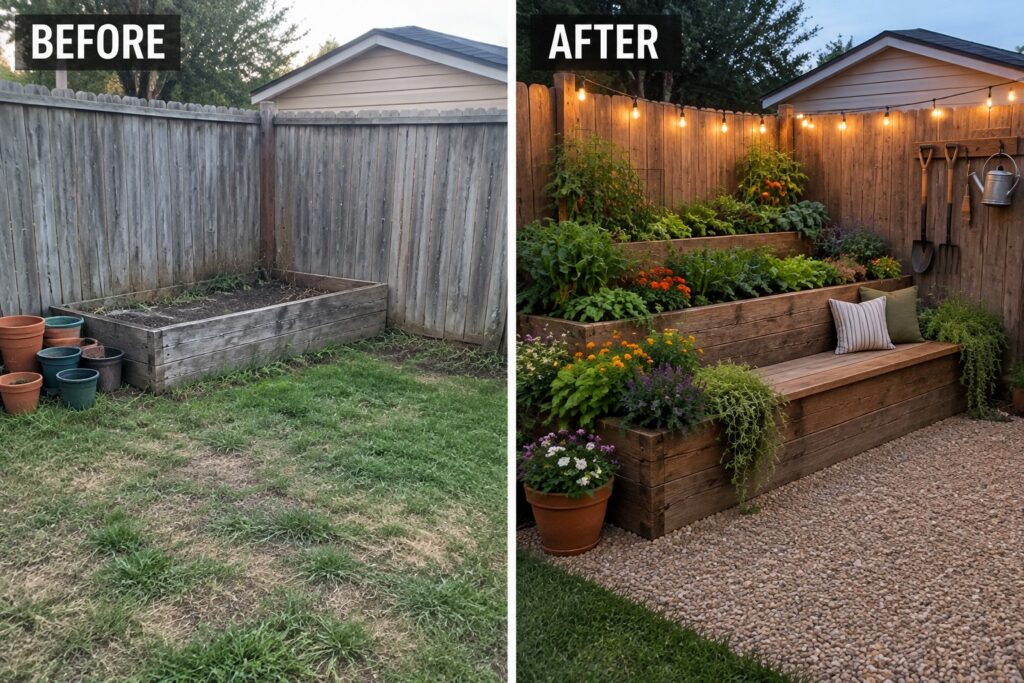
I often find that a garden starts to feel scattered once the beds lose their shape and the soil becomes hard to work with season after season.
Raised beds give the planting areas a clearer structure so everything stays easier to reach and the drainage improves without needing major digging.
They also cut down on constant weeding once the frames are in place.
I tend to test one layout change at a time to see how it holds up once the plants fill in and the weather turns.
A few of the setups described here look straightforward enough to try in sections of my own yard.
Add Tiered Raised Beds For Planting And Seating
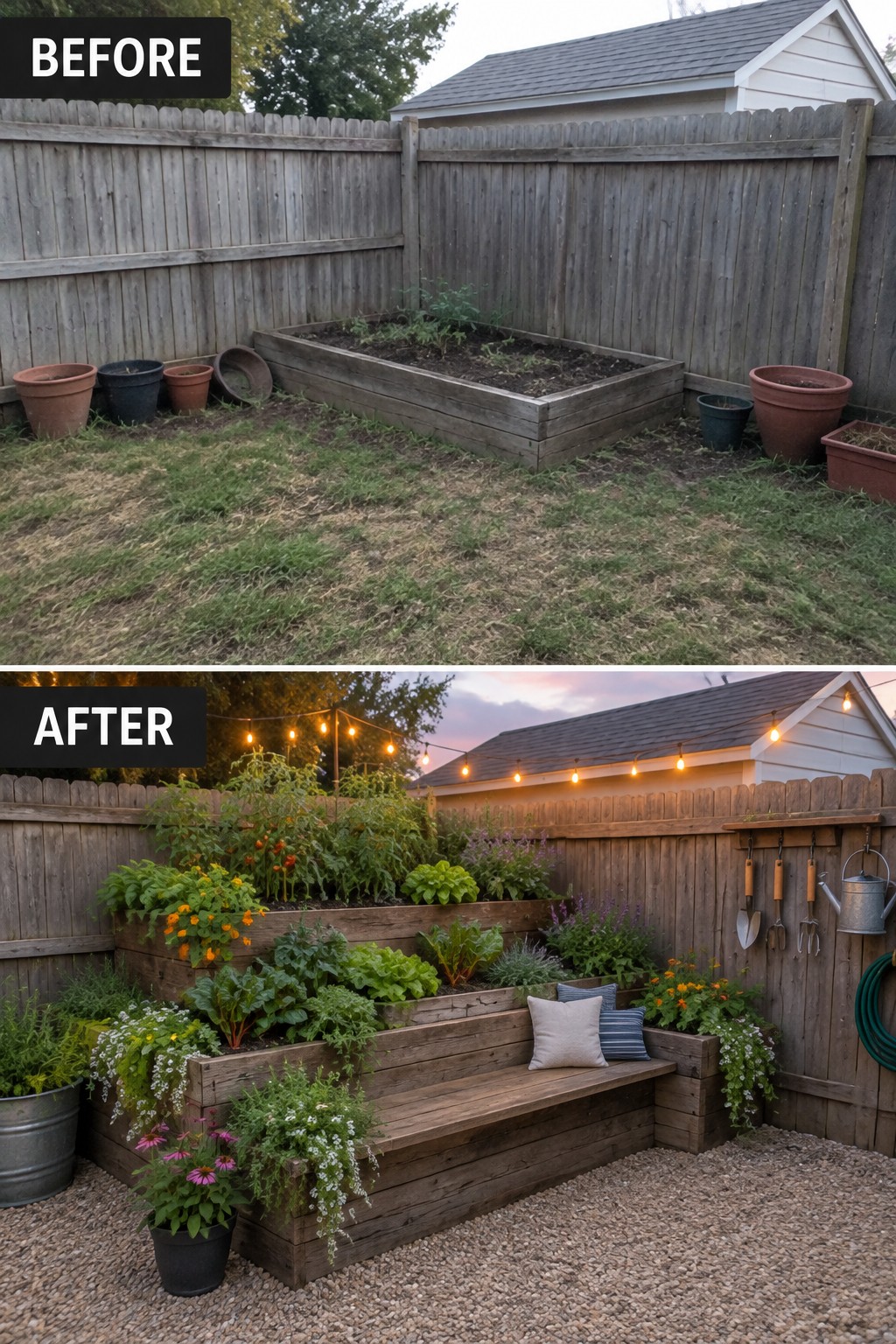
A single raised bed sitting in patchy grass can feel unfinished, especially when pots end up scattered around the edges. Stacking the beds into tiers creates clear planting levels and turns the lower section into a simple bench. The result is a garden that looks planned instead of added on over time.
This approach works best in smaller yards where you need both growing space and a spot to sit without crowding the area. Use pressure-treated lumber or cedar for the frames, keep the lower tier at a comfortable seat height, and plant the upper levels with taller crops so the bench stays usable. Gravel underfoot keeps the whole area drier and easier to maintain.
Refresh An Old Raised Bed With Paint And Planting

One simple way to improve a tired garden spot is to repaint an existing raised bed and update the planting inside it. The old gray wood got a dark finish that makes the bed look sharper, and the sparse weeds were replaced with a mix of colorful greens and grasses that give it more presence along the path.
This idea works best in side yards or narrow spaces where you already have a raised bed but want it to feel more intentional. Pick an outdoor-rated paint, keep the planting to a few repeating plant types, and add a couple of low lights if the bed sits near a walkway.
Add Structure To An Overgrown Backyard
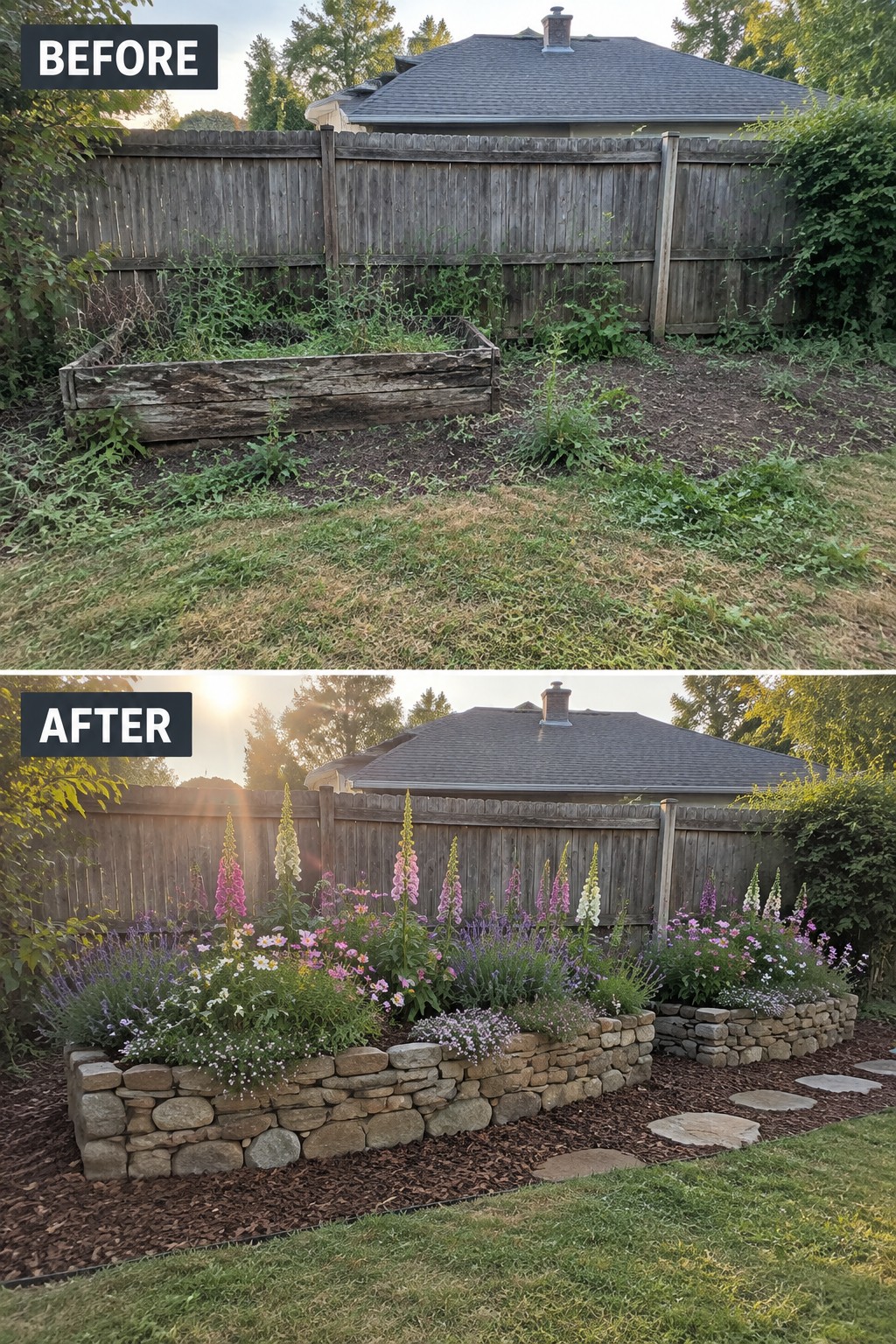
The main improvement came from swapping a broken wooden planter and a tangle of weeds for low stone walls that create clear raised beds. Clearing the overgrowth first made the rest of the work possible, and the new borders turned a messy slope into something that actually looks planned.
This idea suits any yard that has lost its shape. Remove the worst of the weeds and old structures before you build, then use simple stone or block borders to define the beds. Mulch the open ground to hold down new weeds and add a few stepping stones if you need a path through the area. The result stays practical and gives you room to plant without the space feeling scattered.
Add Raised Beds To Bring Order To An Overgrown Yard

The old wooden bed had split and vines were creeping across the lawn, making the whole area feel neglected. New metal raised beds set into gravel give the space clear edges and keep everything contained so the garden stays productive without constant cleanup.
This idea suits backyards that need a simple reset before adding more features. Remove the old frame first, add a gravel base for drainage, then choose beds tall enough to work comfortably. Trellises on the sides help climbing plants stay upright and make the layout feel more organized from the start.
Use Raised Beds To Organize A Narrow Side Yard
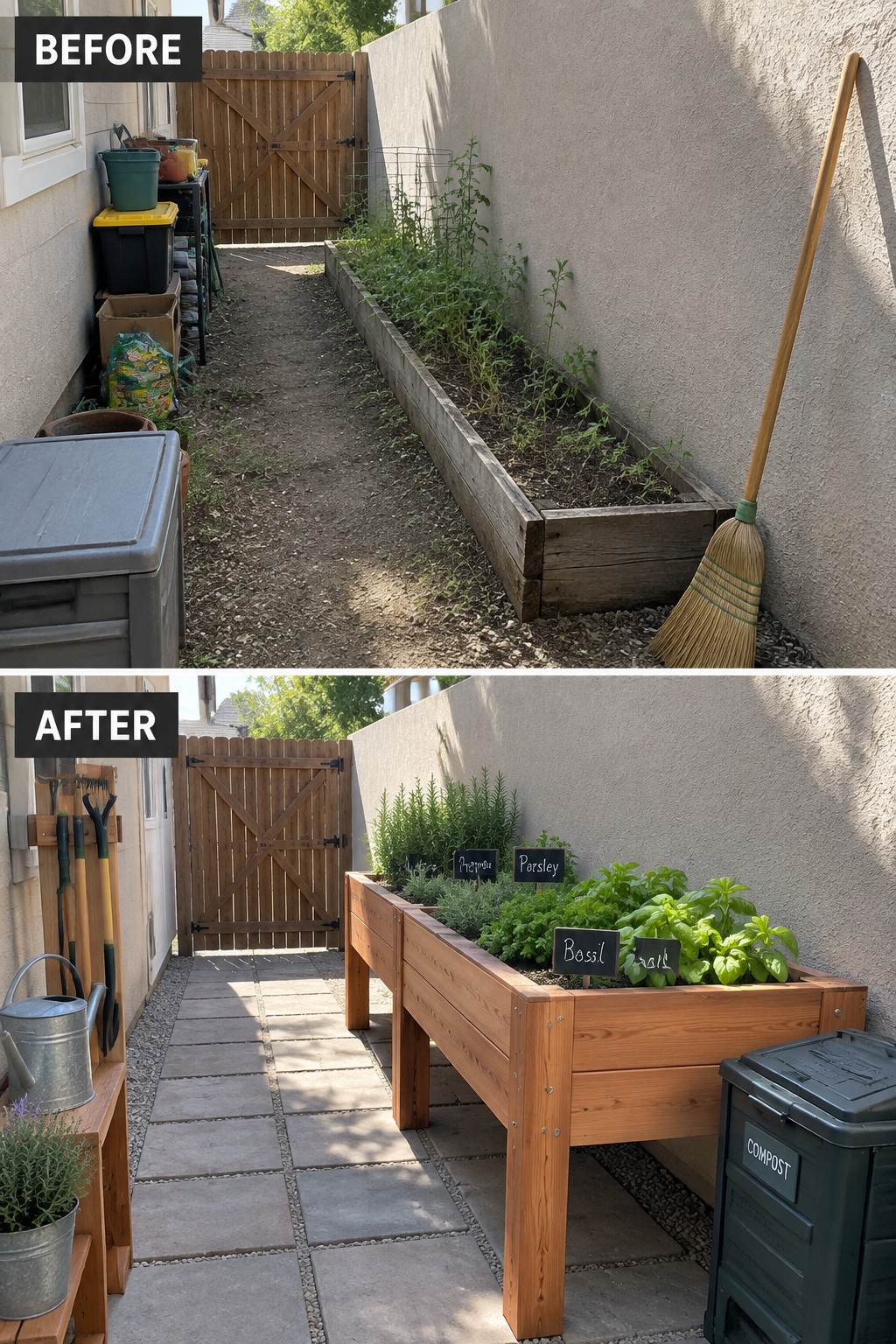
A narrow side yard often ends up as a catch-all for tools and weeds because there is no clear plan for the space. Adding raised beds gives the area a defined purpose and keeps planting contained so the path stays open and usable. The shift from a low, weedy box to taller beds set on pavers shows how much cleaner the whole passage feels once the beds have height and structure.
This idea works best in homes where the side yard is mainly a walkway between the house and a fence or wall. Keep the beds narrow enough to leave room to move, and choose a material like cedar that can handle weather without much upkeep. Focus on the beds first before adding extras like tool racks or pots.
Add A Curved Raised Bed To Shape A Narrow Side Yard
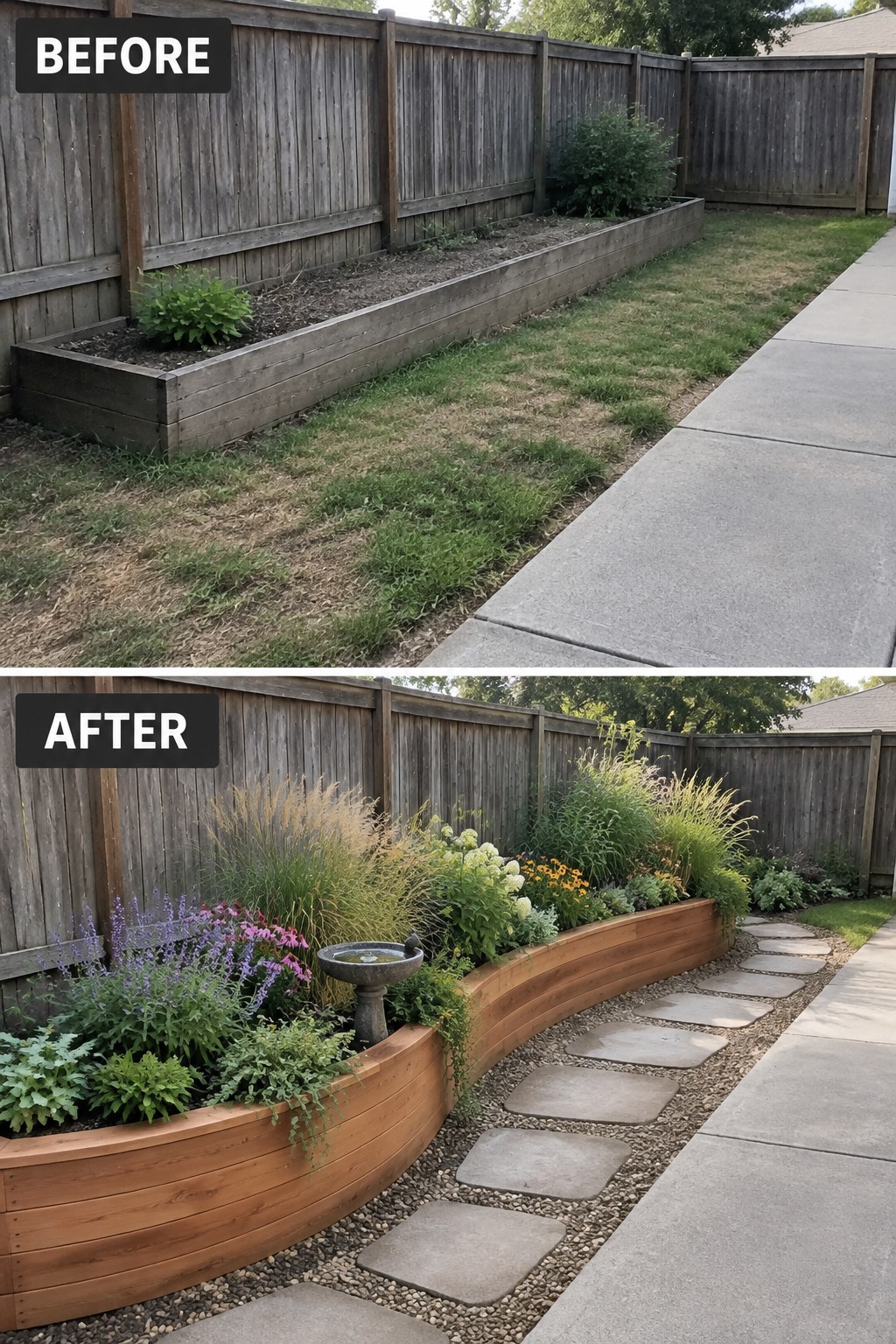
A straight, basic raised bed often leaves a side yard feeling flat and unfinished. Switching to a curved wooden bed gives the space a clear edge and makes the whole area feel more intentional. The new bed sits lower at the front and rises gently, which softens the long fence line and creates room for a simple gravel path with stepping stones.
This approach works well in long, narrow yards where a straight bed can feel like a barrier. Keep the curve gentle so the path stays usable and the bed does not crowd the walkway. Start with the bed itself, then add the path once the shape is set.
Add Trellises To Raised Beds For Vertical Support
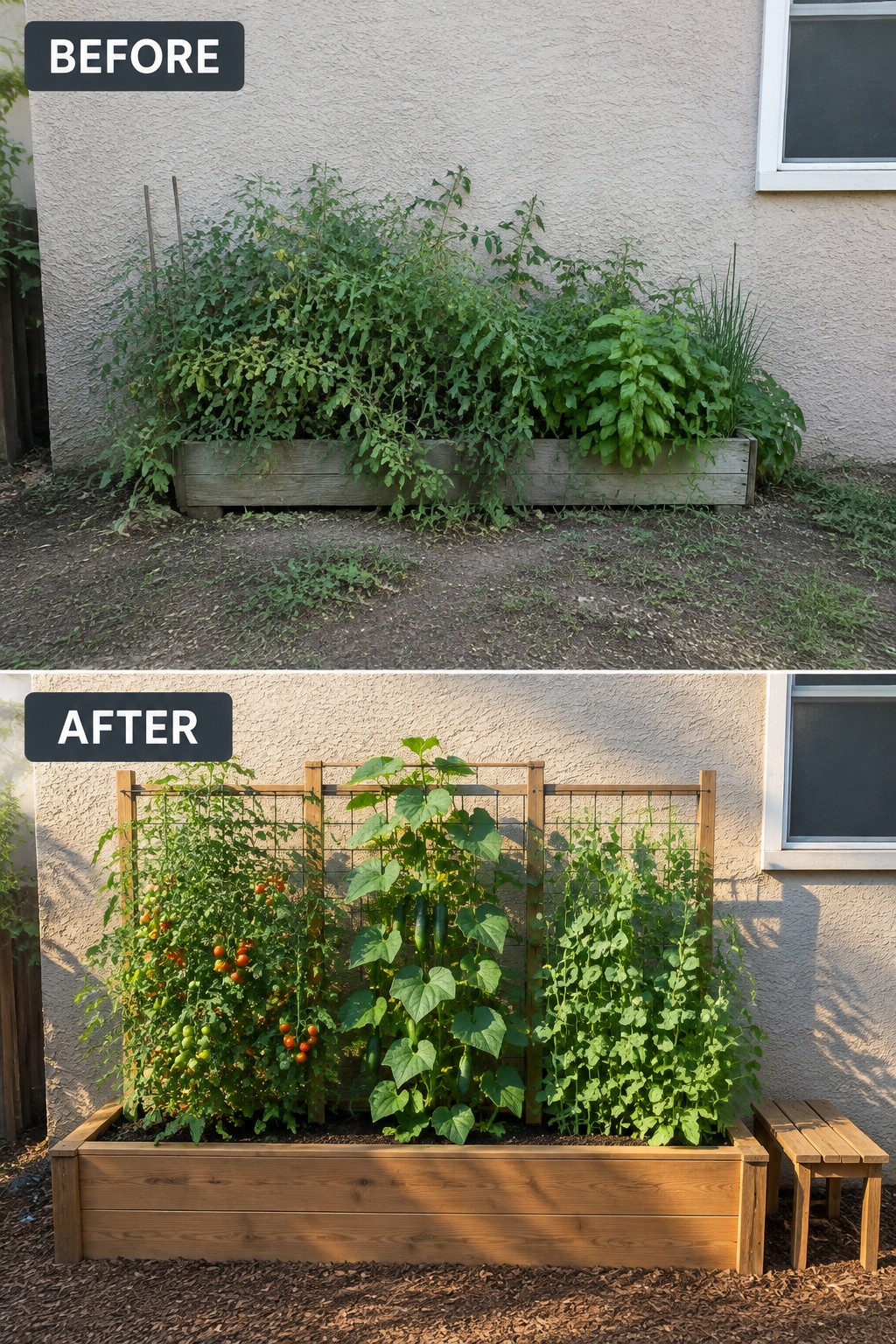
Raised beds often start out neat but quickly turn into a tangle when plants sprawl and crowd each other. Adding a simple wood frame with wire trellising gives tomatoes, cucumbers, and similar crops something to climb, which keeps the beds looking organized and makes the plants easier to reach.
This approach works best in smaller yards where you want to grow more without expanding the footprint. Use the same wood tone for the trellis and bed frame so everything feels connected, and leave a little open space around the beds so the structure stays visible instead of getting lost in extra planting.
Define A Messy Border With Simple Edging
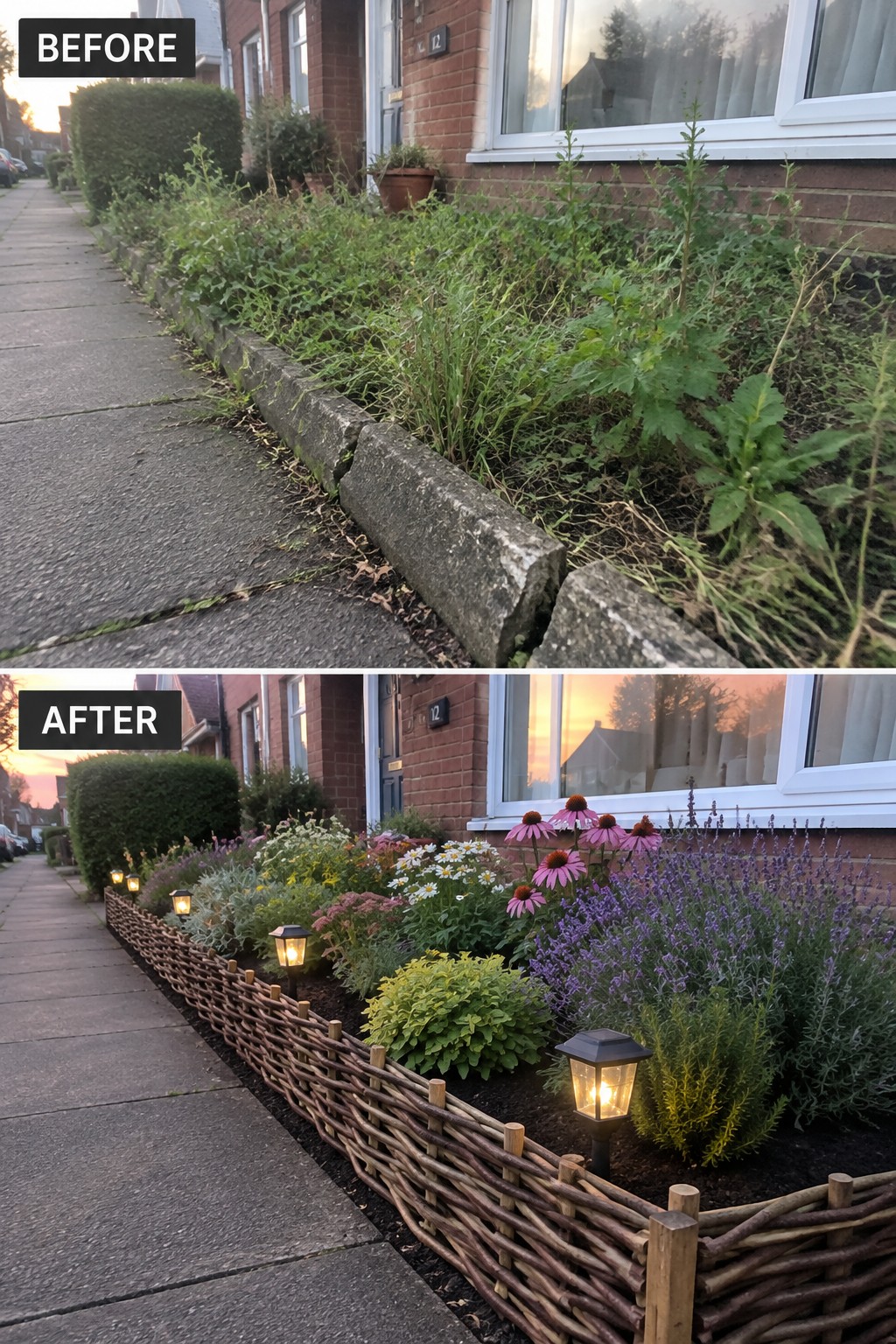
An overgrown strip of weeds and cracked concrete edging makes the front of a house look neglected. Adding a low woven border and a few solar lights turns the same space into a contained garden bed that looks intentional. The planting stays neat because the edge keeps everything in place and gives the eye a clear line to follow.
This works well along sidewalks or house foundations where space is narrow. Start by clearing the weeds and leveling the soil before you add any border. A simple woven edge like the one shown holds mulch and plants without needing a full raised bed, and it suits most older homes where you want structure without spending much.
Use Raised Beds To Terrace A Sloped Yard

A steep backyard slope is hard to plant and harder to walk on. Raised beds stacked in tiers solve both problems at once by creating flat planting areas that follow the hill instead of fighting it. The wooden beds hold the soil in place, and the added stairs with gravel make the whole space easy to reach.
This idea works best on yards that drop sharply from the house or fence line. Plan the beds so each level sits level and has enough depth for what you want to grow. Put the stairs in early so you can move around while you build, and keep the beds narrow enough that you can reach the middle without stepping inside them.
Add Irrigation To Turn An Overgrown Raised Bed Productive

The before photo shows a raised bed full of weeds with a hose just lying on the ground. The after shows the same bed cleaned up, planted in rows, and fitted with drip lines that run straight to each plant. Adding a basic irrigation system is what made the difference. It keeps the soil watered without daily effort and gives the plants a better chance to grow instead of competing with weeds.
This idea works well in any yard with existing raised beds that have gone neglected. Start by clearing the overgrowth first, then lay out simple drip tubing connected to a timer. It suits small to medium gardens where you want vegetables or herbs without spending hours hand-watering every day. The key is keeping the lines tidy so the bed still looks organized as the plants fill in.
Fill A Raised Bed With Mixed Flowers
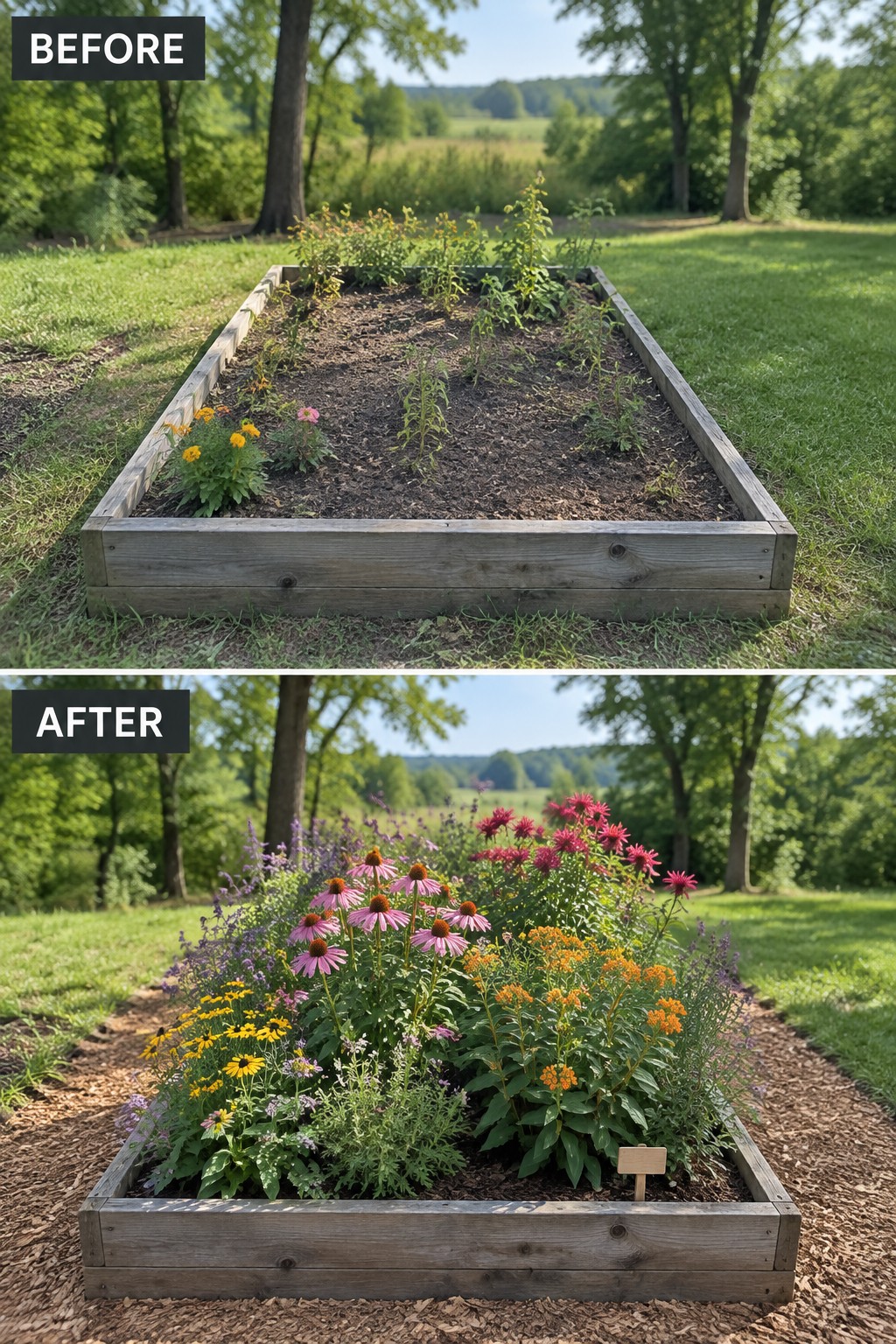
A raised bed often looks thin when plants are few and far between. Here the bed went from scattered stems and plenty of bare soil to a tight mix of pink coneflowers, orange butterfly weed, and yellow daisies that cover the surface.
This idea suits any sunny yard where you want steady color without a big redesign. Pick flowers that bloom together, plant them close, and add a layer of mulch around the edges so the bed stays neat and easy to maintain.
Add A Hoop Tunnel To Your Raised Bed

A bare raised bed often sits unused for weeks while the weather stays cool. Adding a simple hoop tunnel changes that by creating a protected space where plants can go in earlier and stay healthier. The cover shields seedlings from late cold snaps and keeps the soil a bit warmer without any complicated setup.
This works best in backyards that get early spring or fall frosts. Build or buy a basic hoop kit sized to your bed, then use a lightweight row cover fabric that you can vent on warmer days. Keep the design low so it stays easy to reach inside for watering and harvesting.
Build A Pergola Over Raised Beds For Shaded Seating
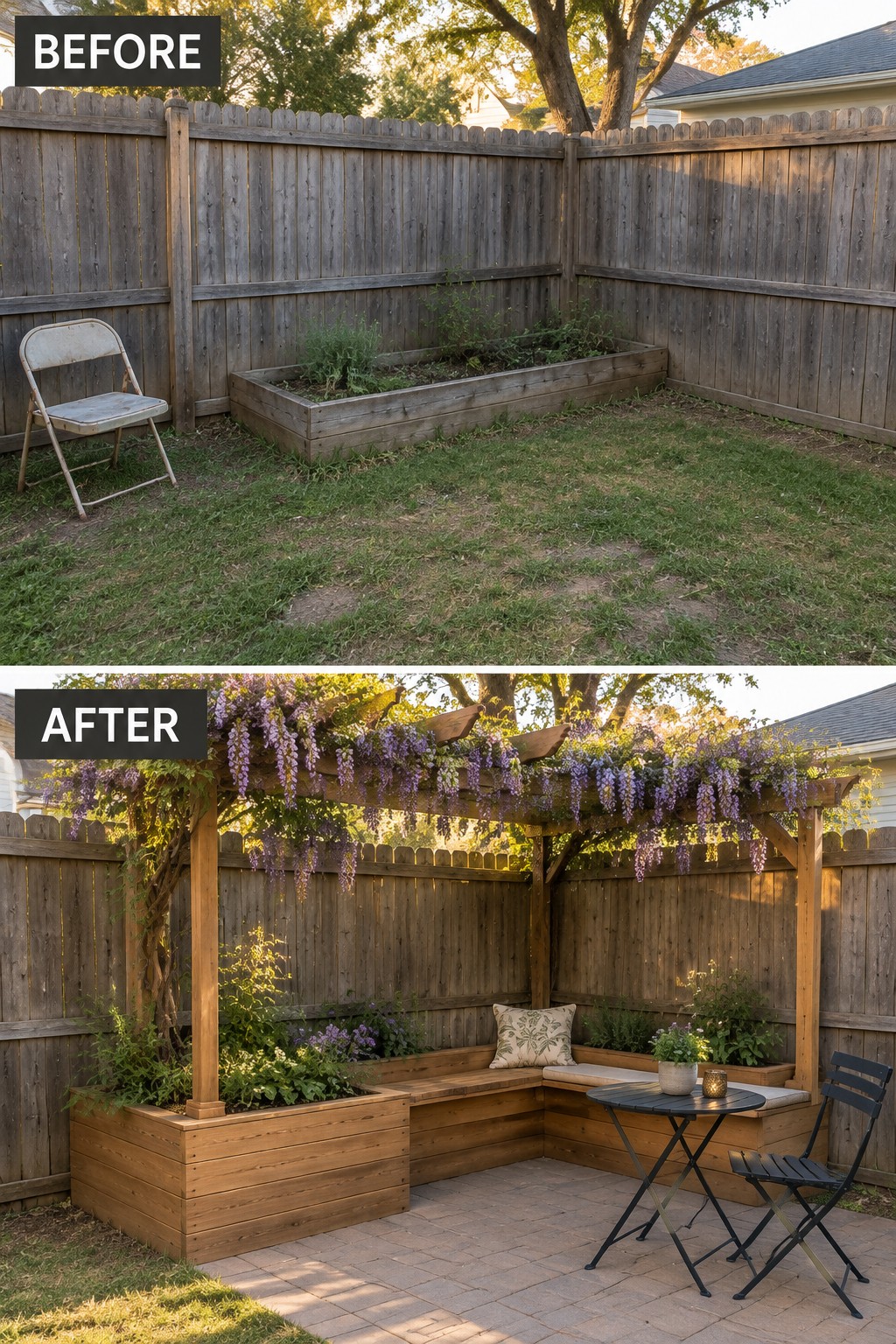
A basic raised bed sitting in an open yard can feel like an afterthought. Adding a simple pergola on top and wrapping a bench around the sides turns the same bed into the center of a usable outdoor spot. The wood ties everything together, the vines provide shade, and the pavers underneath make the area feel finished instead of muddy.
This works best in a smaller backyard where you want one defined place to sit without losing the garden. Start with a sturdy raised bed, then add posts and cross beams that can handle the weight of the roof and any climbing plants. Keep the bench height comfortable and leave enough room around the table so people can actually pull out a chair.
Use Raised Beds To Bring Order To A Messy Garden Edge

A weedy strip along a wall often stays neglected because the ground is uneven and hard to plant in. Building raised beds with concrete blocks gives the space clear edges and turns it into a place where vegetables and herbs can actually grow without getting lost in the grass and debris.
This idea works best in narrow side yards or along fences where you want growing space without fighting the existing soil. Keep the beds simple, fill them with decent soil, and use gravel to finish the ground around them so the whole area stays easy to walk and maintain. It suits homes that need more growing room but do not have a large flat lawn to work with.
Use Raised Beds To Green Up A Narrow Courtyard
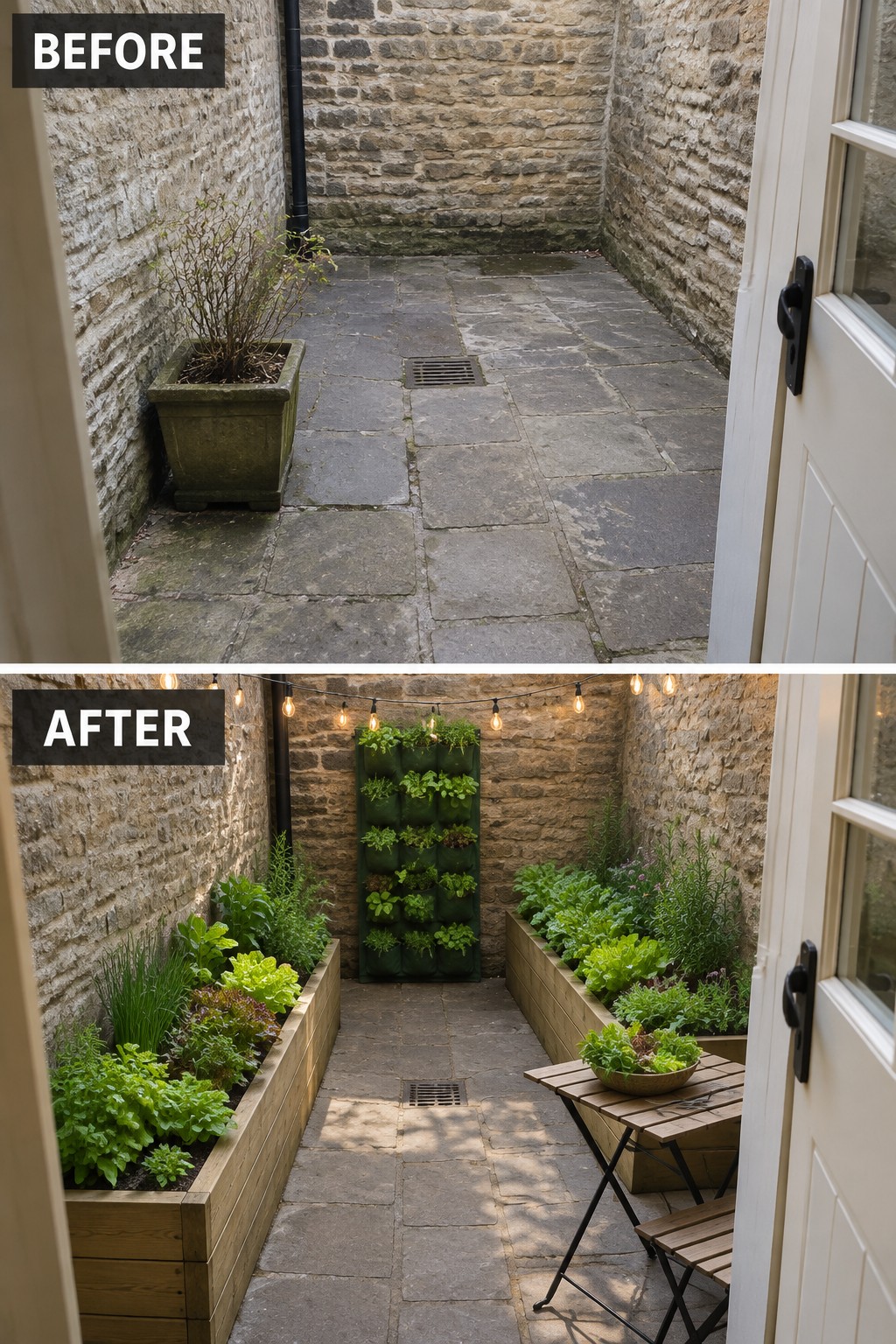
A bare paved courtyard can feel like dead space when there is nowhere to plant. Raised beds solve that by bringing soil into the area without digging up the existing surface. The wooden boxes along each wall and the vertical planter at the back turn the same narrow passage into a place where you can actually grow things.
This works best in small urban yards or side passages where the ground is already hard. Keep the beds fairly narrow so you still have room to walk through, and fill them with crops or herbs that suit the light you get. Once the planting is in, a small table and chairs fit naturally without making the space feel cramped.
Edge A Raised Bed With Brick For Clear Definition

A basic wooden raised bed can start to look tired after a few seasons, especially when the plants inside grow uneven and the edges sag. Switching the border to brick gives the bed solid shape, keeps the soil contained, and turns the whole front strip into something that reads as intentional rather than leftover space.
This approach works best on narrow beds along the front of the house where you want low maintenance and year-round structure. Use a simple running bond pattern so the edge stays low enough not to block the view from the sidewalk, then fill with a mix of shrubs and seasonal flowers that can handle the sun exposure.
Add Raised Beds To Give A Backyard Real Structure
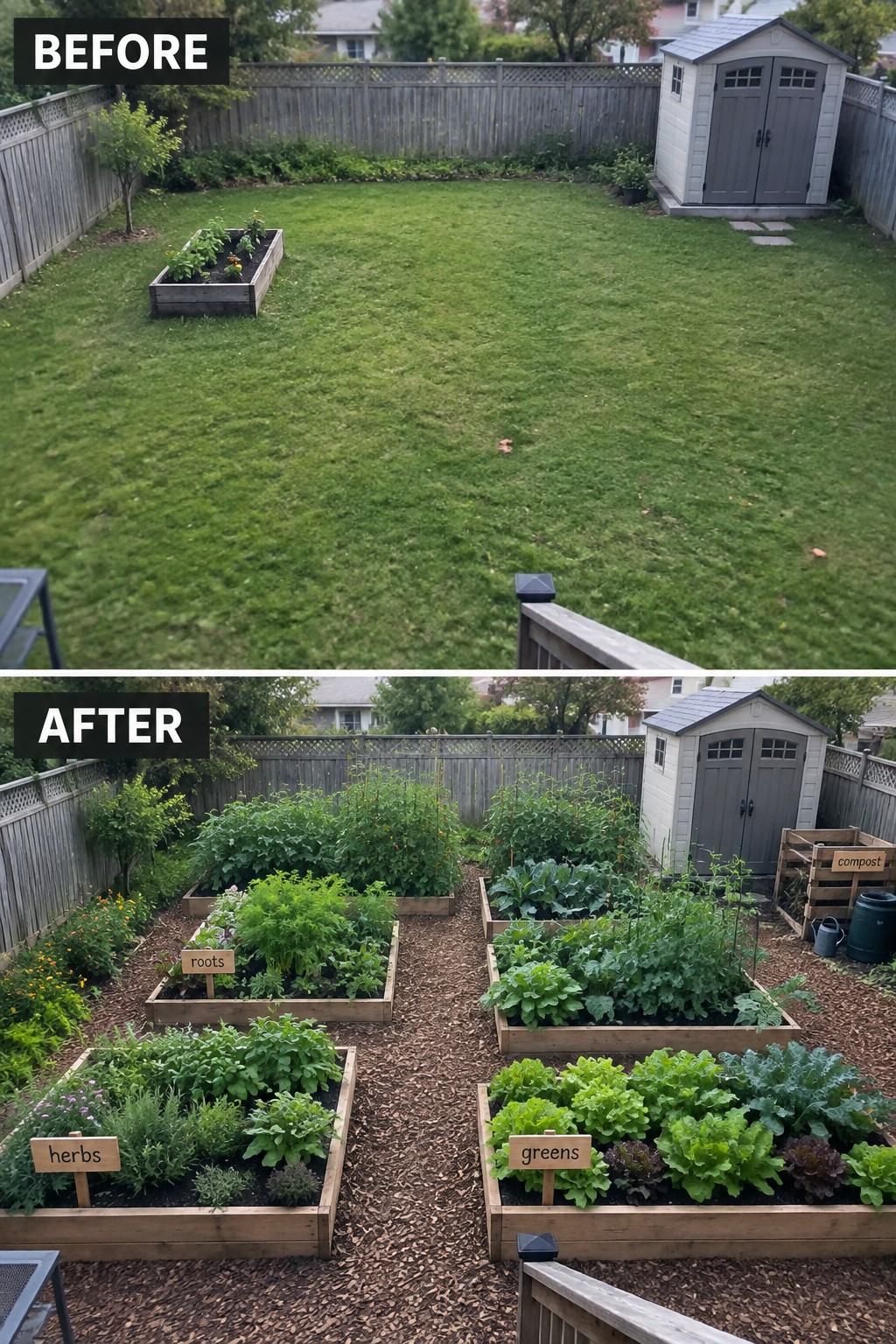
A big empty lawn can feel like wasted space once you start thinking about growing food. The change here comes from adding several raised beds in a simple grid with wood chip paths between them. The beds keep plants separated by type, make weeding easier, and give the whole yard a clear purpose instead of just grass.
This idea works best in a small to medium backyard where you want vegetables without turning the whole lawn into one big bed. Start with four or five beds like the ones shown, set them on level ground, and fill them with good soil before planting. Leave enough space between them for a wheelbarrow or mower, and add a small compost spot nearby so you are not hauling scraps far.
Add Structure To A Raised Bed Garden With Mulch And Paths
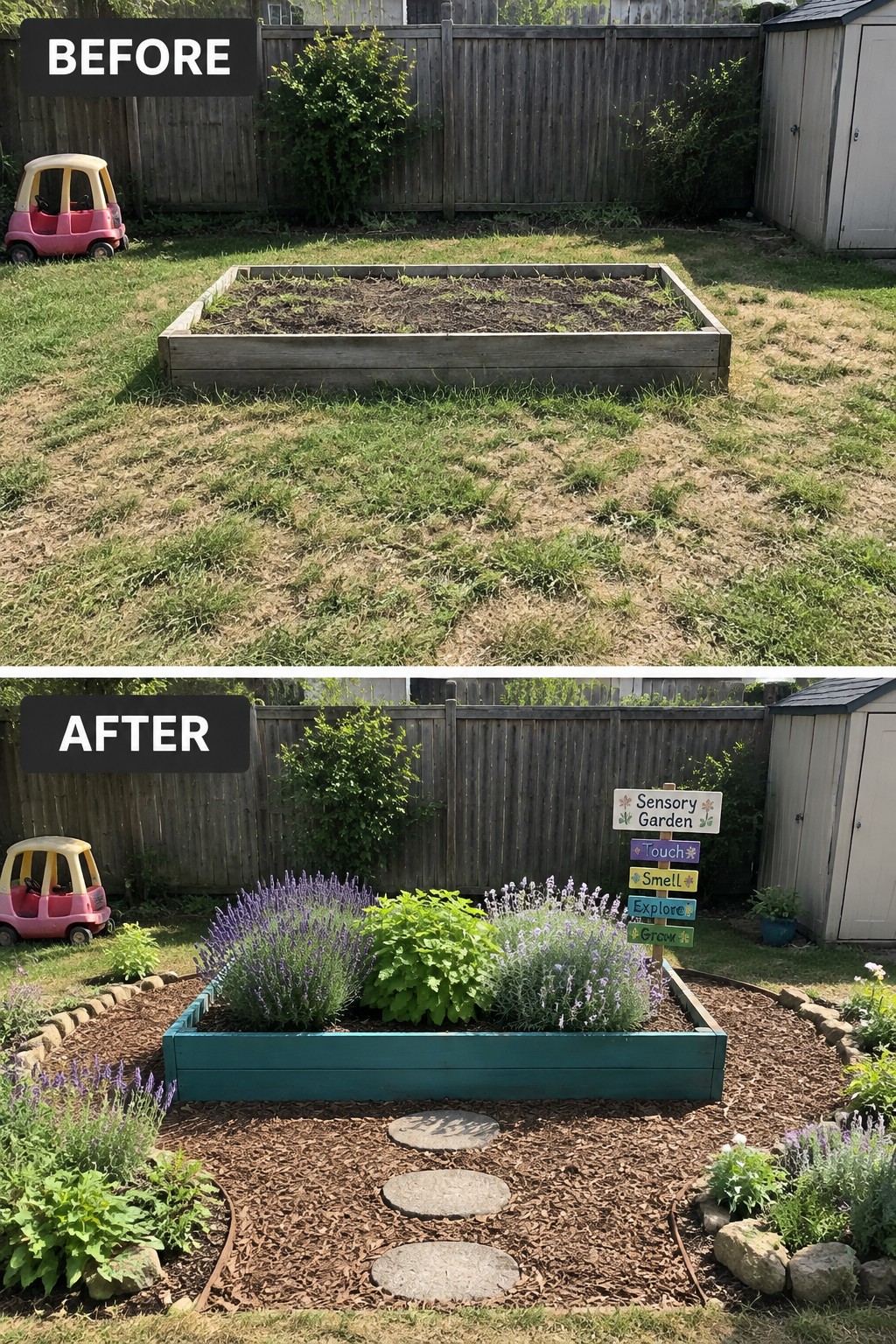
The before photo shows a plain wooden raised bed sitting in the middle of an uneven lawn with no clear edges or purpose. In the after photo the bed gets painted, the ground around it is covered in mulch, and a few stepping stones create a simple path up to it. Those changes turn the bed from something that just exists into the center of a small garden room.
This approach works well in any backyard where the lawn feels scattered or unfinished. Start by clearing the area, then lay down a solid border of mulch or gravel before you add plants. The mulch keeps weeds down and makes the bed look intentional, while the path keeps foot traffic from compacting the soil. It is an easy first step that makes even a single raised bed feel like a real garden.
Turn An Overgrown Slope Into Tiered Raised Beds

The main change here is replacing a sagging wooden wall and heavy overgrowth with stone retaining walls that form clean, level garden beds. The tiers give the slope real structure and turn what was basically a maintenance headache into usable planting space.
Stone walls hold the soil in place on a hill, which makes watering and weeding much simpler than fighting vines on a bare slope. This approach works best on yards with a noticeable grade where flat beds would be difficult to maintain. Check drainage before you build, and keep the beds narrow enough that you can reach across them without stepping inside.
Give A Tired Raised Bed New Structure With Stone
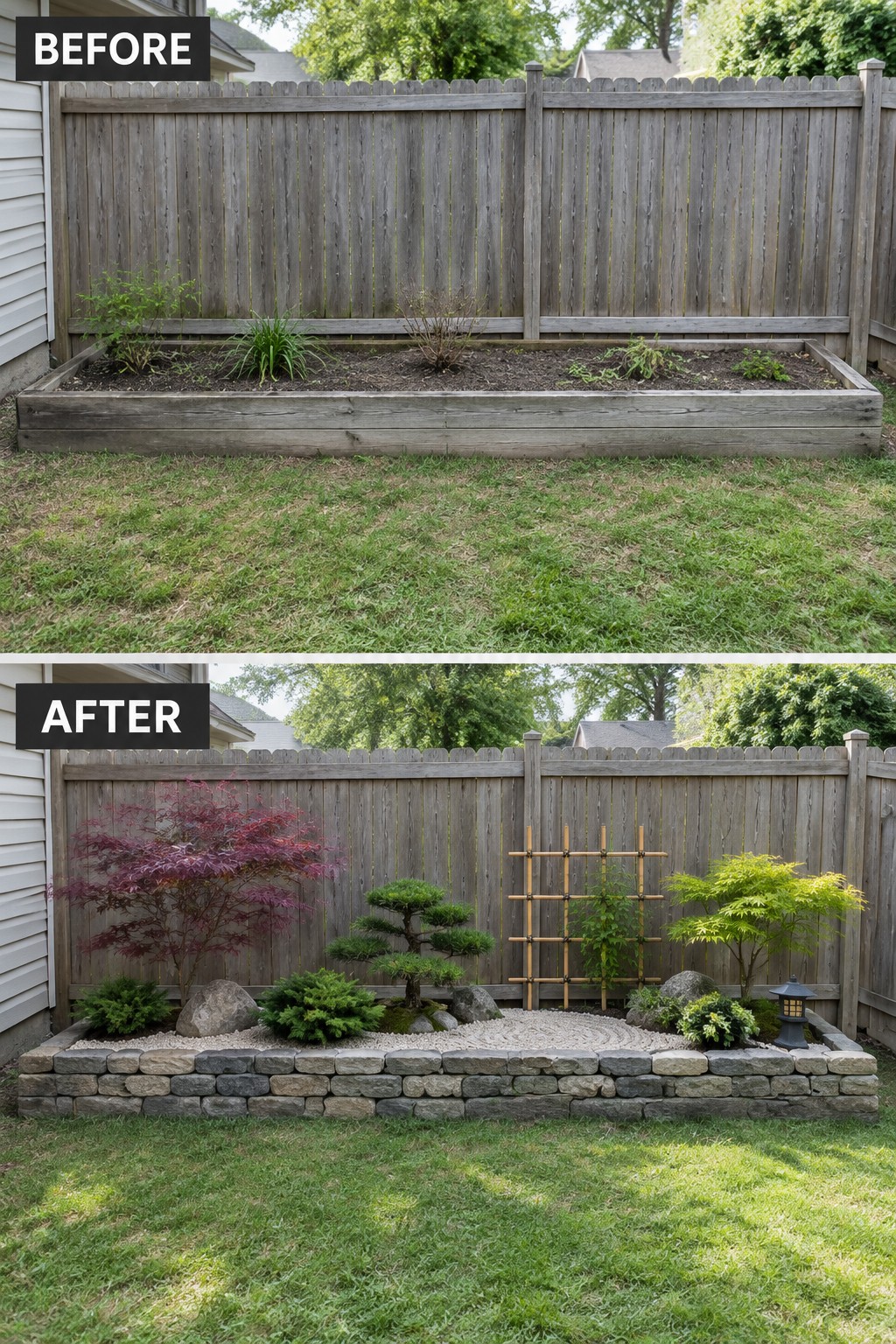
A plain wooden raised bed often ends up looking flat once the first season passes. Switching the border to stacked stone and filling the center with gravel creates a clear edge that makes the whole area feel planned instead of leftover.
This idea works best in smaller yards where the bed sits right against a fence or lawn. Keep the planting simple, use just a few larger specimens, and leave breathing room around them so the stone and gravel stay visible instead of getting buried.
Frequently Asked Questions
Q: What size raised beds work best in a small yard? A: Go with 4 by 8 feet to start. You can reach the middle from either side without stepping on the soil. Add a second one later if the first feels too small.
Q: How do I stop weeds from taking over the paths around the beds? A: Put down cardboard or old newspaper first. Cover it with a few inches of wood chips or gravel. The layer stays put and cuts down on weeding time.
Q: My yard soil is heavy clay. Can raised beds still work for vegetables? A: Fill the beds with a mix of compost and good topsoil. The plants grow in that fresh mix instead of fighting the clay below. Water drains better too so roots stay healthier.
Q: Do I need to water raised beds more often than ground beds? A: Check the soil with your finger each day at first. Raised beds dry out faster in hot weather so you may need an extra soak or two each week.
