

Gardens often end up looking a bit lost when the main paths and bed edges do not line up with how the space actually gets used.
I have found that fixing those basic lines first makes the rest of the yard feel less scattered even if nothing else has been added yet.
A few weekend projects like adding a simple trellis or reshaping a lawn edge can give the garden a clearer shape without requiring heavy tools or big budgets.
Small builds like these tend to hold up better when they stay in scale with the existing layout.
Some of the approaches here are the ones I would try first because they focus on steady structure rather than quick decoration.
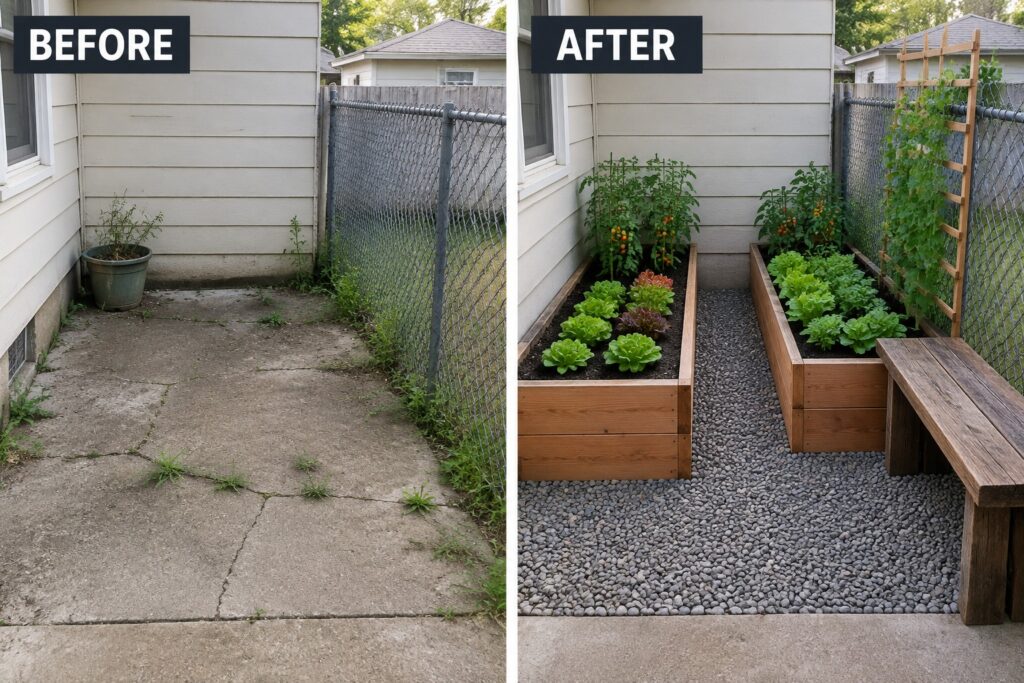
Use Raised Beds To Turn Unused Concrete Into Garden Space

A bare concrete corner next to a wall and fence does not offer much room for plants. Adding two raised wooden beds changes that by creating defined planting areas that keep soil contained and make the space feel purposeful right away.
This approach works best in narrow side yards or back corners where the ground is hard or weedy. Keep the beds low and simple so they do not crowd the area, then use gravel to cover the remaining concrete for easier walking and a neater edge. The result is a small productive garden that fits the space without needing major construction.
Turn An Empty Balcony Into A Seating Area
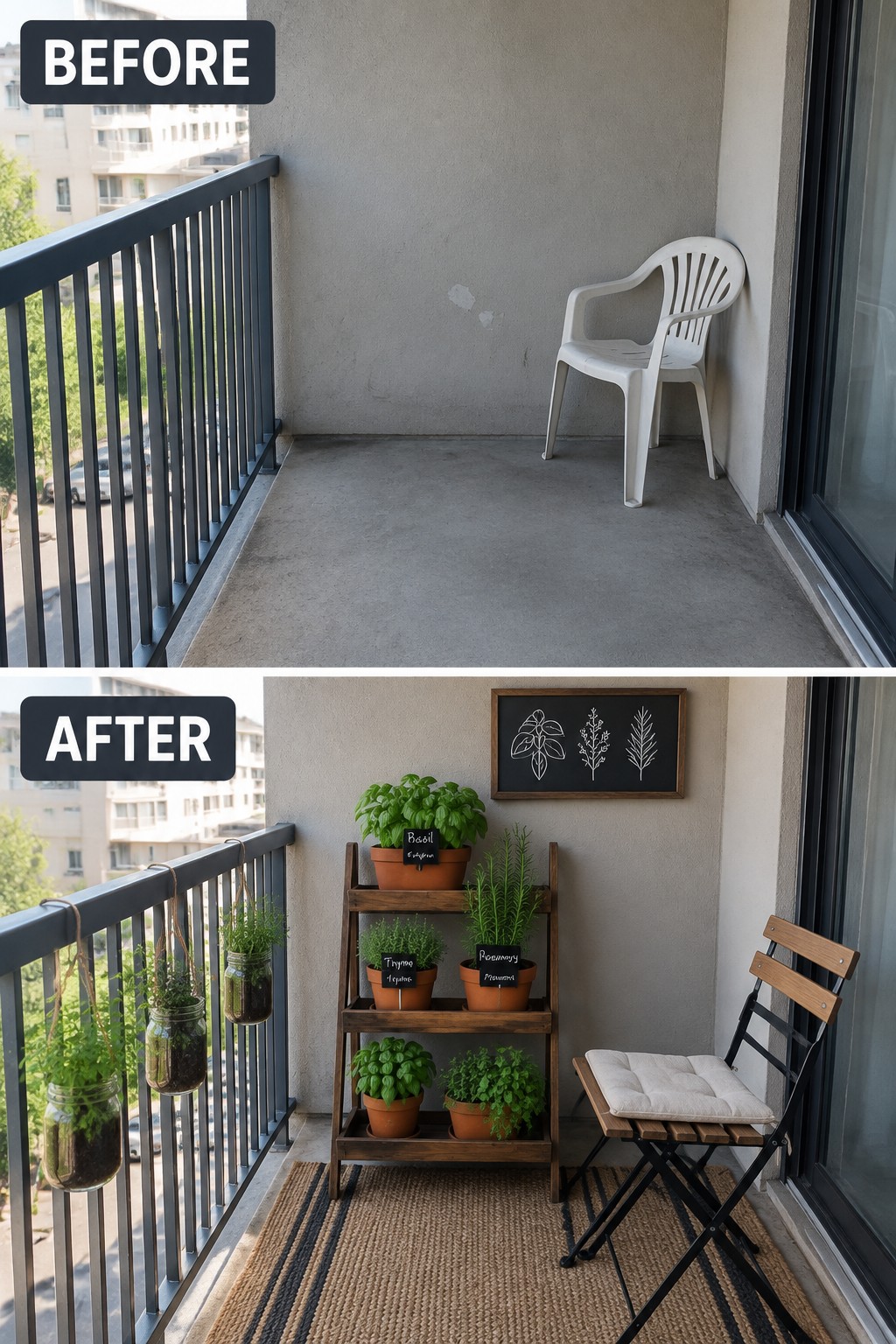
An empty balcony with just a lone plastic chair often feels like dead space. Adding a simple wooden plant stand, a few hanging jars along the rail, and a rug underneath a real chair makes the area feel like an actual place to sit instead of something you just walk past.
This idea works best on small balconies where floor space is limited. Keep the furniture foldable and use the railing for vertical planting so the area stays open enough to move around. Focus first on a few easy herbs or greens rather than filling every surface.
Turn A Plain Fence Into A Vertical Garden

A bare fence with just dirt along the base often leaves a small yard feeling unfinished. Mounting a simple wooden pallet and filling it with plants gives the space height and purpose without taking up ground room.
This idea works best along property lines or next to sheds where ground space is limited. Use a sturdy pallet, line the back, and pick plants that suit your conditions. Adding mulch at the base helps keep the area clean while the plants grow in.
Define An Overgrown Path With Stepping Stones

The original path to the door was just a muddy strip of dirt and patchy grass that made the entrance feel neglected. Placing round stepping stones in a gravel bed with simple metal edging on both sides turns the same route into something that feels intentional and easy to follow.
This idea suits narrow side yards or front approaches where a full walkway would take up too much space. Clear the weeds first, set the stones level, and fill around them with gravel so the path stays defined even after a few seasons of growth.
Turn An Overgrown Corner Into Outdoor Seating
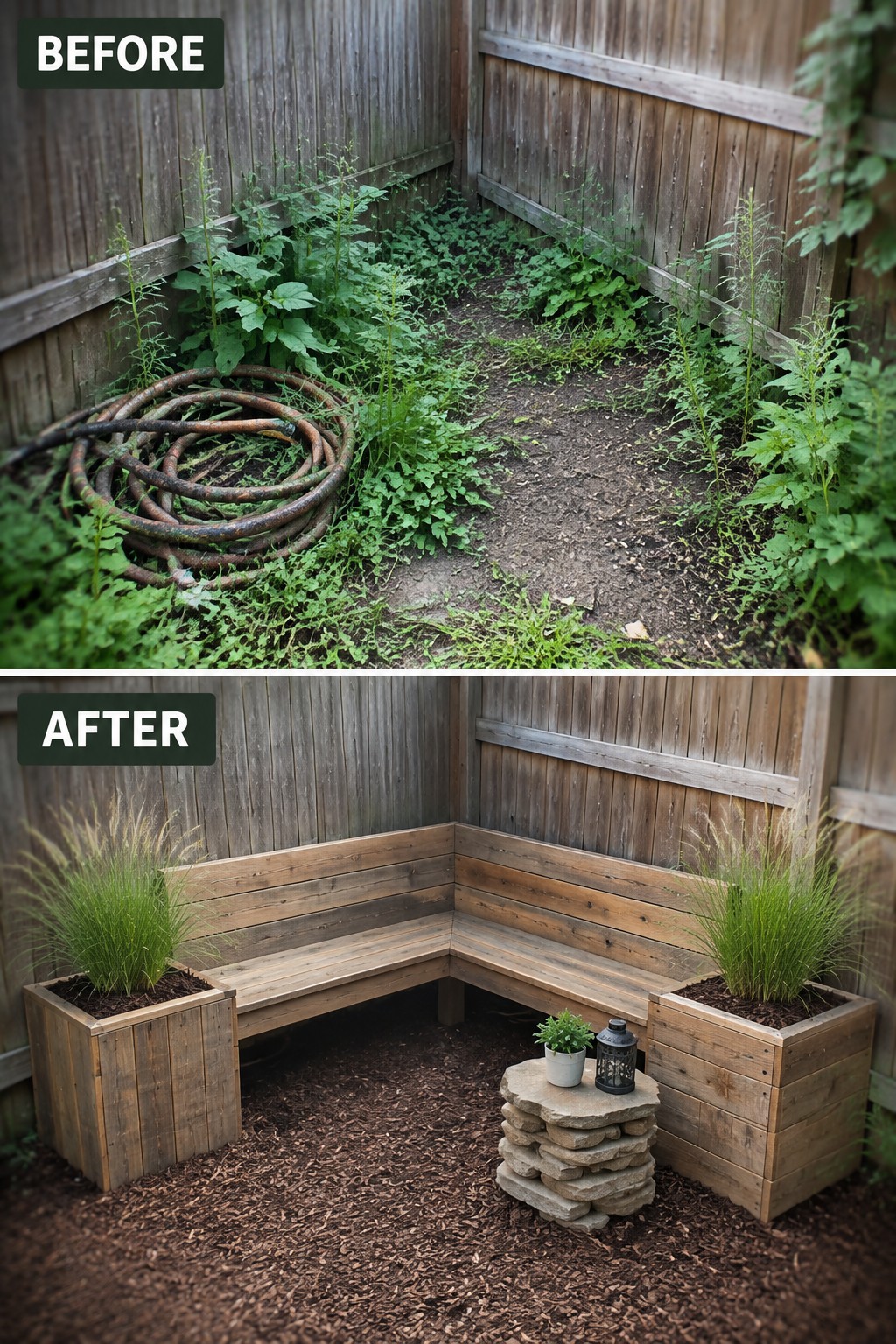
An unused garden corner often stays empty because it feels too messy or undefined to sit in. Adding a simple built-in bench with matching planters gives the space a clear purpose and turns it into a place people actually use. The shift from weeds and a coiled hose to a clean mulch surface and defined seating shows how structure alone makes a small area feel intentional.
This idea works best in tight backyards or side yards where a full patio would not fit. Start by clearing the ground and laying down mulch or gravel, then build the bench to match the fence line so it feels like part of the yard rather than added on. Keep the scale modest and leave open space in front so the seat stays comfortable to use.
Add Structure To A Sloped Border With Rocks
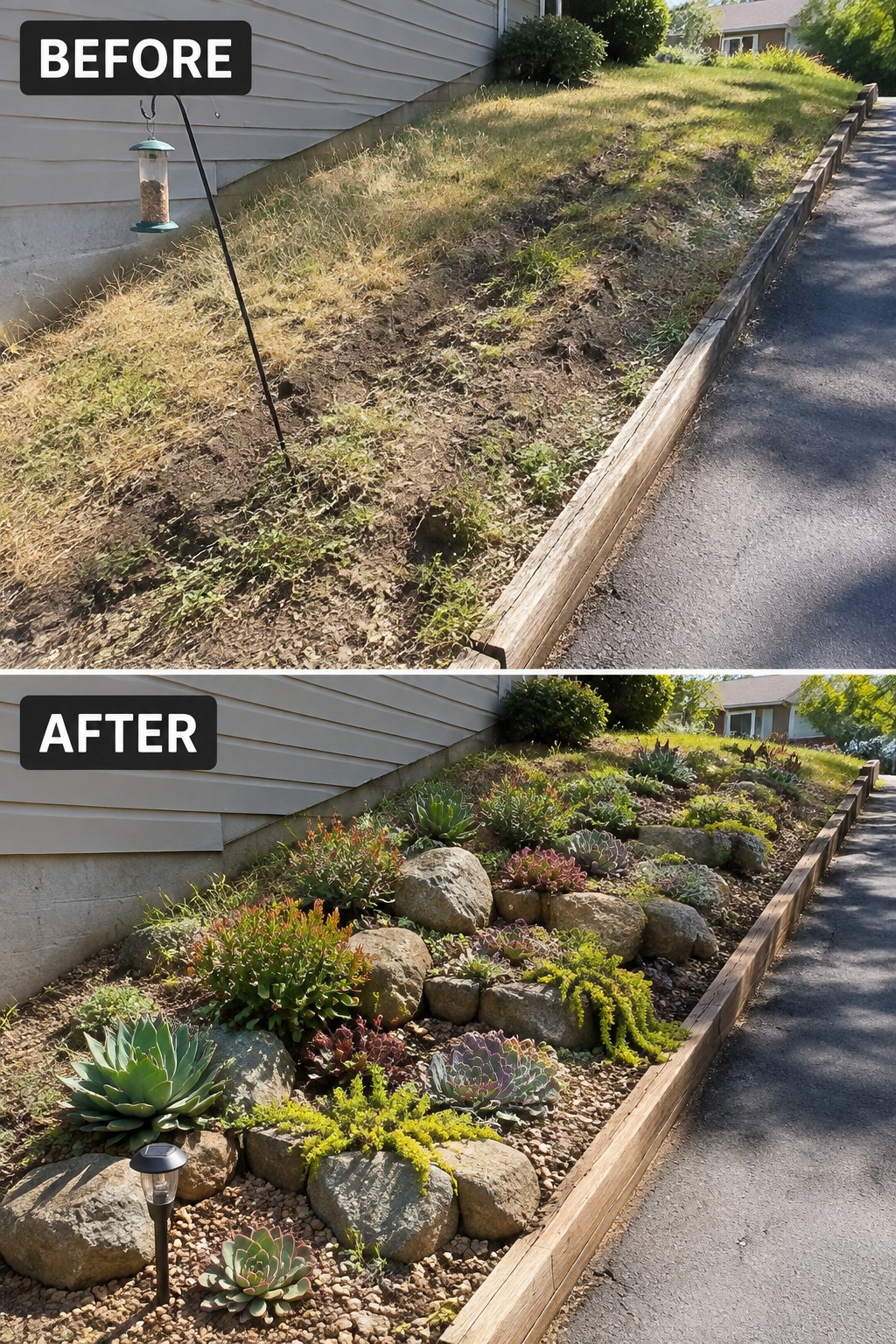
A sloped strip along the house often turns into patchy grass and weeds because it is hard to mow and easy to ignore. Placing large rocks to hold the soil and filling the bed with gravel gives the area clear edges and stops the weeds from taking over again.
This approach works best on narrow slopes next to driveways or foundations where you need low care rather than a full lawn. Clear the old growth first, set the rocks to follow the natural drop of the land, then add hardy plants that can handle the angle before you spread the gravel.
Create A Defined Garden Bed With Simple Stone Edging

A weedy patch under a window often looks worse than it is. Clearing the overgrowth and adding a low stone wall turns the same spot into a contained planting area that stays neat with far less work. Mulch around the outside keeps the rest of the space looking finished without needing constant weeding.
This approach works well in small side yards or tight corners where a full garden would feel crowded. Start by removing the worst of the weeds, then build the edging low enough to hold soil and plants without blocking the window. Choose hardy varieties that can handle the local conditions, and keep the surrounding ground covered so the bed stays the main feature.
Add A Raised Bed To Define A Plain Front Yard
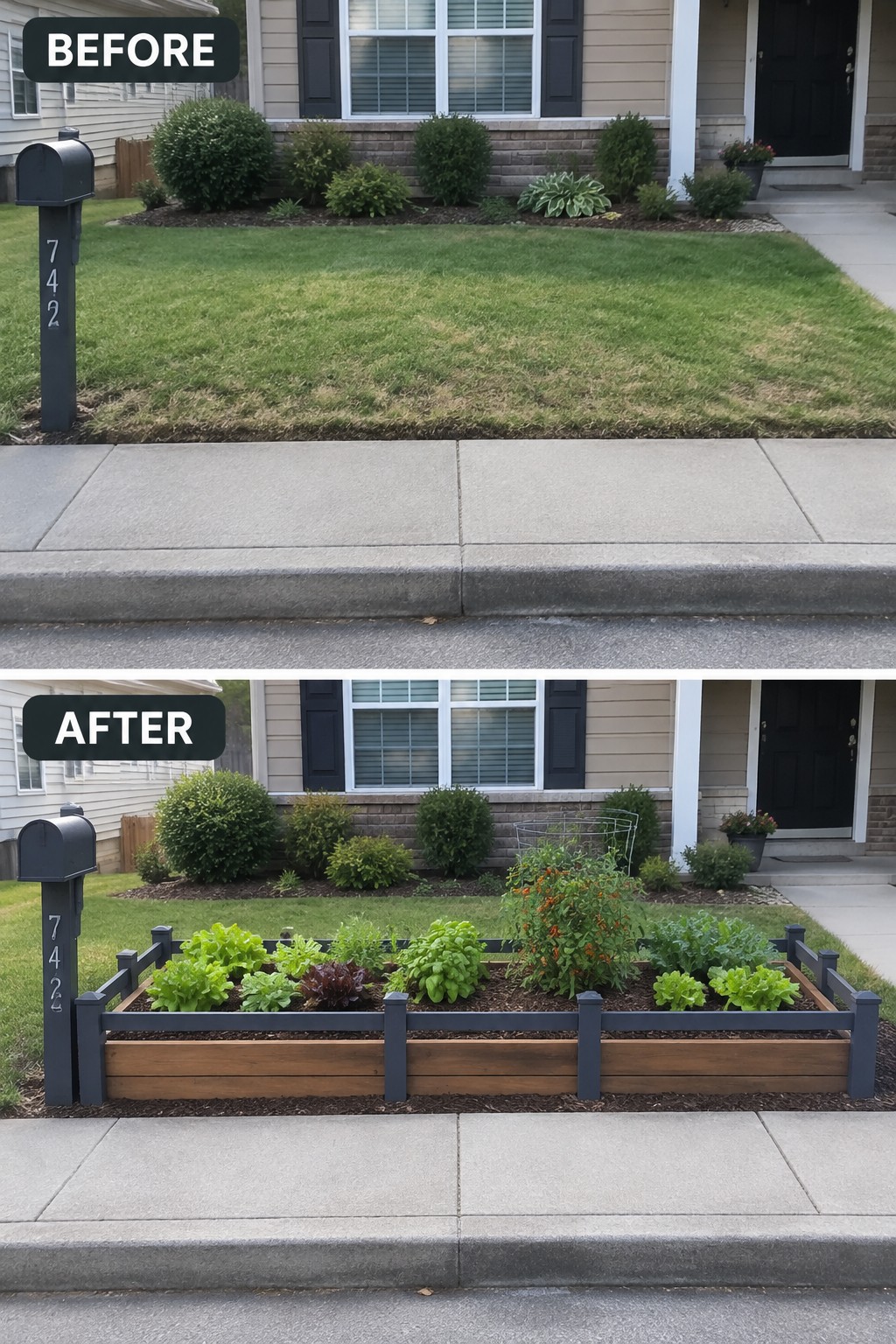
A wide strip of grass often looks unfinished when it runs right up to the sidewalk. Placing a raised bed along the front edge gives the space a clear purpose and turns unused lawn into a growing area.
This works best on small front yards where you want vegetables or flowers without losing the whole lawn. Build the frame low and sturdy so it stays in scale with the house, and leave open grass on both sides so the bed does not block the view or the walkway.
Add Structure To An Overgrown Backyard

Many small yards end up with one corner that just collects leaves and stays bare. Laying gravel over the dirt and adding a bamboo screen gives the space clear boundaries so it stops feeling like leftover ground.
This works best when you keep the materials simple and focus on one zone at a time. Gravel covers uneven soil quickly, while a screen adds privacy without taking up much room. The result stays low maintenance as long as you leave enough open space for walking through.
Start With Cleanup When Reviving A Neglected Garden Bed

Many garden beds along a house end up looking worse each year because the old growth is never fully cleared. Removing the dead stems and tangled plants first makes room for fresh soil and mulch, which instantly changes how the whole strip looks and feels.
This approach works well on narrow beds beside sidewalks or fences where space is tight. Clear everything out, add a layer of mulch to keep weeds down, and plant a simple mix of taller perennials with shorter flowers in front. The result stays neat with very little extra work once the bed is defined.
Use Planters To Freshen Up A Plain Front Entry
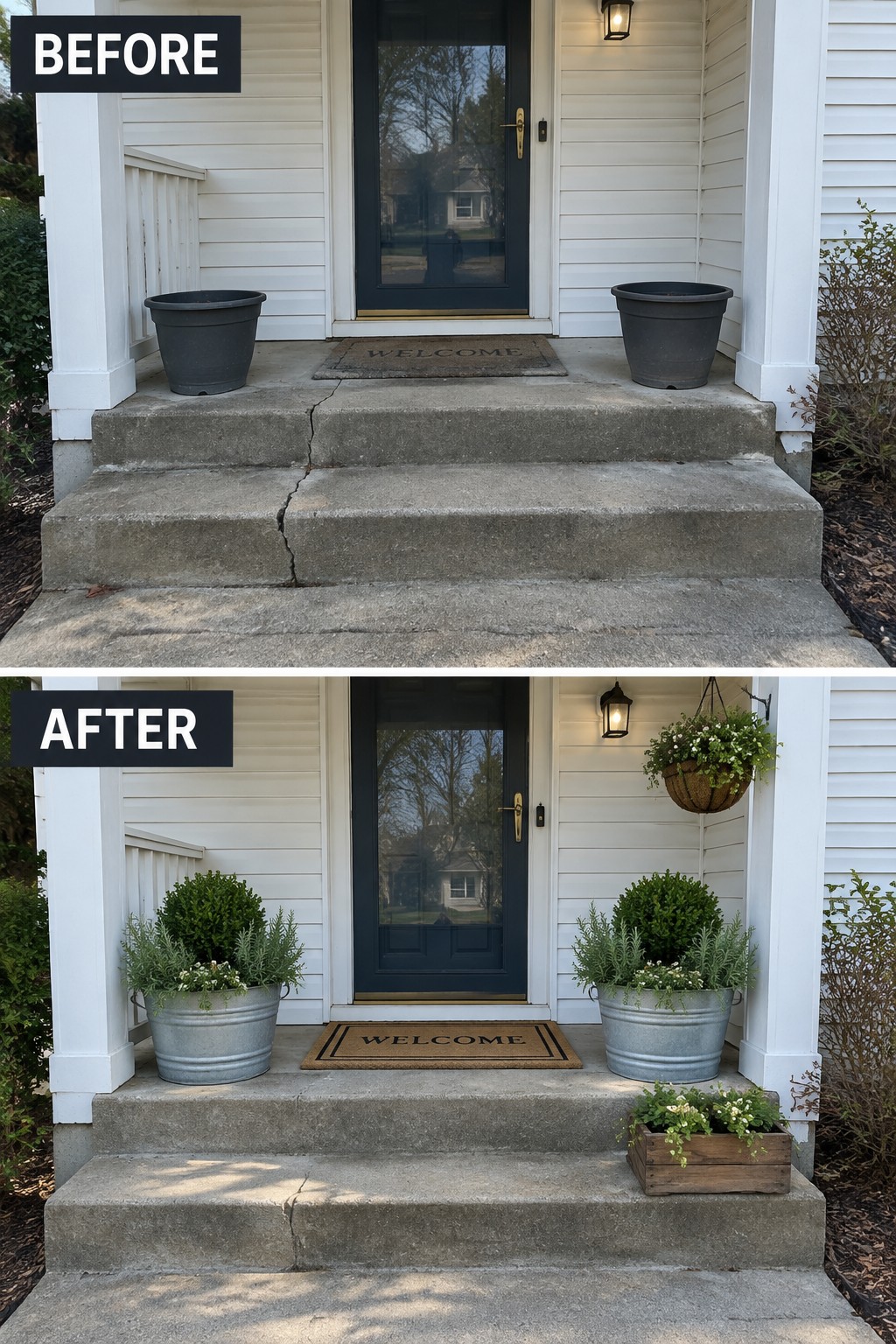
A bare entry often feels unfinished when the steps and landing sit empty. Here the change came from replacing two plain dark pots with several planted containers in different materials and sizes, plus one hanging basket near the door. The result gives the doorway a clearer purpose and makes the whole front look more cared for.
This approach suits houses with small porches or simple concrete steps. Choose a few weatherproof planters, fill them with hardy shrubs and flowers, and set the largest ones closest to the door. Keep the path clear and limit the total number so the space still feels open rather than crowded.
Turn A Bare Backyard Patch Into A Fire Pit Area
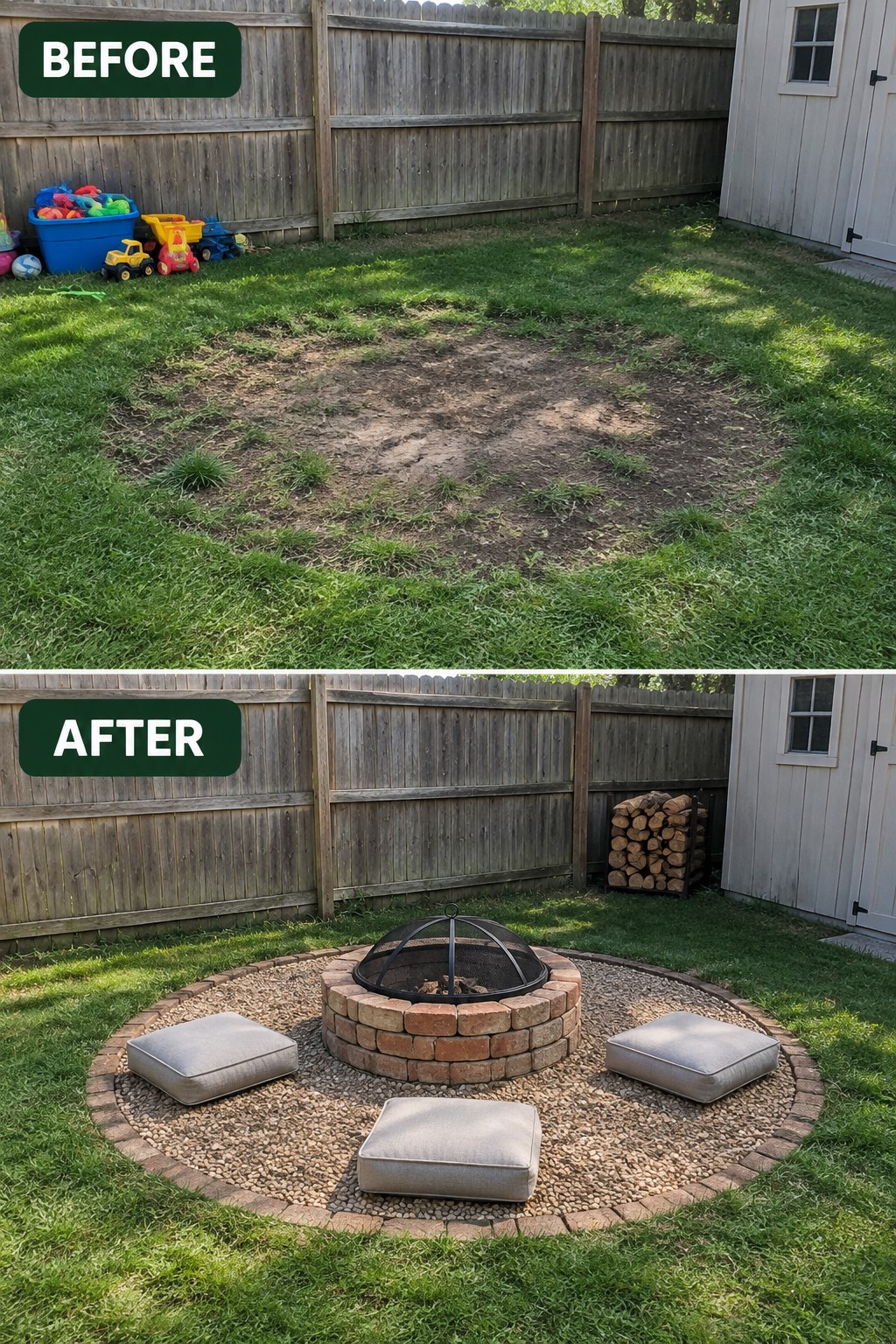
A simple way to make an empty backyard more usable is to carve out one clear spot for a fire pit. The patchy grass and dirt get replaced with a gravel circle edged in brick, which instantly defines the space and gives it a purpose without needing to redo the whole yard.
This approach works best when you want one main gathering spot rather than trying to fill everything at once. Keep the fire pit and base materials weatherproof, add just enough seating for a few people, and leave the surrounding lawn open so the area still feels practical for regular use.
Add Raised Planters To A Narrow Side Yard
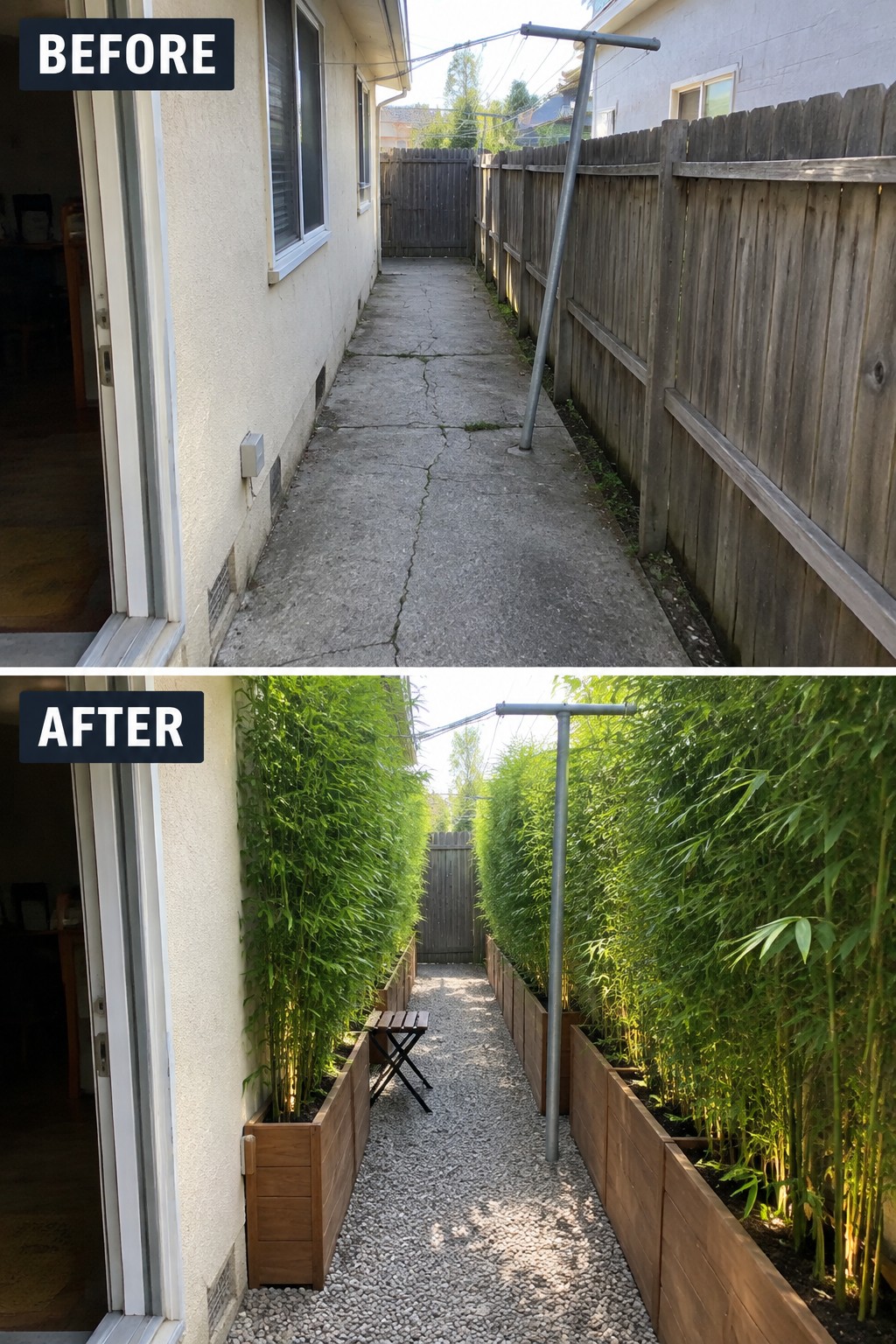
A long, cracked concrete path between the house and fence often feels like wasted space. Raising the planting into simple wooden boxes on both sides adds height, softens the walls, and turns the walkway into a green corridor without needing to dig up the existing surface.
This idea suits narrow side yards where in-ground beds would crowd the path. Gravel replaces the old concrete for better drainage and a cleaner look, while tall plants like bamboo give quick privacy. Keep the planters a consistent width so the walkway stays usable and the beds do not feel too heavy for the space.
Add Flower Boxes Along A Fence For Defined Planting
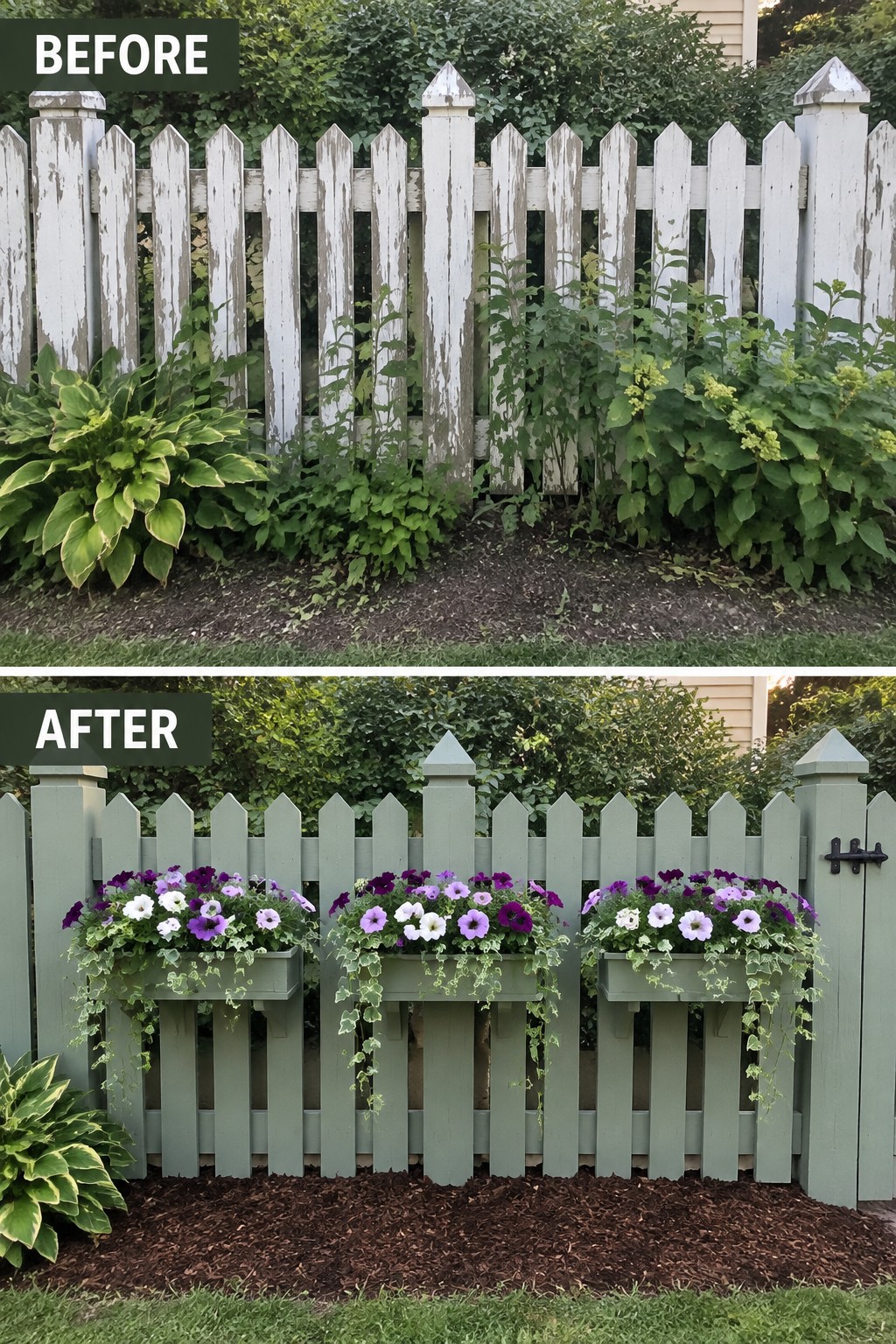
Mounting flower boxes directly on the fence turns a simple boundary into a planted feature. The before photo shows the fence line with plants growing loose at the base and no clear structure. In the after, three boxes sit at mid height, filled with flowers and trailing vines, which lifts the color and keeps the planting neat without widening the bed.
This works well along a side yard or front fence where ground space is limited. Use boxes made for outdoor use, secure them firmly to the posts or rails, and choose plants that handle sun and wind. Keep the number of boxes modest so the fence still reads as the main element rather than a row of containers.
Replace An Old Pond With A Simple Garden Focal Point
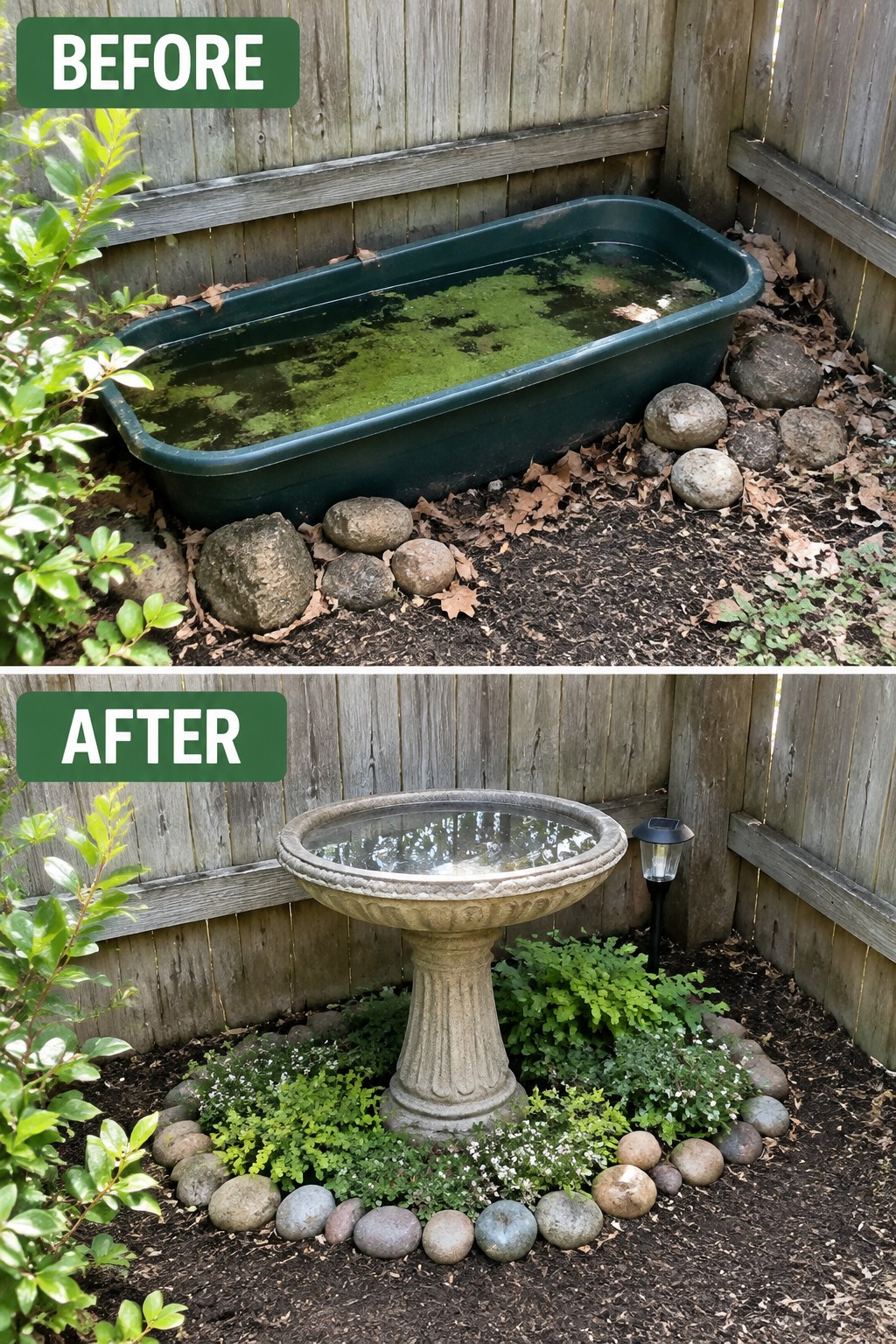
An old plastic pond often ends up looking worse than nothing at all once the water turns green. Removing it entirely and putting a birdbath in its place gives the corner a clear purpose and keeps the space from feeling forgotten.
Start by draining and hauling out the container, then level the ground and add a ring of rocks or low plants around the new piece. This approach works well in small side yards or back corners where a big water feature is more trouble than it is worth. Keep the planting simple so the birdbath stays the main point of interest.
Build Tiered Beds On A Steep Front Slope

A sloped front yard often looks flat and hard to manage when it is just grass. Tiered retaining walls fix that by turning the slope into a series of flat beds that hold soil in place and give plants room to grow. The change from a single open lawn to stacked beds with a gravel path makes the whole area feel planned instead of neglected.
This approach works best on houses where the lawn drops sharply toward the sidewalk. Keep the walls low enough to build in a weekend and choose a simple block that matches the brick on the house. Fill the beds with easy perennials and leave the gravel path clear so mowing stays simple on either side.
Add A Vertical Planter To Give A Small Yard Structure
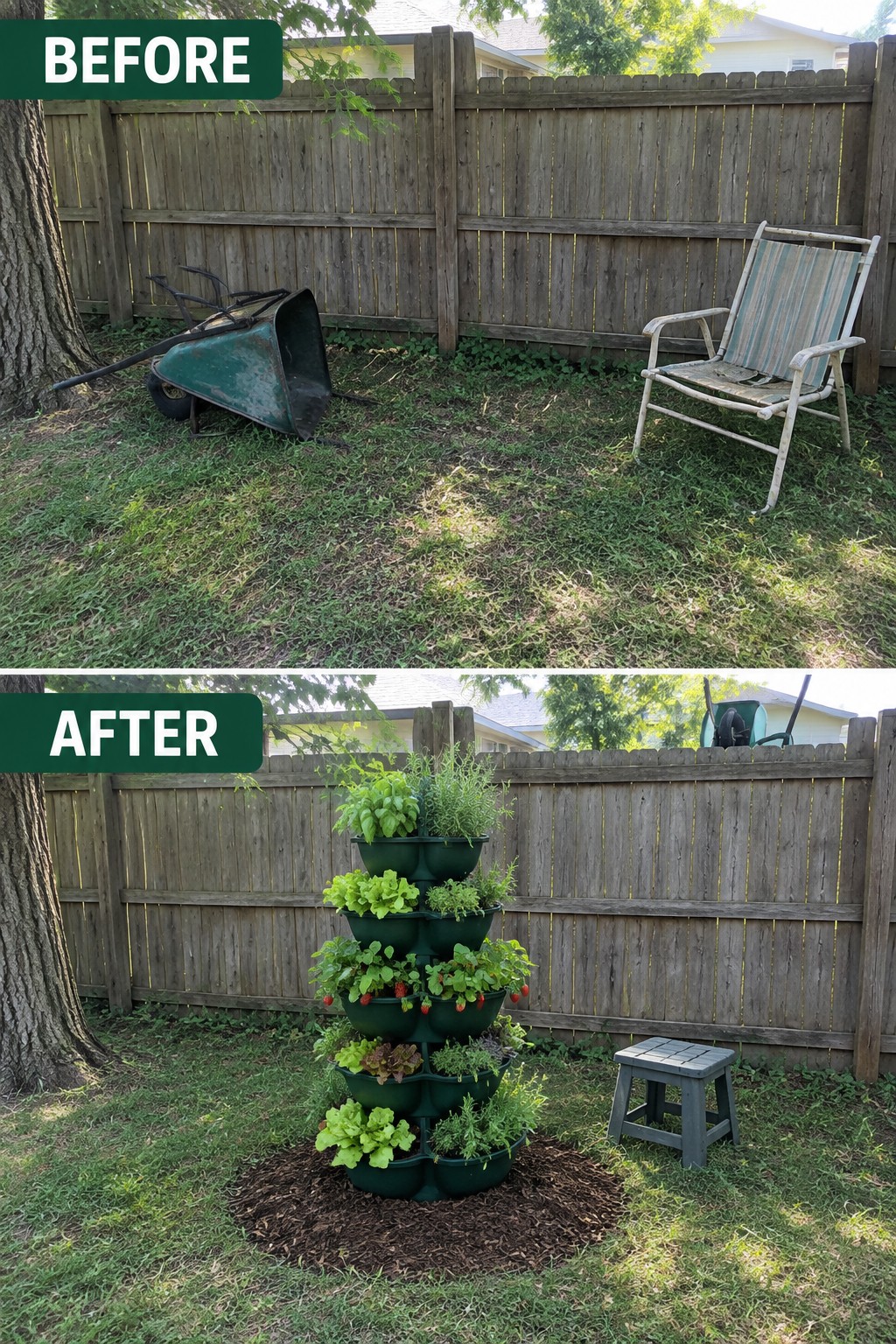
A vertical planter adds height and focus to a flat yard without needing wide beds or major digging. Here the space shifted from an open patch with random items scattered around to a simple planted tower set in fresh mulch, which gives the eye a clear place to land.
This idea suits small backyards where you want more growing room but still need to keep the ground open for walking or mowing. Choose a sturdy tower, place it where it gets good sun, and keep the base tidy so the plants stay the main feature.
Clean Up An Overgrown Border First

A narrow strip along the house often gets ignored until the shrubs grow wild and weeds fill in. Clearing the old growth completely lets you start fresh and lay out plants that actually fit the space without crowding the walkway or the foundation.
Choose a simple mix of low bulbs along the front edge and a few mid-size shrubs behind them. Mulch the whole bed once the plants are in so it stays looking tidy with less work later. This approach suits any home where the side bed is visible from the entry but too small for big features.
Use A Vertical Pallet Planter On A Bare Exterior Wall
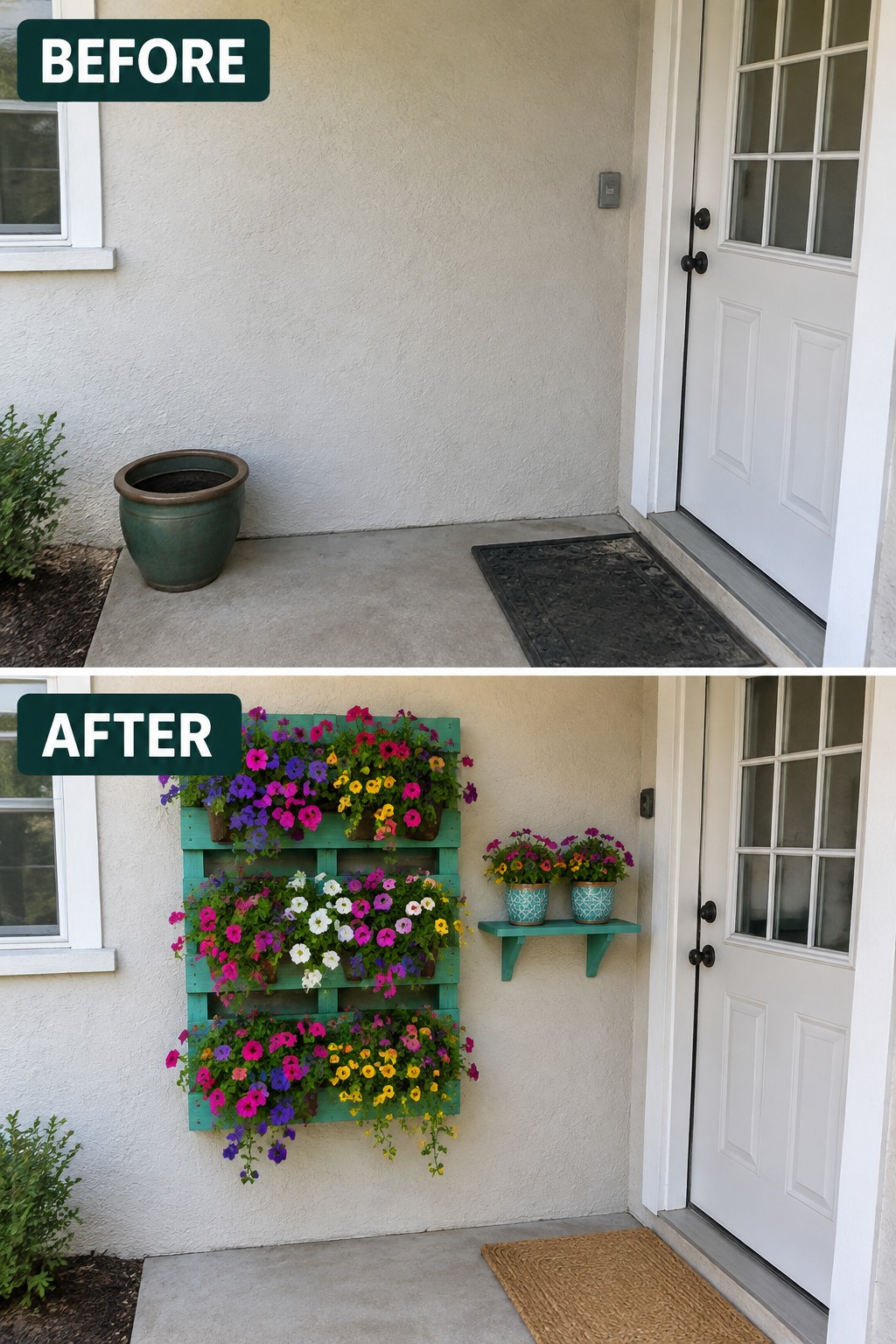
A blank wall beside the front door often looks unfinished on a small entry. Mounting a painted pallet planter loaded with colorful flowers gives that empty space purpose and brings height and color without crowding the floor.
This idea suits houses with simple stucco or siding where you want quick impact. Secure the pallet well for weather exposure, use lightweight soil, and pick plants that handle sun and wind. Leave the rest of the entry uncluttered so the planter draws the eye.
Turn A Messy Strip Into A Neat Raised Garden Bed

A narrow dirt area along the house often ends up looking neglected because there is no clear edge or structure. Building a low stone wall turns that loose strip into a proper raised bed. The gravel along the outside keeps the bed separate from the walkway and makes the whole side of the house feel finished instead of half-done.
This idea works well on any narrow space between the foundation and a path or driveway. Start by clearing the weeds and old edging, then set the stones level so the bed holds soil without shifting. Keep the planting simple at first so the new shape stays visible. The same approach can tidy up other thin beds around the yard without needing a full redesign.
Add Path Lighting To Give A Small Garden More Structure

The path here went from blending into long grass and looking forgotten to feeling like a clear route once lights were placed along both sides. That single addition turned an ordinary walkway into something that stands out at dusk without needing major planting changes.
This works best in compact yards where you want to create order before adding more features. Place the lights at even intervals along the main route first, then check if the edges need a trim to keep the light from getting lost in foliage. Solar versions keep it simple and let you test the layout before committing to anything permanent.
Use A Trellis To Cover A Plain Fence With Climbers

A weathered fence with weeds at the base can feel like wasted space. Adding a simple lattice panel and a few climbing plants turns that same fence into a living screen that adds height and color without needing extra room on the ground.
This approach works best along property lines or the back of a small yard where you want privacy and greenery at eye level. Secure the trellis to the fence, plant roses or clematis at the bottom, and finish the bed with mulch so the focus stays on the plants rather than bare soil. It keeps the project small and doable in a weekend.
Frequently Asked Questions
Q: Which of these weekend projects uses the fewest tools? A: Start with the raised bed from crates. You need a hammer and some screws at most. Stack and secure the crates then fill with soil.
Q: How can I keep the whole thing under fifty dollars? A: Hunt for free wood scraps from neighbors. Use seeds instead of big plants. That covers most of the list without much spending.
Q: What if my weekend gets cut short by bad weather? A: Prep everything indoors first. Finish the outdoor parts the next clear day.
Q: Which plants work best for these small builds? A: Go for easy growers like herbs or marigolds. They take little care once in the ground. Match them to how much sun your spot gets.
