

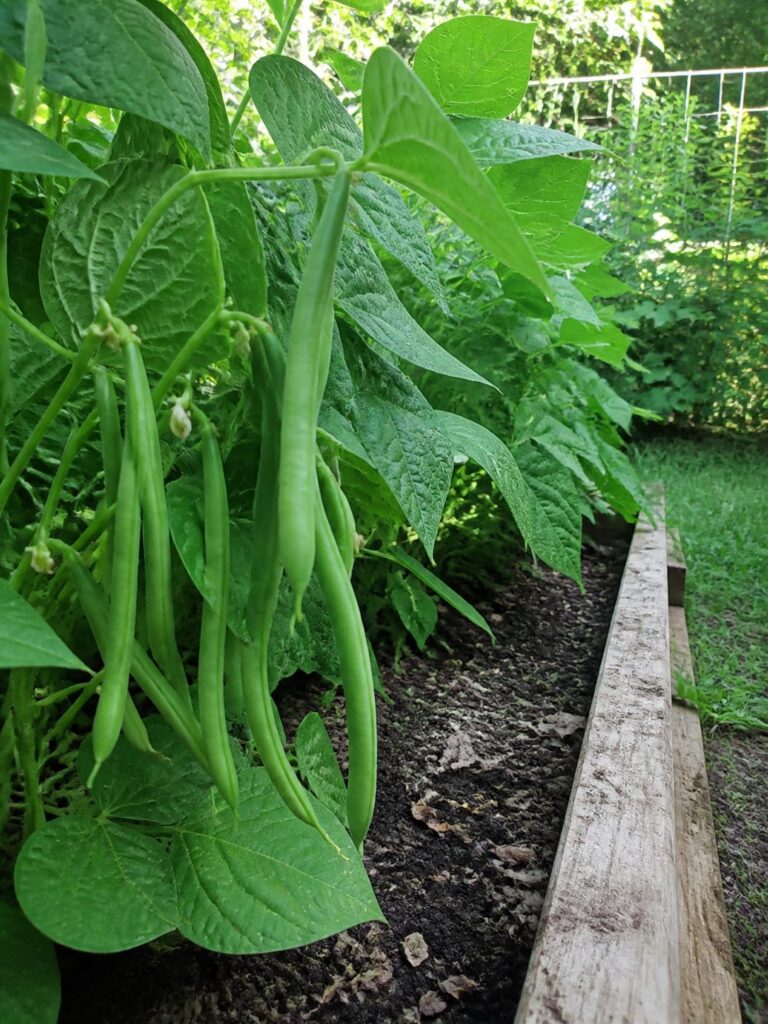
Green beans are among the most rewarding warm-season crops because they grow quickly, flower repeatedly, and can be harvested at several stages. The key decisions are choosing bush or pole habits, waiting for warm soil, and picking often enough to keep plants producing. This guide covers a practical season from seed to final cleanup.
Choose the right bean type
Bush beans stay compact and usually crop in a concentrated flush. Pole beans climb and produce over a longer window, but they need a sturdy support before sowing. Filet, snap, romano, and shelling beans differ in pod size and harvest stage, so read the variety description rather than relying on the word “green.”
| Need | Practical starting point | Why it matters |
|---|---|---|
| Sun | 6–8 hours of direct light | Supports flowering and sturdy stems. |
| Soil | Loose, fertile, well drained | Beans dislike waterlogged roots. |
| Seed depth | About 1 inch, following the packet | Warm soil helps quick emergence. |
| Moisture | Even during flowering and pod fill | Reduces aborted flowers and tough pods. |
Prepare and plant
Wait until soil is reliably warm and the danger of frost has passed. Work compost into the top several inches, remove weeds, and install pole-bean support before seeds emerge. Sow directly because bean roots dislike disturbance. Plant a short row first, then a second row 10–14 days later for a steadier harvest.
Space bush beans according to the packet, commonly a few inches apart in rows 18–24 inches apart. Pole beans need room at the base of their trellis and vertical clearance above it. Keep seed rows evenly moist until emergence, then water deeply when the surface begins to dry.
Care for productive plants
Mulch after the soil warms, leaving a small gap around stems. Beans make their own nitrogen with the help of root bacteria, so heavy nitrogen fertilizer can produce leaves at the expense of pods. Use a soil test when fertility is uncertain and avoid feeding by guesswork.
Guide pole vines onto support while they are young. Inspect leaves for chewing insects, beetles, and mildew, especially after humid weather. Remove badly damaged leaves and keep the bed weed-free without disturbing shallow roots.
Flowering and harvest
Beans need consistent moisture during flowering. Heat, drought, and poor pollinator activity can cause blossoms to drop before pods form. Read the flowering troubleshooting guide if that pattern persists. Harvest snap beans while pods are firm and before seeds bulge. Pick every day or two during peak production; hidden mature pods slow new flowers.
Common mistakes
- Sowing into cold, wet soil.
- Building pole support after vines are tangled.
- Overfeeding with high-nitrogen fertilizer.
- Letting plants swing from drought to saturation.
- Leaving oversized pods on the plant.
Build a repeatable bean routine
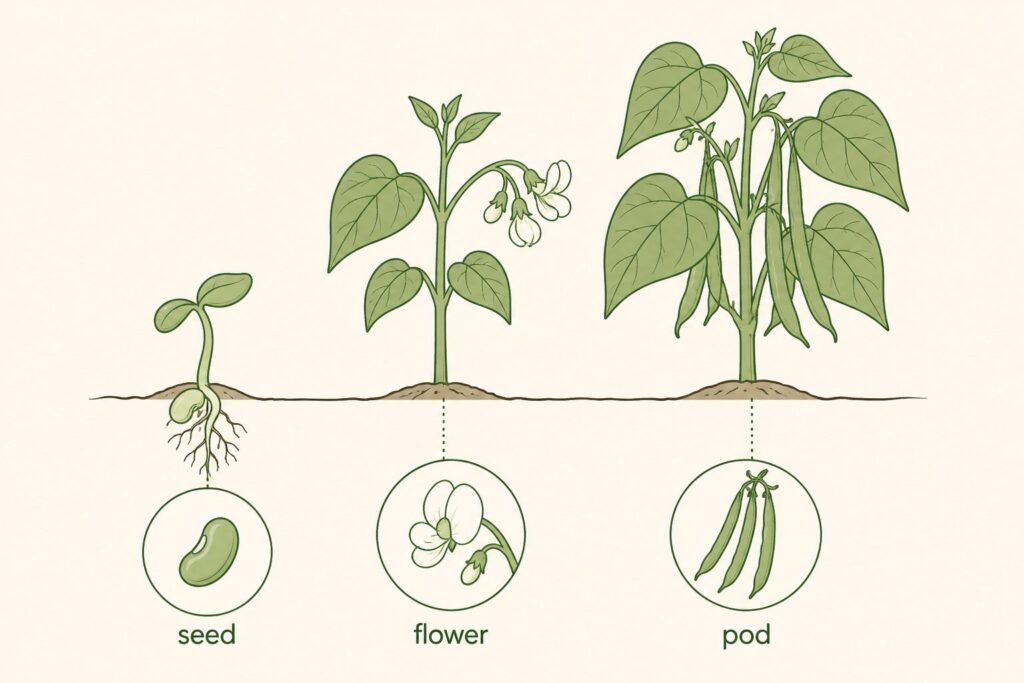
Check beans twice each week while plants are small, then every day or two once flowers and pods appear. Feel several inches down for moisture, inspect the newest leaves, and note the first flower and first harvest. Bush beans may crop in a concentrated flush; pole beans need support checks as vines gain weight. Mulch after soil warms, leaving a gap around stems, and avoid high-nitrogen feed that produces leaves without pods.
| Stage | Priority | Good sign |
|---|---|---|
| Emergence | Warm, even moisture | Uniform seedlings. |
| Vining | Support and airflow | Stems climb without constriction. |
| Flowering | Steady water | Flowers hold and pods swell. |
| Harvest | Frequent picking | New flowers continue. |
Rotate the next bean crop when practical, clear spent vines, and keep a note of which variety suited your space. Use the bush-versus-pole guide, watering guide, and harvest guide from the Green Beans hub.
Make the season easier to manage
Prepare support, labels, mulch, and a harvest container before sowing. Check seedlings for even emergence, then begin looking for flowers once vines are established. Bush rows can be succession-sown; pole rows need early guidance and a secure frame. During peak production, harvest every day or two and record which varieties stay tender longest.
At season’s end, remove spent vines, clean reusable supports, and note first flower, first pod, and final harvest. Those notes help more than a generic maturity number. Compare support in the trellis guide and return to the Green Beans hub.
Season checklist
Prepare support, labels, mulch, and a harvest container before sowing. Check seedlings for even emergence, then inspect flowers and pods every day or two. Bush beans can be succession-sown; pole beans need early guidance. Record first flower, first pod, and final harvest to improve next year’s plan.
Build the bed for a dependable crop
Green beans germinate and establish best after the soil has warmed and is workable rather than cold and saturated. Choose a site with full sun and loose, well-drained soil. Work in finished compost if organic matter is low, but do not assume beans need a heavy nitrogen program. Excess nitrogen can encourage abundant leafy growth without necessarily improving pod production. A soil test is the clearest guide when fertility is uncertain.
Direct-sow seeds at the depth on the packet, commonly around an inch, and water the row gently until emergence. Give bush beans enough space for airflow; install a pole-bean support before vines begin to search for it. Do not thin by pulling adjacent seedlings when spacing is close—snip extras at soil level so the remaining roots are not disturbed.
Manage the season by growth stage
| Stage | Priority | Common mistake |
|---|---|---|
| Germination | Warm soil and even moisture | Planting early into cold, wet ground. |
| Early growth | Weed gently and guide pole vines | Damaging shallow roots while cultivating. |
| Flowering and pod set | Keep moisture reasonably steady | Using high-nitrogen feed as a first response. |
| Harvest | Pick frequently at the intended stage | Leaving mature pods to slow new flowering. |
Adjust for the growing method
In containers, use a large vessel with drainage and check moisture more often because the root zone heats and dries faster. In a bed, mulch after seedlings are established to reduce splash and evaporation. A short succession of bush beans can extend harvest, while a single well-supported pole-bean planting can produce over a longer interval. Keep records of first sowing, first flower, and first pick so the next planting is based on your own weather pattern.
Practical growing decisions
A successful green bean crop begins after the soil has warmed. Beans are direct-sown warm-season plants; cold wet soil can slow germination and weaken seedlings. Choose full sun, loose well-drained soil, and a variety that fits your space. Bush types offer a compact harvest window, while pole types use vertical space and usually produce for longer.
- Wait for warm, workable soil and sow large seeds about 1 inch deep, following the packet where it differs.
- Give bush beans room for airflow; install pole-bean support before vines need it.
- Water deeply enough to reach roots, then adjust for soil, rain, heat, and plant stage.
- Scout flowers and leaves weekly instead of treating every yellow leaf the same way.
- Pick pods regularly at the intended eating stage.
Common mistakes and useful adjustments
Avoid planting into cold saturated soil, crowding plants for the sake of one more seed, or reacting to every symptom with fertilizer. Keep a simple record of the variety, sowing date, weather, watering changes, and harvest quality. That makes it easier to distinguish a seasonal setback from a site or method problem.
Before you change care
Inspect more than one plant, check soil below the surface, and consider the recent weather. Change the clearest limiting factor first, then give the crop time to respond. Beans are resilient, but they do not benefit from repeated root disturbance or rapid swings between drought and saturation.
Prevent the problems that slow a bean crop
Keep the seedbed free of competition while plants are small, but cultivate shallowly so you do not tear the roots. Watch for chewed leaves, distorted new growth, and spots that spread after wet weather. The appropriate response depends on what is actually present: hand removal and sanitation solve some problems, while better airflow, watering at soil level, or removing a seriously affected plant may solve others. Avoid spraying or fertilizing by habit.
Harvest is part of plant care. Pick snap beans before pods become thick and tough, and search beneath foliage for pods that are easy to miss. A steady picking routine encourages continued flowering. If the goal is seed saving, reserve a clearly labeled portion of the crop and allow only those pods to mature fully; do not accidentally leave all marketable pods to age on the plant.
Simple end-of-season review
Note the sowing date, first harvest, best week of production, pest issues, and whether bush or pole habit suited the space. That record helps choose a later succession date, a stronger support, or a different variety next year without changing several variables at once.
Use a realistic planting rhythm
Do not sow the entire seed packet at once unless a single concentrated harvest is the goal. A short follow-up sowing after the first plants are established can protect the season from poor emergence or a weather setback. Stop new sowings early enough that the crop has warm days to mature. This also frees a bed for a later cool-season crop instead of extending it beyond the useful window.
Frequently asked questions
Do beans need fertilizer?
They need balanced fertility, but usually not heavy nitrogen. Compost and a soil-guided feed are safer than repeated lawn fertilizer or manure.
Can beans grow in containers?
Yes. Choose a container with drainage and enough depth for roots, and use a stable trellis for pole types. Containers need more frequent moisture checks.
Use the Green Beans hub to choose the next crop decision.
