

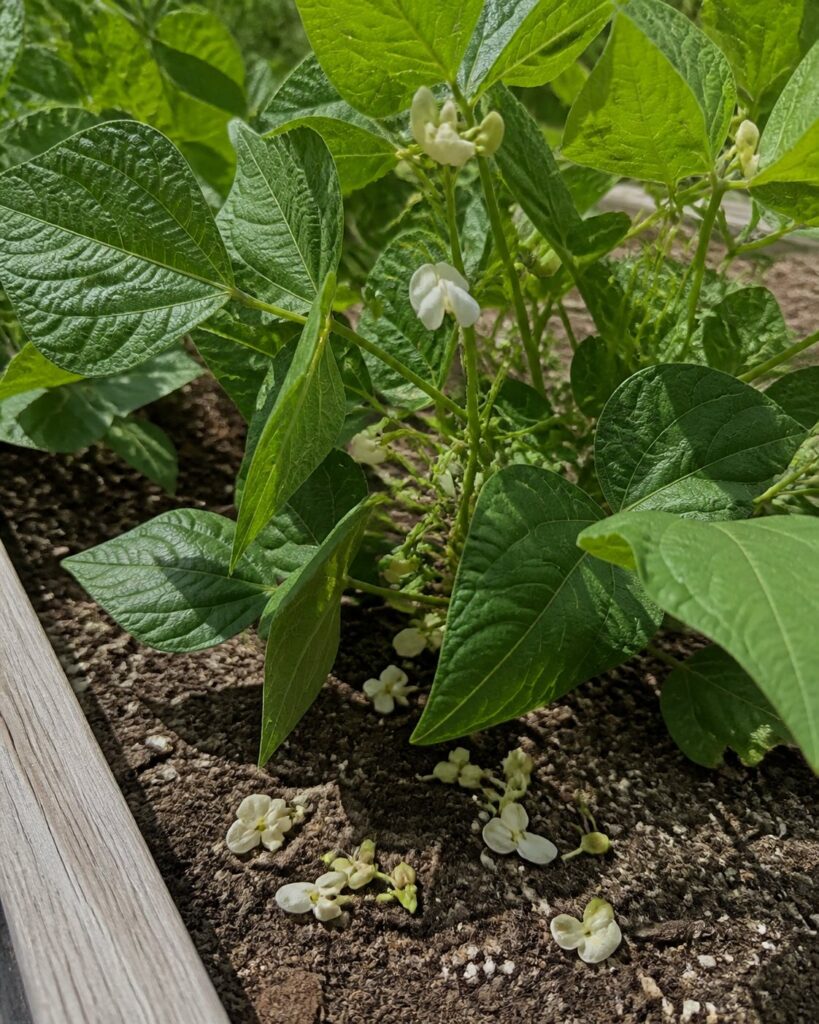
Green bean plants can flower beautifully and still produce few pods. A short delay is normal, especially when the first flowers are male or the plant is settling in. Persistent flower drop usually points to heat, drought, excess nitrogen, poor pollinator access, or another stress that interrupts fertilization.
| What you see | Likely pressure | First response |
|---|---|---|
| Flowers drop during a hot spell | Heat stress | Mulch, water deeply, and provide afternoon relief if practical. |
| Flowers wither after dry soil | Moisture swings | Stabilize root-zone moisture without waterlogging. |
| Lush leaves, few pods | Excess nitrogen or low light | Stop high-nitrogen feed and check sun. |
| Pods form but stay tiny | Plant stress or variety timing | Review water, temperature, and harvest frequency. |
Check the flowers and variety
Beans are self-fertile, and many varieties set without heavy insect activity, but heat can still interfere with flower retention. Read the seed packet for days to maturity and whether the variety is bush or pole. A young plant may simply need more time; compare several plants before deciding there is a crop-wide failure.
Stabilize water and roots
Water deeply when the surface begins to dry, then mulch after the soil warms. Containers and raised-bed edges may need daily checks in hot weather. Avoid alternating severe drought with a soaking that leaves soil saturated. Poor drainage damages roots and can look similar to underwatering because stressed plants stop holding flowers.
Light and fertility
Beans need strong light for reliable flowering. A trellis placed where it shades the row for much of the day can reduce production. Beans make their own nitrogen with root bacteria, so repeated high-nitrogen feeding may create leaves without pods. Use compost and a soil test rather than guesswork.
When to intervene
Remove badly diseased foliage, improve airflow, and inspect flowers and leaves for insects. Do not spray open flowers with broad-spectrum products. If a hot spell is brief, keep the plant healthy and wait for cooler nights. If every plant fails after weeks of good conditions, recheck seed age, variety, soil drainage, and planting date.
Support and harvest rhythm matter too. Read the trellis guide, the watering guide, and the harvest guide. The Green Beans hub links the complete crop plan.
Check the whole plant before changing feed
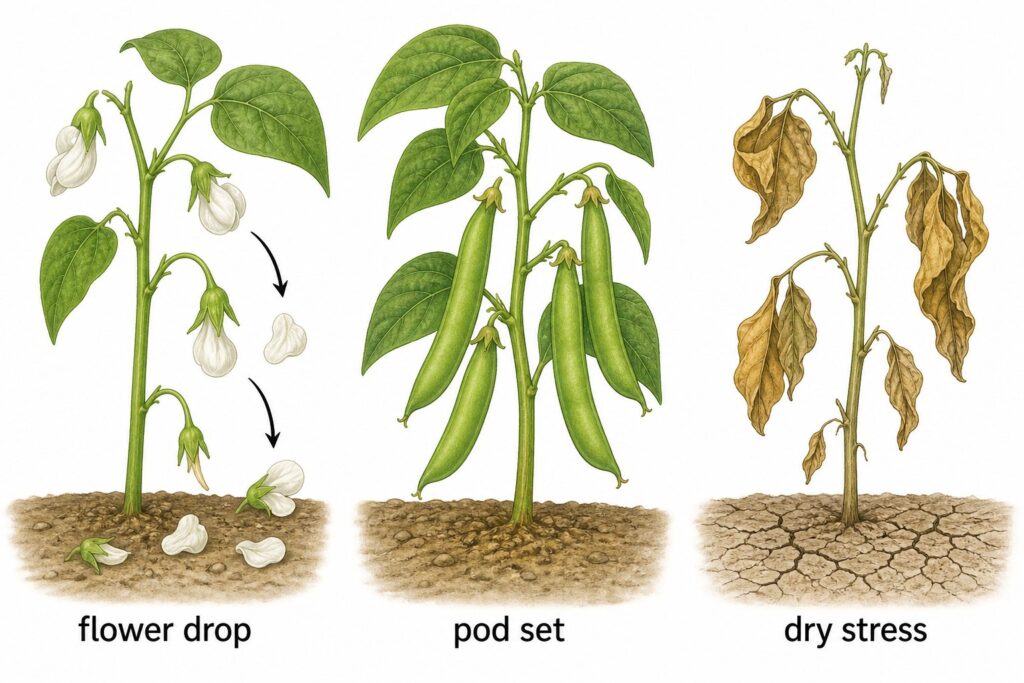
Compare several plants and note heat, dry soil, light, and variety. A young plant may simply need time, while widespread flower drop during a hot spell points to stress. Lush leaves with few pods can follow excess nitrogen or shade; repeated feeding rarely fixes either problem. Keep moisture steady, mulch after warming, and water at the soil line.
| Pattern | Likely pressure | First response |
|---|---|---|
| Flowers drop in heat | Temperature stress | Water deeply and provide relief. |
| Flowers wither after drought | Moisture swings | Stabilize the root zone. |
| Lush vines, few pods | High nitrogen or low light | Stop extra nitrogen and check sun. |
| Pods stay tiny | Stress or delayed picking | Review water and harvest often. |
Beans are generally self-fertile, so correct growing stress before trying to attract more insects. Use the watering guide, the harvest guide, and the Green Beans hub.
Give a short delay time
Beans may need several warm days after first flowering before pods are obvious. During that window, keep moisture stable and avoid disturbing flowers. If no pods appear across multiple plants after good conditions, compare light, heat, variety, and nitrogen. Use the watering guide and return to the Green Beans hub.
Read the pattern
One dropped blossom is not a diagnosis. Compare several plants over a week and note heat, morning moisture, light, and whether pods form elsewhere. Beans are usually self-fertile, so correct root stress and high nitrogen before trying special pollination products.
Read the pattern over several days
One dropped blossom is not a diagnosis. Compare several plants for a week and note heat, morning soil moisture, light, and whether pods form elsewhere. If flowers drop only during a heat wave, stabilize water and provide temporary relief. If vines are lush with few flowers, stop extra nitrogen and check sun exposure.
Beans are usually self-fertile, so correcting root stress is more useful than adding a special pollination product. Follow the watering guide before changing feed.
Use a short diagnostic sequence before changing care
Bean flowers are normally self-pollinating, so a lack of pods is not automatically a shortage of bees. First identify the variety and look at the plant over several days. Some flowers naturally drop, especially after a sudden heat spell, cold night, drought, waterlogging, or transplant-like root disturbance. A plant that is still actively growing may simply need a stable interval before small pods become visible.
| What you see | Likely direction | First response |
|---|---|---|
| Flowers drop after weather swing | Short-term stress | Keep soil moisture even and wait for new flowers. |
| Very leafy plants, few pods | Excess nitrogen or too much shade | Stop adding nitrogen and check sun exposure. |
| Flowers and distorted growth | Pest or disease pressure | Inspect leaves, stems, and growing points closely. |
| Healthy new flowers appear | Normal recovery | Continue regular care rather than making several changes. |
Stabilize the root zone
Water deeply enough to wet the active root zone, then let the soil surface begin to dry rather than keeping it constantly saturated. Mulch can reduce rapid moisture swings, but keep it a little away from stems. Avoid suddenly switching from drought to repeated shallow watering, and do not add high-nitrogen fertilizer to a stressed plant in hope of forcing pod set.
Check light, spacing, and harvest rhythm
Beans need substantial direct light and room for airflow. Crowding can leave flowers shaded and makes it harder to notice pests. Once pods begin, pick them regularly at the intended stage; leaving large mature pods signals the plant to direct energy toward seed maturation. Change one likely cause at a time and observe the next flush of flowers, rather than treating every dropped flower as a separate problem.
Practical growing decisions
Flowers without pods are a signal to review conditions, not proof that a single nutrient is missing. Beans are generally self-pollinating, but heat, drought, saturated soil, poor root establishment, and excess nitrogen can reduce pod set or cause flowers to drop. Check the entire planting: a problem across the bed often points to weather or watering, while one patch may reveal shade, compaction, or drainage.
- Check soil moisture several inches down before changing irrigation.
- Review recent heat waves, cold nights, and wind during flowering.
- Stop adding high-nitrogen fertilizer if foliage is already lush.
- Inspect for insect or disease damage, especially on new growth.
- Give plants time after a short weather event before assuming the crop has failed.
Common mistakes and useful adjustments
Avoid planting into cold saturated soil, crowding plants for the sake of one more seed, or reacting to every symptom with fertilizer. Keep a simple record of the variety, sowing date, weather, watering changes, and harvest quality. That makes it easier to distinguish a seasonal setback from a site or method problem.
Before you change care
Inspect more than one plant, check soil below the surface, and consider the recent weather. Change the clearest limiting factor first, then give the crop time to respond. Beans are resilient, but they do not benefit from repeated root disturbance or rapid swings between drought and saturation.
Avoid common overcorrections
Do not assume every flower needs hand pollination. Beans generally set pods without that intervention, and repeated handling can damage delicate flowers. Likewise, do not respond to a brief flower drop by applying several fertilizers, changing watering schedules daily, and spraying at once. Multiple changes make it difficult to tell what the plant needed.
Instead, check soil moisture, recent weather, light exposure, and nitrogen inputs. If plants are growing in shade or have been heavily fed, correct the controllable cause and allow time for a new flush. If leaves show stippling, chewing, curling, or sticky residue, identify pests before choosing a control. Remove only severely affected plants when they are an ongoing source of problems.
Make the next crop more predictable
Warm soil at sowing, adequate spacing, a steady watering pattern, and harvest before pods overmature are the dependable foundations. Record the first flower and first pod. If pod set repeatedly fails at the same time of year, shift the sowing window or try a variety better suited to the local warm season rather than expecting a midseason amendment to solve weather.
Consider variety and season together
Varieties differ in how quickly they begin flowering and how they handle a long hot season. Read the seed description for growth habit and maturity, but use it as a comparison rather than a guarantee. If flowers consistently drop during a recurring hot spell, a slightly earlier sowing, a later sowing for a fall crop, or a different variety may be more effective than trying to force a stressed planting through the worst weather.
Give new flowers several days to reveal tiny pods before deciding pod set has failed. Then assess the pattern across the whole plant. A few lost flowers are normal; widespread loss combined with poor growth is the signal to review roots, moisture, light, pests, and nutrition.
Frequently asked questions
Do beans need bees to make pods?
Most beans are self-fertile and can set with limited insect activity, but weather and plant stress can still cause flowers to drop. Good moisture and moderate temperatures are usually more important fixes.
Should I add phosphorus for flowers?
Only if a soil test shows a deficiency. Extra phosphorus rarely solves heat, drought, shade, or root problems and can build up in soil.
