

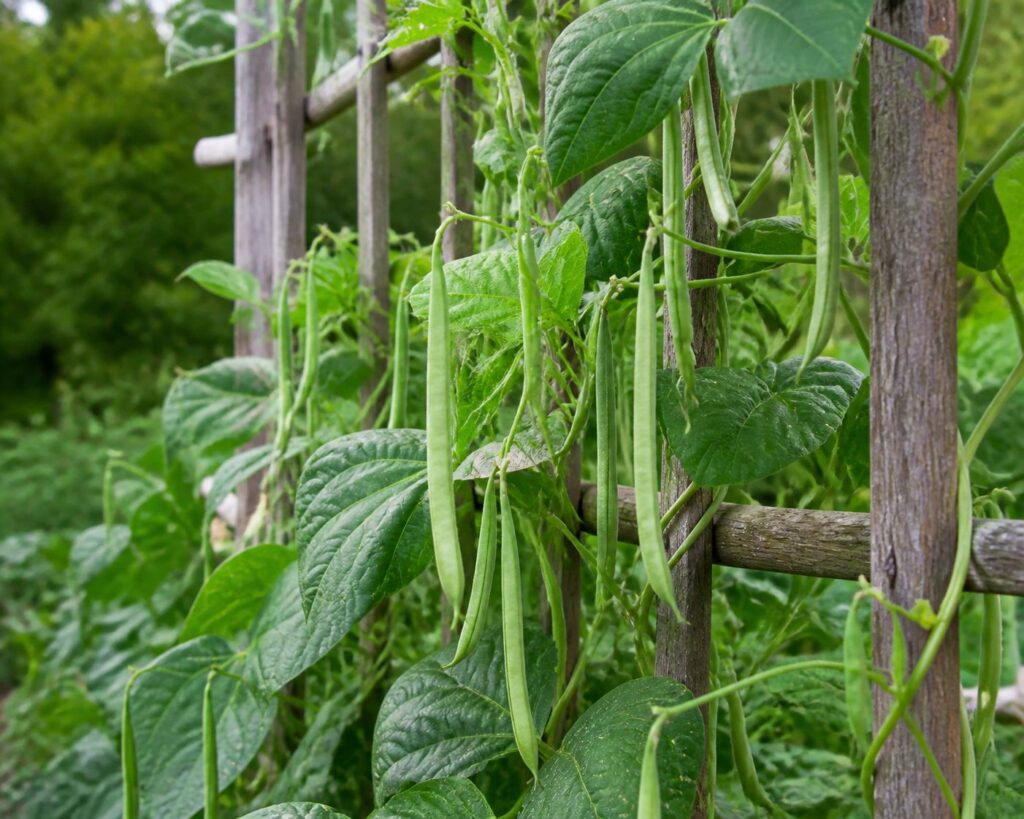
Pole beans are vigorous climbers, but they cannot build a safe trellis after vines are already tangled. Install support before sowing, anchor it firmly, and choose a surface that tendrils can grip. Good support keeps foliage and pods off the ground, improves airflow, and makes harvesting easier.
Choose a structure
| Structure | Best use | Important detail |
|---|---|---|
| A-frame | Two rows in a narrow bed | Brace both feet and add a ridge support. |
| Vertical netting | Single row beside a fence | Anchor the top and bottom so mesh stays taut. |
| Tripod or teepee | Containers and small groups | Use a wide base to resist wind. |
| Fence panel | Permanent bed edge | Check wire spacing and sharp edges. |
Size and anchoring
Most pole beans can reach 6–10 feet, so build support tall enough for the variety but low enough to harvest safely. Push posts 12–18 inches into firm soil or use ground anchors. A tall frame catches wind; add cross-braces and inspect it after storms. Keep the bottom of mesh a few inches above mulch so stems are not buried.
Train young vines
When tendrils appear, point the stem toward the nearest support and wrap it gently. Once the vine has grip, it usually climbs on its own. Check twice a week during rapid growth and use soft ties only where a stem keeps slipping. Never pull a mature vine through tight mesh; guide the new tip instead.
Keep the trellis productive
Do not remove healthy leaves simply to make the structure look tidy. Thin only damaged or badly crowded growth, keep the base weed-free, and harvest from both sides of an A-frame. If vines reach the top, let them drape or pinch only according to the variety’s habit. A dense canopy can hide pods, so regular picking is part of trellis maintenance.
For plant spacing and watering, see the complete bean guide and the watering guide. If flowers appear without pods, read the pollination troubleshooting guide. Return to the Green Beans hub for the full resource set.
Safety and end-of-season care
- Cap sharp wire ends and keep paths clear.
- Do not climb a bean trellis to reach the top.
- Replace split twine before vines become heavy.
- Remove spent vines after production ends and clean reusable netting.
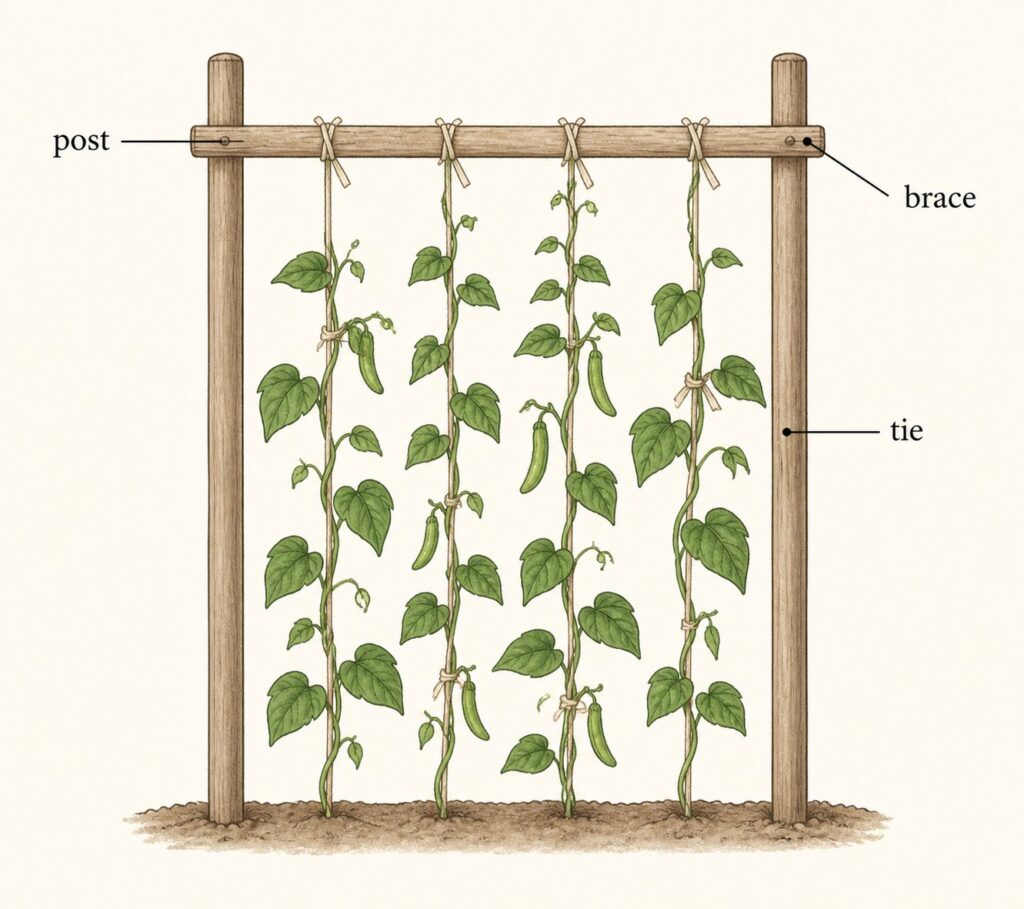
Inspect support as vines grow
A loaded pole-bean trellis catches wind, so push posts 12–18 inches into firm soil or use ground anchors. Add a ridge support or cross-brace to an A-frame and keep sharp wire ends capped. Choose mesh, string, or rough narrow poles that tendrils can grip. A tall structure is useful only if you can harvest from the ground safely.
Guide young vines toward support when tendrils appear, then use soft ties only where stems slip. Check twice each week during rapid growth. Do not pull mature vines through tight mesh. If a tip reaches the top, let it drape or redirect it gently according to the variety’s habit. Harvest hidden pods from both sides so mature beans do not slow new flowers.
Pair this guide with the bush-versus-pole comparison, the watering guide, and the Green Beans hub.
Check the structure after weather
Rain and wind add weight to a trellis quickly. Push loose posts back into firm soil, replace split twine, and keep paths clear. Harvest from both sides so hidden pods do not mature unnoticed. Clean and dry reusable netting after the vines are removed. Pair this routine with the variety comparison and the Green Beans hub.
Storm check
Rain and wind add weight quickly. Tighten loose twine, re-anchor posts, cap sharp wire, and keep paths clear. Guide new growth instead of tugging mature stems. At season’s end, remove vines before they tangle with permanent structures and dry reusable netting.
Inspect support after weather
Rain and wind add weight to a trellis quickly. Tighten loose twine, re-anchor posts, cap sharp wire, and keep paths clear. Guide new growth instead of tugging mature stems. Harvest from both sides so hidden pods do not mature unnoticed. A trellis should make the crop easier to manage, not create a ladder.
At season’s end, remove vines before they tangle with permanent structures and dry reusable netting. Compare the structure with the bush-versus-pole guide.
Choose a trellis that matches the crop and site
A pole-bean trellis needs to be tall enough for the variety, stable in wind, and easy to pick from both sides. Set posts, a cattle-panel arch, or a firm frame before sowing so roots are not disturbed later. Many pole beans climb six feet or more, so a short decorative support can turn into a tangled, shaded mass before harvest begins. Use materials that will not sag under wet vines and pods.
| Support type | Best use | Watch for |
|---|---|---|
| Stout poles with twine | Small beds and simple teepees | Anchor the poles deeply and keep twine taut. |
| Netting on a frame | Long rows | Use a strong frame; netting alone will stretch. |
| Cattle-panel arch | Paths and raised beds | Place it where the shade will not cover shorter crops. |
Train without forcing the vines
When stems are long enough to reach the support, gently wind them in their natural climbing direction and tuck loose growth through the support. Check every few days while plants are young. Do not tie stems tightly: bean stems thicken and a tight tie can pinch them. Once vines are established, guide only the growth that is wandering into paths or neighboring crops.
Keep the trellis usable through harvest
Leave enough access to see flowers and pick pods without pulling vines apart. Water at soil level, especially where a dense wall of foliage makes overhead watering slow to dry. After strong wind or heavy rain, inspect ties, posts, and the base of the frame before damage becomes a collapse. At season’s end, remove vines and wash or dry reusable supports before storing them; this also makes it easier to spot wear before the next crop.
Practical growing decisions
A pole-bean trellis must support mature vines, repeated harvests, and wind—not just young seedlings. Put support in place before planting or immediately after sowing so roots are not disturbed later. Choose a structure that suits the bed: a panel, A-frame, sturdy netting, or poles with strong twine. The important details are secure anchoring, access on both sides, and enough spacing for airflow.
- Set posts or a panel deeply and test for movement before vines climb.
- Keep the base of the support reachable for weeding and watering.
- Guide young vines gently; do not force stiff stems around twine.
- Inspect ties, netting, and anchors after storms.
- Remove and compost healthy vines at season end; clean reusable support.
Common mistakes and useful adjustments
Avoid planting into cold saturated soil, crowding plants for the sake of one more seed, or reacting to every symptom with fertilizer. Keep a simple record of the variety, sowing date, weather, watering changes, and harvest quality. That makes it easier to distinguish a seasonal setback from a site or method problem.
Before you change care
Inspect more than one plant, check soil below the surface, and consider the recent weather. Change the clearest limiting factor first, then give the crop time to respond. Beans are resilient, but they do not benefit from repeated root disturbance or rapid swings between drought and saturation.
Build for wind, weight, and access
Place posts firmly before planting and test the frame by pulling gently from several directions. Vines become surprisingly heavy after rain, especially when pods are forming. If using twine, attach it to a stable top bar and use a material that will not cut stems. If using a panel or net, secure both the top and bottom so wind cannot whip young vines loose.
Leave a path wide enough to stand and pick without leaning on the structure. A support that cannot be reached from both sides may hide ripe pods until they become overmature. Keep climbing plants from overtaking neighboring low crops, and remove broken or diseased leaves as you notice them rather than stripping healthy foliage for appearance.
Seasonal maintenance checklist
- Check anchors after storms and tighten sagging lines.
- Guide young stems gently; never force a stiff vine.
- Pick regularly so pods do not weigh down the frame.
- Remove vines after frost and examine wood, wire, and fasteners before reuse.
A simple durable trellis is usually more useful than an elaborate one. The key is that the support remains upright until the last harvest.
Place the trellis with the rest of the garden in mind
A tall bean wall changes light and air movement. Keep it away from crops that need full sun at the same time, and leave enough clearance that you can weed and pick without brushing through wet foliage. In raised beds, fasten a frame to a stable outside edge or set posts outside the root zone. A trellis installed before sowing is easier on roots and makes the plant layout clear from the start.
When vines reach the top, let them cascade only if they will not shade another crop. Do not cut growing tips simply because they have reached the top unless space requires it; reducing healthy leaf area can reduce the plant’s ability to keep producing.
Frequently asked questions
Will beans climb a smooth pole?
Tendrils grip rough mesh, string, or narrow textured supports better than a smooth, wide pole. Add netting or twine if the vine cannot hold.
Can I move a trellis after planting?
Small seedlings can tolerate a careful adjustment, but moving a loaded trellis risks root and stem damage. Install support first whenever possible.
