

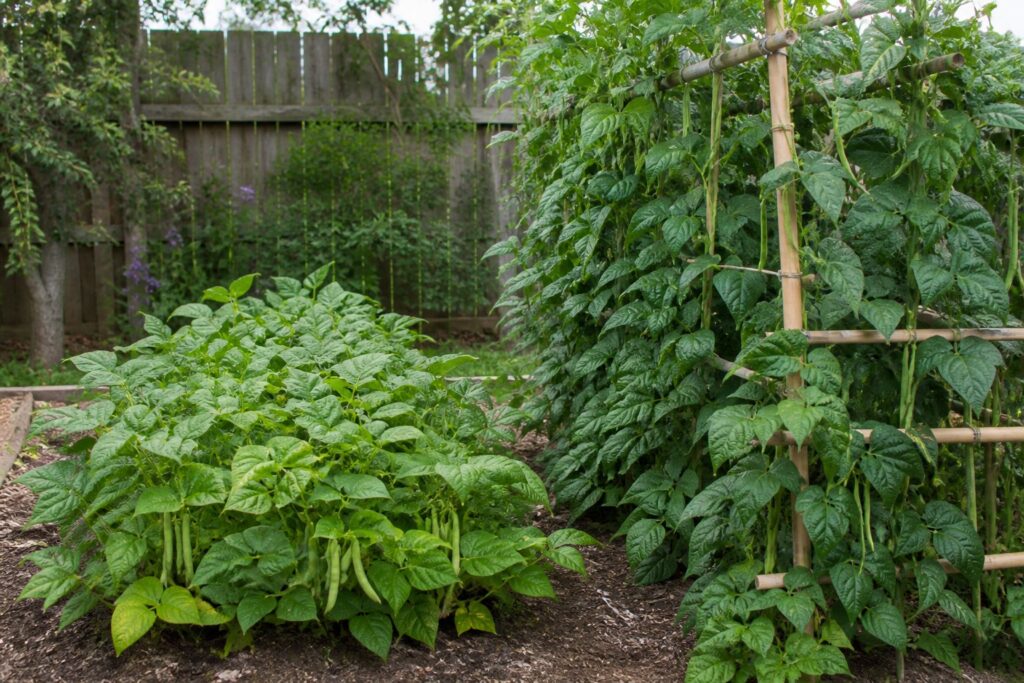
Bush and pole beans are both productive, but they fit different gardens and harvest rhythms. Bush beans make a compact plant and often crop heavily over a few weeks. Pole beans climb, use vertical space, and can produce for much longer when picked regularly. The best choice depends on bed width, support, season length, and how often you can harvest.
| Feature | Bush beans | Pole beans |
|---|---|---|
| Growth habit | Compact, usually 1–2 feet tall | Climbing vines, often 6–10 feet |
| Support | Optional short cage | Sturdy trellis required |
| Harvest pattern | Concentrated flush | Longer, repeated harvest |
| Best fit | Small rows and containers | Vertical beds and long seasons |
When bush beans make sense
Bush beans are useful when you want a quick crop, have limited vertical clearance, or plan several succession sowings. Sow a short row every 10–14 days while weather remains warm. The plants are easy to cover with insect mesh and simple to reach, but their concentrated crop can overwhelm a kitchen if every row matures together.
When pole beans make sense
Pole beans earn their space by producing from a small footprint for a longer window. Place the trellis where it will not shade shorter crops, and build it before sowing. A 6–10 foot structure is common, but choose a height you can harvest safely. Pole vines need regular guiding at first and frequent picking once pods begin.
Compare the workload
Bush beans need less training and can be pulled after a main flush, making cleanup simple. Pole beans require a stronger frame and occasional tie or guide work, but harvesting is often easier on the back because pods hang above the soil. Both types benefit from mulch, steady moisture, and prompt picking.
Plan a mixed planting
Gardeners with room can combine both. Use bush beans for an early, concentrated harvest and pole beans for a later steady supply. Stagger sowing dates rather than planting every variety on one day. Keep notes on first flower, first pod, and peak harvest so next season’s mix reflects your actual climate.
For support details, read the pole-bean trellis guide. For moisture and flower problems, use the watering guide and the no-beans troubleshooting guide. The Green Beans hub keeps the comparison with the rest of the crop plan.
Container and bed decisions
A deep container can support bush beans, while pole beans need a container heavy enough that a tall trellis will not tip. Raised beds warm early and drain well, but they dry faster near the edges. In-ground rows hold moisture longer and make long trellises easier to anchor. Match variety and support to the site you actually have.

Match the type to your schedule
Bush beans are useful for short rows, containers, and several succession sowings. They often produce a large flush, so stagger plantings 10–14 days apart if you want a steadier supply. Pole beans use vertical space and may crop for weeks longer, but they need a trellis installed before sowing and regular picking once pods begin.
| Decision | Choose bush when… | Choose pole when… |
|---|---|---|
| Space | You have a low, wide bed. | You can build upward. |
| Labor | You want little training. | You can guide vines early. |
| Harvest | A concentrated flush works. | A long picking window helps. |
| Container | A stable pot is available. | The pot can anchor a trellis. |
Raised beds warm quickly but dry along edges; in-ground rows hold moisture longer. Choose a variety that fits the actual site, not an imagined garden. Compare support in the trellis guide and return to the Green Beans hub.
Use a side-by-side trial
If you have room, sow a short bush row and one pole variety on the same date. Compare days to first flower, support work, harvest volume, and how quickly pods become oversized. This small trial reveals which habit fits your schedule and climate better than a general claim that one type is more productive. Record the result for next season and use the Green Beans hub.
Try a small comparison
If uncertain, sow a short bush row and one pole variety on the same date. Compare germination, first flower, support work, harvest weeks, and pod quality. This local trial reveals which habit fits your space and schedule better than a generic promise about yield.
Run a small comparison
If you are unsure which habit fits, sow one short bush row and one pole variety on the same date. Compare germination, first flower, trellis work, harvest weeks, and how quickly pods become oversized. A local trial reveals more than a generic yield claim.
Remember that site changes the result: raised beds warm early, containers dry quickly, and a tall trellis can shade neighboring crops. Record the result and use the Green Beans hub to choose the next planting.
Compare the two types before buying seed
The choice is mostly about space, timing, and the way you want to harvest. Bush beans stay compact and usually bring much of their crop in over a shorter period. Pole beans climb and can provide repeated harvests once established, but their support needs to be in place before planting. Neither is automatically better; a small garden often benefits from one of each.
| Question | Bush beans | Pole beans |
|---|---|---|
| Support needed | No trellis for most varieties | Strong trellis, net, or poles needed |
| Space pattern | Uses horizontal bed space | Uses vertical space but still needs root-room |
| Harvest pattern | Concentrated, useful for preserving | Extended, useful for frequent fresh picking |
| Season planning | Easy to sow in small successions | Slower start, then a longer picking period |
Match the type to your routine
Choose bush beans if you want a compact patch, a predictable flush for freezing or canning, or no permanent support. Sow a new short row every two to three weeks while warm weather remains if you want to spread that harvest. Choose pole beans if a fence, arch, or sturdy trellis can be placed where it will not shade smaller crops and you can pick every few days.
Containers change the trade-off. Bush beans work well in broad containers because they do not need a tall frame. Pole beans can work in a large container, but the trellis must be anchored to the container or structure rather than relying on light stakes. Avoid crowding either type: congestion reduces airflow and makes harvest harder.
Use a small trial to decide
If the choice is unclear, grow a short bush-bean row and two or three pole-bean plants in the same season. Record the first harvest, total weeks of picking, effort required, and whether the family used the crop. That practical comparison is more useful than judging only the seed catalog description.
Practical growing decisions
Bush and pole beans solve different garden problems. Bush beans are compact, do not require a tall trellis, and tend to produce much of their crop over a shorter period. Pole beans need secure vertical support and a longer season, but they make repeated picking easier and can yield over a longer interval. The right choice depends on space, harvest rhythm, and season length—not on one type being universally better.
| If you need… | Usually choose | Check first |
|---|---|---|
| Compact beds and a concentrated harvest | Bush beans | Room for succession sowings if you want a longer season. |
| Vertical use of a small garden | Pole beans | A trellis strong enough for mature vines and wind. |
| Short growing season | Fast bush variety | Days to maturity and soil warmth. |
Common mistakes and useful adjustments
Avoid planting into cold saturated soil, crowding plants for the sake of one more seed, or reacting to every symptom with fertilizer. Keep a simple record of the variety, sowing date, weather, watering changes, and harvest quality. That makes it easier to distinguish a seasonal setback from a site or method problem.
Before you change care
Inspect more than one plant, check soil below the surface, and consider the recent weather. Change the clearest limiting factor first, then give the crop time to respond. Beans are resilient, but they do not benefit from repeated root disturbance or rapid swings between drought and saturation.
Plan spacing and support as one decision
For bush beans, use the packet spacing as the starting point and keep rows wide enough to harvest without stepping on the bed. Compact plants still need light and airflow. For pole beans, position the support first, then plant on the side where vines can be reached and picked. A trellis near a north edge of a northern-hemisphere bed often reduces shade on shorter crops; reverse that logic where the sun path differs.
Consider how the crop will be used. A family that wants one weekend of freezing may prefer a block of bush beans. A household that cooks beans several times a week may value the longer production of pole beans. A mixed plan can be especially practical: a short bush sowing for a concentrated early crop and a small trellised planting for later repeated picking.
Do not judge only by total yield
Support cost, picking height, disease pressure, and the ability to replant the space also matter. Pole beans can keep a bed occupied longer; bush beans clear sooner for a follow-on crop. The best choice is the one that fits the garden calendar as well as the plate.
Frequently asked questions
Which type produces more beans?
Total harvest depends on variety, season length, and picking frequency. Pole beans often crop longer; bush beans can produce a large flush in less space and time.
Can I save seed from either type?
You can save seed from open-pollinated varieties if plants are isolated from unwanted crosses and pods mature fully. Do not expect saved seed from a hybrid to repeat the same traits.
