

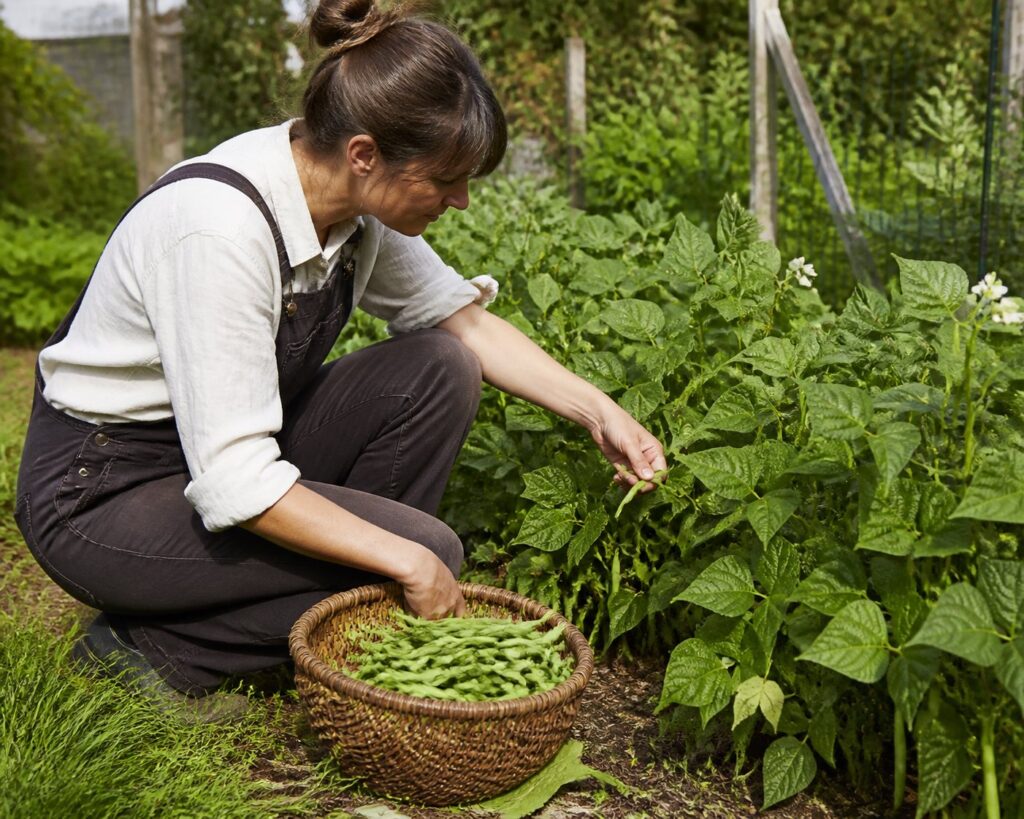
Harvesting green beans at the right stage keeps pods crisp and encourages the plant to make more flowers. Check plants every day or two once pods appear. A pod that is only slightly oversized can become stringy quickly, especially in hot weather.
| Bean type | Harvest cue | Best practice |
|---|---|---|
| Snap beans | Firm pods before seeds bulge | Pick frequently for tenderness. |
| Filet beans | Very slender, before fibers develop | Harvest small and often. |
| Romano beans | Broad, flat pods at the variety’s eating size | Use color and firmness together. |
| Shelling beans | Pods swollen with developed seeds | Allow pods to mature before shelling. |
How to pick without damage
Support the vine with one hand and snap or cut the pod with the other. Do not pull a pod downward because that can tear a stem or neighboring flower. Use clean snips for heavy clusters. Harvest in the cool part of the day, move pods into shade, and refrigerate promptly.
Keep production moving
Hidden mature pods signal the plant to slow flowering, so lift leaves and inspect the back of a trellis. Bush beans may produce a large flush, while pole beans continue when picked regularly. Water steadily during pod fill and avoid heavy nitrogen fertilizer late in the crop. If flowers drop without pods, use the troubleshooting guide; if pods are tough, check size and watering.
Storage and end of season
Keep unwashed beans cool and dry in a breathable bag. Use bruised pods first. Blanching and freezing preserves quality when pods are fresh. At season’s end, remove spent plants and compost healthy material where appropriate. If saving seed, leave selected pods on the plant until they are dry and brittle, and label the variety.
Compare bush and pole harvest rhythms in the variety guide, and use the watering guide to prevent stress. The Green Beans hub keeps the full crop sequence together.
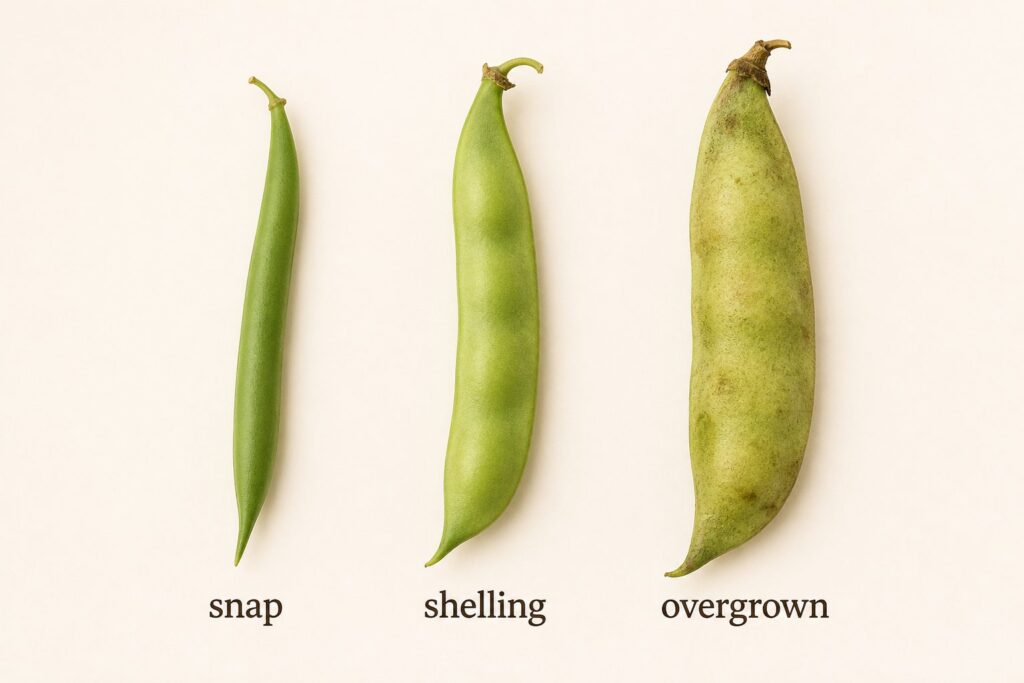
Pick often and handle gently
Inspect plants every day or two once pods appear. Snap or cut each pod while supporting the vine with your other hand; pulling downward can tear stems and flowers. Pick snap and filet beans before seeds bulge, and use the variety description for shelling stages. Harvest in the cool part of the day, move pods into shade, and refrigerate promptly.
| Stage | Visual cue | Use |
|---|---|---|
| Snap | Firm, slender pod | Fresh eating. |
| Filet | Very thin and tender | Quick cooking. |
| Shelling | Seeds swell inside pod | Fresh or dried beans. |
| Overgrown | Stringy, tough, or yellowing | Save seed only if intended. |
Hidden mature pods can slow new flowers, especially on pole beans. Keep watering steady, compare varieties in the bush-versus-pole guide, and return to the Green Beans hub.
Record your harvest rhythm
Note which days pods were tender, when picking became daily, and when production slowed. That record helps distinguish a natural bush-bean finish from drought, heat, or hidden oversized pods. Keep varieties labeled if saving seed and remove spent vines promptly after the final useful harvest. Continue with the variety guide and the Green Beans hub.
Harvest notes
Pick snap and filet beans before seeds swell, but allow shelling types to fill. Support the vine with one hand when cutting pods. Record when picking became daily and when production slowed; those notes help separate a natural bush-bean finish from drought, heat, or hidden oversized pods.
Record the harvest rhythm
Pick snap and filet beans before seeds swell, but allow shelling types to fill. Support the vine with one hand while cutting. Move the basket into shade and refrigerate promptly. Check under foliage daily during peak production; hidden mature pods can slow new flowers.
Record when picking became daily and when production slowed. Those notes help distinguish a natural bush-bean finish from drought, heat, or oversized pods and improve next season’s variety choice.
Pick for the bean type and intended use
Most garden green beans are harvested as snap beans: pods should be firm, crisp, and still relatively smooth, with seeds that have not swollen strongly against the pod wall. The right size depends on the variety; check plants every two or three days once picking begins. Filet types are best young and slender, while some flat-podded varieties are meant to be a little larger. Shell or dry beans are a different harvest: leave those pods to mature fully according to the variety’s use.
| Pod condition | Best action |
|---|---|
| Firm, crisp, seeds barely visible | Pick now for tender snap beans. |
| Pods getting thick with visible seed bumps | Use soon for a more mature texture or remove to keep new flowers coming. |
| Tough, fibrous, or dry pods | Remove from snap-bean plants; save only if intentionally growing seed. |
Harvest without damaging the vine
Hold the stem with one hand and pinch or clip the pod with the other. Pulling can break a brittle branch, especially on pole beans. Pick regularly and look through the foliage rather than taking only obvious pods. Leaving overlooked mature pods slows the plant’s incentive to make more flowers.
Cool and store promptly
Keep picked beans shaded, then refrigerate them dry in a breathable bag or container. For best quality, use them within several days rather than washing and storing them wet. If harvesting more than can be eaten, preserve a batch soon after picking. At the end of the season, remove exhausted vines, note which variety produced during your useful harvest window, and use that record to plan the next sowing.
Practical growing decisions
Harvest green beans by pod stage, not only by the calendar. Snap beans are usually best when pods are firm, smooth, and before seeds bulge strongly; filet types are picked slender; shell beans stay longer until seeds develop. Frequent picking keeps ripe pods from being missed and can encourage continued production in indeterminate pole types.
- Check plants every two to three days during peak production.
- Hold the vine with one hand and snap or cut the pod with the other.
- Remove overmature pods promptly, including any hidden under foliage.
- Cool harvests quickly and use them soon for best texture.
- Record which variety and pod size your household preferred.
Common mistakes and useful adjustments
Avoid planting into cold saturated soil, crowding plants for the sake of one more seed, or reacting to every symptom with fertilizer. Keep a simple record of the variety, sowing date, weather, watering changes, and harvest quality. That makes it easier to distinguish a seasonal setback from a site or method problem.
Before you change care
Inspect more than one plant, check soil below the surface, and consider the recent weather. Change the clearest limiting factor first, then give the crop time to respond. Beans are resilient, but they do not benefit from repeated root disturbance or rapid swings between drought and saturation.
Use harvest timing to extend production
Begin checking plants as soon as the first pods approach the typical size for the variety. In warm weather, a pod can move from tender to overmature quickly, so a two- or three-day routine is more dependable than waiting for a weekend. Pick in the cool part of the day when practical and handle pods gently; bruising and heat shorten storage life.
For pole beans, work from the bottom upward and check the back of the trellis. For bush beans, lift foliage carefully rather than stepping into the row. Keep a container close so pods are not piled in the sun. If production slows after a heavy flush, remove mature pods, keep moisture even, and give the plants a little time; do not assume the crop is finished after one missed picking.
Separate eating harvest from seed saving
Snap beans intended for eating should be picked before seeds become prominent. If saving seed from an open-pollinated variety, mark a healthy portion of plants and allow selected pods to dry fully; do not mix that practice with the regular harvest row. This keeps food quality and seed selection from working against each other.
Plan for the final harvest
As nights cool or the first frost approaches, make a final sweep for pods at the eating stage and remove those that are already tough. Do not leave diseased or heavily pest-damaged vines in place once production has ended. Clear the bed, compost only healthy residue where appropriate, and clean reusable harvest containers and supports.
A final note about variety, planting date, and the last good pick turns the season into practical information. It can show whether a later succession was worthwhile, whether a pole bean outlasted the support, or whether a bush bean crop should be timed for a different preserving week next year.
Keep the harvest container simple
Use a clean shallow container rather than packing pods deeply while you finish picking. Keeping pods cool, dry, and uncrushed makes it easier to use the crop at its best after leaving the garden.
Frequently asked questions
Should I harvest beans when they are small?
For snap and filet beans, yes, if the variety description calls for slender pods. Pickling-size and shelling types have different targets, so follow the cultivar’s guidance.
Why did production stop?
Heat, drought, disease, hidden oversized pods, or the natural end of a bush crop can all reduce production. Check moisture, foliage, and pod size before replanting.
