

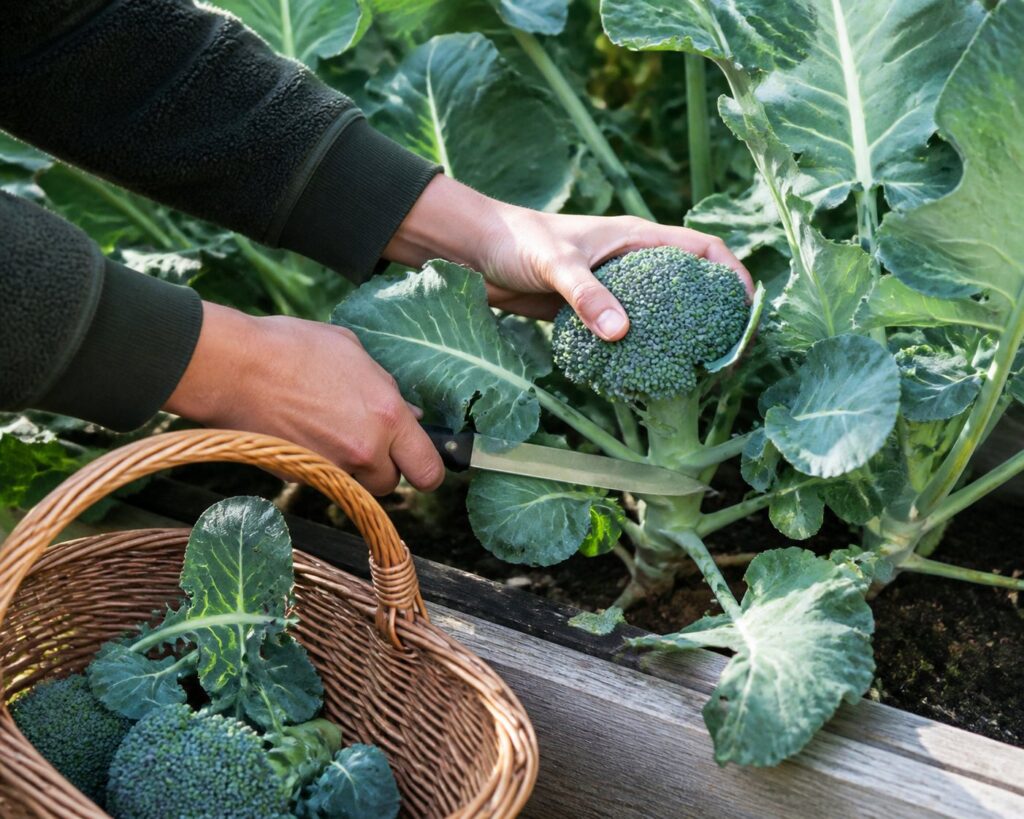
Broccoli is ready to harvest when the buds are firm, tightly closed, and sized for the variety. Harvesting is a timing skill: cut too early and the crown is small; wait too long and the buds separate into flowers. A central head is only the beginning for many plants, because side shoots can continue producing after the main cut.
Recognize the right stage
| Crop type | Harvest cue | Expected follow-up |
|---|---|---|
| Calabrese | Firm central crown with tight green buds | Several side shoots over the following weeks. |
| Heading broccoli | Dense head at the packet’s stated size | Side shoots may be limited. |
| Sprouting broccoli | Multiple tender shoots at usable size | Frequent small harvests. |
| Any type in heat | Cut as soon as buds begin to loosen | Quality declines quickly after flowering starts. |
How to cut the central head
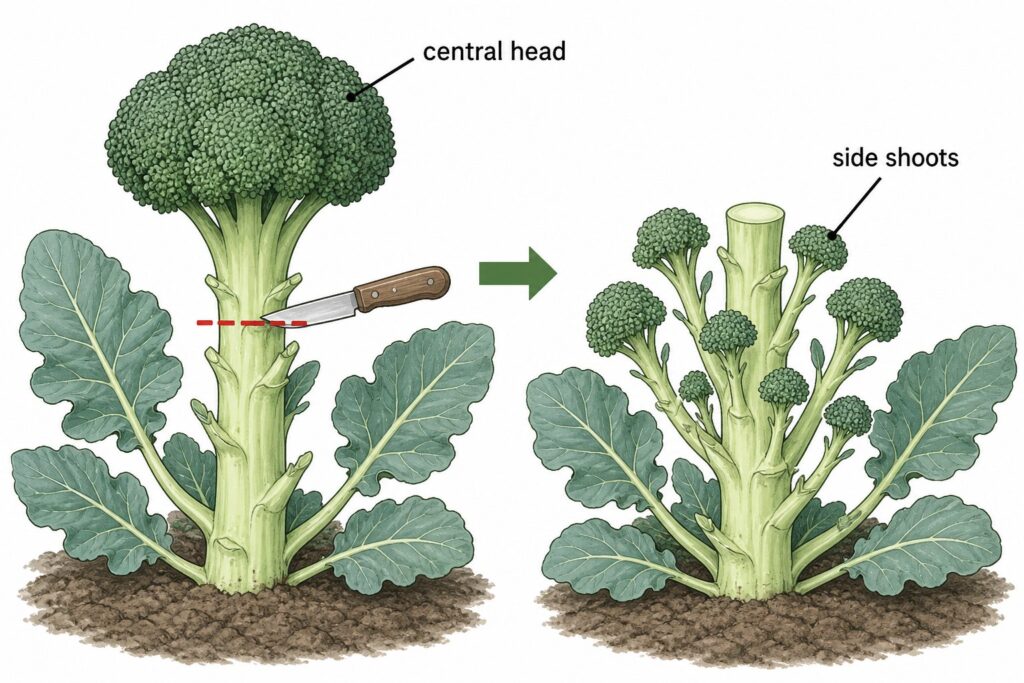
Use a clean, sharp knife and cut the main stem several inches below the crown, leaving a few healthy leaves. A slightly angled cut sheds rain. Handle the head by the stem rather than squeezing the buds. Harvest in the cool morning, move it into shade, and refrigerate promptly. Do not wash until you are ready to use it if you want the longest storage life.
Encourage side shoots
After the central head is removed, keep watering and feeding moderately. Side shoots develop from leaf axils and are often ready in stages rather than all at once. Check every day or two and cut shoots while buds are tight. Avoid stripping all foliage; the remaining leaves power continued growth.
If side shoots open quickly, check heat and moisture first. For a crop that never made a crown, use the head-formation guide. If flowers open before harvest, compare the timing and weather with the bolting guide.
Storage and kitchen quality
Refrigerate sound broccoli in a breathable bag or loosely wrapped towel. Use bruised or insect-damaged pieces first. If buds are yellowing, the flavor may be stronger but the head can still be usable after trimming. Blanching and freezing works best with fresh, firm crowns. Keep raw broccoli away from standing water, which speeds softening.
End-of-season cleanup
Remove spent plants once production has clearly ended. Compost healthy residue only where your system can manage brassica material; dispose of diseased plants according to local guidance. Clean knives and harvest containers, and rotate the next brassica crop when practical.
Make harvest a routine
Once a crown is visible, check every day or two. Look for firm, evenly colored buds and cut before individual buds separate. Use a clean, sharp knife several inches below the crown, leaving healthy leaves and side-shoot nodes. Move the head into shade immediately, then refrigerate it promptly. A smaller dense crown is usually better than a larger crown that has begun to flower.
After the central cut, keep moisture steady and inspect leaf axils for side shoots. Pick those shoots while buds are tight. Tender leaves and peeled lower stems are also useful in the kitchen. Remove yellow flowers and damaged tissue before storing, and keep raw broccoli away from standing water.
If a crown never forms, use the head guide; if it opens early, use the bolting guide. Return to the Broccoli hub.
Make the cut part of the crop plan
Plan a harvest basket, knife, shade spot, and refrigerator space before the central crown is ready. Cutting in the cool morning protects texture, while leaving side-shoot nodes and healthy leaves extends the useful life of the plant. Record the first and final harvest dates to improve next season’s timing. Continue with the bolting guide and the Broccoli hub.
Storage routine
Move cut crowns into shade, refrigerate promptly, and keep them dry until use. Peel thick stems and cook tender leaves or side shoots. Record first, peak, and final harvest dates so next season’s planting date is based on evidence from your own garden.
Store and plan the next crop
Move cut crowns into shade, refrigerate promptly, and keep them dry until use. Peel thick stems and cook tender leaves or side shoots. If buds yellow, trim flowers and use green tissue quickly. At season’s end, remove spent plants and clean knives and containers.
Record first, peak, and final harvest dates. That record helps you shift planting earlier or later and decide whether a variety’s side-shoot production justified its space.
Harvest for quality, then manage the plant
Check a forming head every day or two. The best stage is compact, with individual buds still tight and green. Size varies by variety and season, so do not wait for an arbitrary diameter once buds begin to loosen. Morning harvest after leaves dry but before the day warms generally gives the crispest result.
Use a clean sharp knife to cut several inches below the head, leaving healthy leaves and side-branch nodes. Put the harvest in shade immediately, refrigerate it unwashed in a breathable bag, and rinse near use. Quality falls quickly at room temperature.
| Stage | What to do |
|---|---|
| Central head tight | Cut now for best texture. |
| After the central cut | Keep watering and inspect for smaller side shoots. |
| Yellow flowers visible | Harvest usable tender portions immediately. |
| Plant declining | Remove residue rather than retaining a pest source. |
Record first central harvest and how long side shoots continue. It is useful variety and planting-window information for the next crop.
Turn harvest notes into the next planting plan
Harvest is also an opportunity to assess the crop. A large, tight central head followed by several weeks of side shoots may be worth repeating even if the first harvest was later than expected. A head that opened before it reached useful size suggests that the timing or heat window deserves attention. Write down the variety, first harvest date, side-shoot duration, and any pest pressure while the details are fresh.
Side shoots are not always as large as the central head, but they can be tender and productive when picked before the buds loosen. Continue normal watering and pest checks after the first cut. Do not apply a heavy fertilizer dose simply because the main head has been harvested; the goal is to maintain a healthy plant, not force growth through a declining season.
Food-safety and storage basics
Harvest with clean tools and a clean container. Keep heads out of direct sun, cool them promptly, and discard portions that are slimy, strongly off-smelling, or badly deteriorated rather than trying to store them longer. Rinse under running water near preparation, paying attention to the spaces between florets. These simple steps preserve the quality earned in the garden.
Practical decision guide
Harvest broccoli when the head is firm and the individual buds are small, tight, and uniformly green. Waiting for a larger head can mean missing the best quality, especially in warming weather. A clean cut below the head with several inches of stem preserves the plant for possible side shoots when the variety and season allow.
- Check heads every two to three days as maturity approaches.
- Cut early in the day when plants are cool.
- Use a sharp clean knife and cut on a slant below the head.
- Cool harvested broccoli quickly and refrigerate it loosely wrapped.
- Continue watering and feeding the plant lightly if you expect side shoots.
Seasonal checks and common mistakes
Weather changes the plan. Check soil moisture below the surface after hot or windy periods, avoid working saturated soil, and adjust care to the plant stage rather than following a rigid calendar. Young plants need establishment care; developing heads need protection from stress; mature heads need frequent inspection. Common mistakes include treating a symptom before identifying it, overfeeding leafy plants, delaying harvest while waiting for size, and assuming a rule from another climate will fit every garden.
Before changing the plan
| What you see | First check | Useful response |
|---|---|---|
| Slow growth | Temperature, water, roots, and weeds | Correct the clear limitation before adding fertilizer. |
| Uneven plants | Spacing, shade, and drainage across the bed | Compare several plants and revise the site next season. |
| Quality declining | Weather and maturity stage | Harvest usable produce and adjust the next sowing window. |
Keep a short record of variety, planting date, major weather, and harvest quality. It is the most reliable way to refine a local broccoli plan without relying on false precision.
Use side shoots intentionally
Many heading broccoli varieties produce smaller side shoots after the central head is cut, particularly when the remaining season is cool. Leave leaves and the plant base intact, continue ordinary watering, and check new shoots regularly. Side shoots do not always appear in large quantity; variety, weather, and plant condition matter. Harvest them while buds remain tight rather than waiting for them to match the central head.
Storage and kitchen planning
Broccoli is best used soon after harvest. Keep it cold, avoid leaving it in direct sun, and do not wash it until close to use unless it can be drained and chilled promptly. Plan a few harvests rather than assuming all heads mature together. That approach reduces waste and gives side shoots room to develop.
Frequently asked questions
Can I harvest broccoli after flowers open?
Yes, harvest unopened side shoots and tender stems as soon as possible. Fully open flowers are less tender, but the plant can still provide edible leaves.
Should I pull the plant after the main head?
Not usually. Leave a healthy calabrese plant in place for side shoots unless weather, disease, or space makes removal sensible.
Plan the next crop from the Broccoli hub.
