

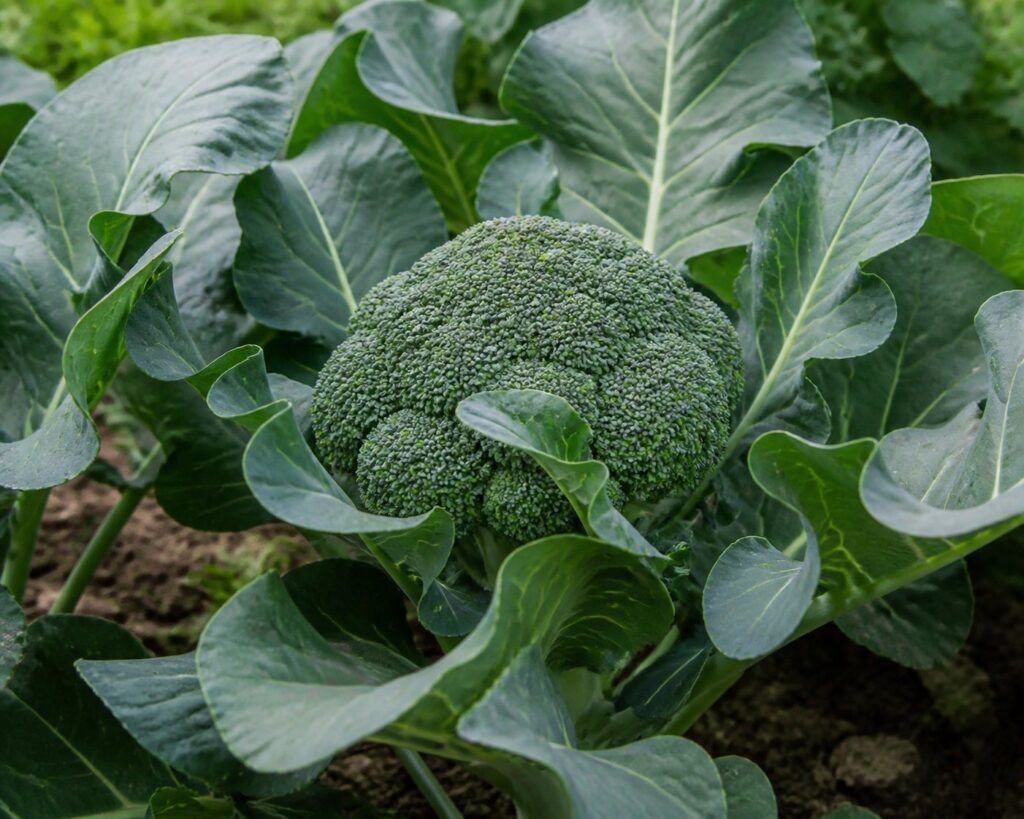
A broccoli plant can grow plenty of leaves and still fail to make the compact head you expected. Head formation depends on variety, plant age, temperature, light, spacing, roots, and steady moisture. Diagnose the pattern before adding fertilizer or pulling the plant.
| What you see | Likely cause | What to check next |
|---|---|---|
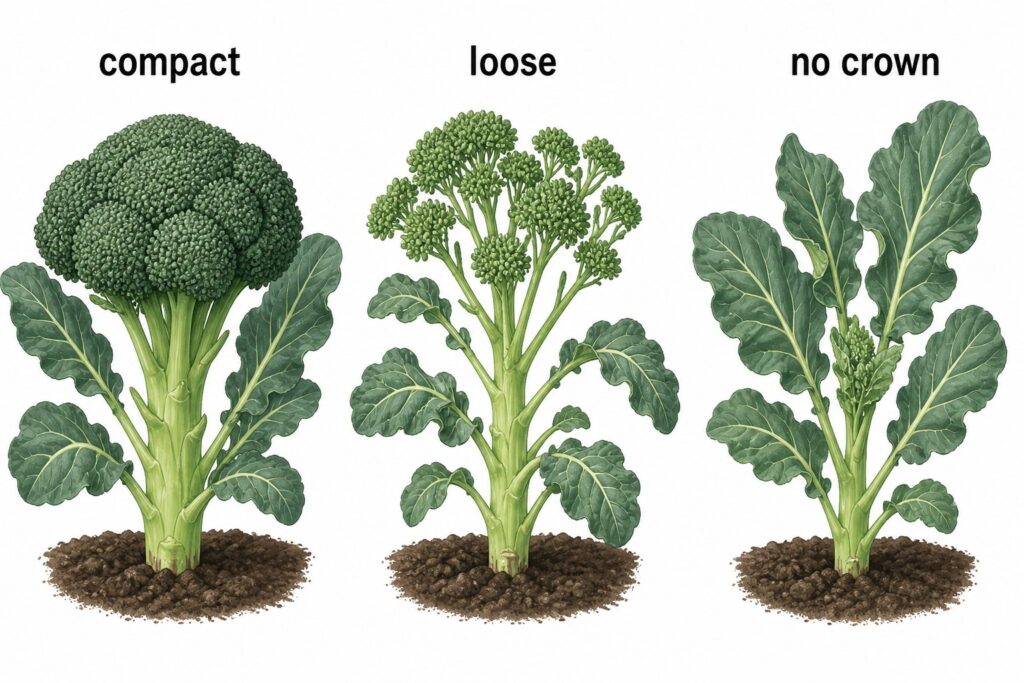
| Large leaves, no crown | Plant is young, crowded, or overfed with nitrogen | Confirm variety maturity, spacing, and soil fertility. |
| Tiny loose crown | Heat, drought, or root stress | Review planting date and moisture swings. |
| One plant lags behind | Root damage, pest feeding, or transplant shock | Inspect the stem and root zone. |
| Head opens quickly | Warm weather or delayed harvest | Harvest at tight-bud stage. |
Check the calendar first
Many head problems are timing problems. Spring broccoli planted too late may enter warm weather before the crown sizes up. Fall broccoli started too late may slow before making a full head. Compare the variety’s days to maturity with your actual sowing date and temperatures using the seasonal timing guide.
Give roots room and moisture
Large varieties generally need 18–24 inches between plants, while compact types may use less. Crowded roots compete for water and leaves shade one another, creating a weak, humid canopy. Water when the top inch of soil begins to dry, then soak deeply. Mulch helps maintain an even root-zone temperature, but keep it away from the stem.
Transplants that were root-bound, planted too deeply, or disturbed in hot weather may pause before resuming growth. Choose young, stocky plants, loosen circling roots gently, and water the planting hole. Avoid repeated cultivation close to the crown.
Light and fertility
Broccoli needs strong light for reliable head formation. Afternoon shade can help in a hot climate, but dense shade all day produces thin stems and slow growth. Fertile soil matters, yet more fertilizer is not always better. A soil test or clear pale-leaf symptom is a better reason to feed than impatience. Excess nitrogen can favor leaves while the crop remains out of balance.
Separate head failure from bolting
A head that opens into yellow flowers has formed a crown but passed the harvest window; a leafy plant with no visible crown has a different problem. Heat and drought can contribute to both. Read the bolting guide for prevention, and the pest guide if leaves show holes or distorted new growth.
When to wait and when to replant
If the plant is healthy, green, and within its maturity range, keep caring for it and wait. If it has been stalled for weeks, is severely damaged, or is entering hot weather with no crown, harvest edible leaves and use the space for a season-appropriate crop. Record the failure so the next planting date and variety can be improved.
Diagnose in a fixed order
- Confirm the variety and days to maturity.
- Check light for most of the day.
- Measure crown-to-crown spacing.
- Feel soil several inches down for moisture and drainage.
- Inspect roots, stems, leaves, and crown for damage.
This order prevents a calendar problem from becoming a fertilizer problem. Broccoli needs fertile soil, but extra nitrogen cannot correct heat, shade, root injury, or drought. If plants are crowded, thin the weakest early rather than removing healthy leaves. If soil is wet, improve drainage before feeding. If a healthy plant is still within its maturity range, continue steady care.
Record the date a crown appears and whether buds stay tight. A small crown can size up in cool weather, while a larger crown may open quickly in heat. Use the seasonal guide, the bolting guide, and the Broccoli hub.
Compare plants before giving up
One slow plant may have root or stem damage, while a whole row that lacks crowns usually points to timing, heat, shade, or fertility. Compare plants in the same bed and check whether they share the same amount of light and moisture. Keep healthy plants growing and reset only the plants that are clearly stalled beyond their maturity window. See the seasonal guide and the Broccoli hub.
When to reset
Keep a healthy plant that remains within its maturity range. Consider replanting only when a stem has collapsed, roots are severely damaged, or the crop is far beyond its seasonal window. Compare several plants before deciding; one slow transplant should not determine the fate of the whole row.
Compare plants before resetting
One slow transplant may have root damage while a whole row without crowns usually points to timing, heat, shade, spacing, or fertility. Compare plants in the same bed and check whether they receive equal light and moisture. Keep a healthy plant within its maturity window; reset only when roots or stems are badly damaged or the season is ending.
Photograph the bed before removing anything and record variety, spacing, weather, and watering. Those details make next year’s correction specific instead of speculative.
Diagnose the plant before changing the soil
First confirm the plant age and variety. A young broccoli plant may simply be building leaves; a mature plant that experienced heat may have made a small head, bolted, or shifted to side shoots. Compare several plants. One weak plant among normal neighbors points more toward transplant or root trouble than a whole-bed fertility problem.
Review sunlight, spacing, soil moisture, and plant history in that order. Broccoli needs full sun, room for roots, and soil that stays evenly moist without standing water. Excessive nitrogen can produce abundant foliage without guaranteeing a head, so a soil test is more useful than adding fertilizer reactively.
| Pattern | Useful next move |
|---|---|
| Healthy leaves, plant still young | Maintain care and give it time. |
| Small loose head in heat | Harvest usable portions and shift next planting. |
| All plants stunted | Check spacing, drainage, fertility, and weather together. |
| One plant behind | Do not overfeed the bed for one weak plant. |
Do not strip leaves to force a head. Keep a plant briefly for side shoots if pests and disease are controlled.
Plan the next planting from the diagnosis
If head failure follows the same pattern across a season, treat it as a planning signal. A plant that reaches head stage in heat may need an earlier spring start or a fall window. A crowded bed may need fewer plants, even if that feels counterintuitive; individual plants with room often produce a more useful harvest than a dense stand of small ones.
Before replanting, remove old roots and crop debris, assess whether water pooled or dried too quickly, and add compost only where it improves soil structure. Use a soil test for nutrient questions. If disease is suspected, rotate broccoli and related brassicas away from that spot for a season or more instead of trying to correct every symptom with fertilizer.
Decide whether to keep a plant
Keep a plant when it is green, pest pressure is manageable, and side shoots may still be useful. Remove it when it is heavily infested, clearly flowering past the useful stage, or occupying needed space for the next timed crop. This is a garden-planning decision, not a judgment on whether a plant was worth growing.
Practical decision guide
A broccoli plant that makes leaves but no usable head can be responding to heat, crowding, insufficient maturity time, nutrient imbalance, root stress, or a variety that is poorly matched to the season. Start by checking the variety label and the plant age; not every leafy plant is failing. Then inspect several plants and the root zone before adding fertilizer.
- Confirm that the variety should form a central heading head.
- Check spacing, sun, soil moisture, and whether the crop entered hot weather early.
- Compare plants across the bed to identify local drainage or shade issues.
- Use a soil test rather than guessing at nutrient correction.
Seasonal checks and common mistakes
Weather changes the plan. Check soil moisture below the surface after hot or windy periods, avoid working saturated soil, and adjust care to the plant stage rather than following a rigid calendar. Young plants need establishment care; developing heads need protection from stress; mature heads need frequent inspection. Common mistakes include treating a symptom before identifying it, overfeeding leafy plants, delaying harvest while waiting for size, and assuming a rule from another climate will fit every garden.
Before changing the plan
| What you see | First check | Useful response |
|---|---|---|
| Slow growth | Temperature, water, roots, and weeds | Correct the clear limitation before adding fertilizer. |
| Uneven plants | Spacing, shade, and drainage across the bed | Compare several plants and revise the site next season. |
| Quality declining | Weather and maturity stage | Harvest usable produce and adjust the next sowing window. |
Keep a short record of variety, planting date, major weather, and harvest quality. It is the most reliable way to refine a local broccoli plan without relying on false precision.
Check the plant stage before diagnosing failure
Broccoli first builds leaves and a root system; a central head appears only after the plant reaches the appropriate stage under suitable conditions. A plant that is simply young should not be treated as a nutrient emergency. Conversely, a tiny “button” head on a small stressed plant can follow cold stress, heat, drought, root restriction, or a transplant that was held too long.
Diagnostic record
Note the variety, transplant date, spacing, recent temperature extremes, fertilizer applications, and whether all plants or only one section is affected. This record turns a vague symptom into a comparison you can use for the next planting. Correct current stress where possible, but reserve major soil or timing changes for the next crop.
Frequently asked questions
Will cutting leaves encourage a head?
Removing healthy leaves reduces the plant’s ability to make energy. Remove only diseased or badly damaged tissue; correct light, spacing, water, and timing instead.
Can a small head grow larger?
Often yes, if buds remain tight and weather stays cool. Keep moisture steady and check daily so you harvest before the crown opens.
Use the Broccoli hub for the complete care sequence.
