

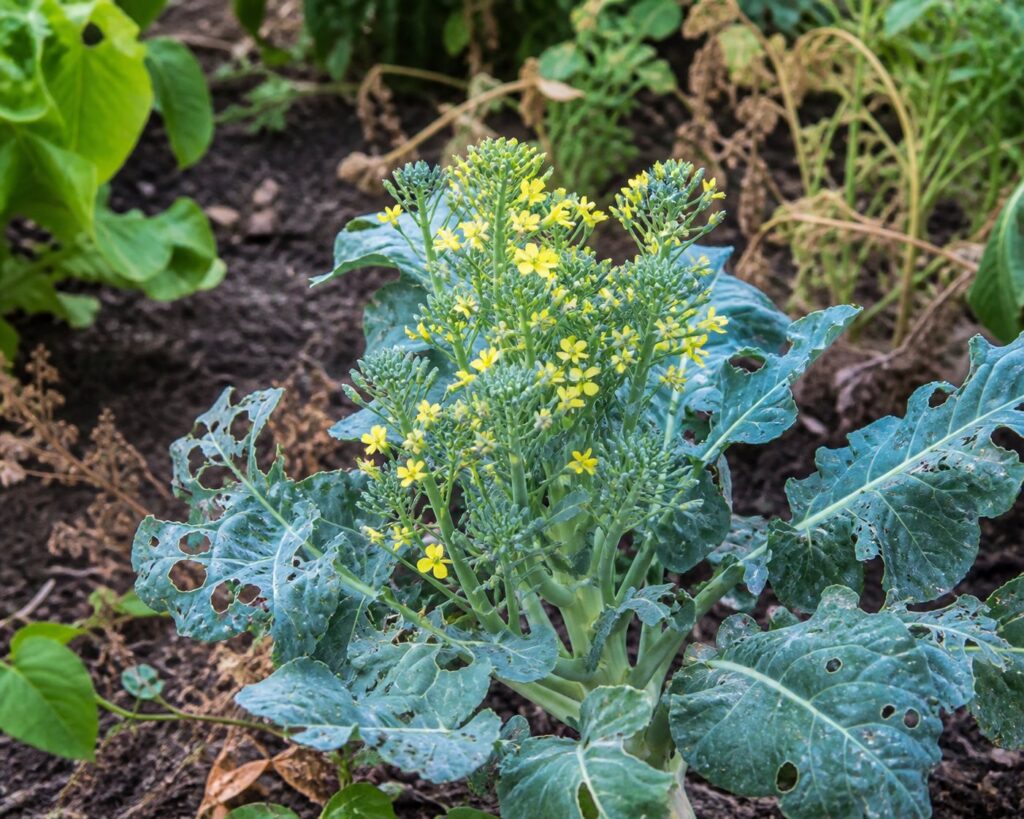
Broccoli bolts when the plant shifts from making a compact edible head to opening flower buds. Bolting is a normal reproductive response, but it often feels sudden because a few days of heat can turn a promising crown into yellow flowers. The best prevention is a well-timed crop with steady moisture and minimal root stress.
What bolting looks like
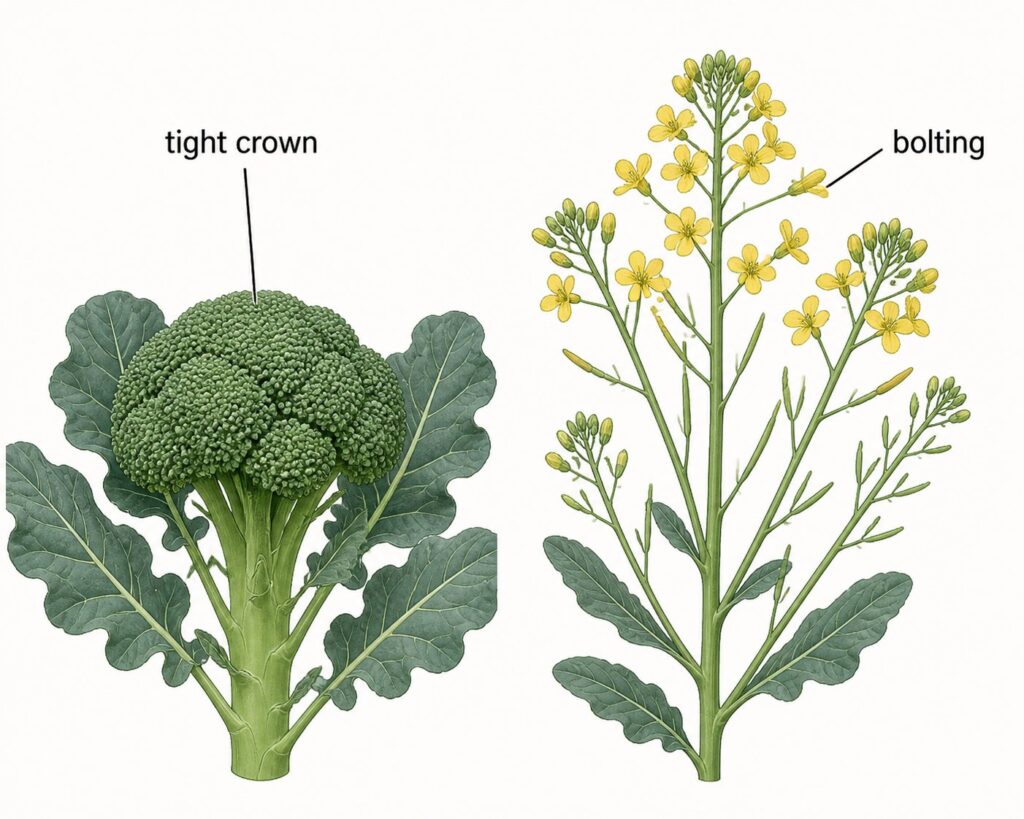
A bolting plant sends the central stalk upward, the head loosens, and individual buds separate. Yellow flowers may open before the crown reaches its expected size. Small side shoots can also stretch and flower. Taste remains usable while buds are tight, so harvest promptly when you see the crown beginning to separate.
| Clue | Likely pressure | Useful response |
|---|---|---|
| Loose head after a heat wave | Temperature stress | Harvest early, mulch, and plan the next crop for cooler weather. |
| Plant stalls after transplanting | Root disturbance or root-bound start | Use younger transplants and water consistently. |
| Flowering after drought | Moisture stress | Deeply water and keep future growth evenly moist. |
| Only one variety bolts | Variety sensitivity | Choose a heat-tolerant or season-appropriate cultivar. |
Prevent bolting before it starts
Use the planting calendar to place spring crops early enough to mature before sustained heat. For fall crops, start seedlings early enough that they are established before shortening days. Mulch once soil is warm, water deeply when the top inch dries, and avoid cultivating close to the roots.
Spacing is part of temperature management. Plants crowded together compete for water and dry slowly after rain. Give large varieties roughly 18–24 inches, or follow the packet for compact cultivars. Shade cloth can reduce afternoon heat in a hot site, but it should not block morning light or trap humid air.
When feeding helps—and when it does not
Broccoli needs fertile soil, but fertilizer cannot reverse a heat-triggered flowering response. Incorporate finished compost before planting and use a balanced feed only when soil history or a test suggests it is needed. Avoid repeated high-nitrogen applications that produce oversized leaves while delaying a balanced crop.
If the plant is already bolting
Cut the central head immediately if buds are still tight, leaving side-shoot nodes on the stem. Keep watering and harvest side shoots while they remain tender. If flowers are fully open, the plant is still edible as a leafy vegetable, but it will not return to a compact main head. Note the date, variety, and weather rather than removing every plant automatically.
Bolting is not the same as every head-formation problem. If the plant is leafy but never makes a crown, compare light, spacing, nutrition, and transplant age using the head-formation guide. For chewing damage, see the pest guide.
Common mistakes
- Starting spring broccoli too late.
- Letting seedlings become root-bound.
- Allowing soil to dry completely between waterings.
- Planting too close for the variety.
- Waiting to harvest until yellow flowers appear.
Separate stress from a normal finish
A few flowers on a mature crown are different from a young plant that never forms a crown. Heat, drought, root disturbance, and variety sensitivity can all accelerate flowering, but the remedy starts with timing and steady care. Keep a note of the temperature pattern before the crown opened. If every plant bolted together, change the planting window; if one variety bolted, compare maturity and heat tolerance.
When a crown begins to loosen, cut it while buds are still green and tight. Leave several inches of stem and healthy leaves so side shoots can develop. Continue deep watering and moderate feeding, but do not expect fertilizer to reverse an opened flower stalk. Shade cloth can buffer a short heat spike; permanent heavy shade usually reduces growth.
Pair this guide with the planting calendar and pest guide, then return to the Broccoli hub.
Use the forecast as part of prevention
When several hot days are forecast, water deeply before the heat arrives, refresh mulch, and use temporary afternoon shade if the site permits. Avoid transplanting or heavy root disturbance during the hottest period. A crown that is already tight should be harvested before the spell rather than left in the hope that it will hold.
After flowering, keep the plant only if tender side shoots remain useful. Record the variety and date so the next crop can be shifted. Compare that record with the seasonal guide and return to the Broccoli hub.
After bolting starts
Cut a loosening crown while buds are still green and tight, leaving healthy leaves for side shoots. If flowers open fully, harvest tender shoots and leaves while quality remains useful. Record variety, date, temperature, and moisture so next season’s planting window can move earlier or later for a reason.
Use a bolting record
When a crown opens, note the variety, plant age, recent temperature, and moisture. Cut tight buds immediately and leave healthy leaves for side shoots. If flowers are fully open, harvest tender shoots and leaves while quality remains useful. Do not expect fertilizer to reverse an opened stalk.
If several plants bolt together, move the next sowing earlier or later. If one variety bolts, compare its maturity range and heat tolerance with alternatives. Combine the record with the seasonal timing guide before changing soil or feeding.
Separate bolting from other head problems
Bolting is the shift from a compact edible head to a flowering stem. It is different from a small head caused by crowding or slow establishment. Tight green buds signal a harvest-ready head; loosening, elongating buds and visible yellow signal flowering. Once that change is clear, harvest usable florets promptly rather than expecting the central head to tighten again.
Prevent stress before planting: choose a season-suited variety, avoid holding seedlings too long in cells, harden them off gradually, and keep moisture even. During a warm spell, water deeply before heat, maintain mulch, and avoid root disturbance. Extra fertilizer cannot reverse heat stress.
| Condition | Priority action |
|---|---|
| Hot days forecast | Water the root zone and retain mulch. |
| Plants crowded | Plan wider spacing next crop; moving mature plants adds stress. |
| Buds loosening | Harvest now and watch for side shoots. |
Note variety, planting date, and the weather at bolting. A change to the seasonal window often matters more than a reactive product.
Keep a prevention record
After harvest, write down whether the plant was transplanted or direct-sown, how long it was in a pot, the first warm spell, and the date buds began to loosen. This separates a heat-window problem from a one-off pest or watering event. For a spring crop that repeatedly bolts, try an earlier transplant date or a quicker-maturing variety; for a fall crop, schedule the start so head formation falls after the hottest part of summer.
Do not rely on row cover or shade as a permanent fix. Covers can protect young plants from insects and a brief spell of exposure, but they can also trap warmth. Remove or ventilate them when temperatures rise. Afternoon shade may be helpful in a hot site, but it cannot turn a warm-season planting into a cool-season crop.
Harvest decisions when weather turns
If tight buds are present before a hot period, harvest early rather than waiting for a little more size. If the head is already open, use the tender portions quickly and decide whether the side shoots justify keeping the plant. That quick decision protects quality and clears room for the next crop when needed.
Practical decision guide
Broccoli bolting means the head moves quickly toward flowering: buds loosen, stems stretch, and yellow flowers may appear. Heat during head development is a common trigger, but early cold stress, uneven growth, and variety mismatch can also contribute. Once a head is opening, harvest it promptly; prevention is mainly a timing and steady-care decision for the next planting.
- Match varieties to spring or fall conditions.
- Keep young plants growing without drought, crowding, or root disturbance.
- Use row cover only while it helps pest protection and remove it before it traps excess heat.
- Check developing heads every few days as warm weather approaches.
Seasonal checks and common mistakes
Weather changes the plan. Check soil moisture below the surface after hot or windy periods, avoid working saturated soil, and adjust care to the plant stage rather than following a rigid calendar. Young plants need establishment care; developing heads need protection from stress; mature heads need frequent inspection. Common mistakes include treating a symptom before identifying it, overfeeding leafy plants, delaying harvest while waiting for size, and assuming a rule from another climate will fit every garden.
Before changing the plan
| What you see | First check | Useful response |
|---|---|---|
| Slow growth | Temperature, water, roots, and weeds | Correct the clear limitation before adding fertilizer. |
| Uneven plants | Spacing, shade, and drainage across the bed | Compare several plants and revise the site next season. |
| Quality declining | Weather and maturity stage | Harvest usable produce and adjust the next sowing window. |
Keep a short record of variety, planting date, major weather, and harvest quality. It is the most reliable way to refine a local broccoli plan without relying on false precision.
Read the head, not only the weather forecast
A broccoli head can change quickly once buds begin to enlarge. Inspect the crown every few days, especially when daytime temperatures rise. Tight, compact buds indicate harvest quality; a looser surface, visible yellow, or an elongating central stem signals that flowering is underway. Harvesting a slightly smaller tight head is usually more useful than waiting for a larger head that opens.
Prevention plan for the next crop
- Choose a variety whose maturity suits the season.
- Plant early enough for spring harvest or schedule a fall-maturing crop.
- Maintain even moisture and avoid severe transplant or root stress.
- Use mulch and timely irrigation to reduce drought swings.
- Record when head formation began compared with the first hot spell.
Frequently asked questions
Can bolted broccoli be saved?
You cannot turn an opened flower stalk back into a tight crown, but you can harvest tender shoots and leaves. The plant may still provide useful food for a short time.
Does cold weather cause bolting?
Cold alone is not usually the trigger. A young plant exposed to stress, followed by warming weather or long days, can flower early; stable growth and correct timing reduce the risk.
Use the Broccoli hub to plan a cooler, steadier next crop.
