

I have watched my own backyard change shape over time as I focused more on how plants fit together instead of just filling empty spots.
Choosing native species and smarter water use turns the garden into something that needs less work after the first year or two.
That shift surprised me.
Paying attention to the edges and how paths guide movement through the space keeps everything looking intentional even as it grows wilder in places.
Some of these ideas are ones I plan to adapt based on what has worked in my yard so far.
Rock-Lined Drainage Channels in Garden Beds
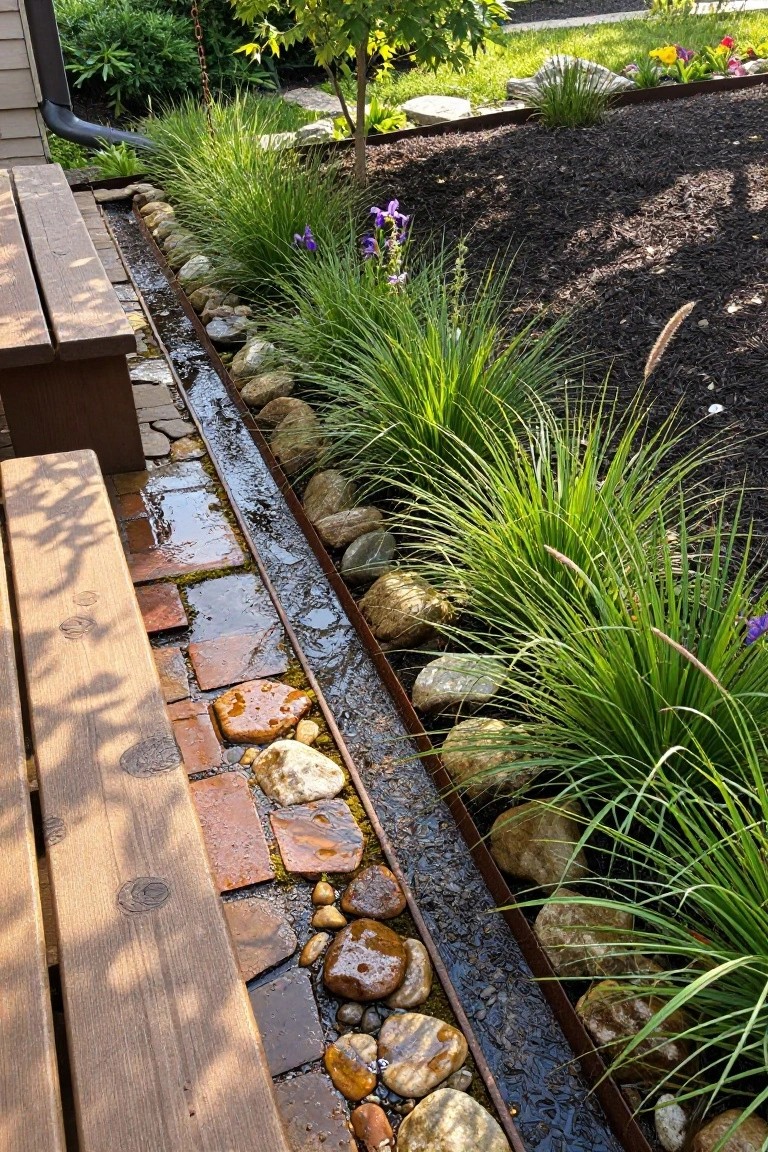
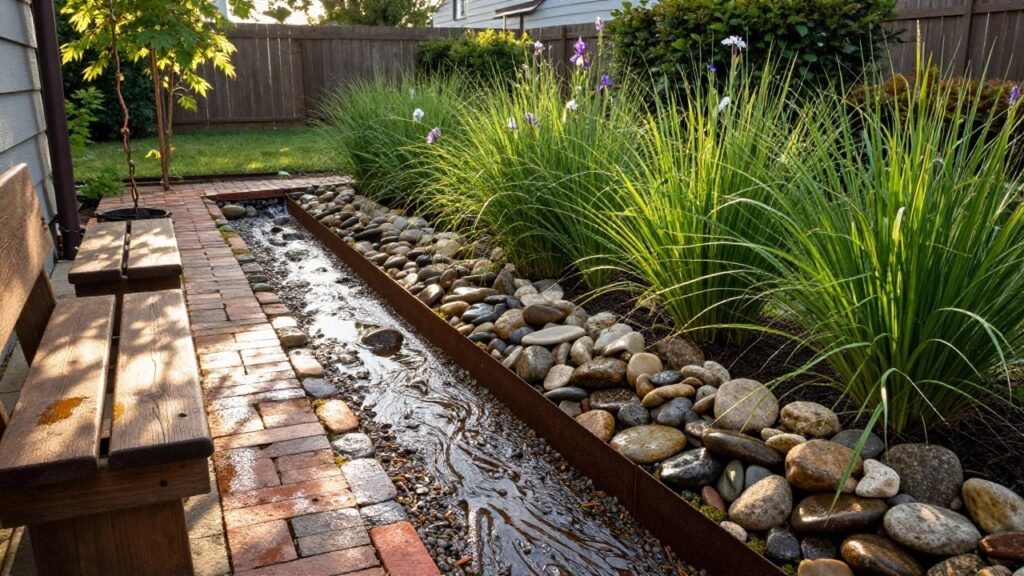
One practical way to handle rainwater in your yard is with a simple channel like this. It starts at the downspout and runs water along the edge of a bed, through smooth river rocks and right past moisture-loving plants like grasses and irises. The metal edging keeps everything neat, and the dark mulch fills in around it. This setup soaks up excess water naturally instead of letting it pool or wash soil away. It’s low fuss and fits right into a backyard without much space.
You can add one along any house side or patio edge where runoff collects. Pick permeable materials so water filters into the ground, helping recharge soil. It works best in average yards, not super flat ones. Just choose plants that handle wet feet now and then, and check the slope so flow stays gentle. Keeps things greener without extra hoses.
Raised Beds with Straw Mulch
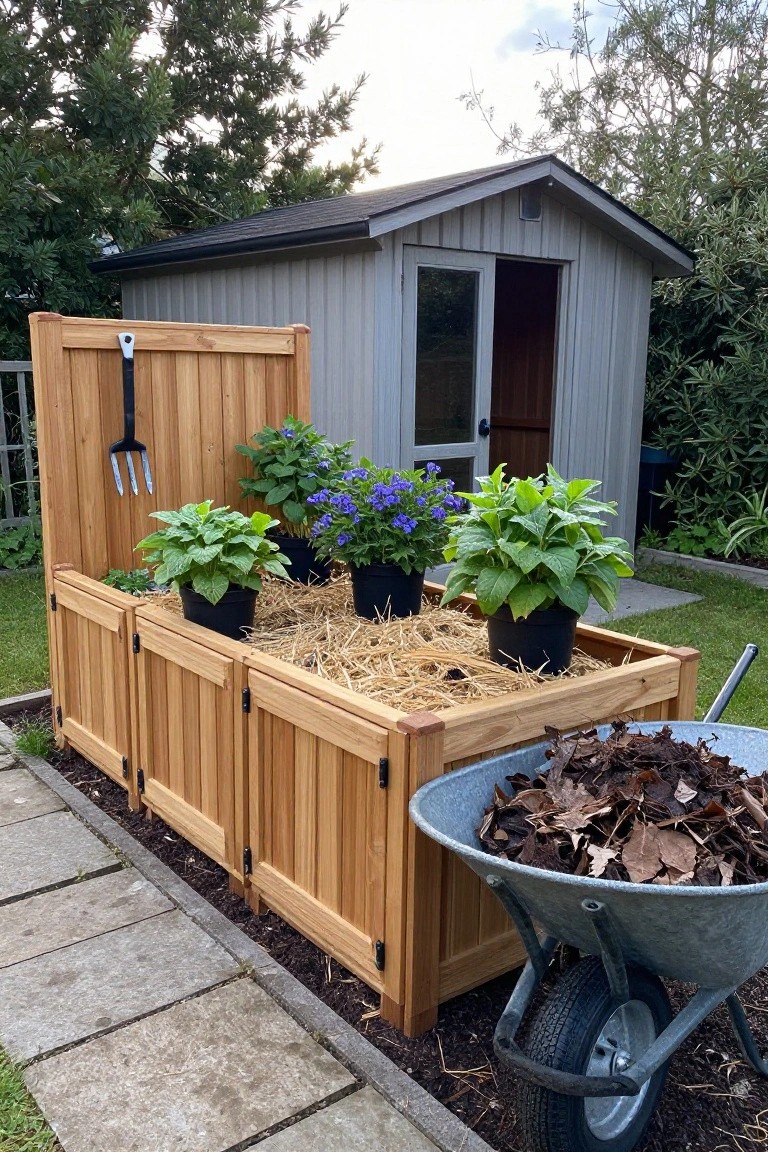
One easy way to garden without much digging is to build raised beds like this wooden one. The straw inside holds moisture, feeds the soil as it breaks down, and keeps weeds down. You see pots of greens and flowers tucked right in, with leaves nearby ready to add more layers. It’s practical for building healthy dirt over time.
Put these beds along a fence or near a shed in a backyard corner. They work in small spaces or poor soil yards. Start with rough wood panels, pack in straw or wood chips from fall cleanup, then set plants on top. Watch for rot on the wood… treat it yearly if needed.
Gravel Terrace with Potted Plants
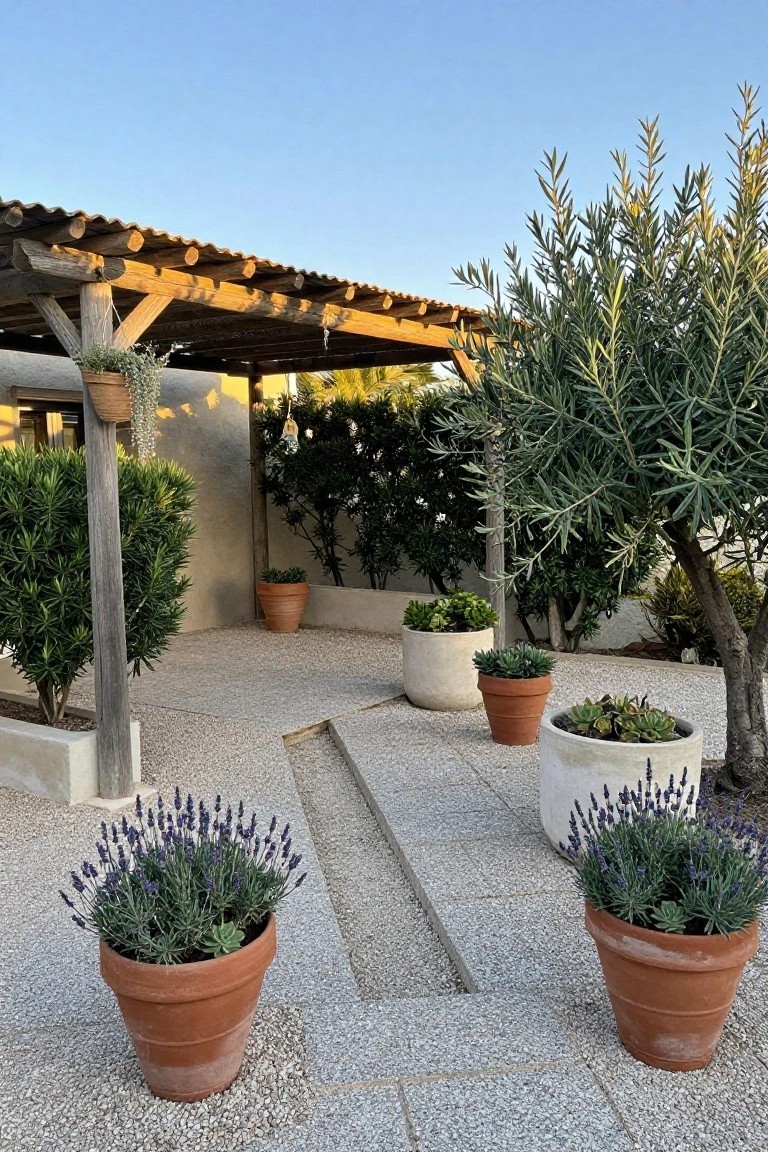
One easy way to set up an outdoor living space is with a gravel terrace filled in with potted plants. You get that clean, open feel from the light-colored gravel underfoot, and the pots bring in color and height without digging up the yard. Here, terracotta pots hold lavender and succulents right along the edges, while bigger olive trees stand nearby. It keeps things simple and dry-climate friendly, since gravel drains fast and these plants don’t need much water.
This setup works best in sunny backyards where you want low upkeep. Lay down gravel over a flat base for the patio area, then group pots for planting zones. Add a pergola overhead if shade helps. It suits smaller spaces or spots near the house, and you avoid big lawns that guzzle water. Just pick tough plants like lavender that handle heat.
Winding Stone Paths Through Native Plants
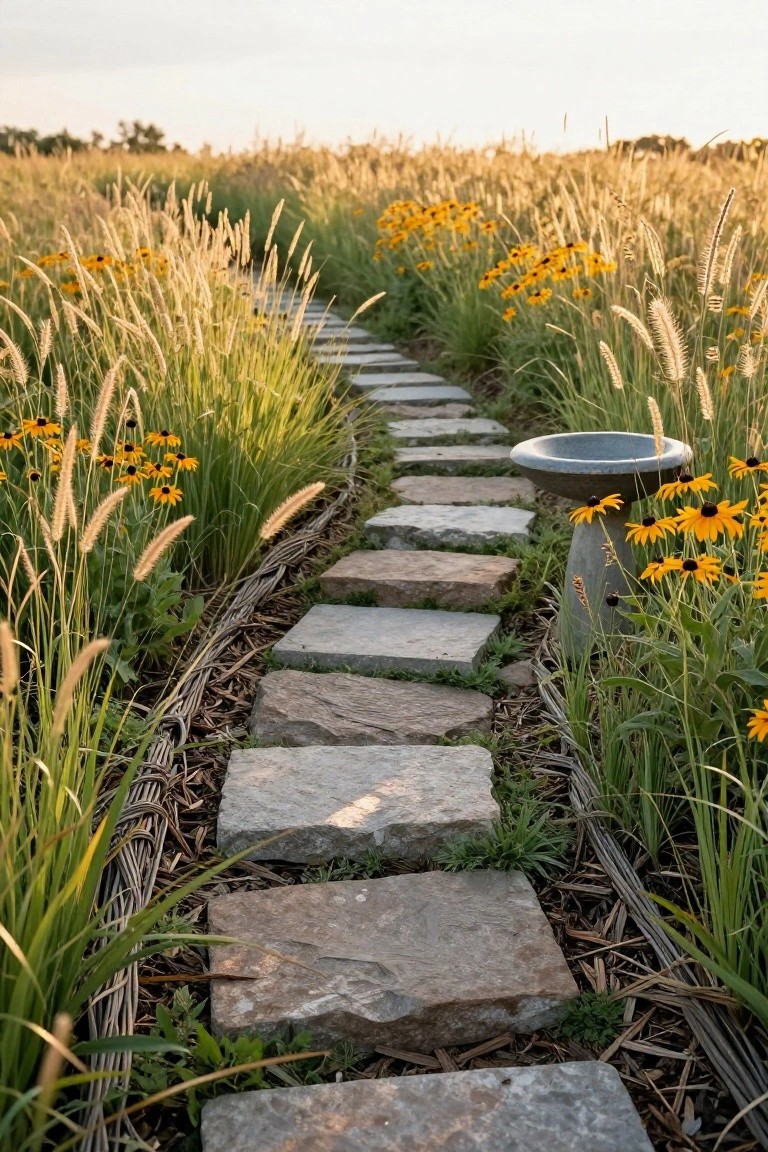
A simple way to add structure to a backyard garden is with a winding path made from flat stone slabs set right into the soil. Here, tall foxtail grasses and black-eyed Susans line both sides, creating that natural prairie look without much upkeep. Native plants like these thrive on their own, use less water, and draw in birds and pollinators, making the whole setup eco-friendly from the start.
You can lay this out in any sunny backyard spot where you want a casual walkway to a seating area or shed. Source stones from local quarries to keep it sustainable, and plant perennials that match your climate. Watch the spacing so the path stays walkable even as plants grow. A birdbath nearby adds a nice touch for wildlife, but skip it if you prefer plants only.
Train Raspberries Up a Fence Pole
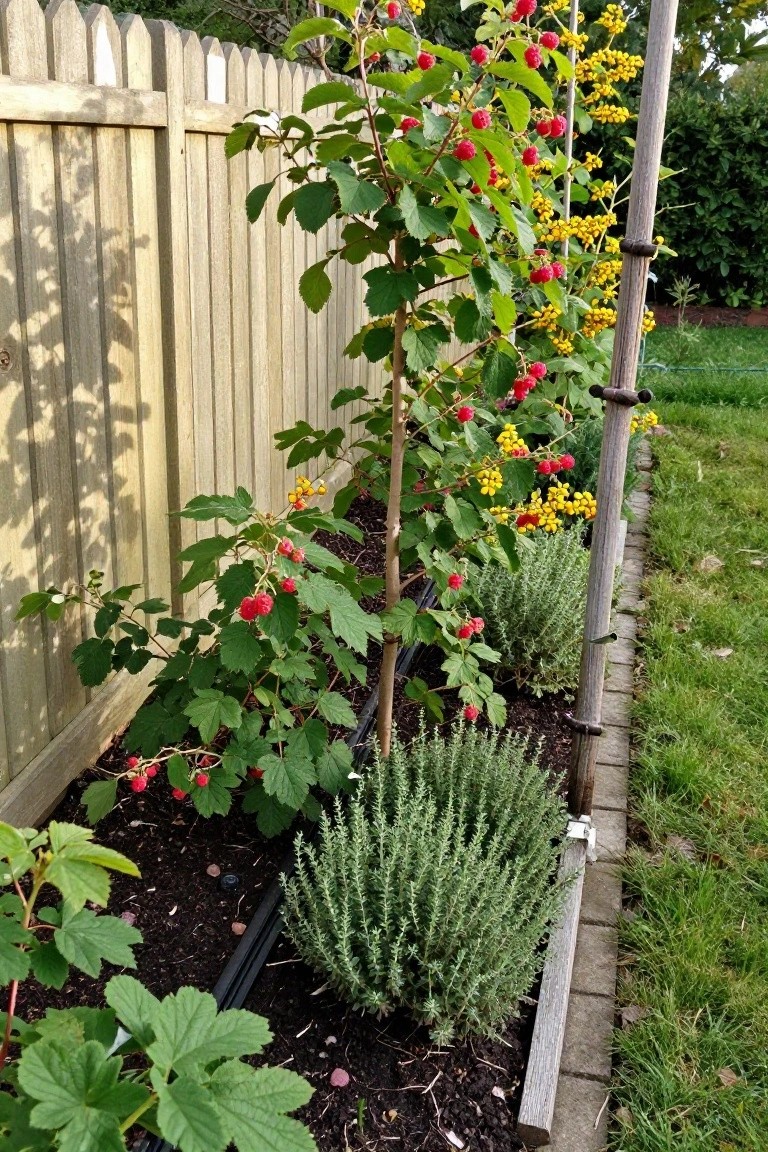
One easy way to fit more food plants into a small backyard is training raspberries up a simple pole right along the fence. You see the canes tied loosely to that weathered wood post, letting the berries hang at picking height without sprawling everywhere. It keeps the bed tidy and productive, and the mulch below holds in moisture so you water less.
This setup works great in narrow spots like fence lines or pathsides, where you pair the upright berries with low herbs like thyme for ground cover. Start with sturdy young canes, a tall pole, and soft ties. Mulch heavy around the base. It suits any sunny yard, even rentals… just check your fence holds up.
Gravel Gardens with Stepping Stone Paths
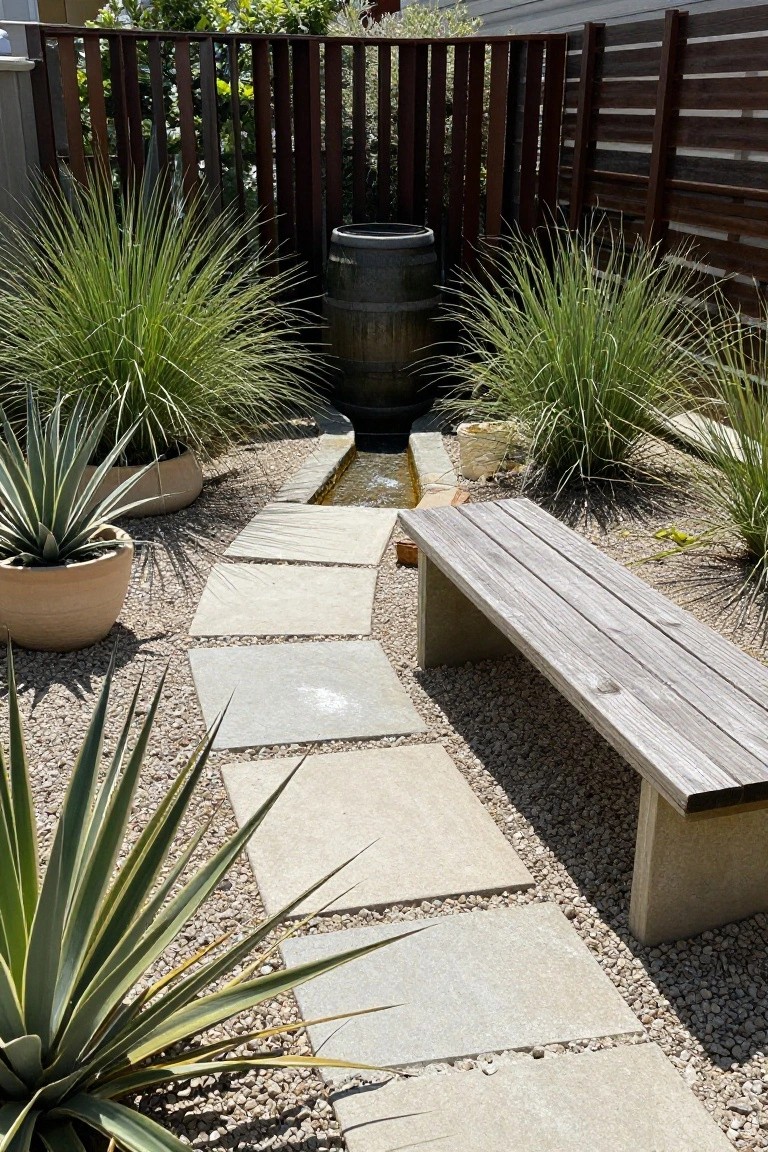
Gravel gardens like this one swap out grass lawns for a mix of small stones and drought-tolerant plants. You get a clean path of wide stone pavers winding through, plus spots for sitting without needing constant watering or mowing. The agaves and tall grasses fill in nicely, and that barrel fountain adds a bit of sound without fuss.
These work best in hot, dry yards where water bills add up. Start with landscape fabric under the gravel to block weeds, set your stones where people will walk, then tuck in low-water plants around the edges. A simple bench at the end makes it a real hangout spot. Just refresh the gravel every few years.
Nestle a Stone Bench in Lush Ferns
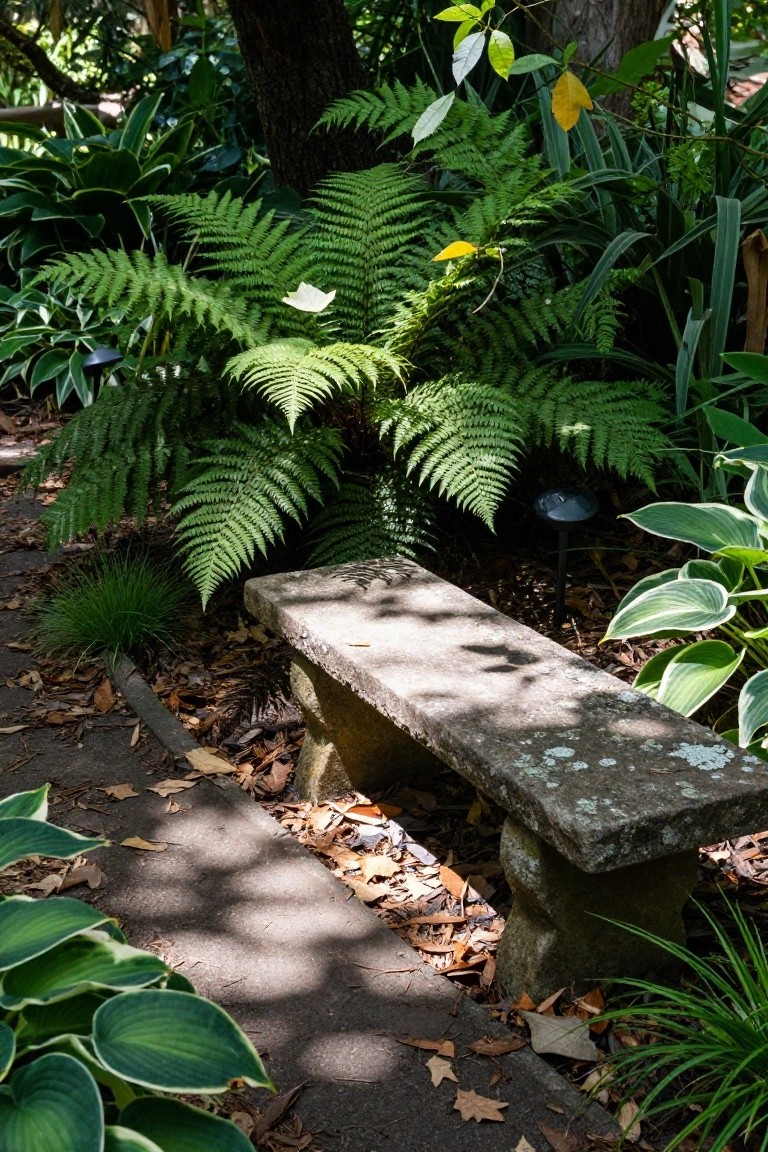
A plain stone bench tucked right into a thick planting of ferns makes for an easy garden spot to pause and breathe. The bench looks right at home there, with ferns arching over it and soft path nearby. It’s low fuss too, since ferns handle shade well and don’t need much water or trimming once established.
Put this in a shady corner or along a back path where you want a quick rest without building anything fancy. It fits woodland yards or spots under trees best. Just make sure the ground drains okay, or the bench could stay damp. Native ferns keep it sustainable and looking full year round.
Wildflower Borders Along Fences
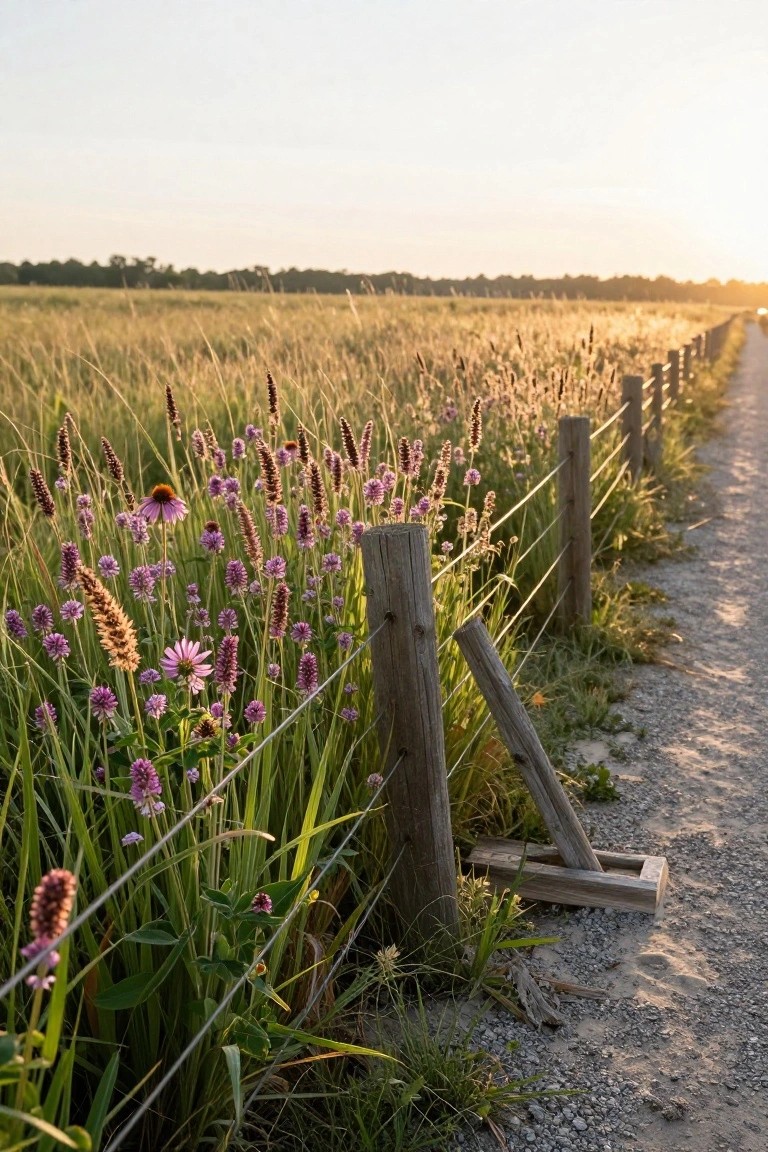
One easy way to add color and life to your backyard is planting wildflowers right along a fence line. You see tall grasses mixed with pink spikes and coneflowers hugging the posts, creating that natural look without much fuss. These native plants draw pollinators, need little water once established, and keep things eco-friendly by cutting down on mowing and chemicals.
Try this in a sunny spot next to a path or property edge, especially if you have a simple wood fence. Start with seeds or plugs of local varieties like prairie clover and big bluestem. It fits smaller yards too, just keep the bed narrow to avoid overwhelming the space. Watch for any aggressive spreaders in your area.
Wildlife-Friendly Garden Pond
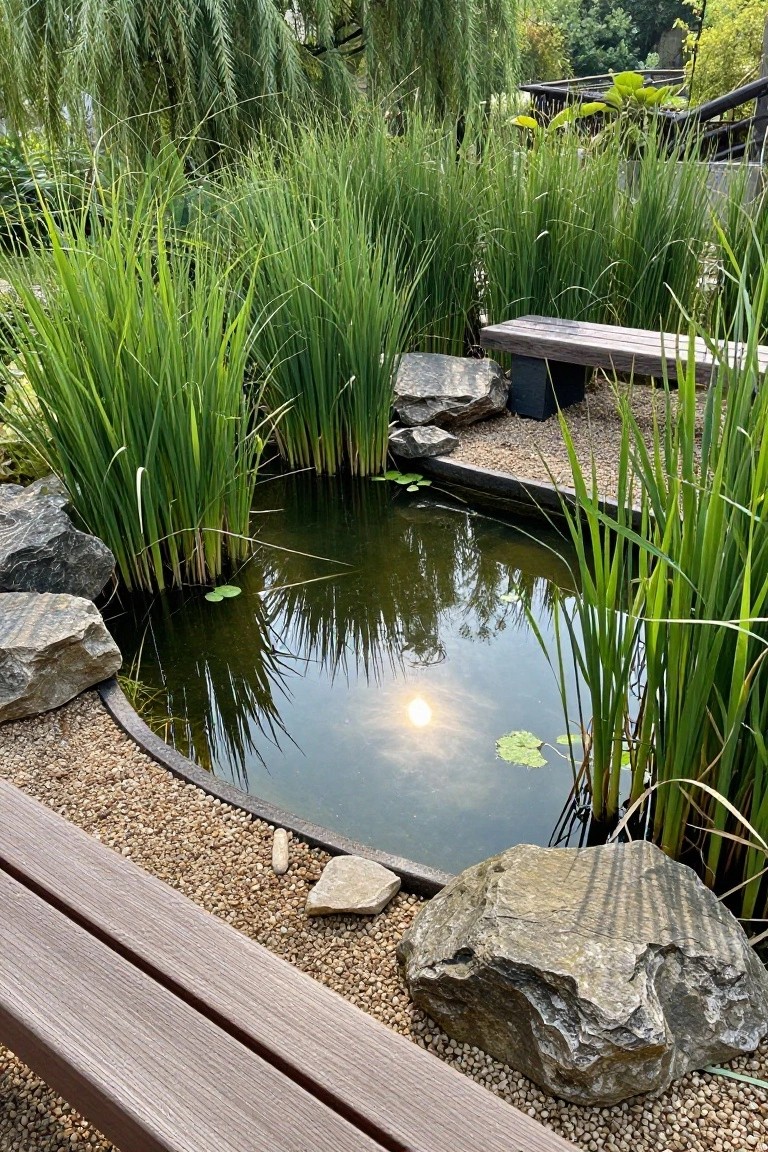
A simple pond like this pulls in birds, frogs, and dragonflies to your yard. The tall reeds and floating water lilies give it a wild, natural feel without needing fancy upkeep. Rocks around the edge and gravel ground it all, making the space feel balanced and easy on the eyes.
This works great in smaller backyards where you want some water without the hassle. Pick native reeds so they thrive on their own, and keep the liner simple. Add a bench close by… and you’ve got a quiet spot that boosts your garden’s eco side.
Tiered Stone Herb Gardens
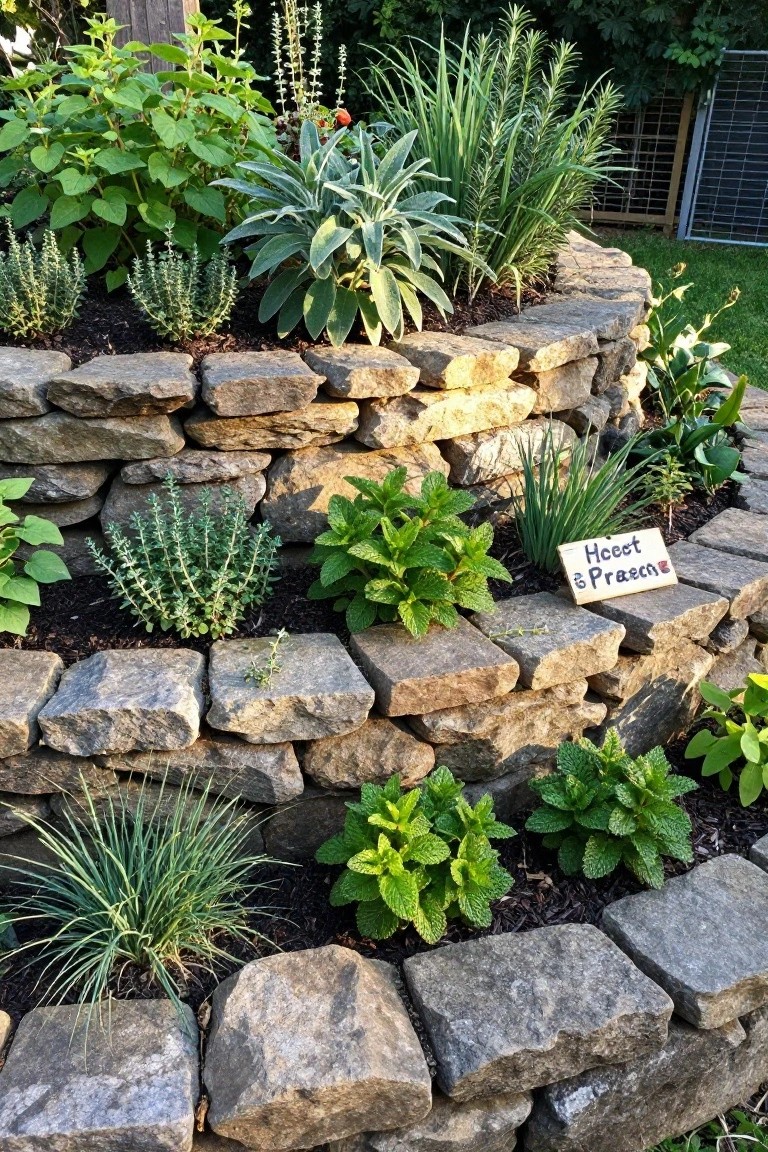
One simple way to fit more plants into a tight backyard spot is building tiered beds from natural stone. These stacked walls create levels that hold soil for herbs like rosemary, mint, and labeled chives or parsley. The rough stones blend right into the landscape. No mortar needed. It feels sturdy and lets roots spread without washing out.
This works best on slopes or level ground where you want to grow edibles without taking up flat space. Source stones locally to keep it eco-friendly and low-cost. Pick drought-tolerant herbs to save water. Just watch for weeds in the cracks… pull them early.
Vertical Fence Planters for Edibles
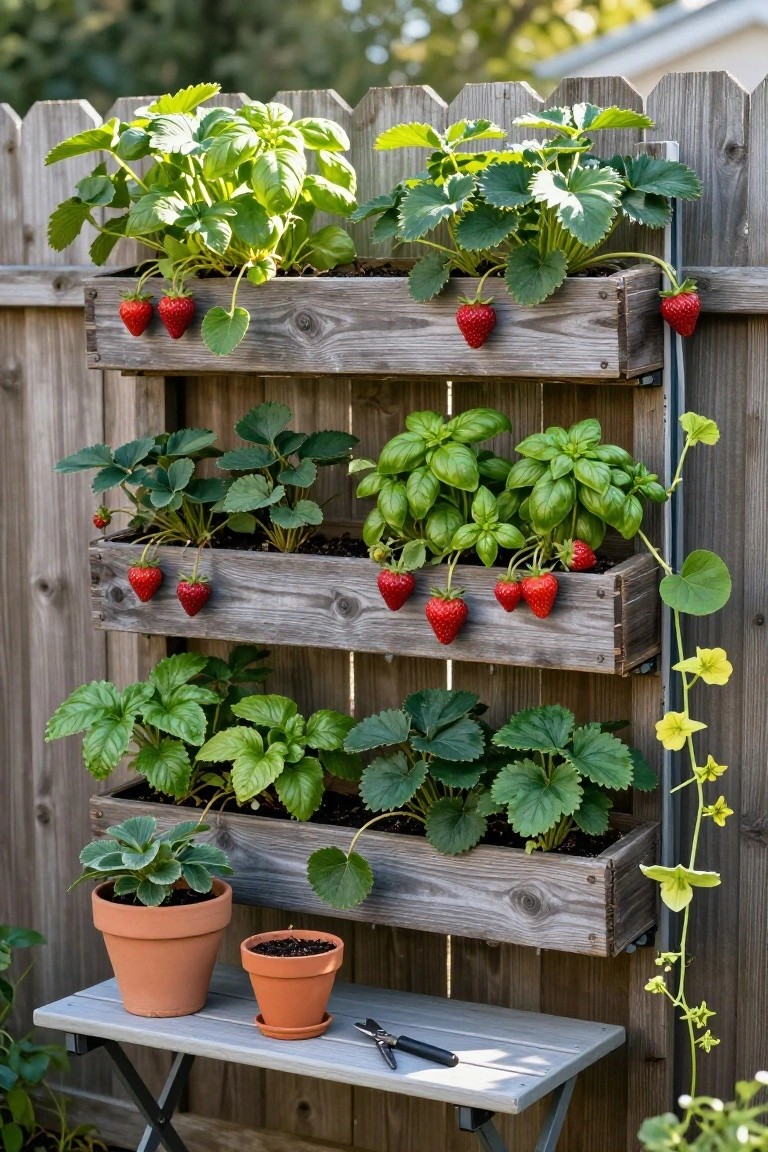
One smart way to make use of backyard fences is mounting tiered wooden planters right on them. These setups let you grow strawberries and herbs like basil without taking up ground space. The ripe berries hang over the edges, making them easy to pick, and the plants fill out the boxes nicely. It’s a practical look that fits right into a casual garden setup.
You can build something similar with reclaimed wood boxes attached to any sturdy fence that gets good sun. Fill them with soil suited for edibles, and plant trailing strawberries on top with bushier herbs below. This works best in small yards or patios… just make sure the fence can hold the weight when watered. Keeps things productive and off the lawn.
Stepping Stone Paths in Mulched Gardens
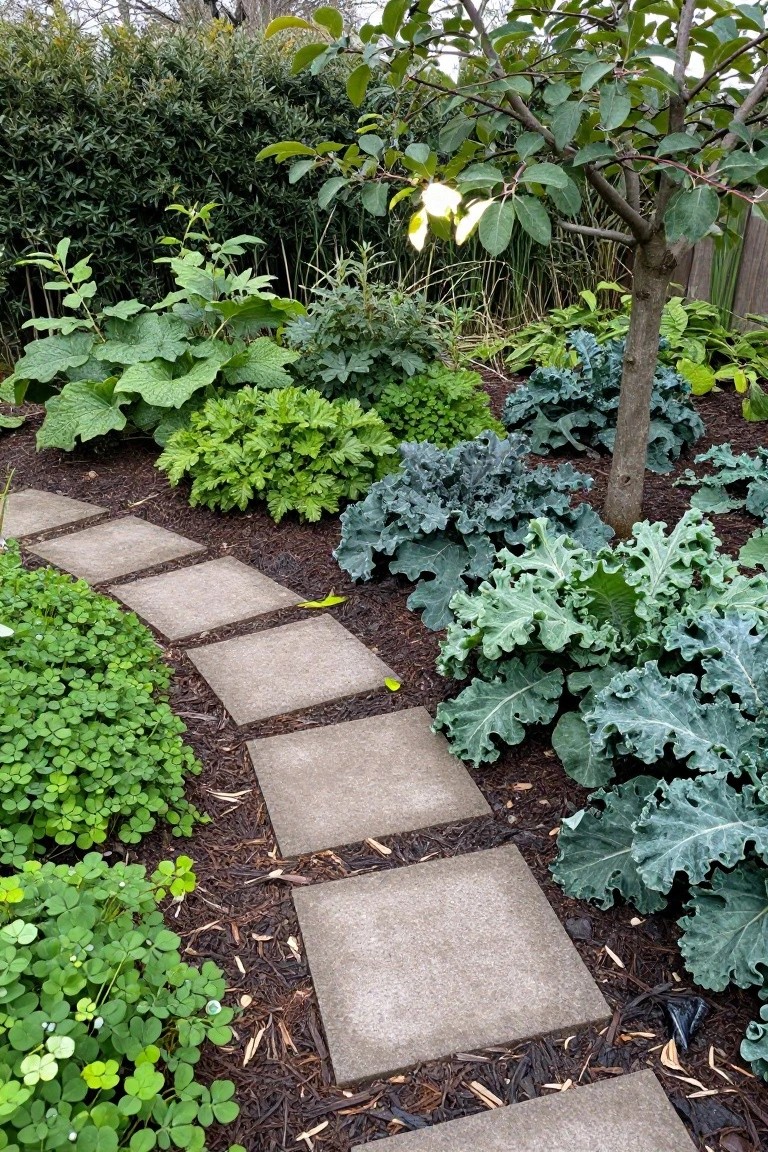
A simple way to add structure to your backyard garden is with square concrete stepping stones laid into deep mulch beds. Here you see them curving gently through lush plantings of kale, clover, and other greens. The mulch keeps weeds down, holds in moisture, and feeds the soil as it breaks down. It’s practical for everyday walking without paving over everything.
These paths work best in veggie or herb areas where you want easy access but still room for plants to spread. Lay the stones loose on leveled mulch, spacing them for your step. Pick bark mulch from local trees to keep it sustainable. Just make sure plants like low-water ones won’t get trampled.
Low-Maintenance Green Roof Gardens
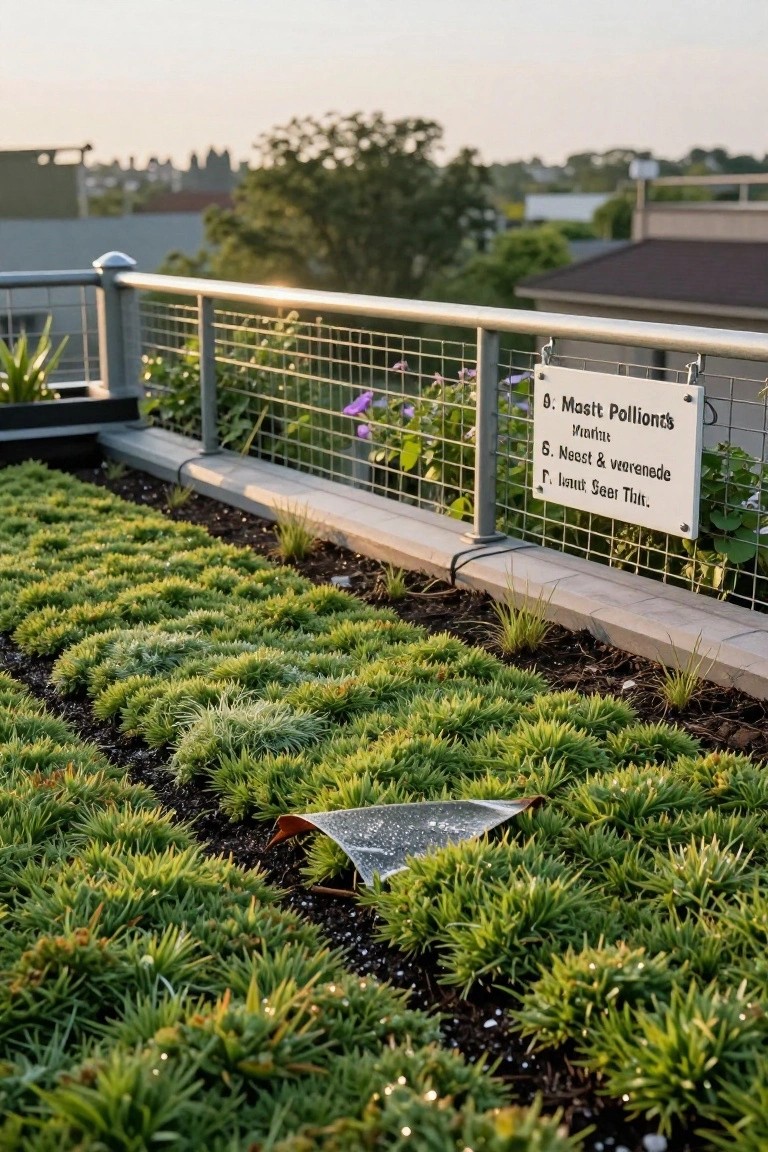
Green roofs like this one use tough, low-growing plants such as sedums and mosses that handle full sun and poor soil without much fuss. The structured rows and simple paths make it easy to walk around and enjoy, while the plant labels point to varieties that draw in pollinators and birds. It’s a smart way to add green space where yard room is tight, and it helps cool the building below.
These setups work best on flat roofs or sturdy balconies in urban spots. Start with a lightweight soil mix and pick natives suited to your area to keep watering low. Just check your roof can take the weight first, and maybe add gravel edging to hold everything neat.
Stepping Stone Paths Through Grass
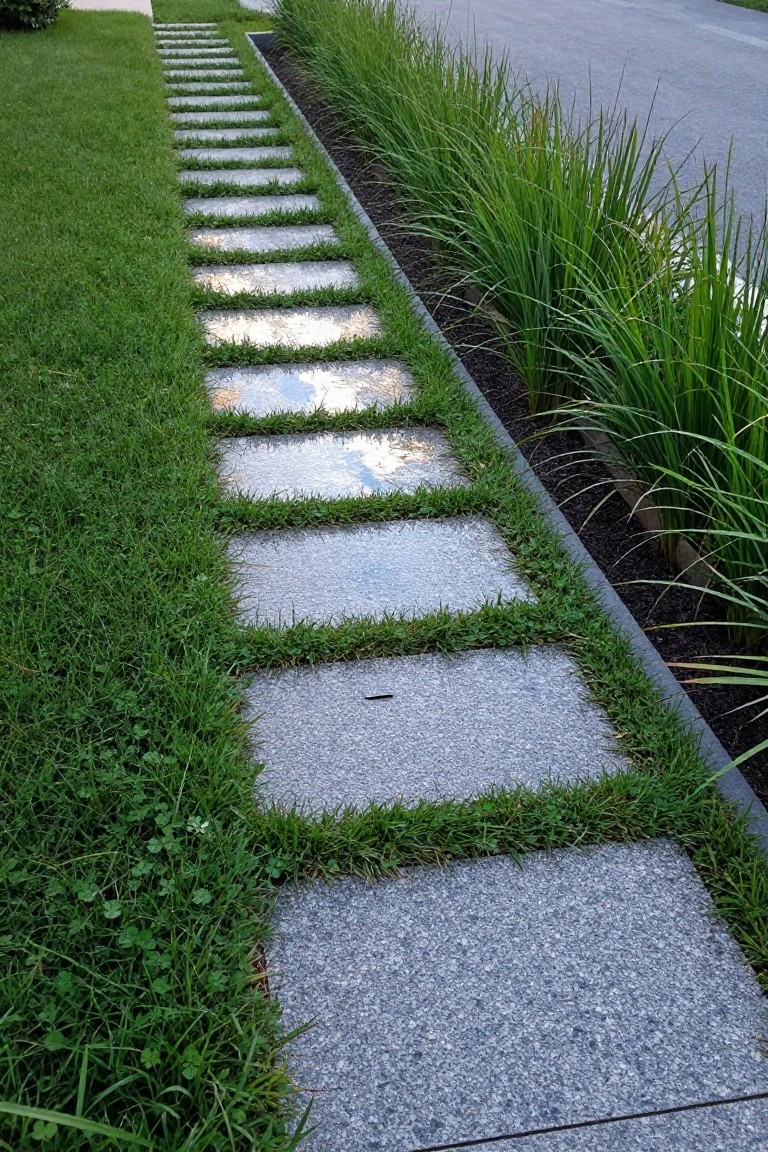
One easy way to add paths without paving over your whole yard is to set square stones into the grass. Like these granite pavers spaced just right for stepping from one to the next. It keeps most of the lawn intact. Grass fills in around them. And it’s sustainable too, since water soaks right through instead of running off.
These paths work great in backyards where you want to guide foot traffic without much upkeep. Plant taller grasses along one side for a soft edge. They suit any size lot, especially if you’re aiming for low water use. Just space the stones to match your stride. Avoid crowding them or the grass won’t thrive.
Compact Backyard Greenhouse
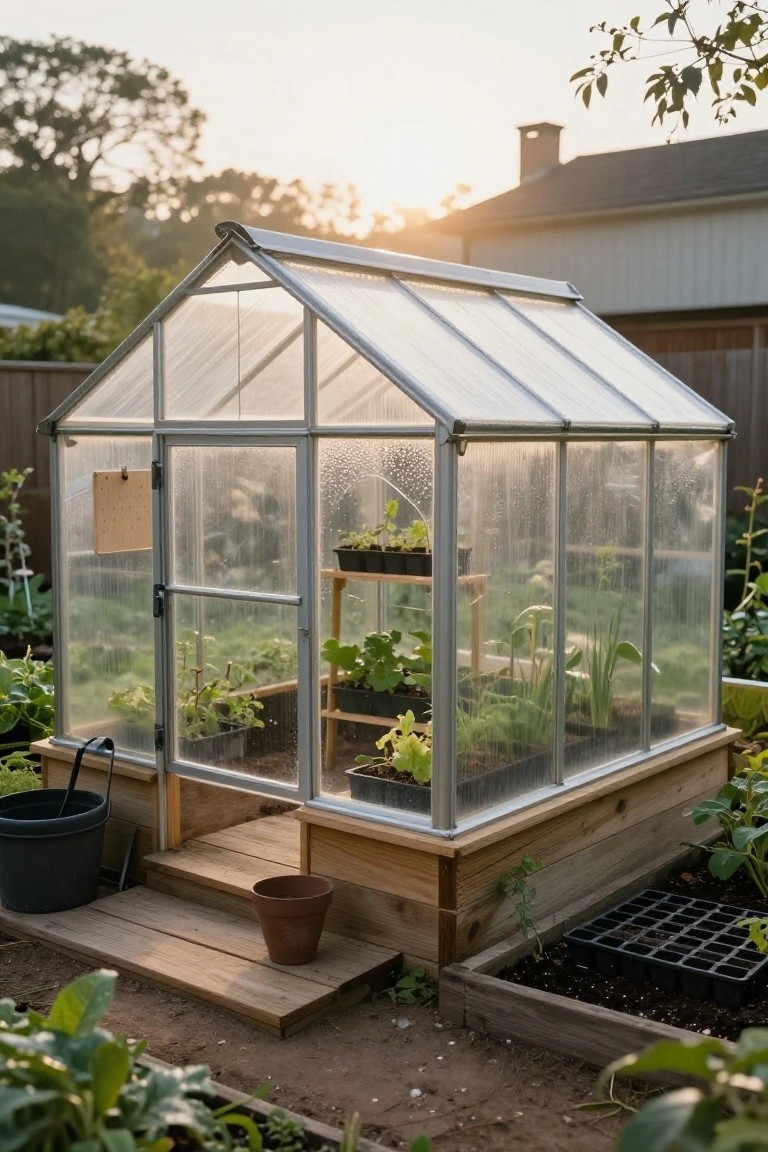
A small greenhouse tucked into the yard makes sustainable gardening easier by letting you start seeds early and shield plants from cold snaps. You see it here with young greens and herbs inside, plus trays of seedlings nearby. It keeps your growing season longer without much fuss, and that raised wooden base keeps everything off the damp ground.
Put one like this on level ground near your house for quick checks. Aluminum frames hold up well, and the clear panels let in plenty of light. It fits most backyards, even tighter spots, but make sure you vent it on warm days to avoid cooking the plants.
Natural Stone Raised Beds
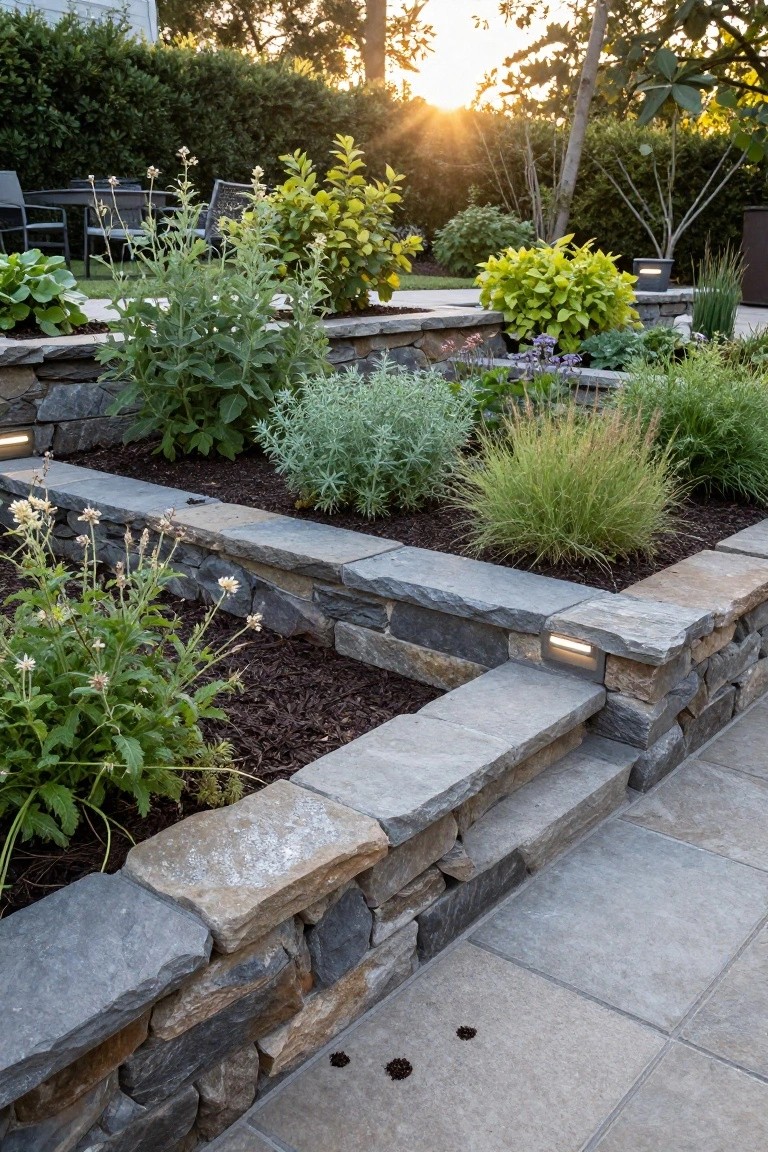
Raised garden beds built from natural stone give your backyard a sturdy, layered look that works great on sloped spots. The dark mulch keeps soil in place and weeds down, while plants like tall grasses and herbs fill in naturally without much fuss. It’s a simple way to turn a tricky hill into usable planting space, and the stone blends right into the landscape.
These beds suit eco-friendly yards because stone lasts forever and doesn’t need replacing like wood does. Pick local stone to cut down on transport, and plant low-water perennials or edibles inside. They fit best in backyards with some grade, maybe near a patio… just make sure the walls are stable if you’re stacking them yourself.
Raised Beds for Backyard Veggies
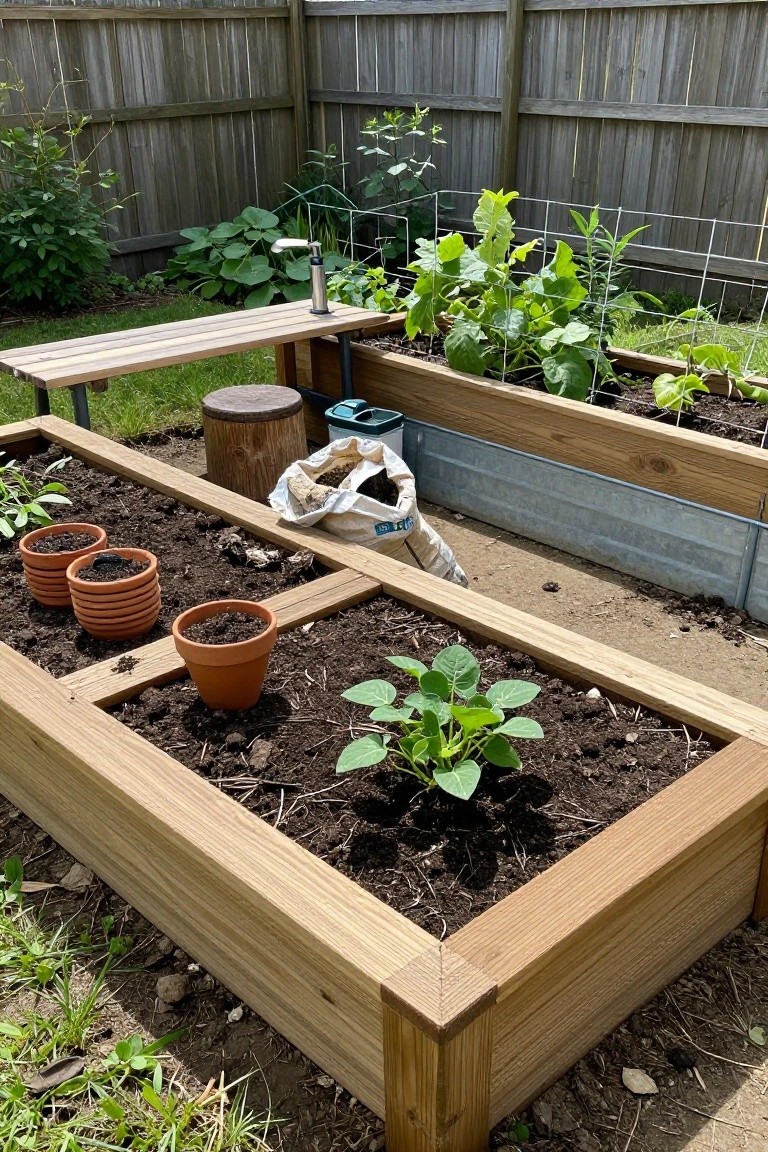
Raised garden beds like these wooden ones make growing your own food straightforward and sustainable. You fill them with clean soil and compost, skipping the weedy ground below. Wood keeps things natural, and the height saves your back. Notice the young plants and terracotta pots starting things off right.
Put them in a sunny corner near a fence for support. They’re ideal for small backyards or rentals, since you can build modest sizes with basic lumber. Just treat the wood to last longer, and rotate crops to keep soil healthy. Works well for beans, tomatoes, anything that climbs or spreads.
Moss Between Concrete Slabs
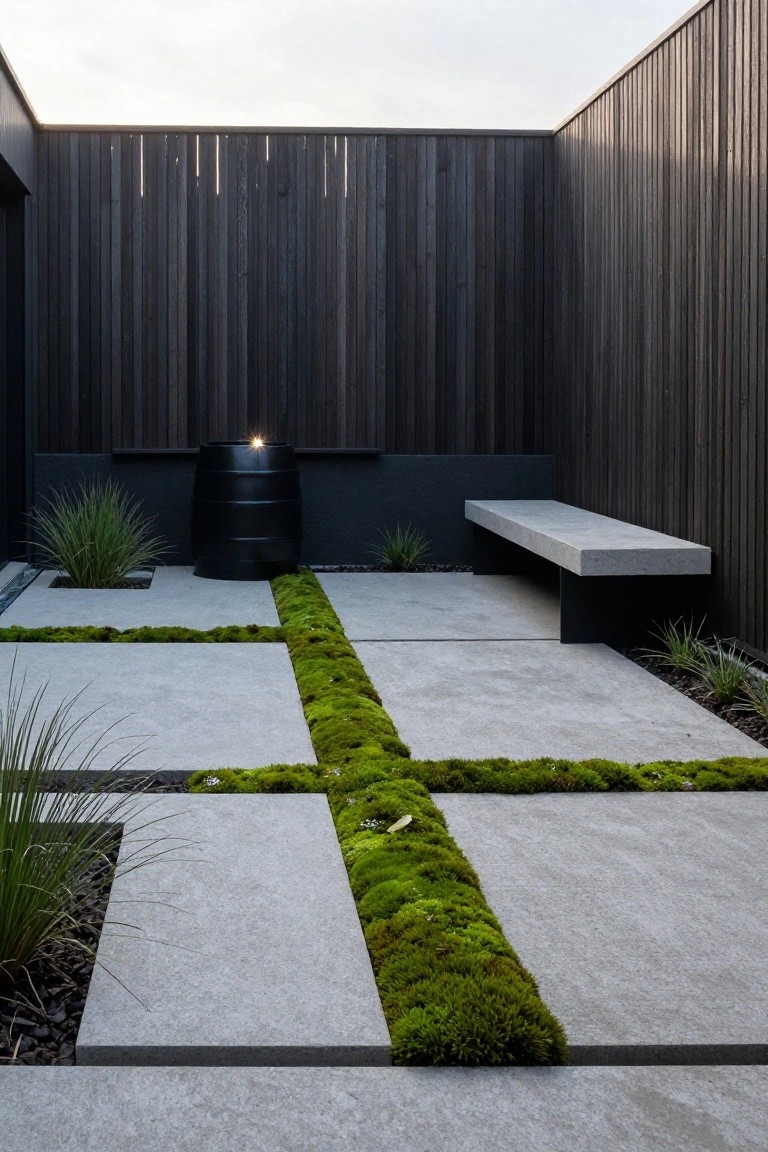
Big concrete slabs laid out with moss filling the gaps make for a simple, green hardscape that fits right into a backyard. The moss softens those hard edges and stays low-maintenance, needing mostly shade and not much water. It’s a nice way to blend stone with living green without turning your yard into a full lawn.
Try this on patios or paths in smaller spaces, like a courtyard setup. Add grasses around the edges for some height. It suits modern homes with partial shade. Leave wider joints so the moss can spread on its own.
Build a Bee Hotel for Pollinators
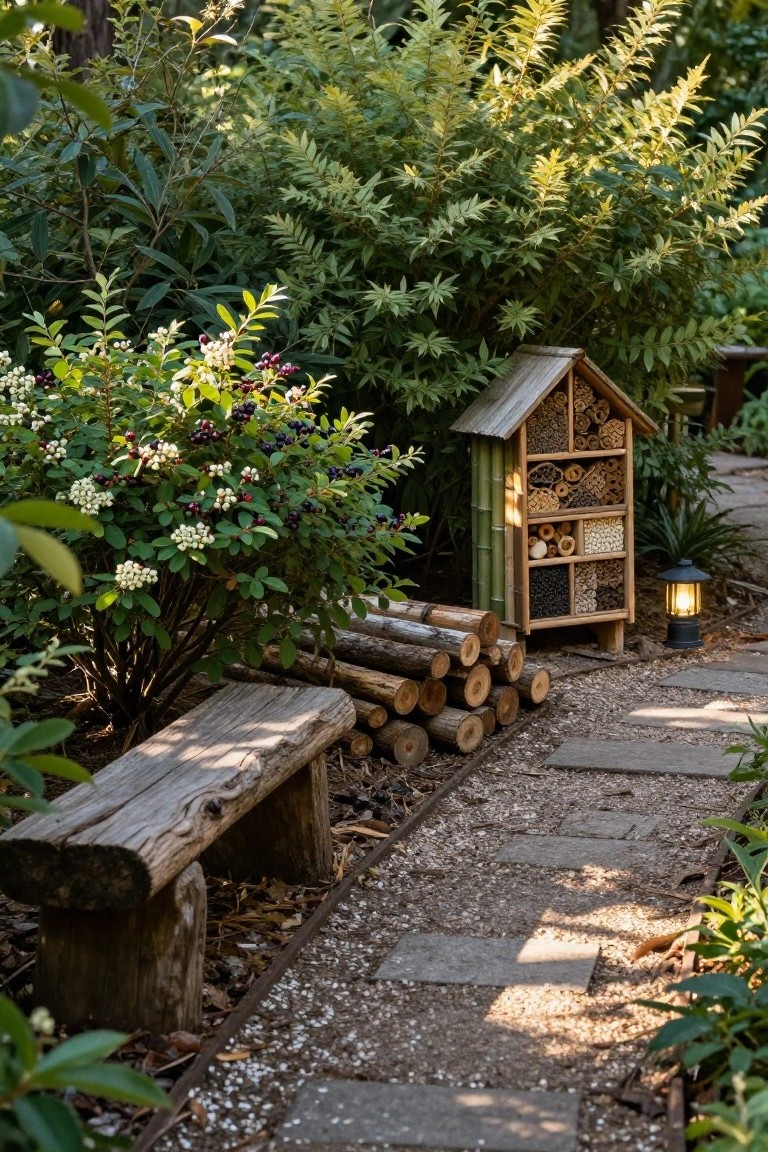
One simple way to make your backyard more eco-friendly is adding a bee hotel. These structures give solitary bees and other insects a safe place to nest, and they fit right into a natural garden setup. In this spot, a bamboo and wood version sits among ferns and berry bushes, looking like it belongs without any fuss. It helps boost pollination for your plants too, which keeps everything growing better.
Place one near flowers or veggies that need pollinators, maybe by a path or seating area so you can watch the activity. Use local materials like hollow reeds, bamboo, or drilled logs to fill the compartments. Keep it off the ground on legs to stay dry, and pick a sunny location sheltered from wind. It’s low cost and low maintenance once set up.
Frequently Asked Questions
Q: My backyard gets a lot of sun. Which of these ideas will hold up best without constant watering?
A: Focus on native plants and mulch heavily around them. They establish deep roots that pull moisture from below. Check the soil with your finger before adding more water.
Q: How can I deal with weeds without reaching for sprays?
A: Pull them when the soil feels soft. But cover the cleared spots right away with mulch. This stops new growth before it starts.
Q: Is composting worth the effort for a small yard?
A: Toss in kitchen scraps and yard clippings. Turn the pile every week or two. You’ll have rich soil in a few months.
