


I’ve noticed that the edges of flower beds are what first give a garden its sense of order, quietly framing the plants and paths as everything grows and shifts over seasons. When those borders weaken or fade, the whole layout starts to look ragged, no matter how vibrant the blooms. In my yard, switching to a sturdy edging transformed a jumbled patch into something that actually holds together year after year. Walkers by often comment on how crisp lines make the space feel larger and more deliberate. Worth trying a couple of these yourself.
Rock Edging for Flower Beds

One straightforward way to keep flower beds tidy is lining them with natural rocks. In this setup, a cluster of white daisies sits right up against a border of rugged stones. It gives a casual, earthy feel that blends into the yard without much upkeep. The rocks hold back the soil and plants nicely, stopping everything from spilling over onto the path.
You can pull this off almost anywhere, from a small side yard to a bigger backyard garden. Just gather rocks in a few sizes, stack or place them along the bed’s edge, and let low-growing flowers fill in. It works best around cottage-style homes or spots with some slope. Watch the scale though. too-small rocks might get buried over time.
Corten Steel Edging for Clean Borders
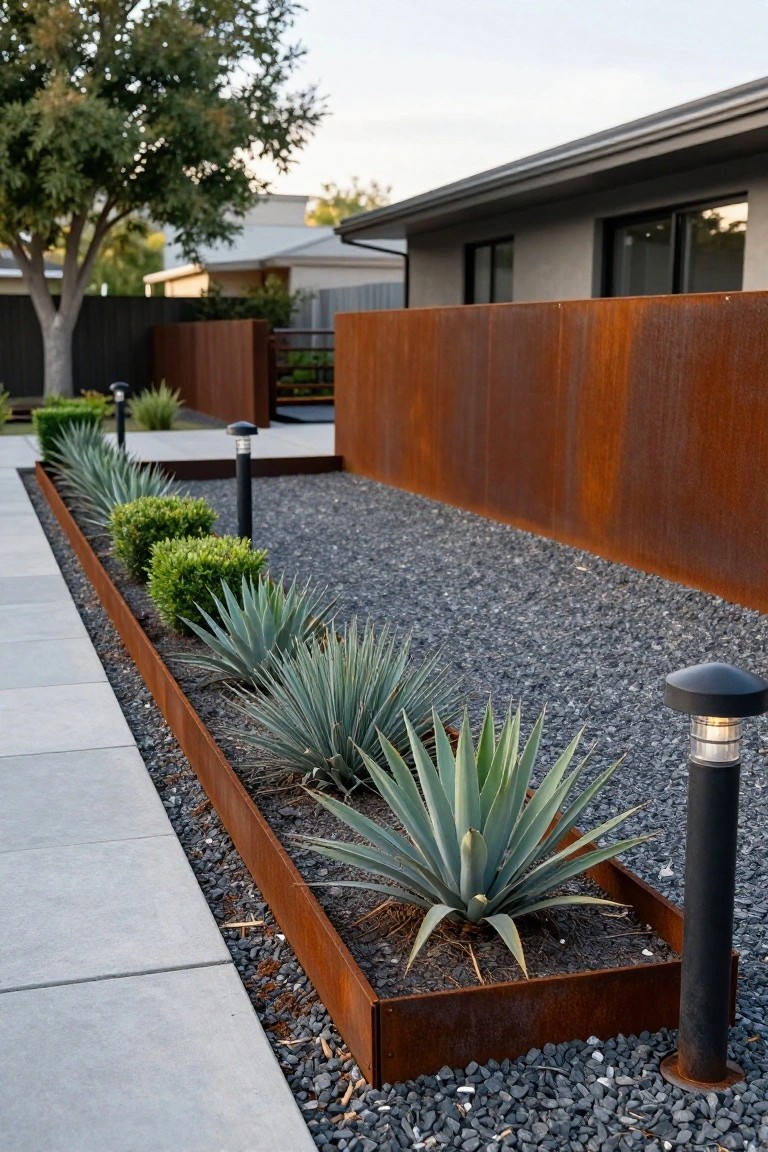
Corten steel makes a tough, good-looking edge for garden beds. It starts out plain but rusts to that rich orange-brown patina over time, which fits right in with gravel mulch and plants like agaves or boxwoods. The straight lines keep everything neat without much upkeep, and it stands up to weather better than wood or plastic.
You can run it along a walkway like this or shape it into raised planters. It suits modern homes or drier yards where low-water plants do well. Go for thicker sheets if your soil pushes hard, and set it deep enough so it lasts.
Rustic Stone Edging for Flower Beds

This kind of edging uses rough, stacked stones to hold back soil and mulch in a flower bed. It keeps everything tidy without any fussy lines. The natural shapes, even with bits of moss here and there, blend right into a backyard setting. Those tall purple lupines pop against it nicely.
Try it around mixed plantings like perennials and grasses. It suits cottage gardens or older homes best. Source stones from nearby if you can, for that real local look. On a gentle curve like this, it guides the eye along a path too. Just pack the base firm so nothing shifts.
Scalloped Concrete Edging for Flower Beds
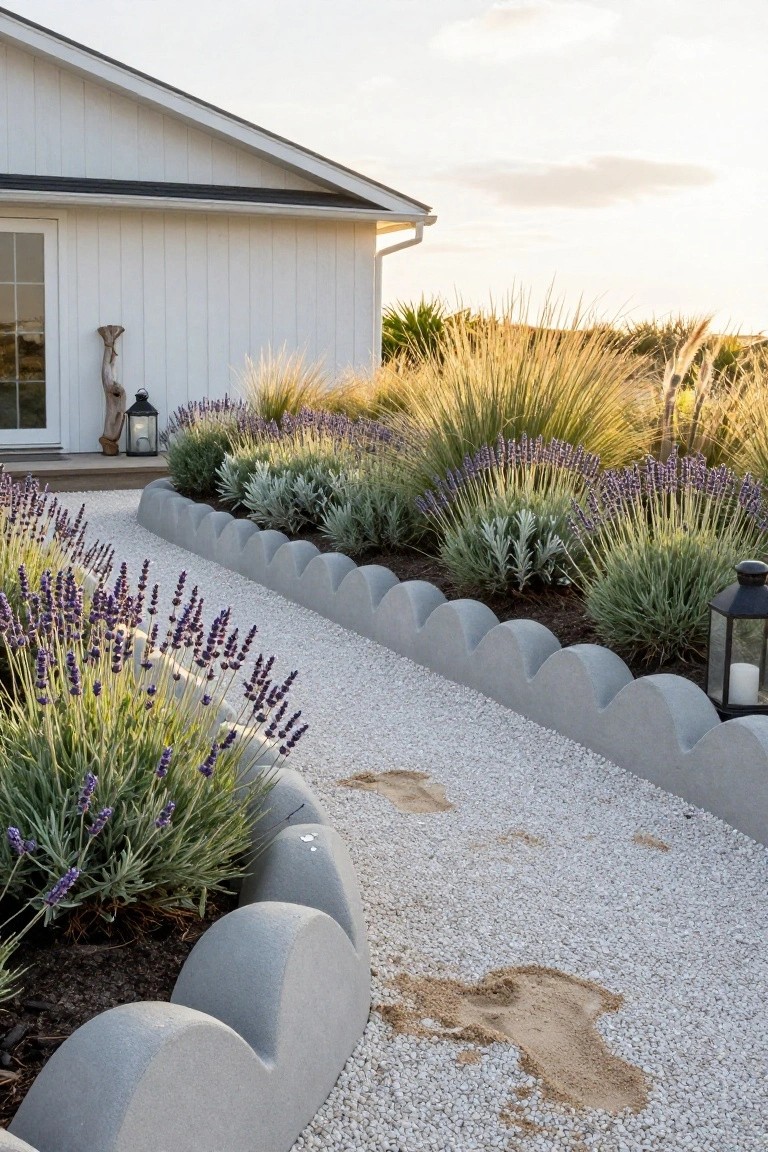
Garden beds look sharp when you line them with scalloped concrete edging. The wavy gray blocks create a soft border that holds back soil and plants without feeling rigid. Here it runs along a gravel path, keeping lavender and grasses in place nicely.
This works best in sunny spots with drought-tolerant plants. Try it around coastal homes or simple backyards where you want low upkeep. Go for concrete that matches local stone… it blends right in and holds up to foot traffic.
Stone Spheres as Bollard Edging

Big stone spheres like these make a strong, clean edge for garden beds. Placed along a gravel strip next to a low boxwood hedge, they hold the line between the driveway and lawn without looking fussy. The rounded shape gives a bit of softness to the hard materials, and they stand up well to everyday traffic.
You can use this setup along paths, driveways, or anywhere you need a durable border. It fits formal front yards or even side gardens on older homes. Go for granite or similar heavy stone, bedded into gravel so they stay put. Skip it in super small spaces where the scale might overwhelm.
River Rocks for Garden Path Edging

One simple way to keep flower beds neat is lining paths with smooth river rocks. They form a clean, curving border that holds back soil and mulch without looking stiff. In this setup, the rounded stones hug a gravel walkway, letting moss and plants spill softly over the edge. It’s low fuss and fits right into natural yards.
You can use these rocks anywhere with winding paths or straight borders. Grab a mix of sizes from a local supplier, lay them single file along the bed line, and backfill with gravel or dirt to hold them steady. They work best in shaded spots with moisture-loving plants… just rinse off moss buildup now and then to keep things fresh.
Rusted Metal Edging for Succulent Beds
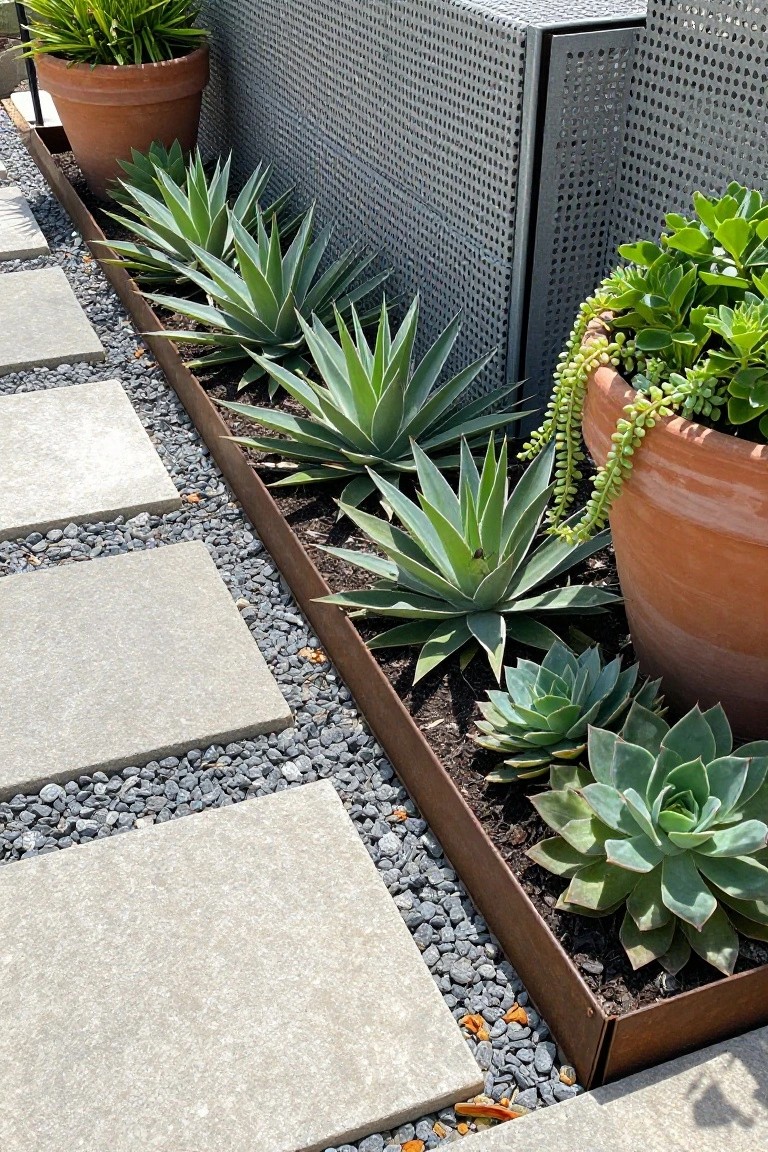
Rusted metal edging like corten steel makes a simple border for beds full of tough plants such as agaves and succulents. It holds everything in place along a path without looking fussy, and that natural rust color blends right into gravel or stone surrounds. Folks like how it stays put year after year, no rot or crumbling.
This works best in sunny, dry yards where low-water plants thrive, maybe next to a patio or side entrance. Set the edging flush with your walkway, backfill with well-draining soil, and plant densely. Skip it in wet climates unless you seal the inside… otherwise it might speed up too fast.
Brick Edging for Flower Beds
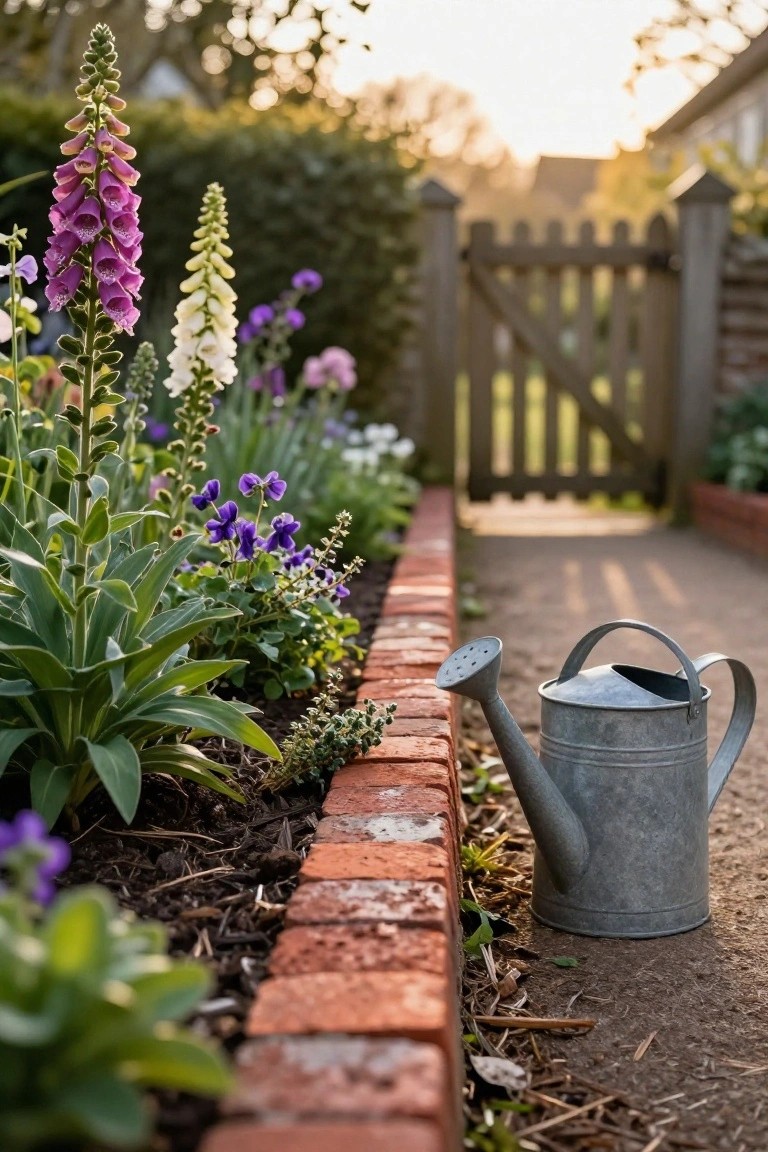
Brick edging gives flower beds a clean, finished look that holds everything in place. You see it here along a simple path, where tall foxgloves and violas spill right up to the low red bricks without going over. It’s practical too. Keeps soil from washing out and weeds from creeping in.
This works best in cottage gardens or anywhere you want a bit of structure without much fuss. Lay bricks on a sand base for drainage, and it suits most yards. Go with reclaimed bricks if you like that worn-in feel… just check they’re level so water doesn’t pool.
Raised Concrete Edging for Tidy Beds
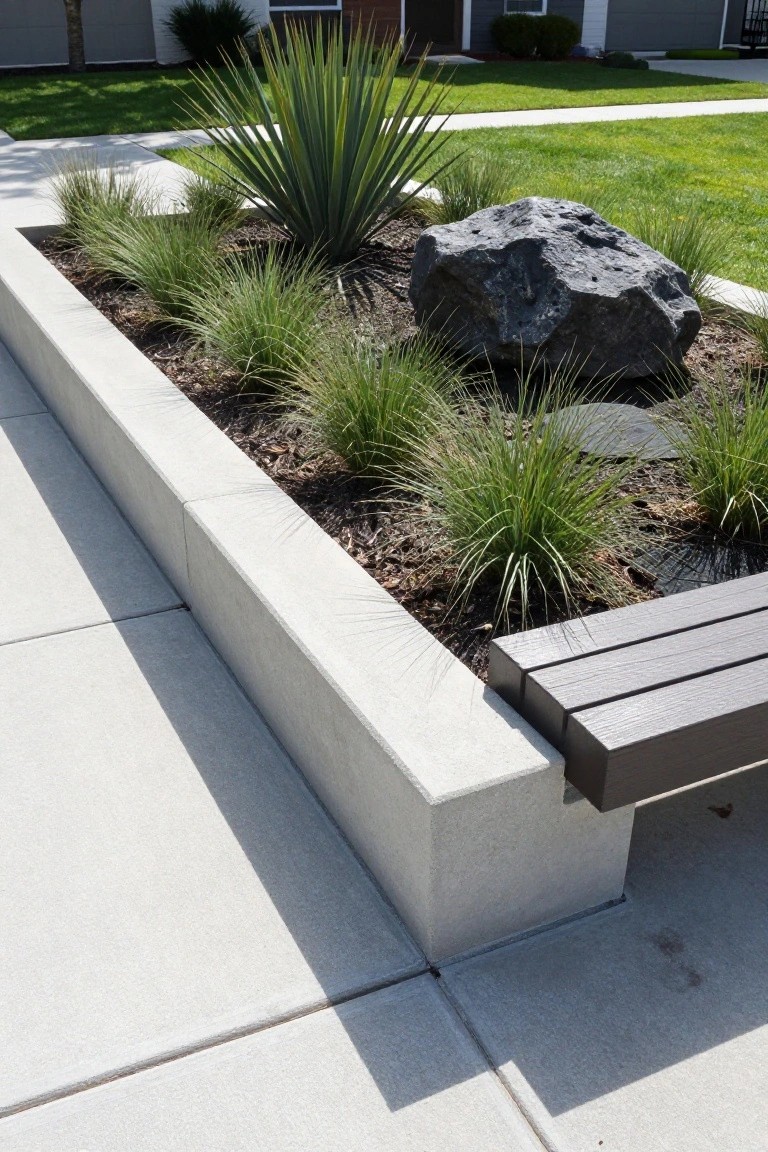
Raised concrete beds like this one make garden edges look sharp and modern without much fuss. The clean white walls hold back soil and plants nicely, keeping mulch in place and weeds out. Here, tough grasses and a big boulder fill the space, giving a low-key desert feel that stays put year-round.
You can use this in front yards or along paths where you want structure but not high upkeep. It fits sunny, dry areas best, maybe near a patio or entry. Just pick drought-tolerant plants to match, and add a bench if there’s room… turns it into a spot to sit.
Potted Citrus Trees for Courtyard Edges

A big potted lemon tree like this one makes a strong edge for small garden spots. It stands tall in a simple terracotta pot right up against the wall. The oranges add color and interest without needing much ground space. Pair it with smaller pots of lavender or herbs at the base and you get a neat layered look that keeps things tidy.
This works best in sunny courtyards or patios where you want structure but not full beds. Plant a dwarf citrus in a wide pot for stability. Tuck lower plants around it to fill gaps. It suits Mediterranean style homes or anywhere with tile floors. Just make sure the pot drains well to avoid root rot.
Rustic Log Edging for Flower Beds

Split wooden logs make a simple, sturdy border for flower beds. They hug the soil tight and let colorful blooms like red dahlias and pink cosmos stand out against the dark, weathered wood. It’s a natural look that feels right in a backyard garden, without much fuss.
Lay the logs flat along the bed edge, maybe half-buried for stability. This works best in cottage gardens or next to paths, paired with gravel to keep things tidy. Old fence posts or tree rounds do the job cheap, and they age nicely over time.
Metal Edging for Clean Flower Beds

Thin metal strips like these make a big difference in keeping flower beds sharp and contained. Buried just along the edge of the sidewalk here, they hold back the soil and plants without letting grass creep in or flowers flop over. You get that tidy look that lasts through the season.
This works best in front yards or side paths where space is tight and you want low upkeep. Pair it with mounding perennials such as hydrangeas or daylilies, then top with mulch. Avoid curves if you’re new to it. Straight runs are easiest to install.
Tiered Concrete Beds for Sloped Gardens
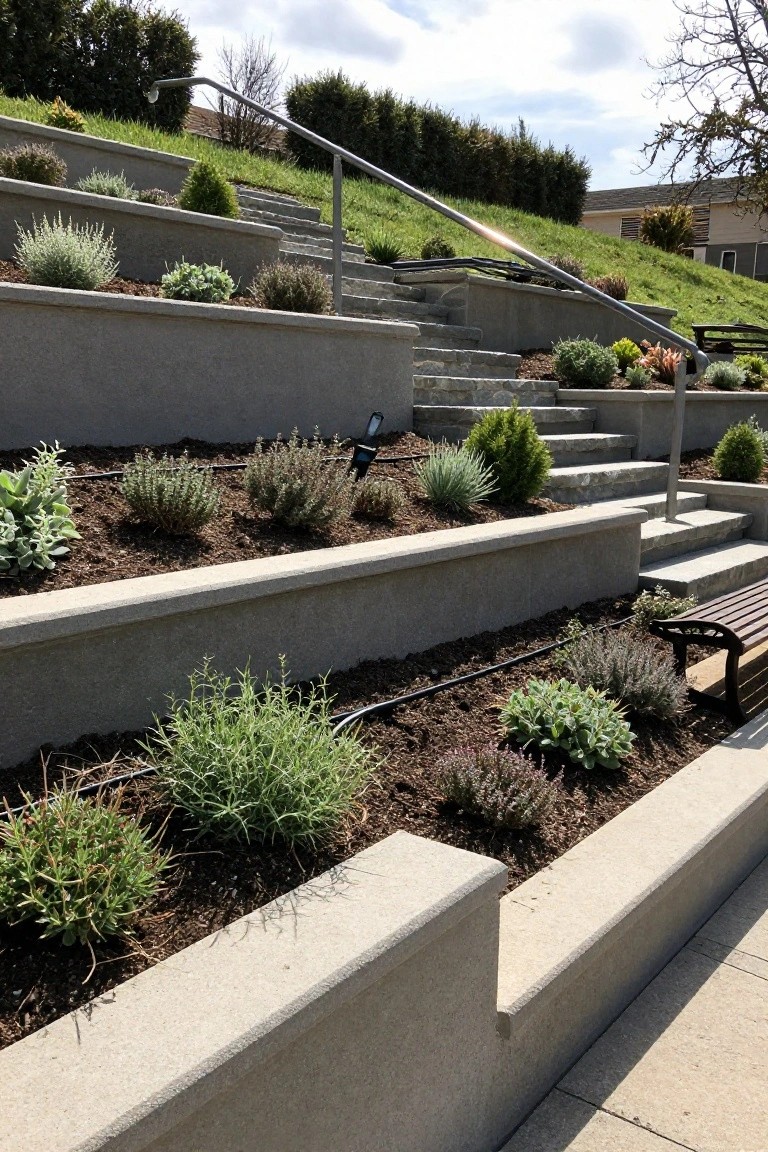
Concrete retaining walls turned into tiered garden beds give sloped yards a sharp, organized look. You see neat rows of plants tucked into the beds, like lavender and succulents, all held back by smooth gray concrete. It keeps soil in place without fuss and makes the whole slope feel intentional instead of wild.
These work best on hillsides where you want low upkeep and a modern edge. Build them wide enough for good planting depth, add drip lines for easy watering, and pick drought-tolerant stuff. They suit contemporary homes or any spot needing structure… just check local drainage rules first.
Wood Block Edging for Flower Beds
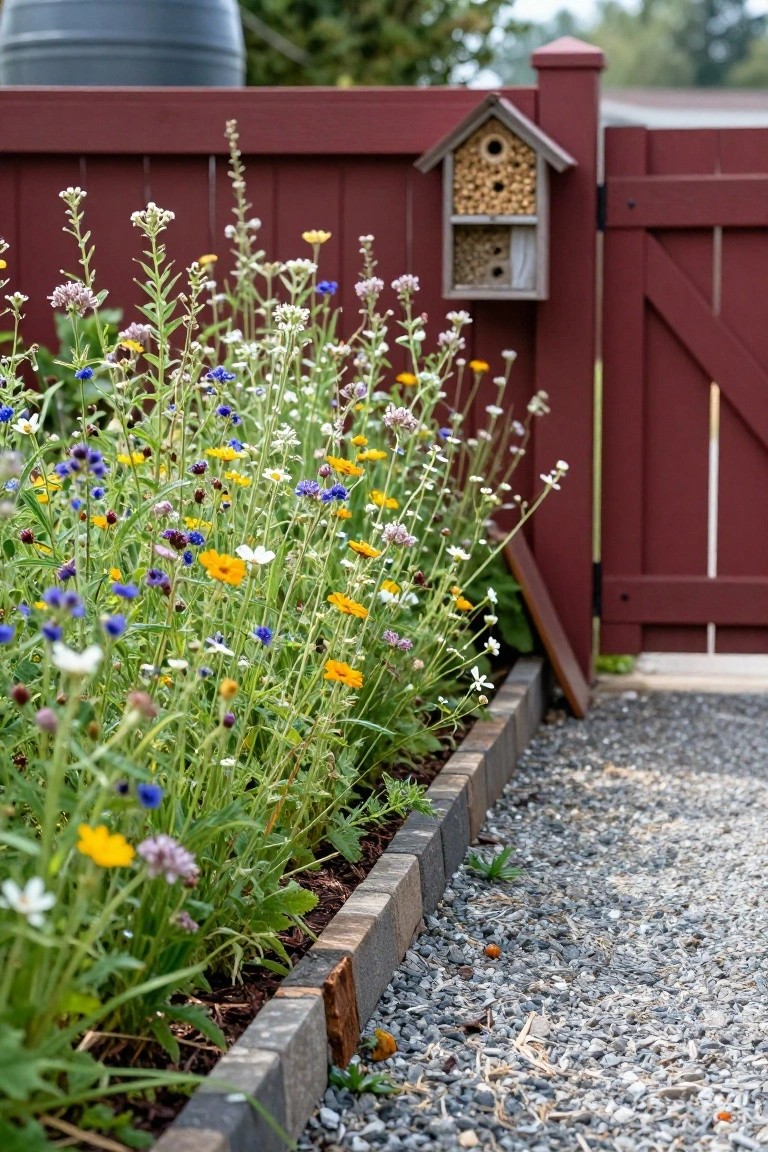
Wood blocks make a sturdy, natural border for flower beds like this one. Laid flat along the edge, they keep soil in place and give the bed a tidy shape without much fuss. Here, the dark blocks set off a mix of colorful wildflowers nicely, right next to a gravel path.
This works well in backyard gardens with loose plantings. Source short timber sections from a lumber yard, set them in a shallow trench, and backfill with soil. It suits casual spots near fences. Just use treated wood if moisture is an issue.
Rusted Metal Planter Benches

One smart way to edge garden beds is with raised metal planters that curve into benches. The weathered rust finish looks right at home outdoors and ties into the plants without much upkeep. You get neat borders for flowers or ferns plus a place to sit all in one piece.
These work best in cozy backyards where space is tight. Plant hostas or ferns inside to soften the metal edges then top the benches with simple woven cushions. They suit casual gardens that mix hard surfaces with greenery but check your soil drainage first since metal can heat up in full sun.
Clean Stone Pool Edging

A simple white stone coping runs right along the pool edge where it meets the weathered wood deck. That clean line keeps water contained and gives the whole area a tidy look without much fuss. The contrast with the wood makes the border stand out just enough.
This works best around backyard pools or any spot where decking bumps up to a hardscaped feature. It suits casual outdoor spaces with plants nearby. Go for light-colored stone to brighten things up, and keep it level for safety.
Raised Brick Planters for Tidy Herb Beds

One simple way to edge a garden bed nicely is with raised planters made from the same brick as your house wall. It keeps everything looking tied together. Here you see a long bed packed with herbs like basil and some tougher plants, all held in by that sturdy brick. The metal rim on top gives it a clean finish too. This setup makes the planting area feel structured without much fuss.
These work great along a side path or patio edge where you want herbs close to the kitchen door. They suit townhouses or older brick homes best, since the material matches right up. Just make sure the soil drains well, or add gravel at the bottom. It’s practical for picking fresh stuff all season.
Log and Rock Path Edging

One easy way to keep garden paths neat is lining them with a big log and some river rocks. It gives a clean edge without much work. The log acts like a natural curb, holding back soil and plants, while the rocks fill in gaps and stop weeds. This setup fits right into wooded spots where you want things to look wild but organized.
To try it, find a sturdy log from your yard or nearby, and gather smooth stones from a creek bed. Lay the log along one side of the path, then tuck rocks against it. It works best in shady gardens with ferns or mulch. Just check the log now and then for rot, and replace if needed.
Terracotta Pots as Garden Edging
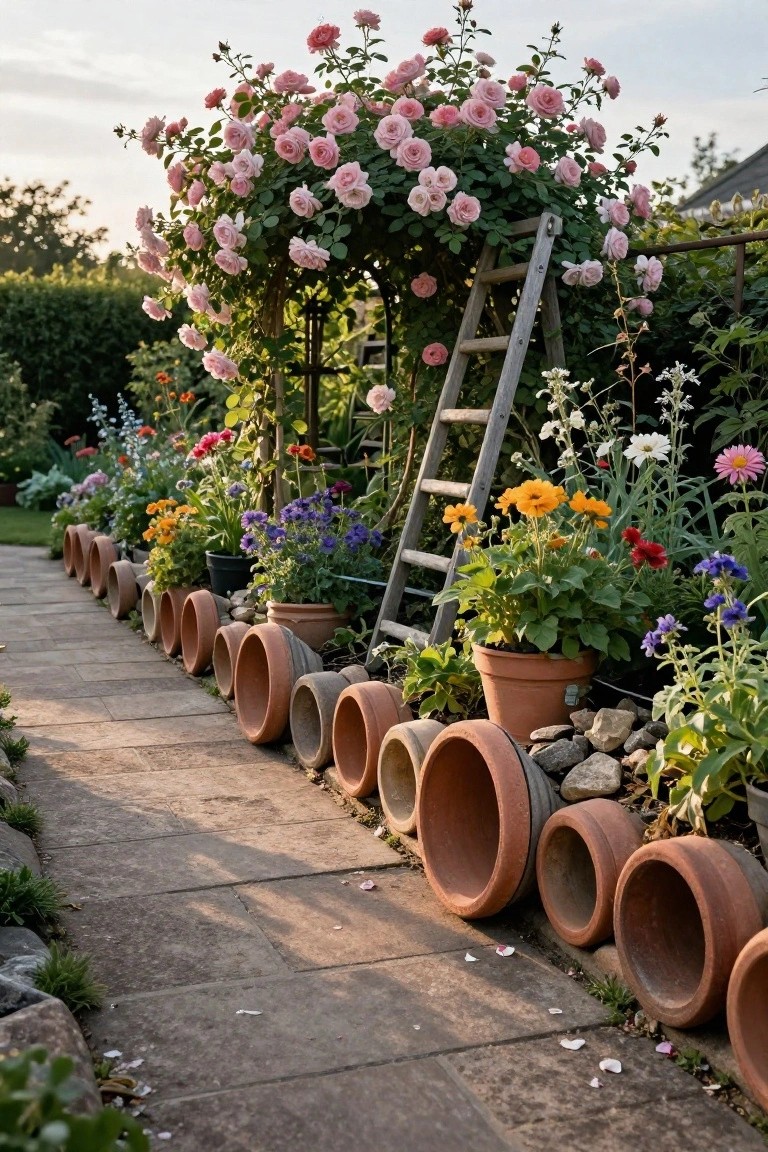
One simple way to edge flower beds is lining up terracotta pots along a path. It keeps plants from spilling over onto the walkway and gives everything a neat, folksy look. Those pots hold back the soil while letting flowers poke through here and there.
You can use whole pots, stack a few, or cut them in half and bury the edges. Works best in cottage-style yards or anywhere with a stone path. Just make sure they’re stable so nobody trips.
Raised White Edging for Garden Beds
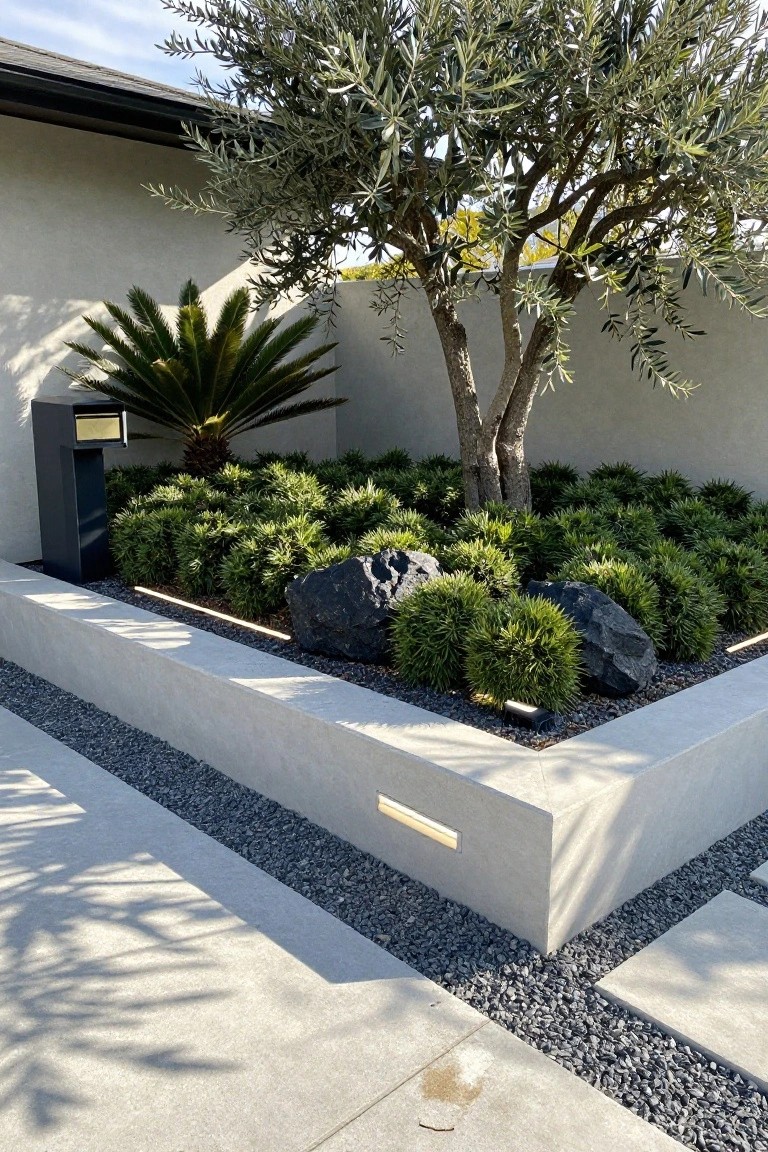
Raised white walls make a simple way to edge garden beds and keep plantings looking sharp. Here the smooth concrete edges hold back structured shrubs and big black boulders while dark gravel fills in around them. It gives a clean modern feel without much upkeep and ties right into the house wall.
This works best around patios or along house sides where you want low borders that won’t flop over time. Go for stucco or poured concrete on the edges… pair it with gravel mulch to cut down on weeds. Suits dry climates or modern homes. Just make sure the height fits your plants so they don’t spill out.
Concrete Block Raised Beds

One straightforward way to edge your garden beds is stacking concrete blocks into raised planters. They hold everything in tight, making it simple to plant veggies like strawberries and tomatoes without the soil spilling over the sides. You see labels on the plants here, which keeps track of what’s what in a busy patch.
These work best in average backyards where the ground isn’t great for growing. Just stack the blocks two or three high, line them if you want to keep soil from staining, and fill with good compost mix. They’re cheap and tough. Watch for weeds creeping into the block holes though.
Frequently Asked Questions
Q: How do I stop my edging from shifting after rain?
A: Dig a trench a bit deeper than the edging height.
Pack gravel at the bottom for drainage and stability. Top it with soil and tamp it down firm.
Q: What’s the simplest edging for a beginner like me?
A: Pick up some flexible plastic strips from the garden store.
Push them into a shallow trench along your bed. They bend easy around flowers and hold up for years.
Q: Can edging keep grass from invading my flower beds?
A: Run a sharp spade along the edge every couple weeks to slice invading roots.
This quick trim stops grass cold…and your beds stay neat.
Q: How do I edge a sloped yard without it sliding?
A: But drive stakes every foot or so on the low side.
Anchor everything tight. Walk on it a few times to settle the soil.
