


I’ve noticed over years of tending my own yard that garden borders quietly define whether a landscape feels structured or just scattered.
They frame plantings and paths so the whole space flows naturally as it matures through seasons.
Without solid edges, even the best layouts blur into chaos when perennials spread.
I swapped out plain wood for clipped boxwood in one bed last spring, and it sharpened everything instantly.
Certain combinations here adapt well to different soils and sunlight, making them practical to test over time.
Lavender-Lined Boxwood Borders

One clean way to edge a garden path is with low boxwood hedges trimmed into neat squares, paired alongside with spikes of lavender. Those terracotta pots tucked in here and there keep it simple and grounded. It creates that polished look without feeling too stiff, and the lavender brings in some easy color through summer.
Try this along a walkway to the house or around a seating area. It works best in full sun where lavender thrives, and boxwood stays dense with a little trimming now and then. Suits cottage-style yards or formal setups… just keep the path gravel or stone to match that crisp edge.
Climbing Roses on a White Picket Fence
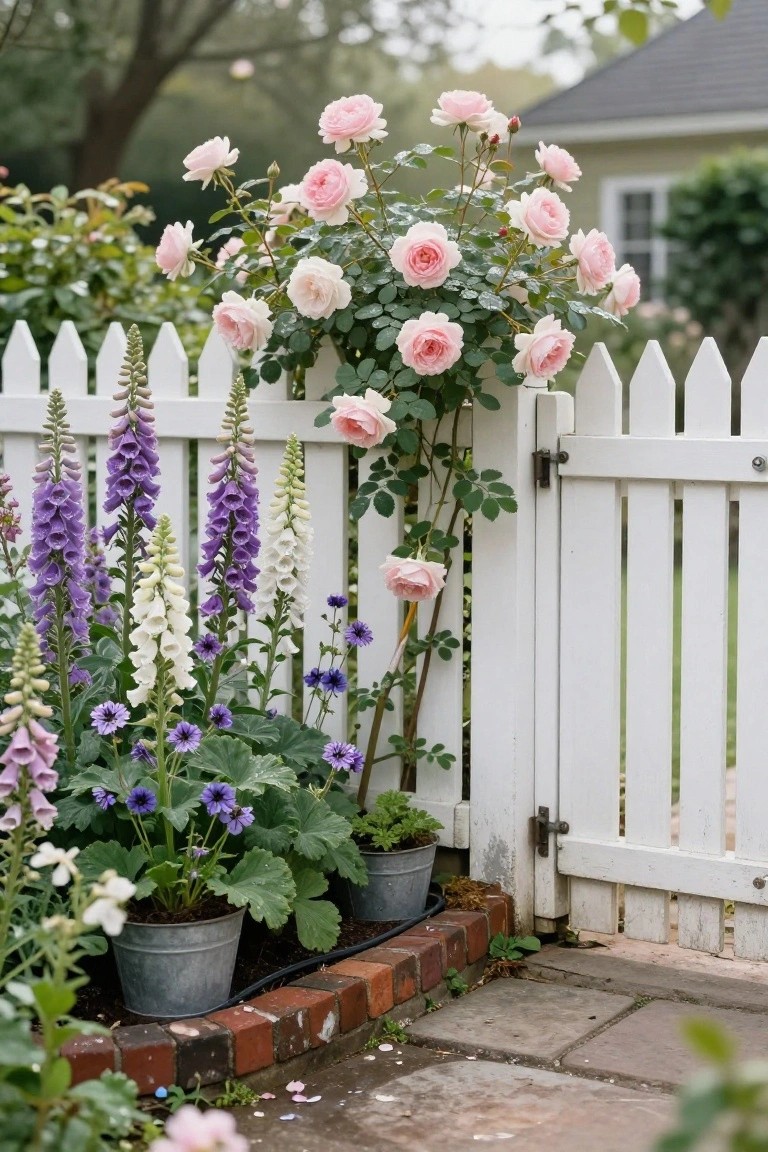
A simple white picket fence gets a big lift when you let climbing roses take over. Those soft pink blooms drape right across the gate and posts, turning a plain border into something straight out of a storybook garden. It keeps things neat but adds that easy romance without much fuss.
Train your roses up from the base of the fence, and mix in tall foxgloves nearby for some height contrast. This works best in smaller front yards or along paths where you want curb appeal that feels lived-in. Just prune once a year to keep it from getting wild.
Clean Gravel Borders with Agave Plants

One straightforward way to give your garden a polished edge is filling borders with gravel and planting blue agave along the way. The gravel keeps things tidy, cuts down on weeds, and lets the spiky leaves of the agaves stand out sharp against it. That simple setup next to a stone path makes the whole landscape feel put together without much fuss.
These borders work great in sunny spots where low-water plants thrive, like along walkways or around patios. Go for drought-tolerant agaves in a row for that repeating rhythm… just space them enough so they don’t crowd each other as they grow. It’s perfect for modern yards or drier climates, and the gravel drains fast after rain.
Rustic Raised Beds from Weathered Wood

Raised garden beds built from old, rough-sawn wood like this one bring a bit of farmhouse charm to any yard. The splintered edges and iron hardware make it look like it grew there naturally, especially when packed with rosemary and other herbs. It keeps things low-key but polished around a simple gravel path.
These beds work great along fences or walkways to define planting zones without much fuss. They’re ideal for herb gardens in small backyards or sunny spots near the house. Pick rot-resistant wood if you can, and line the bottom with landscape fabric to hold soil in place.
Dry-Stacked Stone Borders for Garden Beds
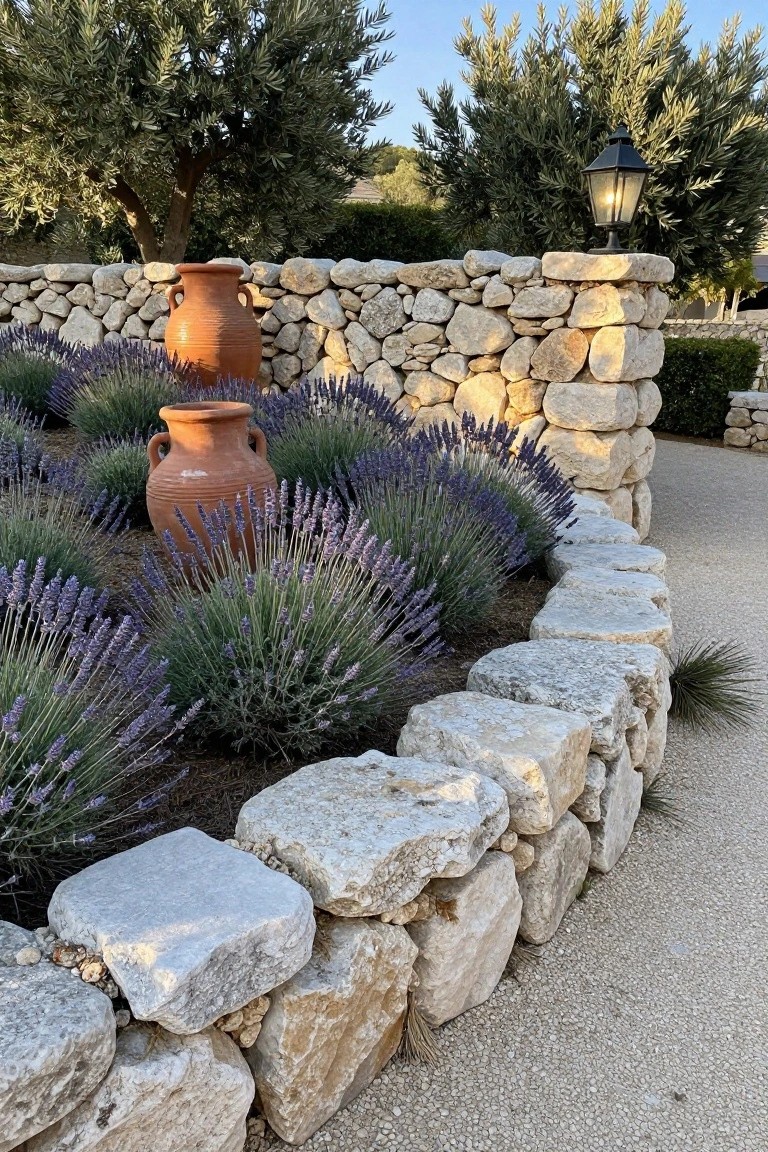
One straightforward way to give your garden beds a clean edge is with dry-stacked stone borders. These walls, built from rough limestone or similar local rock without any mortar, curve gently around plantings like lavender. The look feels natural and settled in, especially with tall terracotta pots tucked among the plants for some height. It’s low fuss once set up and lets the garden do the talking.
This style works best in sunny, well-drained spots where drought-tolerant plants like lavender or rosemary can spread out. It suits older homes or cottages with a bit of land, or even a smaller yard if you keep the beds narrow. Just source stones that match your soil or house stone for easy blending, and watch for shifting over time in wet climates.
Metal Edging for Clean Raised Beds

One straightforward way to give your garden beds a sharp, finished look is with metal grid edging. It holds back the soil just right, keeping everything in place around flowers like those bright yellow coneflowers. That simple barrier makes the space feel more organized and easier to walk through, without needing fancy stonework.
You can run it along paths or around veggie plots in a backyard setup. It suits casual home gardens best, especially if you want low upkeep. Pick galvanized metal so it lasts through wet seasons, and pair it with mulch for even cleaner lines.
Slatted Wood Fences for Coastal Borders

One simple way to edge a garden path is with slatted wood fencing like you see here. It runs right along the gravel walkway, keeping sand and plants in place while giving that beach house feel. The horizontal slats let you peek through to the dunes and ocean, so it doesn’t block the view. Plus, it holds up well against salt air and wind.
This works best around coastal properties or anywhere with sandy soil. Use cedar or pressure-treated pine for the wood, and fill the border with gravel mulch, a few agaves, and native grasses. Keep the fence low, around three feet, so it guides foot traffic without feeling like a wall. Watch for rot over time, though, and refresh the sealant every couple years.
Mossy Stone Garden Borders

A low stone wall covered in moss works well as a simple garden border. It gives paths a natural edge that looks like it’s always been there. With ferns spilling over and plants tucked alongside, it keeps the garden feeling neat but wild.
Put these borders along walking paths or around planting beds in shady spots. They suit wooded yards or sloped areas best. Stack flat stones without mortar for that easy, lived-in style, and let moss grow in naturally.
Boxwood Hedges Edge a Gravel Garden Path

Low boxwood hedges make great borders for a gravel walkway like this one. They keep things tidy and formal without much fuss. Just trim them a couple times a year and they hold that sharp shape. The stone curb along the base adds a clean finish that ties right into the path.
Plant the boxwoods close together for a solid edge, then space out big urns with seasonal flowers for pops of color. This works best on straight paths leading to an entrance or through a side yard. It suits classic homes or any spot where you want a bit of structure in the landscape.
Curved Pebble Edging for Garden Beds

Smooth pebbles laid in a gentle curve make a simple border that separates lawn from plantings without looking too stiff. Tall grasses like miscanthus tuck right behind the stones, giving some height and sway on a breeze. It’s a clean way to define beds that feels more natural than wood or metal.
This works well around yards with mixed flowers and lawn, especially where you want low upkeep. Pick pebbles in gray or earth tones, two or three inches deep for the line. Suits most home gardens, from small backyards to bigger lots. Watch the scale though…too big stones can overwhelm narrow beds.
Succulent Borders with Gravel and Concrete Pots

Tough blue-green agaves planted in simple concrete pots make for a sharp garden border that hugs the base of a house. Tall purple agapanthus flowers add just enough height and color without overwhelming the look. The gravel mulch ties it all together for easy upkeep and a polished feel.
Use this idea along walls or paths in sunny spots. It suits modern homes or dry climates best since these plants need little water. Group a few pots loosely in beds, fill gaps with gravel, and let the shapes do the work. One tip: refresh the gravel every couple years.
Brick Path with Peony Borders

A straight brick path like this cuts neatly through the garden, with raised beds on both sides overflowing with peonies. The mix of white and pink blooms fills out the edges just right, giving the whole walkway a full, tended feel without much fuss. It’s that classic garden look that pulls everything together.
You can pull this off in a backyard border or side yard pretty easily. Lay bricks for the path and low walls, then plant peonies along the rims… they bush out nicely and bloom big come spring. Works best where you want some structure but not too stiff. Just keep the beds mulched to hold moisture.
Black Pebble Borders Along Pool Edges

One clean way to edge a garden bed is with black pebbles. They form a sharp line right along the pool coping, mixed in with tall grasses and a few white flowers. Low LED lights tucked under the stones add a soft glow at night, and that big terracotta pot pulls it together without trying too hard. It keeps things neat and low fuss.
This setup works best around pools or patios where you want definition but not a lot of mowing. Just rake in the pebbles over landscape fabric, plant tough grasses like these, and run wiring for the lights before covering. Suits modern homes or warmer spots… avoids mud and gives a finished feel year round.
Low Brick Walls for Garden Borders
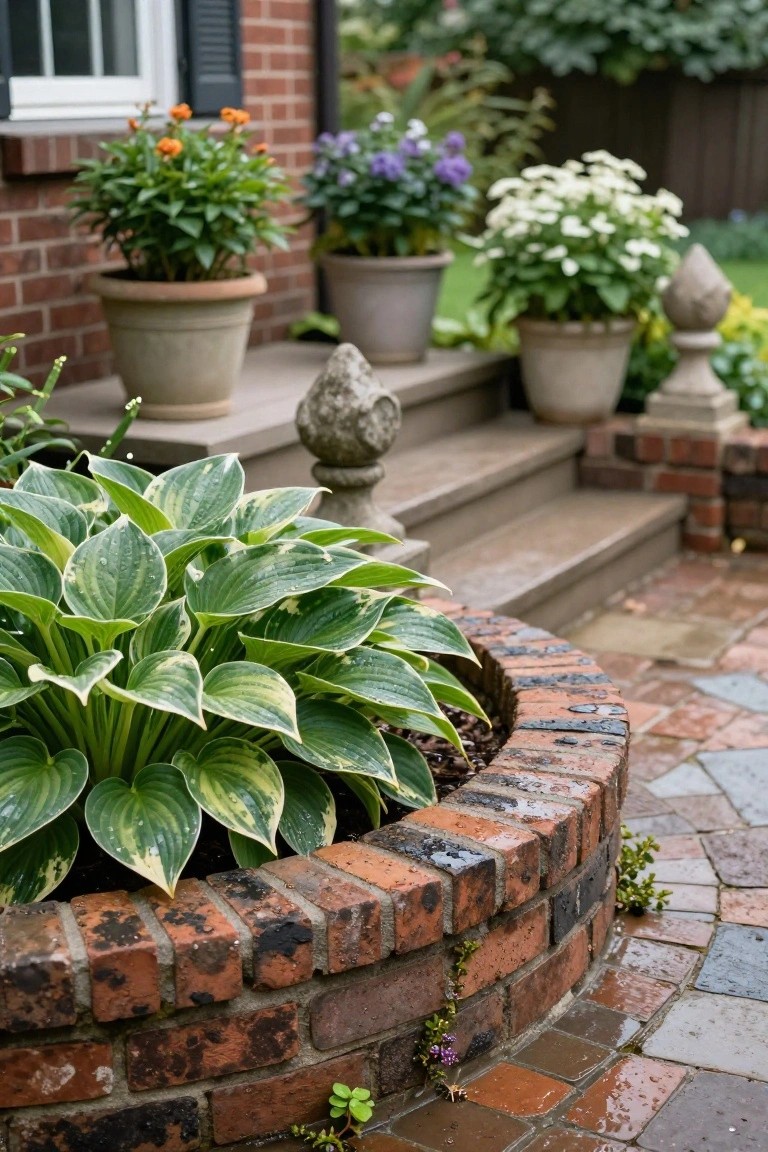
One straightforward way to tidy up garden edges is with low brick walls like this. They hold back soil for plants such as hostas, keeping everything neat and contained. The bricks here pick up on the house color, so the garden feels like part of the home instead of an add-on. It’s a simple fix that adds some structure without much height.
These work best around steps or paths in front yards, where you want a clean line between plants and walkways. Go for older bricks if you can find them. They age nicely and fit homes with brick or stone details. Just make sure the wall drains well, or roots might rot after rain.
Boulder-Lined Stepping Stone Path

A simple way to guide folks through a garden is with flat stone slabs set into gravel, edged by bigger rocks. It keeps things neat without looking too stiff. The grasses spilling over soften the line, and that little water trickle at the end adds a quiet touch.
This works best on a gentle slope or curving around beds, where you want low upkeep but some structure. Pick local stone to fit your spot, and keep the gravel fresh to avoid weeds. Fits most yards, especially if you’re after that easy country feel.
Sleek Metal Raised Beds as Garden Borders
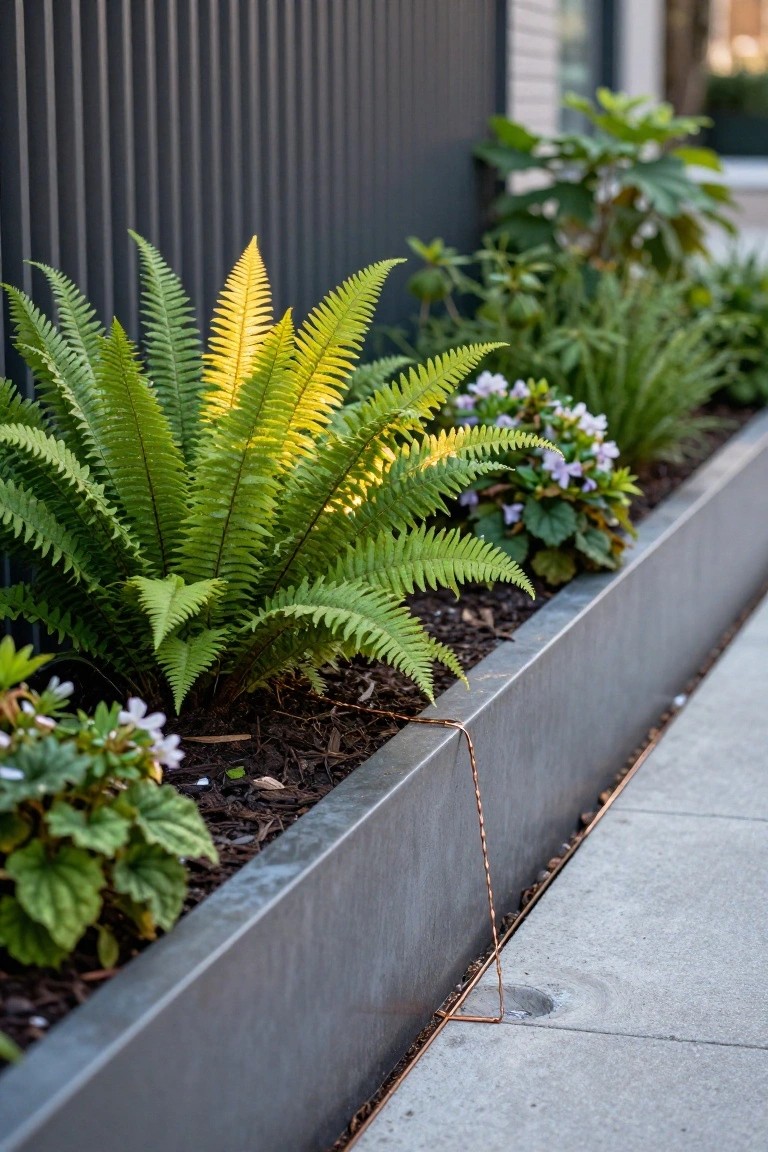
One clean way to edge a garden is with long metal raised beds like this one running alongside a path. The dark steel holds back the soil and plants while giving everything a sharp, modern line. Ferns spilling over the edge add that lush feel without messing up the tidy border.
These beds suit narrow side yards or front walkways where you want low upkeep and a polished look. Go for rust-resistant corten or powder-coated steel to handle weather. Fill with tough plants like ferns or hostas that thrive in shade, and keep the mulch fresh to avoid weeds.
Boxwood Parterre Garden Layouts

A simple boxwood parterre like this creates clean lines with low hedges outlining gravel paths. The central conifer tree gives it height without crowding the space. Urns filled with pink roses add a touch of color at the corners. It’s a classic way to make a garden feel structured and put-together.
This setup works best in smaller yards or as a front border where you want formality without much fuss. Plant dwarf boxwoods for easy trimming, and use pea gravel to keep weeds down. It suits older homes with traditional vibes… just keep the hedges neat, or it loses that crisp edge.
Rustic Metal Troughs for Garden Borders

Rustic metal troughs like these make great borders along curbs or paths. The corten steel develops a nice patina that fits right into outdoor settings. Here they’re planted with blue spiky grasses and broad agave leaves, plus some gravel mulch at the base. It keeps everything tidy and low fuss.
Set them in a row where you want to edge a bed or driveway. They work well in sunny spots for drought plants. Modern homes or simple yards take to them easy, but check drainage first to avoid root rot.
Natural Rock Borders with Irises

Big rounded rocks make a sturdy edge for iris beds along this walkway. They keep the soil in place and give the planting a neat shape without much upkeep. The tall iris leaves fill in behind them nicely, and those purple flowers add color that lasts into spring.
This works well next to paths or patios where you want some structure but not fussy trimming. Pick rocks from a local source to match your yard. Plant irises in full sun with good drainage, and they’ll come back year after year. Just pull weeds from the stones now and then.
Raised Borders with Tile Mosaic Edges

Low raised borders like these keep garden beds neat and separate from paths. Made from stucco in a soft terracotta shade, they get their polish from insets of blue and white mosaic tiles along the top edge. That simple detail adds pattern and color without overwhelming the space. It works especially well around citrus trees and gravel paths, tying everything together nicely.
You can use this in a courtyard or along a sunny patio walk. It suits Mediterranean-style yards or any warm-climate spot where you want low upkeep. Just match the tile colors to your plants… blues pop against greens and oranges. Build the borders about a foot high, and fill with drought-tolerant stuff that won’t spill over.
Boxwood Borders Along Walkways

Boxwood shrubs make for some of the cleanest garden borders you can plant. They’re evergreen, so they stay full and tidy all year, and when you line them up along a walkway like this, with mulch filling the beds, the edge looks sharp and finished. Those little path lights tucked in add a soft glow at dusk without being too bright.
This setup suits front yards near streets or driveways where you want structure without much fuss. Space the boxwoods about two feet apart for a hedge effect, top with two inches of mulch, and run low-voltage lights every four to six feet. It holds up in moderate climates, though you might shear them once a year to keep the shape.
Stone Spheres in Succulent Borders

Large round boulders tucked into a succulent bed make a simple border stand out. Here, rough stone spheres mix with shiny metallic ones among agaves and other low-water plants. They add height and texture without much upkeep. The lights along the edge pick them up at dusk too.
This works well next to paths or patios in sunny spots. Pick drought-tolerant plants to keep it easy. Go for a few big spheres rather than crowding them in. It suits modern houses… or even older ones wanting a fresh edge. Just make sure the bed drains well.
Raised Terracotta Planters for Garden Borders

One straightforward way to give your garden a neat, organized look is with raised terracotta planters. These long troughs work great for herbs like rosemary and thyme, keeping everything in tidy rows. The warm terracotta color fits right into most yards, and the raised design makes it easy to tend without bending over much. Plus, they hold soil well and drain nicely.
Set them along a path or fence line for a clean border that separates lawn from planting areas. Brick edging around the base adds a bit more structure and keeps gravel or mulch in place. This setup suits smaller yards or sunny spots, and it’s low fuss once established. Just watch for overwatering in clay pots.
Curved Stone Edging for Garden Borders

A low curved wall of natural stone makes a simple border between flower beds and paths. Here it holds back big hydrangea blooms in blues and greens along with tall lavender spikes. The gentle curve follows the path right to a fire pit and keeps the whole yard looking neat without being too rigid.
This edging works well around patios or seating spots where you want plants close but contained. It suits sloped yards or formal gardens best, since the stone adds weight to hold soil back. Pick rough local stone so it blends in, then fill beds with perennials that spill over just a bit. One thing to watch: make sure the wall drains well or plants might rot in wet spots.
Gravel Paths Edged with Boulders and Flowers

A simple gravel path like this gets its polish from big boulders placed right along the edges, mixed with clumps of yellow and purple flowers. It keeps things natural but contained, so the garden feels put together without looking overdone. Those rocks do a lot. They hold back the plants and add weight to the whole border.
You can pull this off in a side yard or leading to a back door, especially where trees give some shade. Pick perennials that come back each year, like asters and goldenrod, and space the boulders to match your path curve. It suits casual homes best. Just watch the gravel doesn’t wash away in heavy rain.
Frequently Asked Questions
Q: Do these elegant borders work in small yards too? A: Scale everything down with low hedges or slim stone lines. They define your space neatly without overwhelming it. Your yard will feel bigger and more put-together right away.
Q: How do I start borders on a tight budget? A: Hunt for free or cheap materials like leftover bricks from a neighbor or river rocks from a walk. Lay them straight along the bed edge and backfill with soil to hold them. Skip fancy stuff at first; simple always looks sharp.
Q: What plants keep borders low-maintenance? A: Choose tough ones like lavender or dwarf boxwood that shape with one yearly trim. They resist pests and drought once established. Deadhead flowers to keep the look crisp.
Q: How do you handle borders in shady spots? A: Go for hostas or ferns that thrive without sun. Edge with dark mulch or slate for contrast. But water more often since shade holds moisture.
