


Small outdoor spaces tend to work best when every element serves a purpose and leaves room to actually use the area.
I tried a few container setups on my own patio last year and saw how the wrong scale made everything feel cluttered rather than welcoming.
Containers change the whole feel when sized right.
People often notice first whether they can move freely or if the plants get in the way of daily use.
These kinds of ideas are worth adapting because they come from what actually holds up outside over time.
Tiered Shelf for Balcony Herbs

A basic wooden A-frame shelf like this turns a narrow balcony ledge into a proper herb garden. You get three levels for pots, plus room underneath for tools or saucers, all without taking up floor space. Herbs such as basil and rosemary thrive there in the sun, staying close enough to snip for dinner.
It works best on sunny urban balconies or tiny patios where ground is limited. Go for untreated wood to weather nicely outdoors, and secure it well against wind. Start with easy growers… skip anything too thirsty at first.
Vertical Container Gardens for Balconies

Small balconies don’t have much floor space. That’s why hanging pots on the wall makes sense. Here, a simple gray frame holds all kinds of plants, from ivy vines to cherry tomatoes and lemons. It fills the vertical area with green without crowding the seating spot below.
Try this on any apartment balcony or narrow terrace. Use a basic metal panel or wooden ladder for support, then mix trailing plants up top with bushier ones lower down. A bench at the bottom gives you a place to sit and enjoy it. Watch the weight though, and go for pots that drain fast.
Tiered Pedestals for Container Plants

One smart way to make a small patio feel bigger and fuller is stacking simple concrete pedestals for your potted plants. It pulls the eye up, using that vertical room you might otherwise ignore. Here, lavender in terracotta pots sits tall on the cubes, mixed with silvery leaves and low succulents. The setup looks tidy but lush, especially with a bamboo screen behind for some privacy.
These pedestals work great on any tight outdoor spot like a balcony or corner terrace. Pick sturdy concrete blocks from a garden center, stack two or three high, and group plants by height. Taller ones go up top, trailers spill down the sides. Just make sure good drainage so roots don’t sit wet. It’s low fuss and changes with seasons.
Circular Planters as Deck Centerpieces

A simple round planter works great as the heart of a small outdoor spot. Here, a rusted metal ring holds succulents, grasses, and a blue water basin, drawing the eye and creating a little oasis. Two chairs sit right next to it, turning the deck into a cozy hangout without taking up much room.
This idea fits balconies, rooftops, or any tight patio. Pick a raised corten steel bed for durability and that weathered patina. Go with drought-tolerant plants like these to keep maintenance low, especially in sunny coastal areas. Just make sure it’s stable on wood decks.
Hanging Planters for Small Balconies

Hanging planters work great in tight spots like balconies. They take plants up off the floor so you keep walking room open. In this setup, terracotta pots dangle with trailing white flowers that soften the edges and fill the air with green. It’s a simple way to make a small space feel fuller and more alive.
Try them on apartment balconies or narrow terraces where floor space counts. Use sturdy hooks or chains rated for the weight, and pick trailing plants like jasmine that cascade nicely. Water from above but catch the drips below. They fit most spots, even renters, as long as you avoid overloading rails.
Corner Bench with Container Plants
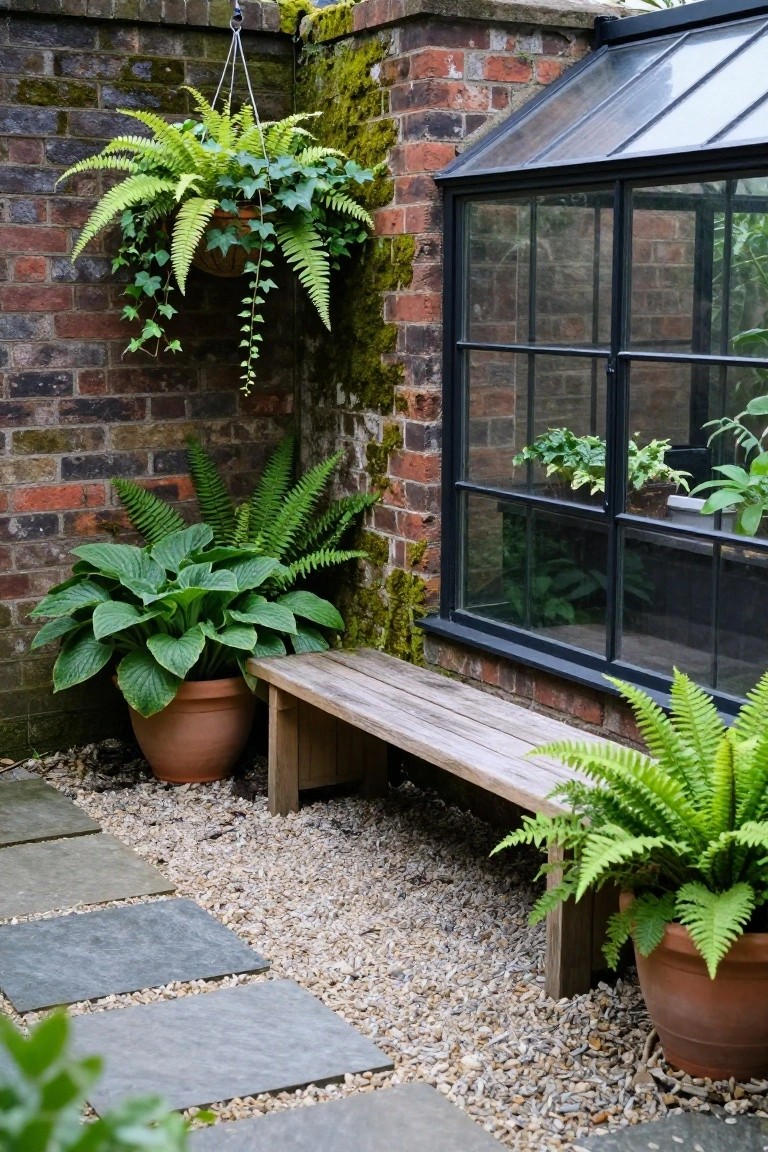
A plain wooden bench sits right in a tight corner spot, hugged by big terracotta pots full of ferns and hostas. Those oversized plants give the area a full, green feel without taking up walking room. The setup works because it turns a plain wall into something cozy and alive, pulling your eye to the seat.
This idea fits best in small walled yards or beside a shed or greenhouse. Go for tough plants like ferns that handle shade well, and keep pots simple in clay for that grounded look. Just make sure the bench stays easy to reach, nothing too crowded.
Pallet Shelves for Vertical Planting

One smart way to fit more plants into a tight spot is turning old pallets into a simple tiered shelf. You see it here with succulents in clay pots tucked into the slats, making use of wall space without taking up the floor. It keeps things organized and adds some rustic charm to a plain wall.
This works great on balconies or patios where ground room is short. Grab a sturdy pallet, stand it upright, and secure the pots so they don’t tip. Go for low-water plants like these succulents to keep upkeep easy. Just watch the weight if you’re hanging it high.
Tall Grasses in Big Pots for Balconies

One simple way to make a small balcony feel more like a real outdoor spot is to tuck tall grasses into oversized containers. You see it here with that big black pot of feathery green stuff planted right next to the bench. Those grasses shoot up high enough to soften the railing and block some of the view from neighbors. They add movement on a breezy day too. It’s low fuss but looks full and natural.
Put this to work on any city balcony or tight patio. Go for hardy types like fountain grass that don’t need much water or trimming. Keep the pots simple and dark so the plants stand out. Size matters. A pot at least two feet tall gives you that height without crowding the seating. Watch the weight though on upper floors.
Garden Trolley for Container Plants
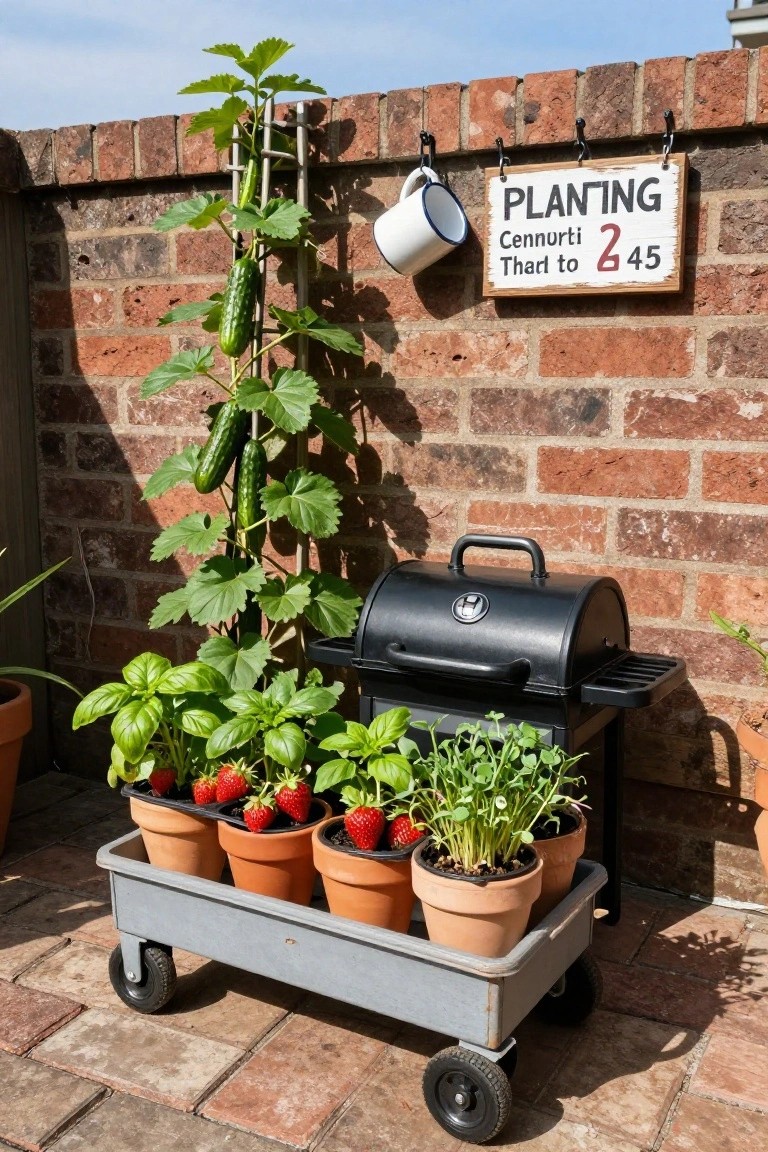
One smart way to fit more plants into a tight patio is to load them onto a wheeled garden trolley like this. The gray metal cart holds several terracotta pots of strawberries, basil, and greens right by the barbecue. It turns a simple corner into a fresh produce spot without crowding the ground.
This works best in small backyards or balconies where space stays flexible. Pick a sturdy cart that rolls smooth, fill it with edibles you use often, and park it where you cook or sit. Move it for better light or out of the way when company comes. Just don’t overload it.
Bench Planters for Tight Patios

One smart way to fit plants into a small outdoor spot is to build planters right into the base of a bench. It uses that strip of space along the wall without crowding the seating. You get greenery close at hand, like those rosemary plants tucked in, and it keeps the area feeling open.
This works best next to a house on a narrow patio or porch. Go for tough, upright plants that won’t flop over the seat. Pair it with string lights overhead for evenings. Just make sure good drainage so roots stay happy.
Tiered Concrete Planters for Terraces

Large concrete boxes arranged in tiers make a small terrace feel like a real garden. You get layers of plants without needing much ground space. Here, tall grasses mix with silver-leafed shrubs for texture, and a potted olive tree sits right in the middle for some height. It’s clean and modern, but easy to pull off.
These work best on rooftops or balconies with full sun. Go for drought-tolerant plants like fescue grasses or lavender cotton to keep watering simple. The concrete holds up to wind and weather. Add a wood bench along one side if you want a spot to sit. Just make sure the boxes are well-drained.
Simple Wooden Shelves for Succulents

One easy way to add plants to a tight outdoor spot is with a basic wooden shelf like this. It holds square pots of succulents right on the wall, keeping the floor clear. The matching wood ties it together against a plain brick backdrop, and it just looks right for everyday care.
This works best on a balcony or porch where space is short. Pick low-water plants like these, and you won’t fuss much. Hang your pruning shears nearby too. It suits rentals or older homes that need a green boost without big changes.
Cluster Pots on Hard Surfaces
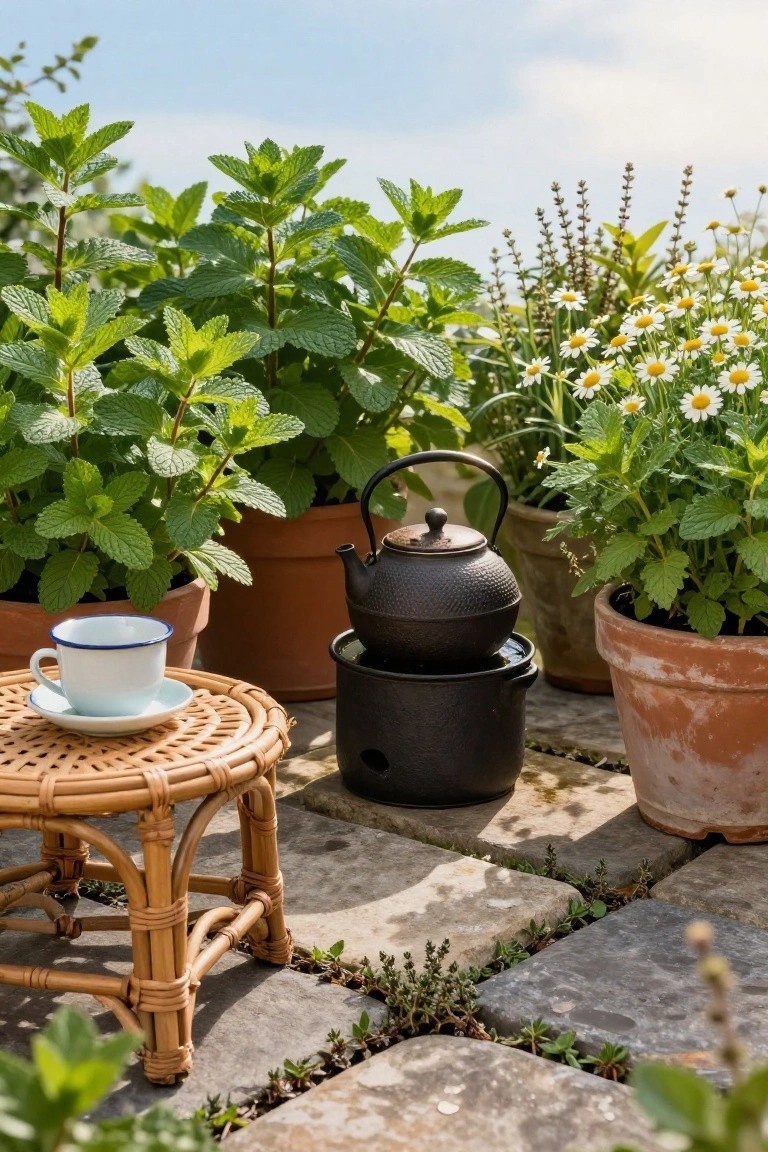
Placing several containers close together on stone or concrete turns a flat paved spot into a real garden. You get height from taller plants, texture from the leaves, and color from the blooms without digging beds or taking up much room. It keeps things simple and easy to adjust whenever you want.
This works best on small patios, side paths, or balconies where ground space is limited. Choose pots that match in material or color so the group feels pulled together, and make sure each one drains well. You can shift them around for sun or to change the look as the seasons move along.
Edge a Small Moss Bed with Stone
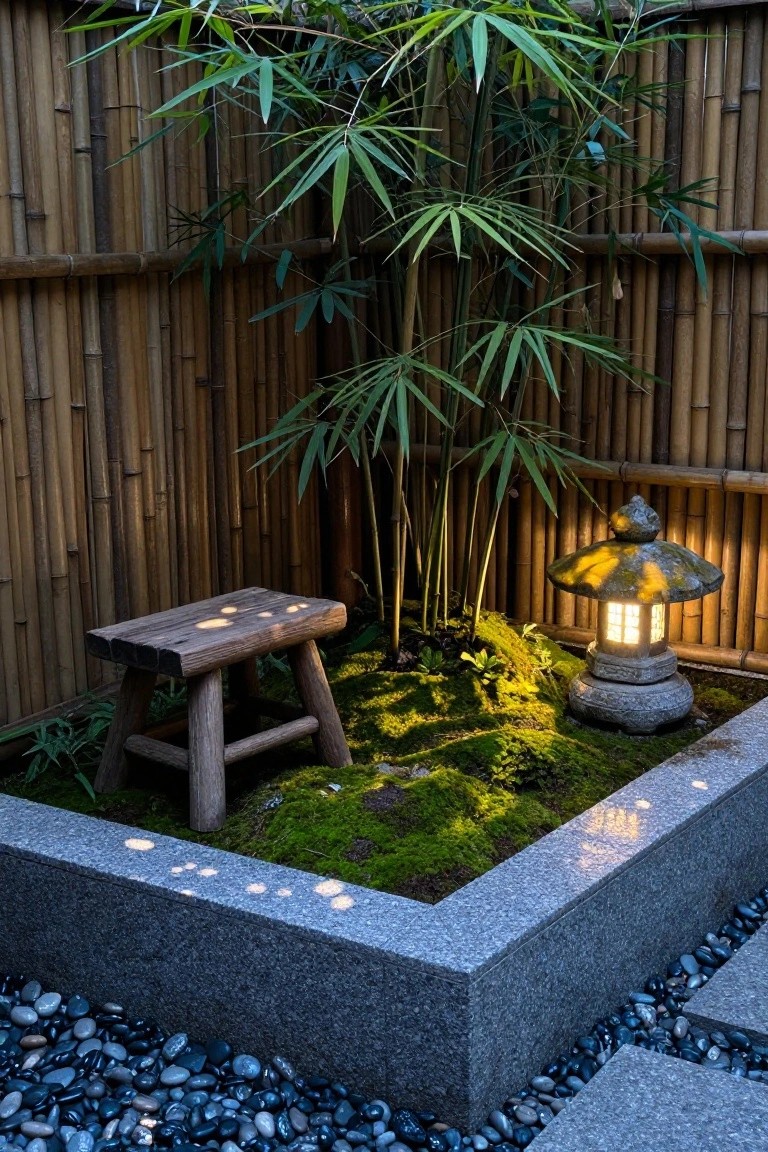
A simple stone border turns a tiny patch of ground into a self-contained moss garden that stays neat and low maintenance. The edging keeps the soft greenery in place while the surrounding pebbles help with drainage and stop weeds from creeping in. It is an easy way to add calm texture to a corner without taking up much room.
This works best in shaded spots against a fence or wall where moss can settle in naturally. Keep the bed shallow and choose stones that match your hardscaping so the whole area feels pulled together. Add a few small accents like a low stool or lantern if you want a place to pause without cluttering the space.
Arrange Containers on Different Levels

One simple way to get more impact from a small balcony is to set some pots on low tables or crates. This adds height without taking up extra floor space and lets shorter plants sit beside taller ones. The mix of big floor pots and raised ones keeps everything from looking flat.
It works well on decks or porches where you have a few sturdy surfaces handy. Group plants with similar sun needs together so watering stays easy. Just watch the weight on railings and make sure nothing blocks the walkway.
Layer Plants Using Containers Of Different Heights

Containers make it easy to bring height and softness into a small paved space without digging beds. A tall tree in a big pot sets the scale, while mid height grasses fill in the middle and a low bowl of succulents sits right at seating level. The mix keeps the area feeling full but still open for movement.
Place the tallest pot at the back near a bench or wall, then step the smaller ones forward so each plant can be seen. This works well on patios or balconies where space is tight and you want seasonal changes without permanent changes to the floor. Just watch the weight if you are on a deck and make sure the pots have good drainage.
Large Wooden Planters For Small Balconies
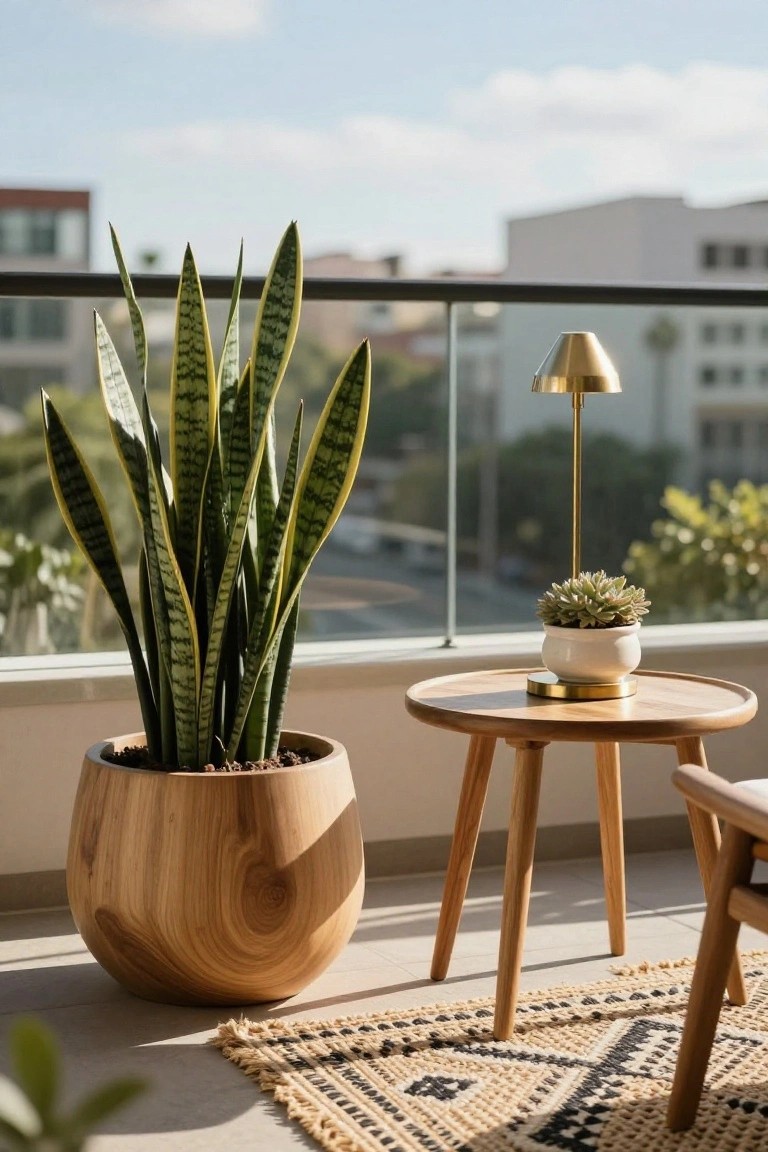
A big wooden container changes how a small balcony feels right away. It gives you room for a tall plant that fills vertical space without taking over the floor. The round shape and natural wood keep things simple while still making the area feel more finished.
This works best on apartment balconies or narrow patios where you want greenery but cannot add built-in beds. Set the planter in one corner and leave the rest open for a table and chair. Just make sure the pot has good drainage and is sturdy enough to handle wind.
Long Trough Planters Keep Small Rooftops Organized
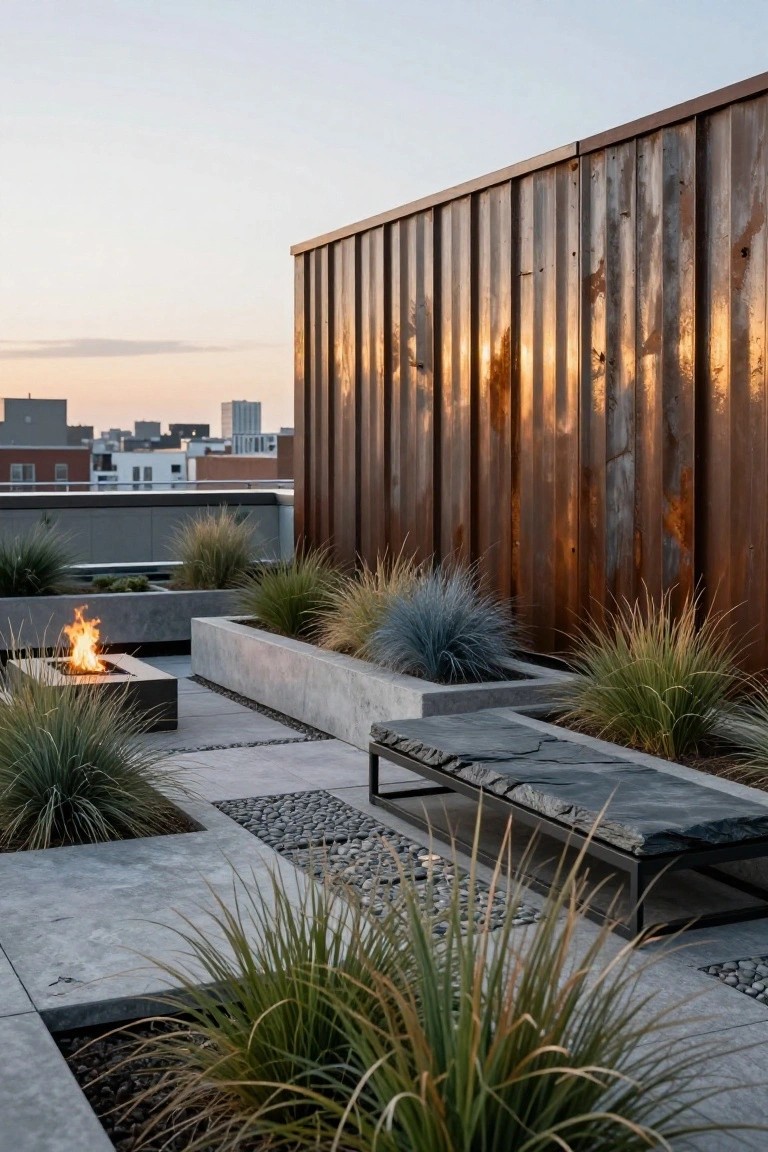
Long concrete troughs give you a simple way to fit real planting into a tight rooftop or terrace. They hold enough soil for grasses to grow well and create a clear line that separates the seating area from the edge without taking up much floor space.
These work best on flat modern rooftops where you want low care and a tidy look. Fill them with a mix of taller and finer grasses so the planting feels full but still leaves room for a bench or fire pit nearby.
Tiered Planters Add Growing Space on Small Balconies

A tiered planter setup works well when floor space is tight. Instead of spreading pots around the deck, you can stack several wooden boxes at different heights along one wall. This keeps the plants visible and easy to reach while leaving room for a bench or chair underneath.
It suits apartment balconies or narrow patios best. Choose sturdy wood that can handle weather, and mix flowers that trail over the edges with upright blooms in the upper tiers. Just check that the structure is securely fastened so it stays stable in wind.
Group Containers on a Wooden Slab

Placing multiple pots together on one piece of wood keeps the whole display compact and easy to move. It works especially well with concrete planters since the slab adds some warmth and natural texture that the pots alone would lack. This setup suits small patios or balconies where space is tight but you still want several plants visible at once.
The wood can be a simple board or a found piece with character. Just make sure it is stable and treated for outdoor use so it holds up in weather. This approach lets you rearrange plants without moving them one by one and keeps the area looking tidy rather than scattered.
Repurpose an Old Bathtub as a Planter

An old bathtub makes a surprisingly practical container when you need extra depth for larger plants. It holds plenty of soil and gives roses or shrubs the root space they often lack in smaller pots, which helps them stay healthy even in a compact yard.
This works well on a patio or against a fence where you want one big focal point without taking up much floor space. Drill a few drainage holes in the bottom before you fill it, and set it on blocks so water can run out freely. You can add smaller pots nearby if you want more variety without crowding the area.
Frequently Asked Questions
Q: Which containers work best if I only have a tiny patio? A: Pick lightweight pots made from plastic or resin so you can move them around easily. Make sure each one has drainage holes at the bottom to prevent root rot. Group a few together to create a nice cluster without taking up much room.
Q: How much should I water my container garden each day? A: Check the soil with your finger each morning and water when the top inch feels dry. Containers dry out faster than ground soil especially in warm weather so you might need to water twice on hot days. Add some mulch on top to help hold moisture longer.
Q: What plants grow well together in one container? A: Try mixing herbs like basil and thyme with flowers such as marigolds for a useful and pretty combo. They all like similar sun and water needs so they thrive side by side. Start small and see how they fill out over the season.
Q: Do I need special tools for container gardening? A: A small trowel and a watering can handle most tasks just fine. Skip the fancy gadgets and focus on good soil instead.
