


I have found that a backyard vegetable garden works best when the beds follow the way the yard actually slopes and drains instead of fighting the shape of the land.
Over time I have seen how simple pathways and low edging keep the space easy to walk through and weed without turning into a mud pit after rain.
Small choices like these make the biggest difference.
When I try new ideas I usually start with one or two that fit how much sun my yard gets and how often I can water during a hot spell.
That way the garden stays productive instead of becoming something I have to fight with every season.
Raised Wooden Beds for Backyard Veggies

Raised wooden beds turn a simple backyard patch into a productive vegetable spot. They keep soil contained and at waist height, so weeding and harvesting feel less like work. In this setup, lush kale fills the beds while red bean pods climb bamboo stakes. A gravel edge keeps things neat around the boxes.
Build these for tight spaces near a fence or house. Go with cedar or pine, maybe treated against rot. Keep beds no wider than four feet to reach across easily. Add climbers on trellises for vertical space… saves room for more plants.
Symmetrical Raised Bed Vegetable Garden
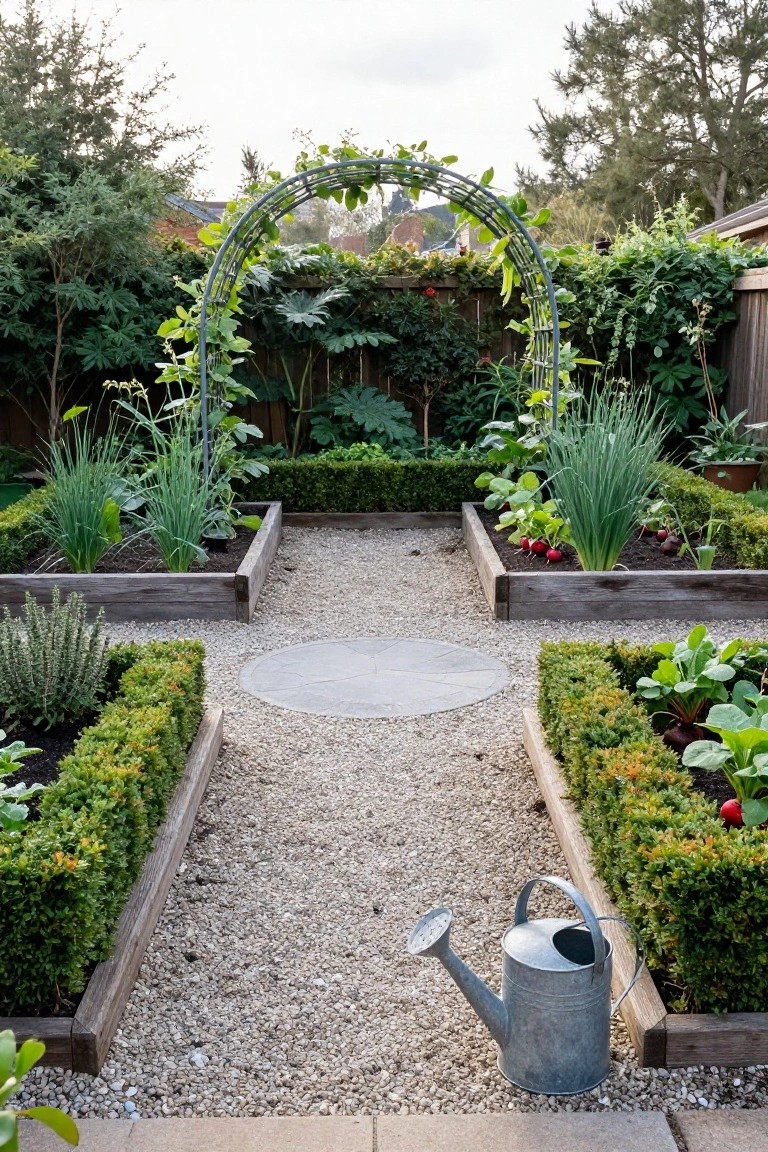
This garden takes simple raised beds and arranges them in a tidy square around a central gravel path. Boxwood hedges edge the beds, giving the whole setup a formal parterre feel that’s usually seen in flower gardens. It keeps veggies looking neat and contained, easy to tend without sprawl.
Plant salad greens, beets, and herbs in the beds like this one shows. The gravel path handles foot traffic well and drains fast after rain. It suits a sunny backyard corner with decent space. Just make sure the wood is untreated so it lasts, and trim those hedges a couple times a year.
Raised Concrete Planters Along Walls

Raised concrete planters like these make it simple to grow veggies in a narrow backyard strip. They run right along the wall and path, holding rows of lettuce, herbs, and even a small lemon tree without taking up much room. The plain concrete ties into the hard surfaces around it, so the garden feels clean and built-in rather than tacked on.
Line them up next to a house wall or walkway where you have just a foot or two of soil space. Hook up drip tubing for watering without waste, and add a simple bench nearby for easy picking. This setup suits city lots or rentals best. Skip it if your spot gets blasting afternoon sun, though.
Vertical Tomato Vines in a Courtyard

One easy way to fit more veggies into a tight backyard spot is to grow tomatoes up a wall on a simple trellis. Those red clusters tumbling down make a plain stucco wall come alive with color and give you fresh picking right at hand. It works great here because the vines catch the sun without taking up ground space, and they pair well with potted herbs below.
You can try this in any sunny, sheltered corner like a patio or alleyway garden. Nail up some wire or wood slats, plant sturdy tomato starts at the base, and train the stems as they grow. Keep soil moist and watch for pests. It suits warmer spots best, but pots let you move things if needed.
Terraced Raised Beds on a Slope
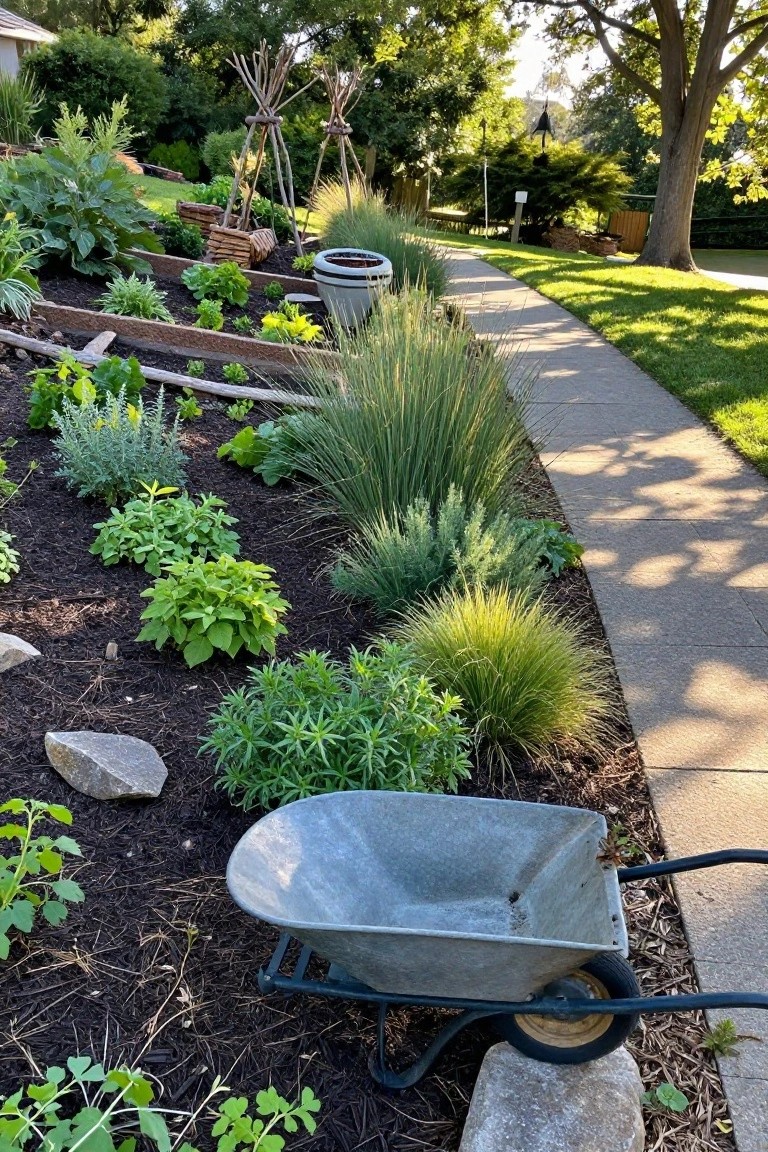
Sloped yards can be tricky for planting, but terraced raised beds turn that challenge into an advantage. Here, wooden beds stacked along the hill hold herbs, greens, and veggies, with mulch keeping soil in place and grasses adding structure between them. It makes the space feel organized and productive without looking forced.
These work best in backyards with a gentle incline, where you want to grow food without tilling everything. Start with simple wood or stone for the beds, layer in edibles close to the path for easy picking, and mix in tougher plants like ornamental grasses to hold it all together. Just make sure good drainage so water doesn’t pool. A wheelbarrow nearby keeps things practical.
Backyard Greenhouse for Year-Round Veggies

A simple glass greenhouse like this one makes vegetable gardening so much easier. Tucked against a brick wall on a wooden deck, it’s filled with pots of basil, eggplants, and lettuce. The clear panels let in light while keeping plants safe from cool nights or rain. At dusk with those soft lights on, it feels like a little glowing haven right in your yard.
Put one in a sunny spot near your back door for quick checks and harvests. It works great in small backyards where space is tight. Start with pots so you can move things around, and pick a model with good ventilation to avoid stuffy air inside.
Winding Stone Path Through Raised Beds

A good vegetable garden needs paths that let you walk between the plants without compacting the soil. This setup uses flat stones laid in a gentle curve right down the middle of raised wooden beds. It keeps everything neat and makes harvesting feel like a stroll. The path fits naturally with the beds full of greens, lettuce heads, and spots of flowers.
You can copy this in most backyards, even sloped ones. Build beds from untreated wood, about two feet high, and fill with good soil. Space the path wide enough for a wheelbarrow. Add mulch around the stones to cut down on weeds. It’s practical year-round… just refresh the beds each spring.
Dining Table in the Raised Bed Garden
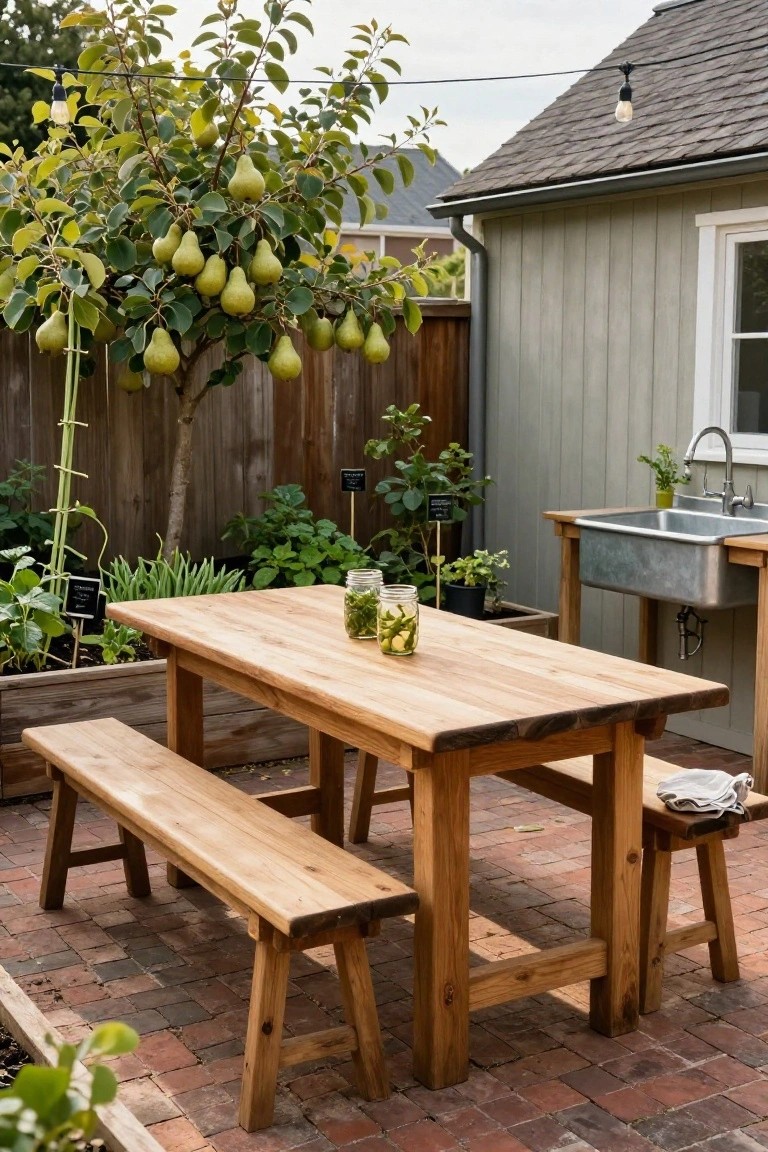
One easy way to make your vegetable garden more usable is to tuck a simple wooden picnic table right in among the raised beds. Here, the rough-sawn table and benches sit on a brick patio, with greens, beans, and herbs growing close by. Jars of pickles on the table nod to the harvest, turning the spot into a place for meals fresh from the dirt. It keeps everything practical and keeps you out there longer.
This works best in a compact backyard where space is tight. Build or buy sturdy wood furniture that matches the garden vibe, and leave room to walk between beds. Sunny spots are ideal so plants thrive and you can eat outside most days. Skip fancy finishes, though. Raw wood holds up better to spills and dirt.
Rustic Raised Beds Along a Garden Path

This garden uses simple raised beds made from wooden crates and stone edging to hold ferns, mint, and greens. The beds line a mossy stone path that leads right to a plain wooden bench. It keeps everything organized in a small space, while the lush plants make it feel wild and inviting. Perfect for shade where veggies might struggle otherwise.
Set this up in a backyard corner against a fence. Stack crates for height, fill with good soil, and plant low-light edibles like lettuce or herbs between the ferns. Lay flat stones for the path, let moss grow naturally. Watch for wood rot, so treat it first. Works best tucked away, not out front.
Hanging Rope Baskets for Vertical Veggies

Hanging rope baskets like these let you grow tomatoes and peppers right up against a wall. They take advantage of vertical space in tight spots, keeping the ground clear for other plants or paths. The baskets full of ripe produce add easy color without much effort.
This works best on a sunny brick or block wall in a small backyard. Screw in strong hooks, line the baskets with coco fiber, and plant compact varieties. Just reach up to pick, and watch for drying out on hot days.
Raised Stone Beds for Vegetables

Raised beds built from dry-stacked local stone make vegetable gardening simple and neat. They hold soil in place without mortar, letting roots breathe and water drain fast. In this setup, herbs like lavender and greens fill the beds right along a gravel path. That keeps everything contained and easy to reach.
You can add these beds next to a patio or dining area for a smooth flow between growing and eating outdoors. They suit cottage-style backyards or any spot with a gentle slope. Just pick stones that match your region to avoid that fake look, and fill with good soil mix for steady yields.
Raised Beds Along a Gravel Path

One straightforward way to fit a vegetable garden into a tight spot is lining raised wooden beds right along a central gravel path. It keeps everything within arm’s reach for planting and picking, and that young tree in the middle brings in some vertical interest without taking up bed space. The gravel handles drainage well and stays neat even with foot traffic.
This works best in side yards or narrow strips behind the house where you want production without sprawling. Go for simple cedar or pine beds about knee-high, plant lettuces and herbs close to the path, and taller stuff farther out. Skip mulch on the gravel to keep weeds down, and it stays pretty low fuss year-round.
Colorful Raised Bed Vegetable Garden

Raised beds like this one turn a simple veggie patch into something really fun. Paint the wood in bright rainbow stripes, just like the blue, yellow, and pink here. It makes the whole garden pop against the sand and keeps things cheerful while growing beans, greens, and strawberries right at kid height.
This setup works best in small backyards or play areas. Build it low with scrap wood, add a little bench inside for sitting, and train beans up a bamboo arch. Skip fancy stuff. Non-toxic paint only, and place it near the fence for easy access.
Raised Stone Beds for Easy Mediterranean Veggies

One smart way to fit a vegetable garden into a tight backyard spot is with low raised beds made from beige stone blocks. They hug the edge of a patio like this one, planted up with artichokes, rosemary bushes, and other tough greens that handle sun and dry spells. A scattering of pebbles around the base keeps weeds down and ties everything to the tiled floor. The olive tree overhead adds some natural shade without crowding things out.
These beds work best in warm, sunny yards where you want to grow edibles close to the house. Stack local stone for walls about a foot high, fill with decent soil, and mulch with rounded pebbles. Go for plants like artichokes or herbs that won’t need much fussing. Watch the bed doesn’t get too wide or it blocks the path. Keeps harvesting simple right from your seat.
Terraced Raised Beds for Sloped Yards

Slopes can make backyard gardening tough. Water runs off, soil erodes, and flat space is hard to come by. These terraced raised beds fix that. Built from sturdy gray metal planters stacked right into the hill, they hold soil in place and let you grow veggies like kale, onions, and herbs without much hassle. A simple wooden bench nearby makes it a spot to sit and enjoy the growth.
This setup works best on any hillside or uneven lot. Go for galvanized metal beds if you want something low-maintenance that won’t rot. Mix in edibles and a few succulents for year-round interest. It suits small backyards too… just scale down the tiers. Watch the drainage though, add gravel at the bottom if needed.
Patio Bench Nestled in Raised Veggie Beds

One easy way to make your backyard more usable is to tuck a simple bench into your vegetable garden. Here, sturdy raised beds made from weathered metal edge a gravel and stone patio, with vines climbing the walls and greens spilling over. The wooden bench sits right in the middle, turning a planting area into a spot to relax and enjoy what you’ve grown. It keeps everything contained and practical.
This setup works great in small courtyards or tight urban yards where space is limited. Go for rust-friendly corten steel beds that age nicely, and add string lights for evenings. Plant edibles like squash on the walls and herbs below. Just make sure the bench is comfy and the paths are wide enough to walk through without bumping the plants.
Raised Beds Along a Brick Path

Raised beds keep the soil contained and make it easier to reach every plant without compacting the ground. They also give the garden a clean edge that helps it look intentional instead of scattered.
A simple brick path running alongside the beds adds dry footing and keeps foot traffic from turning the soil into mud. This layout works especially well in modest backyards where space is limited but you still want room to walk through and harvest comfortably.
Add Built-In Seating Along Your Garden Beds

Running a bench right up against a raised vegetable bed turns the garden into an active part of the outdoor space. People can sit close to the plants without needing extra furniture or walking across the yard, and the setup keeps everything in one compact area.
This works especially well in smaller backyards where space is tight. Match the bench height to the bed edge so it feels natural to use, and keep the planting simple so the area stays easy to maintain over time.
Add a Greenhouse to Extend Your Growing Season

A small greenhouse can turn a basic vegetable garden into something more productive. It gives you a place to start seeds early and shelter plants that need extra protection from cold or heavy rain. Many people find it helps them get fresh harvests for more months of the year without much extra work.
Place the greenhouse at the end of a simple path so it becomes easy to reach from the rest of the garden. Use pavers or gravel to keep the route dry and practical. Keep a few pots nearby for plants you want to move inside or out as the weather shifts. This approach fits well in medium to large backyards where you already have room for beds and paths.
Use Tiered Raised Beds To Grow More
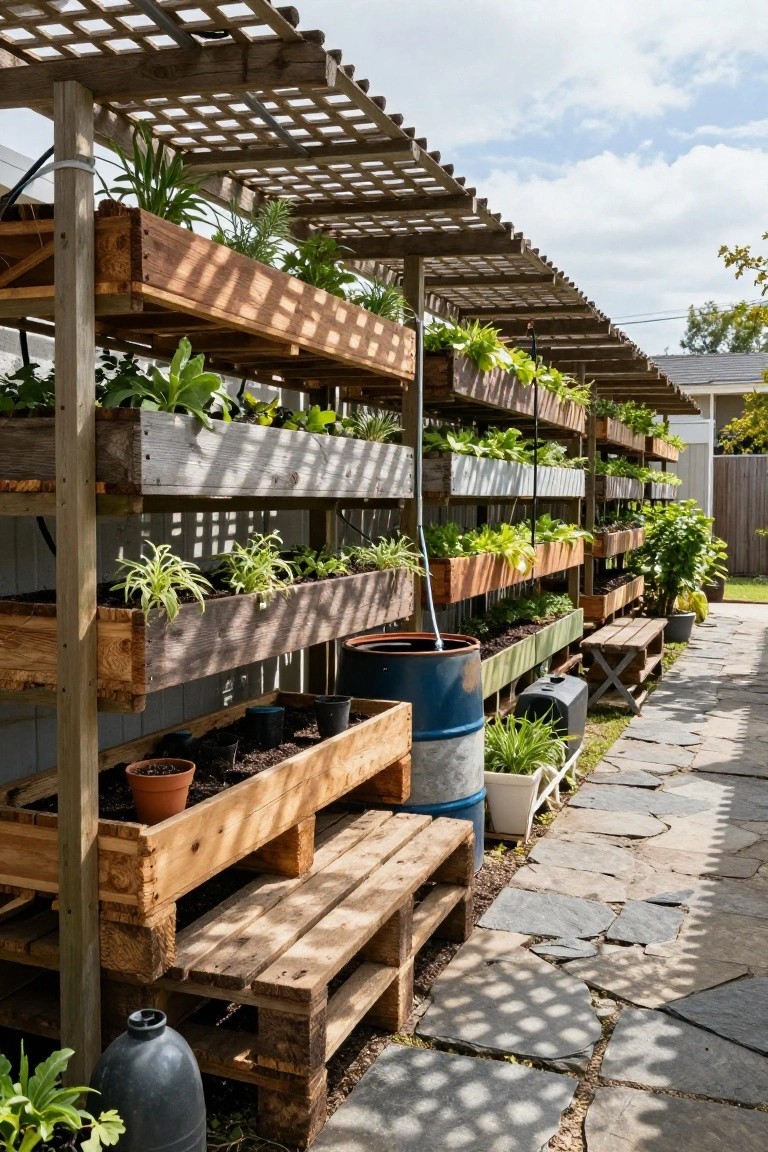
Tiered raised beds give you extra growing room without spreading out across the whole yard. The stacked levels keep plants at a comfortable height and let you fit a full vegetable garden into a narrow strip of space.
This approach works best in smaller backyards where ground space is limited. Build the frames from simple lumber, line them up along a path for easy access, and add an overhead grid if you want a bit of shade during the hottest part of the day.
Curved Raised Beds Keep Vegetables Accessible

Curved raised beds give a vegetable garden a clear shape without making it feel boxed in. The low concrete walls hold the soil neatly and create natural paths around the center so you can reach everything without stepping on plants. This layout works especially well when you want to grow a mix of herbs and peppers in one spot while still leaving room for a table or small fire feature in the middle.
It suits most backyard sizes because the curve softens the look and lets you adjust the beds to fit around existing trees or patios. Just make sure the walls are wide enough to sit on and that the soil depth stays at least twelve inches for root crops. Keep the inside curve open so the space stays usable instead of crowded.
Raised Beds Around a Backyard Pond

Raised beds keep vegetables organized and easier to reach, especially when you add a small pond right next to them. The water brings in a bit of life with fish and helps the whole space feel more complete without needing extra decoration.
This works best in backyards that already have some decking or a simple patio. Place the beds in full sun and keep the pond close enough to enjoy from a chair, but not so close that splashing becomes a problem during harvest.
Frequently Asked Questions
Q: My yard is pretty small though. Will any of these ideas actually work there?
A: Pick the vertical or container versions from the list. You can grow plenty of tomatoes and herbs in pots along a fence (even a balcony works in a pinch) without taking up much ground space at all.
Q: How do I keep the bugs away without using harsh sprays?
A: Try companion planting like marigolds next to your veggies. It naturally deters pests and adds some color too.
Q: What if I have zero gardening experience?
A: Start with one simple raised bed idea from the article. Focus on easy crops like lettuce and radishes first to build your confidence.
