


I have driven past plenty of houses where the front garden either pulls everything together or leaves the place feeling a bit unfinished.
What works best for me is focusing on how the plants and paths interact with the house itself rather than treating the yard as a separate project.
In my experience the ideas that last are the ones that consider seasonal growth and how the space will look months later.
Small details like the way mulch meets the lawn or how borders frame the walkway often end up being the parts I notice most when I come home.
Layout tweaks can shift the whole feel without much effort.
Brick Edging Along the Garden Path

A straight path of stone slabs makes getting to the front door easy and neat. Low brick walls run alongside it, filled with gravel for drainage and low upkeep. Lush plants like hydrangeas and foxgloves tumble over the edges. This keeps the garden looking tidy while adding color right where people walk up.
Try this in a narrow front yard next to a house wall. It suits older brick homes or cottage styles best. Plant perennials that come back each year. The gravel cuts down on weeding. Just make sure the path stays level so no one trips.
Boulders Anchor Succulent Beds

Big boulders mixed with agave and other succulents make a bold statement along this entry path. The rocks give weight and permanence, while the plants add just enough green texture without fuss. It’s a clean way to fill space and direct attention to the door.
This works great for sunny, dry yards where low-water plants do well. Frame the beds with rusted metal edging to keep everything tidy, then lay flat stone pavers for the walk. Fits modern homes best… and it’s pretty hands-off once established.
Frame Your Entry with Potted Olive Trees

Large olive trees in terra-cotta pots placed on either side of the front door give this entry real presence right away. They add height without permanent planting and create a simple symmetry that pulls the eye straight to the door. The soft gray-green leaves fit right in with a stucco wall and warm roof tiles for that easy Mediterranean look people keep coming back to.
Put matching pots like these in front of any entry where you want more scale fast. They work well on smaller lots or rentals since you can move them around. Just pick spots with good drainage and full sun. Skip it if your style is super modern. The trees stay manageable with occasional pruning.
Symmetrical Beds Flank the Front Path
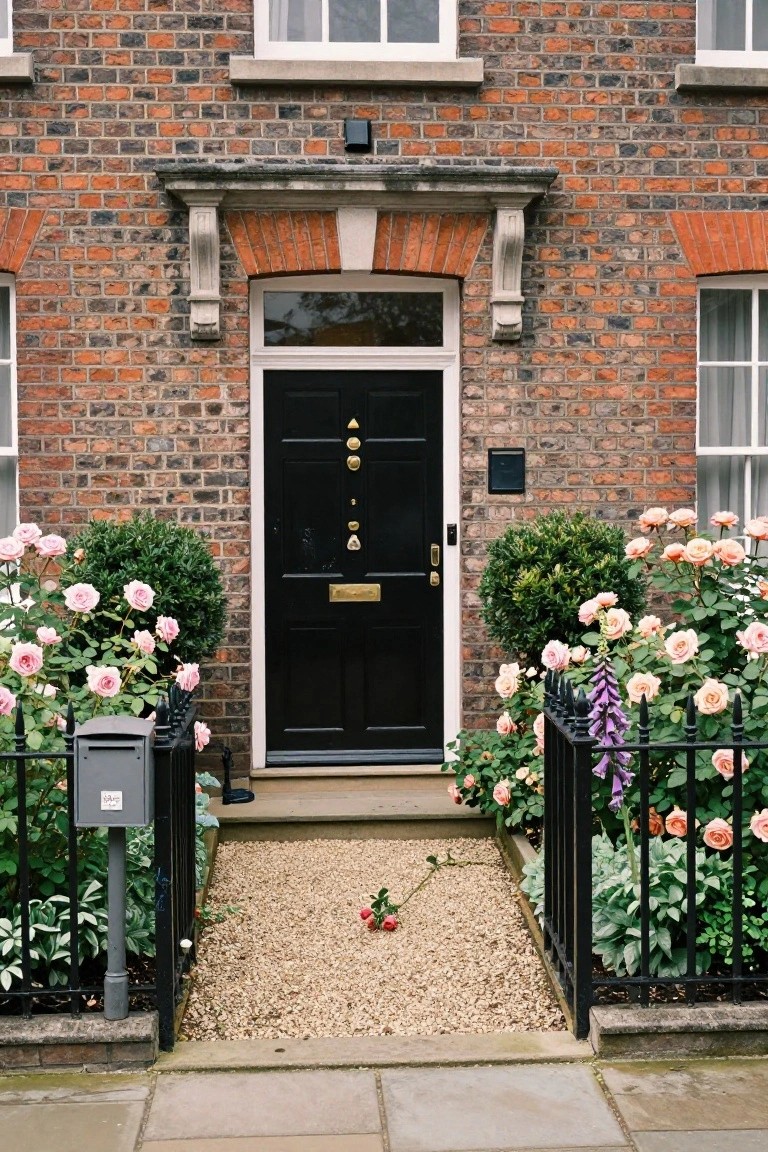
One easy way to boost curb appeal is planting matching beds right along your entry path. Pink roses spill over boxwood shrubs on both sides here, drawing the eye straight to the door without overwhelming the space. That simple repeat softens a solid brick facade and feels put-together.
Try this on older homes with straight paths. Go for repeat plants like roses for bloom and evergreens for shape. Gravel keeps it low fuss, and a black fence adds crisp edges. Just trim bushes a couple times a year.
Boulder and Succulent Rock Gardens

One simple way to boost front yard curb appeal is stacking large natural boulders and tucking in clusters of succulents and tall grasses around them. This setup looks rugged but put-together. It uses the rocks as the main structure, with plants filling in the gaps for color and texture without much upkeep.
These gardens work great on sloped lots or dry spots where grass struggles. Pick boulders in earth tones to blend with your house, then add echeverias or sedums that spread easily. Gravel mulch keeps weeds down. Go easy on the plants at first… they fill out over time. Suits modern or rustic homes looking for low-water appeal.
Winding Stepping Stone Path in Gravel
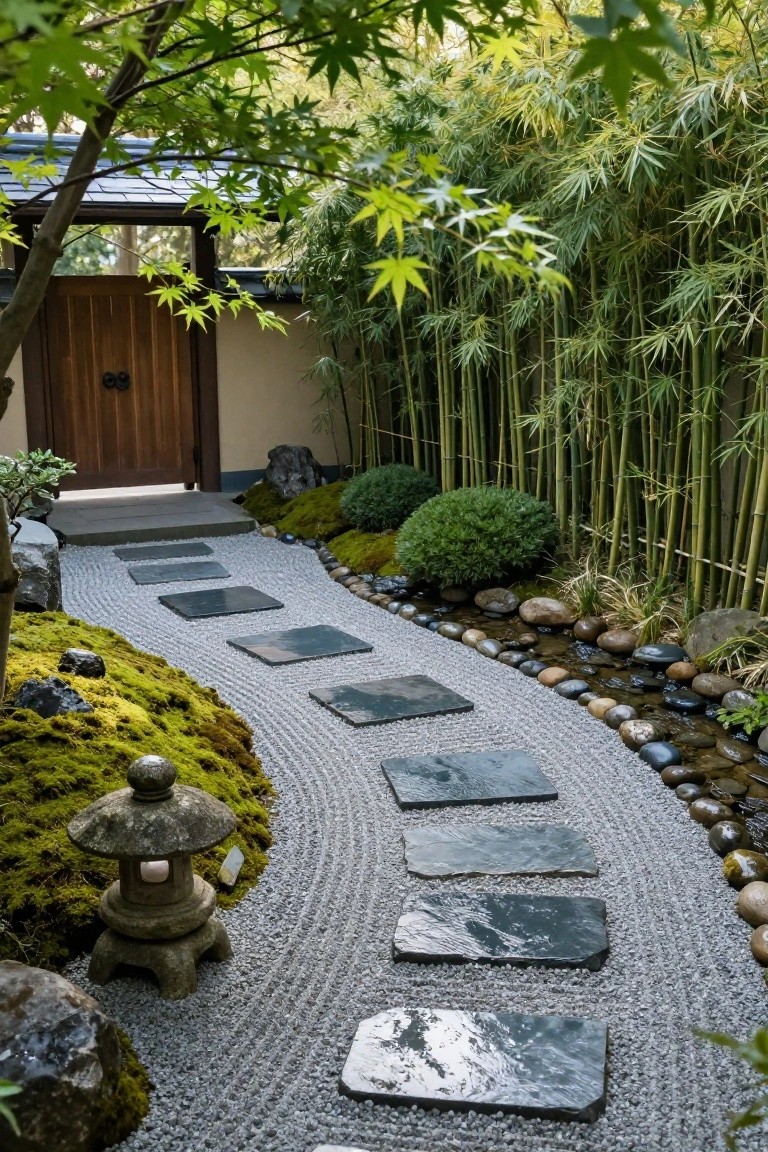
A simple path like this one uses flat dark stones set into raked gravel. It pulls you right toward the front door without feeling too straight or busy. The gravel gives that clean, low-maintenance look, and the curve keeps things interesting as you walk up.
This setup works great for smaller front yards or spots with not much room to mow. Lay down landscape fabric first, then add gravel and stones spaced for regular steps. Add a lantern or mossy rock nearby if you want, but keep the gravel raked smooth. It suits any house style, just scale the path width to your entry.
Simple Slab Path with Gravel Edges
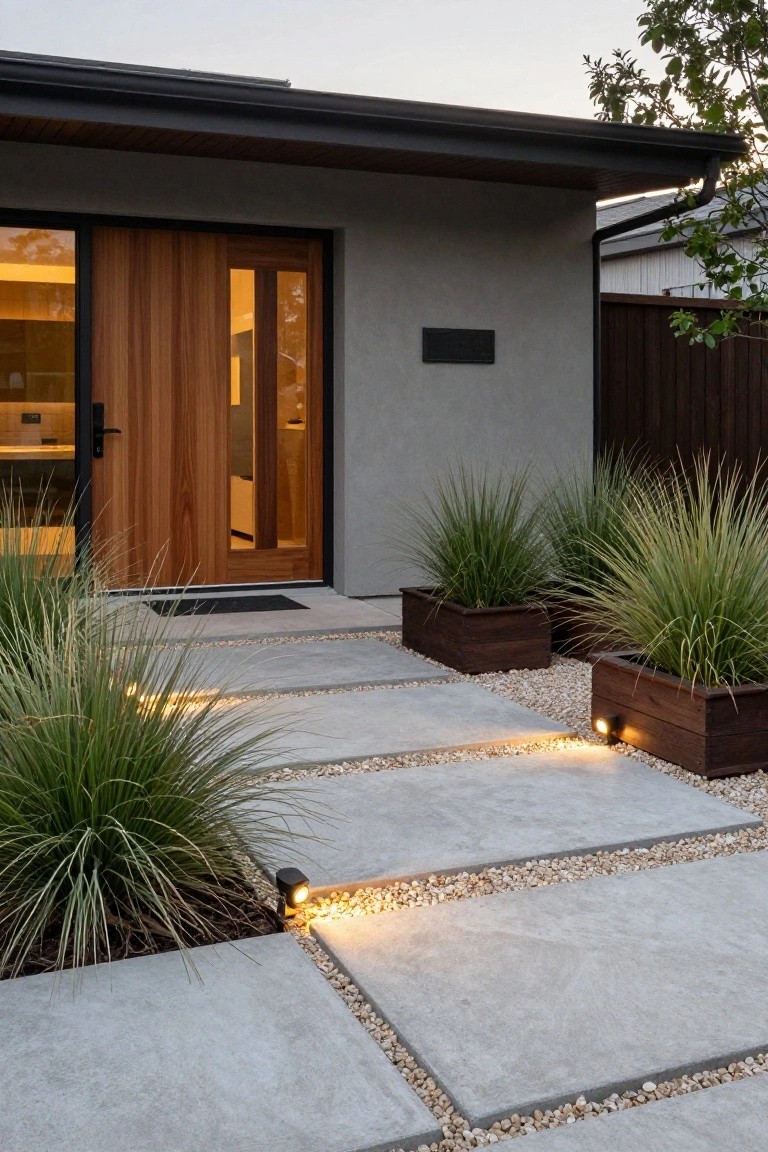
A straightforward front path like this one uses wide concrete slabs set into gravel beds. The gravel fills the gaps and edges, while tall grasses add some height without much upkeep. It pulls your eye straight to the door and feels fresh without being fussy.
This setup works best in front yards that get full sun, where drought-tolerant grasses thrive. Lay the slabs wide apart for a relaxed stride. Skip tiny pebbles. Go for larger gravel that stays put. It’s perfect for modern houses or anywhere you want curb appeal on a budget… just watch the weeds in that gravel.
Dune Grasses and a Simple Bench

One easy way to get coastal curb appeal is planting tall dune grasses around your front path. They sway in the breeze and hide a lot without much work. Here the grasses edge a sandy walkway leading to a white hut with a blue door. A weathered wooden bench sits right in the mix. It pulls everything together into something relaxed and beachy. No fussy flowers needed.
Try this in a front yard that gets full sun. Use native grasses if you can, they handle salt and wind better. Set the bench off the path on sand or gravel. It works for small lots or even inland spots wanting that shore feel. Just keep the path clear so it stays welcoming. Watch the grasses don’t flop over walkways after rain.
Lush Planters on Entry Ledges

One easy way to add curb appeal is stacking rectangular metal planters right on a brick ledge next to your front steps. Here, tall ferns mix with boxwood and pink geraniums spilling over the edges. It frames the door without taking up yard space. The setup looks full and green even in a tight spot.
This works best on row houses or smaller lots where ground beds won’t fit. Pick tough plants like ferns that handle some shade. Line up three or four matching troughs for that clean look. Keep soil moist and trim back in fall. It suits brick or stone homes that need a soft touch up front.
Create a Formal Parterre Garden

A parterre garden brings old-world order to your front yard with its neat boxwood hedges laid out in tight patterns around a central fountain. It stands out because that symmetry feels polished without much upkeep once established. The gravel paths and simple stone fountain keep things clean and let the structure do the talking.
This setup works best on a flat front area where you want instant curb appeal that looks like it’s been there forever. Go for low boxwoods that stay dense, and pick a fountain not too big for the space. It suits traditional or colonial-style homes, but watch the scale on smaller lots, it can overwhelm if you overplant.
Black-Eyed Susan Garden Border

A simple border bed packed with black-eyed Susans brings bright yellow color right to your front yard. These perennials bloom for weeks in summer, filling out the space with their upright stems and dark centers. They stand out against plain grass and hedges without much fuss.
Edge the bed with stone or metal to keep it tidy, and tuck in a rustic bench for a spot to sit. It fits most sunny front yards, especially in suburbs. They spread over time but stay manageable if you divide them every few years.
Tall Grasses Along Front Yard Drainage

One simple way to boost curb appeal is planting tall grasses right along a drainage channel. These irises with their long green blades and pops of purple or yellow flowers do a good job of hiding the concrete edges. The water running through keeps it all looking fresh and natural. It turns a plain utility spot into something that fits the yard without much work.
This works best in front yards where you have to deal with runoff or ditches. Pick grasses that grow narrow and tall to stay out of the way. They handle wet soil fine and come back each year. Pair them with pavers for clean walkways. Just keep the channel clear so water flows right. Good for any home style that wants low fuss green.
Tiered Raised Beds for Sloped Yards

Tiered raised beds turn a sloped front yard into usable planting space. Stacked wooden boxes follow the grade, holding small citrus trees, boxwoods, and herbs without needing much flat ground. The setup looks clean and structured, pulling the eye up to the house entry.
These work best on modest inclines near steps or paths. Use rot-resistant wood like cedar, line the bottoms for drainage, and pick tough plants that handle some shade. They suit family homes wanting low-fuss curb appeal… no big digging required.
Rose Arbor Over Front Steps
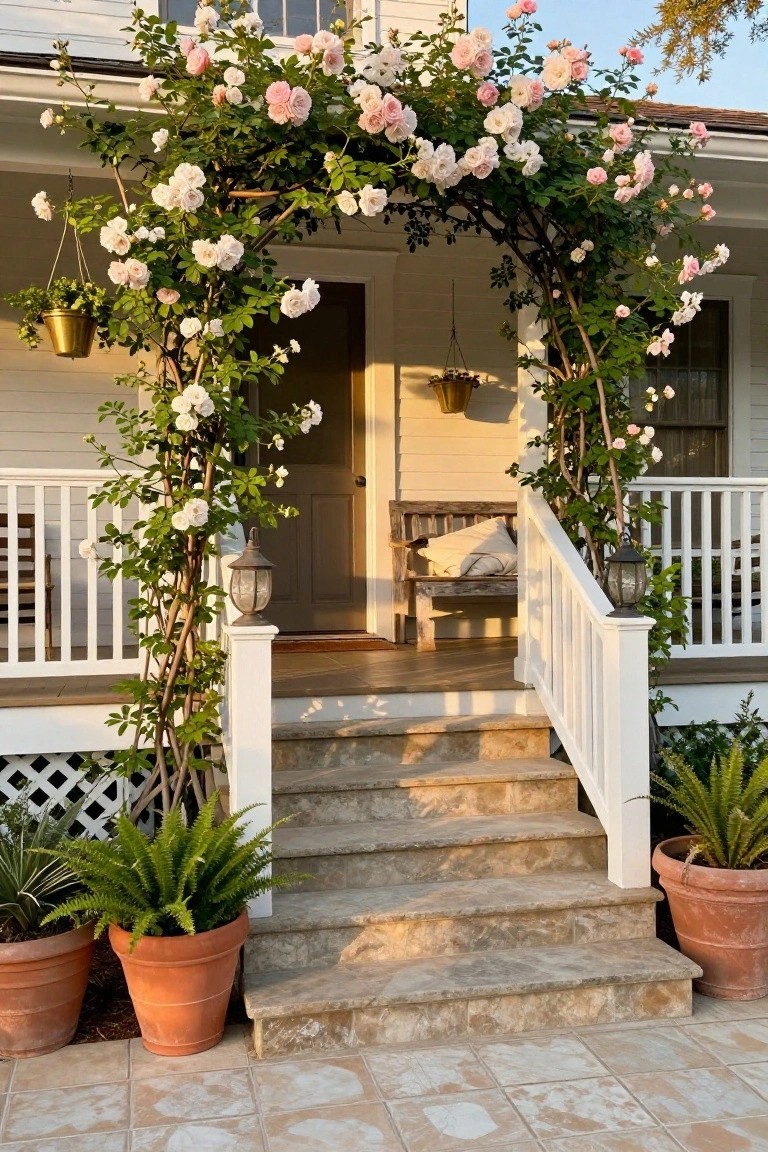
A wooden arch draped in climbing roses makes a sweet frame for your front entrance. The soft pink and white flowers spill over just right, pulling focus to the door without overwhelming the space. It’s one of those old-school garden touches that boosts curb appeal on a budget and feels personal right away.
Set up a sturdy arch over your walkway or steps, then plant easy climbers like ‘Iceberg’ or ‘Blush Noisette’. They’ll cover up quick with regular training. Suits low-key homes with porches, especially in mild climates. Keep paths clear underneath… and watch for aphids in humid spots.
Frame Your Front Yard with Potted Olive Trees

Large olive trees in oversized concrete pots make a simple way to add height and structure to a front yard right away. They give that Mediterranean vibe without needing to dig up the whole space. Here the trees stand on either side of a bench, pulling the eye straight to the seating spot and making the gravel area feel more put together.
Plant them in pairs to bookend a path or entry gate, like this setup near a low wall. It works best in sunny, dry spots where olives thrive, and suits homes with a clean modern or rustic look. Just pick pots big enough so the trees won’t tip in wind, and keep the gravel simple underneath to let them stand out.
Curved Walkway with River Rock Edges

A simple curved walkway like this one pulls visitors right to your front door without feeling too rigid. The concrete path bends gently through the yard, edged all along with smooth river rocks that keep grass and mulch in place. That little detail adds a natural flow, especially with a big white-flowering tree overhead for some shade and softness.
You can do this on most any front yard. Just pour or repour your path with a soft curve, then drop in the rocks along the edge. It works great for suburban homes with flat lawns… low upkeep too, since rocks stop weeds easy. Skip it if your yard slopes a lot, though.
Line Your Front Path With Low Landscape Lighting
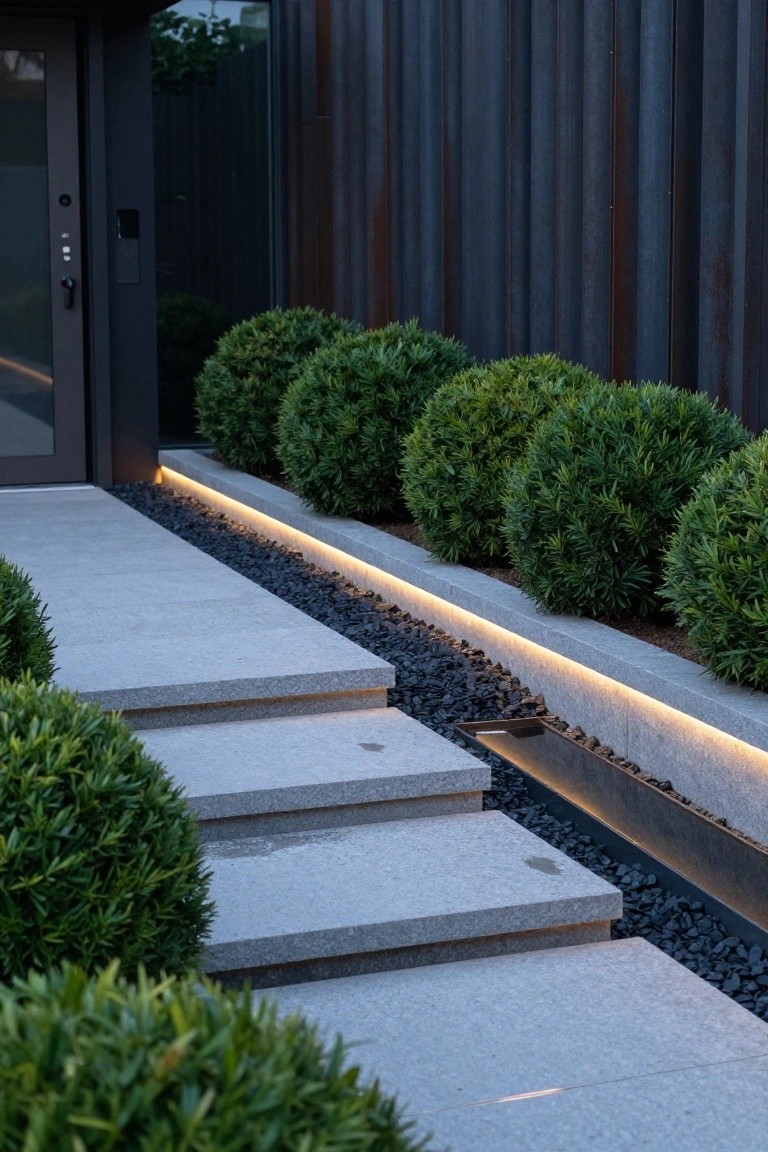
Running a slim strip of lighting right along the edge of a planting bed gives the front walk a quiet glow after dark. It makes the path easy to follow without adding tall lamps or fixtures that can crowd the space.
This approach suits homes with straightforward landscaping and clean architectural lines. Keep the light warm and low so it highlights the gravel and steps without overpowering the plants or looking too bright from the street.
Edge Your Path With Lavender
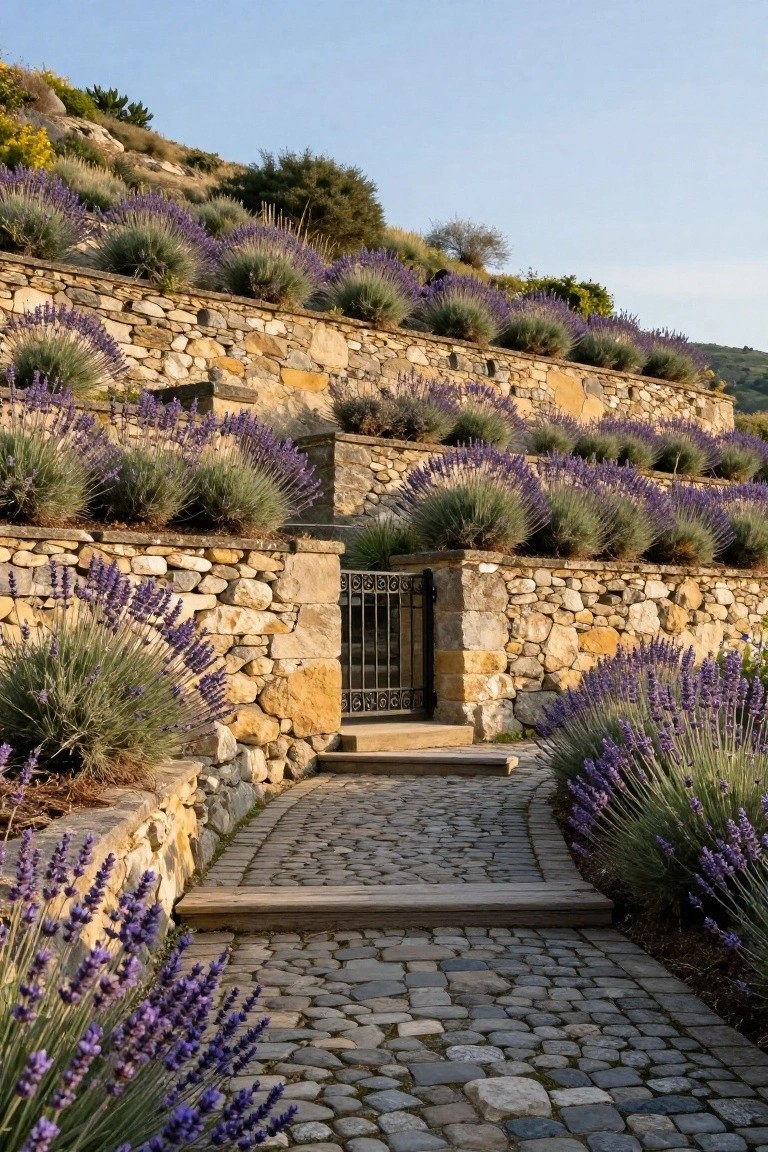
A simple path lined with lavender gives a front yard instant charm without needing a big overhaul. The purple blooms soften the stone edges and bring steady color right up to the walkway.
This setup works best on gentle slopes or flat lots where you can keep the beds narrow. Plant the lavender close to the path so it brushes the stones as it grows, and choose a variety that stays compact in your climate.
Stepping Stone Paths In Gravel
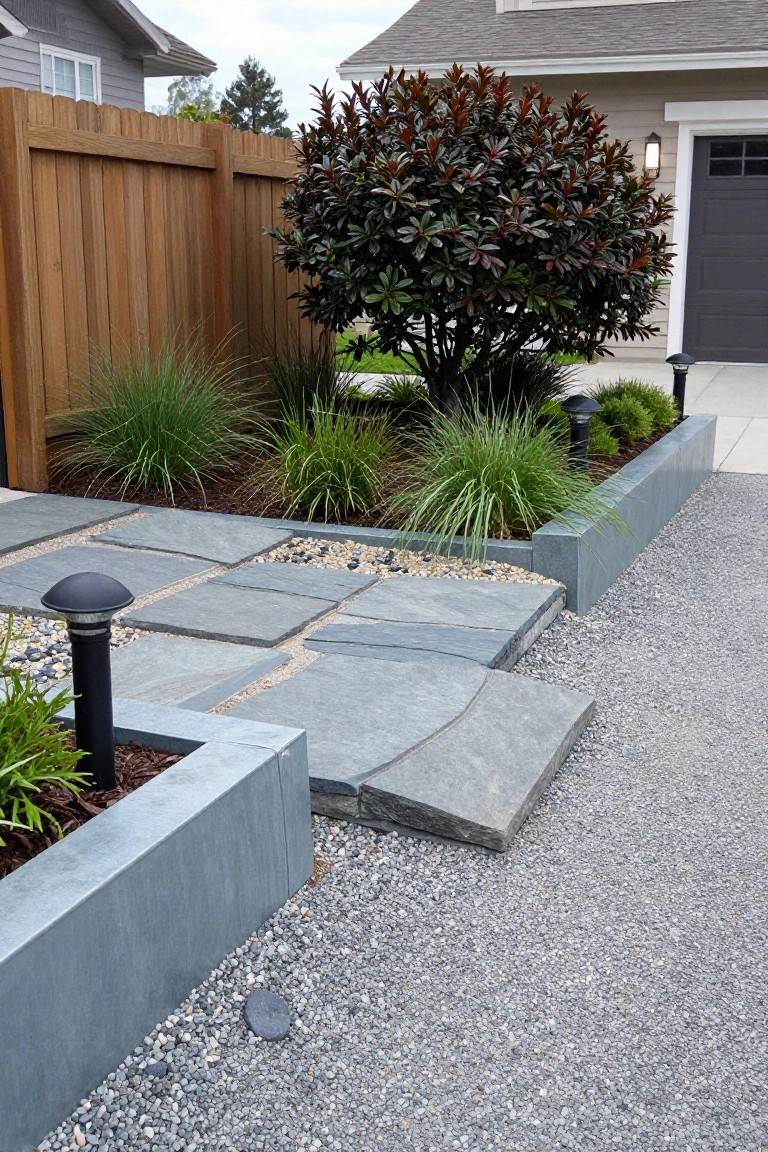
A path made from large flat stones set into gravel gives a front yard an easy flow without looking too formal. The stones break up the surface and make walking simple, while the gravel keeps things low maintenance and helps with drainage around the beds.
This approach works well on homes with straight lines and modern plantings. Keep the stones irregular in shape and size so the path feels natural rather than rigid. Pair it with low grasses and a few taller shrubs to soften the edges without crowding the walkway.
Soften Stone Steps With Tall Grasses

Tall ornamental grasses make a simple way to add softness around hard surfaces like stone steps and low walls. They bring height and movement without crowding the entry, and the way they catch light at the base keeps the whole front looking cared for after dark.
This approach works best on houses with clean architecture and low borders along the path. Keep the planting in loose groups rather than a straight line, and use just one or two other plant types so the grasses remain the main feature.
Frequently Asked Questions
Q: What if my front yard has poor soil? A: Mix in some compost to give plants a strong start. Then choose hardy varieties that thrive even in tough ground. They’ll fill out nicely with just a bit of extra care at planting time.
Q: How often should I water new garden beds? A: Water deeply right after planting to help roots settle. Then check the soil every few days and water when it feels dry an inch down. This keeps things growing without wasting water.
Q: Can these ideas work for a small yard? A: Scale them down by focusing on one key spot like the walkway edges. But pick plants that stay compact so nothing crowds the space. You’ll still get that welcoming boost without overwhelming the area.
