

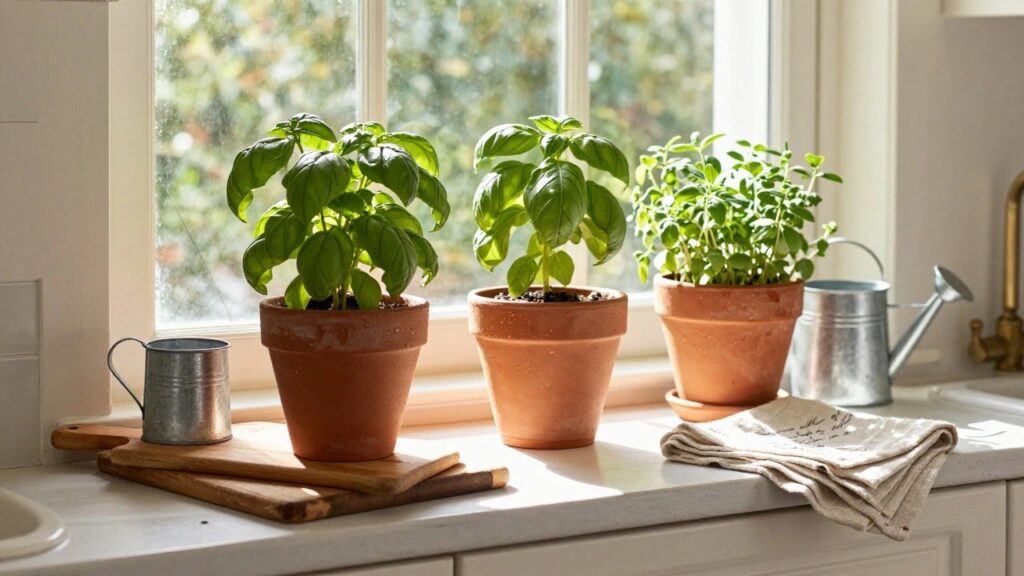
I have noticed that kitchens often feel more alive when there are fresh herbs growing right within reach during meal prep.
It is the small details like where you place the pots that end up shaping how easily you cook with them each day.
Light matters more than I expected.
Some ideas work better if you consider the counter space and daily traffic first before adding too many plants.
I would start by testing one or two that match the way my kitchen gets sun before committing to more.
Kitchen Windowsill Herb Garden
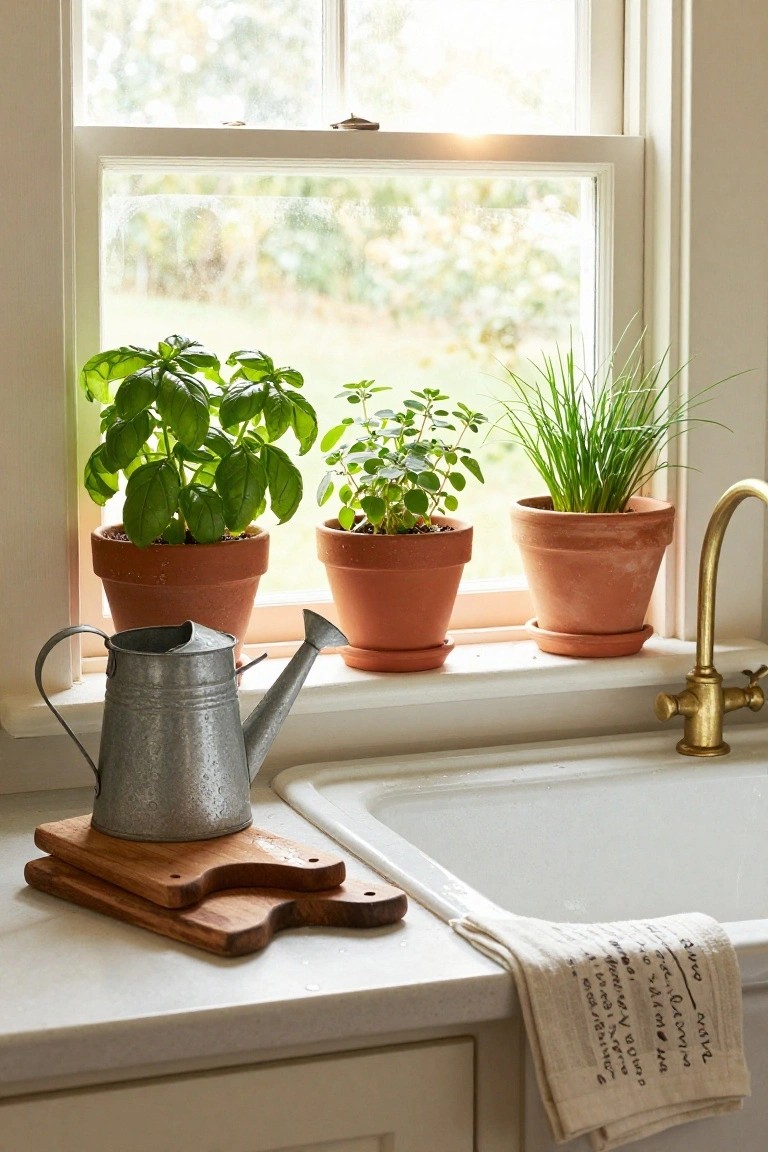
Growing herbs on the kitchen windowsill brings fresh green right where you need it most. Basil oregano and chives fill terracotta pots along the ledge catching morning sun. It’s a simple way to make cooking feel more connected to the garden without stepping outside.
Set this up over your sink for easy watering and snipping. A metal watering can stays handy on the counter below. It fits any sunny kitchen window even in a small space. Just check that the pots drain well to avoid drips.
Herb Pots on Open Kitchen Shelves
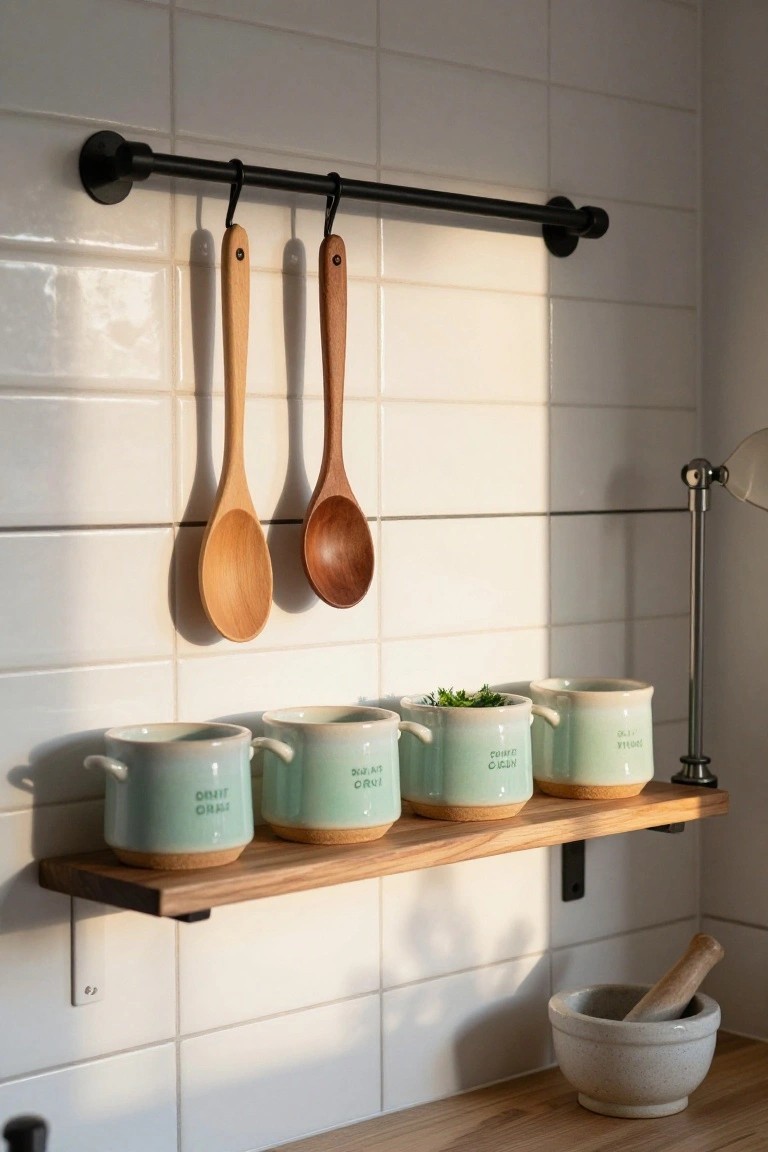
Having fresh herbs right in the kitchen makes cooking feel more alive. These green pots with labels like oregano and dill line up neatly on a simple wooden shelf. They mix with hanging wooden spoons nearby for that everyday garden touch. It’s practical and keeps greens handy without much fuss.
Try this in a small kitchen or any spot by the counter. Grab plain pots and label them clearly so you know what’s what. It works best against plain walls like white tile. Just water them regular and pick a shelf that’s easy to reach.
Kitchen Island Herb Planter
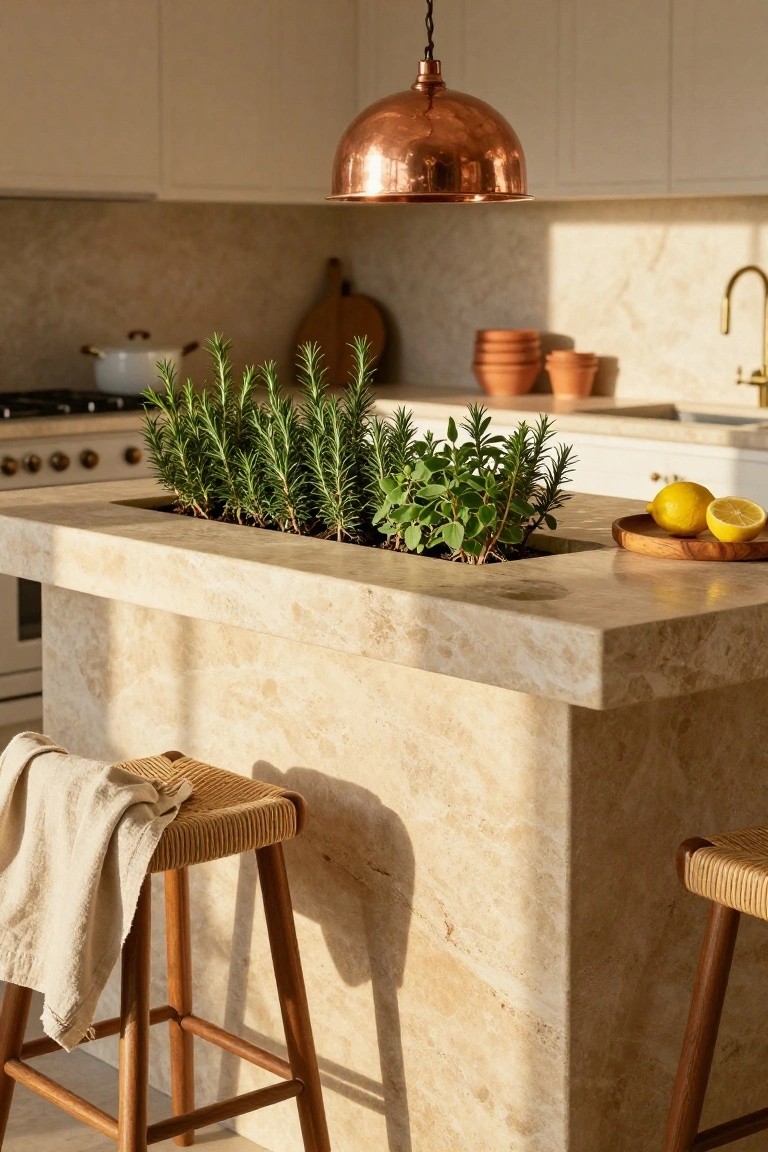
One simple way to add fresh herbs to your kitchen is to build a planter right into the island counter. Here rosemary and basil grow straight out of a stone trough, close enough to snip for dinner. It keeps things practical without taking up counter space, and that garden touch makes the whole kitchen feel alive.
This works best in kitchens with solid surfaces like travertine or quartz that can handle a cutout. Just seal the edges well for drainage, and pick tough herbs that like indoor light. It’s great for everyday cooks who want convenience… but skip it if your island sees heavy traffic.
Cozy Corner Herb Shelves
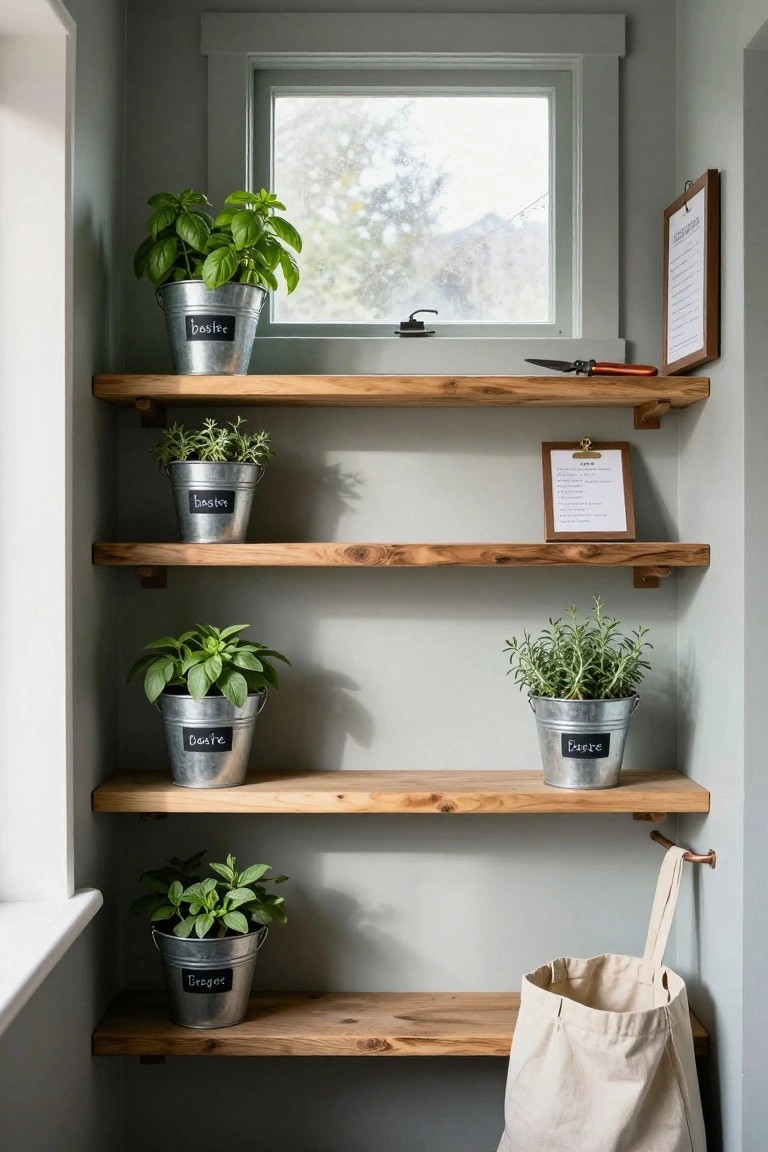
Tuck a set of simple wood shelves into a kitchen corner by the window, and fill them with galvanized buckets of herbs like basil and thyme. This keeps fresh greens handy for cooking, and the metal buckets give it a casual farm feel that fits right in with everyday kitchen life. No fancy setup needed. Just plants doing their thing.
Hang the shelves where they get decent light, maybe four levels high to use the space well. Label each bucket with chalk so you know what is what at a glance. It suits small kitchens or any spot short on counters. Watch the watering though. Those buckets dry out faster up high.
Windowsill Herbs in a Kitchen Nook
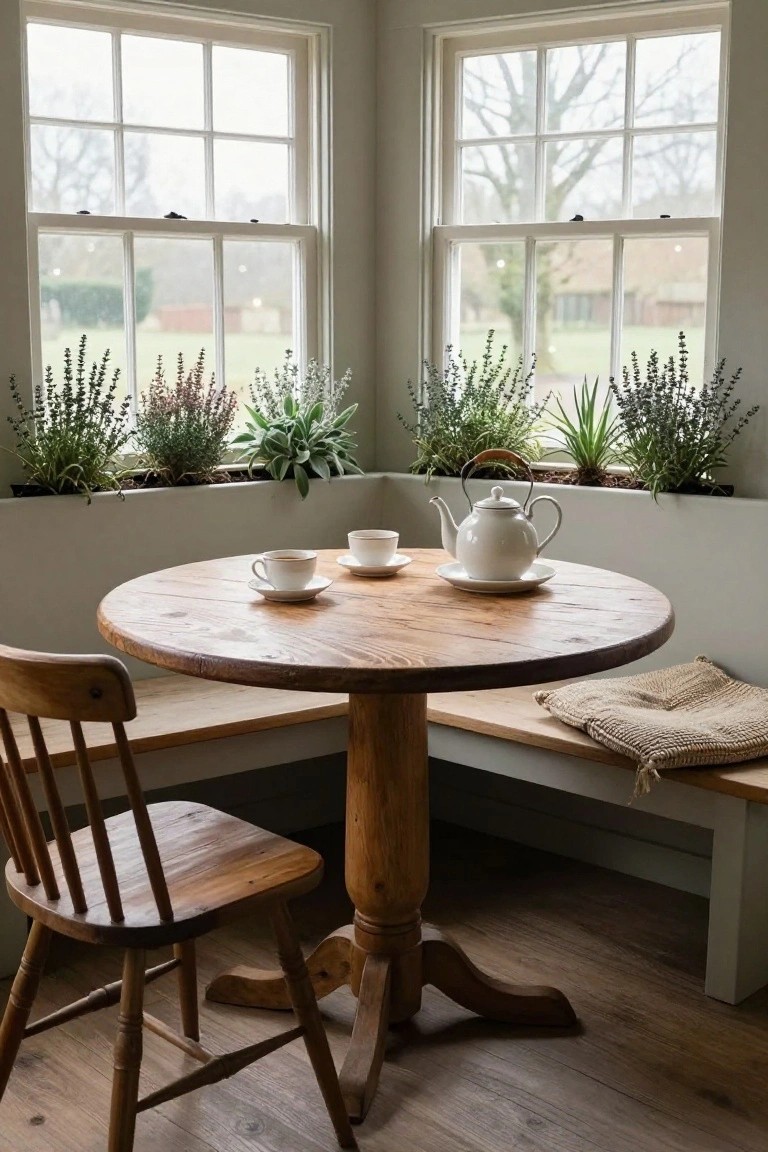
Deep windowsills make perfect spots for herbs like lavender right above your eating area. This setup pulls the garden feeling indoors without taking up floor space. You get fresh greenery and a light herbal scent while having tea or breakfast. The plants frame the corner nicely, softening the plain walls.
Try this in kitchens with wide sashes that face a yard or field. Line the sills with long troughs filled with low-growing herbs. Add a round wood table underneath for two people. It suits older homes or cottages best. Just keep the plants trimmed so they don’t block the light.
Hanging Herbs from Kitchen Shelves
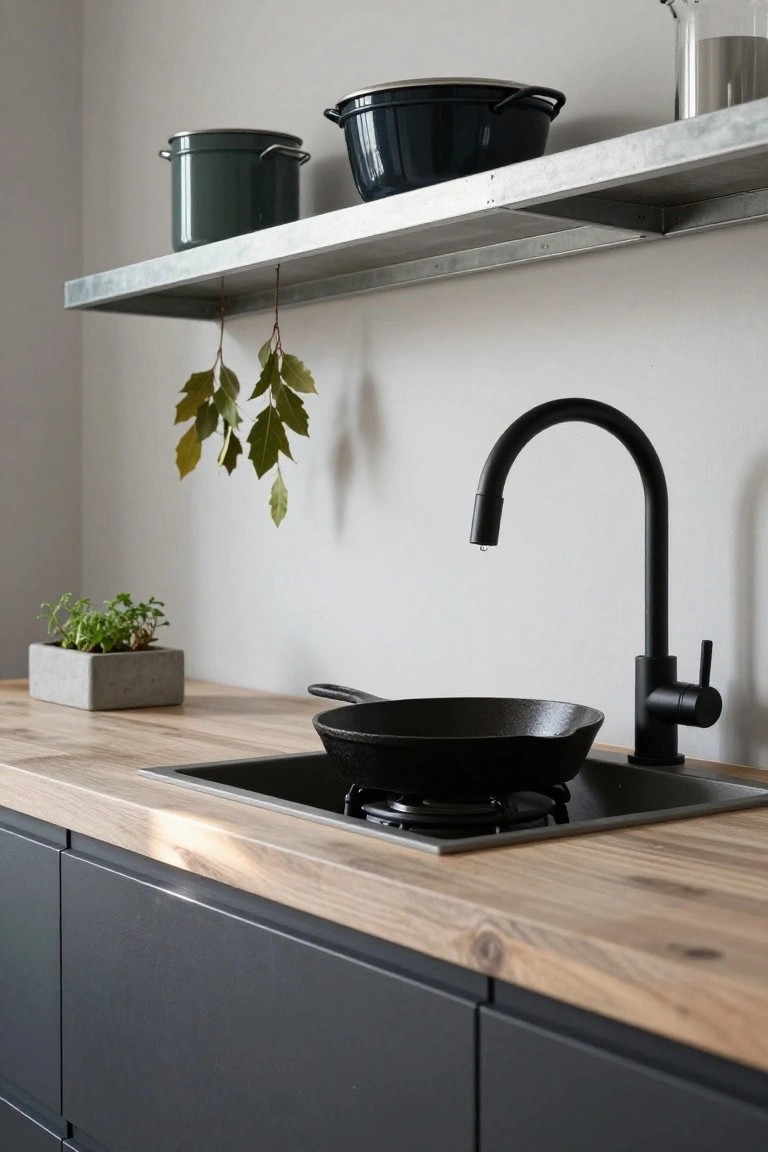
One easy way to bring garden freshness into your kitchen is hanging herbs right from the open shelf. In this setup, bay leaves dangle from simple hooks under a metal shelf loaded with pots. It keeps things practical for cooking while adding that lived-in, herb garden touch without much effort.
Hang your go-to herbs like bay, thyme, or rosemary this way above the sink or stove area. It suits compact kitchens with open shelving best, especially if you like matte black fixtures and wood counters. Just use sturdy hooks and rotate herbs as needed… keeps it fresh year round.
Open Shelving for Kitchen Herbs
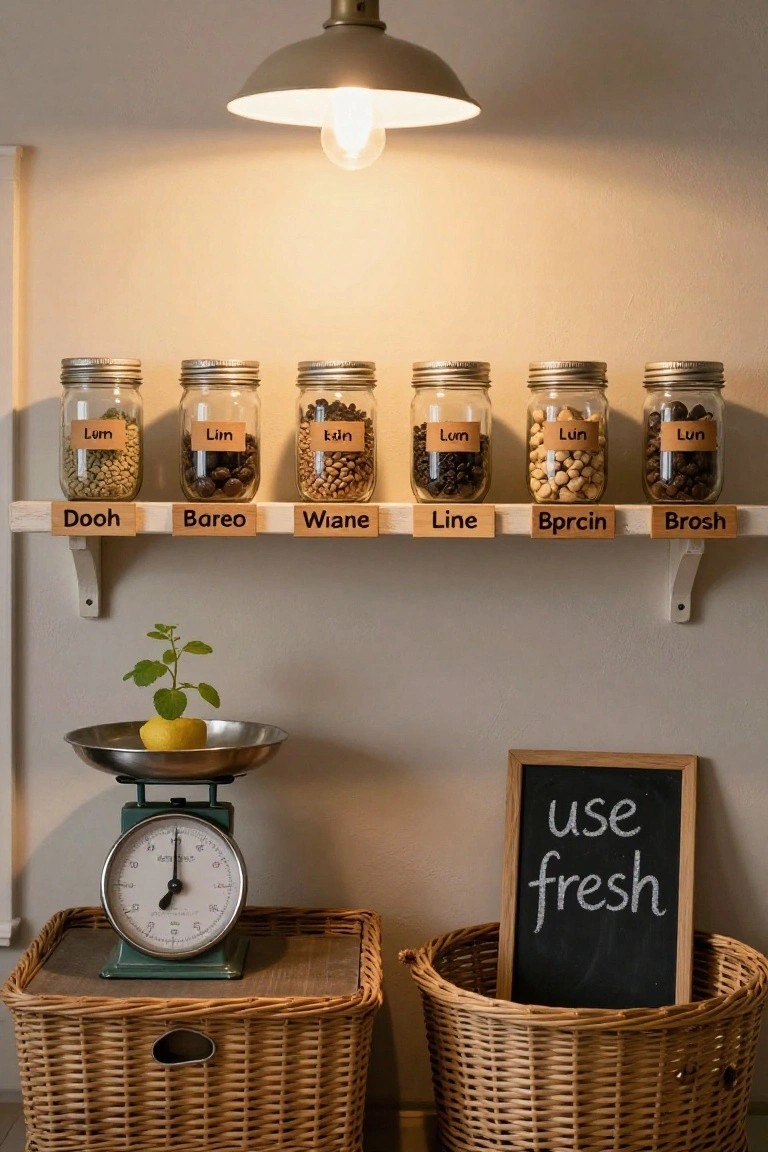
A wooden shelf lined with mason jars full of dried herbs and beans makes a practical spot for kitchen staples. Each jar is clearly labeled with names like Lêm, Lîn, and Lùn, so you always know what you’ve got on hand. It brings that home garden feel indoors without much fuss, and the nearby “use fresh” sign keeps things balanced.
This works best in a small kitchen where counter space is tight. Hang the shelf at eye level above your workspace, fill jars with whatever you dry from the garden, and add a simple scale below for weighing out portions. It suits casual homes that lean toward natural, everyday cooking.
Kitchen Shelf Herb Garden with Hanging Pots
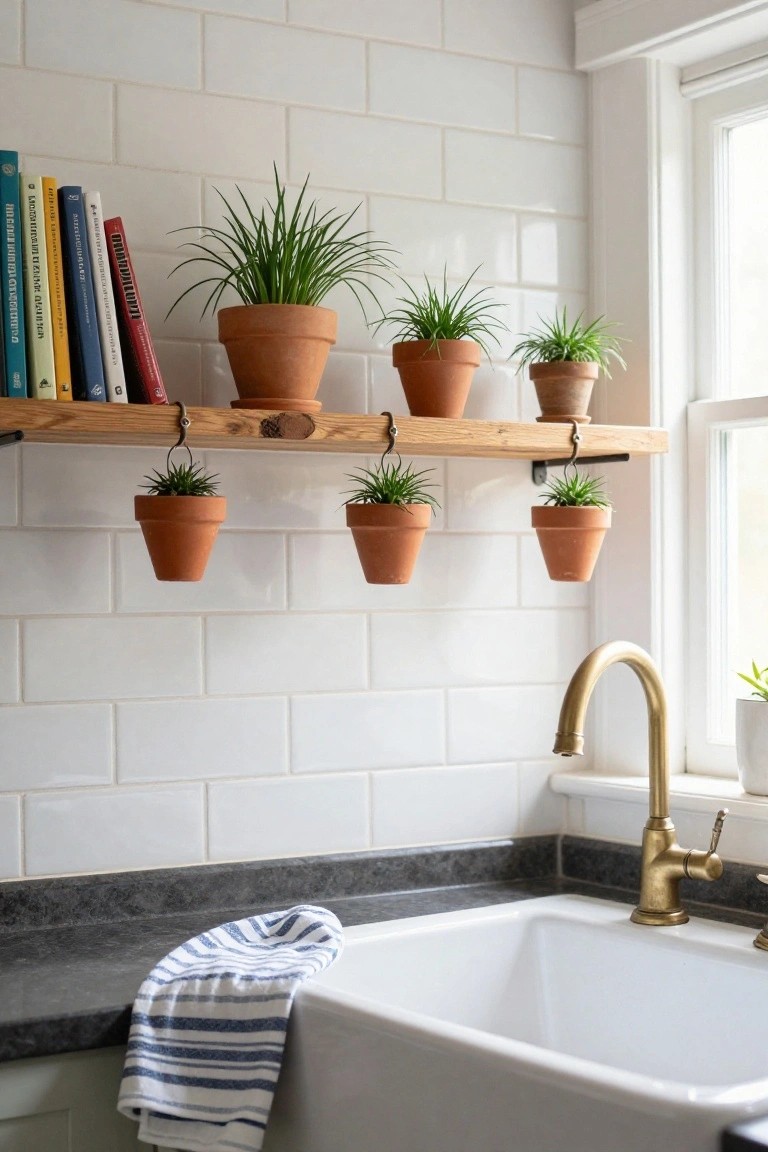
A wooden shelf mounted right on the kitchen wall holds a mix of books and potted plants, while small terracotta pots hang below it over the sink. This keeps herbs close for cooking and adds that fresh garden touch without crowding the counters. The white tiles make the green plants pop nicely.
It’s perfect for apartments or any tight kitchen spot. Pick easy herbs like parsley or chives that thrive indoors near a window. Water them straight into the sink, and they stay handy. Just check they get enough light so they don’t stretch too much.
Potted Herbs on the Kitchen Island
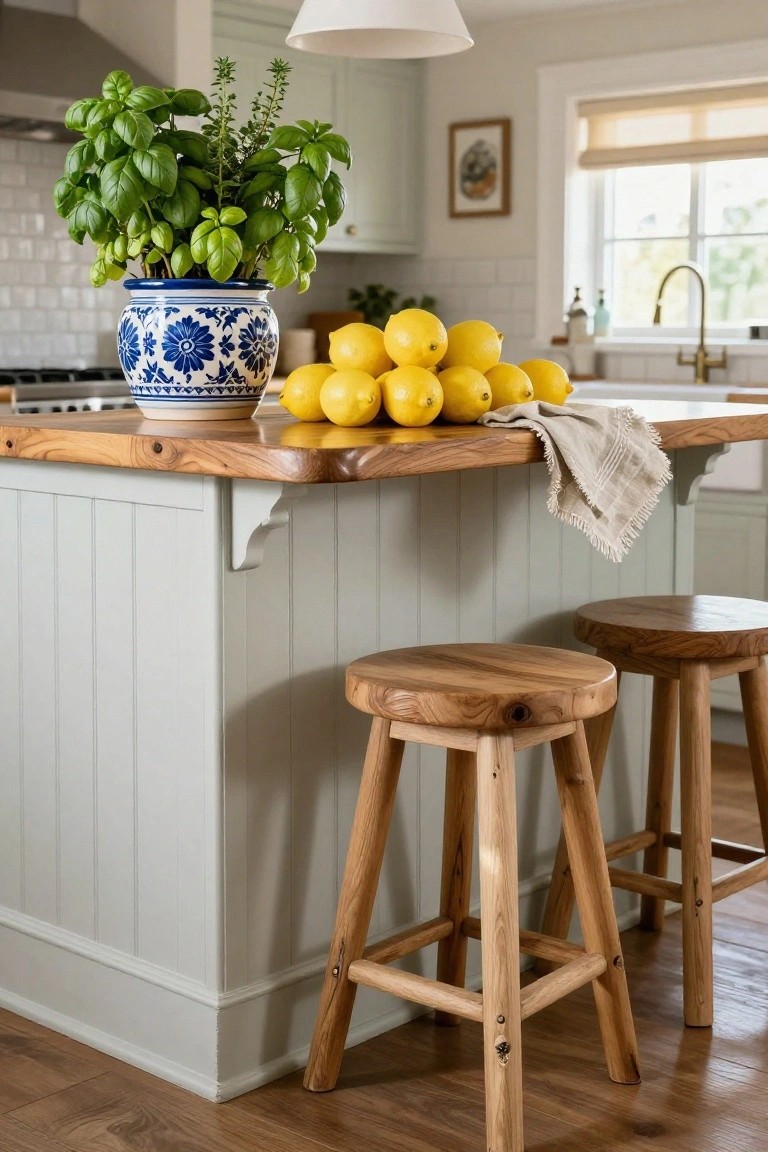
Having a big potted herb like basil right on your kitchen island keeps things fresh and handy for cooking. In this setup, the lush green plant sits in a blue and white pot next to a pile of lemons on the wooden top. It turns the counter into a little indoor garden without crowding the space.
This works great in kitchens with good window light, like near that soft shaded one here. Go for a sturdy pot that matches your cabinets a bit… pale greens or neutrals pair easy. Just pick herbs you use often, keep soil moist, and trim to keep it bushy. Fits most home kitchens, even smaller ones.
Fridge Top Herb Garden Spot
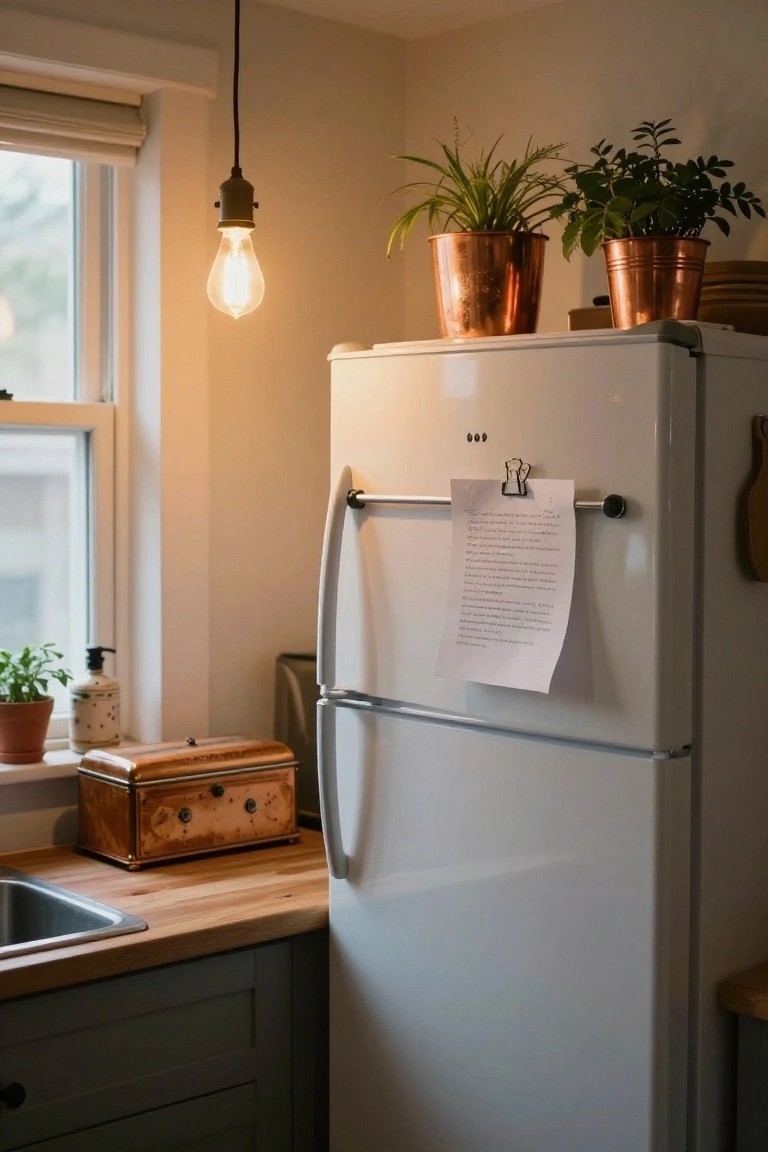
One simple way to bring fresh herbs right into your kitchen is by setting pots on top of the fridge. Those copper pots with greenery catch the light nicely and keep things feeling alive up there. It uses space you might overlook otherwise, and the warm metal tone fits a cozy setup without much effort.
This works best in kitchens with good indirect light near a window. Pick easy herbs that don’t mind a bit less sun, like mint or chives… just secure the pots so they won’t tip. It’s perfect for apartments or smaller homes where counter space stays clear for cooking.
Fresh Herbs on the Kitchen Windowsill
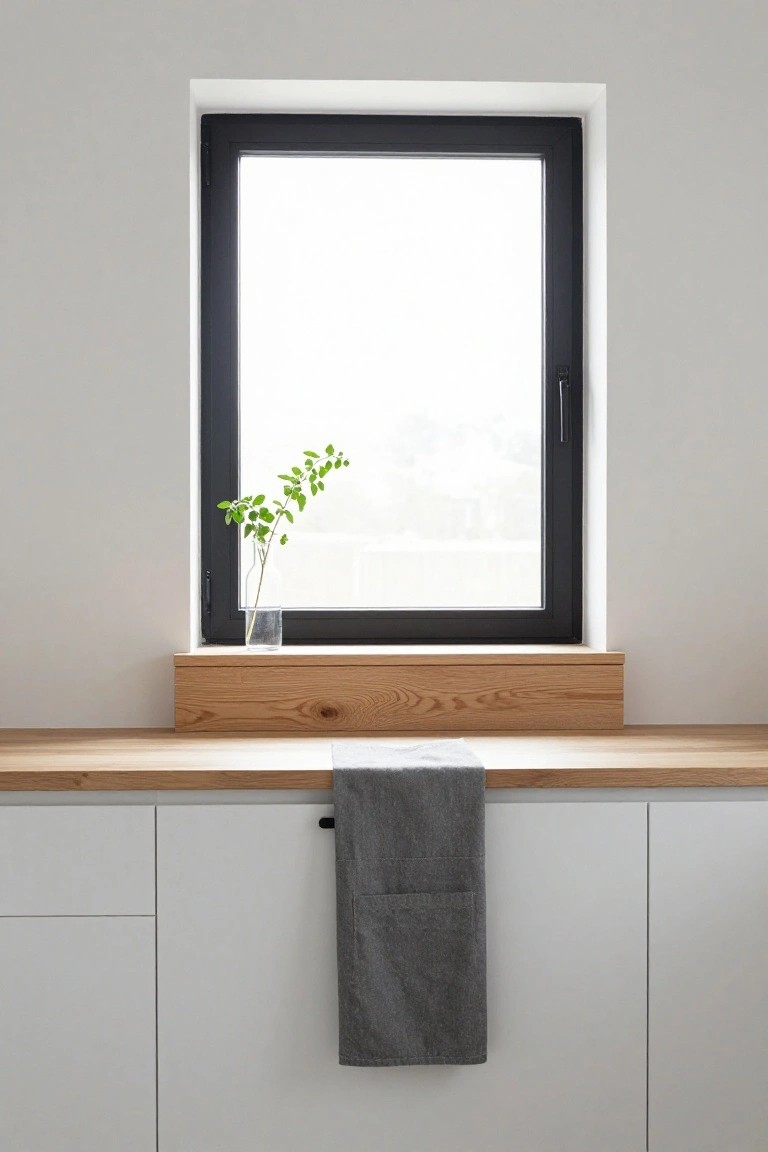
A quick sprig of herbs tucked into a glass vase on the kitchen windowsill gives your space that cozy garden touch without taking up counter room. It works because it’s right there in the light, staying fresh longer, and adds a bit of green to plain white cabinets and wood tones.
This fits small kitchens best, especially ones with a wide sill over the sink or counter. Snip from the store or your own plants, use any clear jar, and swap weekly. Keeps it simple… no big planters needed.
Vertical Herb Shelves in the Kitchen
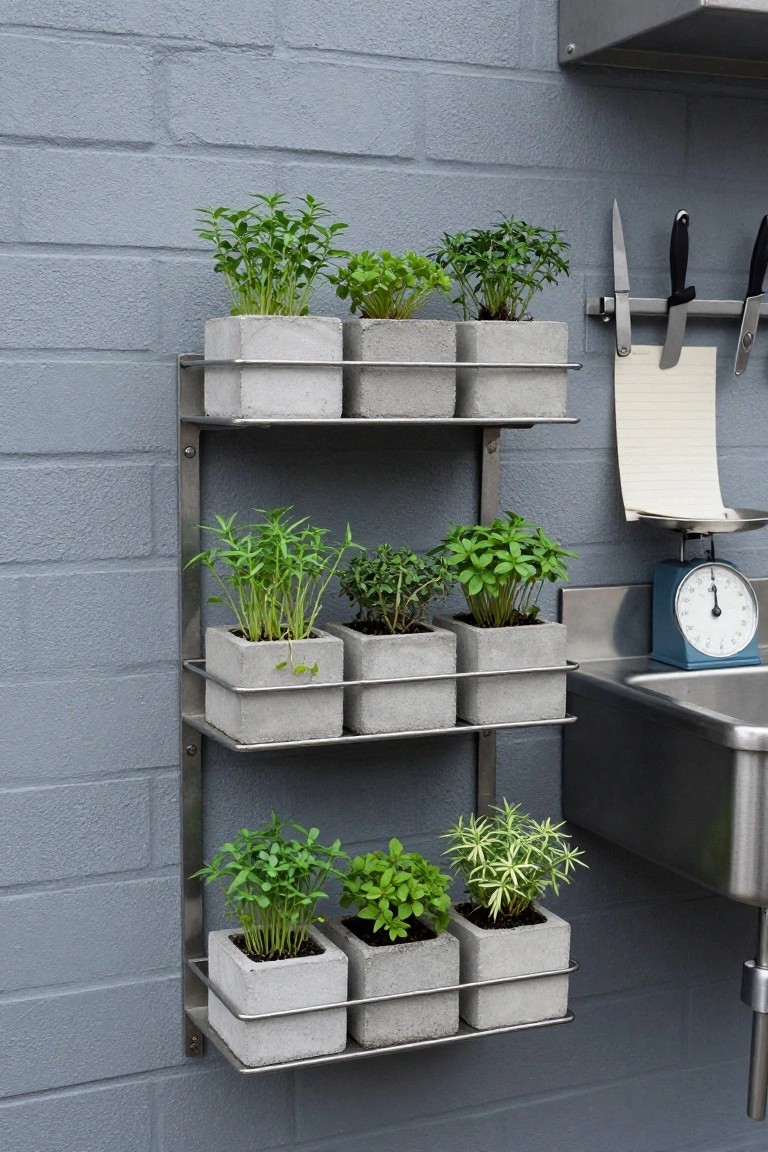
One easy way to keep fresh herbs handy is with a simple wall-mounted shelf like this. It holds square concrete pots full of basil, cilantro, and others right above the sink area. No need to trek outside or to a windowsill. The metal frame keeps everything sturdy and off the counters, so your workspace stays clear.
This setup works best in small kitchens where space is tight. Mount it near a window for light, or use grow lights if needed. Pick pots that match your style, concrete for a modern feel or clay for rustic. Just water regularly and trim as you cook. It’s practical for apartments too.
Tabletop Herb Pots
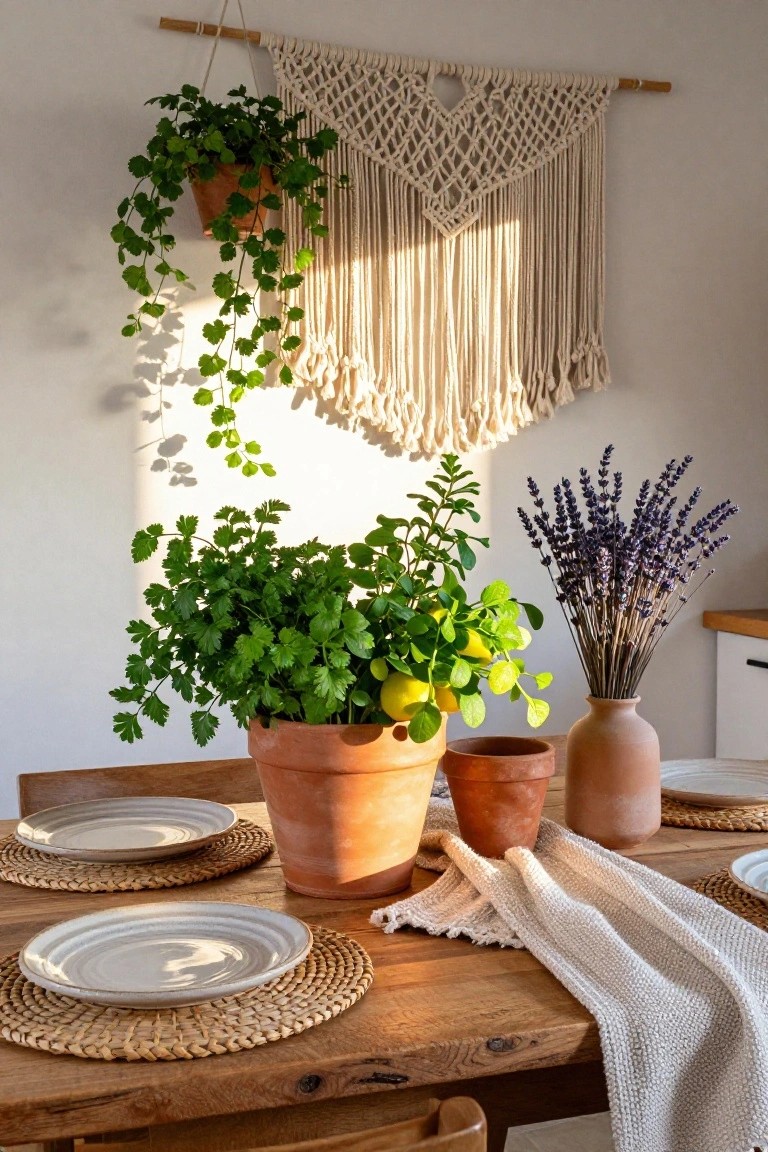
One straightforward way to get that fresh kitchen garden vibe is putting potted herbs directly on your dining table. A big terracotta pot of parsley takes center stage here, paired with a smaller one of lemony greens. It keeps everything handy for cooking and makes the space smell alive without much effort.
This setup fits right into everyday kitchens, especially casual ones with wood tables. Go for simple clay pots that match your style, and group two or three together. Watch the sunlight though… too much direct hit can wilt the leaves fast.
Recessed Shelf for Kitchen Herbs
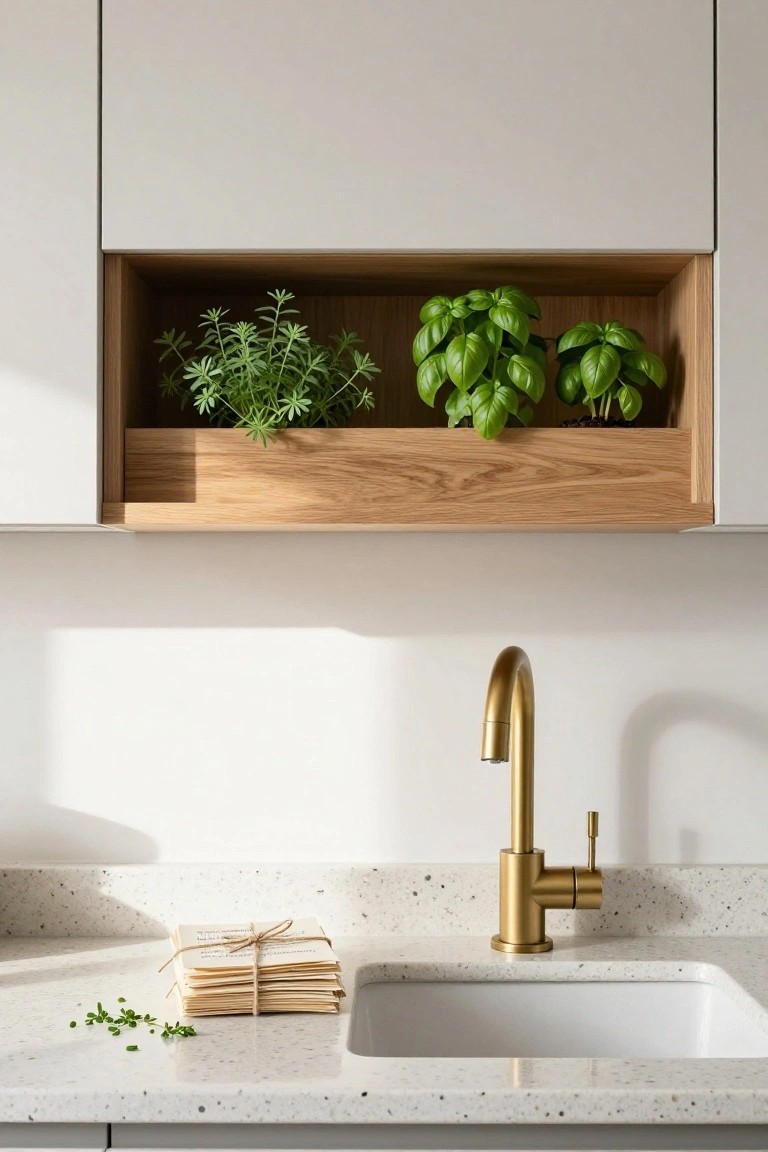
A recessed shelf built into the wall above the sink keeps fresh herbs within easy reach while they still get light. It turns a plain stretch of cabinetry into a working spot for basil, thyme, and similar plants without taking up counter space.
This works best in kitchens that already have a window nearby and a simple sink area. Keep the shelf shallow so it does not interfere with daily use, and choose a wood tone that matches the surrounding cabinets. Check the plants often for moisture so water does not drip onto the counter below.
Herbs Right on the Kitchen Windowsill
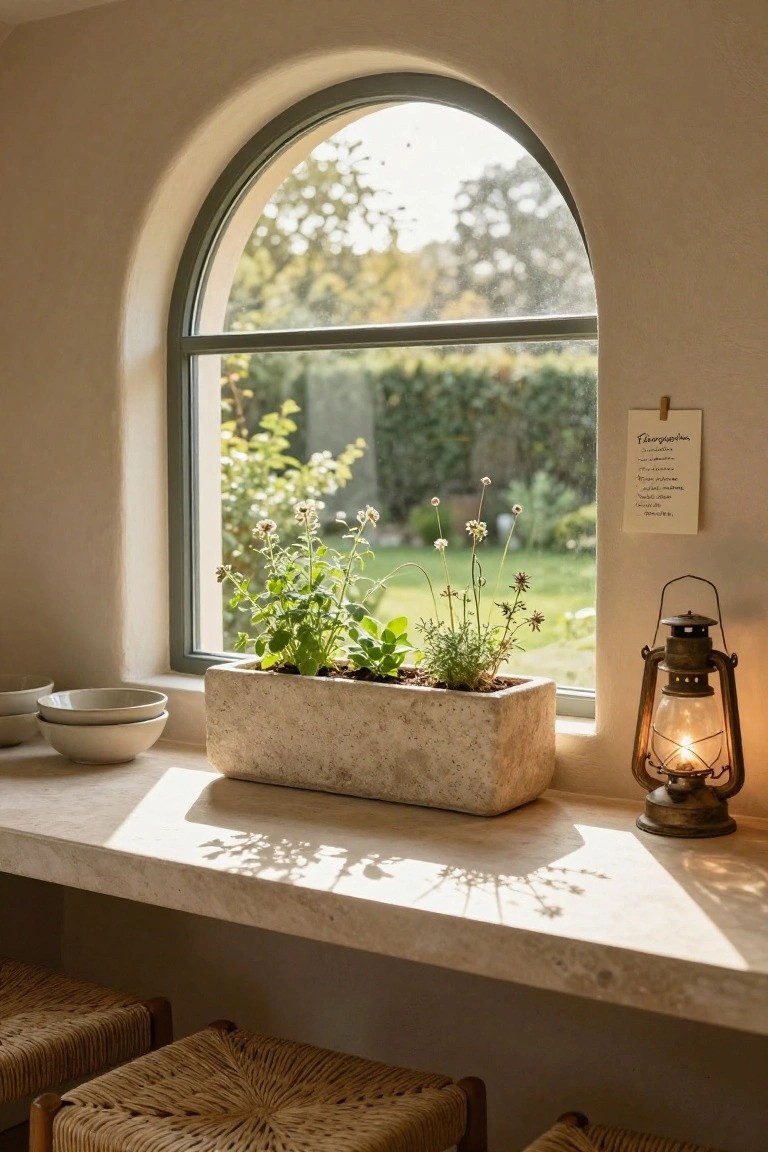
A long planter box of herbs on the windowsill keeps fresh flavors close at hand while the plants get steady light. It turns a simple ledge into a working spot for cooking without crowding the counters or needing extra shelves.
This works best in kitchens with wide sills that face the sun for several hours a day. Choose a sturdy material that can handle moisture, and check the soil now and then so the plants do not dry out too fast.
Herb Drawers Built Into The Counter
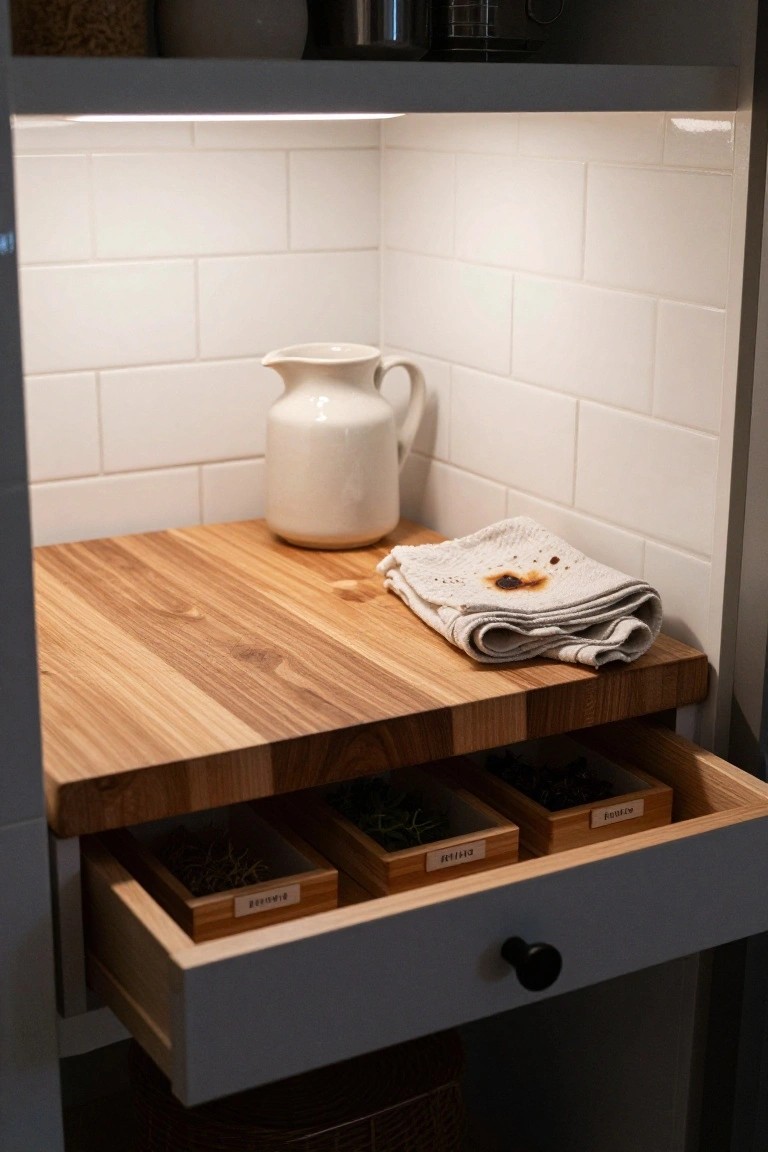
One simple way to keep fresh herbs close at hand is to add pull-out drawers right under the kitchen counter. The drawers hold small labeled containers so you can reach for thyme or rosemary without opening a cabinet or stepping away from the cutting board.
This works best in kitchens that already have some open space below the work surface. It keeps herbs organized and easy to rotate, which helps them stay useful longer than if they sat in a basket on the counter.
Herbs Right on the Kitchen Windowsill
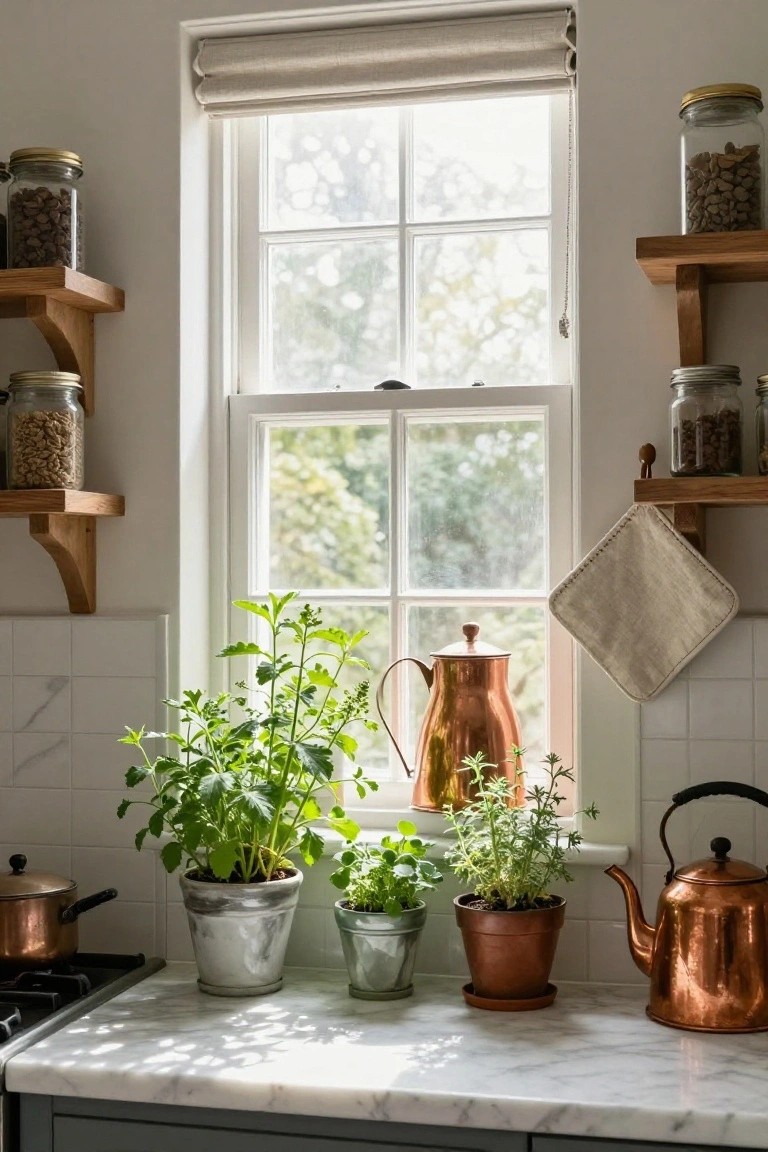
Keeping a few herb pots right on the windowsill makes them easy to grab while cooking. The light is usually good there, and the plants stay close to where you will use them most.
This idea works well in kitchens with a wide ledge or counter space under a sunny window. Pick pots that fit without crowding the plants, and stick to herbs you reach for often so nothing goes to waste.
Display Herbs on a Ladder Shelf
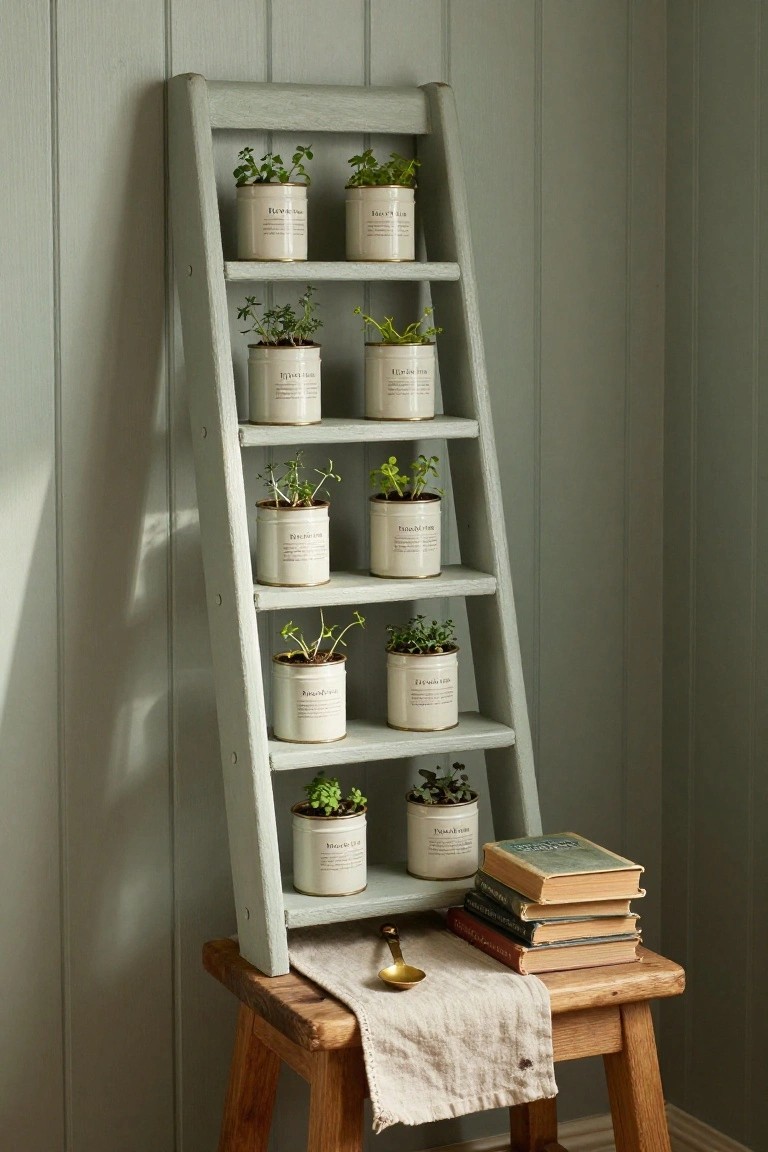
A ladder shelf gives herbs a simple vertical home that keeps them handy without taking up floor space. The staggered rungs let each pot get light and air while turning a plain wall into a working herb station.
This setup suits small kitchens or any indoor spot with decent light. Set it near a window so the plants stay healthy, and keep a small stool or bench at the base for easy watering and harvesting.
Keep Fresh Herbs on the Kitchen Counter
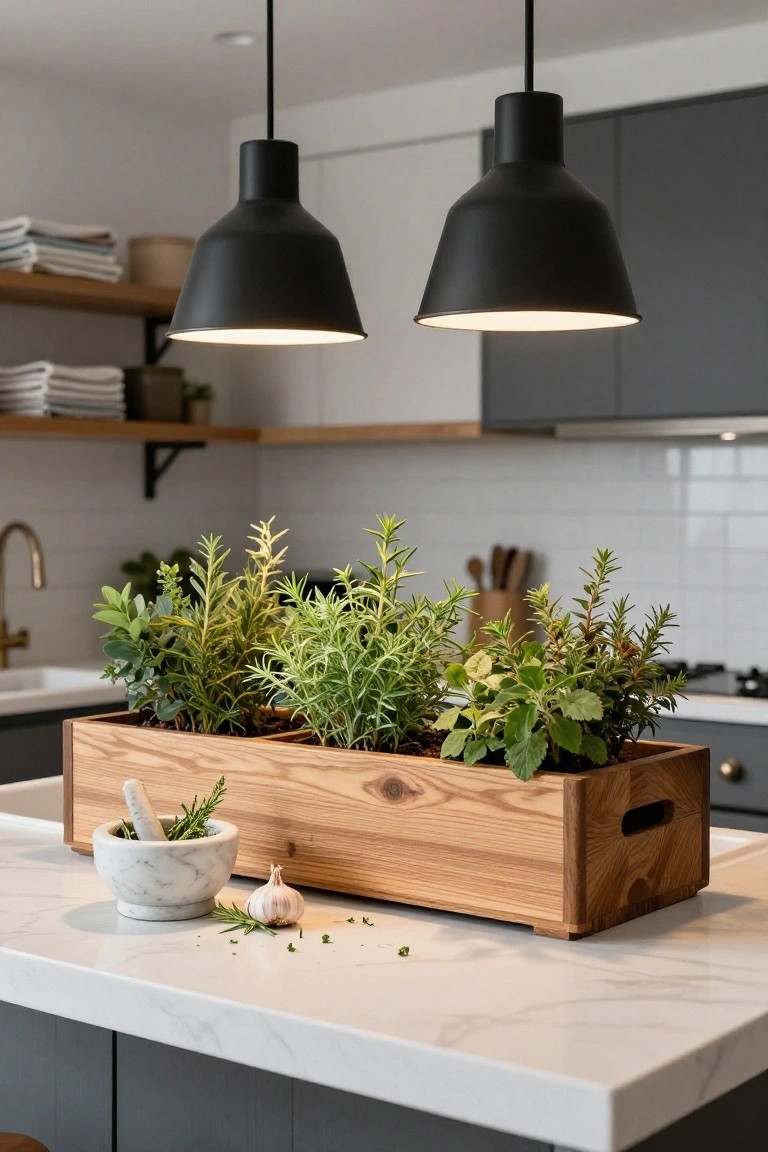
A long wooden box filled with rosemary, thyme, and other cooking herbs sits right on the counter where you work. It keeps the plants close at hand for quick snips while you cook and adds a bit of green without taking up much space.
This setup works best in kitchens with decent natural light or under pendant fixtures that can support the plants. Use a sturdy trough-style planter with good drainage so the soil stays healthy, and choose herbs you actually reach for often. Just watch that the box does not crowd your main workspace.
Frequently Asked Questions
Q: What herbs should I start with if I want quick results in the kitchen?
A: Basil and mint grow fast from small plants. You can snip leaves right away for cooking. Keep them in a sunny spot and water when the soil feels dry on top.
Q: How do I keep herbs going indoors all year?
A: Choose hardy ones like chives and parsley that handle lower light. Rotate the pots every week so all sides get sun. Trim them often to encourage bushy growth instead of tall stems.
Q: Is it worth buying seeds or should I get young plants?
A: Young plants from a nursery let you harvest sooner. Seeds take longer but cost less if you have patience. Go with plants for your first try to build confidence.
