


I’ve spent enough time in my yard to see how a garden’s pathways set the tone from the first step.
Without them, even the prettiest plantings feel chaotic as you wander aimlessly.
Strong edging along borders keeps everything in line as plants fill out over seasons.
I like how some setups use unexpected materials to guide the eye without overpowering the green.
A couple of these ideas have me eyeing spots in my own layout for real tests this spring.
Lavender-Lined Gravel Path

A gravel path like this one makes a garden feel put together without a lot of fuss. It winds gently between low brick edging and thick plantings of lavender, leading right to a plain wooden bench. The purple flowers give steady color through summer, and their smell hits you as you walk by. It’s low maintenance too, since lavender doesn’t need much water once it’s going.
You can fit this in a narrow side yard or along a fence, anywhere with full sun. Just lay down gravel over landscape fabric, add simple brick borders, and plant lavender close along the edges. Throw in a bench at the end for sitting. Watch the scale though. Keep the path narrow if space is tight, or it might overwhelm things.
Gravel Borders with Succulent Planting

One easy way to upgrade a walkway is to add a narrow gravel border planted with succulents. It gives a clean, modern edge without much upkeep. The gravel keeps things tidy, and tough plants like agaves and echeverias fill it out nicely. Metal edging holds it all in place, like the rusted steel strips you see here.
This works great along side paths or driveways, especially in sunny, dry spots. Pick low-water plants that match your climate, and use dark gravel for contrast against concrete. Just make sure the edging sits level so water drains well. It’s simple for most yards.
Courtyard Fountain as Patio Centerpiece

A simple stone fountain right in the middle of a courtyard patio turns the whole space into something special. The gentle water sound mixes with nearby plants like rosemary and bougainvillea, making it a spot where you just want to sit with a drink. It keeps things calm without much fuss.
This setup works best in smaller enclosed yards or patios off the house. Put four chairs around a little table nearby, add a lemon tree in a pot for green, and let vines climb the arches. Watch the scale though. Too big a fountain can crowd things. Keeps maintenance easy too, just run the water and trim back the climbers now and then.
Moss-Covered Stone Garden Borders

One simple way to add character to your garden paths is with low stone walls covered in moss. It gives that soft, lived-in look without much effort. The moss grows naturally on the stones, blending the hard edges right into the plants around it. You see it here along this curving path, with ferns and hostas tucked in close.
These borders work best in shady spots where moss thrives, like under trees or along north-facing walks. They’re great for cottage gardens or something with a bit of a Japanese feel. Just make sure the stones stay damp enough, and skip any sealers that would stop the moss from taking hold.
Pergola for Shaded Deck Dining
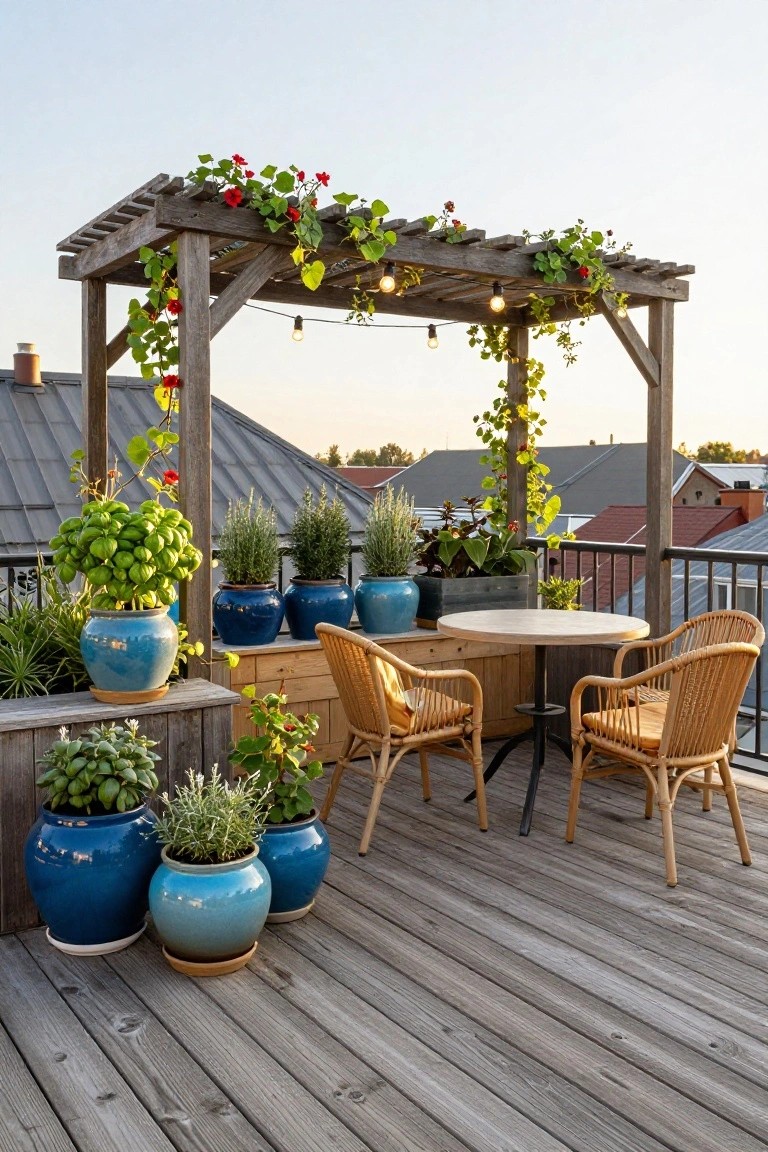
A wooden pergola like this one turns a plain rooftop deck into a real outdoor room. Vines climb right up the beams for natural shade, and those string lights add a soft glow come evening. It keeps the space open while making meals outside feel special and protected from the sun.
You can set one up on any deck or patio with decent size. Pick pressure-treated wood that ages nicely, plant quick climbers like pothos or morning glory, and group pots of herbs around the base for easy color. Rattan chairs keep it casual. Just make sure it’s anchored well if you’re up high.
Raised Bed Vegetable Garden with Central Path
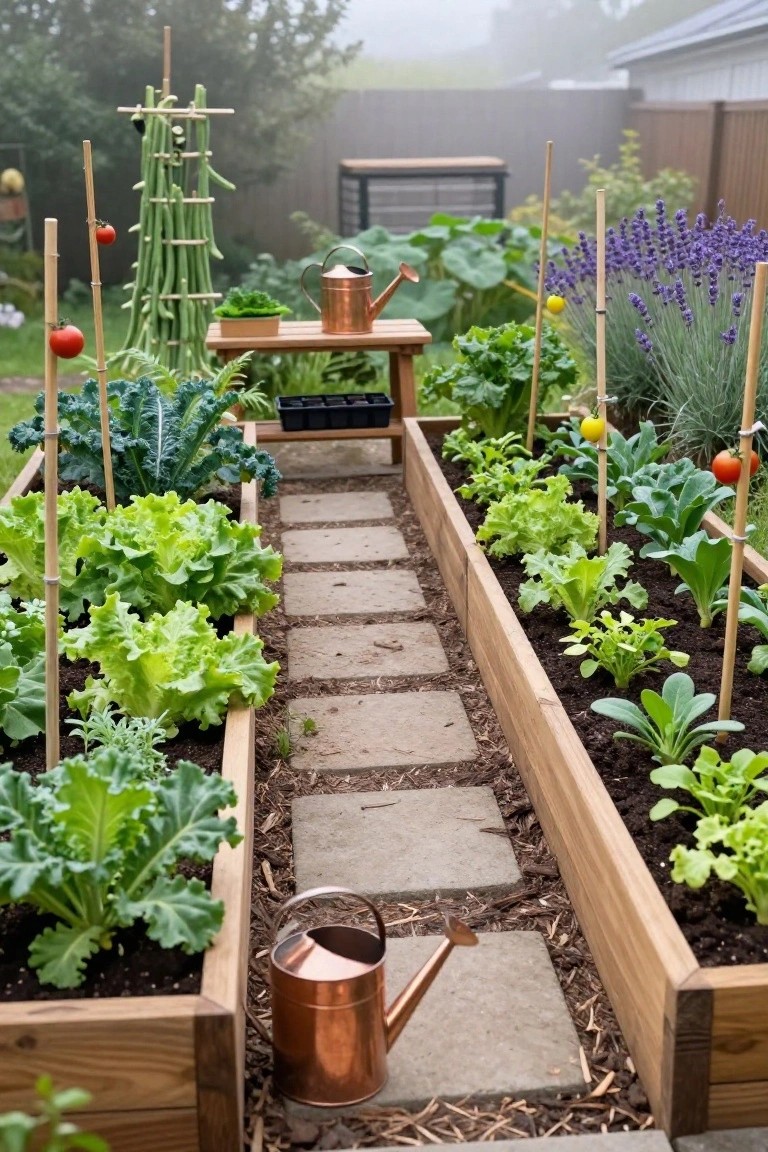
One straightforward way to organize a backyard veggie patch is with wooden raised beds and a simple stone walkway running right through the center. It keeps everything tidy and reachable. No more trampling soil to get to the far plants. Here, lettuce and kale fill the beds, beans climb tall trellises, and tomatoes peek out along the edges.
These gardens suit smaller yards or spots with poor soil. Build the beds knee-high from untreated wood, space them for your path width, and plant in rows or blocks. Watch for wood rot over time… treat it yearly. Perfect if you want fresh produce without much fuss.
Zen Gravel Garden Retreat

White gravel raked into soft waves makes this outdoor spot feel instantly calm. A few moss balls dot the ground, and flat stones lead to a rough wood bench. It’s a smart way to turn a plain yard area into something thoughtful, without needing much planting or color.
This works best in tight spaces like courtyards or side yards near the house. Pick fine gravel for easy raking, add concrete blocks under the bench for stability, and keep accents simple. Skip it if you want grass or flowers… gravel stays low fuss year round.
Flowing Borders with Grasses and Flowers

One easy way to dress up a walkway is planting tall grasses and low flowers in a soft curve. You get that natural sway from the grasses, plus pops of yellow from coreopsis or similar blooms, all mulched with pebbles to keep weeds down. It feels relaxed and beachy, especially with the house siding nearby. A rough wooden bench tucked in adds a spot to pause without much effort.
This works best along side paths or front entries where you want color but not constant upkeep. Go for drought-tough plants like these in sunny, dry spots. Just pick grasses that won’t spread too wild… and space the bench where it won’t block foot traffic. Fits most homes, really softens hard edges.
Curved Garden Benches with Built-In Planting
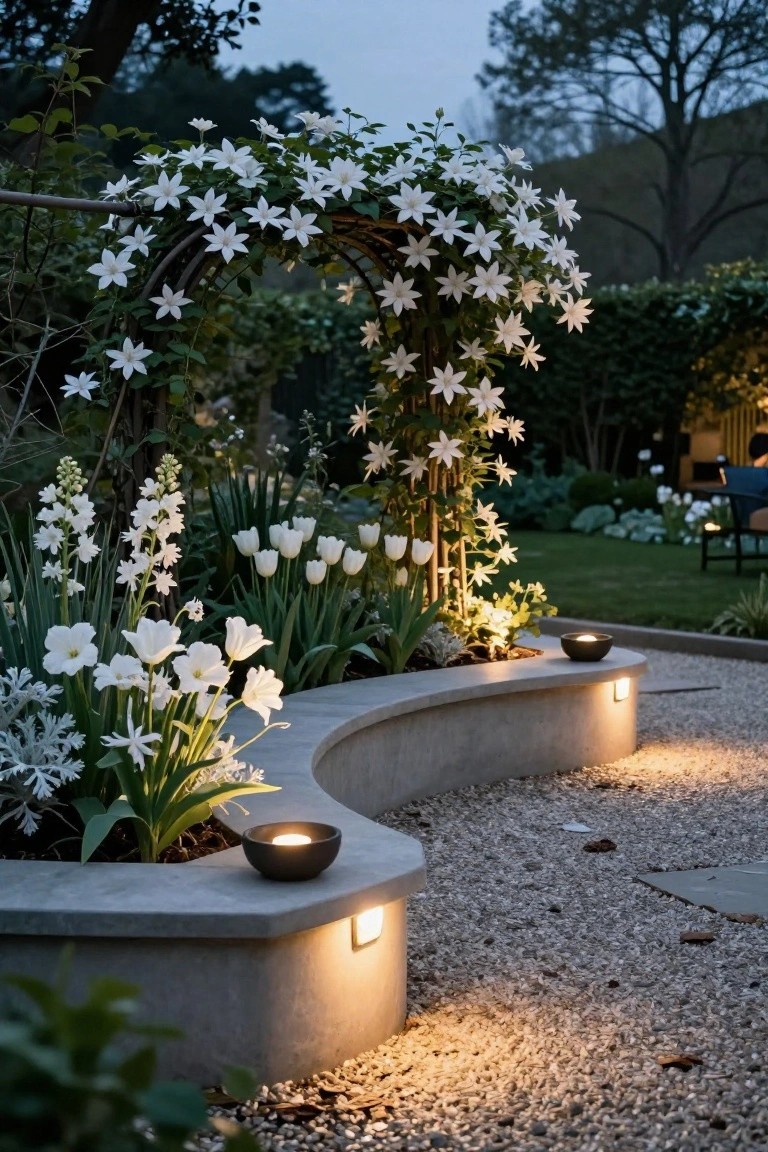
One simple way to make your garden more usable is to build curved concrete benches right into the planting beds. This setup turns the edge of your flower border into a spot to sit and enjoy the plants up close. The gentle curve keeps it from feeling too boxy, and it works well with soft white flowers like clematis and tulips that spill over naturally.
You can add low uplights along the base and a candle or two for evenings. It fits best in smaller yards where you want to save space and add some structure without a full patio. Just make sure the concrete is smooth enough to sit on comfortably, and pick plants that won’t overhang the seat too much.
Circular Raised Herb Garden

A simple circular raised bed like this makes growing herbs a breeze. Built with stacked fieldstones, it holds everything in one tidy spot. You get rosemary, thyme, lavender, and more all within arm’s reach. No sprawling mess. Just fresh picks for cooking whenever you want.
Put one near your back door in full sun. Stack local stones for walls about knee-high. Fill with well-draining soil and your favorites. It suits small yards or patios… low fuss, good drainage, and that stone gives it a natural, lasting look. Watch for too much shade though. Herbs need light.
Tall Irises Along Walkway Beds

Planting tall irises right along a walkway like this makes a simple border that bursts with color through spring. The upright blue blooms mix with fans of green swords and a few white flowers for contrast, all held in by gravel mulch and stone edging. It keeps things neat without much fuss, and the height draws your eye down the path.
This works best in sunny spots next to patios or side paths where you want low upkeep. Space the rhizomes about a foot apart in well-drained soil, add pebbles to hold moisture and block weeds. Suits most yards… just trim back the dead leaves after bloom to stay tidy.
Tiered Vertical Planters for Balcony Gardens

If you have a small balcony or patio spot next to a door, stacking wooden planters up the wall gives you a ton of growing room without taking floor space. This setup packs in strawberries, herbs, and greens on three levels, and the warm wood fits right against a modern glass door. The string lights tucked in add a soft glow for evenings, making it feel like an extension of your indoor space.
It’s perfect for apartments or townhomes where yard room is tight. Use untreated cedar or pine boxes, line them with plastic for drainage, and pick shallow-rooted edibles that thrive in sun. Keep soil light, water from the top so it trickles down, and group plants by water needs. Watch for weight on the wall mounts though… test it steady first.
Brick-Edged Garden Paths
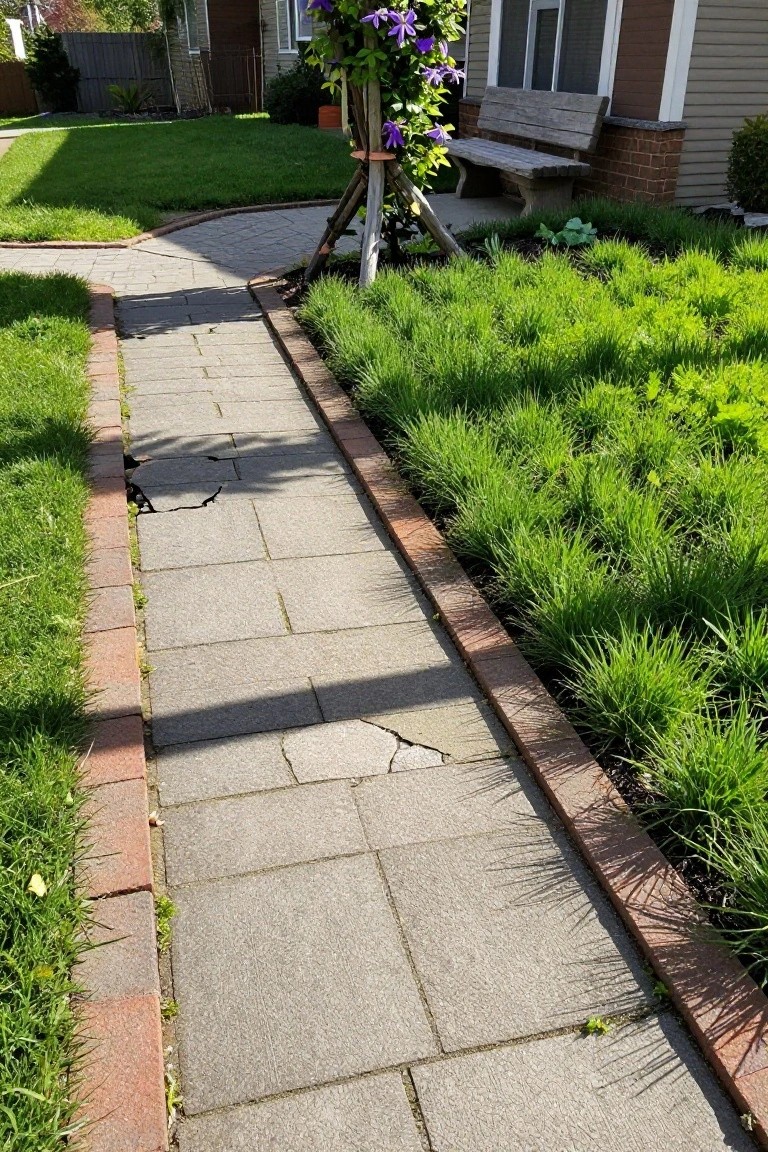
One straightforward way to tidy up your front yard is with brick edging along a stone path. It keeps everything in line, especially when the path curves a bit like this one made from large gray pavers. The low brick border stops grass and plants from creeping over, and it adds a nice crisp look next to all that soft green growth.
These edges work best in cottage-style yards or anywhere you want a path that feels welcoming without being fussy. Lay them along existing walkways or build a new one leading to your door. Just make sure the ground is level first, or the bricks might shift over time. Simple to do yourself on a weekend.
Boxwood Hedges for Tidy Veggie Beds

Low boxwood hedges work great to edge raised vegetable beds. In this setup, they frame cabbage plants, strawberries, and onions neatly. The hedges stay green all year. That keeps the garden looking sharp even when crops come and go. Gravel paths between the beds make it easy to walk around without compacting soil.
Try this in a sunny backyard spot. Boxwoods handle some shade too. Space beds about four feet wide for reaching in from both sides. Trim hedges once or twice a year… simple job. Suits older homes with a classic yard feel.
Wildflower Meadow Bench
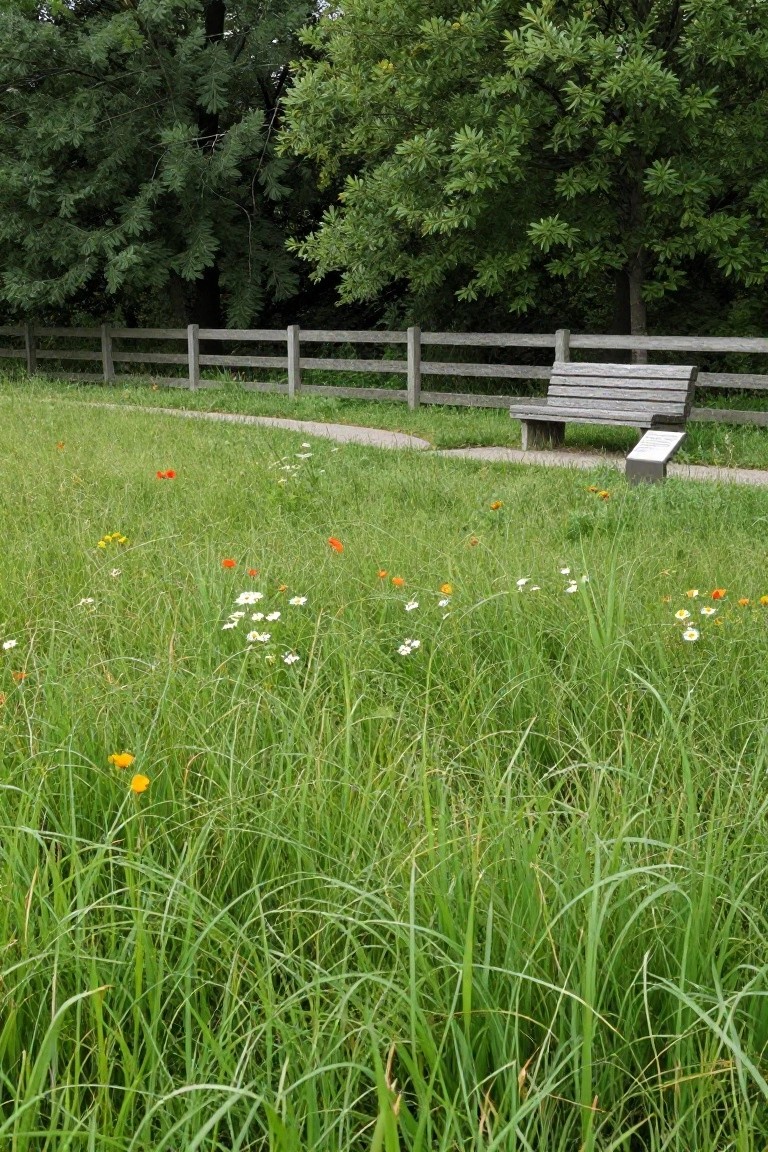
A plain wooden bench tucked into a sea of wildflowers makes for an easy garden rest spot. You see the grayed wood against tall grass and pops of color from daisies, poppies, and marigolds. It’s low-key and peaceful. No fuss, just a place to sit and breathe in the outdoors.
Put one near a path in your backyard or along a fence line. Native wildflower seeds do most of the work once established. Go for weathered benches to blend right in. Fits cottage-style yards or anywhere you want less mowing. Watch the grass doesn’t swallow the seat.
Fire Pit Centerpiece for Patios

A clean square fire pit sits smack in the middle of this patio, pulling loungers and seating right around it. That setup turns a simple outdoor spot into something people actually use, especially come evening when the flames kick in and the wall lights glow soft. The trees nearby frame it without crowding.
Try this in a courtyard or snug backyard where space is tight. Pick a modern gas model in dark concrete or metal, pair it with low teak chairs for easy lounging, and run uplights up slim trees. It suits modern homes best, stays practical year-round, just keep seating close enough to feel the heat.
Shaded Woodland Garden Path

One easy way to refresh a shady spot in your yard is with a simple path edged by ferns and big-leafed hostas. This setup turns a dark corner into something peaceful and natural looking. The ferns spill over the edges just right, and those white birch trunks add height without crowding things. It’s low fuss once established.
Lay down wood chips or stepping stones for the path, then plant ferns and hostas along both sides. It works best under trees or near a north-facing wall where sun is spotty. Tuck in a plain bench at the end for sitting. Keep soil moist and mulch well to hold it all together. Avoid sunny spots, since these plants won’t take full light.
Raised Bed Olive Tree Garden
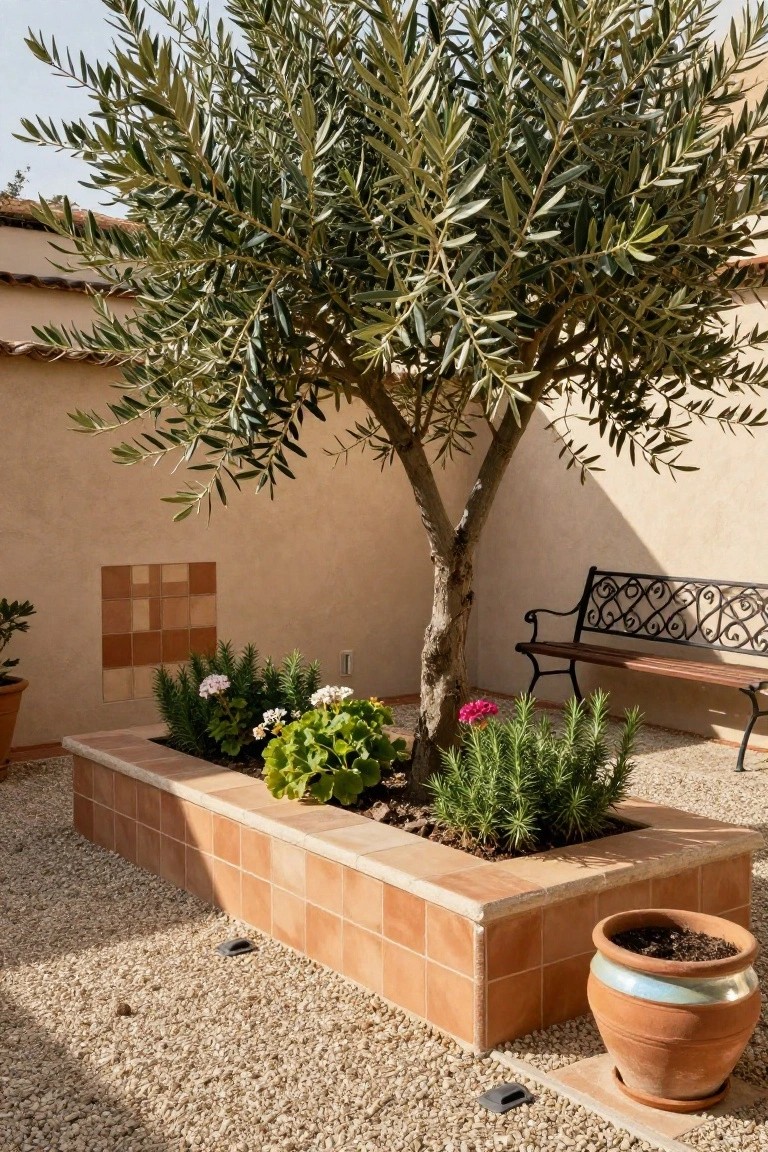
A raised bed like this one centers everything around a mature olive tree. The terracotta edging keeps soil in place and adds a bit of warmth that fits dry climates. You get instant height and structure without digging up the whole yard. Plants tucked around the base fill in nicely for color.
Put this in a sunny courtyard or patio corner where space is tight. Use gravel for the ground to cut down on weeds. Add a bench close by for sitting under the branches. It suits Mediterranean looks or anywhere you want low-water gardening. Just make sure the tree has good drainage.
Symmetrical Entry Garden Bed

A simple raised stone bed right at the front walk can turn your entry into something special. Here, neat boxwood shrubs form the backbone, with lavender adding soft purple color and fragrance. The stone birdbath sits dead center, pulling it all together without much fuss. It gives that classic look that welcomes guests, and the evergreens keep it tidy year-round.
Plant this setup against a house with clean lines, like clapboard siding. Keep the bed low, no more than two feet high, so it doesn’t block the door. Add lanterns on posts for evening light. Works best on smaller front yards… just scale the plants to fit, or it might overwhelm. Easy to maintain once established.
Poolside Succulent Beds
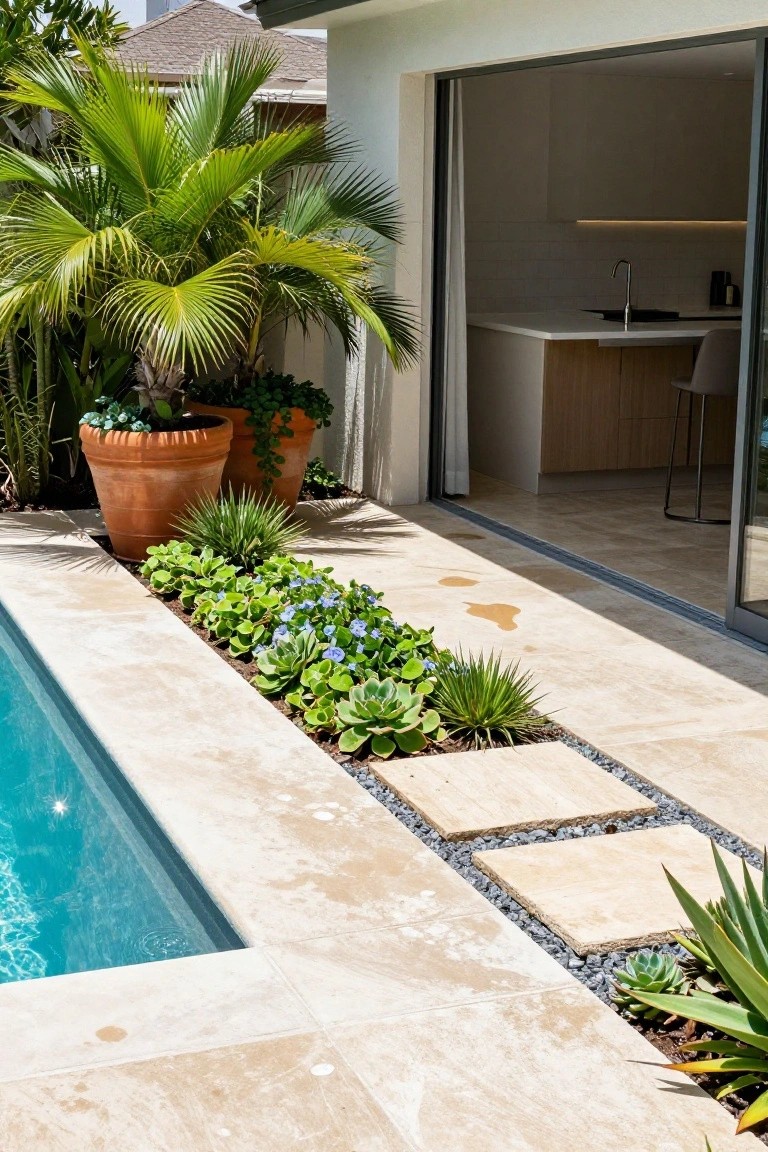
One easy way to green up a pool area is with narrow planting beds right along the edge. Here, tough succulents like agaves and echeverias fill the space, mixed with trailing groundcovers and those blue flowers for a bit of color. It softens the stone deck without crowding the swim area, and big terracotta pots nearby add some height from palms. Keeps things low fuss too.
This works best on sunny spots near the house, like this setup flowing into the kitchen. Go for drought-tough plants that drop few leaves in the pool. Make the bed just wide enough for roots, maybe two feet, and edge it clean with stone or gravel. Suits modern homes or any tight yard… just watch for overwatering.
Stone Paths with Low Lighting
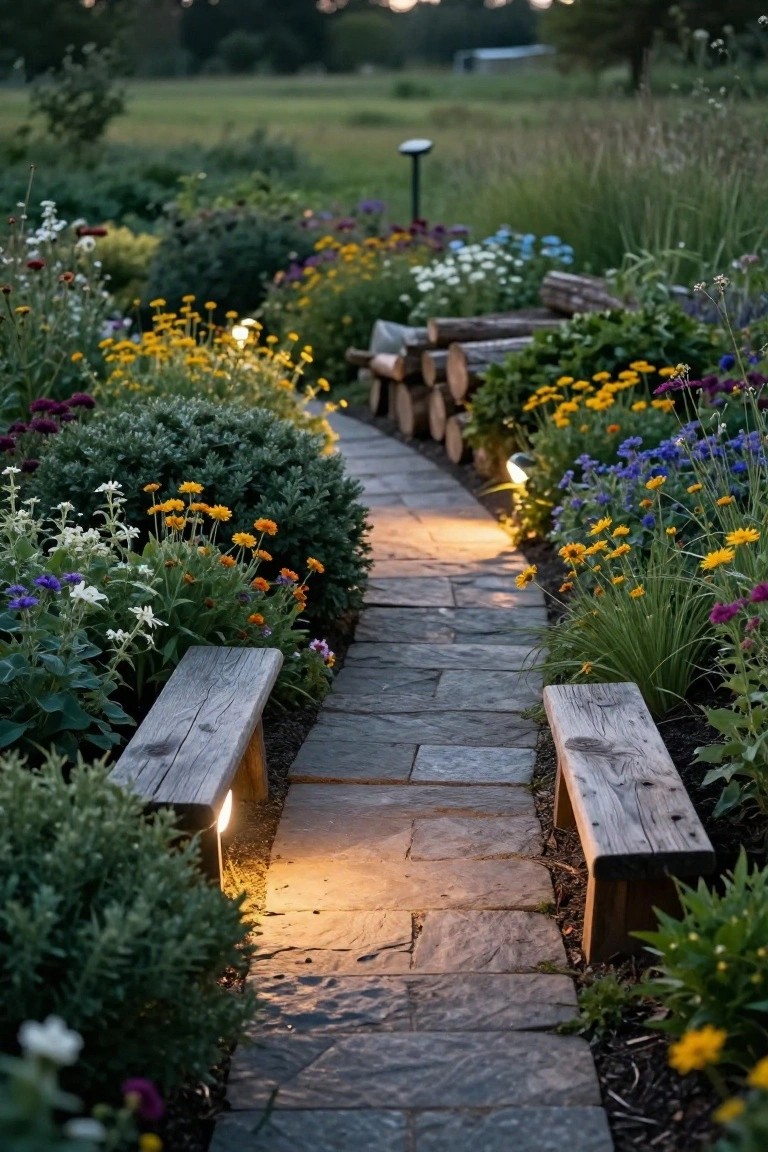
A winding stone path like this one cuts right through lush flower beds, making the garden feel like it’s leading you somewhere special. The soft glow from those ground lights pops up just enough to guide your steps after dark, without washing out the plants. It’s a simple way to make your yard more usable in the evenings.
Lay down irregular stone pavers for that natural look, then tuck in low-voltage or solar uplights every few feet. Border it with easy perennials like marigolds and salvia that spill over the edges. This setup fits most home gardens, especially if you want low upkeep… just watch for tripping spots until you’re used to it.
Frequently Asked Questions
Q: What if my yard is super small or I only have a balcony?
A: Go for vertical gardens or hanging baskets right away. They climb walls or dangle from railings and free up every inch of floor space. Tuck in trailing ivy or petunias for instant green without the sprawl.
Q: I’m new to this— which ideas won’t die on me fast?
A: Grab drought-tolerant picks like sedum or lavender. Plant them in well-draining soil and water deeply but rarely. They bounce back from neglect better than finicky flowers.
Q: Can I pull off these ideas without spending a ton?
A: Hunt thrift stores for old pots, crates, or ladders to repurpose. Fill them with seeds from dollar packets instead of pricey starters. Your space transforms cheap and cheerful.
Q: How do I pick plants that actually match my climate?
A: Check your local nursery for zone-hardy varieties. They know what thrives where you live and steers you from flops. Swap in natives; they root deep and need zero fuss.
