


I’ve noticed that vegetable gardens often struggle when plants are scattered without much thought to what grows well together.
It affects how the soil holds up and how many issues show up once the season gets going.
Some pairings just click once you try them side by side.
I like to pick one or two combinations each year and tuck them into a single bed first.
That gives me a clear sense of what works in my own yard before I shift the rest of the layout.
Companion Planting Tomatoes with Basil and Marigolds

One reliable way to boost your tomato plants is planting basil and marigolds right alongside them. In this setup, the tomatoes climb up a wire cage while basil fills in around the base and marigolds add bright orange flowers. Basil repels common tomato pests like aphids and hornworms. Marigolds go after nematodes in the soil that can hurt roots. It’s a simple combo that keeps things healthier overall.
Put this to work in a raised bed near your back door, like here against the fence. It fits small veggie patches or patio edges where space is tight. Give tomatoes room to grow tall, and pinch back the basil to keep it bushy. Watch that marigolds don’t crowd out the others at first.
Corn and Pumpkins as Companions

Tall cornstalks make a natural fence for sprawling pumpkin vines. The corn shades the soil a bit and gives the pumpkins something sturdy to lean toward if you train the vines that way. Together they keep weeds down since the pumpkin leaves cover the ground. It’s one of those old-time pairings that just works without much fuss.
Plant the corn first so it gets a head start. Then tuck in the pumpkins along the base once the corn is knee high. This setup fits right into any backyard veggie patch. Add a simple stone path like this one for easy picking. Watch the spacing though. Pumpkins spread fast.
Tiered Stone Planters for Companion Herbs

A simple tiered stone planter like this one packs herbs and veggies into a small footprint. Rosemary fills the top tier, chives sit in the middle, and lower levels hold more ground covers. The setup keeps companions close. That means natural pest protection and healthier plants without much extra space.
Put one on a sunny patio or near your kitchen door. Use local stone for a natural look that blends with paths. Start with tall herbs up high and trailing plants below. It suits small yards best. Just make sure drainage is good to avoid root rot.
Nasturtiums in Patio Vegetable Beds

Those orange nasturtium flowers popping out of the black raised planters catch your eye right away. They’re planted right alongside squash and climbing beans on the nearby trellis, a smart companion move because nasturtiums pull pests like aphids away from the veggies. It keeps everything healthier without much fuss, and the trailing flowers add a nice edible bonus too.
Set this up in your own patio or small yard with simple raised beds along the edge. Plant the nasturtiums around the borders so they spill over, protecting the main crops inside. Works best in sunny spots on modern hardscape like concrete pavers. Just keep the beds deep enough for roots, and you’ll have a tidy veggie patch that fits right into outdoor living.
Marigolds Guarding Lettuce Beds
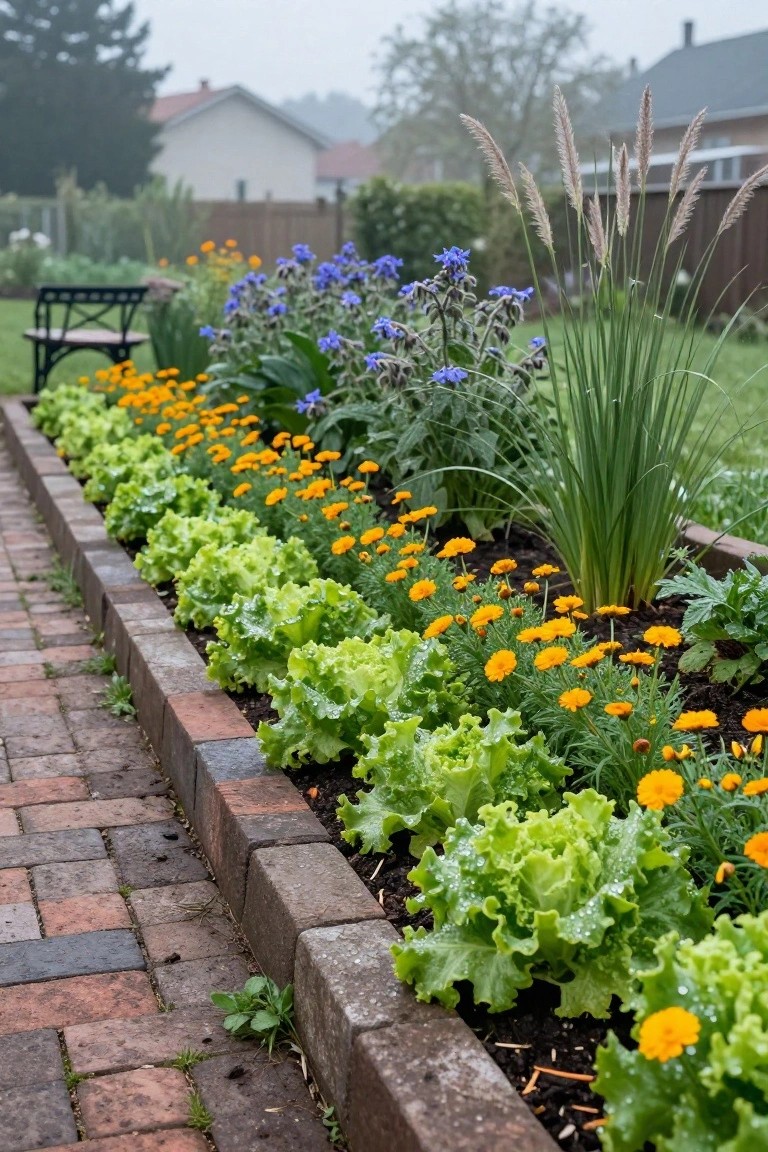
One smart move in vegetable gardens is planting marigolds right alongside lettuce. Those orange flowers release a scent that repels nematodes and aphids, common pests that hit leafy greens hard. You get pretty color too, and the lettuce stays healthier without sprays. In this bed, the mix looks tidy and productive.
Set it up in a raised border along a path or fence, like the brick edging here. It suits small home plots where space is tight. Space the marigolds every few lettuce plants so they don’t compete for sun. Keep soil moist, and you’ll harvest greens all season.
Marigolds Next to Cabbages

One smart way to keep your cabbage patch healthier is planting marigolds right along the edges. Those bright orange flowers you see bordering the cabbage rows release a scent that bugs like cabbage worms hate. It cuts down on pests without chemicals, and the flowers pull in good bugs too. Plus the garden looks cheerful.
Try this in raised beds or any veggie plot with enough sun. Space the cabbages normally, then tuck marigolds or nasturtiums around the outside. It works well for other brassicas like broccoli. Just refresh the flowers yearly… they self-seed sometimes.
Borage to Help Strawberries Thrive
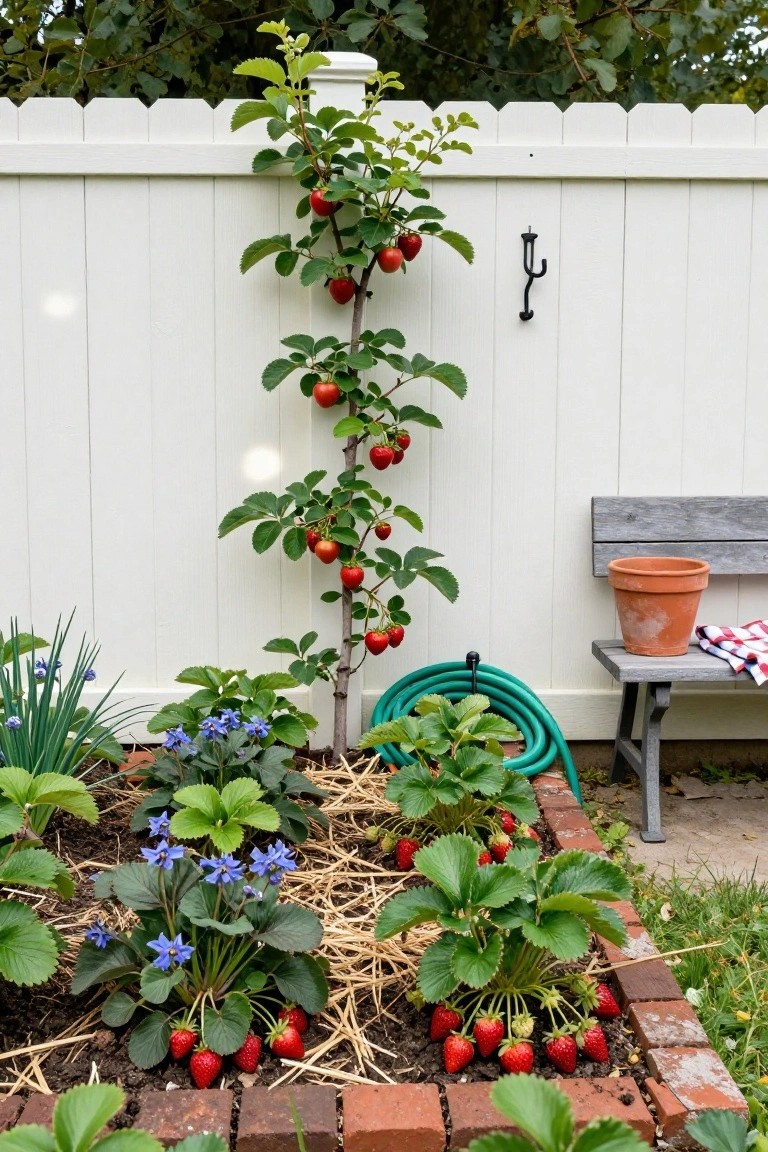
One simple way to keep strawberry plants healthier is planting borage right nearby. Those blue flowers pull in bees and other pollinators that help with berry production. They also seem to discourage some common pests like slugs without needing extra sprays. In this setup the borage sits among the strawberry leaves in a neat raised bed.
Try this in any sunny veggie patch or along a fence line. Space the borage plants every couple feet around your strawberries. It works well for small home gardens… just keep an eye so the borage does not crowd things out as it spreads a bit.
Roses with Lavender and Alliums

Roses do well when you tuck lavender and alliums right along the base. In this garden the climbing roses cover the fence nicely, and the lavender plants plus those white flower heads fill in below. Lavender keeps bugs away from the roses, and the alliums add extra pest protection. You end up with a fuller border that stays healthier without much fuss.
Try this setup along a fence or next to the house where you get good sun. It suits cottage-style yards or even edges of veggie patches. Just space the roses for air flow, and let the lavender spread a bit. Keeps things looking tidy through summer.
Using Marigolds as Vegetable Companions

One simple way to keep bugs away from your vegetables is planting marigolds right alongside them. In this setup, the bright orange marigolds line the gravel path next to raised beds full of onions, lettuce, and other plants. They release a scent that nematodes and some insects hate, so your veggies stay healthier without much spray.
Just tuck marigolds into the edges of your beds or along paths where they get full sun. They work great in small backyard plots like this one, and you can pick the French variety for tighter spaces. Keep them flowering all season by deadheading, and watch how they help the whole garden thrive.
Companion Planting Basil and Tomatoes in Containers

Tomatoes and basil make a classic pair in the garden. Planting basil right around the tomatoes helps keep pests away and can even make the tomatoes taste better. In this setup, the basil grows tall and bushy next to the tomato plants in simple woven pots. It works so well because the basil acts like a natural protector without taking up extra space.
This idea shines on balconies or small patios where room is tight. Use deep pots for the tomatoes and tuck basil starts in around the edges. Add a bit of marigolds nearby if you want extra pest control. Just keep the soil moist and pinch back the basil to keep it full. It fits right into urban spots like this one.
Vertical Pocket Planters for Herbs

Wall-mounted fabric pockets make it easy to grow herbs right up against a house wall. In this setup, chives poke out the top, mint fills the middles, and geraniums add color at the ends. These plants work well as companions because they naturally repel pests that bother tomatoes or other veggies planted nearby. It’s a practical way to squeeze more green into a tight spot without taking up ground.
Try this on any sunny exterior wall in a small yard or patio edge. Use sturdy hooks or a metal frame to hold the pockets, and pair them with pots on a pallet base below for extra room. Herbs like these thrive here and stay handy for the kitchen too. Watch for overwatering though, since poor drainage can rot the roots quick.
Sunflowers and Beans in Tandem

Sunflowers growing tall next to beans is one of those simple pairings that pays off in the garden. The sunflowers pull up nutrients from deep in the soil and share them with the beans through their roots. Meanwhile, the beans fix nitrogen right in the ground to feed the sunflowers and keep everything stronger against pests. You see it here with the beans climbing up amid those big yellow heads.
Set this up in rows along a gravel path like the one shown, so you can walk right in to tend them without compacting the soil. It works best in full sun spots with decent space, maybe a backyard plot or raised beds. Just keep an eye on spacing so the beans get enough light early on.
Raised Beds for Rosemary Companion Planting

One smart way to keep your veggie garden thriving is planting rosemary in raised terracotta beds alongside good companions like lavender or savory herbs. You see the neat rows of rosemary here, tucked in with softer green plants that fill out the beds nicely. Rosemary’s strong scent helps deter beetles and other pests, while its bushy growth gives shade and structure to the mix. These pairings make plants healthier overall without much fuss.
Build these beds in a sunny spot near your kitchen for easy picking. The terracotta holds heat well, which rosemary loves, and keeps soil well-drained. Aim for beds about a foot high so you don’t bend over much. Works best in warmer climates or sheltered patios, and watch that the central gravel path stays clear for good airflow.
Mix Flowers Into Vegetable Beds

Raised beds make it simple to tuck flowering plants right in with vegetables. The purple blooms along these beds show how alliums and similar flowers can sit among leafy greens without crowding them. This setup helps draw pollinators while keeping some common pests away from the crops.
Try grouping a few flower stems at the edges of each bed so they stay easy to reach for harvesting. It works especially well in partly shaded gardens where the mix adds color without needing extra space. Keep the soil rich and watch how the combinations affect growth from one season to the next.
Grow Marigolds Right In Your Vegetable Beds

Marigolds make a simple addition to any vegetable garden. Their bright flowers help discourage common pests while the roots improve the soil around nearby crops. Many people notice fewer bugs on tomatoes, beans, and greens when marigolds sit close by.
This approach fits raised beds or small plots best. Tuck the flowers along the edges or between rows so they do not crowd the vegetables. They need little extra care once planted and keep working through the season.
Border Garden Beds With Low Stone

Low stone borders help keep companion plantings neat and easy to manage. They create clear lines between rows so you can group fruit trees with helpful flowers without everything running together. The setup also makes watering and weeding simpler since the edges stay defined over time.
This approach works well in home vegetable gardens that have enough space for straight rows. Keep the stones low enough that plants can spill over slightly, and choose materials that match the soil and climate in your area.
Frequently Asked Questions
Q: My tomatoes always get hit with pests. Which companion really cuts that down?
A: Plant basil right next to them. The scent throws off the bugs that usually go for tomato leaves. You will notice fewer holes and healthier plants by midsummer.
Q: Does companion planting change how often I need to water everything?
A: Most companions share similar needs so you can water the whole bed at once. Keep the soil evenly moist without soaking it. Your plants will stay stronger and fight off disease better that way.
Q: What if one of my companion plants starts taking over the space?
A: Pinch back the aggressive grower early. This keeps everything balanced without pulling anything out. Your other veggies get the room they need to produce.
Q: Can I try these pairings in pots on my patio?
A: Pick compact varieties that match in water needs. A tomato with basil in one big pot works fine. Just check moisture daily since containers dry out faster.
