

I have found that the gardens that actually last for busy people are the ones built around plant choices and layouts that match the hours they really have each week.
Over time I have seen too many yards lose their shape because the initial plan ignored how little time most homeowners can spare once the season gets going.
Low maintenance does not mean no maintenance at all.
It means setting up paths, beds, and plantings so the space still reads as intentional even after a skipped weekend of care.
I usually try one small change first in my own yard before deciding whether it belongs in the larger plan.
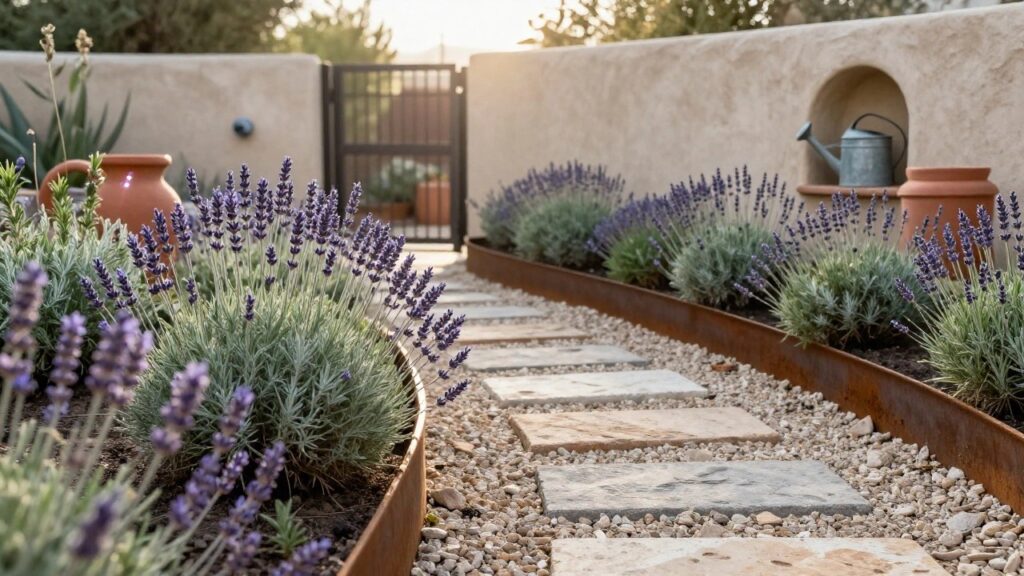
Raised Steel Planters for Lavender Borders
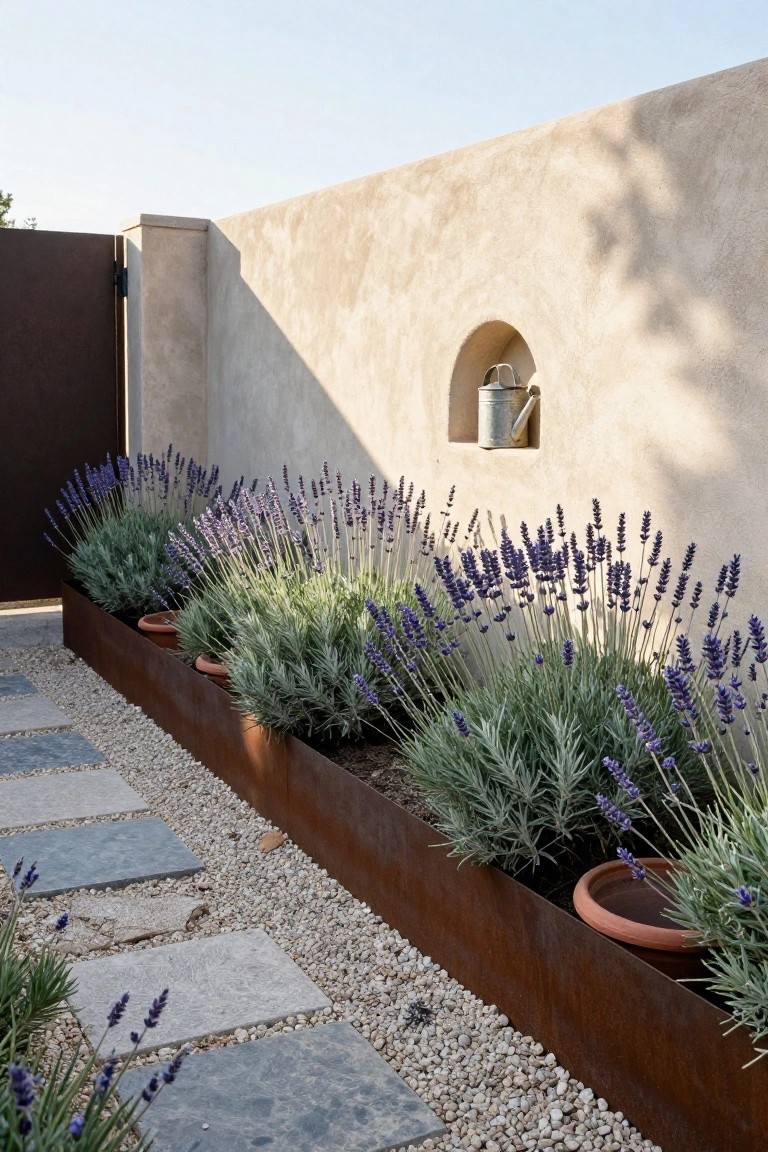
Long, narrow steel planters like these make a clean border for lavender right up against a wall. The rusty corten look fits right in with stucco or stone, and it holds the plants in tight rows so nothing spills over onto paths. Lavender fills them out nicely with those silvery leaves and purple spikes, keeping the whole line looking full without much fuss.
Set them along a side yard or entry path where sun hits most of the day. Lavender does well in poor soil, so fill with gravel at the bottom for drainage. Trim once a year… that’s it for upkeep. Works on any size lot, even narrow spots.
Raised Beds Simplify Backyard Gardening
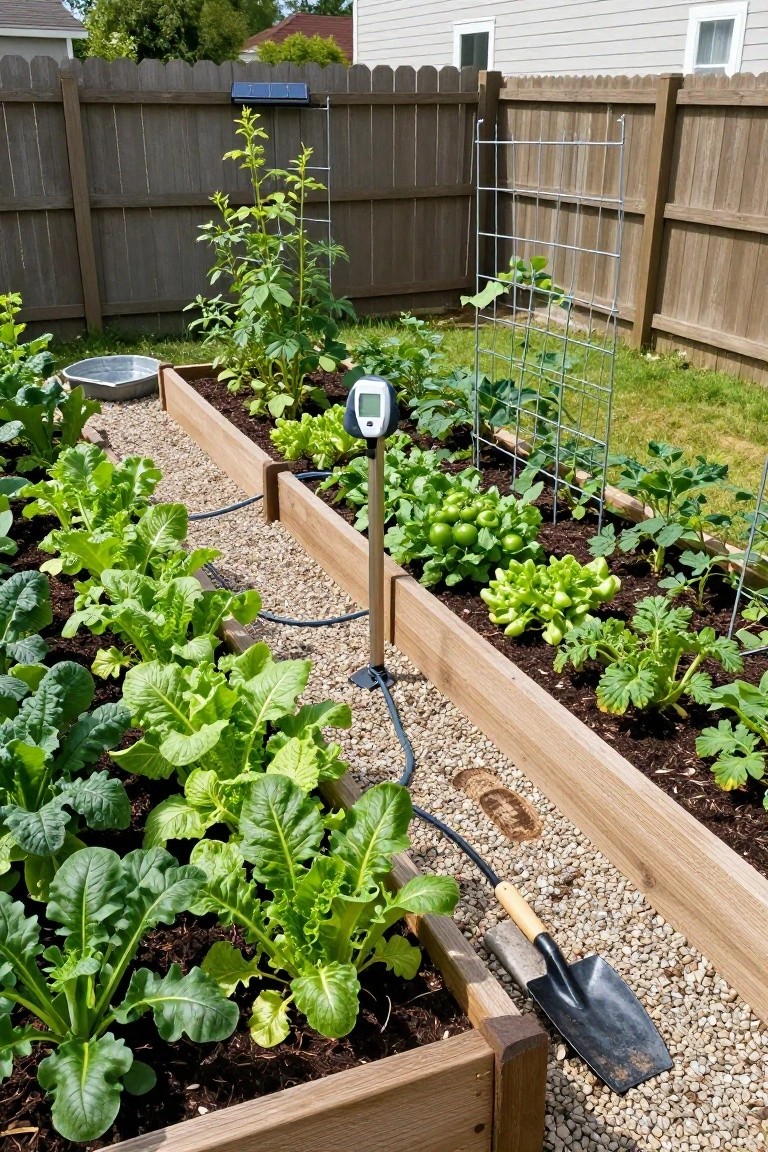
Raised beds turn a plain backyard patch into a productive spot without much hassle. Wood frames hold soil and plants up off the ground, so you reach everything easily. Veggies like lettuce and tomatoes grow close together, and gravel paths between beds let you walk through dry even after rain.
Put these in a sunny fenced area where you have room for a few beds in a row. Use simple lumber for the frames, good garden soil inside, and add drip lines for automatic watering. Busy homeowners get fresh greens all season… weeds stay low, bending stays minimal.
Low-Maintenance Silver Shrub Borders
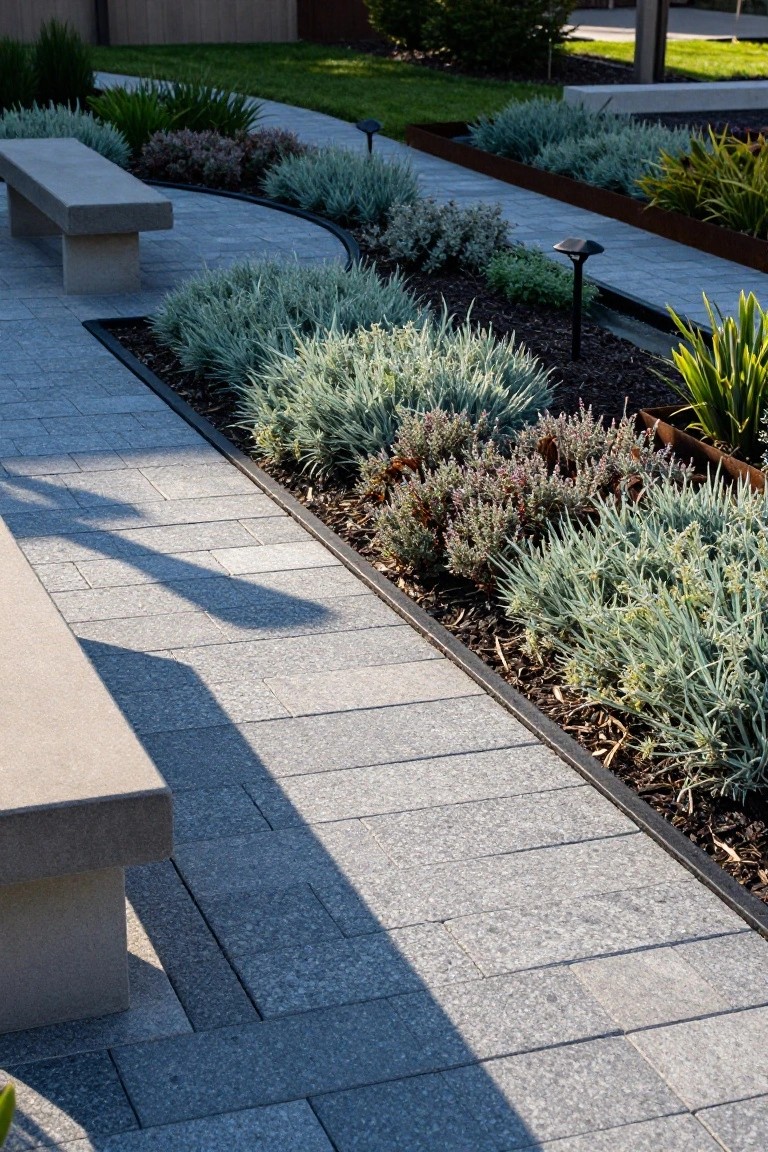
One straightforward way to tidy up a yard without much work is planting borders of silver or blue-green shrubs along paths. These plants, like lavender and senecio, fill in thick and stay neat on their own. They handle dry spells fine and need little trimming, which fits busy schedules. The massed look gives structure right away, and that dark mulch keeps weeds down.
Pair them with a simple stone path and corten steel edging like you see here. It works great in small side yards or entry walks where you want polish without fuss. Go for full sun spots, and space plants close at first so they knit together fast. Just watch for too much shade, since these prefer light.
Mossy Stone Edging for Garden Paths
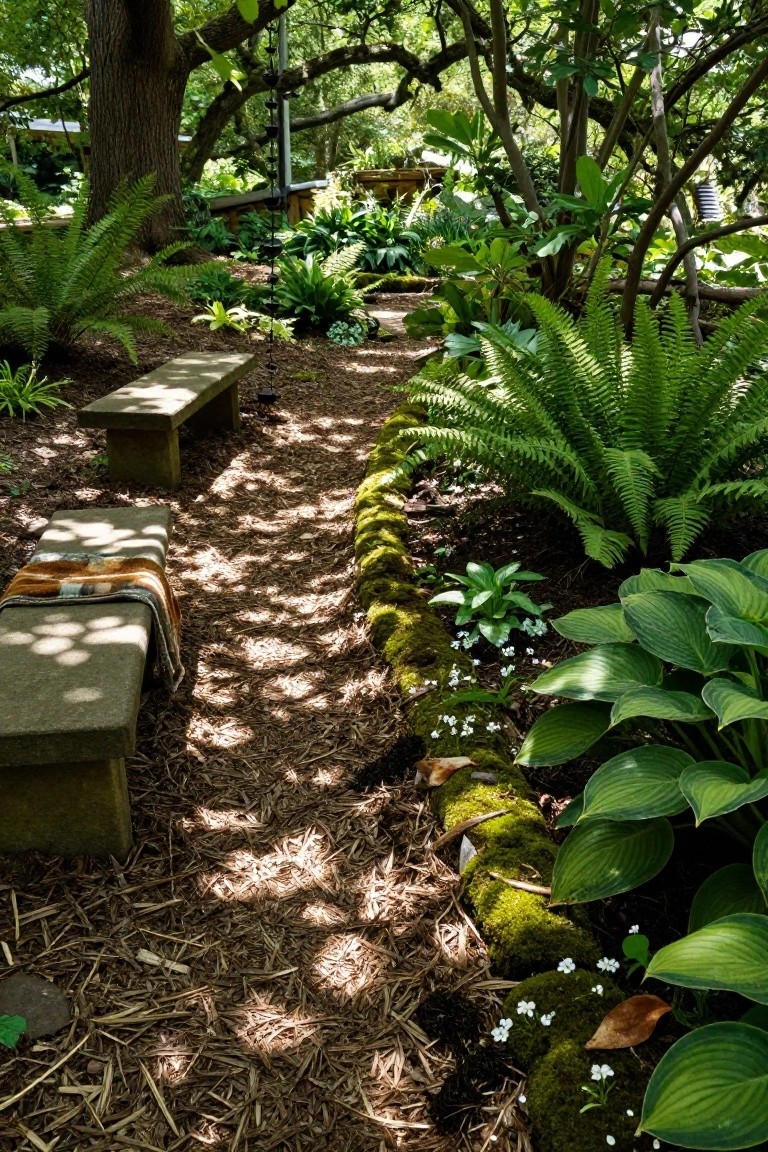
One easy way to define your garden beds without constant trimming is to use rough stones along the path edge. Let moss grow over them naturally, like in this setup where the stones hug a simple mulch walkway. It gives a soft, woodsy look that fits right in with ferns and hostas. Busy folks love it because the moss fills in on its own… no weeding needed.
Place these stones in shaded spots where moss thrives, maybe winding from your back door to a seating area. They’re great for smaller yards or under trees, keeping things neat but wild. Just rinse them off now and then if dirt builds up, and source local stones to match your soil.
Gravel Courtyards with Concrete Planters
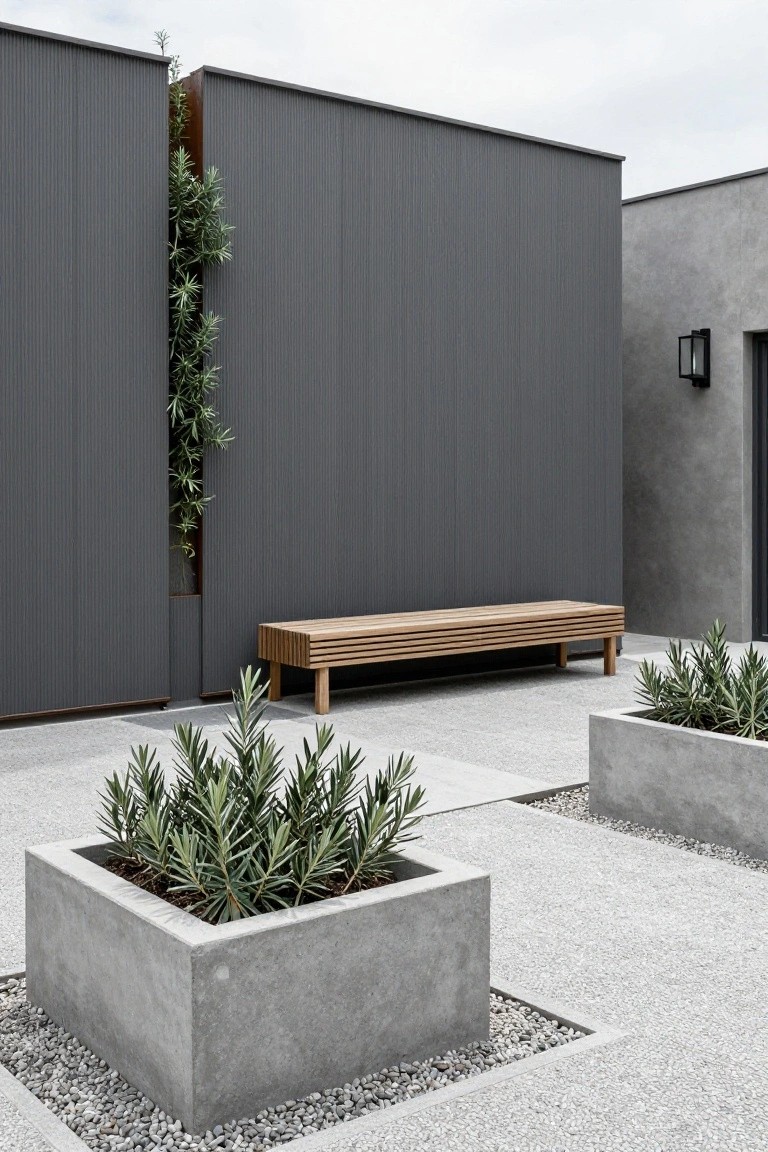
Gravel courtyards like this one keep outdoor spaces simple and sharp. Big concrete planters hold structured plants such as spiky grasses. The gravel base cuts down on mowing or weeding. It all feels modern without much upkeep. Busy homeowners get a clean look that stays put.
Put this in a side yard or entry patio where space is tight. Line up a few square planters along the edges. Fill them with drought-tolerant plants. Gravel works over any base soil. Add a plain wooden bench if you want a spot to sit. Skip it if drainage is poor though… water can pool. Suits most homes with a bit of modern edge.
Easy Outdoor Potting Station
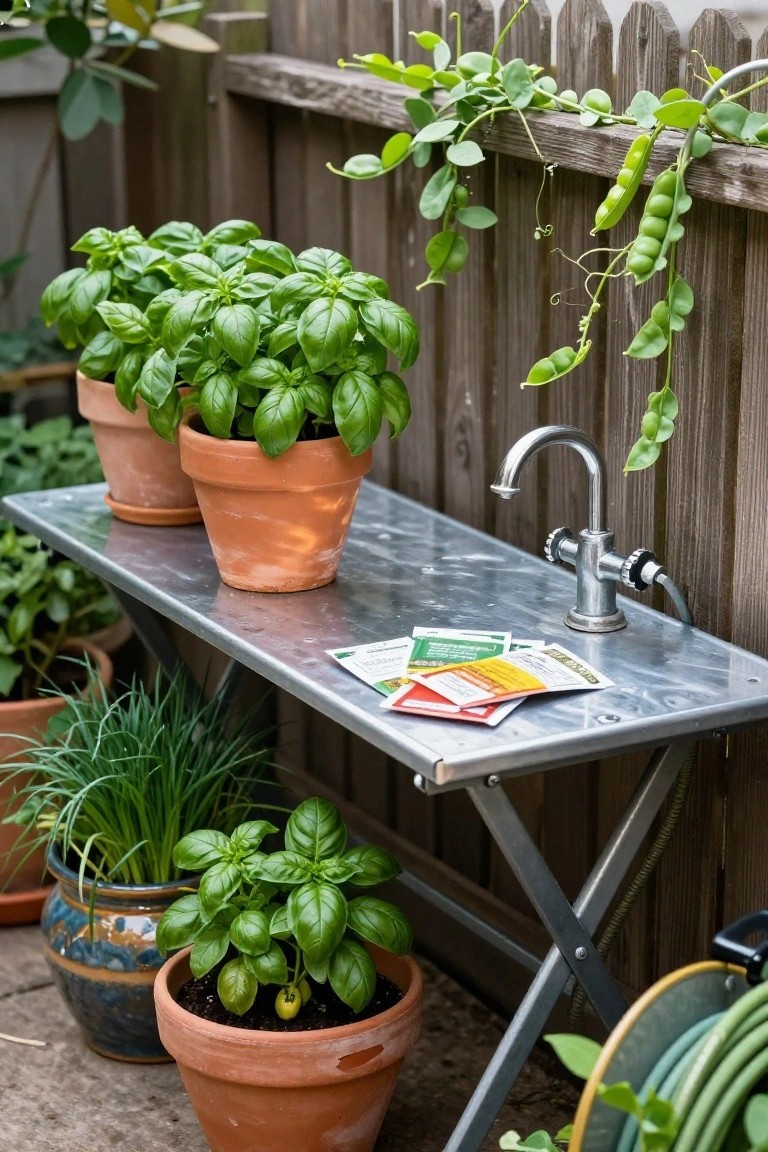
If you want fresh herbs without spending hours in the yard, pull together a simple potting station on a sturdy table. This setup with its built-in faucet keeps everything handy for quick watering and planting. Basil pots line up right there, seed packets stay within reach, and it turns a corner of the patio into a real work spot.
Stick it near a fence or shed where you can reach a hose easy. It fits tight spaces and suits renters or small lots best. Watch for rust on the metal, though, so pick galvanized if you can. Busy homeowners swear by this for low-fuss gardening that actually gets used.
Linear Planters for Patio Gardens
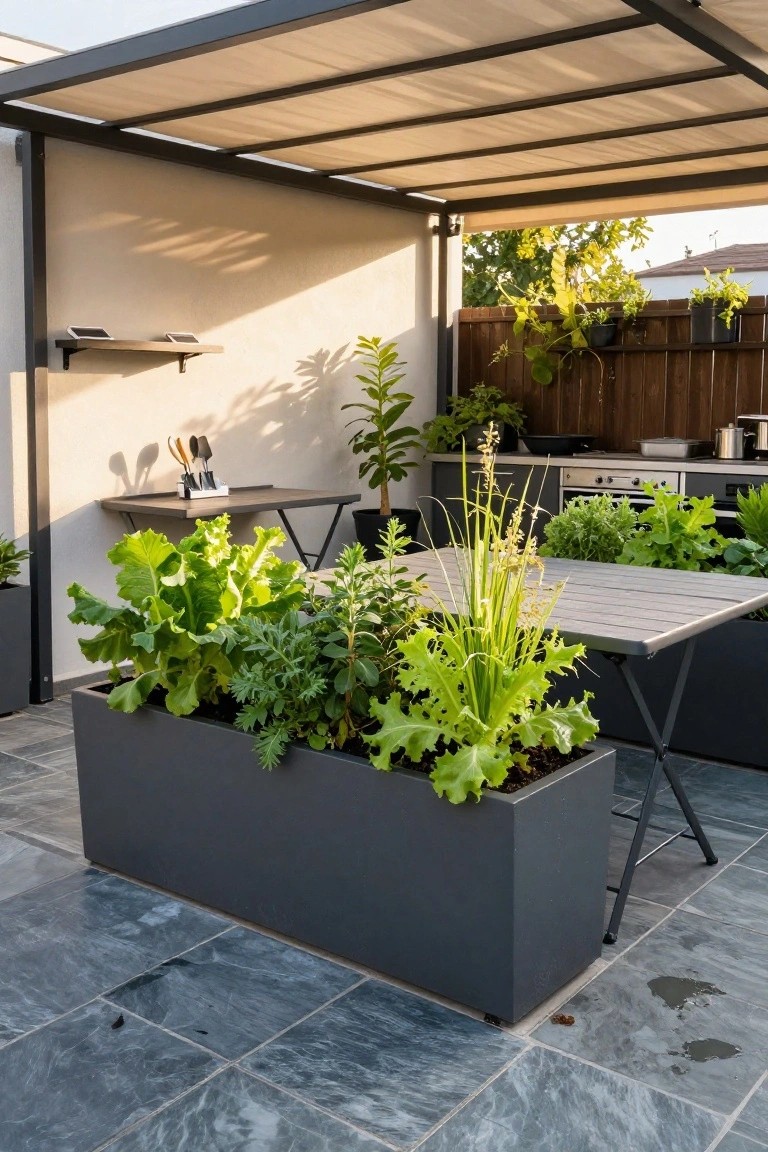
One easy way to garden without much space is lining your patio edge with a long trough planter. Here it’s filled with lettuce, herbs, and greens right next to the outdoor kitchen and dining table. You grab fresh picks while prepping dinner. No bending over beds or trekking to a yard plot.
These work best on smaller patios or balconies where you want produce handy. Choose a low, wide box in metal or plastic that drains well, then plant compact veggies that thrive in pots. Keep soil moist but not soggy. Fits busy routines perfectly.
Railing-Mounted Planter Boxes
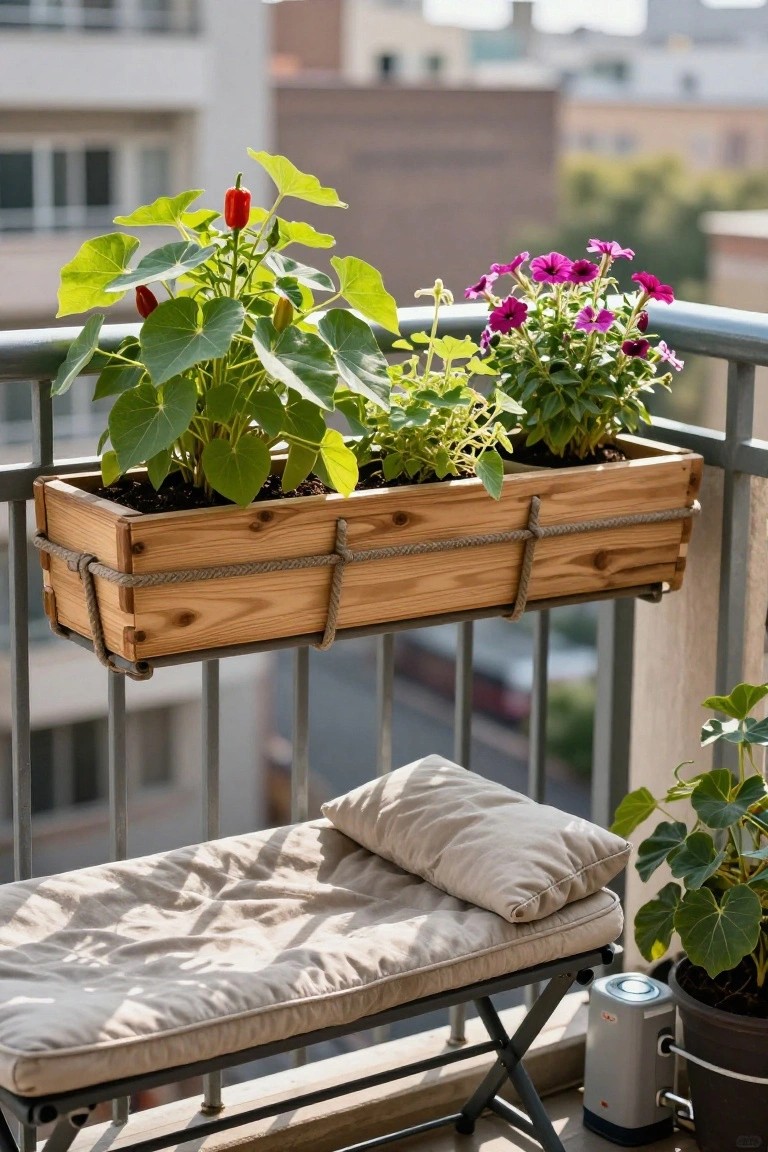
One easy way to garden on a small balcony is to mount wooden planter boxes directly on the railing. These rope-tied cedar boxes hold a mix of peppers, herbs, and flowers, giving you fresh growth without eating up any floor space. Busy folks like it because setup is quick, and plants stay off the ground where they get good light.
This works best on urban balconies or patios with sturdy rails. Pick rot-resistant wood, line the box if needed, and plant low-maintenance stuff like chilies or basil. Just check your railing can handle the weight, especially when wet. Keeps things green and practical.
Boxwood Hedges Outline Low-Key Entry Beds
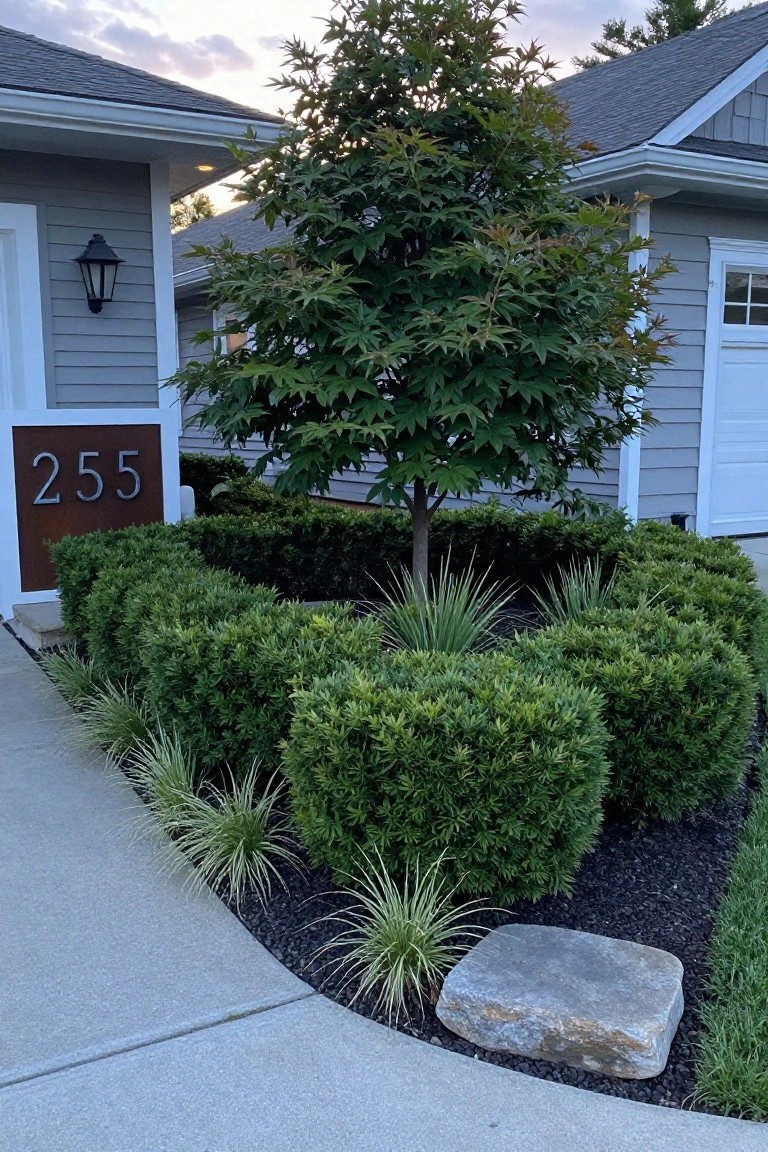
Boxwoods make a solid choice for front yard beds like this one. Trimmed into gentle curves, they hold the shape of the planting area without much work. A single tree in the middle adds height and interest. Grasses nearby give a bit of texture. The whole thing stays neat through the seasons, which fits busy homeowners just fine.
Put these beds along your driveway or house foundation. They’re forgiving on small lots. Go for dwarf varieties to keep trimming easy, maybe twice a year. Skip fussy flowers. This works on ranch styles or craftsman homes… keeps the entry looking put-together without daily fuss.
Tiered Planting Beds with Stone Walls
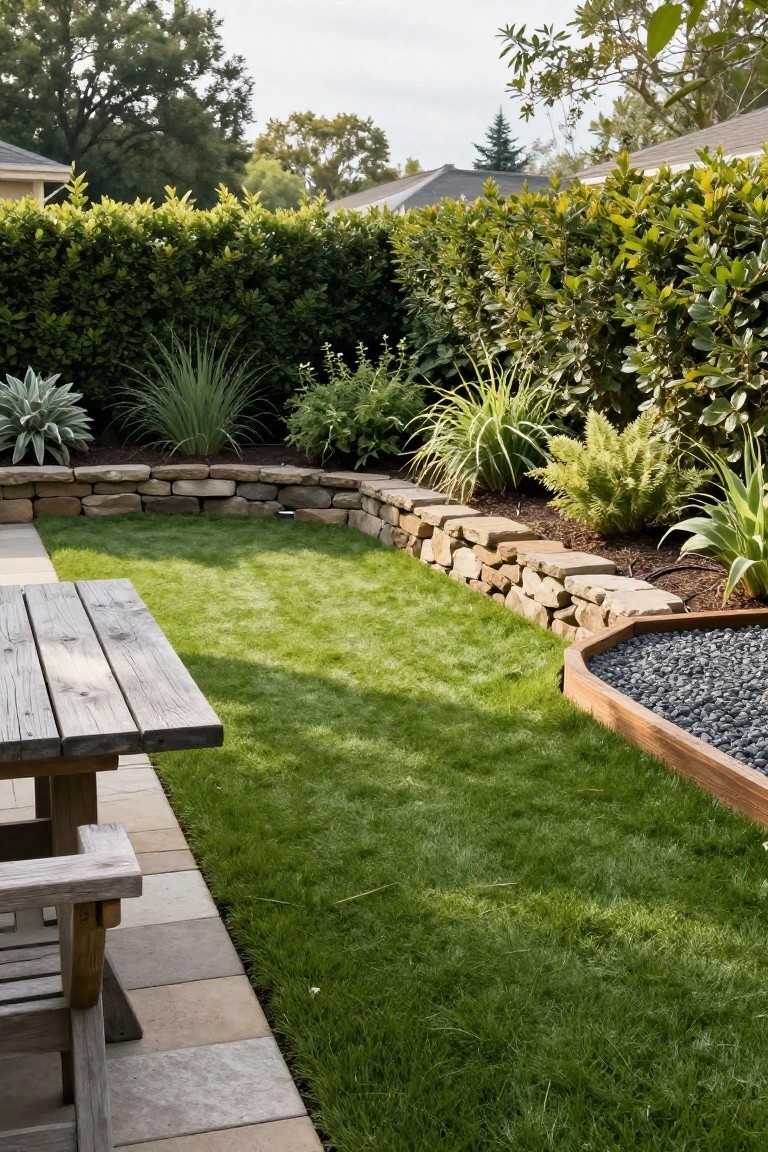
A simple stone retaining wall like this one creates natural tiers for your plants. It holds back soil for things like grasses and agave without needing fancy engineering. Busy homeowners love how it adds height and structure to a plain yard. The wall keeps everything neat, and the plants spill over just enough to soften it up.
Put one in along a slope or to edge your lawn from flower beds. It works best in smaller backyards where you want definition but not a ton of mowing or weeding. Pick stones that match your area for a seamless look, and make sure water drains away from the base. Pair it with gravel spots nearby to cut down on grass even more.
Simple Swales for Rainwater Management
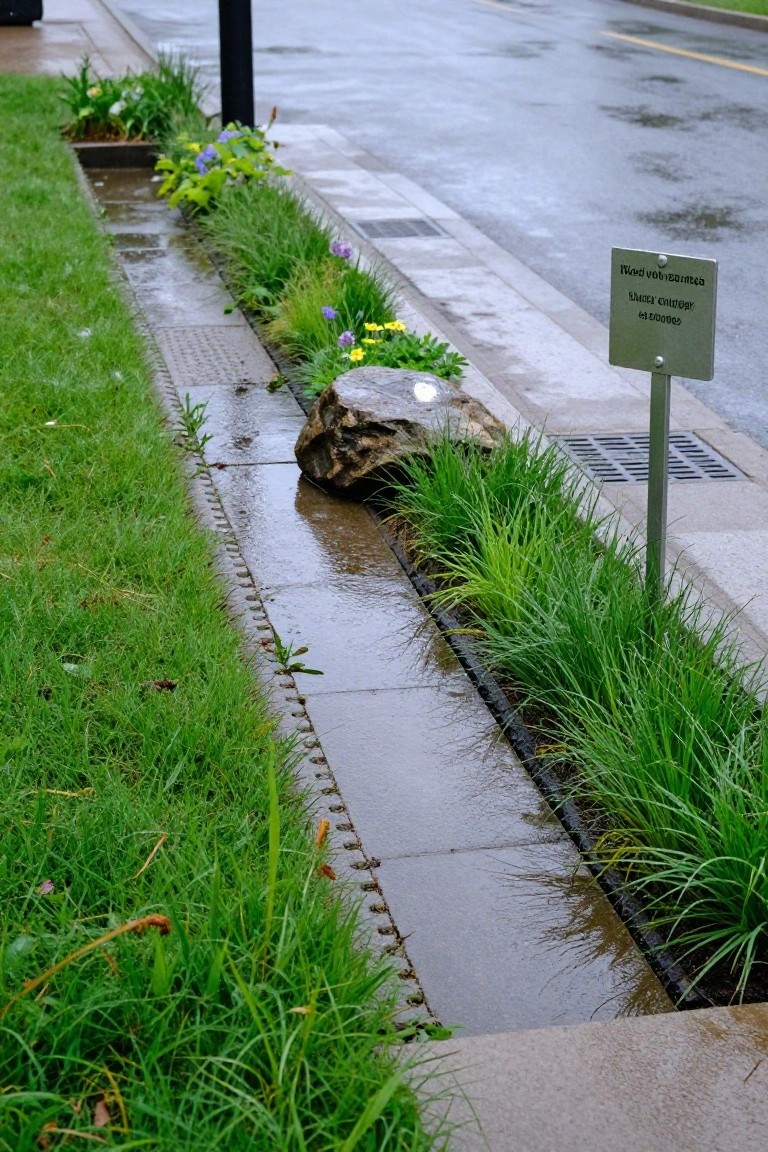
Runoff from rain can turn paths and driveways into puddles fast. This kind of linear swale solves that by directing water into a planted channel. Grasses and flowers like the purple blooms and yellow ones here soak it up and filter it naturally. It’s low fuss once established and fits right along edges without much upkeep.
Put one next to your sidewalk driveway or yard boundary where water collects. It works best in rainy spots or sloped areas. Pick tough native plants that handle wet feet and dry spells. Just dig a shallow trench line it if needed and plant. Your yard stays neater through storms.
Simple Container Gardening on the Patio
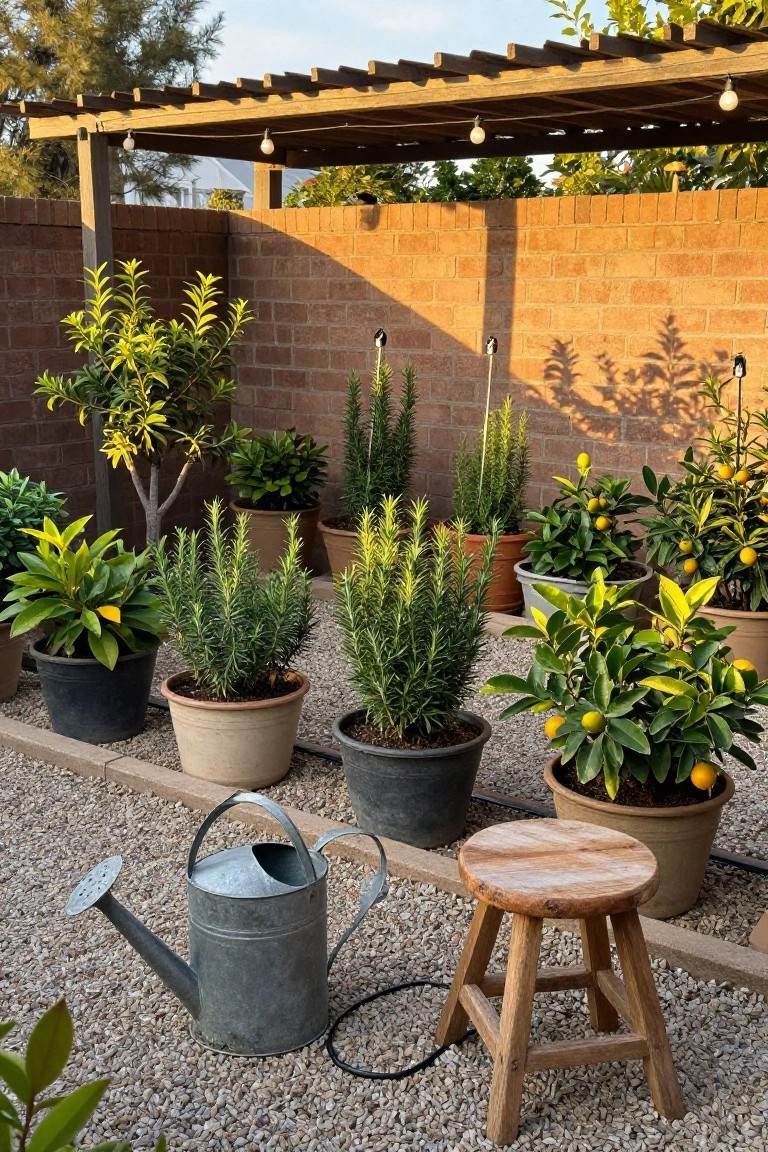
Potted plants like rosemary, lemon trees, and crotons make for an easy garden setup right on your patio. No digging or big plots needed. Just group them in pots under a pergola for shade and a bit of structure. It keeps things tidy and lets you snip herbs or pick a lemon whenever you want, without much fuss.
This works great in small backyards or courtyards where space is tight. Pick sturdy pots that drain well, and stick to low-water plants that thrive together. Add a stool for sitting while you tend them. Watch for too much sun on the citrus, though. Move pots around as seasons change.
Gravel and Agave Beds for Easy Gardens

Gravel beds planted with agaves make a strong low-maintenance choice for busy homeowners. These succulents thrive on little water and look bold without much fuss. The dark gravel keeps weeds down and sets off the spiky blue-green leaves nicely. A simple stone bench fits right in, giving a spot to sit without taking over the space.
This setup works best along streetsides or front paths where you want curb appeal but no daily watering. Pick mature agaves for quick impact, and use metal edging to hold the gravel back. It suits sunny dry spots and modern homes. Just keep kids away from the sharp tips.
Raised Brick Beds Around the Pool
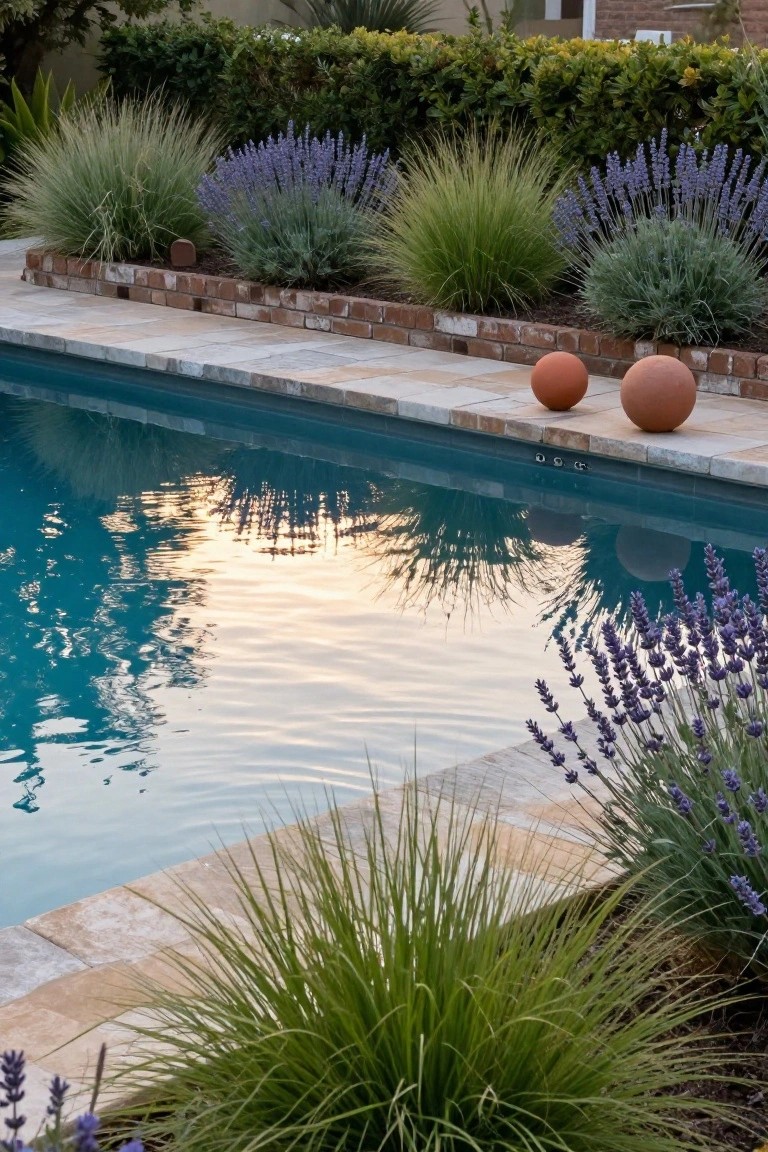
One easy way to dress up a pool area without much upkeep is to build raised brick beds right along the edge. These hold back soil and plants like tall grasses and lavender that sway in the breeze. They add a soft layer next to the hard deck tiles. Plus the brick ties into the warm tones around most backyard pools. It’s a look that feels put together but doesn’t need constant trimming.
You can do this along any straight pool side or curve it to follow the shape. Pick drought-tough plants such as fountain grass or lavender that come back year after year. It works best in sunny spots on homes with a bit of a Mediterranean feel. Just make sure the beds drain well so roots don’t rot. Those terracotta balls on the deck add a simple finishing touch if you want one.
Wheeled Metal Planters for Simple Gardening

One easy way to add plants without digging up your yard is a big galvanized trough on wheels. You see it here parked right by the garage, loaded with tough grasses, a purple allium bloom, and some herbs. It fits busy schedules because you can roll it into the sun or shade, water it with the nearby hose, and move it for winter storage. No permanent spots needed, and that rusty metal look gives a casual vibe against a plain garage door.
These work great tucked along driveways or patios where space is tight. Fill them with low-water picks like fountain grass or sedums that don’t need daily fuss. Just watch the weight when full of soil, and lock the wheels on slopes. Perfect for townhomes or rentals too, since nothing gets committed to the ground.
Frequently Asked Questions
Q: How much space do these ideas actually need? A: Most of them fit in a few pots or a small corner of your yard. You can tuck herbs into window boxes or let ground cover spread under trees. Pick one spot and build from there instead of spreading everything out.
Q: What happens if I forget to water for a week or two? A: Choose drought-tolerant plants like succulents or native grasses. They bounce back easily after dry spells. Mulch helps lock in moisture too.
Q: Do I need special tools for these effortless setups? A: No fancy gear required. A basic trowel and hose cover most tasks. Grab what you have in the shed and get started.
Q: How do I stop weeds without constant pulling? A: Lay down thick mulch right after planting. It blocks light and keeps weeds from sprouting. You might pull a few stragglers now and then but not much more.
