

Ever wondered how you can turn your cucumber plants into flourishing green wonders? What if I told you that the secret lies in something as simple as homemade cucumber fertilizer? Picture this: your cucumbers growing bigger, juicier, and more abundant than ever before. That’s the magic of creating your own fertilizer, tailored to meet your plants’ specific needs.
In this article, you’ll uncover the art of making cucumber fertilizer right in your backyard. Say goodbye to store-bought products with unknown ingredients and hello to a natural, cost-effective solution that will have your cucumbers thanking you in every crisp bite. Get ready to dive into the world of DIY fertilizers and watch your cucumber garden transform into a thriving oasis of freshness.
Benefits of Homemade Fertilizers
Making your own cucumber fertilizer has numerous advantages that can significantly benefit your cucumber plants. Here are some key benefits to consider:
- Tailored Nutrients: You can customize the nutrient mix to fit the specific needs of your cucumber plants, promoting optimal growth and health.
- Cost-Effective: Homemade fertilizers are often more budget-friendly than store-bought options, saving you money in the long run.
- Environmentally Friendly: By using natural ingredients, you reduce the environmental impact of synthetic chemicals often found in commercial fertilizers.
- Improved Soil Health: Homemade fertilizers can enhance soil fertility over time, creating a better foundation for healthy plant growth.
- Sustainable Gardening: Making your own fertilizer aligns with sustainable gardening practices and reduces reliance on potentially harmful chemicals.
- Enhanced Plant Resilience: Homemade fertilizers can help cucumber plants develop stronger immunity to pests and diseases, leading to a more robust harvest.
- Fun and Educational: The process of creating your own fertilizer can be enjoyable and educational, deepening your understanding of plant nutrition and care.
Ultimately, the benefits of homemade cucumber fertilizer make it a worthwhile investment for the health and productivity of your cucumber plants.
Understanding Cucumber Nutrient Needs
To ensure healthy and productive cucumber plants, it’s crucial to understand the nutrient requirements of these vegetables. Cucumbers are heavy feeders that require a well-balanced supply of essential nutrients to thrive. Here are the key nutrients that cucumbers need:
- Nitrogen: Promotes leafy growth and overall plant development.
- Phosphorus: Facilitates strong root development and flower and fruit production.
- Potassium: Aids in disease resistance and enhances fruit quality.
When preparing your own cucumber fertilizer, consider the N-P-K ratio. Aim for a balanced ratio, such as 10-10-10, to meet the nutrient needs of your cucumber plants.
Signs of Nutrient Deficiencies
Identifying and addressing nutrient deficiencies promptly is crucial for maintaining healthy cucumber plants. Look out for these signs:
- Yellowing leaves may indicate a nitrogen deficiency.
- Dark green leaves with purple tints could signal phosphorus deficiency.
- Weak stems and poor fruit development may point to a potassium deficiency.
Tips for Providing Nutrients
To meet your cucumber plants’ nutrient needs, consider the following tips:
- Use a quality, balanced fertilizer to supply essential nutrients.
- Monitor your plants for any signs of deficiencies.
- Adjust your fertilization regimen based on plant growth and development.
Ensuring that your cucumber plants receive adequate nutrients is vital for their health and productivity.
Essential Components of Cucumber Fertilizer
When making cucumber fertilizer, it’s essential to understand the key components that will promote healthy growth and abundant yields for your plants. Here are the crucial elements that should be present in your homemade fertilizer mix:
- Nitrogen (N): Stimulates lush leafy growth in cucumber plants, aiding in photosynthesis and overall plant vigor.
- Phosphorus (P): Supports root development and fruit production, helping the plant establish a strong root system and produce high-quality cucumbers.
- Potassium (K): Essential for disease resistance and fruit quality, potassium ensures that your cucumber plants are resilient against common diseases and produce flavorful fruits.
When creating your own cucumber fertilizer, aim for a balanced N-P-K ratio to meet the specific needs of your plants. Consider a ratio like 10-10-10 to provide a well-rounded combination of nutrients for optimal growth.
Additional Tips:
- Blend different organic materials like compost, manure, or fish emulsion to create a nutrient-rich fertilizer for your cucumber plants.
- Regularly monitor your plants for signs of nutrient deficiencies, such as yellowing leaves or stunted growth, and adjust your fertilization routine accordingly.
- Apply the fertilizer mix sparingly around the base of your cucumber plants to avoid over-fertilization, which can harm the plants.
By incorporating these essential components into your cucumber fertilizer mix and maintaining a balanced nutrient profile, you can ensure that your plants thrive and produce a bountiful harvest.
Methods of Making Homemade Cucumber Fertilizer
To make homemade cucumber fertilizer, you have several options that can provide your plants with the necessary nutrients. Here are some methods you can use:
- Compost Tea: Create a nutrient-rich compost tea by soaking compost in water for a few days. Strain the mixture and use the liquid to feed your cucumber plants.
- Manure Tea: Similarly, you can steep aged manure in water to create manure tea. This organic solution is beneficial for plant growth.
- Eggshell Fertilizer: Crushed eggshells are a great source of calcium for your cucumber plants. Simply crush them finely and sprinkle around the base of the plants.
- Epsom Salt Solution: Epsom salt is rich in magnesium, which supports plant growth. Dissolve Epsom salt in water and use it as a foliar spray or soil drench.
| Method | Benefits |
|---|---|
| Compost Tea | Provides essential nutrients for plant growth |
| Manure Tea | Organic solution for plant development |
| Eggshell Fertilizer | Rich in calcium for plant health |
| Epsom Salt Solution | Contains magnesium for plant support |
Recommended Products

🥒 EXPERTLY CRAFTED FOR CUCUMBER PRODUCTIVITY – Gardenera LIQUID POWER Cucumbers Fertilizer is designed to enhance vine growth, flowering, and high-yield fruiting for all cucumber types, including slicing, pickling, and greenhouse varieties.
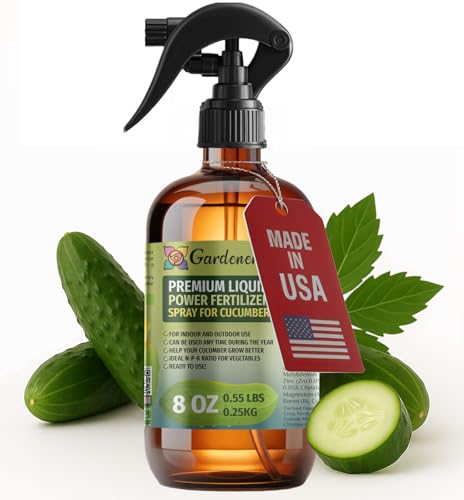
🌿 READY-TO-USE CONVENIENCE – Skip the hassle of measuring and mixing. This LIQUID POWER cucumber fertilizer spray comes fully premixed in an easy-to-use spray bottle, ready for immediate application to your garden or indoor plants.

Cucumber fertilizer specifically formulated for cucumbers, zucchini, pumpkins, butternut squash, melons, watermelon, and gourds, promoting robust vines, strong roots, and high yields
Applying Homemade Fertilizer to Cucumber Plants
When applying homemade fertilizer to your precious cucumber plants, there are a few key steps to ensure they reap the full benefits of your efforts. Here’s how you can effectively nourish your cucumber plants:
- Timing is crucial: Apply the fertilizer after the seedlings have developed their first true leaves for optimal absorption.
- Avoid overdoing it: It’s best to lightly water your plants before applying the fertilizer to prevent potential root burn.
- Apply close to the base: Pour the fertilizer solution near the plant stem to facilitate direct nutrient uptake.
- Stay consistent: Regular application, following the specific instructions for each type of homemade fertilizer, will help maintain healthy growth.
- Observe and adjust: Monitor your cucumber plants’ growth and adjust the frequency of fertilization if needed, considering factors like weather conditions.
- Rotate the methods: Rotate between different homemade fertilizer options to provide a diverse range of nutrients for robust plant development.
By following these simple guidelines, you can effectively nourish your cucumber plants with homemade fertilizer and support their growth and productivity.
Conclusion
You now have the knowledge to create and apply homemade fertilizer to your cucumber plants. Remember to follow the suggested steps for optimal nourishment. By applying the fertilizer at the right time, avoiding overuse, and ensuring consistent application, you can effectively support the growth and productivity of your plants. Keep an eye on your cucumber plants’ progress and make adjustments as needed. Rotating between different homemade fertilizer options will provide a diverse range of nutrients for your plants. With these guidelines in mind, you’re on your way to cultivating healthy and thriving cucumber plants in your garden.
Frequently Asked Questions
When is the best time to apply homemade fertilizer to cucumber plants?
Apply homemade fertilizer to cucumber plants after seedlings develop their first true leaves.
How can I prevent over-fertilization when using homemade fertilizer on cucumber plants?
Avoid over-fertilization by pouring the fertilizer solution near the plant stem for direct nutrient uptake.
How often should I apply homemade fertilizer to cucumber plants?
Maintain consistency in applying homemade fertilizer to cucumber plants for optimal nourishment.
How can I ensure the growth and productivity of cucumber plants with homemade fertilizer?
Monitor plant growth closely and adjust fertilizer application as needed.
Should I use different homemade fertilizer options for cucumber plants?
Rotate between different homemade fertilizer options to provide a variety of nutrients for cucumber plants.
