


A bitter cucumber is usually a signal of plant stress, fruit age, variety, or some combination of those factors. One bitter fruit does not prove that the whole plant is failing. Taste can vary from one cucumber to the next, and the bitterness often concentrates near the stem end and skin. The useful response is to look at the growing conditions and harvest stage before changing fertilizer or abandoning the vine.
This guide explains why cucumbers become bitter, how to reduce the most common stresses, and what to do with fruit that has already lost quality. For the crop’s broader care sequence, start with Growing Cucumbers: A Complete Guide and review When and How to Harvest Cucumbers.
What causes bitterness?
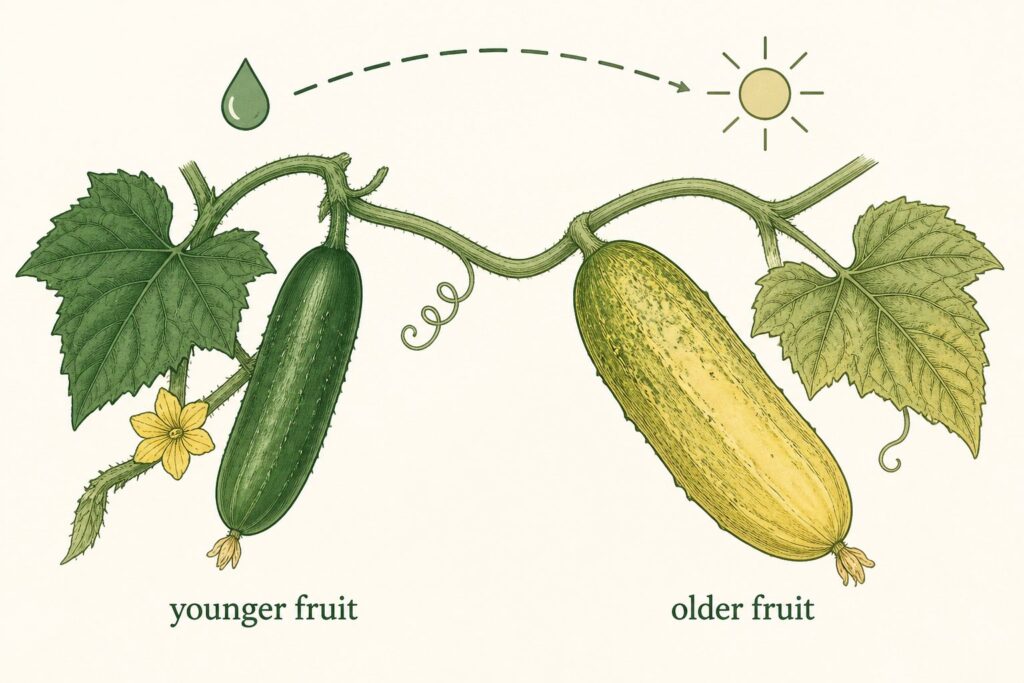
Cucumber bitterness is associated with cucurbitacin compounds, which are influenced by genetics and growing stress. A variety may be naturally more prone than another, while drought, intense heat, cold setbacks, root disturbance, or uneven growth can increase the chance of unpleasant fruit. The same plant can produce a good cucumber after a stressful one if conditions improve.
| Clue | Possible contributor | First response |
|---|---|---|
| Several bitter fruits after dry weather | Moisture stress. | Check soil depth and establish consistent watering. |
| Bitter fruit only at the end of the vine | Fruit age, heat, or vine stress. | Harvest younger and inspect the plant. |
| Bitterness in a particular variety | Genetic tendency. | Try a different recommended variety next season. |
| Bitter fruit after transplanting | Root disturbance or stalled growth. | Protect roots and keep moisture steady while recovering. |
Water evenly, not constantly
Cucumbers have a large leaf area and can use water quickly in warm weather. Allowing the root zone to become very dry, then soaking it heavily, creates a stressful swing. Containers and raised beds often need more frequent checks than in-ground beds. Feel the soil a short distance below the surface and water deeply enough to moisten the active root zone. Adjust for rainfall rather than following a rigid schedule.
Drip irrigation or a soaker hose keeps water near roots and leaves drier. If you must use a sprinkler, water early enough that foliage can dry. Mulch after plants establish to slow evaporation and reduce soil temperature swings, but leave room around the stem for air circulation. The complete guide covers root-zone watering by growing method.
Protect roots from heat and disturbance
Roots perform poorly when the soil is both hot and dry. A light mulch layer, afternoon relief in an exposed site, and reliable watering can help. Do not transplant into cold ground, and avoid cutting or digging close to the crown after vines are established. A damaged root system may not supply leaves and fruit consistently even when the soil is wet.
Support can reduce accidental damage. A trellised vine is easier to water at the base and less likely to be stepped on than a sprawling vine. If you train cucumbers, install support early and use loose ties. Read How to Trellis Cucumbers for stable options.
Harvest at the right size
Oversized cucumbers often become seedy, watery, or tough, and fruit left on the vine can divert energy from new flowers. Check plants every day or two once production begins. Pickling types are usually harvested small; slicing types are harvested when they reach the variety’s expected length and color. Cut fruit with a clean snip and avoid tearing the vine.
If one fruit is bitter, taste another from a different part of the plant. Do not let a single sample determine the whole crop. If bitterness is repeated, taste from the blossom end toward the stem end; many people find the stem end more intense. Discard fruit that is soft, damaged, or otherwise unsafe rather than trying to disguise it.
Choose varieties thoughtfully
Variety selection cannot guarantee sweetness, but it can change the odds. Look for descriptions that mention mild flavor, disease resistance, and suitability for your climate. Seed packets and reputable regional suppliers are more useful than a universal “best cucumber” claim. If you save seed, remember that cross-pollination can make next-generation fruit unpredictable unless the variety is isolated appropriately.
Parthenocarpic greenhouse types can be useful in protected settings, but follow their instructions about pollination and fruit set. A variety bred for pickling may taste best at a smaller size, while a slicing type may be better eaten fresh. Match the crop to the use instead of waiting for every cucumber to reach the same size.
Stress beyond water
Heat
Very hot days and warm nights can accelerate leaf water loss and disrupt flowering. Provide moisture, mulch, and temporary afternoon relief where practical. Avoid enclosing plants in a stagnant cover.
Cold
A chilly start can stall roots and leave the plant uneven for weeks. Plant after the soil warms and harden transplants gradually. A cold setback may show up later as poor fruit quality even after leaves recover.
Nutrition
Do not treat bitterness with a heavy fertilizer application. Check soil, roots, moisture, sun, and pests first. Excess nitrogen can make a vine lush without improving fruit.
Disease or pest pressure
Leaf loss reduces the plant’s ability to support fruit. Inspect undersides of leaves, remove badly affected material, and use locally appropriate identification and controls. A bitter cucumber is not itself a disease diagnosis.
A practical troubleshooting sequence
- Taste a second fruit and note where bitterness is strongest.
- Check soil moisture below the surface and recent weather.
- Look for root disturbance, wilt, pests, or major leaf loss.
- Review whether fruit has been left oversized on the vine.
- Confirm the variety’s intended harvest size and use.
- Correct one or two clear stresses, then monitor new fruit.
Common mistakes
- Watering only when leaves wilt severely.
- Adding fertilizer before checking whether soil is dry or waterlogged.
- Leaving mature fruit hidden under a dense canopy.
- Assuming every bitter cucumber means the seed is bad.
- Blaming companions or trellis design without checking variety and weather.
Separate variety traits from growing stress
Some cucumber varieties naturally have stronger bitter notes near the stem end, while others are bred for mild flavor. Stress can intensify the problem, but a single bitter fruit does not prove the entire crop is failing. Taste a thin slice from the blossom end and compare fruit from different plants before changing several variables at once. Record the variety, harvest size, and recent weather so you can identify a pattern.
| Clue | Likely contributor | First response |
|---|---|---|
| Bitter fruit after a hot, dry spell | Moisture stress | Mulch and water deeply on a regular schedule. |
| More bitterness in shaded or crowded growth | Low light and slow drying | Improve spacing and airflow; avoid wetting leaves late. |
| Only one variety is affected | Genetic tendency | Compare cultivars before changing the whole bed. |
| Fruit is very large and seedy | Late harvest | Pick at the variety’s normal eating size. |
A prevention routine
Apply a layer of organic mulch after the soil has warmed, keeping it a few inches away from the stem. Water the root zone deeply when the surface begins to dry rather than alternating drought with a heavy drench. Containers may need more frequent checks than beds because they hold less water. Trellising helps leaves dry and makes it easier to notice fruit that should be picked.
Do not chase bitterness with excessive fertilizer. High nitrogen can produce lush vines without solving irregular watering or poor harvest timing. If flowers are dropping without fruit, read the pollination guide; if fruit is simply getting too large, use the harvest guide. The Cucumbers hub links these decisions in one place.
When a bitter cucumber is still useful
Remove the stem end and taste again before discarding the fruit. If the flavor remains unpleasant, compost it rather than serving it. Cucurbit plants can also produce unusually bitter fruit when stressed, so persistent or extreme bitterness across multiple plants is a reason to stop tasting and seek local extension guidance before eating more from that batch.
Frequently asked questions
Can I remove bitterness by peeling a cucumber?
Peeling may remove some bitterness near the skin, and trimming the stem end may help, but it cannot rescue every fruit. Taste the cucumber and use your judgment.
Does watering more make cucumbers sweeter?
Consistent moisture can reduce one important stress, but excessive water or poor drainage can create other problems. Aim for even root-zone moisture.
Are bitter cucumbers poisonous?
Do not eat fruit that is strongly bitter, spoiled, or makes you feel unwell. Bitterness can have multiple causes, and a severe unpleasant taste is a reason to discard the fruit rather than experiment.
For flower and fruit-set issues, read Cucumber Flowers but No Fruit. Return to the Growing Cucumbers hub for the full resource set.
Additional questions
Does peeling remove all bitterness?
Peeling can reduce bitterness concentrated near the skin, but it is not a guaranteed fix. Taste a small slice first, especially when fruit is strongly bitter.
Will more water make cucumbers bland?
Consistent moisture supports even growth, but constantly saturated soil damages roots. Aim for a steady, well-drained root zone rather than waterlogged conditions.
