

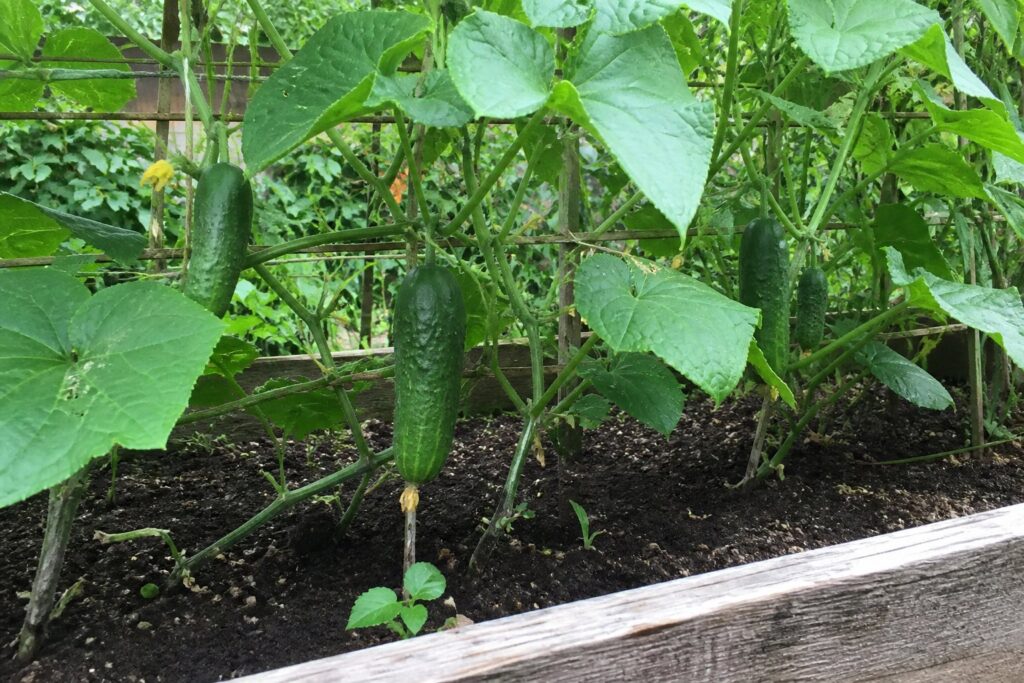
Cucumbers are fast-growing, warm-season vines that reward steady care. Give them warm soil, regular moisture, room to run or a strong support, and harvest often, and a few plants can produce more than a household expects. The common disappointments—yellow leaves, bitter fruit, flowers without cucumbers, and tangled vines—usually become easier to solve once you separate the crop’s needs into timing, roots, leaves, flowers, and harvest.
This guide is a practical starting point for growing cucumbers in an in-ground bed, raised bed, or large container. It links to focused guides on when to plant cucumbers, trellising, bitterness, pollination, and harvest timing.
Choose a cucumber type for your garden
Start with the space and use you actually have. Bush or compact cucumbers can suit containers and small beds. Vining types usually produce more foliage and need a trellis, arch, fence, or carefully managed ground space. Pickling and slicing types can both be productive, but their ideal harvest size differs. Some varieties are parthenocarpic and can set fruit without pollination; others rely on pollinated flowers and may produce seeds. Read the packet for mature size, disease resistance, days to maturity, and whether the variety is intended for fresh eating or pickling.
| Choice | Useful when | Planning note |
|---|---|---|
| Bush or compact | Container, patio, or narrow bed. | Still needs sun, water, and harvest access. |
| Vining | Raised bed or ground space with support. | Plan trellis height and tie points before vines run. |
| Parthenocarpic | Protected growing or low-pollinator setting. | Follow the variety’s instructions; fruit may be seedless. |
| Pickling type | Frequent small harvests and preserving. | Quality drops quickly if fruit is left oversized. |
Site, soil, and bed preparation
Cucumbers need strong light and warmth. Choose a site with roughly six to eight hours of sun, while allowing some afternoon relief in climates where leaves wilt in intense heat. Soil should drain freely but hold enough moisture to prevent repeated stress. A raised bed can warm early and gives roots a defined zone; in-ground soil can be excellent when it is loose and well drained. Containers should be large enough that roots do not dry out within hours.
Work finished compost into the bed before planting if the soil needs more organic matter. Avoid planting into a pocket of fresh manure or concentrated fertilizer. A soil test can guide pH and nutrient adjustments; do not assume that more nitrogen is the answer to slow fruiting. Excess nitrogen can produce a large leafy vine with fewer flowers, while poor drainage can weaken roots even in fertile soil.
Plant after the soil is warm
Cucumber roots and leaves dislike cold starts. Sow or transplant after the danger of hard frost has passed and the soil has warmed reliably. The planting-calendar guide explains how to count from local frost patterns instead of treating a generic date as exact. If you start seed indoors, use containers that allow roots to move without becoming tightly bound and transplant gently. Direct sowing is often simpler when the garden is warm enough.
Plant seeds according to the packet, commonly about one-half to one inch deep. Give seedlings consistent moisture while they establish. If you use a row cover for early warmth, remove or vent it when flowers appear so pollinators can reach varieties that require them. Never let a cover turn a young bed into an overheated, stagnant tunnel.
Spacing and support
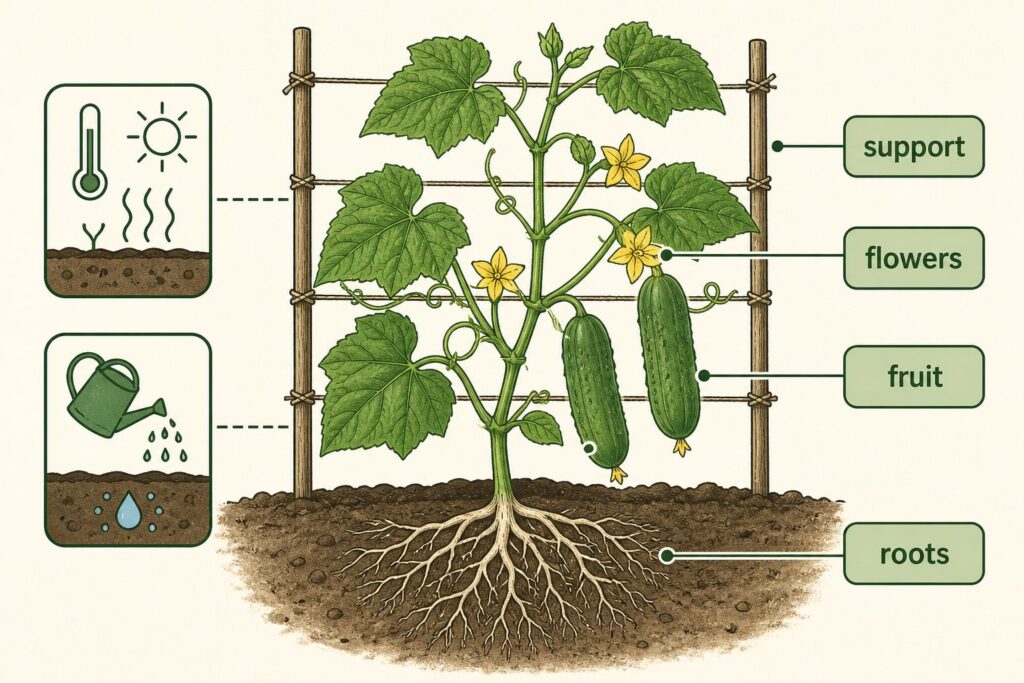
Space according to the variety and whether vines will climb. A trellis allows air and light to reach foliage, keeps fruit cleaner, and makes harvesting easier, but it must be installed before vines become tangled. A ground-grown vine needs more horizontal area and should not be placed where walking will crush stems. Keep a clear path to the base so you can water the soil rather than wetting leaves repeatedly.
Use soft ties or clips when a young vine needs direction. Do not pull a heavy mature vine sideways by one tender stem. The detailed cucumber trellis guide covers materials, height, anchoring, and training choices.
Water for steady growth
Watering is the daily foundation of cucumber quality. Keep the root zone evenly moist, especially while flowers and fruit are forming. Sandy beds and containers may need more frequent checks than loam. Water deeply enough to reach the roots, then check the soil before watering again. A dry-to-drenched cycle can stress plants and is one contributor to poor fruit quality and bitterness.
Use a soaker hose, drip line, or low stream directed at soil when practical. Morning watering gives foliage time to dry if leaves are splashed. Mulch after plants establish to slow evaporation, leaving a small gap around stems. In a container, drainage holes matter as much as water volume: saturated roots cannot use oxygen normally.
Feed the crop without overfeeding
Apply nutrients based on soil condition and the product label. A balanced amendment incorporated before planting may be enough for a short crop. If plants are pale or growth is weak, check moisture, root crowding, sun, and pests before adding fertilizer. Once vines are flowering and fruiting, a light labeled feeding may help in poor soil, but excess nitrogen often favors leaves over fruit. Never place granular fertilizer directly against stems or roots.
Flowers, pollination, and fruit set
Many cucumbers produce separate male and female flowers. Male flowers usually appear first; female flowers have a small swelling behind the blossom. Bees and other pollinators transfer pollen on varieties that require it. If flowers fall without a swelling, that may be normal early in the season. If female flowers repeatedly fail to enlarge, inspect for low pollinator activity, wet or windy weather, excessive heat, or plant stress.
Do not hand-pollinate automatically. First improve conditions: grow flowers nearby, avoid spraying open blooms, keep plants watered, and give vines room. For a full diagnostic sequence, read Cucumber Flowers but No Fruit.
Prune and train with a purpose
Cucumbers are not tomatoes; aggressive pruning is not required for every variety. Remove damaged leaves, fruit touching the soil, or growth that blocks a path. On a trellis, guide young tendrils gradually. If the plant’s instructions recommend removing early side shoots or limiting a leader, follow that variety-specific method. Otherwise, focus on airflow, access, and removing diseased tissue rather than stripping healthy foliage.
Common problems
| Symptom | First checks | Useful response |
|---|---|---|
| Leaves wilt in afternoon | Soil moisture, heat, root damage. | Check below the surface; shade roots with mulch and water consistently. |
| Flowers but no fruit | Flower type, pollinators, stress, variety. | Use the pollination guide before changing fertilizer. |
| Bitter fruit | Variety, drought, heat, harvest age. | Correct moisture swings and harvest younger fruit. |
| Powdery or spotted leaves | Airflow, wet foliage, disease pressure. | Remove affected leaves, improve spacing, and seek local diagnosis. |
Harvest often
Check vines every day or two once fruit begins. Cucumbers can move from ideal to oversized quickly, and frequent picking encourages continued production. Cut fruit with a knife or snips rather than tearing the vine. Harvest at the size and color recommended for the variety; do not judge every cucumber by a supermarket standard. The harvest guide covers slicing, pickling, yellowing, and storage decisions.
Season checklist
- Choose a variety that fits space and use.
- Prepare warm, well-drained soil.
- Install support before vines run.
- Plant after cold soil and frost risk ease.
- Keep moisture steady and direct water to soil.
- Inspect leaves and flowers weekly.
- Harvest promptly and record what worked.
Adjust care as the vines change
Cucumber care is easier when you treat the season as a series of short decisions instead of one fixed routine. During the first two weeks, the priority is an evenly moist seed zone and protection from cold nights. Once the vine has several true leaves, shift attention toward support, airflow, and a regular harvest rhythm. During flowering and fruit fill, water demand usually rises, especially in a sunny raised bed or container. Check the top inch of soil before watering, then soak the root zone slowly enough that water penetrates rather than running off.
| Growth stage | What to check | Useful response |
|---|---|---|
| Emergence | Seed crusting, gaps, cold nights | Keep the surface damp and thin crowded seedlings once they establish. |
| Vining | New tendrils, leaning stems, weeds | Guide growth onto support and mulch without covering the crown. |
| Flowering | Male and female flowers, insect activity | Water consistently and avoid spraying open flowers. |
| Heavy fruiting | Fruit size, leaf color, harvest frequency | Pick promptly and provide steady moisture and fertility. |
Common setbacks and quick fixes
Seedlings that stall often have cold roots, compacted soil, or a dry surface. Replanting into warmed, loose soil is usually more effective than adding fertilizer. Pale lower leaves can be an early sign of hungry soil, but yellowing that begins between veins or appears with speckling deserves a closer pest or disease inspection. If vines look healthy but fruit is scarce, read the pollination guide before changing the feeding program.
For a compact planting plan, pair this guide with the cucumber planting calendar, then use the harvest guide to keep mature fruit from slowing new set. Return to the Cucumbers hub whenever you need a different crop decision.
Frequently asked questions
Can cucumbers grow in a container?
Yes, if the container is large, drains well, receives sun, and supports the chosen variety. Compact types are easiest, while vining types need a stable trellis.
Why are cucumber leaves yellow?
Older leaves can yellow naturally, but widespread yellowing may reflect overwatering, poor drainage, nutrient imbalance, pests, or disease. Check roots and soil before feeding.
How many cucumber plants do I need?
A few healthy plants can provide a substantial harvest. Start with the space you can water and pick regularly rather than planting more vines than you can support.
Return to the Growing Cucumbers hub for the complete resource set.
Additional questions
Can cucumbers grow without a trellis?
Yes. Bush varieties and sprawling vines can grow on clean mulch, but a trellis usually improves airflow, keeps fruit straighter, and makes pests easier to spot. Match support to the variety rather than forcing a heavy vining type onto a short cage.
Should I remove the first flowers?
There is no universal need to remove flowers from a healthy transplant. If a very small plant is struggling after cold weather, removing a few early fruitlets can redirect energy temporarily, but correcting light, moisture, or root stress is the durable fix.
