

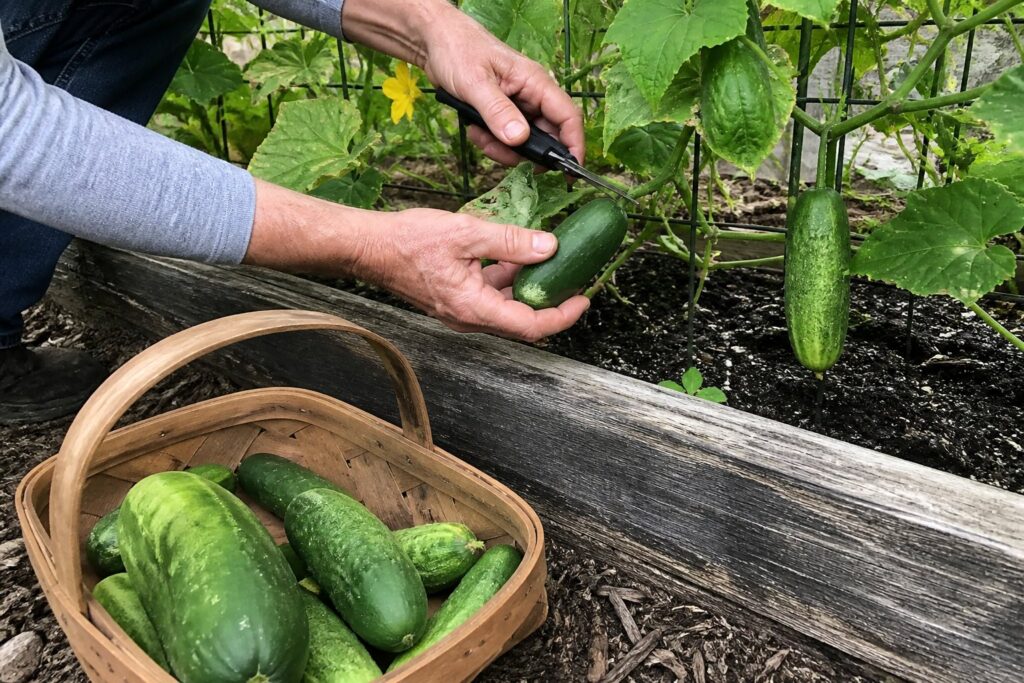
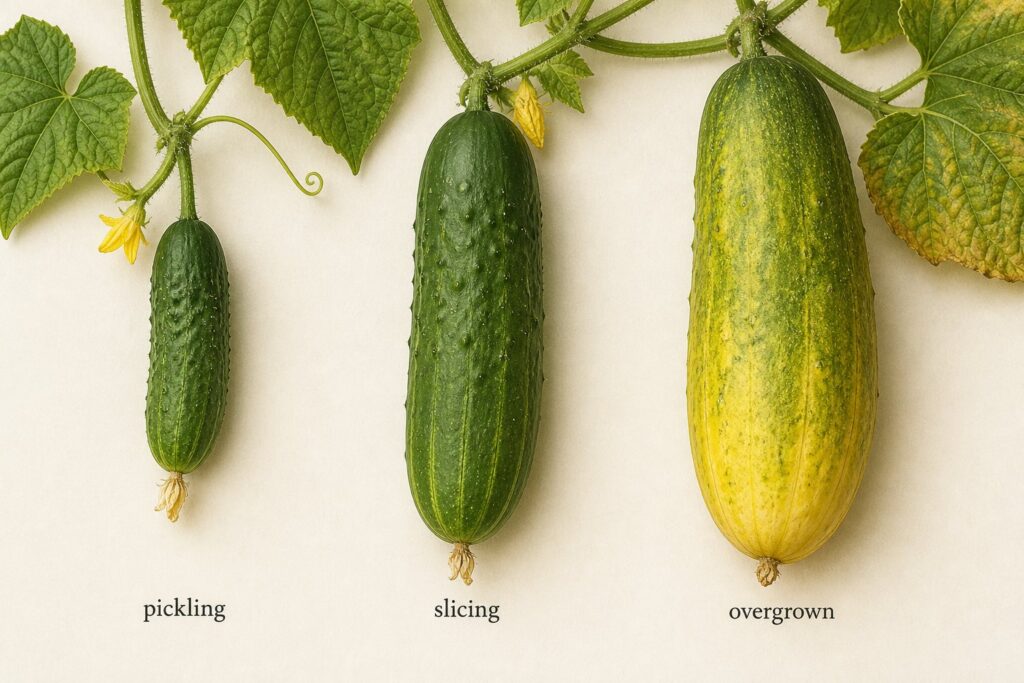
Cucumbers are best harvested by size and use, not by waiting for one universal “ripe” stage. A slicing cucumber may be ready while it is still firm, green, and relatively small; a pickling cucumber is often picked much younger. Leave fruit on the vine too long and it can become seedy, yellow, tough, or bitter, while the plant spends energy on an oversized fruit instead of new flowers.
Once production begins, check plants every day or two. Trellised vines make fruit easier to see, but ground-grown plants hide cucumbers under leaves. The trellis guide explains how support improves access; the bitterness guide covers stress and overmaturity.
Use the variety’s harvest description
| Use | Harvest cue | If you wait too long |
|---|---|---|
| Slicing | Firm, green fruit at the packet’s expected length. | Seeds enlarge and texture becomes watery or tough. |
| Pickling | Small, firm fruit picked frequently. | Oversized fruit may not fit the intended preserve. |
| Baby or specialty | Harvest at the size and color described for the cultivar. | Quality can change quickly after the ideal window. |
| Seed saving | Only if the variety and isolation plan support it. | Fruit becomes large and inedible for fresh use. |
Color alone is not enough. A pale spot where fruit rests on soil can be normal, while overall yellowing may signal age or stress. Compare a few fruits from the same vine and read the seed packet before deciding what “ready” looks like.
How to pick without damaging the vine
- Lift leaves gently and find the fruit’s stem.
- Support the cucumber with one hand.
- Cut the stem with clean snips or a knife rather than twisting hard.
- Remove hidden oversized fruit while you are there.
- Place harvested cucumbers in a shaded basket, not on hot soil.
- Check the plant again for flowers and small fruit before leaving the bed.
Pulling or bending a vine can break tender stems and reduce future production. On a trellis, do not yank fruit through a mesh opening. Cut the stem or adjust the vine gradually. Wear gloves if foliage is prickly, and wash tools when moving between plants with suspected disease.
Harvest frequency affects production
Frequent picking keeps the plant in a productive rhythm. A plant carrying several mature fruits may set fewer new ones, especially if water or nutrition is limited. This does not mean harvesting tiny fruit every hour; it means checking on a regular schedule that matches weather and variety. During peak summer growth, daily checks are often worthwhile.
If you are away, ask someone to pick according to the packet’s size guidance rather than leaving fruit to guesswork. A single hidden cucumber can become a heavy, yellow surprise. Remove it and continue caring for the rest of the vine.
What to do with overgrown cucumbers
Use judgment. Some slightly oversized fruit can be peeled, seeded, and added to a cooked dish or relish. Very bitter, soft, damaged, or decaying fruit should be discarded. Do not leave large fruit on the vine simply because it is no longer ideal for slicing; removing it lets the plant direct attention to newer growth.
If you want to save seed, treat that as a separate project. Cucumbers cross-pollinate readily, and saved seed may not reproduce the parent type without suitable isolation. Follow a reliable seed-saving method for the specific cultivar.
After harvest: cooling and storage
Cucumbers lose quality quickly in heat. Move fruit into shade and cool it promptly. Store fresh cucumbers in a way that limits dehydration without trapping excessive condensation. The best approach depends on your refrigerator, humidity, and how soon you will eat them. Avoid placing them where they will freeze.
| Condition | Practical response |
|---|---|
| Fruit is firm and clean | Cool promptly and use within its best quality window. |
| Fruit has a soft spot | Trim if appropriate and use immediately; do not store with sound fruit. |
| Fruit is yellow or seedy | Use for cooking or relish if flavor and texture are acceptable. |
| Fruit is strongly bitter or decayed | Discard it. |
Harvest clues beyond the fruit
Keep watching the vine. New flowers, leaf color, turgor, and the condition of growing tips tell you whether the plant can keep producing. If leaves wilt every afternoon, check root-zone moisture and heat. If fruit set slows, inspect flowers and pollinator activity. If the plant is covered in old fruit, pick it promptly and reassess. The pollination guide helps separate flower biology from plant stress.
Common mistakes
- Waiting for every cucumber to reach the same size.
- Pulling fruit from a trellis and breaking the stem.
- Leaving hidden fruit under dense foliage.
- Harvesting in full midday heat and leaving fruit in the sun.
- Keeping soft or damaged fruit beside sound cucumbers.
- Assuming a yellow cucumber is always a disease symptom.
A practical harvest routine
- Check the crop every day or two.
- Pick fruit at the size recommended for its use.
- Cut stems cleanly and support the vine.
- Remove overgrown fruit and inspect foliage.
- Shade and cool the harvest promptly.
- Record which size and frequency gave the best quality.
Match harvest size to the variety
There is no single correct cucumber size. Pickling types are often harvested small and crisp, slicing types are best before seeds become prominent, and specialty varieties may be short, round, or pale while still ready. Use the seed packet or variety description as your reference, then harvest a little early while you learn how quickly that plant adds size in your conditions.
| Use | Harvest cue | What to avoid |
|---|---|---|
| Pickling | Small, firm fruit with even green color | Leaving fruit until seeds enlarge. |
| Fresh slicing | Full length for the variety, glossy and firm | Yellowing, hollow centers, or soft blossom ends. |
| Burpless or specialty | Typical color and size listed for the cultivar | Judging readiness by color alone. |
| Seed saving | Only from an intentionally selected mature fruit | Saving seed from a random hybrid plant. |
Make harvesting a routine
Walk the plants every day or two when they are producing heavily. Lift leaves gently and use snips or a knife to cut the stem rather than twisting the vine. A short piece of stem can remain on the fruit, but avoid tearing the plant or pulling neighboring flowers loose. Harvest in the cool part of the day when possible, then move fruit into shade and refrigerate promptly. Wipe off soil, but delay washing until just before use if you need maximum storage life.
Frequent picking encourages the plant to keep flowering, while a hidden oversized cucumber can divert energy toward seed production. Check the underside of leaves and the back of the trellis; fruit often hides in those spots. If fruit is bitter, compare size and recent moisture using the bitterness guide. For flowering problems, see the pollination guide. The Cucumbers hub keeps the whole crop plan together.
After the last harvest
Remove spent vines promptly once production has clearly ended, especially if foliage is diseased. Compost healthy material only where your compost system reaches temperatures suitable for the diseases present; otherwise dispose of affected vines according to local guidance. Clean supports and rotate cucurbits when practical. A short note about first harvest, peak weeks, and the final harvest will make next season’s planting date much easier to choose.
Keep harvested fruit crisp
Handle cucumbers as little as possible after cutting. A clean, dry cloth can remove loose soil, while washing immediately can spread moisture across the skin and shorten storage. Store sound fruit in the refrigerator in a perforated bag or loosely wrapped towel, and use damaged or very small fruit first. If a cucumber becomes soft at one end, trim it and assess the rest rather than allowing it to contact other harvested fruit.
Harvest notes are valuable at the end of the season. Record which plants produced straight fruit, which varieties held quality in heat, and how often you needed to pick. Those observations can guide next year’s choices more reliably than a general maturity number. Pair your notes with the planting calendar and return to the Cucumbers hub for the next crop decision.
Frequently asked questions
How do I know when a cucumber is ready?
Use the variety’s expected length, firmness, color, and intended use. A packet’s harvest description is more reliable than a generic calendar.
Should I pick cucumber flowers?
No. Flowers are part of future fruit production. Focus on harvesting fruit and diagnosing pollination or stress issues when needed.
Why are my cucumbers yellow?
Fruit may be overmature, stressed, or affected by a variety-specific color change. Inspect the whole plant and compare with the cultivar description.
For the full seasonal plan, return to the Growing Cucumbers hub and review the planting calendar before your next crop.
Additional questions
Why are some cucumbers yellow?
Some cultivars are naturally pale or yellow when ready, but most green slicing cucumbers turn yellow when left too long. Use the variety description and firmness as your guide.
Can I store cucumbers with apples?
Keep them separate from ethylene-producing fruit such as apples and ripe tomatoes when possible. Cool, stable storage helps preserve texture, but cucumbers can suffer chilling injury if kept very cold for too long.
