

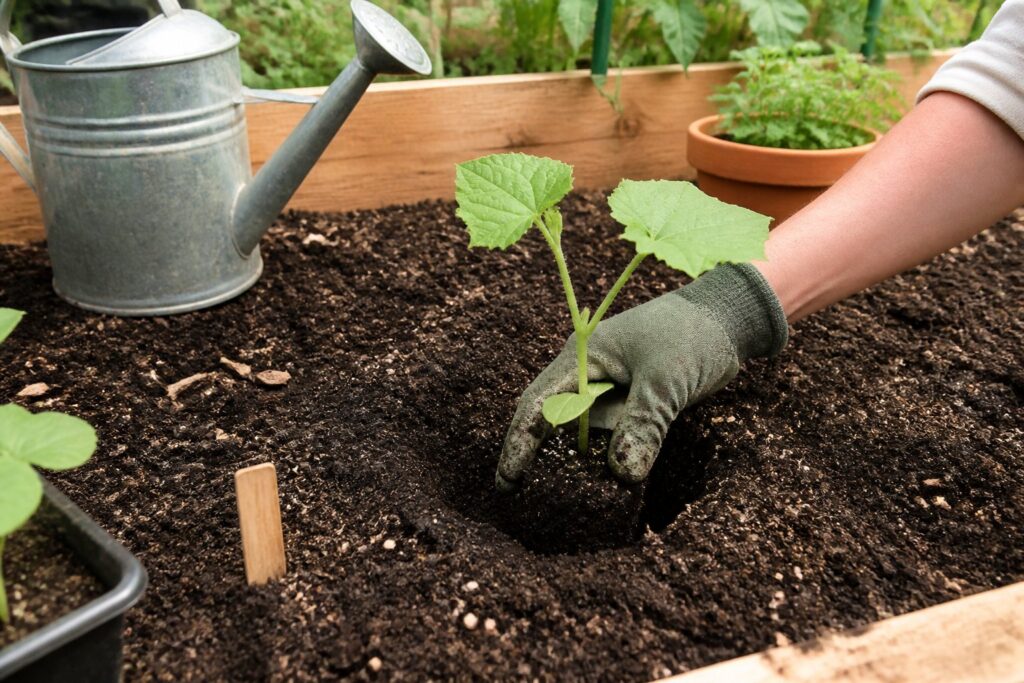
When to plant cucumbers depends on warmth more than the calendar. Cucumbers are warm-season plants: cold soil slows roots, chills seedlings, and can turn an early planting into a long recovery. The right window is the point when frost risk has eased, soil is warming, and you can keep the young plants evenly watered. In a mild climate, that window may arrive early; in a short season, a protected start can make the difference.
This guide turns those ideas into a planting plan for direct sowing, indoor starts, succession crops, and late-season harvests. Use the complete cucumber guide for care after planting and the trellis guide before vines begin to run.
Use soil temperature and frost together
Average last-frost dates are useful reference points, but cucumbers do not respond to dates alone. Check whether the soil is warming reliably and whether the forecast includes a hard freeze. A warm afternoon followed by several cold nights can still produce poor establishment. Dark mulch or a raised bed may warm sooner, while a low, wet garden can remain cold longer.
| Signal | What it tells you | Planting decision |
|---|---|---|
| Hard frost still likely | Young vines can be damaged or killed. | Wait or use a removable protection plan. |
| Soil cold and wet | Roots establish slowly and disease risk rises. | Delay, improve drainage, or warm the bed. |
| Warm soil and mild nights | Seeds and transplants can begin active growth. | Plant a small first sowing and monitor it. |
| Hot weather arriving soon | Young plants can dry rapidly after transplanting. | Water consistently and provide temporary relief. |
Direct sowing outdoors
Direct sowing avoids transplant shock and is straightforward once the soil is warm. Prepare a fine bed, make shallow planting holes or a short furrow, and sow according to the packet, often around one-half to one inch deep. Leave the final spacing the variety requires rather than filling every inch of bed. Water gently so seed stays in place.
Keep the surface evenly moist until seedlings emerge. A crusted or dry seedbed can create gaps even when the weather is otherwise suitable. Once plants have several true leaves, thin crowded spots and guide vines toward their support. If you plan to grow on a trellis, install it before the plants need it.
Starting cucumbers indoors
Indoor starts can extend a short season, but cucumbers dislike root disturbance and outgrow small pots quickly. Sow into individual containers only a short time before outdoor planting, using the packet’s transplant timing as a guide. Keep seedlings bright and avoid a long, weak period in a dim window. Harden them gradually by increasing outdoor exposure over several days.
Transplant on a calm, mild day. Water the containers first, slide plants out without pulling the stem, and set them at the same depth unless the variety’s instructions say otherwise. Protect from strong wind and cold nights while roots settle. Indoor starts are a tool for timing, not a requirement for every garden.
Plan successive plantings
Cucumber plants can slow or decline after a heavy early harvest. In a long season, sowing a second small batch several weeks after the first can provide younger vines later. Make sure the second planting has enough time to mature before your likely first fall frost or the point when nights become too cool.
Succession planting works best when it is written into the bed plan. Reserve a section, refresh the soil, and keep the second sowing away from the shade and disease pressure of an exhausted vine. Do not plant new seedlings where a diseased plant was removed without addressing the underlying problem.
Timing in hot climates
In hot regions, the planting season may include an early spring crop and a late-summer crop rather than a midsummer crop. High soil temperatures can reduce germination, while extreme heat can cause flowers to drop and fruit to become misshapen. Use afternoon shade, mulch, and consistent irrigation where practical, but do not enclose plants in a cover that traps excessive heat.
Pick varieties that match your local season. A heat-tolerant or disease-resistant option from a regional supplier may be more useful than a variety chosen only for its catalog description. Local extension guidance is particularly helpful where seasons are very different from the general calendar.
Timing in short seasons
In a short growing season, start with the earliest suitable variety and prepare the bed before planting day. Black plastic or landscape fabric can warm soil, but it must be managed so roots do not overheat and water can reach them. A low tunnel or row cover may protect young plants from cool nights; vent it as soon as daytime temperatures rise and open it for pollinators when needed.
Do not rush a transplant into cold ground simply because the calendar says it is time. A week of warm, active growth often beats two weeks of stalled growth after an early planting.
Choose timing by the harvest you want
| Goal | Timing approach | Trade-off |
|---|---|---|
| Early fresh cucumbers | Use an early variety or protected start. | Needs closer attention to cold and hardening. |
| Steady summer harvest | Plant once soil is warm and harvest frequently. | Vines need continuous water and support. |
| Late-season crop | Count backward from the likely end of warm weather. | Shorter days and cool nights slow growth. |
| Pickling supply | Use successive sowings so fruit does not arrive all at once. | Requires labels and regular picking. |
Common timing mistakes
- Planting after a warm day while nights remain cold.
- Starting seeds indoors too early and keeping root-bound plants for weeks.
- Ignoring a wet, cold bed because the air feels warm.
- Putting a second sowing into the shade of a mature vine.
- Leaving a row cover on through flowering and blocking pollinators.
- Using one national date instead of local frost and weather patterns.
A planting-day checklist
- Confirm the frost forecast and soil condition.
- Choose a sunny site and prepare loose, well-drained soil.
- Install trellis or supports before sowing if vines will climb.
- Sow or transplant at the recommended depth and spacing.
- Water gently and mark the date and variety.
- Check moisture daily until emergence or transplant recovery.
- Plan the next sowing only if the remaining season supports it.
Choose the planting method that fits your season
Direct sowing is usually the simplest option once soil is reliably warm. Cucumbers dislike root disturbance, so if you start indoors, use individual pots and transplant while plants are young. Harden seedlings for about a week by increasing outdoor exposure gradually, then plant in late afternoon and water the root ball in thoroughly. A short row cover can buffer cool nights, but uncover plants when flowers open so pollinators can reach them.
| Situation | Best approach | Timing cue |
|---|---|---|
| Long, warm season | Direct sow in the bed | Soil is around 60°F (16°C) or warmer and nights are settled. |
| Short season | Start one plant per pot | Sow indoors roughly 3–4 weeks before the safe outdoor window. |
| Cool spring with a tunnel | Transplant under protection | Use a cover until nights are mild; ventilate on sunny days. |
| Late-summer gap | Sow a quick second crop | Count backward from the first expected cool weather using the variety’s days to maturity. |
Succession sowing and weather checks
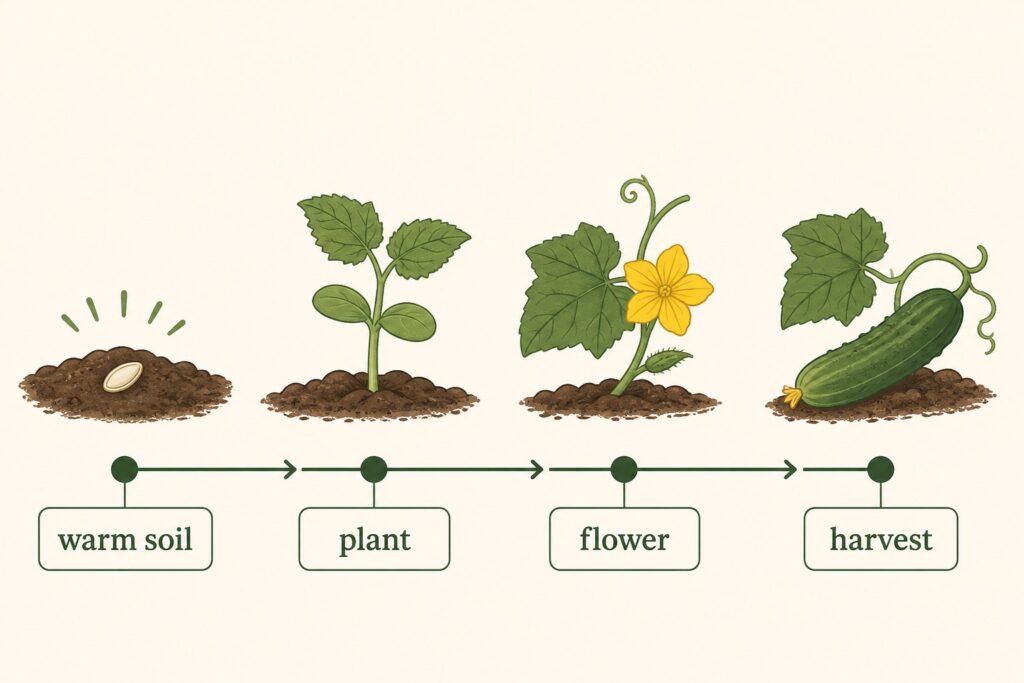
For a longer harvest, sow a small second batch rather than putting every seed in at once. The second sowing can fill gaps left by cucumber beetle damage or a plant that becomes tired early. Keep a simple note of sowing date, variety, first flower, and first harvest; those observations are more useful for next year than a generic calendar. A forecasted cold snap is a reason to delay a sowing or prepare protection, not a reason to move seed into cold, wet soil.
Spacing and support also influence timing. Crowded plants dry slowly after rain, while a trellised row warms and dries faster. Use the trellis guide to prepare support before planting, and use the complete cucumber guide for soil and watering details. The Cucumbers hub keeps the seasonal resources together.
Planting-day checklist
- Confirm the soil is warm, crumbly, and not waterlogged.
- Water pots or the seed row before handling roots.
- Label varieties and record the sowing date.
- Install trellis posts before vines need them.
- Protect seedlings from wind and cold, then remove covers for pollination.
Frequently asked questions
Can I plant cucumbers before the last frost?
It is risky in an unprotected bed. Wait for a reliable warm window or use a removable protection system that still allows ventilation and pollination when needed.
How long after transplanting before cucumbers grow?
Healthy starts may pause briefly while roots settle. Cold soil, root damage, wind, and inconsistent moisture can extend that pause.
Can cucumbers be planted in fall?
In mild climates, yes, if the crop has enough warm days left. Count backward from the likely end of warm weather and choose a suitable quick variety.
Return to the Growing Cucumbers hub for the full crop plan.
Additional questions
Can I plant cucumbers after a light frost?
Wait. A light frost can kill tender foliage even if the afternoon feels warm. Plant after the frost risk has passed or use a reliable cover that protects the entire plant and soil.
Is midsummer too late?
Not automatically. In a long, warm season, a fast variety can produce a useful late crop. Check the days to maturity against your expected first cool nights and keep young plants evenly watered while they establish.
