

Tired of your cucumber plants sprawling all over the place? Ever wondered if there’s a better way to grow them? Imagine having fresh cucumbers at your fingertips without taking up much space in your garden. Sounds intriguing, doesn’t it?
Picture this: you walk out to your backyard and see lush, green cucumbers growing vertically, neatly stacked one above the other. No more bending down to search for hidden cucumbers in the tangle of vines. Exciting, right?
Benefits of Growing Cucumbers Vertically
Vertical gardening offers various advantages for growing cucumbers compared to traditional methods:
- Space Efficiency: Vertical growth maximizes your garden space, perfect for smaller yards or urban settings.
- Improved Air Circulation: Helps prevent disease and promotes overall plant health.
- Easier Harvesting: Cucumbers are visible and within reach, allowing for convenient picking.
- Reduced Pest Damage: Elevated positions can deter pests like ground-dwelling insects.
- Uniform Growth: Cucumbers develop straighter, making them more visually appealing.
| Statistics | |
|---|---|
| 70% | of diseases in plants reduced with vertical gardening |
| Up to 50% | increase in crop yields achieved |
Choosing the Right Support Structures
When choosing support structures for your vertical cucumber garden, consider the following factors:
- Sturdiness: Opt for durable materials that can withstand the weight of growing cucumbers without bending or breaking.
- Height: Ensure the support structure is tall enough to accommodate the vertical growth of cucumbers and prevent them from trailing on the ground.
- Spacing: Provide adequate distance between the support structures to allow room for each cucumber plant to thrive without overcrowding.
- Versatility: Select support structures that are adjustable or customizable to meet the specific needs of your cucumber plants as they grow.
- Material: Choose materials like trellises, cages, or stakes based on your space constraints and gardening preferences.
Different support structures offer unique benefits, such as:
- Trellises: Ideal for vertical growth, they provide support and encourage cucumbers to grow upwards, saving space in your garden.
- Cages: Sturdy structures that help keep cucumber plants off the ground, reducing the risk of damage from pests or diseases.
- Stakes: Simple and cost-effective support for individual cucumber plants, offering stability as they grow vertically.
Selecting the right support structure is crucial for the success of your vertical cucumber garden. By considering factors like sturdiness, height, spacing, versatility, and material, you can create an optimal environment for your cucumbers to thrive and yield bountiful harvests.
Selecting the Perfect Cucumber Varieties
When selecting cucumber varieties, consider your climate and space availability.
- Determinate cucumbers suit smaller spaces and containers.
- Indeterminate cucumbers thrive in larger spaces and grow vigorously.
For a vertical garden, choose compact or vining cucumber varieties.
- Compact cucumbers are ideal for limited spaces.
- Vining cucumbers require ample vertical support for growth.
Select disease-resistant cucumber varieties to ensure a healthy harvest.
- Look for varieties resistant to common cucumber diseases like powdery mildew.
- Resistant varieties reduce the need for chemical treatments.
Consider the flavor profile you prefer.
- Opt for bitter-free varieties if you dislike bitter cucumbers.
- Traditional varieties offer classic cucumber taste.
Choosing hybrid or heirloom cucumber varieties depends on your gardening goals.
- Hybrid cucumbers offer disease resistance and consistent yields.
- Heirloom cucumbers preserve historic flavors and characteristics.
Experiment with different cucumber varieties to find your favorites for vertical gardening.
| Data | Values |
|---|---|
| Determinate Cucumbers | Small spaces |
| Indeterminate Cucumbers | Larger spaces |
| Disease-resistant | Healthy plants |
| Bitter-free varieties | Taste preference |
| Hybrid cucumbers | Disease resistance |
| Heirloom cucumbers | Historic flavors |
Setting Up Your Vertical Cucumber Garden
When setting up your vertical cucumber garden, choose a sunny spot with at least 6-8 hours of sunlight daily to promote healthy growth. Ensure your vertical structure, whether it’s a trellis, fence, or cage, is sturdy and can support the weight of growing cucumbers.
Recommended Products

Space-Saving Tomato Planter with Trellis: Integrated with rust-resistant stainless steel rods that support tomatoes, cucumbers, beans, and climbing plants; the planter box has 10.6 x 10.6 x 7.3 inch internal dimensions and can hold 3.5 gallons of soil, ideal for patios, balconies, decks, and small gardens
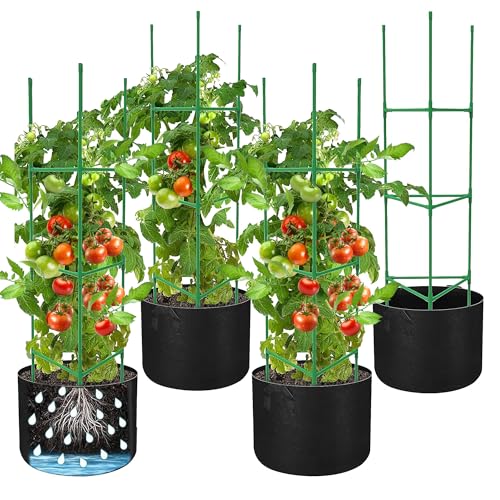
Planter Bag: Our garden tomato cages come with 4 pcs grow bags, which are made of quality felt material, water permeability is good, will not cause the plant to wither due to water accumulation, and designed with 2 carrying handles for easy movement.
Selecting the Right Containers
- Opt for deep containers to allow for proper root growth.
- Ensure the containers have good drainage to prevent waterlogging.
Preparing the Soil
- Use a well-draining soil mix rich in organic matter.
- Add compost to provide essential nutrients for your cucumber plants.
Planting Your Cucumber Seeds
- Plant cucumber seeds 1 inch deep in the soil.
- Space seeds 6 inches apart to give each plant enough room to grow.
Watering and Maintenance
- Water cucumbers consistently to keep the soil moist but not waterlogged.
- Check for pests regularly and take necessary measures to protect your plants.
- As your cucumbers grow, guide the vines upward on the trellis or support structure.
- Prune excess foliage to promote airflow and prevent disease.
Maintaining and Harvesting Your Vertical Cucumber Crop
Growing cucumbers vertically has many benefits, including easier maintenance and harvesting of your crop. By following these tips, you can ensure a successful yield and enjoy fresh cucumbers all season long:
- Consistent Care: Regularly check your plants for pests and diseases. Address any issues promptly to maintain plant health.
- Watering Schedule: Maintain a consistent watering schedule to keep the soil moist but not waterlogged. Cucumbers need plenty of water, especially during hot weather.
- Harvesting: Harvest cucumbers when they reach the desired size. Check your plants daily during peak growing season as cucumbers can quickly grow to an oversized stage.
| Data | Value |
|---|---|
| Optimal Harvest | 6-8 inches long |
| Ideal Frequency | Every 2-3 days |
| Growing Season | 50-70 days |
- Pruning: Regularly prune excess foliage to improve air circulation and sunlight exposure, which can help prevent disease.
- Support Maintenance: Ensure your vertical structure is stable and provides adequate support for growing vines. Check for any signs of weakness or damage throughout the season.
- Fertilization: Consider feeding your cucumber plants with a balanced fertilizer to promote healthy growth and fruit production.
- Enjoying the Fruits of Your Labor: Once harvested, cucumbers can be used in salads, pickles, or enjoyed fresh as a healthy snack.
Start implementing these practices to maintain and harvest a successful vertical cucumber crop in your garden.
Conclusion
You’re now equipped with the knowledge to grow cucumbers vertically successfully. Remember to provide consistent care, water regularly, and harvest with care. Follow the guidelines for optimal harvest size, watering frequency, pruning, support maintenance, and fertilization. By implementing these tips, you’ll ensure a bountiful cucumber yield and get to savor the taste of fresh cucumbers all season long. Happy gardening!
Frequently Asked Questions
How often should I water my cucumber plants in vertical gardening?
In vertical gardening, water cucumber plants consistently and deeply to keep the soil moist but not waterlogged. Water them at least once a day, adjusting as needed based on weather conditions.
What is the optimal harvest size for cucumbers in vertical gardening?
For cucumbers in vertical gardening, harvest them when they reach about 6-8 inches in length. This size ensures that the cucumbers are flavorful, crisp, and have good texture.
Do I need to prune my cucumber plants in vertical gardening?
Yes, prune cucumber plants in vertical gardening to encourage air circulation, reduce disease risk, and promote better fruit production. Remove any yellow or diseased leaves regularly.
How should I support my cucumber plants in vertical gardening?
Support cucumber plants in vertical gardening using trellises, cages, or stakes to keep the vines off the ground, save space, and prevent fruit rot. Train the vines as they grow and adjust the support as needed.
What fertilization schedule should I follow for cucumbers in vertical gardening?
Fertilize cucumber plants in vertical gardening every 2-3 weeks with a balanced fertilizer or compost to provide essential nutrients for healthy growth and bountiful harvests.
How can I enjoy the cucumbers harvested from vertical gardening?
Enjoy fresh cucumbers from vertical gardening raw in salads, sandwiches, or as healthy snacks. Experiment with different recipes like cucumber salads, pickles, or refreshing drinks like cucumber-infused water.
