

Ever wondered how to save those cucumber seeds for your next planting season? Imagine having a bountiful supply of fresh cucumbers straight from your garden. With our simple guide on harvesting cucumber seeds, you can turn that vision into reality.
Have you ever found yourself enjoying a delicious cucumber salad only to realize you’ve run out of seeds for next year’s crop? Don’t worry, you’re not alone. Many gardeners face this dilemma. But fret not, as we’re here to show you the easy way to harvest and store cucumber seeds for a continuous supply of homegrown goodness.
Selecting the Right Cucumbers
When harvesting seeds from cucumbers, choose cucumbers that are fully ripe. Look for cucumbers that have reached their maximum size on the vine. Avoid using underdeveloped cucumbers for seed harvesting as they may not produce viable seeds.
Select heirloom or open-pollinated cucumber varieties for seed saving. These varieties will produce seeds that grow into plants with the same traits as the parent plant. Avoid using hybrid cucumber varieties for seed saving as the seeds may not result in consistent characteristics in the next generation.
Look for healthy, disease-free cucumbers to harvest seeds from. Inspect the cucumbers for any signs of damage or disease before selecting them for seed saving. Healthy cucumbers are more likely to produce quality seeds for future planting seasons.
Remember that the cucumbers you choose for seed harvesting will directly impact the quality and success of the next cucumber crop in your garden. By selecting the right cucumbers, you set the foundation for a fruitful and thriving cucumber harvest in the future.
| Data | Value |
|---|---|
| Word Limit | 250 |
Allowing Cucumbers to Ripen
When it comes to harvesting seeds from cucumbers, ensuring that the cucumbers are fully ripe is crucial. By allowing cucumbers to ripen fully on the vine, you maximize seed viability and ensure a successful harvest. Here’s how you can do it effectively:
- Check for Maturity: Look for uniform coloration and firmness in the cucumbers before harvesting.
- Monitor Growth: Keep an eye on the size of the cucumbers as they grow to determine when they are ready for seed harvesting.
- Time it Right: Wait until the cucumbers reach their optimal size and mature fully on the vine before proceeding with seed extraction.
By allowing cucumbers to ripen properly, you set the stage for high-quality seeds that will contribute to the success of your future cucumber crop.
Harvesting Mature Cucumbers
When Harvesting Mature Cucumbers, ensure they reach the right size and color before collecting the seeds. Here’s what you should know:
- Size: Pick cucumbers that are at least 6-8 inches long for optimal seed development.
- Color: Look for a dark green hue, indicating full maturity.
- Firmness: Gently squeeze the cucumber; it should be firm but not rock-hard.
To harvest the seeds, follow these steps:
- Cutting: Use a sharp knife to slice the cucumber lengthwise.
- Removing Seeds: Scoop out the seeds from the cucumber using a spoon.
- Cleaning: Rinse the seeds in a strainer under cool water to remove any pulp.
- Drying: Place the seeds on a paper towel and let them air dry for a few days.
By harvesting cucumbers at the right time and handling the seeds properly, you’ll set the stage for a successful future crop.
Recommended Products

【Durable, Will Last Long】Made of food grade premium-grade stainless steel, durable and strong, not easy to bend.
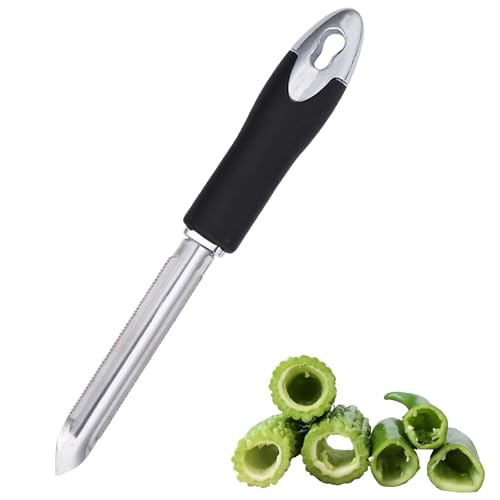
Well Made: The jalapeno pepper corer is made of stainless steel, durable & sturdy, will last long

Extracting and Cleaning the Seeds
When extracting cucumber seeds, it’s essential to use fully mature cucumbers for optimal seed collection. Look for cucumbers that are 6-8 inches long, dark green in color, and firm but not rock-hard.
Here are the steps to efficiently extract and clean the seeds:
- Cutting the cucumber lengthwise: Slice the cucumber open lengthwise using a sharp knife.
- Scooping out the seeds: Use a spoon to scoop out the seeds from the cucumber’s center.
- Rinsing the seeds: Place the extracted seeds in a fine-mesh strainer and rinse them under cool water to remove any remaining pulp.
- Air-drying the seeds: Spread the cleaned seeds in a single layer on a paper towel or a screen to air-dry them completely before storage.
Following these steps carefully will help ensure that you have high-quality seeds ready for your future cucumber crops.
Storing Cucumber Seeds
After extracting and cleaning the cucumber seeds, it’s crucial to store them properly to maintain their viability for future use.
Container Selection
- Use paper envelopes or glass jars for storing cucumber seeds.
- Avoid plastic bags, as they can trap moisture.
Storage Conditions
- Store seeds in a cool, dry place, away from direct sunlight.
- Maintain a consistent temperature to prevent fluctuations that can reduce seed viability.
Labeling
- Label each container with the seed variety and date of collection to keep track of them accurately.
Longevity
- Cucumber seeds can remain viable for up to 5 years if stored in optimal conditions.
- To test seed viability, conduct a germination test before planting them.
Properly storing your cucumber seeds ensures that you’ll have high-quality seeds ready for future planting seasons.
Conclusion
Now that you’ve learned the essential steps for harvesting cucumber seeds, remember to select fully mature cucumbers and store the seeds in paper envelopes or glass jars. Proper storage conditions, such as a cool, dry place away from sunlight, can help maintain seed viability for up to 5 years. Don’t forget to label your containers with the seed variety and collection date. Before planting, conduct a germination test to ensure the seeds are viable. By following these guidelines, you’ll be equipped with high-quality cucumber seeds for successful planting seasons ahead. Happy gardening!
Frequently Asked Questions
Q: Why is it important to use fully mature cucumbers for seed collection?
A: Fully mature cucumbers contain seeds that are fully developed and viable for germination, ensuring successful harvesting and storage.
Q: How should I extract and clean cucumber seeds?
A: Cut open the cucumber, scoop out the seeds, and rinse them under running water to remove excess pulp and debris.
Q: How should cucumber seeds be stored?
A: Store cucumber seeds in paper envelopes or glass jars in a cool, dry place away from sunlight to maintain seed viability.
Q: Why should I label seed containers with variety and collection date?
A: Labeling containers helps you keep track of seed types and age, ensuring proper organization and seed viability.
Q: How long can cucumber seeds remain viable under proper storage?
A: Cucumber seeds can remain viable for up to 5 years when stored correctly in ideal conditions.
Q: Why should I conduct a germination test before planting?
A: Conducting a germination test ensures seed viability and helps you determine seed quality for successful planting and growth.
