

Wondering when the perfect time is to plant your cucumber plants? Have you ever found yourself eagerly waiting for those fresh cucumbers, only to be left disappointed by the results? Imagine knowing exactly when to plant them for a bountiful harvest. In this article, you’ll discover the ideal timing to sow your cucumber seeds and set yourself up for success. Ready to dive in and learn the secrets to a thriving cucumber garden?
Choosing the Right Time of Year
When choosing when to plant your cucumber plants, it’s crucial to consider the time of year. Here’s a helpful breakdown to guide you:
- Spring Planting: Optimal for cucumber plants, offering warm soil and adequate sunlight for germination.
- Late Spring to Early Summer: Ideal timing for outdoor planting, ensuring that the risk of frost has passed and the temperatures are consistently warm.
To ensure a successful cucumber harvest, aim to plant your seeds or seedlings during these periods to provide them with the best conditions for growth. Remember, the timing of planting can greatly impact the overall health and yield of your cucumber plants.
Temperature Considerations
- Soil Temperature: Aim to plant your cucumber seeds when the soil temperature reaches at least 60°F. Cucumber plants thrive in warm soil, promoting healthy germination and growth.
- Air Temperature: Ensure that the air temperature remains consistently above 70°F during the day for optimal growth. Cucumber plants are sensitive to cold temperatures, so planting during warmer weather is essential.
- Frost Risk: Avoid planting cucumber plants outdoors too early, as they are susceptible to frost damage. Late spring to early summer is generally a safe time to plant outdoors, once the risk of frost has passed.
- Sunlight Exposure: Cucumber plants require plenty of sunlight to thrive. Choose a planting location that receives at least 6-8 hours of direct sunlight daily for vigorous growth and abundant fruit production.
- Temperature Fluctuations: Sudden temperature drops can stress cucumber plants and affect their productivity. Monitor weather forecasts and protect your plants during unexpected cold spells to avoid stunted growth.
By paying attention to temperature considerations, you’ll give your cucumber plants the best chance to flourish and produce a bountiful harvest.
Soil Preparation
When preparing the soil for your cucumber plants, ensure it’s well-draining to prevent waterlogging issues that can harm the plants. Loamy soil with organic matter like compost is ideal for healthy growth.
Before planting, test the soil pH levels. Cucumber plants thrive in slightly acidic to neutral soil with a pH range of 6.0 to 7.0. Adjust pH levels if needed before planting.
Clear the planting area of any weeds or debris that can compete with your cucumber plants for nutrients. Till the soil to improve aeration and break up compacted areas.
Consider adding a balanced fertilizer or organic matter to the soil to provide essential nutrients for your cucumber plants to flourish. Mix it well into the soil before planting.
Maintain proper moisture levels in the soil. Avoid overwatering, as it can lead to root rot, but ensure the soil is consistently moist to support healthy growth.
Monitor the soil temperature to meet the requirements for optimal cucumber plant growth. Remember, a well-prepared soil sets the foundation for a successful cucumber garden.
Recommended Products

PRODUCT DETAILS: Vermont Compost Company Fort Vee Organic Potting Mix A rich, organic, compost-based potting soil that is ideal for growing your veggies, Plants, and herbs free from any harmful chemicals. Our all natural mixed organic garden soil is composed of all-natural ingredients our Plants needed to grow naturally and is a great choice for gardeners who prefer compost-based germination and growing medium. Product Weight: 20 Quarts

ONLY ORGANIC COCO COIR ENHANCED WITH NUTRIENTS! We are the ONLY Organic Coco Coir that contains enhanced nutrients. Ours coconut coir includes worm castings, mycorrhizae, kelp, and more to encourage faster, healthier growth! Feeds your plants for up to four months!
Planting Techniques
When it comes to planting cucumber plants, timing is crucial for a successful harvest. Here are some key tips to help you master the planting process:
- Planting Time: Wait until after the last frost date in your area, once the soil has warmed up to around 60-70°F.
- Spacing: Plant your cucumber seeds or seedlings about 12-24 inches apart in rows that are 3-4 feet apart. This ensures they have enough space to grow and receive adequate sunlight.
- Depth: Plant your seeds about 1 inch deep in the soil, covering them with a light layer of soil or compost.
Here are some Planting Techniques that can help you achieve a bountiful cucumber harvest:
- Direct Sowing: Sow cucumber seeds directly into the ground once the soil temperature is ideal. This method works well for varieties that do not transplant easily.
- Transplanting: Start your cucumber seeds indoors about 3-4 weeks before the last frost date. Once they have developed a few true leaves, transplant them outdoors.
Recommended Products

EASIER SEED STARTING: Our Burpee SuperSeed tray with 36 flexible pop-out cells is designed to simplify indoor seed starting for all your favorite vegetables, flowers and herbs. Just add seed starting mix, seeds, water and light to get growing! Rows are labeled alphanumerically for seedling identification with included Plant-o-Gram diagram. Tray dimensions: 11.5" x 10-3/8" x 2-1/4"

Upgraded Flexible Cells: Upgraded Silicone Seed Starter Tray with 12 flexible pop-out cells per tray. The soft silicone cells keep seedlings well protected and can be gently bent and popped out when it's time to transplant to your outdoor garden! Our seed starting trays are specifically designed to reduce stress on seedlings, so you won't damage their roots when transplanting

Promotes Healthy Root Development: Each cell measures 1.5" square by 2.25" deep, designed to promote healthy root development and ensuring your seedlings get a strong start for robust growth.
Caring for Your Cucumber Plants
Once you’ve planted your cucumber seeds, Caring for Your Cucumber Plants properly is crucial for a successful harvest. Here are some essential tips to ensure your plants thrive:
- Watering:
- Keep the soil consistently moist, especially during flowering and fruit development.
- Aim to water at the base of the plant to prevent fungal diseases.
- Fertilizing:
- Feed your cucumber plants with a balanced fertilizer to encourage healthy growth.
- Consider side-dressing with compost halfway through the growing season for an added nutrient boost.
- Weeding:
- Regularly remove weeds around your cucumber plants to reduce competition for nutrients and water.
- Mulching:
- Apply a layer of mulch around the base of the plants to retain moisture and suppress weed growth.
- Support:
- Trellising or using stakes can help support the vines as they grow, reducing the risk of fruit rotting on the ground.
- Pest Control:
- Monitor for common pests like aphids and cucumber beetles. Consider using organic pest control methods if needed.
- Disease Prevention:
- Practice crop rotation to reduce the risk of soil-borne diseases affecting your cucumber plants.
- If you notice any signs of disease, promptly remove and dispose of affected plant parts.
| Watering | Fertilizing | Support |
|---|---|---|
| Consistently moist soil is key | Feed with a balanced fertilizer | Trellising or staking can benefit |
| Water at the base to prevent fungus | Side-dress with compost mid-season | Helps prevent ground rotting |
Recommended Products
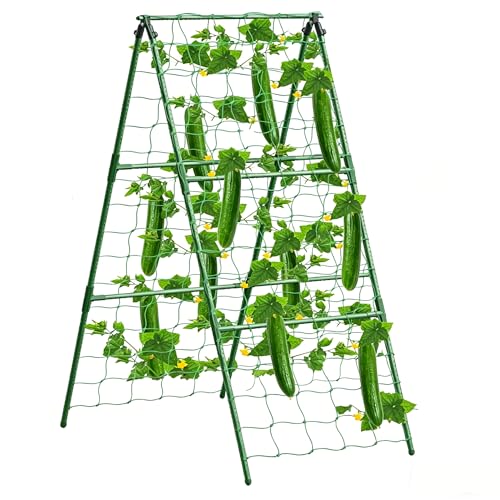
【Package included】:This Trellis for Climbing Plants Outdoor comes complete with everything you need to get started: 17pcs metal stakes, 8pcs T shape connect pipe, 2 A-shaped connectors, and a 0.9x1.8meter plant net.

🌹2 in 1 Garden Trellis -- Our plant trellis can be configured into 2 types of trellising (panel trellis & plant cage), and you also can place 2 or most panels together to form a larger trellis panel or cage. Adjustable structure plant stakes can meet your different plant supports need.

Innovative Patent-Pending Design: Our moss poles feature a unique, patent-pending design that enhances support and promotes growth for your climbing plants. This innovative approach creates the perfect environment for your plants to thrive, making plant care more effective and enjoyable
Conclusion
Now that you’ve learned about planting cucumber plants and how to care for them throughout the growing season, you’re well-equipped to nurture a bountiful cucumber harvest. Remember to maintain consistent moisture levels, provide proper fertilization, and support your plants as they flourish. By staying vigilant against pests and diseases, and implementing organic solutions when needed, you can ensure the health and productivity of your cucumber crop. With these tips in mind, you’re on your way to enjoying fresh, homegrown cucumbers straight from your garden. Happy planting!
Frequently Asked Questions
How often should I water my cucumber plants?
Water your cucumber plants consistently to keep the soil moist, especially during flowering and fruit development. Water at the base of the plant to prevent fungal diseases.
What fertilizers should I use for my cucumber plants?
Fertilize your cucumber plants with a balanced fertilizer for healthy growth. Consider side-dressing with compost mid-season to provide additional nutrients.
What are the essential practices for caring for cucumber plants?
Essential practices include weeding, mulching, and providing support through trellising or stakes. These practices help ensure healthy and productive cucumber plants.
How can I control pests on my cucumber plants?
Monitor your cucumber plants for common pests regularly. Use organic pest control methods when needed to protect your plants effectively.
How can I prevent diseases in my cucumber plants?
Prevent diseases in your cucumber plants by practicing crop rotation and promptly removing any affected plant parts. Disease prevention is crucial for the overall health of your plants.
