

Ever wondered what carrot plants actually look like in your backyard garden? Picture this: you’ve sown the seeds, watered them diligently, but now you’re left wondering if those vibrant green shoots are indeed the beginnings of your favorite root vegetable.
Characteristics of Carrot Plants
When it comes to carrot plants, there are several key characteristics to keep in mind as they grow in your garden. Here’s what you can expect:
- Foliage: Carrot plants produce feathery green leaves that resemble parsley or dill. These foliage tops are an essential part of the plant’s growth process, absorbing sunlight for photosynthesis.
- Roots: The most prized part of the carrot plant is, of course, the edible orange root below the soil. This taproot is where the plant stores nutrients and grows to its signature shape and color.
- Flowers: If left to grow past the typical harvesting time, carrot plants can produce delicate white flowers. While these flowers are lovely, most gardeners prefer to harvest the roots before this stage.
Understanding these characteristics can help you identify and care for your carrot plants as they thrive in your garden.
Recommended Products

Miracle-Gro Indoor Potting Mix for Seed Starting grows stronger roots for seeding success (vs unfed when used as directed)

NUTRIENT-RICH, NATURAL, AND ORGANIC SOIL: Grow a bountiful garden in your home with the Back to the Roots All-Purpose Natural and Organic Peat-Free 3-in-1 Seed Starting Mix, packed with the nutrients needed for your plants, flowers, and vegetables to thrive

Includes Back to the Roots Compressed Seed Starting Potting Mix that expands to 12qt of soil. A balanced pH, which means it’s truly all-purpose. Use alone or as an amendment for anything in a pot or in the ground — vegetables, flowers, herbs, and even starting seeds.
Growth Stages of Carrot Plants
When growing carrot plants, it’s essential to understand the various stages they go through as they develop. Here’s a breakdown to guide you through their growth process:
- Germination: Carrot seeds typically take around 1-3 weeks to germinate. At this stage, you’ll notice small seedlings emerging from the soil.
- Leaf Development: As the seedlings grow, they’ll start to form their distinctive feathery green foliage leaves. These leaves play a crucial role in photosynthesis.
- Root Growth: Carrot plants put most of their energy into developing their taproot, the part that we ultimately harvest. It grows deeper into the soil as the plant matures.
- Flowering: If you allow your carrot plants to continue growing without harvesting, you may be rewarded with delicate white flowers. While beautiful, this indicates that the plant is diverting energy from the taproot.
Understanding these growth stages is key to successfully cultivating healthy and flourishing carrot plants in your garden. Keep an eye on these changes to ensure your plants are developing as they should.
Identifying Carrot Plant Leaves
When Identifying Carrot Plant Leaves, keep in mind that they are pinnate, meaning the leaflets are arranged on either side of the stem.
Carrot plant leaves are feathery and have a lacy appearance, resembling fern fronds.
You can differentiate carrot plant leaves from weeds by their distinctive appearance and slender, fine texture.
Carrot leaves have a muted green color and are soft to the touch, making them easy to identify even among other plants.
Carrot plant leaves typically grow in a rosette shape, spreading out from the center of the plant.
Carrot plants are also known for their smooth, hairless leaves, which further aid in their identification.
Carrot leaves play a crucial role in the plant’s growth, as they are responsible for photosynthesis and nutrient absorption.
Recognizing Carrot Flowers
When carrot plants reach maturity, they produce flowers that are small and white. These delicate blooms form umbels, which are flat clusters of flowers that resemble an upside-down umbrella.
Recommended Products
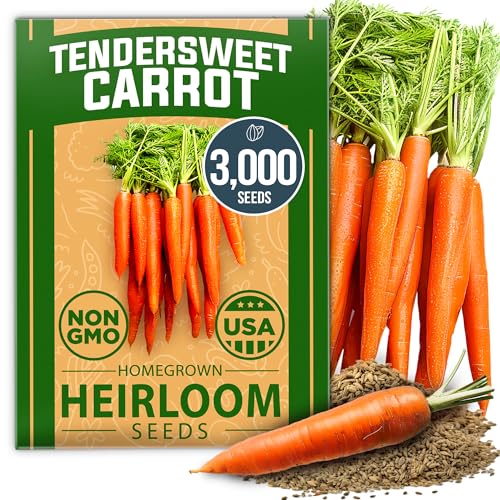
Premium Tendersweet Carrot Seeds: Authentic Open-Pollinated Premium Heirloom Seeds (USA) Non-GMO, Untreated, High Germination Rate. Phenomenal dessert Brix profile. High-impact carotene energy. An outstanding orange monolith for open ground, high ridges, and patio containers. Your garden bed is your pride.

Sweet, Coreless Roots: Heirloom carrots with tender 9-10 inches orange taproots and high sugar content. Grow in 3-10 USDA zones. Great carrots seeds for planting in any home garden.

Premium Seeds: Tendersweet heirloom carrot variety offering approximately 2600 seeds for extensive garden planting and multiple growing seasons
Identifying Characteristics:
- White petals: Carrot flowers have small petals that come together to create a delicate white blossom.
- Umbel shape: Look for the characteristic umbrella-like clusters where the flowers sprout from a central point.
- Flower stalks: The flowers sit atop long, slender stalks that emerge from the center of the plant.
Sign of Seed Development:
- After flowering: Once the flowers bloom and are pollinated, they develop into seeds.
- Green seed heads: These seeds start as small, green structures that eventually mature into brown seeds.
- Pollination: Carrot flowers play a crucial role in the pollination process, essential for seed production and future plant growth.
- Seed saving: By allowing some flowers to mature into seeds, you can collect and save them for planting future crops.
Understanding the appearance and significance of carrot flowers provides insights into the plant’s reproductive cycle and allows you to participate more actively in seed saving and next season planting.
Conclusion
Now you know that carrot plants go through a fascinating journey from tiny seeds to mature plants with delicate white flowers that eventually turn into seeds. Recognizing these flowers is key to understanding the plant’s life cycle and ensuring successful pollination for future growth. By familiarizing yourself with the appearance of carrot flowers, you can actively engage in seed saving practices and make informed decisions for your upcoming harvests. Keep an eye out for those umbrella-like clusters of white blooms as a sign that your carrot plants are on their way to producing seeds for future planting. Happy gardening!
Frequently Asked Questions
What are carrot flowers and why are they significant?
Carrot flowers are small, white blooms that signal plant maturity. They form umbrella-like clusters called umbels and develop into seeds essential for seed production and plant growth.
How do carrot flowers contribute to the plant’s reproductive cycle?
Carrot flowers play a crucial role in pollination, enabling seed production for future crops. The flowers start as green structures and mature into brown seeds, ensuring the continuation of the plant’s life cycle.
Why is it important to understand carrot flowers?
Understanding carrot flowers is key to actively participating in seed saving and planning for future crops. It provides insights into the plant’s reproductive process, allowing for better horticultural practices.
