

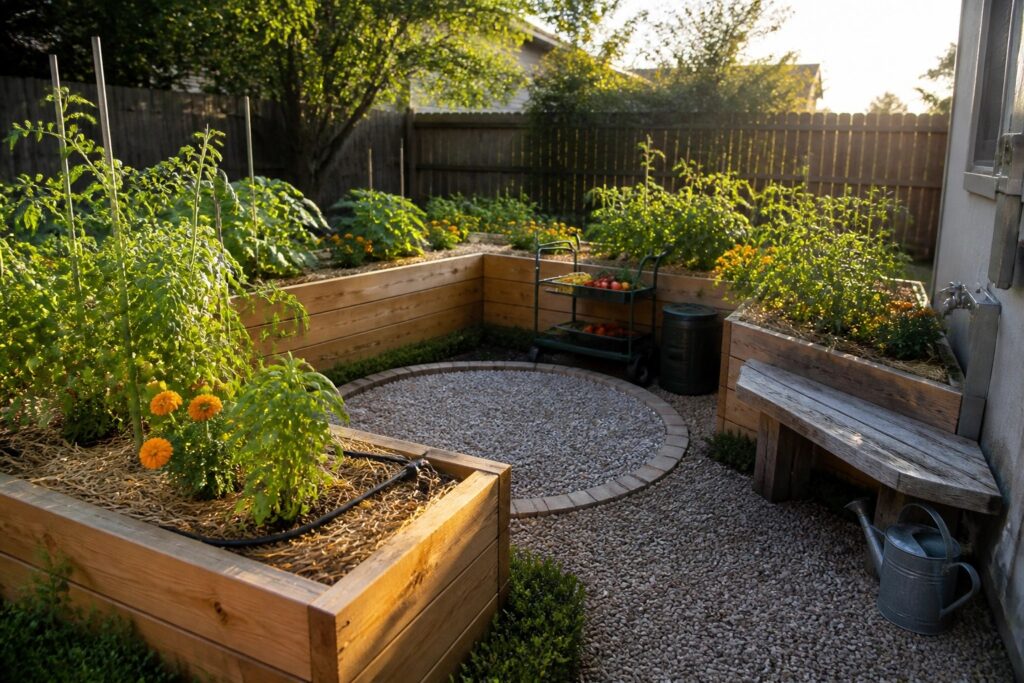
When planning raised beds, the arrangement of the beds themselves often decides how practical the whole garden feels day to day.
Access matters more than I expected at first.
Paths that allow easy movement without crowding the edges help me stay on top of maintenance instead of fighting through overgrown areas later on.
I usually notice right away if a layout leaves some plants hard to reach once everything starts growing tall.
Trying out a few different patterns has shown me which ones support better airflow and simpler harvesting without extra effort.
Arrange Raised Beds Around A Central Path
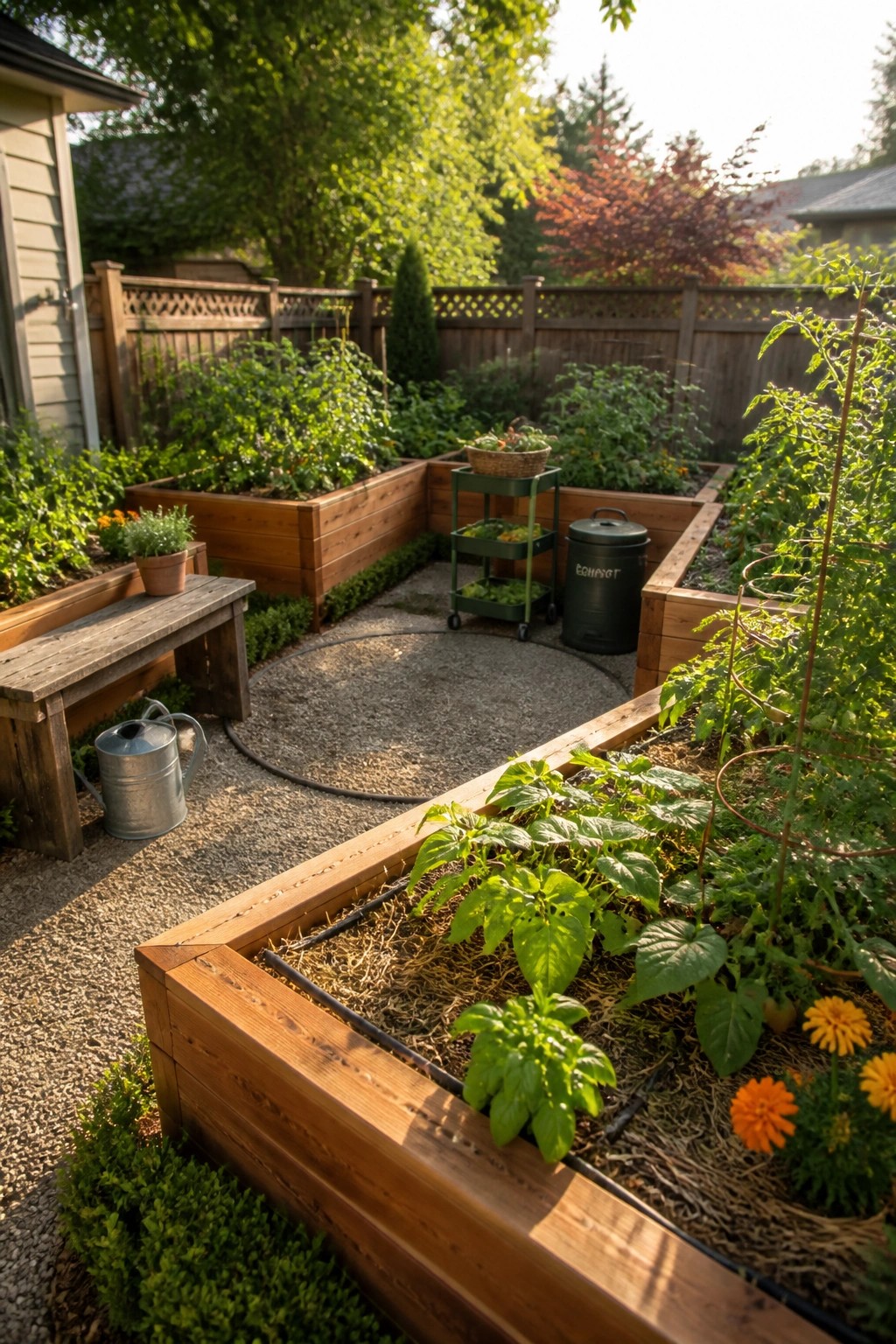
Placing raised beds around a central gravel path makes the whole garden easier to work in. You can move between the beds without compacting the soil, and it gives you a clear route to reach every plant when you need to water or pick vegetables.
This layout suits smaller yards that still need several beds. Keep the path wide enough for a wheelbarrow or cart, and use soaker hoses along the edges so watering stays simple. The beds themselves stay neat with a layer of mulch on top.
Raised Beds With Stone Borders
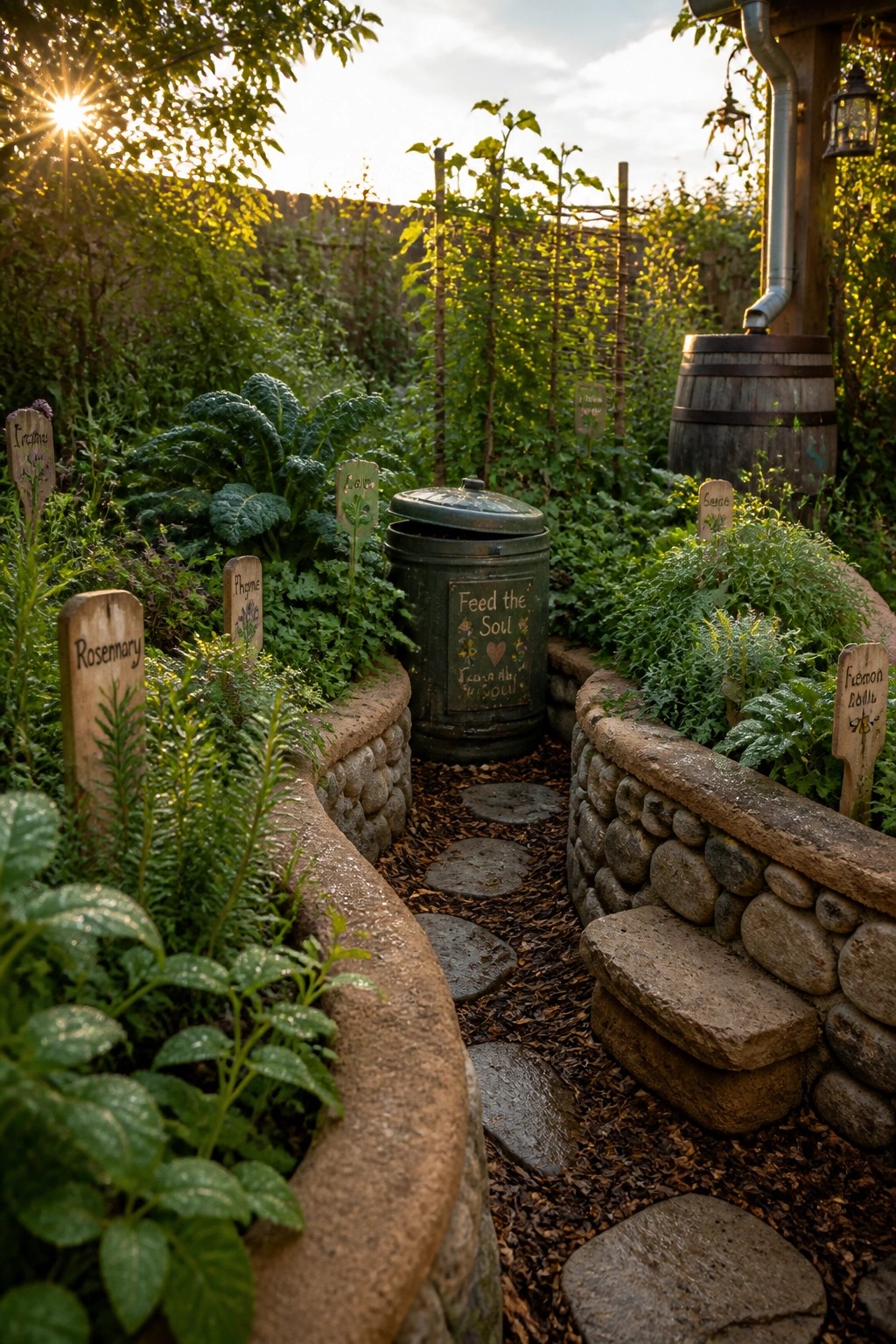
Stone borders give raised beds a solid edge that holds everything in place while making the beds easier to reach. The low walls let you lean in without compacting the soil, which helps keep plants healthy and harvests coming steadily.
This setup works best in long or narrow garden spaces where a central path needs to stay clear. Keep the beds no more than three feet wide so you can tend both sides from the walkway without extra stepping stones.
Raised Beds On Multiple Levels
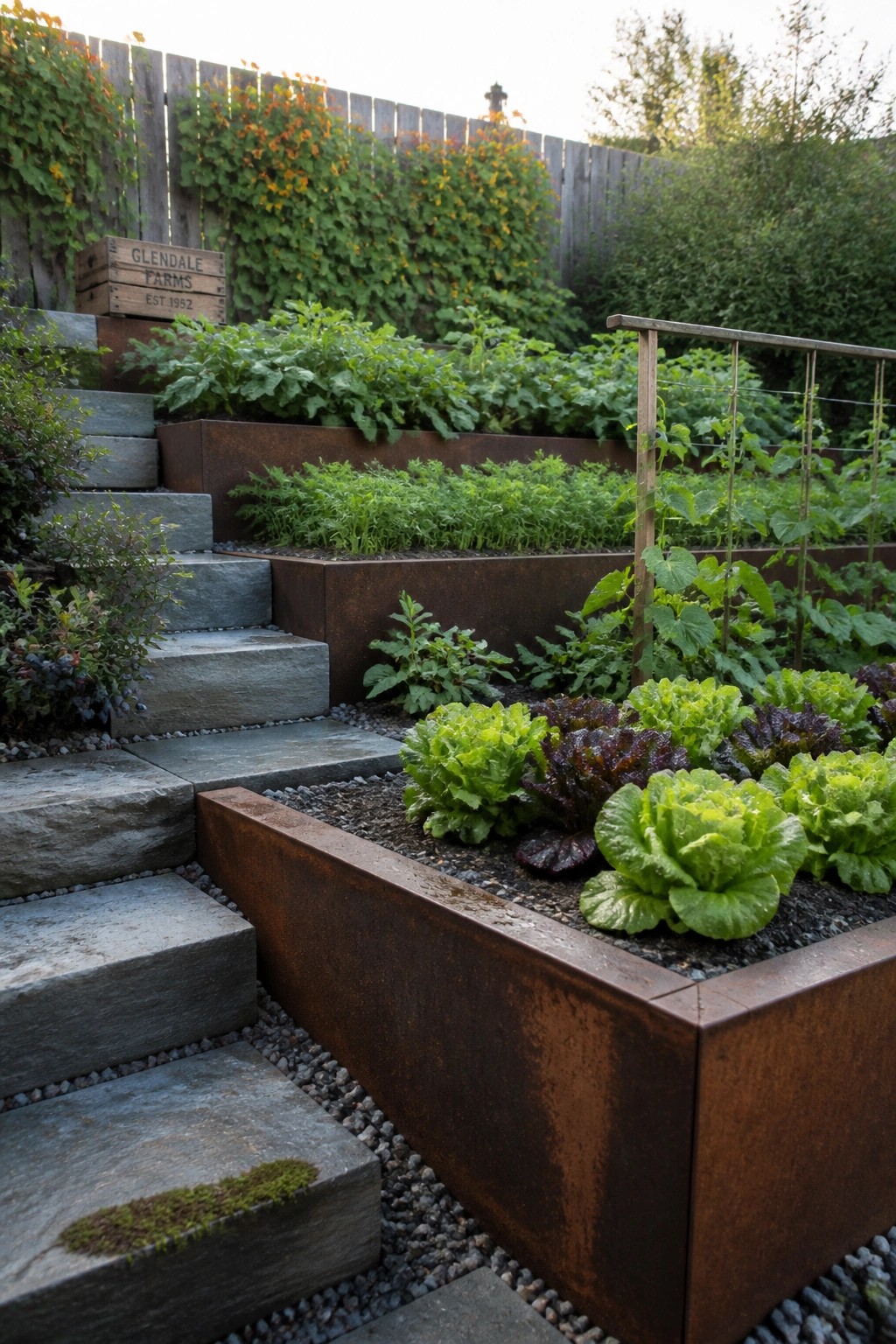
Raised beds at different heights make a lot of sense on a sloped yard. They keep the soil contained, stop erosion, and let you reach the plants without awkward bending or stepping over rows.
This works best on properties with a noticeable drop from one end to the other. Metal sides hold the soil well on each level, and simple stone steps between the beds give you a clear path so you can harvest or water without compacting the soil.
Create Rows Of Raised Beds With Paths Between Them
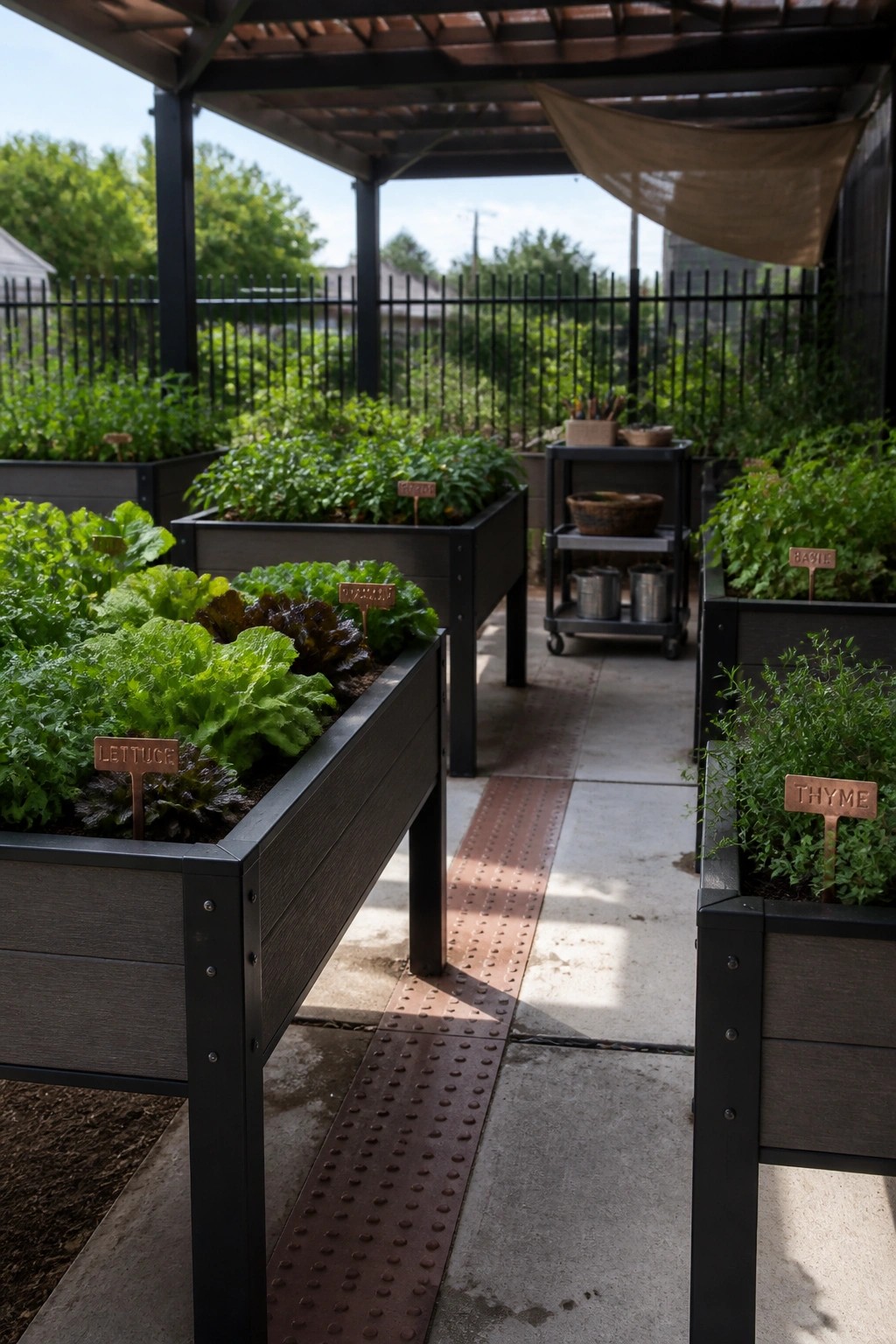
Raised beds work best when you can reach every plant without stepping on the soil. Placing them in straight rows with a path running down the middle makes watering, weeding, and harvesting much simpler. The beds stay neat, and you avoid compacting the soil each time you walk through.
This layout suits a side yard, a narrow lot, or any space where you need to move equipment or a wheelbarrow. Keep the path at least two feet wide so you can kneel comfortably and reach both sides without strain. A textured strip down the center also helps in wet weather.
Raised Beds In A Grid Layout
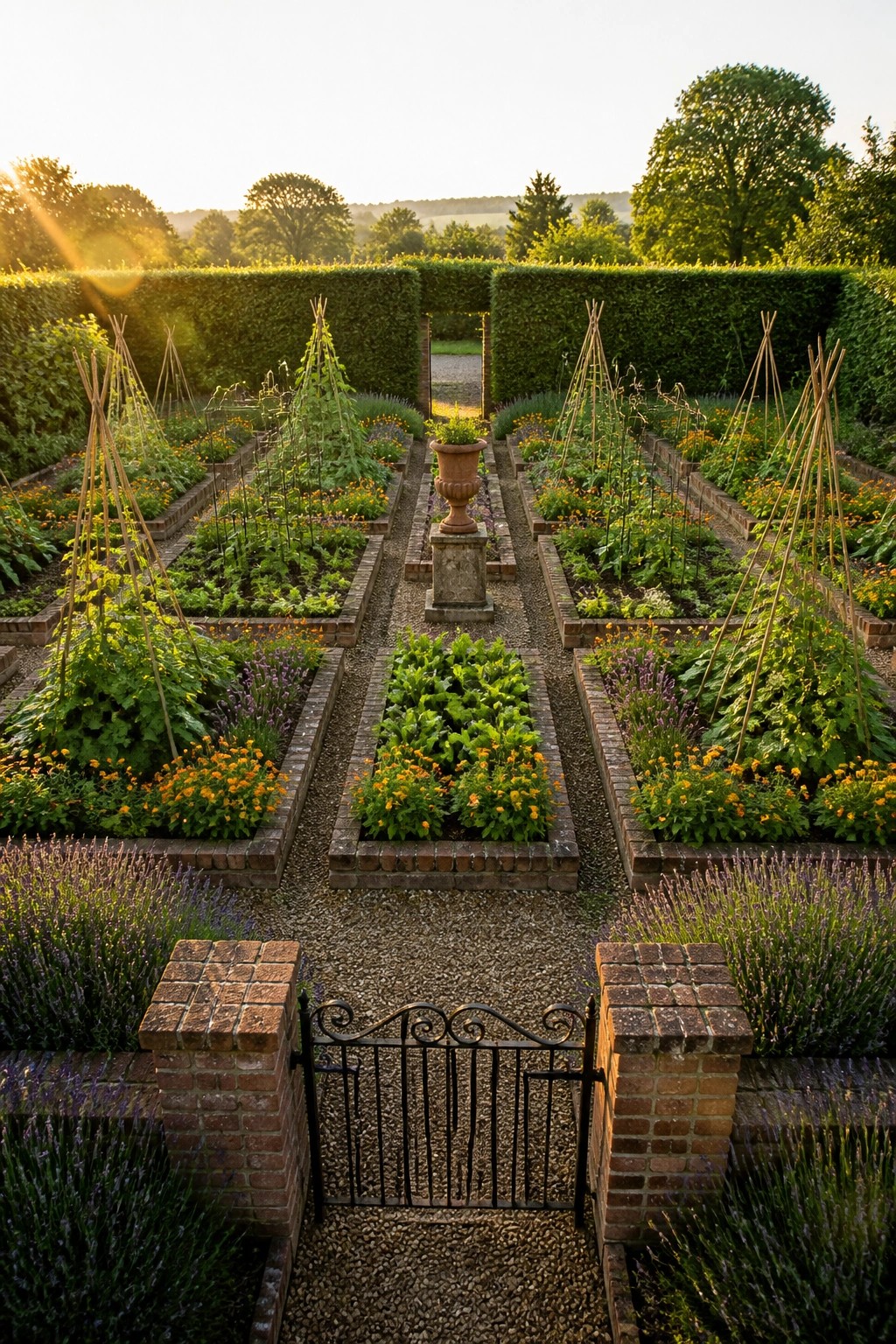
A grid of raised beds with paths running between them makes it much easier to reach every plant without stepping on the soil. The layout keeps beds narrow enough to work from the sides, which helps with weeding, watering, and harvesting without extra effort.
This setup works well in a sunny backyard where you want a tidy vegetable garden that still feels productive. Brick edging and gravel paths keep the beds defined and the ground dry underfoot, though you may need to adjust path width if you use a wheelbarrow often.
Line Raised Beds Along a Deck
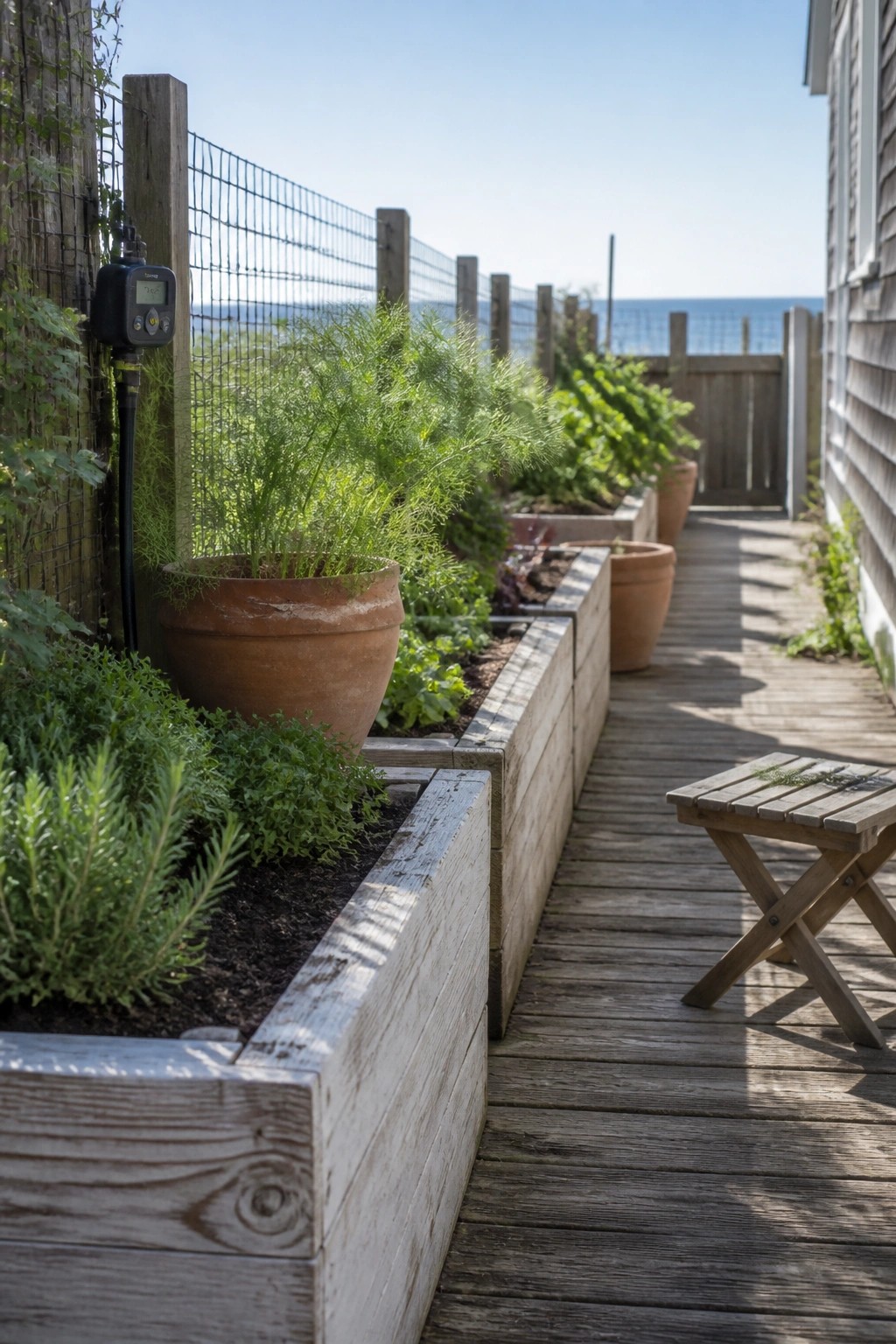
Raised beds placed right next to a deck or path make daily care and harvesting much simpler. You can reach across without stepping into the soil, which keeps the beds neat and reduces compaction over time.
This layout works best on narrow side yards or coastal homes where space is tight. Keep the beds no wider than about three feet so every plant stays easy to reach from the walkway.
Raised Beds Form Easy Access Paths
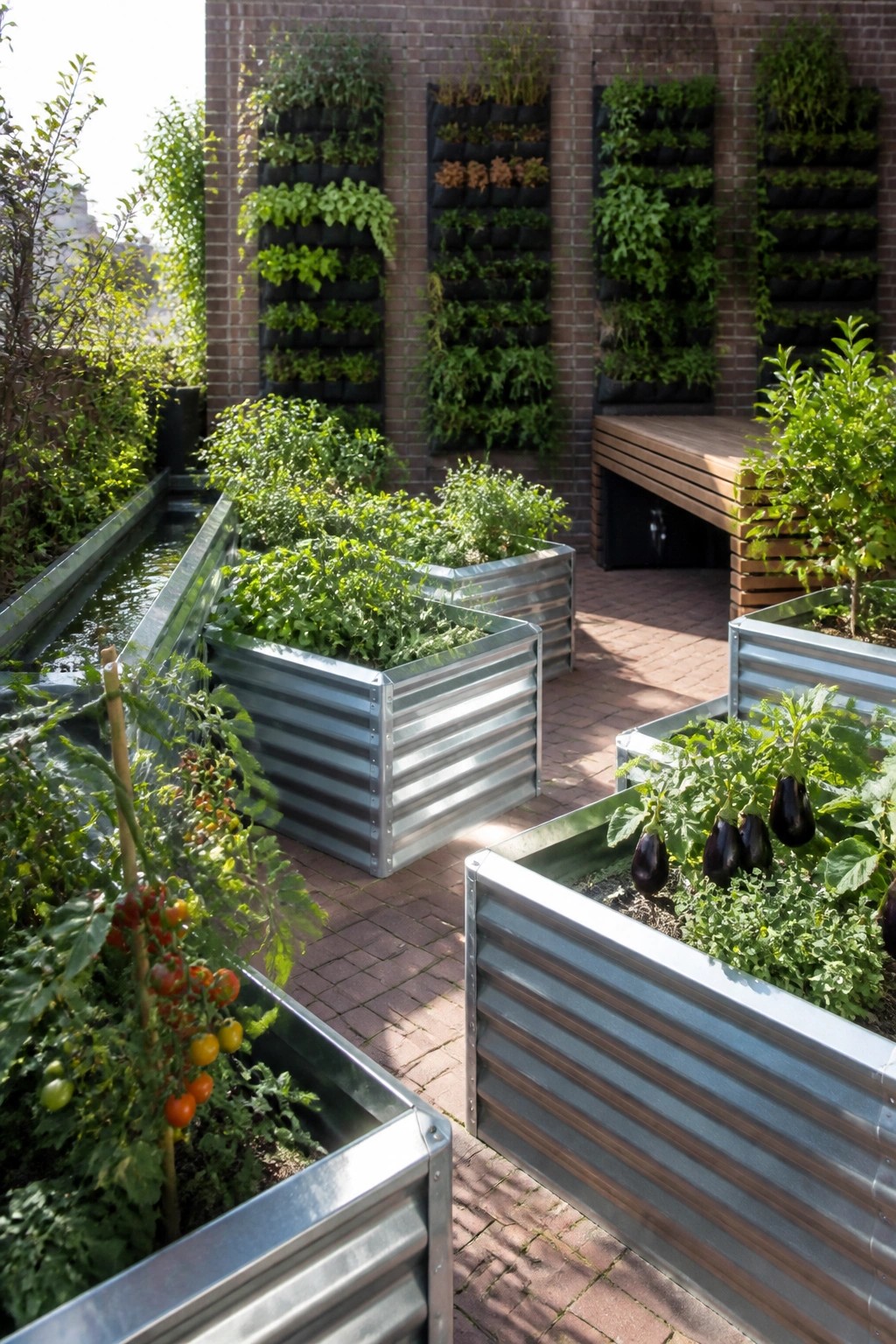
Placing raised beds in straight lines with room to walk between them makes daily care much simpler. You can reach both sides of each bed without stepping on the soil or stretching over plants.
This layout suits patios, rooftops, or narrow side yards where space is tight. Keep the beds no wider than four feet so everything stays easy to harvest, and leave at least two feet between them for a wheelbarrow or kneeling pad.
Raised Stone Beds With Gravel Paths
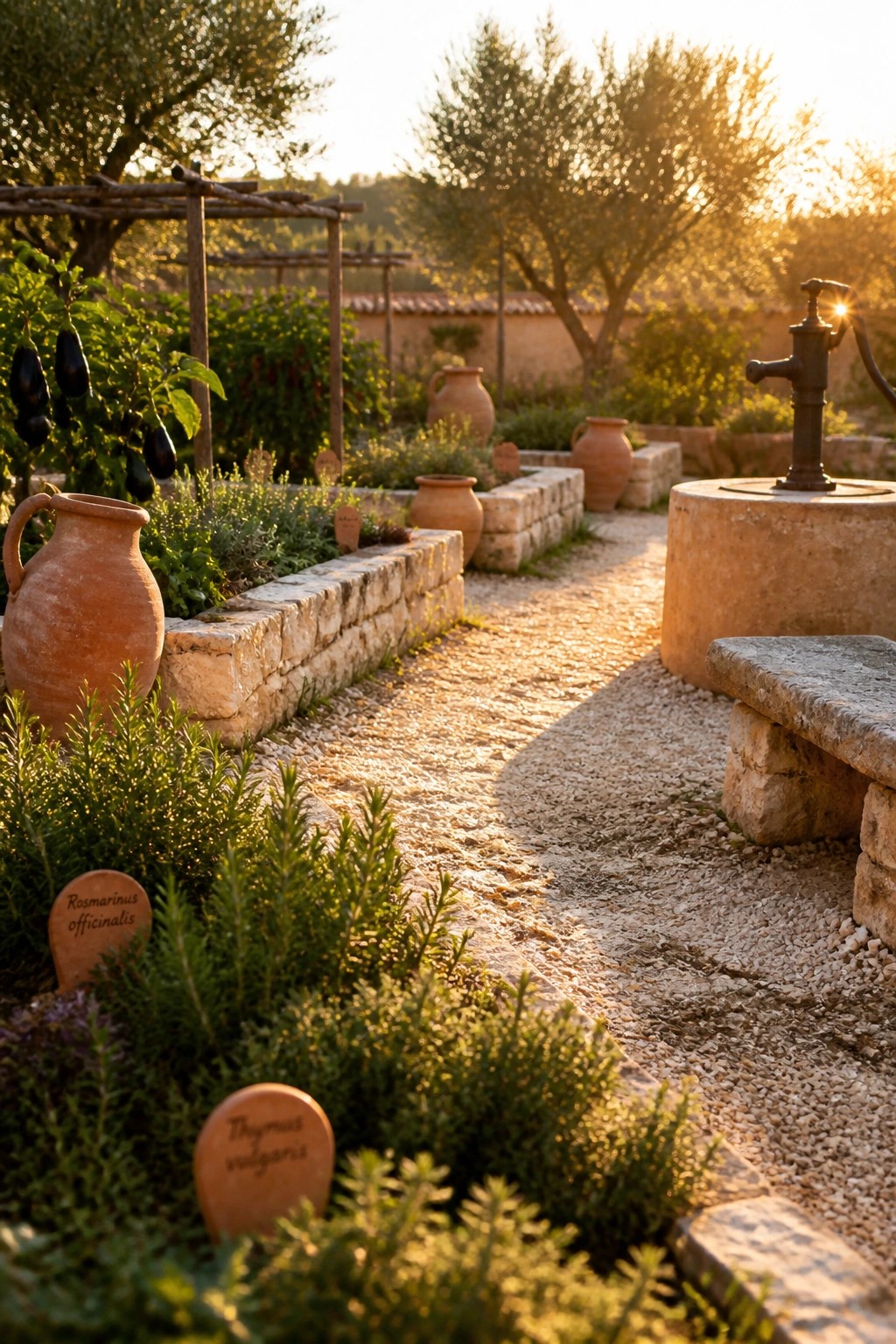
Raised beds built with stone edges help keep soil contained while creating firm walkways right beside the plants. The gravel surface drains well and gives you a stable place to stand or kneel when you need to reach in for harvesting or weeding.
This layout suits small to medium gardens where you want easy access without compacting the soil. Make the paths at least two feet wide and keep the bed walls low enough to lean over comfortably.
Raised Beds With Steps Improve Access
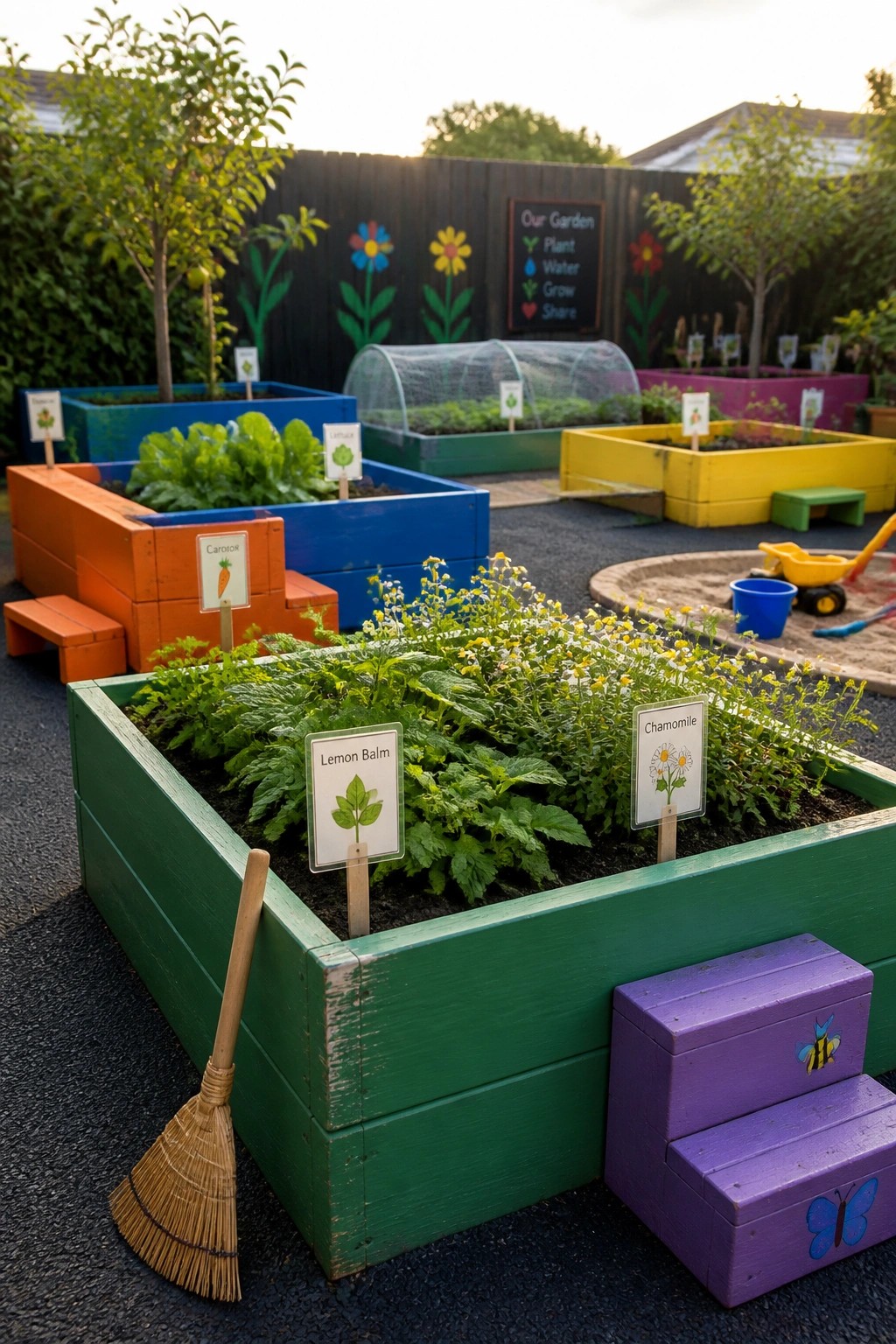
Raised garden beds often sit low enough that reaching the middle becomes a stretch. Adding simple steps right against the side solves that problem without taking up much space.
This works best in family gardens or any spot where kids and adults share the work. Paint the steps to match the beds so everything stays neat and easy to move around.
Raised Beds That Border A Deck
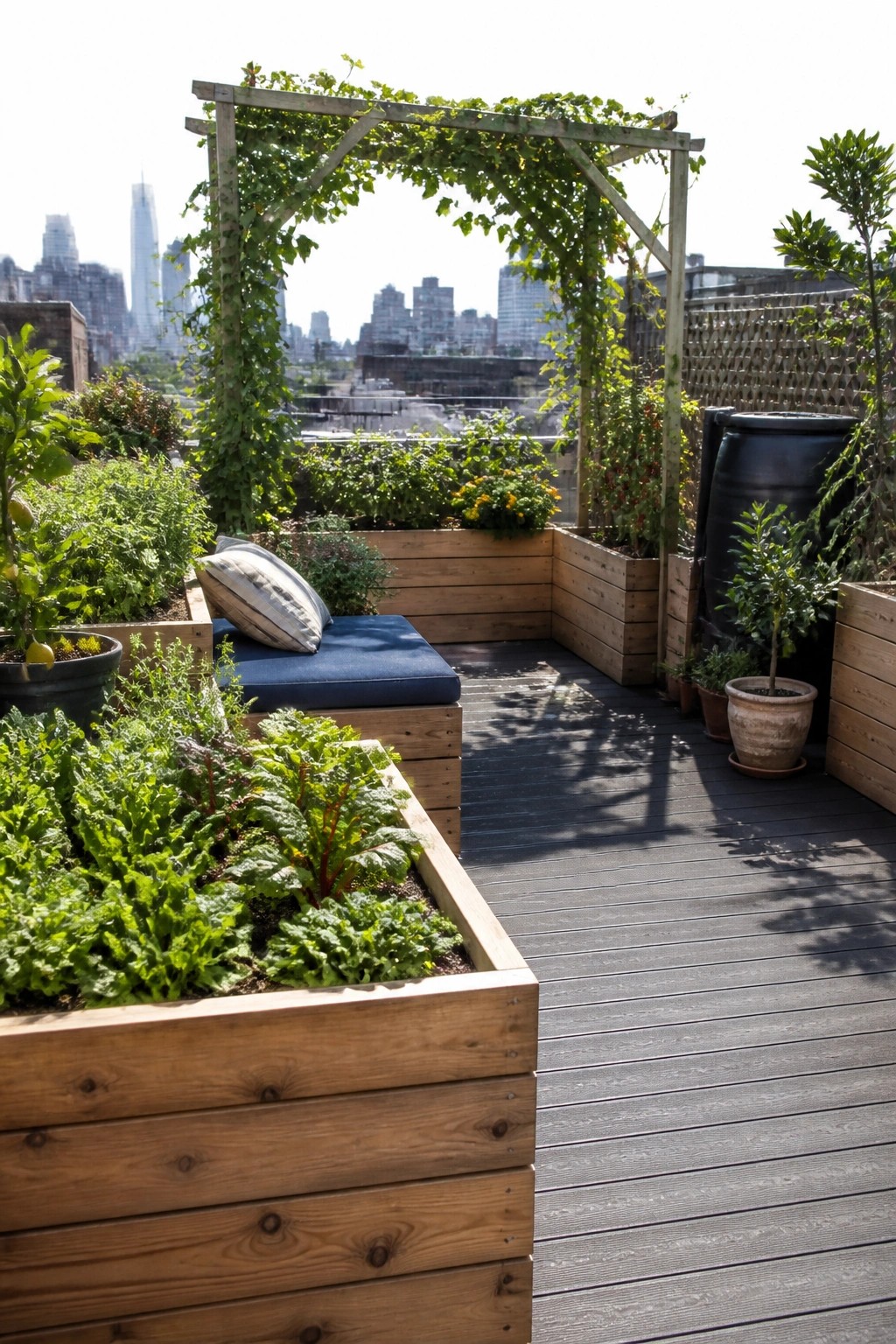
Placing raised beds right along the edges of a deck makes it easy to reach plants without extra walking or bending. You can check on things or grab a few leaves while sitting nearby, and the beds themselves help mark off the space so the deck stays clear for chairs or just moving around.
This layout suits rooftops, small backyards, or any spot where you want both growing room and a place to sit. Keep the beds at a comfortable height and width so no one has to lean too far, and leave a little gap between sections if you need to step through for maintenance.
Train Fruit Trees On Wires For Easy Harvests
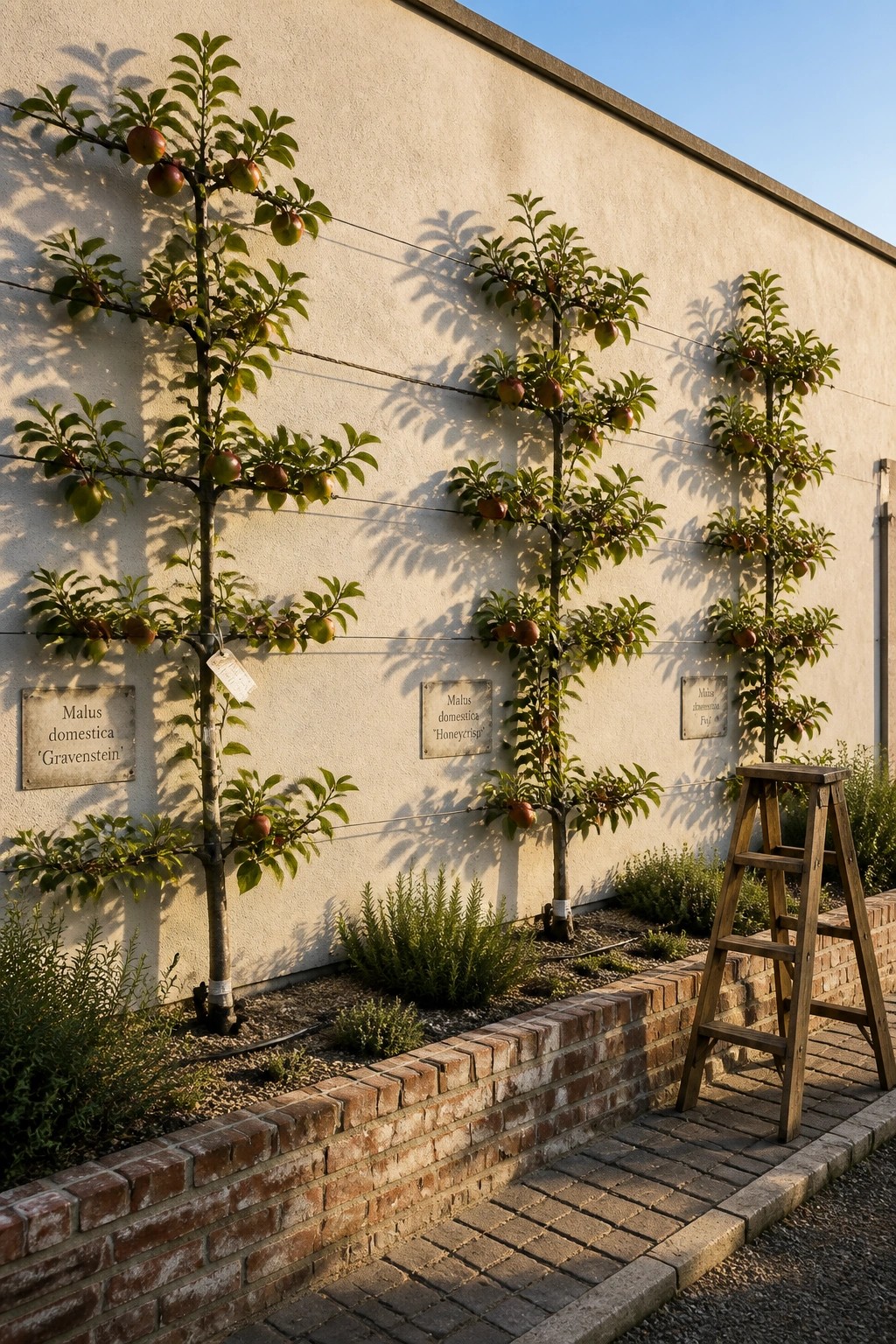
Training fruit trees flat against a wall with simple wires gives you fruit in a very small space. The branches stay in neat rows so you can reach every apple without a tall ladder or crowded branches getting in the way. It also keeps the trees warmer against the wall, which helps in cooler climates.
This setup works best along a south or west facing wall where the trees get full sun. Set the wires about a foot apart and prune yearly to keep the shape. The brick edging in the photo shows how a low border keeps the bed tidy and makes weeding simpler too.
Brick Raised Beds With Gravel Paths
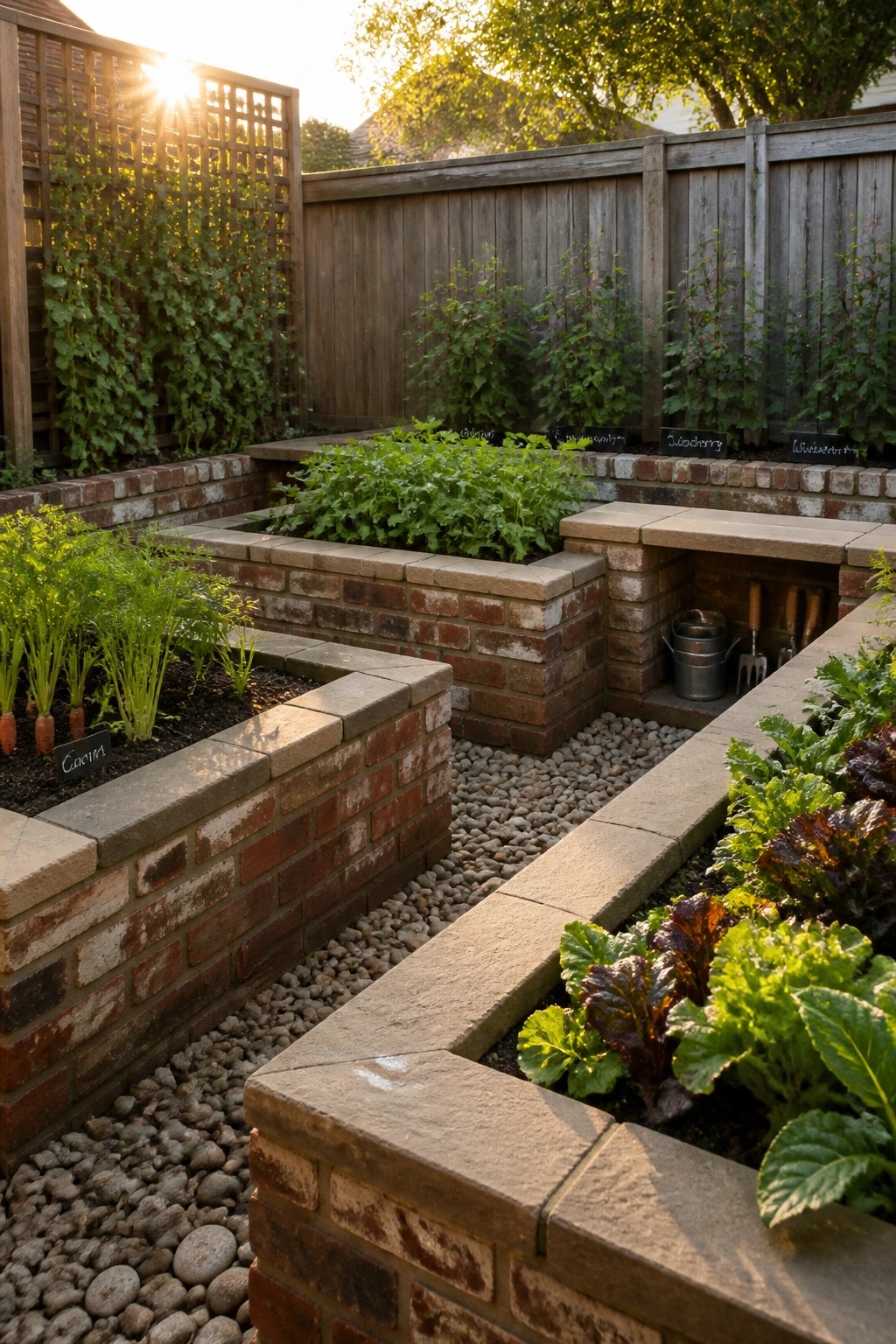
Raised beds built from brick give a garden lasting structure while creating natural walkways between them. The gravel paths keep feet dry and make it easy to reach every plant without compacting the soil.
This layout works best in smaller yards where space is tight and regular harvesting matters. It suits anyone who wants beds that hold their shape over time and stay simple to maintain.
Run Raised Beds Along a Path
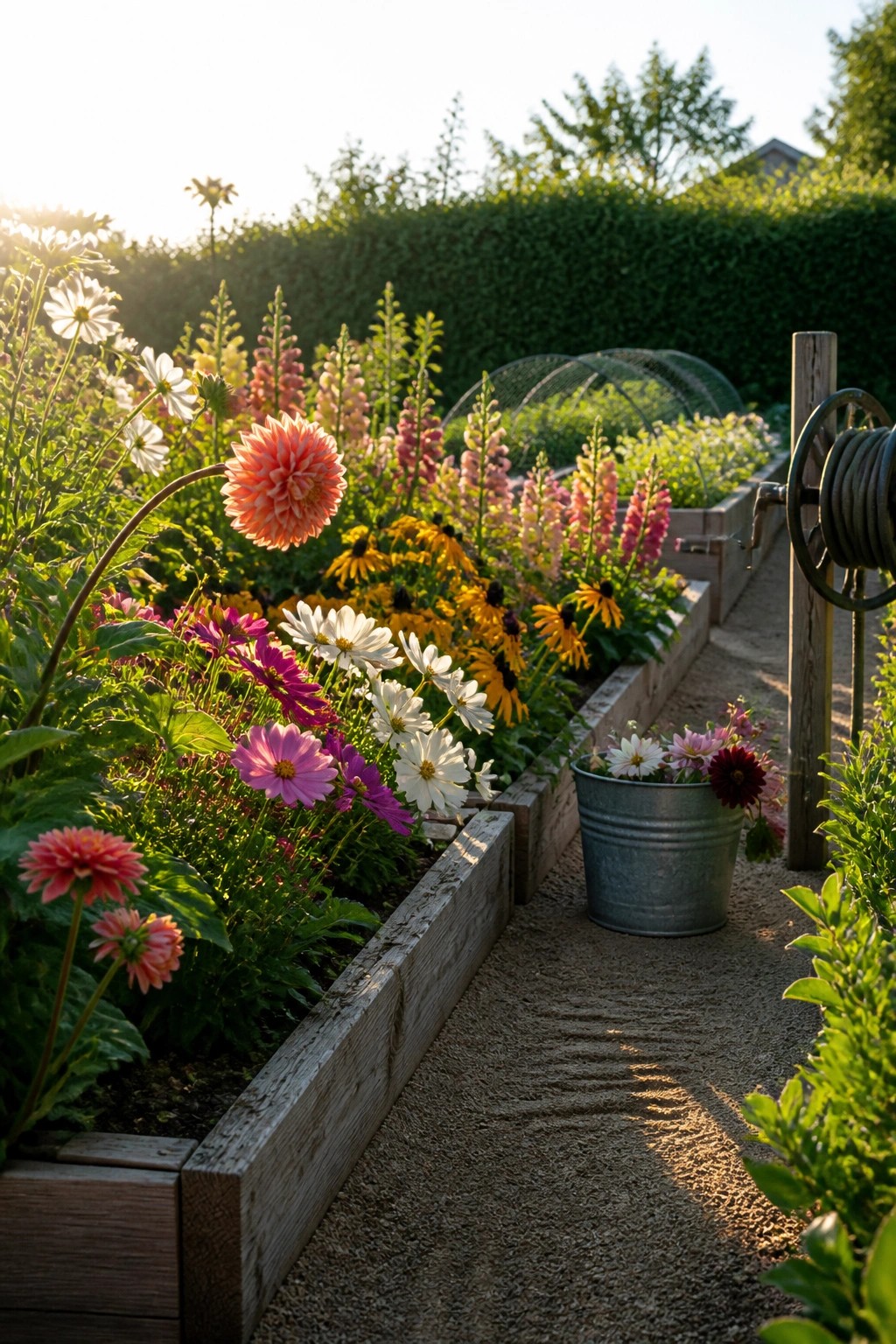
Raised beds placed along a central path make it much easier to reach every plant without stepping on soil. This setup keeps the beds narrow enough to tend from one side, which helps with watering, weeding, and picking produce before it goes bad.
It works well in long, narrow yards or along the edge of a fence. Keep the path at least two feet wide so a wheelbarrow or watering can fits through. Gravel or wood chips hold up better than grass in this kind of layout.
Raised Beds With Mulch Paths Between Them
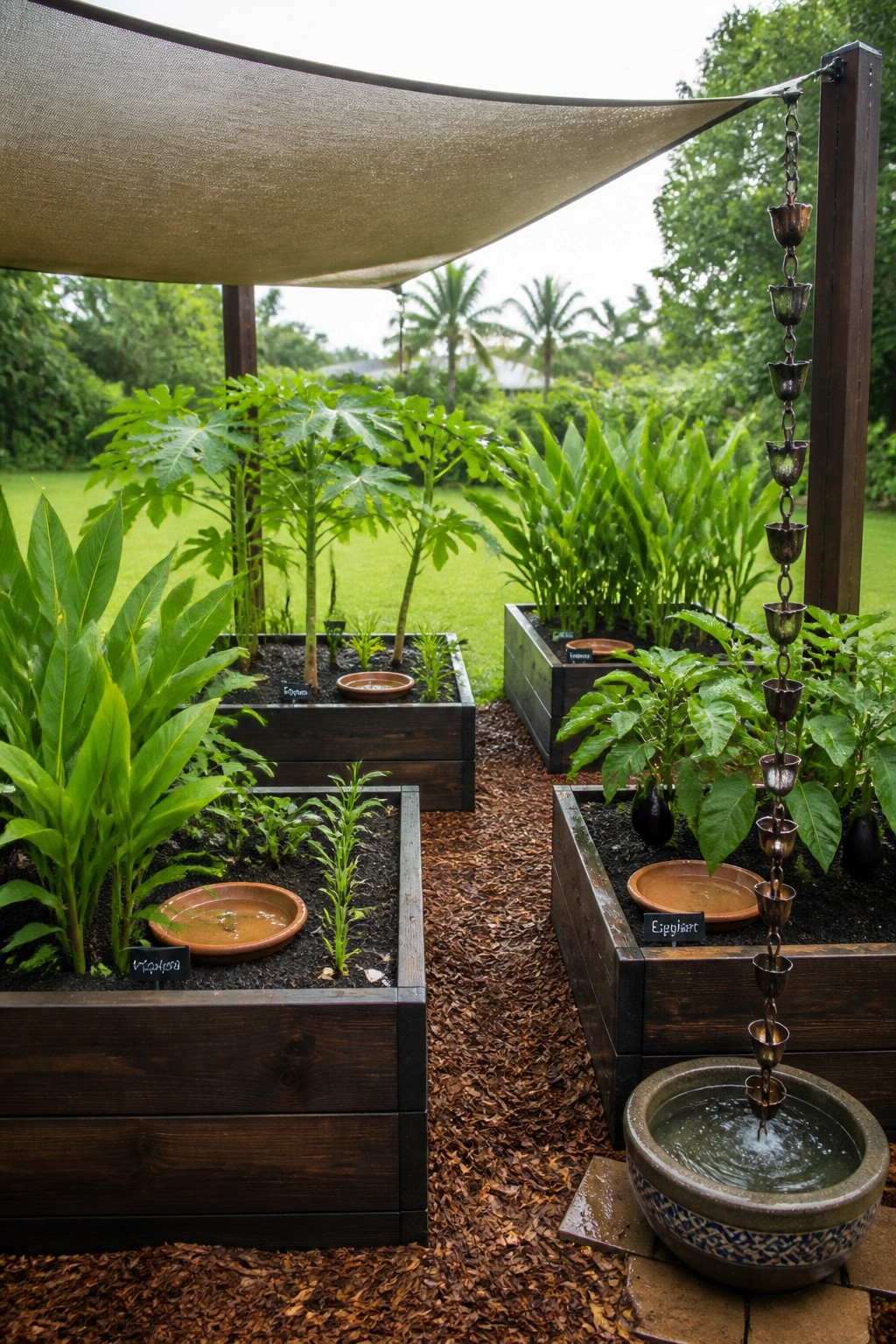
Raised beds work best when you keep the space between them open and easy to walk on. Mulch paths let you move around without compacting the soil, and they make it simple to reach every plant for watering or picking.
This setup works well in a home vegetable garden where you grow a mix of crops. It keeps maintenance straightforward and helps you harvest without extra effort, especially once the plants fill out.
Curved Stone Beds For Easy Access
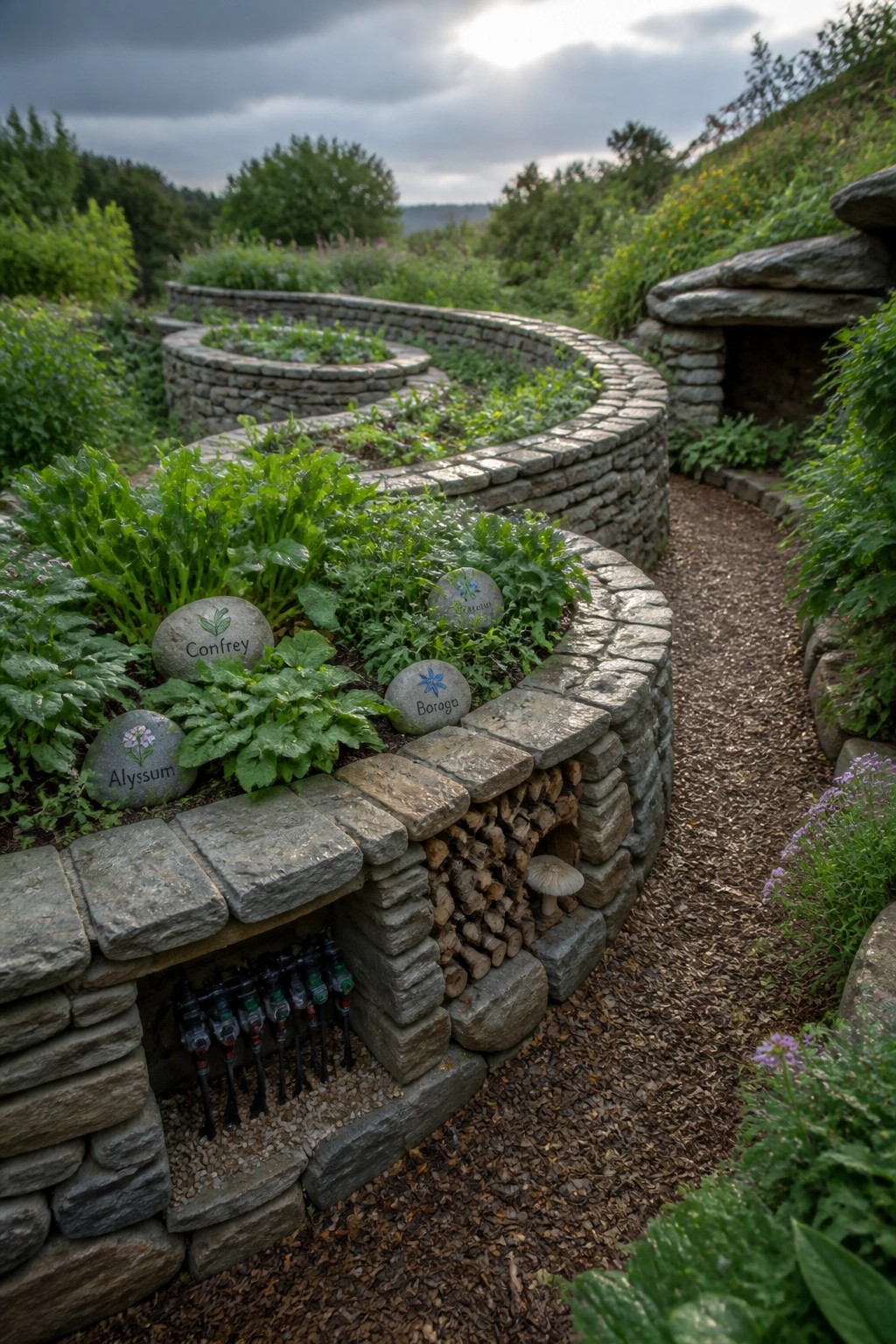
Curved raised beds made from stone let you follow the natural shape of the yard instead of forcing straight lines. The path stays right next to the planting area the whole way, so you can reach every plant without stretching or walking on the soil.
This layout works best on a gentle slope or in a long narrow space where a straight row would feel cramped. Tuck practical items like irrigation valves into the base of the wall so they stay out of sight but remain easy to reach when needed.
Arrange Beds Along a Central Path
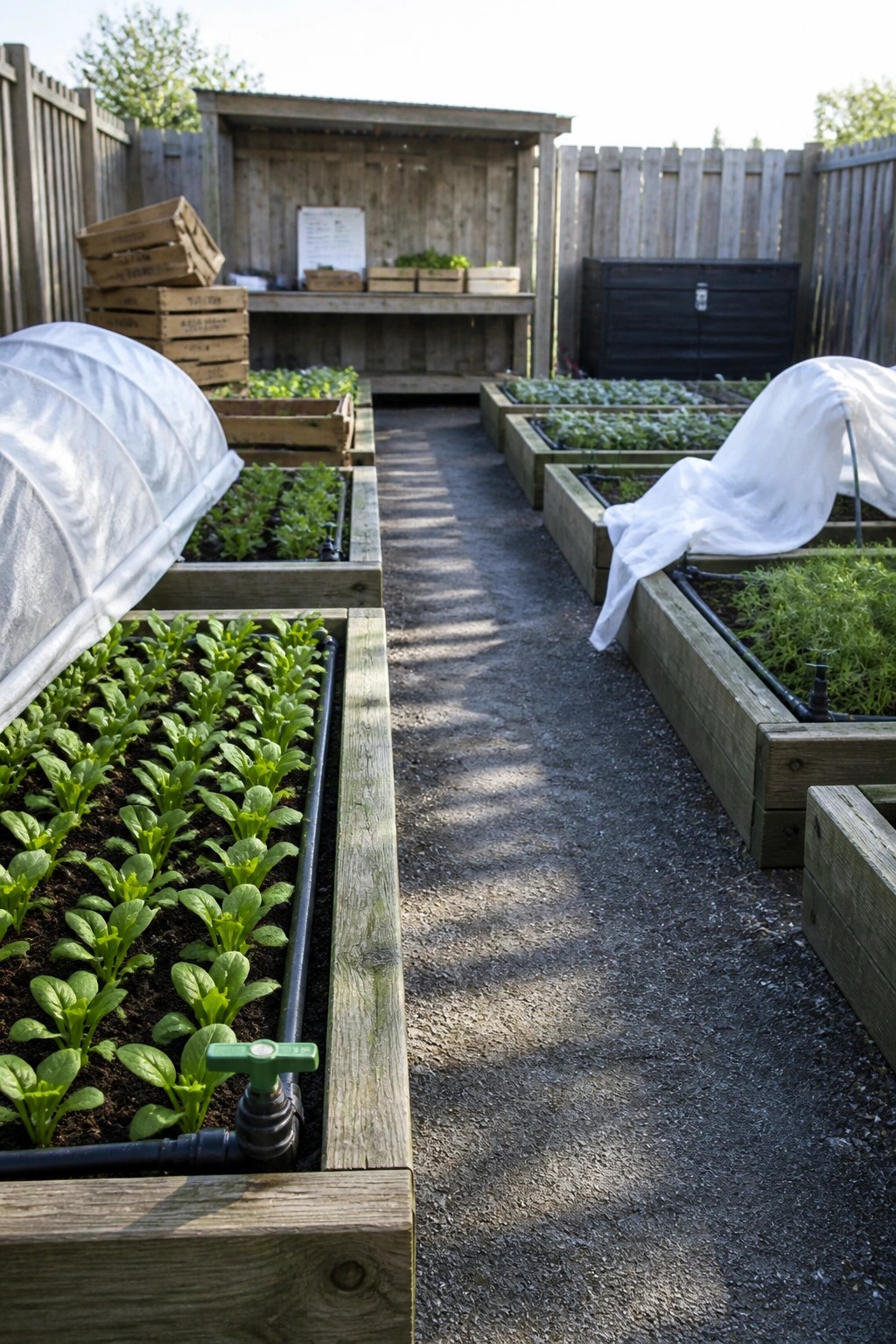
Running raised beds in rows on either side of a path makes daily garden work simpler. You can reach both sides without stepping on the soil, which helps keep roots healthy and reduces weeding time later in the season.
This layout suits smaller backyards or side yards where space is tight. Leave the path at least two feet wide so a wheelbarrow or hose can move through easily.
Run a Raised Bed Along an Outdoor Prep Counter
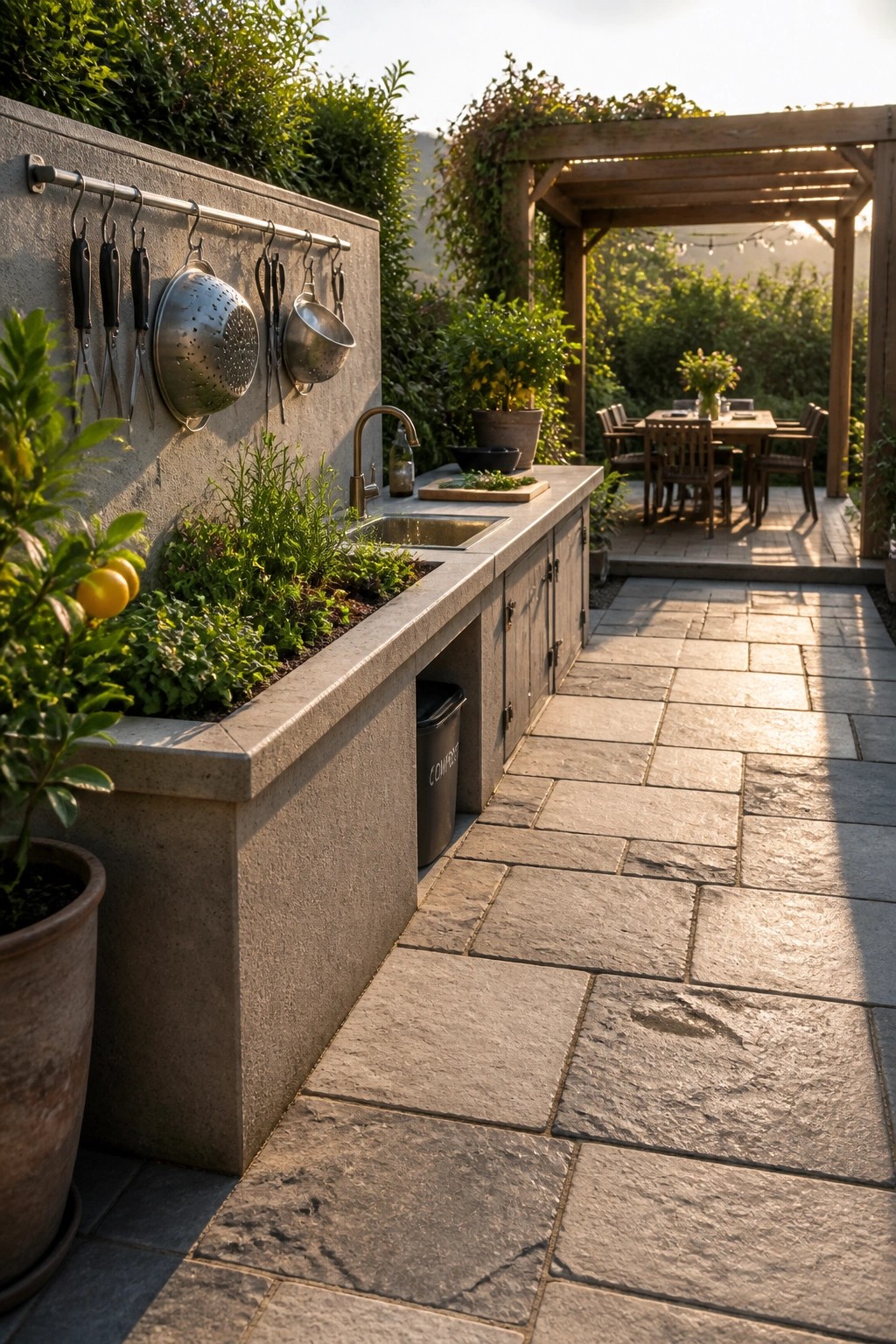
A raised bed built right into an outdoor counter keeps herbs and small vegetables within arm’s reach of the sink. This setup cuts down on trips back and forth across the yard and makes it easier to harvest and rinse produce in one spot. The bed also adds a living edge to what would otherwise be a plain work surface.
This layout works best on a paved patio or along the side of a deck where you already do food prep. Keep the bed depth around twelve to eighteen inches so the soil stays manageable, and choose herbs that tolerate some reflected heat from the surrounding stone or concrete.
Raised Beds With Stone Edging
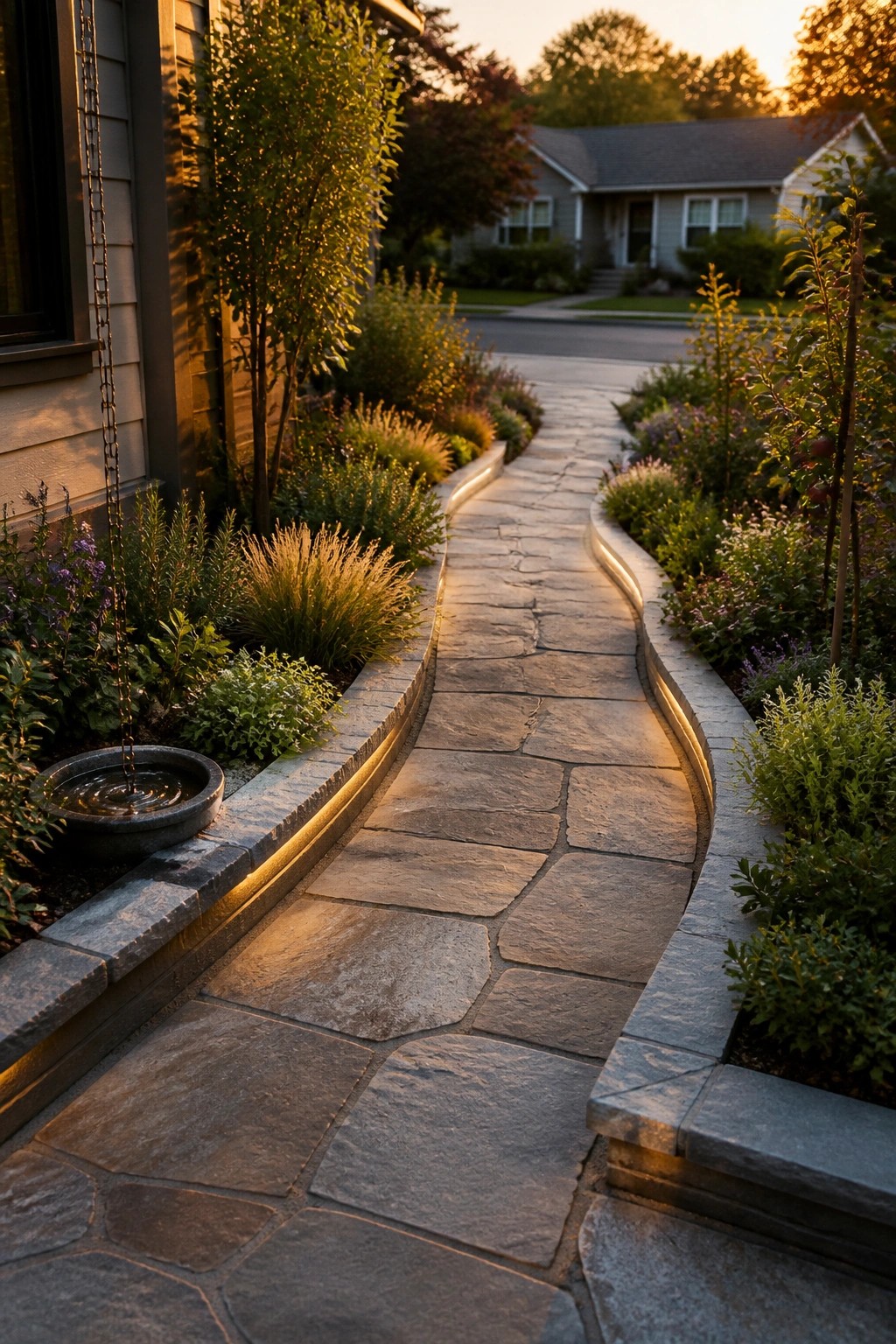
Low stone borders turn ordinary garden beds into something more practical. They hold the soil in place, keep the edges clean, and make it easier to walk right up to the plants without sinking into soft ground or compacting the soil.
This works especially well along a path since the raised height and firm edge let you reach across without extra stepping stones or awkward reaching. It suits smaller yards where you want clear access and a simple layout that does not need constant trimming or weeding along the sides.
Tiered Stone Beds For Multiple Planting Levels
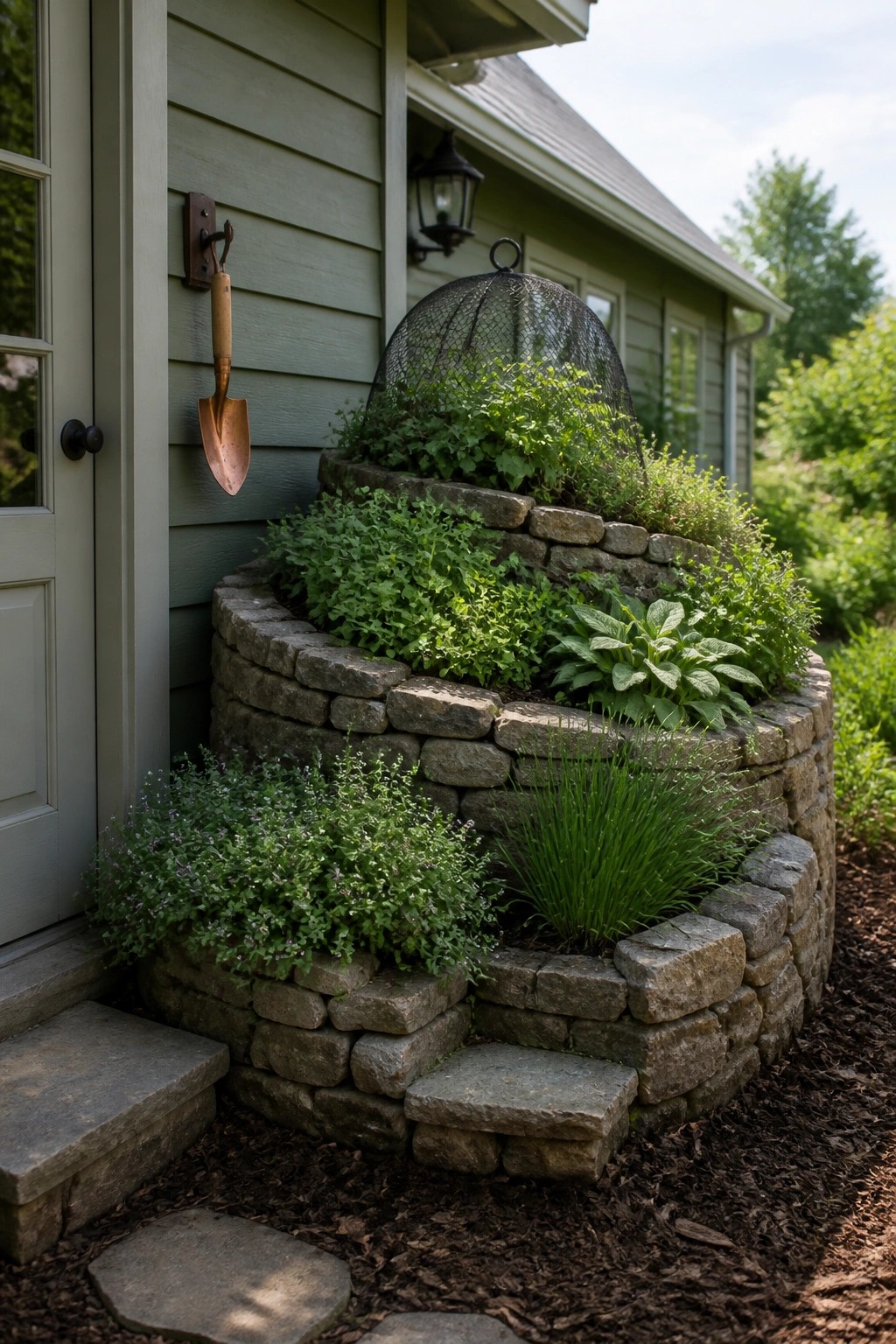
Tiered stone beds give you extra growing space without taking up much ground area. The different heights make it easier to reach plants in the back and help separate crops that need different conditions.
This layout works best along a house wall or in a corner where the curve can follow the building. Keep the tiers at least eight inches deep for roots and use the lower step as a simple path when you need to reach the center.
Brick Raised Beds Along A Path
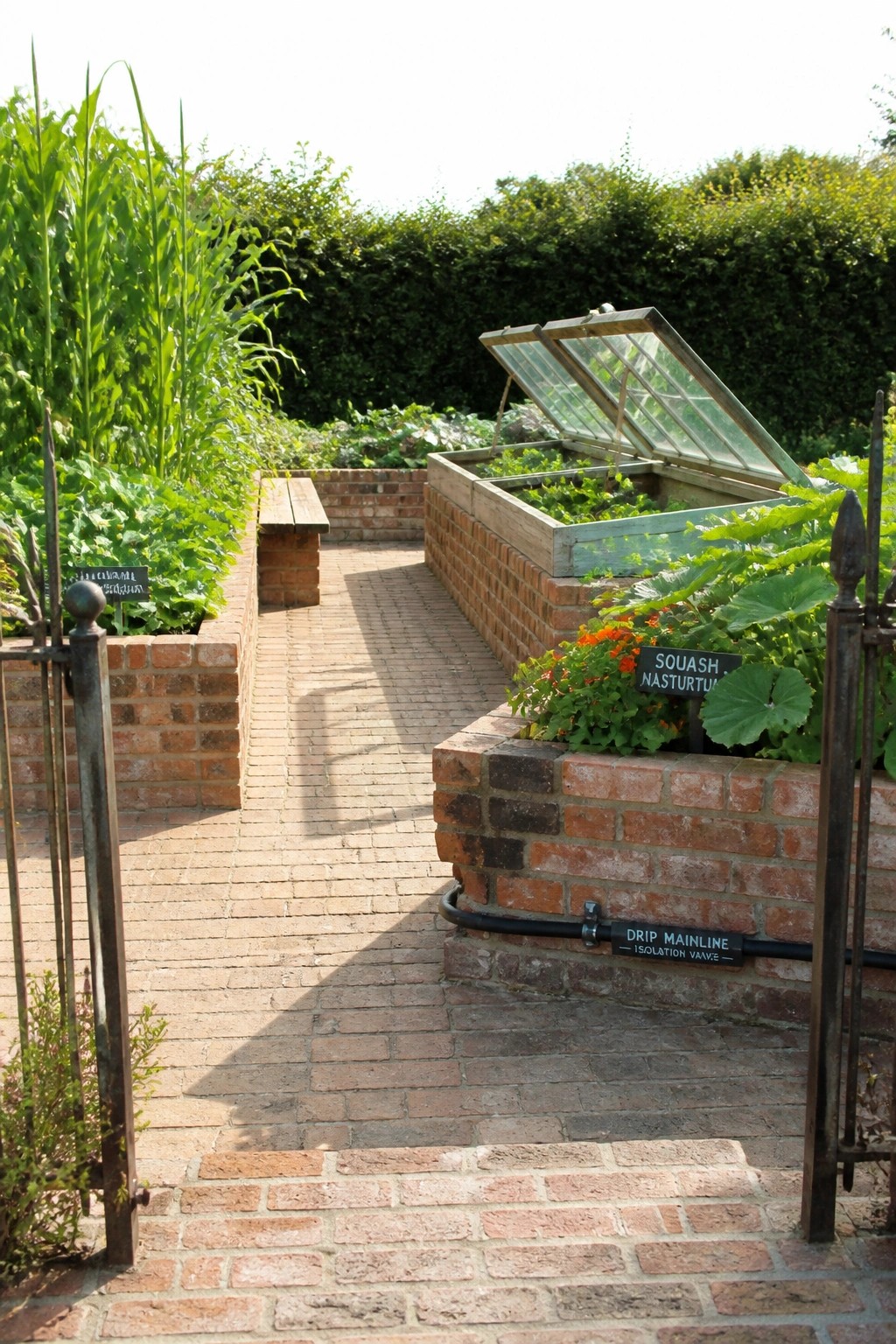
Raised beds made from brick hold up well over time and give the garden a clean edge that keeps soil in place. A central path between them makes it simple to walk through and reach every plant for watering or picking without compacting the soil.
This setup suits smaller gardens or vegetable plots where regular access matters most. Running drip lines along the base of the beds keeps watering straightforward and cuts down on daily work.
Curved Beds Around A Central Work Area
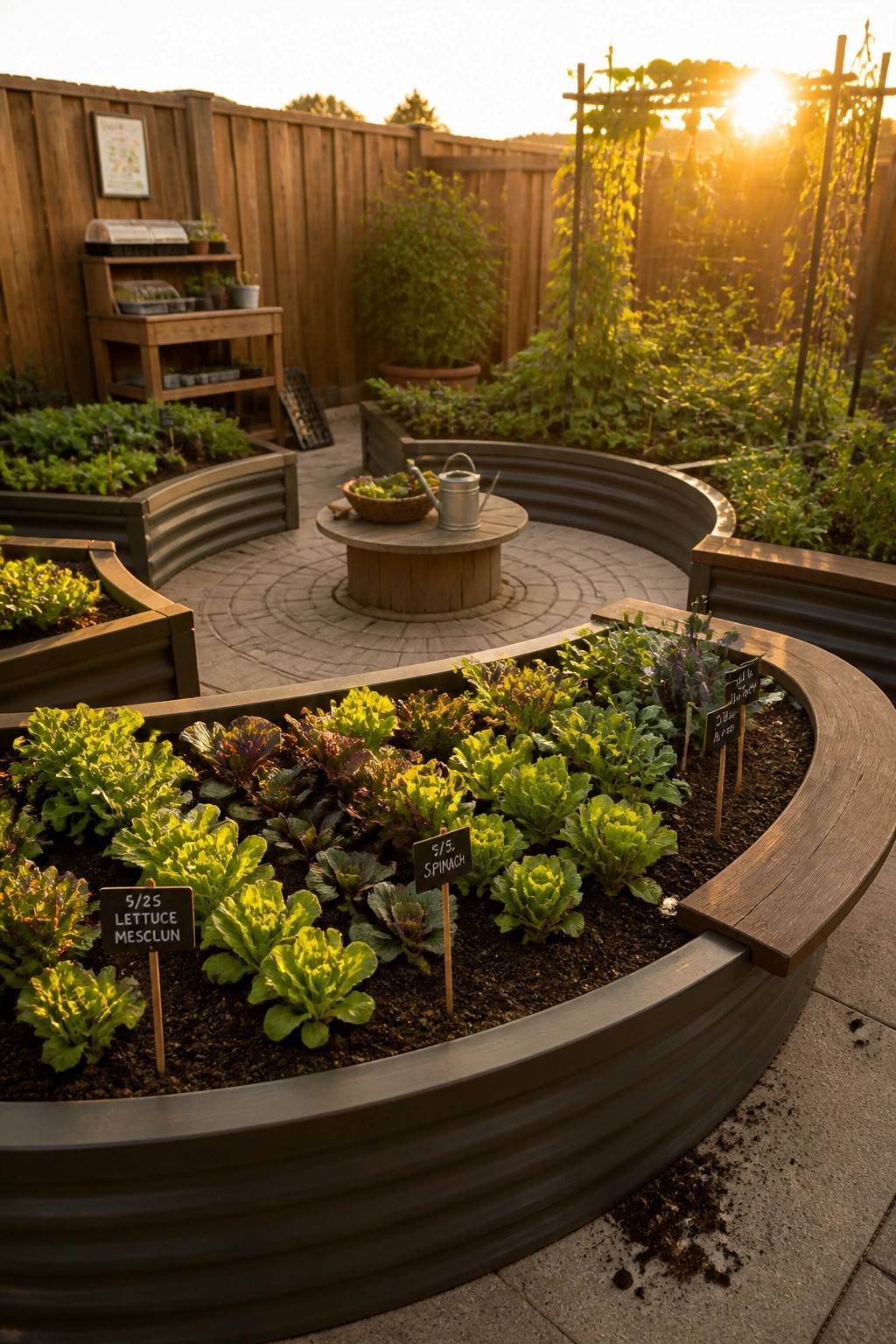
Many people set up raised beds in straight rows, but curving them around a central spot makes daily work much easier. You can reach both sides of each bed from the middle without stepping on the soil, and the shape keeps everything close at hand during harvest.
This layout suits smaller yards where you want to grow a lot in one area. Metal beds hold the curve well, and leaving space in the center for a small table or basket gives you a spot to set tools and picked vegetables without extra trips.
Raised Beds Along A Path
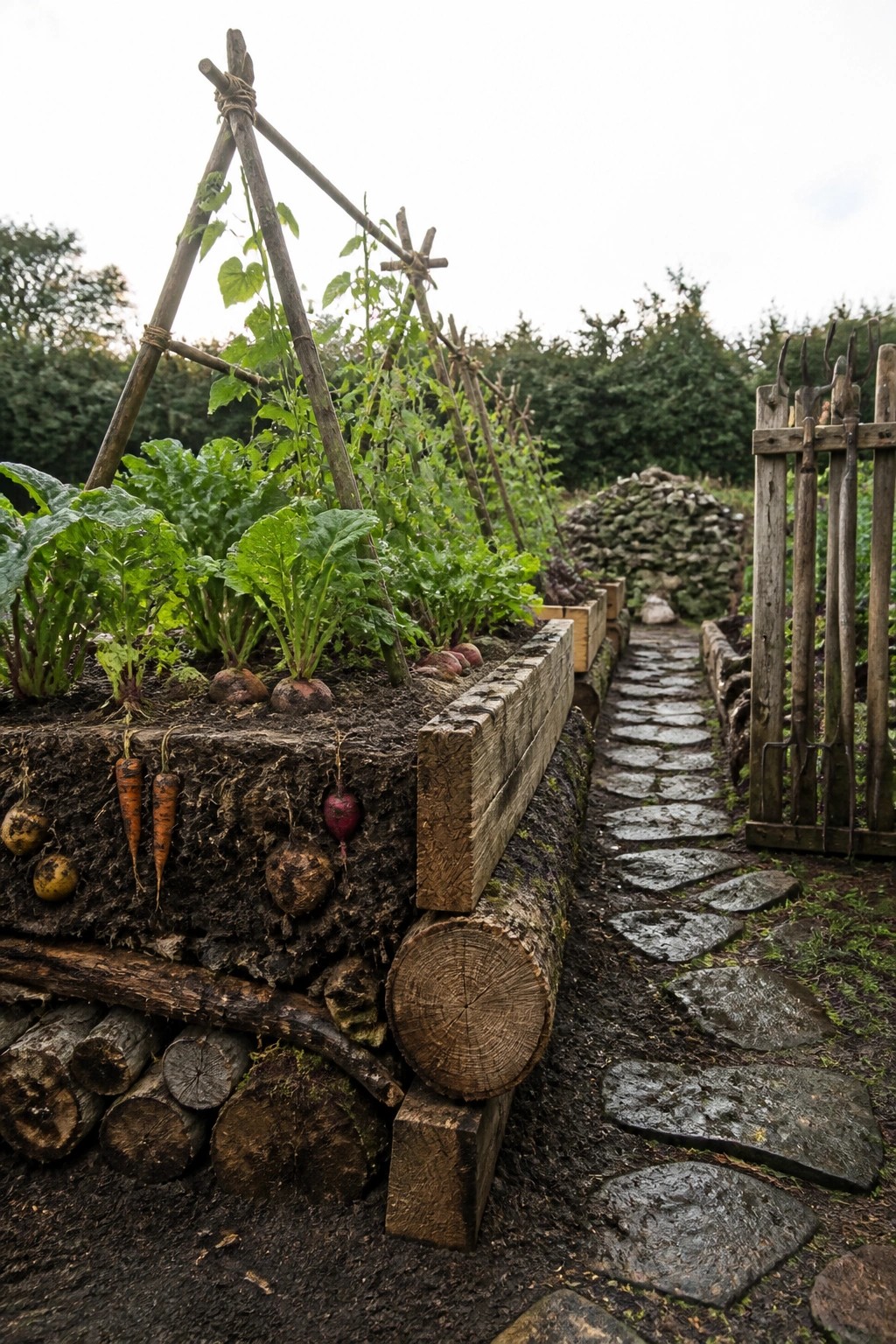
Placing raised beds right next to a garden path makes daily care and harvesting much simpler. You can reach both sides of the bed without stepping on the soil, and the path keeps things tidy even after rain.
This layout works well in smaller plots or along the edge of a larger garden. Use sturdy log or timber edging to hold the soil in place, and keep the path wide enough to move tools or a cart through without crowding the plants.
Mount Raised Beds Along Fences In Narrow Yards
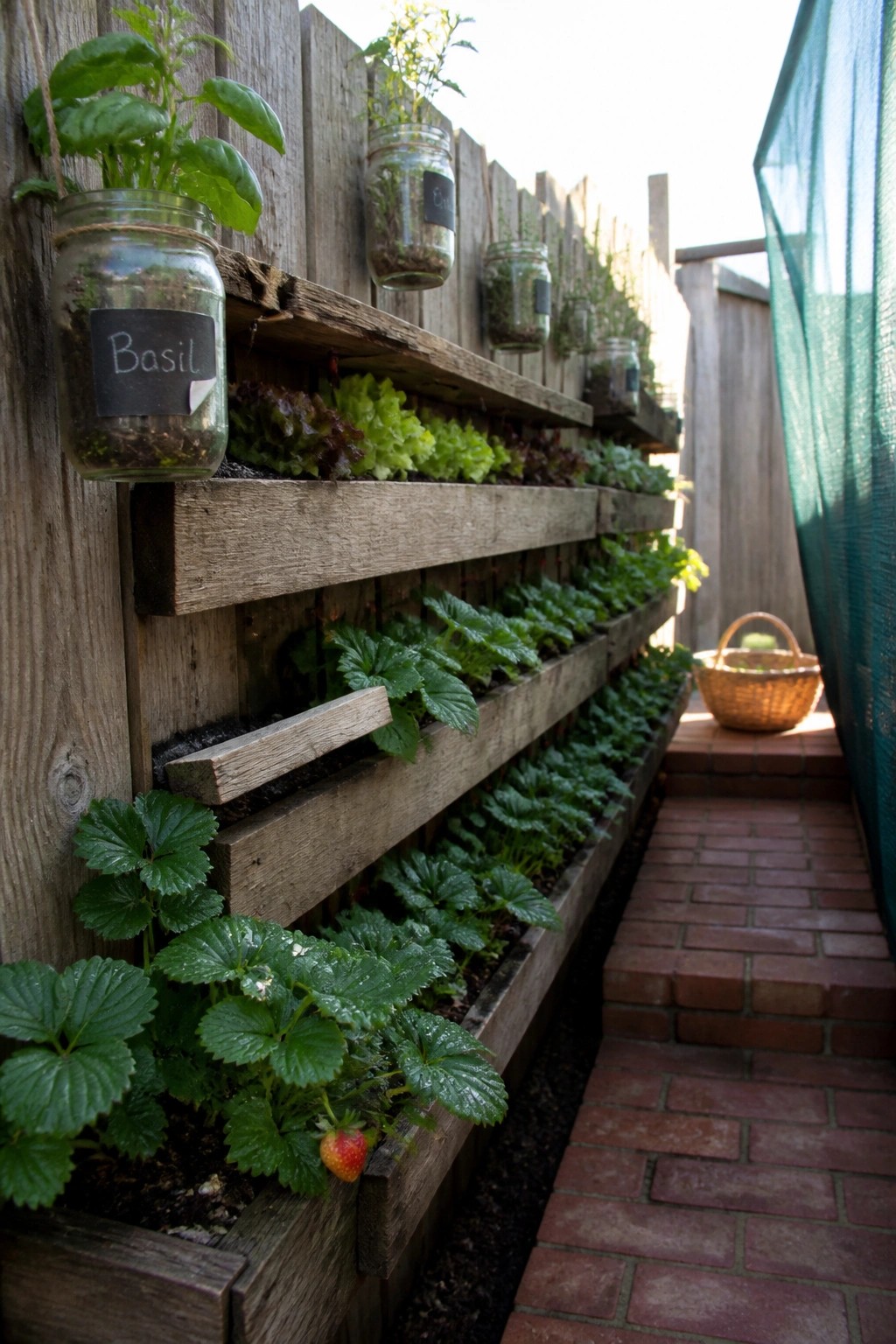
This layout works well when ground space is tight but you still want plenty of growing room. The tiers sit right against the fence so the beds take up little width while giving each plant level its own sunlight and easy reach.
It fits side yards, alleys, or any long thin strip where a standard bed would block the path. Use sturdy brackets to hold the weight and keep the bottom row low enough for comfortable harvesting without bending too far.
Long Raised Beds With A Central Path
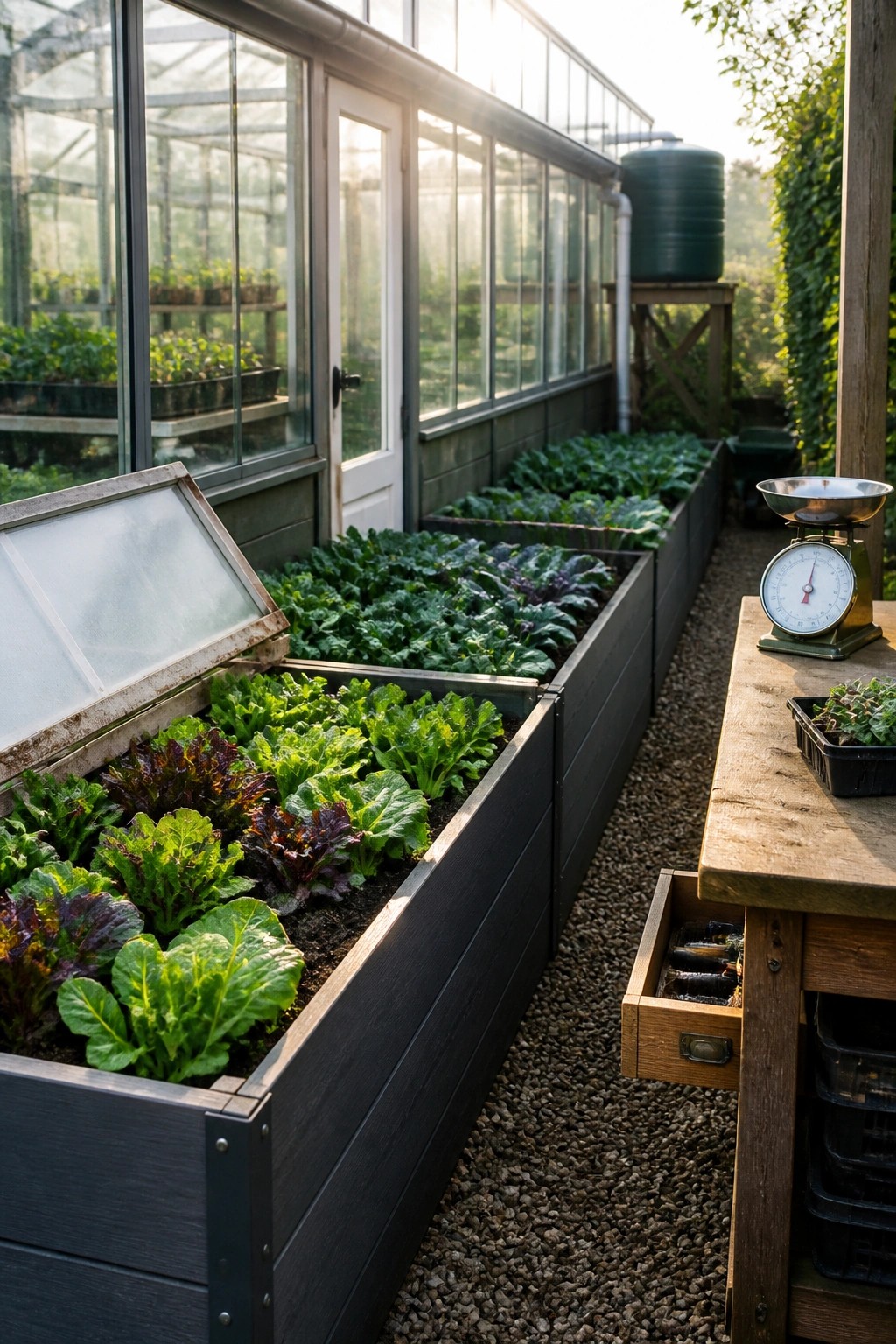
Long raised beds placed on either side of a gravel walkway make it simple to reach every plant without stepping into the soil. The straight layout keeps the path clear and lets you move through the space easily even when carrying tools or baskets.
This setup suits a greenhouse or any sheltered growing area where space is limited but you still want a decent harvest. Keep the beds narrow enough to reach the center from the path and use a durable edging material so the beds hold their shape over time.
Frequently Asked Questions
Q: How wide should paths between beds be?
A: Two feet gives enough room to move tools and buckets around. You can also kneel down without crowding the plants.
Q: Should all beds be the same height?
A: Vary the heights a little if your back needs a break on some days. Taller beds work well for herbs you pick often.
Q: What layout helps with harvesting in a hurry?
A: Group quick pick veggies close to your door. You grab what you need without crossing the whole yard.
