

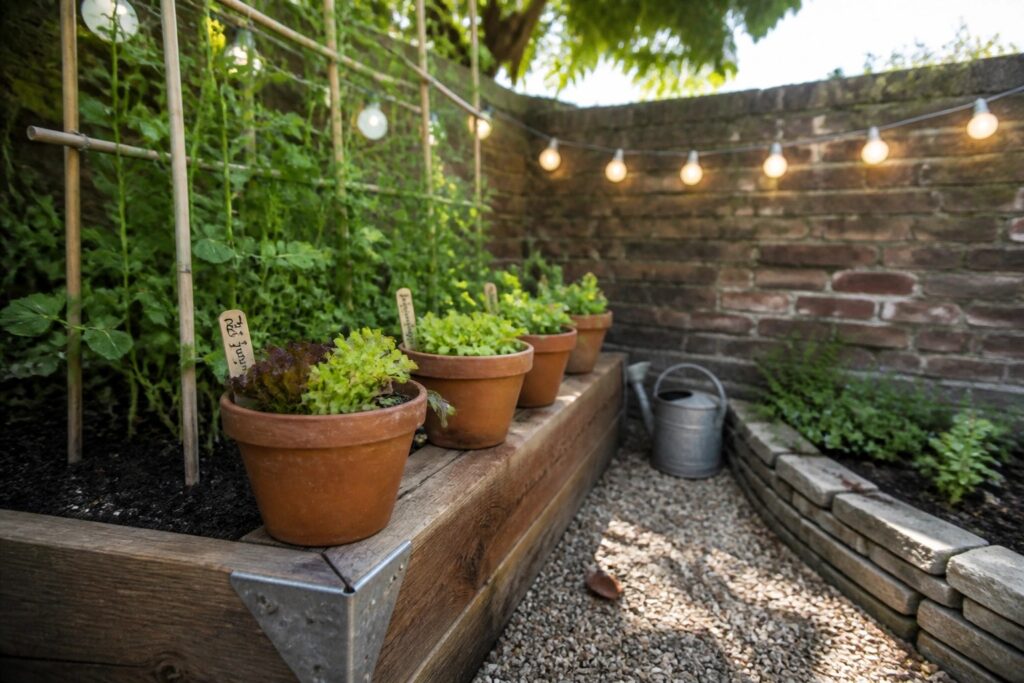
When backyard corners stay empty they often look unfinished and waste usable growing room.
Raised beds bring structure to those spots and make it easier to manage water and roots over time.
I test corner beds first in any yard I work on.
That choice usually reveals whether the bed height and shape will leave enough room for movement around the rest of the space.
Over a few seasons the beds that work best tend to be the ones that match the natural flow of the yard rather than fighting it.
Add Vertical Stakes To Raised Beds

A raised bed gains a lot more growing room when you add simple vertical stakes right inside it. Vining plants can climb instead of sprawling across the ground, which makes a big difference in a tight backyard corner.
This setup works best along a wall or fence where the bed runs long and narrow. Use sturdy stakes that match the bed material and space them evenly so the plants have support without blocking light or airflow.
Slim Metal Beds Fit Narrow Corners

A slim raised bed made from weathered metal gives you planting space without eating up much room. It tucks neatly against a wall or fence and keeps soil contained so the rest of the yard stays open and easy to walk through.
Place the bed on gravel and keep the shape long and low. This works best in small backyards where you want a few herbs or flowers close to a bench or path. Just watch the drainage if your soil stays wet in winter.
Low Stone Walls For Tiny Raised Beds
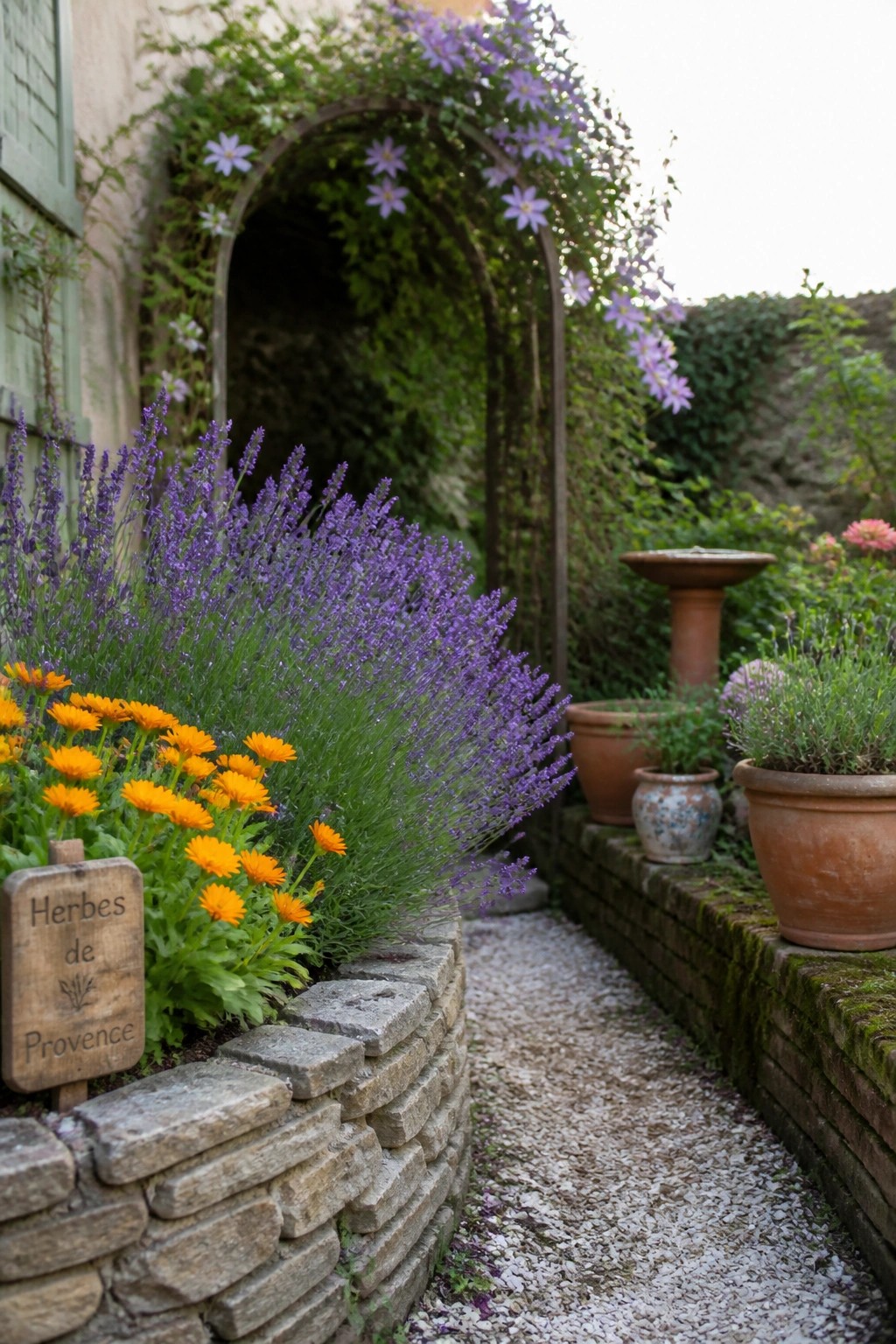
Low stone walls give a raised bed clear shape even when space is tight. They hold the soil in place along a path or corner and let you grow more without spreading into the walkway. The look stays simple and fits older homes or cottage style yards.
This works best in narrow side areas or small backyards where a full raised box would feel too big. Stack the stones just high enough to contain the bed, then mix herbs with flowers so the plants soften the edge over time. Watch the drainage if your soil stays wet.
L-Shaped Raised Beds For Tight Corners

An L-shaped raised bed makes good use of a small corner by running along two walls at once. This layout gives you more planting space than a single straight bed while keeping the center open for access.
Build it from basic lumber and keep the path narrow with pavers or gravel so you can reach everything without stepping on the soil. The light wood color also helps the beds blend into a small yard instead of feeling heavy.
Low Stone Walls Form Useful Raised Beds

Low stone walls give you a simple way to build small raised beds that fit right into tight backyard corners. They hold the soil in place, keep plants from spilling onto paths, and add a sturdy edge that feels permanent without taking up extra room.
This setup works especially well along walkways or next to steps where you want easy access for watering and harvesting. It suits older homes or any space where you prefer natural materials over wood that might rot over time.
Built-In Lighting For Raised Garden Beds

Many small yards benefit from a raised bed that does more than just hold soil. Adding a simple LED strip along the base gives the bed a gentle glow at night, which makes it easier to spot and use after dark without needing extra fixtures around the yard.
This approach works best in tight corners next to a wall or fence where space is limited. The lights can run on a timer or solar power, and they keep the bed looking neat even when the rest of the garden is dim. Just keep the strip low and protected so it lasts through the seasons.
Simple Wood Frames For Corner Beds
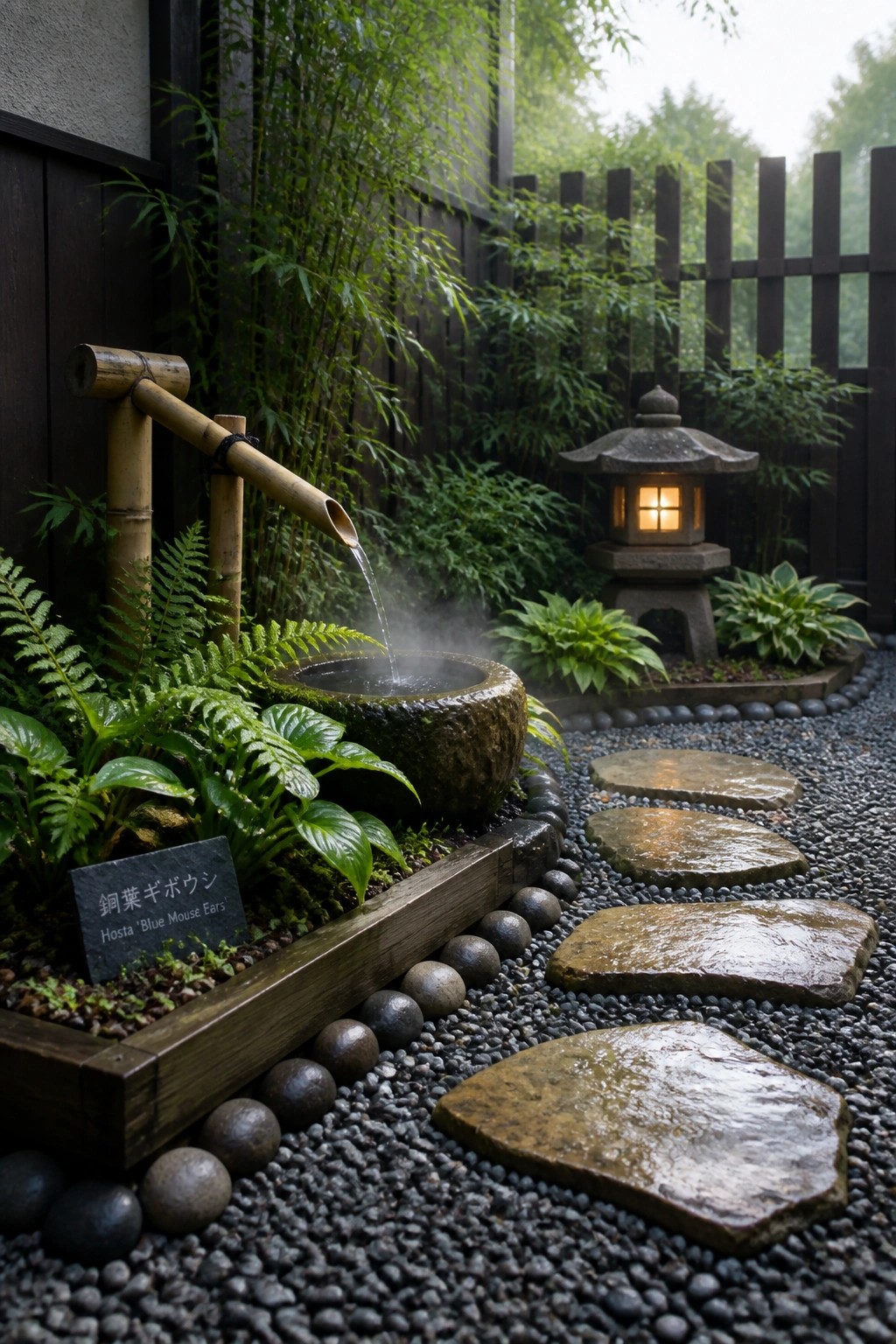
A low wooden border turns a tight gravel corner into a contained planting spot without needing much room. It lifts the soil just enough to improve drainage and keeps the bed looking neat next to paths and water features.
This works well in small backyards where you want clear planting areas but still need space to walk. Use rot resistant wood and keep the frame low so it blends with surrounding gravel and stepping stones.
Spiral Raised Beds For Small Corners
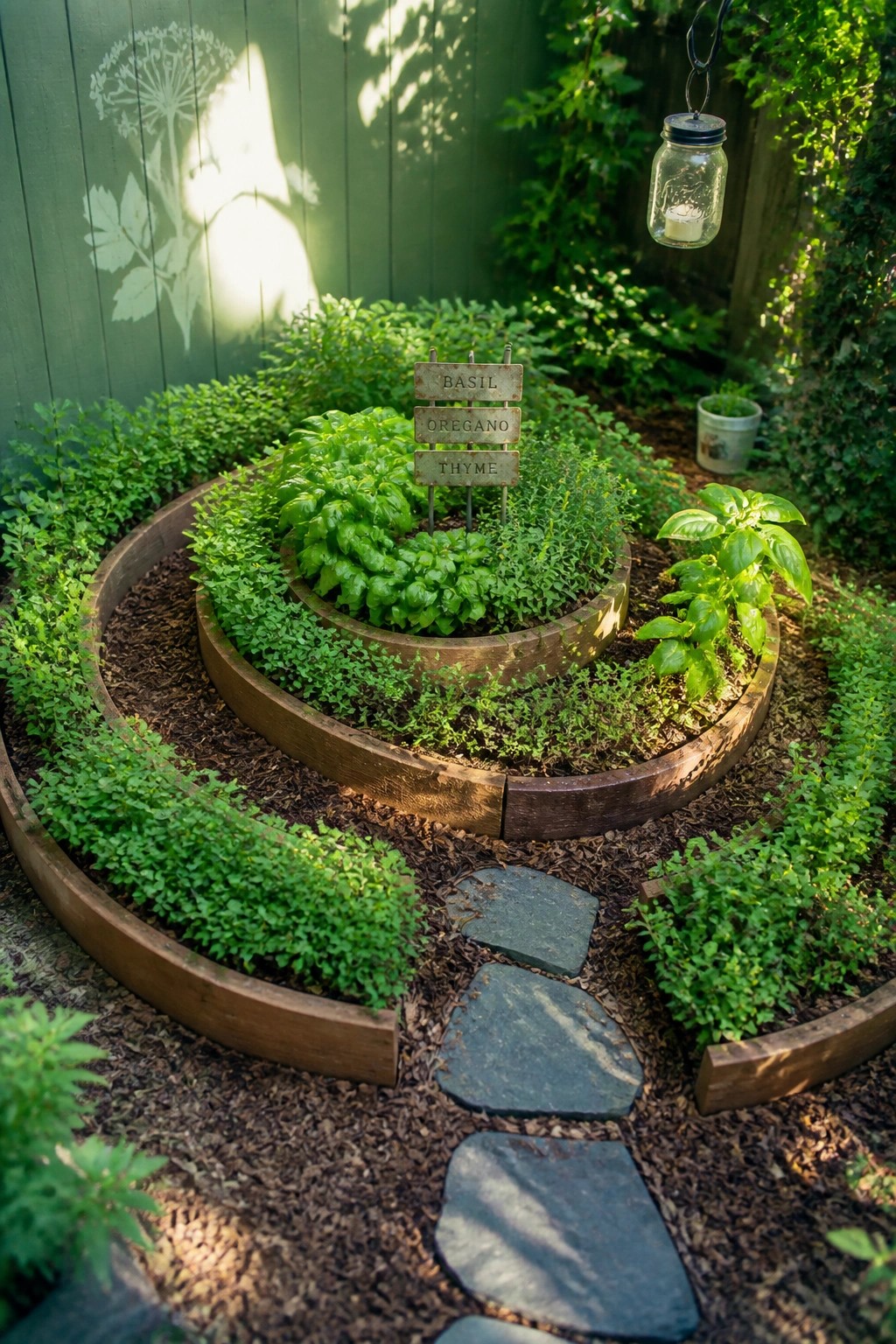
A spiral layout in raised beds lets you pack more plants into a tight spot while keeping everything easy to reach. The tiers create different growing zones in one small footprint, which works well when ground space is limited.
This setup suits corner areas or narrow yards where straight rows would crowd the path. Use wood for the frames and add simple stepping stones so you can walk around without stepping on the soil.
Raised Beds From Wooden Crates

Wooden crates make good raised beds for tiny corners because they are simple to move and set up without any building. They work especially well when placed right on gravel so water drains easily and weeds stay down.
This idea suits small backyards or side yards where space is tight and you want something you can change later. Keep the plants low and drought tolerant so the whole thing stays neat with little upkeep.
Vertical Raised Beds Along A Wall
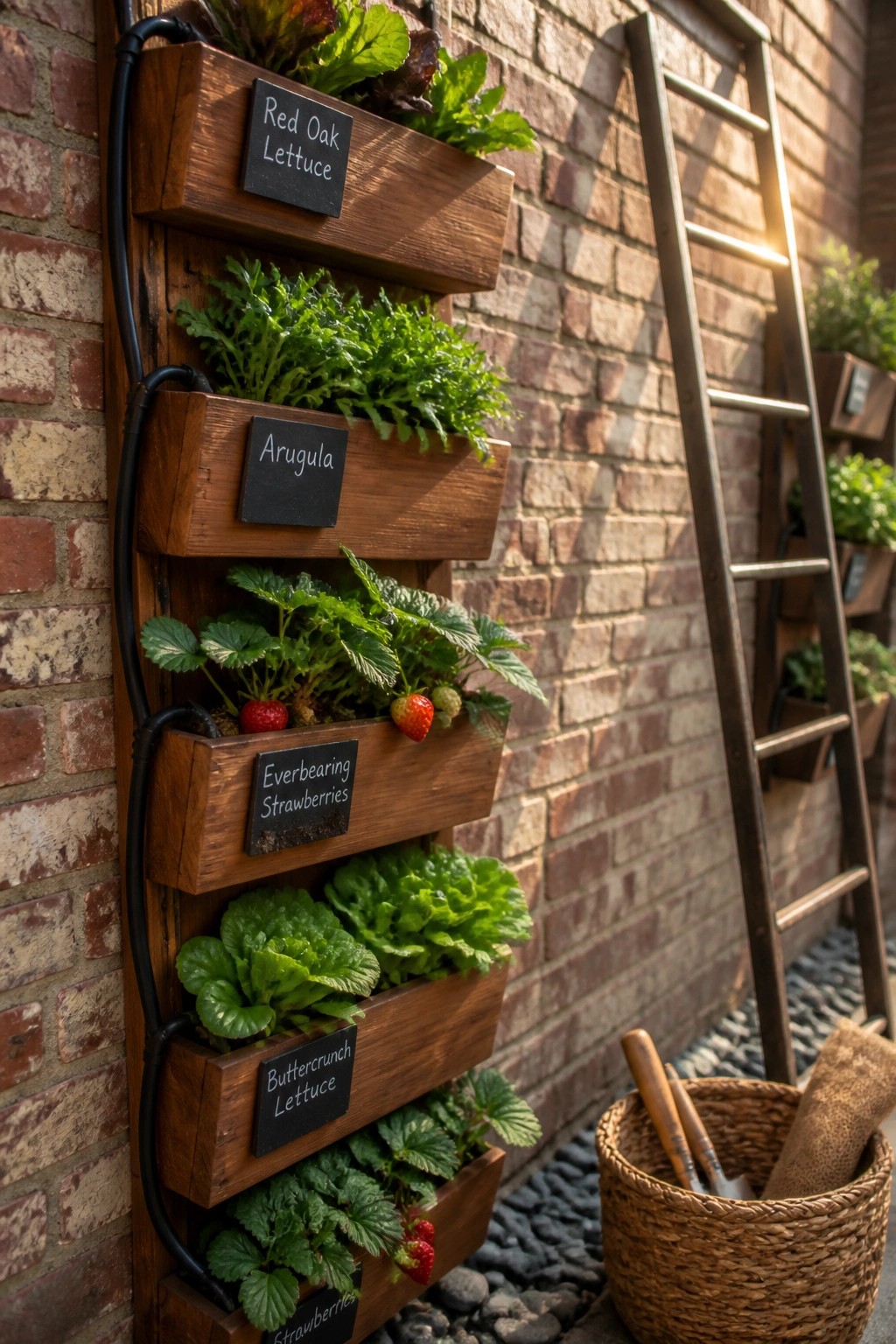
Stacking small wooden planters up a wall turns an unused vertical surface into productive growing space. This setup lets you fit several crops in one narrow spot without taking over the ground, which works especially well when the backyard is mostly paved or very tight.
It suits homes with brick walls or fences that get decent sun. Keep the boxes shallow enough to stay secure, label each level clearly, and run a simple drip line down the stack so watering stays easy. Watch the weight as the soil gets wet and make sure the wall can handle it.
Metal Raised Beds For Tight Corners

Metal raised beds give you a clean way to grow in small backyard spots without spreading soil everywhere. The steel holds its shape over time and does not rot like wood, so it stays useful even when tucked right against a wall or fence.
These beds work best in narrow corners where a regular garden would feel cramped. Keep the size modest and group a few together if you have the room. Just make sure the metal has good drainage at the bottom so the soil does not stay soggy.
Build a Raised Bed Along the House Wall

A narrow strip of ground next to the house often gets ignored, but turning it into a raised bed puts that space to work. The low brick sides keep the soil contained and make it easy to reach the plants without bending too far.
This setup suits small side yards or tight front entries where space is limited. Keep the bed under a foot or two wide so it does not block the path, and add a simple trellis if you want to grow tomatoes or other climbers upward.
Curved Raised Beds From Reclaimed Wood

Curved shapes work well in small yards because they follow the natural lines of a corner instead of fighting against them. The wood planks sit low and follow a gentle bend that lets you reach every plant without stepping into the bed.
This setup suits tiny backyards or side yards where space is limited. Reclaimed lumber keeps the cost down and blends into the garden over time. Just make sure the curve is wide enough for easy watering and harvesting.
Gabion Raised Beds For Small Yards

A gabion raised bed uses wire mesh cages filled with stones to form a solid border that can curve around tight spaces. This approach stands out because it creates a clear edge without needing wide lumber or heavy concrete, which helps in corners where every inch counts.
It works best along paths or against a fence where drainage matters and the ground slopes a little. Use smaller stones near the top so plants sit securely, and keep the overall height under two feet if the bed sits close to a walkway.
Adding Clear Labels To Small Raised Beds
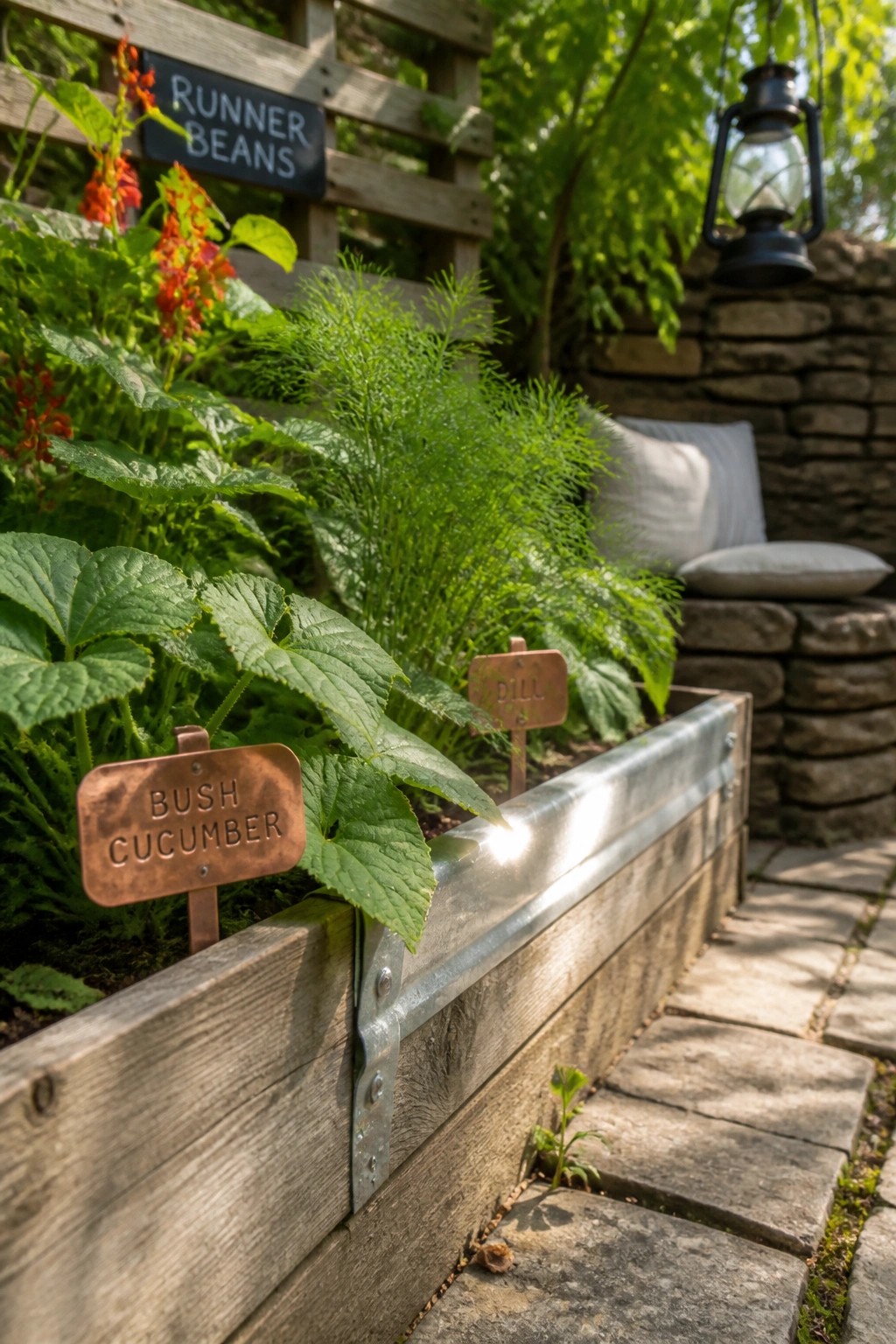
Labels make a big difference when you pack several crops into one narrow bed. They help you remember what is planted where, especially once the leaves fill in and everything starts to look similar. Copper tags hold up well outdoors and give the bed a simple finished look without much effort.
This approach works best in tight backyard corners where space is limited and you want to grow more than one thing at a time. Place the bed against a wall or along a path so it stays out of the way. Just make sure the markers are easy to read from the front so you can spot what needs water or harvesting.
Wooden Raised Beds For Corner Planting

A simple wooden raised bed gives a small corner some clear structure. It holds the soil in place and makes it easier to combine taller plants with lower ones without the whole area looking scattered.
This kind of bed works best along a fence or in a tight backyard spot where ground space is limited. Keep the surrounding ground simple, like dark pebbles, so the bed stays the main feature and does not crowd the rest of the yard.
Tiered Raised Beds For Narrow Yards

Tiered beds let you fit more plants into a slim strip of ground without spreading out sideways. The different heights keep everything visible and easy to reach, which matters when space is tight along a path or wall.
This setup works best in small backyards or side yards where a single flat bed would feel cramped. Use simple wood construction and keep the tiers modest so the beds stay practical rather than bulky.
Line Brick Beds With Recycled Bottles
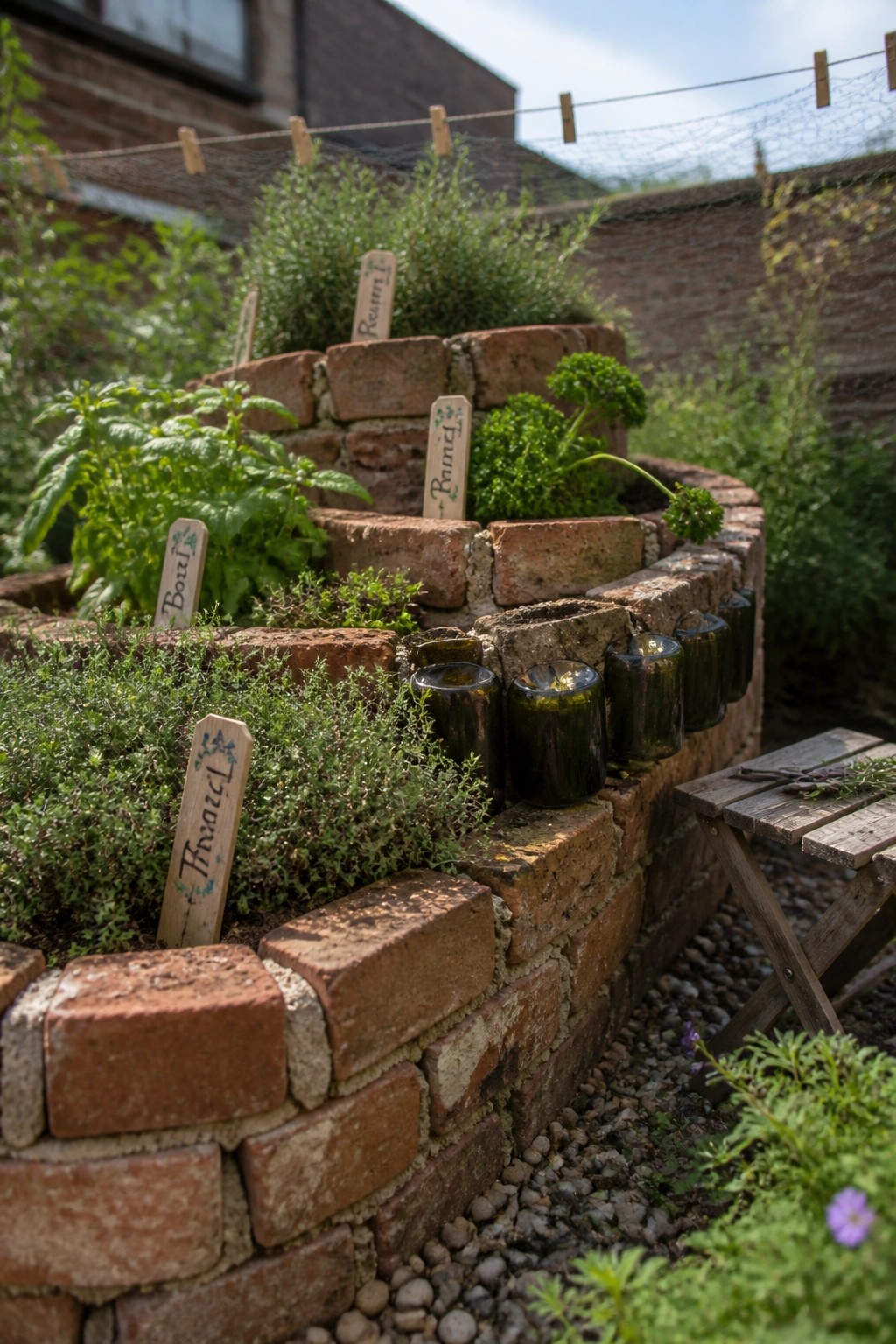
Many gardeners like to press old glass bottles into the sides of brick raised beds. It adds a little color and texture without crowding the planting space.
This trick works best in tight backyard corners where every inch counts. Set the bottles in place while you lay the bricks, or tuck them in afterward with a bit of mortar to hold them steady.
Dark Raised Beds For Small Corners
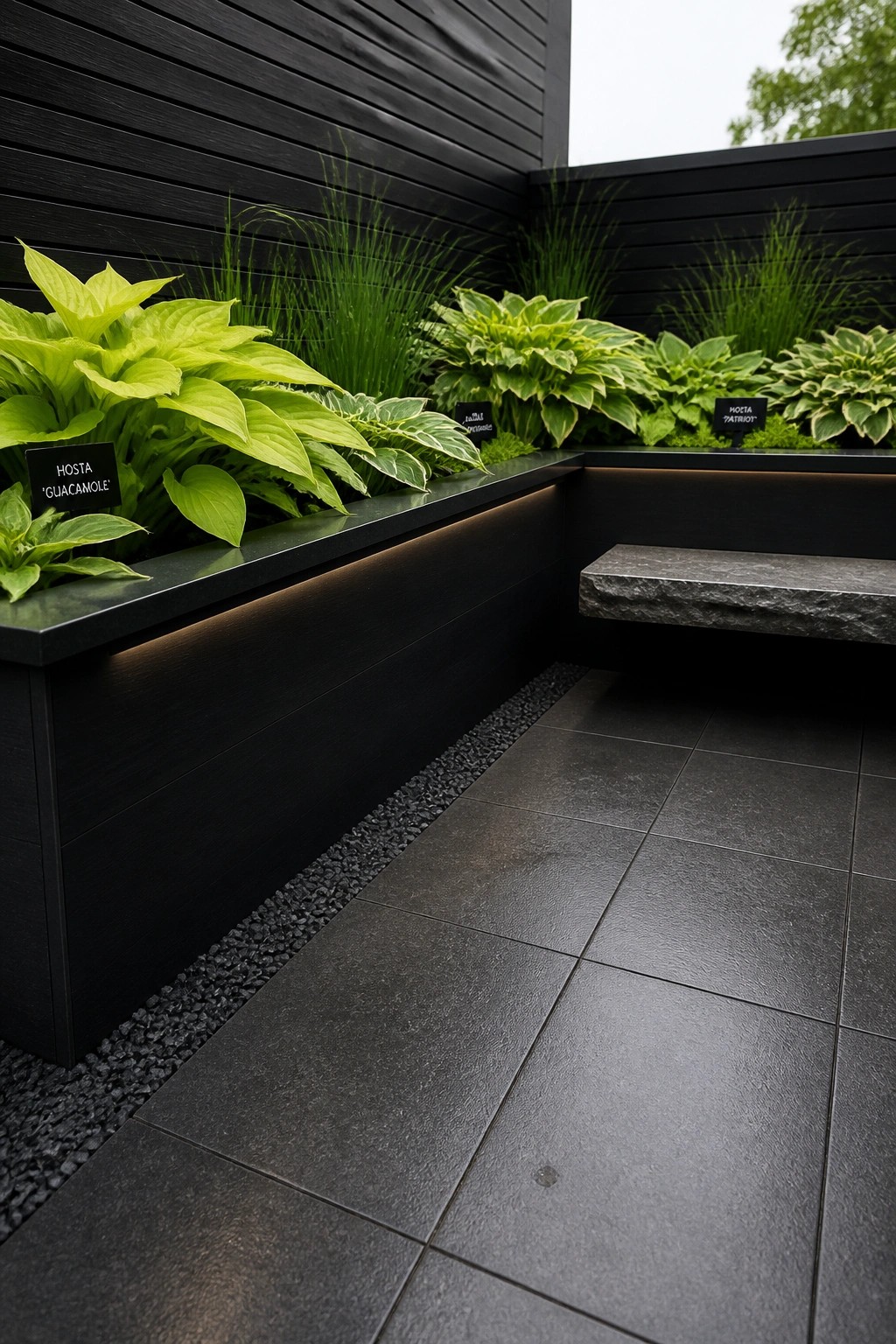
A dark raised bed can make a tiny corner feel more intentional without taking up much room. The deep color keeps the focus on the plants while the clean lines help the space look organized instead of crowded.
This works best in backyards where you want low maintenance and a modern touch. Pair it with simple gravel edging and a few reliable shade plants so the bed stays neat year after year. Add a slim light strip along the inside edge if you want to enjoy the plants after dark.
Brick Raised Beds With Tile Accents
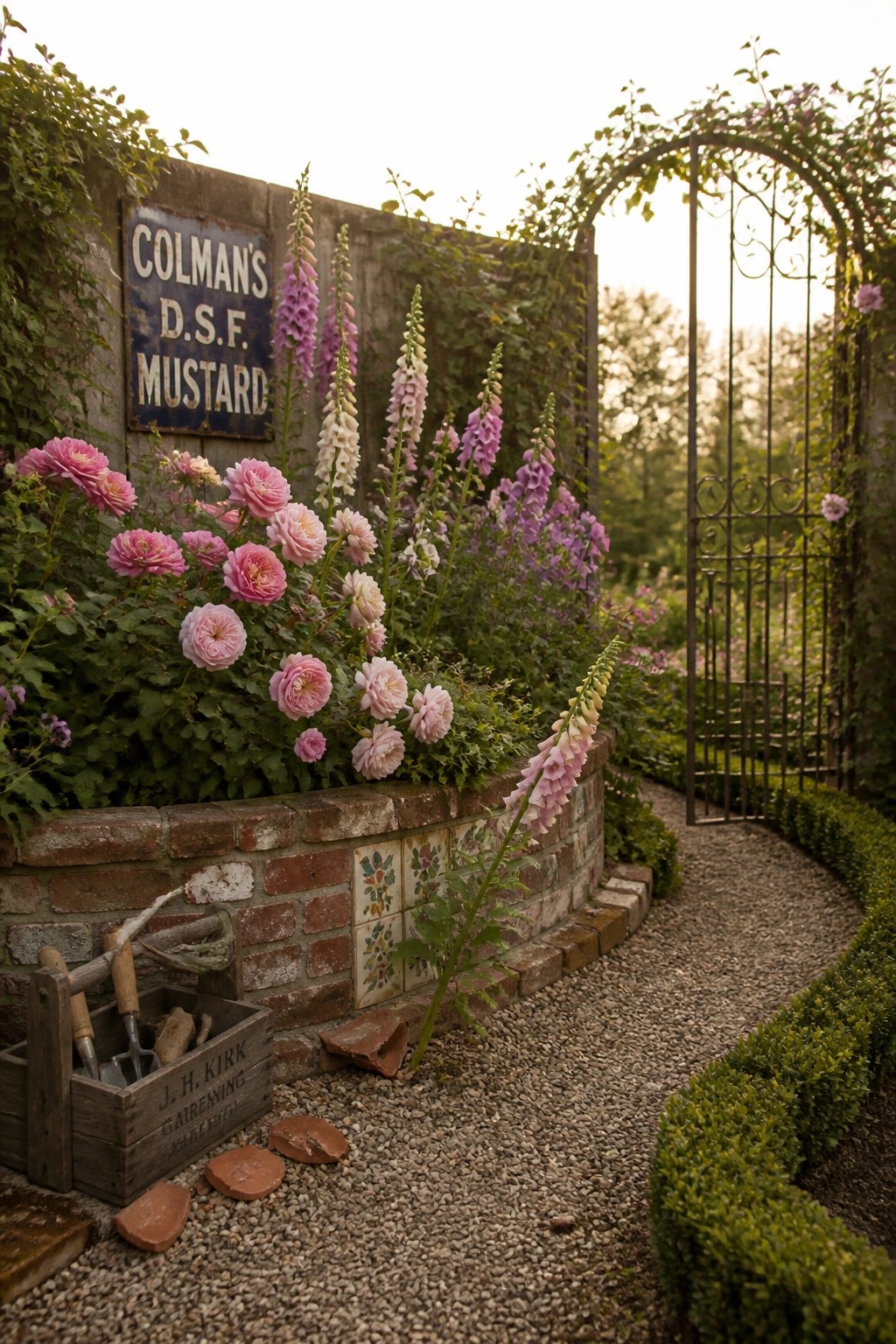
A low brick raised bed gives you a clean edge that lasts and helps keep soil in place in a small corner. The tiles set into the front add a simple pattern that breaks up the plain brick without adding bulk.
This approach works well along a path or against a wall where space is tight. It suits older homes or cottage gardens and keeps the planting area neat while leaving room for a gravel walkway.
Wooden Crates Make Simple Raised Beds

Many gardeners turn to old wooden crates when they need a quick raised bed for a small corner. The boxes stack easily and hold soil without much extra work, which keeps the setup light and affordable.
They suit tiny backyards best because you can move them around or add more as space allows. Just line the inside if the wood is untreated and place the crates on gravel or bare ground so water drains well.
Frequently Asked Questions
Q: Can these beds really work in a space barely two feet across?
A: Start with a skinny vertical design that hugs the fence or wall. It leaves just enough room to reach in and tend the plants without blocking your path. Narrow beds like this still give roots plenty of depth when you build them up.
Q: What if I skip the wood and use something I already have around?
A: Old crates or metal tubs turn into quick beds with almost no extra work. Just drill a few holes in the bottom for drainage and set them in place. They hold up well in a corner where they stay partly sheltered.
Q: How do I stop the soil from drying out fast in such a small spot?
A: Water in the morning and check again by midafternoon since tiny beds heat up quicker. A light layer of mulch on top slows evaporation without much fuss. This keeps the plants steady even on hot days.
