

Are your cucumber plants taking a nosedive in their pots? Picture this: you eagerly planted those seeds, dreaming of fresh cucumbers, only to find them drooping and tangled. Fret not, as your green saviors are here! In this article, discover the secrets to supporting your cucumber plants in pots like a pro.
Selecting the Right Pot
When it comes to supporting your cucumber plants effectively, the first step is to choose the right pot. Here are some key points to consider:
- Size Matters: Opt for a pot that provides ample room for root growth. Aim for a pot that is at least 12-16 inches deep.
- Drainage is Key: Ensure the pot has proper drainage holes to prevent waterlogging, which can lead to root rot.
- Material Selection: Look for pots made of durable materials like plastic, ceramic, or terra cotta. Avoid porous materials that may dry out too quickly.
- Consider Climbing Varieties: For cucumber plants that vine or climb, you may want to select a pot that accommodates trellises or support structures.
Remember, the right pot sets the foundation for healthy and thriving cucumber plants in your container garden.
Choosing the Ideal Location
When selecting the location for your potted cucumber plants, opt for a spot that receives at least 6-8 hours of direct sunlight daily. This ensures adequate sunlight for photosynthesis and healthy plant growth.
Ensure the area is sheltered from strong winds, as they can damage the delicate cucumber vines. Placing your pots near a wall or using a windbreak can protect your plants from strong gusts.
Consider proximity to a water source. Cucumbers need consistent watering, so having easy access to water will make it simpler to maintain optimal soil moisture levels.
Avoid locations with extreme temperature fluctuations. Find a spot with stable temperatures to prevent stress on the plants and promote steady growth.
Remember, the ideal location for your cucumber plants is key to their overall success in a pot.
Providing Adequate Support Structures
When it comes to supporting cucumber plants in pots, it’s essential to consider the following factors:
- Choose Proper Trellises or Cages: Select sturdy and durable supports that can bear the weight of growing cucumbers.
- Install Supports Early: Place the support structures near the plants when they are young to avoid damaging the roots later.
- Tie up Plants Gently: Use soft ties like twine or plant clips to avoid injuring the vines.
- Prune Regularly: Trim excess foliage to keep the plant focused on producing fruit rather than excessive greenery.
- Check for Growth: Monitor your cucumber plants’ progress regularly and adjust the support as needed to prevent bending or breaking.
| Key Tip: | Choose supports that are at least 5 feet tall to accommodate the vine’s growth. |
|---|
Recommended Products
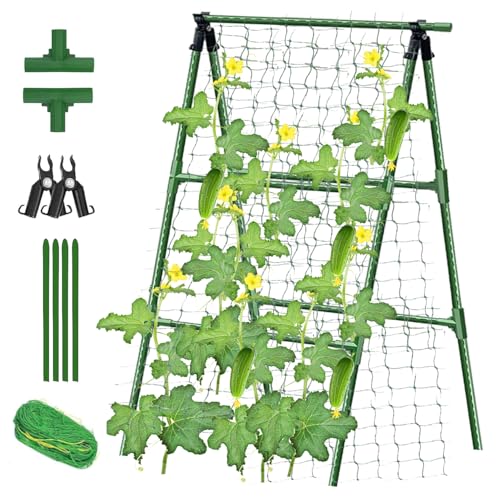
【Groumh A-FRAME DESIGN】NOTE: THE TRELLIS IS FOR SMALL PLANT NOT FOR BIG!! sturdy 48x15in A-frame cucumber trellis can grow various plants from both sides of the trellis....
Watering and Fertilizing Techniques
When cultivating cucumber plants in pots, watering and fertilizing are crucial steps to ensure healthy growth and abundant harvests. Here are some essential techniques to help you nurture your potted cucumber plants effectively:
- Watering:
- Consistency is key. Water your cucumber plants regularly, especially during hot weather.
- Keep the soil moist but not waterlogged to prevent root rot.
- Consider using a drip irrigation system to deliver water directly to the roots.
- Fertilizing:
- Choose a balanced fertilizer with equal parts nitrogen, phosphorus, and potassium.
- Feed your plants every 2-3 weeks during the growing season.
- Avoid over-fertilizing, as it can lead to excessive foliage growth at the expense of fruit production.
By following these Watering and Fertilizing Techniques, you can provide your potted cucumber plants with the nutrients and hydration they need to thrive and produce a bountiful harvest.
Dealing with Pests and Diseases
When growing cucumber plants in pots, it’s essential to be mindful of pests and diseases that can threaten your plants. Here are some practical tips to help you combat these common issues:
- Identify the Problem: Keep an eye out for common pests like aphids or spider mites as well as signs of diseases such as powdery mildew or bacterial wilt.
- Natural Remedies: Consider using neem oil or insecticidal soap to deter pests without harming beneficial insects. For diseases, try fungicides approved for organic gardening.
- Cultural Practices: Opt for proper spacing between plants to improve air circulation and avoid overcrowding that can lead to disease spread.
- Regular Inspection: Check your plants frequently for any signs of trouble. Early detection can prevent pest infestations or disease outbreaks.
- Sanitation: Remove any diseased or infested plant parts promptly to prevent further spread within your potted cucumber garden.
- Companion Planting: Some plants like basil or marigolds can help repel pests naturally. Consider planting them alongside your cucumber plants.
- Consult Experts: If you’re unsure about a particular pest or disease issue, reach out to local garden centers or extension services for guidance.
By staying vigilant and taking proactive measures, you can protect your potted cucumber plants from pests and diseases, ensuring a healthy and productive harvest.
Recommended Products

FUNGAL DISEASE CONTROL: Prevents and controls black spot on roses, powdery mildew, rust, downy mildew, and other listed fungal diseases when applied on a 7–14 day schedule

Protect your oasis with 3 garden products in 1 from Captain Jack’s; Bonide Captain Jack’s Ready-to-Use Neem Oil spray for plants is a multi-purpose fungicide, insecticide and miticide for your lawn & garden

PLANT DISEASE CONTROL: Natria Neem Oil acts as an insecticide and fungicide in one convenient spray; Ready-to-use trigger sprayer requires no mixing
Conclusion
You’ve learned how to care for your potted cucumber plants by addressing pests and diseases. By following the tips shared in this article, you can ensure your plants stay healthy and thrive. Remember to identify pests early, use natural remedies, and maintain good plant hygiene. With these practices in place, you’ll be on your way to a successful cucumber harvest. Stay vigilant, stay proactive, and enjoy the fruits of your labor!
Frequently Asked Questions
What are some common pests and diseases that affect potted cucumber plants?
Common pests include aphids, spider mites, and cucumber beetles. Diseases like powdery mildew and bacterial wilt can also impact cucumber plants.
How can I naturally control pests on my potted cucumber plants?
You can use neem oil, insecticidal soaps, or introduce beneficial insects like ladybugs to control pests on your cucumber plants.
What cultural practices can improve the health of my potted cucumber plants?
Practices like proper watering, fertilizing, and providing adequate sunlight and airflow can improve the overall health of your potted cucumber plants.
Why is it important to regularly inspect my potted cucumber plants for pests and diseases?
Regular inspections allow you to identify and address pest or disease issues early, helping prevent them from spreading and causing significant damage to your plants.
What should I do if I notice signs of pests or diseases on my potted cucumber plants?
Promptly remove any affected or diseased parts, consider companion planting with pest-repelling plants, and consult with gardening experts for advice on appropriate treatment options.
