

Ever wondered how to grow your own crisp cucumbers right in your backyard? Picture this: it’s a warm summer day, and you’re harvesting fresh cucumbers to add a delicious crunch to your salads. Exciting, right? In this article, you’ll discover the simple yet rewarding process of planting cucumbers from seedlings.
Have you ever faced the disappointment of store-bought cucumbers lacking that garden-fresh taste? Say goodbye to bland cucumbers and hello to homegrown goodness. By following our step-by-step guide, you’ll soon be enjoying flavorful cucumbers straight from your garden.
Get ready to elevate your gardening game and savor the satisfaction of growing your own cucumbers. With our expert tips, you’ll soon be on your way to a bountiful cucumber harvest that’ll have you feeling like a green-thumbed pro in no time.
Selecting the Right Seedlings
When choosing seedlings for your cucumber plants, opt for healthy ones with vibrant green leaves and sturdy stems. Avoid any seedlings that appear weak or have discoloration.
Consider the variety of cucumbers you want to grow; whether it’s slicing cucumbers, pickling cucumbers, or specialty types, make sure the seedlings match your preferences.
Check the roots of the seedlings. They should be well-developed but not overcrowded in their container. Well-established roots are crucial for the plant’s early growth stages.
Look for local options when possible. Seedlings that are suited to your region’s climate and soil conditions are more likely to thrive in your backyard.
Opt for organic seedlings if you aim to grow your cucumbers without synthetic pesticides or fertilizers right from the start.
Consider starting your seedlings from scratch if you want full control over the growing conditions, ensuring the health and quality of your cucumber plants.
Think about the spacing and number of seeds in each container. Overcrowding can lead to competition for nutrients, affecting the overall growth of your cucumber plants.
When in doubt, don’t hesitate to seek advice from local gardening centers or online forums to make informed choices for your cucumber seedlings.
Choosing the Perfect Location
Before you start planting your cucumber seedlings, it’s crucial to choose the right location in your garden. Here are some essential tips to help you select the perfect spot:
- Sunlight: Find a sunny spot in your garden that receives at least 6-8 hours of sunlight daily. Cucumbers thrive in sunlight.
- Soil: Ensure the soil is well-draining and rich in organic matter. pH level should be between 6.0-7.0 for optimal growth.
- Space: Cucumbers need space to spread out. Leave about 2-3 feet between each plant for proper growth and airflow.
- Protection: Protect your cucumbers from strong winds, which can damage the plants. Consider using fences or plant them near a windbreak.
- Accessibility to Water: Choose a location near a water source to ensure easy watering, especially during the hot summer months.
By selecting the perfect location for your cucumber seedlings, you set them up for success and ensure a bountiful harvest.
Preparing the Soil
To ensure healthy cucumber growth, start by preparing the soil properly:
- Test your soil: Check pH levels to ensure it’s between 6.0-7.0.
- Amend the soil: Add compost or aged manure for nutrient-rich soil.
- Loosen the soil: Break clumps and ensure good drainage.
- Remove weeds: Clear the area to prevent competition for nutrients.
Remember, well-prepared soil sets the foundation for thriving cucumber plants.
Recommended Products

Compact Growth: Cucumber Picklebush plants are known for their compact, bush-like growth, making them ideal for small gardens, containers, or spaces with limited room.


Non-GMO & Organic Certified Seeds – Enjoy peace of mind with Marketmore Cucumber seeds that are USDA Certified Organic by OTCO and Non-GMO. Proudly grown in the USA, these seeds bring healthy, natural goodness straight to your garden.
Transplanting Seedlings
When transplanting cucumber seedlings, ensure the soil is well-prepared. Here’s how:
- Timing: Wait until after the last frost date in your area.
- Preparation: Dig a hole slightly larger than the seedling’s root ball.
- Spacing: Plant seedlings 12-24 inches apart in rows 3-6 feet apart.
- Depth: Plant seedlings at the same depth as they were in their containers.
- Watering: Water seedlings immediately after transplanting and regularly.
- Sunlight: Place seedlings in an area with full sun for optimal growth.
- Support: Consider using trellises or stakes for vertical growth.
Transplanting seedlings is a crucial step in planting cucumbers successfully.
Recommended Products

ADJUSTABLE SIZE:This tomato cage can be seamlessly adjusted to reinforce existing plant supports or extend vertical growing space for your plants. From delicate seedling stage to full harvest season, this plant support cage fully meets the needs of healthy and upright growth for your plants
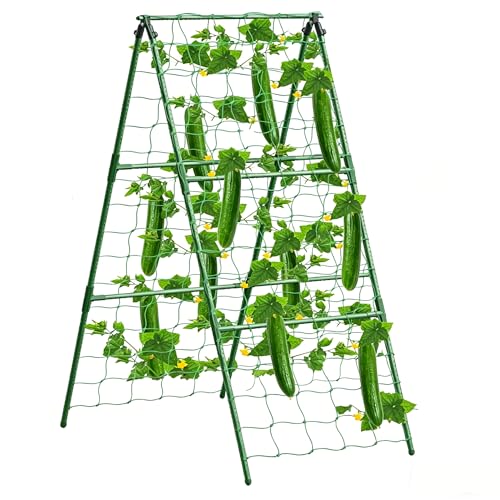
【Package included】:This Trellis for Climbing Plants Outdoor comes complete with everything you need to get started: 17pcs metal stakes, 8pcs T shape connect pipe, 2 A-shaped connectors, and a 0.9x1.8meter plant net.

【Multi-Function】 Tall Tomato Cage-Each tomato cage can be adjusted from 16inches to 47 inches in height,suit for different growth stages of plants, offering versatile supports for a wide variety of tomato plants, ensuring they grow tall and strong.
Caring for Your Cucumber Plants
Taking care of your cucumber plants is essential for ensuring a bountiful harvest. Here are some key tips to help you tend to your cucumber plants effectively:
- Watering: Keep the soil consistently moist, but not waterlogged. Ensure 1-2 inches of water per week, adjusting based on weather conditions.
- Sunlight: Cucumbers thrive in 6-8 hours of direct sunlight each day. Make sure they are planted in a sunny spot in your garden.
- Fertilizing: Feed your cucumber plants with a balanced fertilizer every 2-3 weeks to support healthy growth.
- Pruning: Regularly prune any yellow or diseased leaves to promote airflow and prevent diseases from spreading.
- Support: Consider using trellises or stakes to support your cucumber plants as they grow, keeping the fruit off the ground and reducing the risk of rot.
Ensuring you address these key aspects of caring for your cucumber plants will help you nurture healthy, productive vines that yield an abundance of fresh cucumbers for you to enjoy.
Recommended Products

[DURABLE AND STURDY] Crafted from robust hollow steel, this garden stakes features a fade-resistant green plastic coating, offering reliable protection against wind, rain, and rust. With anti-slip ridges, it's easy to tie on plant ties, aiding in plant climbing. the pointed bottom design of tomato stakes enables effortless soil insertion, ensuring a secure anchoring effect with minimal effort

【DIY Kit】 This kit contains 20 stakes, each 17" in length and 0.335" in diameter, along with 14 connectors, 14 rotatable clips, 14 plant clips. You can connect two or more stakes to achieve the desired length.

🌹2 in 1 Garden Trellis -- Our plant trellis can be configured into 2 types of trellising (panel trellis & plant cage), and you also can place 2 or most panels together to form a larger trellis panel or cage. Adjustable structure plant stakes can meet your different plant supports need.
Conclusion
You’ve now learned the essential steps to care for your cucumber plants and ensure a successful harvest. Remember to water them consistently, give them plenty of sunlight, fertilize regularly, prune any diseased leaves, and provide support with trellises. By following these guidelines, you’ll be on your way to growing healthy cucumber vines that produce delicious cucumbers. Happy planting!
Frequently Asked Questions
How often should I water my cucumber plants?
Water your cucumber plants consistently, aiming to keep the soil moist but not waterlogged. Typically, it’s recommended to water them deeply 2-3 times a week, adjusting based on weather conditions.
How much sunlight do cucumber plants need?
Cucumber plants thrive in full sunlight, requiring at least 6-8 hours of direct sun daily for optimal growth and fruit production.
When should I fertilize my cucumber plants?
Fertilize your cucumber plants every 2-3 weeks with a balanced fertilizer to provide essential nutrients for healthy growth and fruit development.
Why is pruning important for cucumber plants?
Pruning helps with air circulation, reduces disease risk, and focuses plant energy on fruit production, leading to higher yields of quality cucumbers.
Do cucumber plants need support?
Yes, cucumber plants benefit from support like trellises or cages to keep the vines off the ground, promoting better air circulation, easier harvesting, and preventing rot.
