

Ever wondered how to make the most of your garden space while growing delicious cucumbers? Picture this: you’re eager to grow your own fresh produce but limited on space. What if we told you there’s a simple solution that not only saves space but also improves your cucumber harvest?
Benefits of Growing Cucumber on Trellis
Increased Yield: When you grow cucumbers on a trellis, you can harvest more cucumbers in the same space.
Better Air Circulation: Growing cucumbers vertically on trellises improves air circulation around the plants, reducing the risk of diseases.
Easier Harvesting: Cucumbers are easier to pick when grown on a trellis, saving you time and effort.
Space Saving: Utilizing a trellis allows you to maximize your garden space, making it ideal for smaller or urban gardens.
Reduced Pest Damage: Elevating cucumbers on a trellis can help prevent pest damage to your plants.
Less Bending and Stooping: Training cucumbers to grow vertically on a trellis means less bending for you during maintenance and harvest.
Support for Vining Plants: Trellises offer essential support for vining cucumber plants, promoting healthy growth and straighter cucumbers.
| Metric | Value |
|---|---|
| Increase in Yield | 30-50% |
| Space Saving | Up to 60% |
Choosing the Right Trellis for Cucumbers
When it comes to choosing the right trellis for your cucumbers, there are a few factors to consider to ensure optimal growth and support for your plants. Here are some key points to keep in mind:
- Material: Opt for sturdy materials like wood, metal, or plastic. Wooden trellises provide a natural look and can be custom-built to fit your space, while metal ones offer durability and a modern aesthetic.
- Height: Ensure the trellis is tall enough to support the vertical growth of your cucumber plants. A height of at least 5 to 6 feet is ideal to allow the vines to climb and spread easily.
- Spacing: Consider the spacing between the trellis slats or wires. Make sure the gaps are wide enough for easy harvesting and good air circulation to prevent disease.
- Strength: Cucumbers can become heavy when mature, so choose a trellis that can support the weight of multiple fruit-bearing vines without bending or breaking.
- Ease of Maintenance: Select a trellis design that allows for easy access to the plants for pruning, harvesting, and pest control.
By selecting the right trellis for your cucumbers, you’ll provide them with the necessary support to thrive and maximize your garden space efficiently.
Recommended Products

Weather-Resistant Garden Trellis: This 6ft garden obelisk trellis is made with PE-coated steel and plastic connector rings to help resist outdoor rust and weather exposure. Insert the trellis at least 10in into soil for better stability in gardens, yards, raised beds, or large pots.

Adjustable Height & Versatile Design – This 6ft tall obelisk trellis features 4 adjustable rings to support plants at every growth stage. Perfect for roses, clematis, jasmine, tomatoes, cucumbers, and other climbing plants in pots, raised beds, or garden grounds.
Preparing Your Garden for Cucumber Trellising
To start growing cucumbers on a trellis, here are some essential steps to prepare your garden:
- Choose a Sunny Spot: Pick a location with full sun for your cucumber plants to thrive.
- Prepare the Soil: Ensure your soil is well-draining and rich in organic matter.
- Install the Trellis: Set up your trellis before planting to avoid disturbing the roots later.
- Plan for Space: Allow ample room for the cucumber vines to climb and spread.
Take these initial steps to set the stage for successfully trellising your cucumber plants.
Planting and Training Cucumber on Trellis
For successful cucumber growth on a trellis, plant your cucumbers in hills or rows, ensuring they get plenty of sun and their roots are well-drained.
Space your cucumber seeds or transplants about 6 inches apart in rows, or plant 3-4 seeds per hill, 1 inch deep.
Water the seeds or seedlings regularly, keeping the soil consistently moist but not waterlogged, especially during the hot summer months.
When vines reach a few inches tall, gently guide them up the trellis to begin training them to climb by wrapping around the support.
Use soft ties or twine to help secure the plants to the trellis without damaging the vines as they grow.
Recommended Products
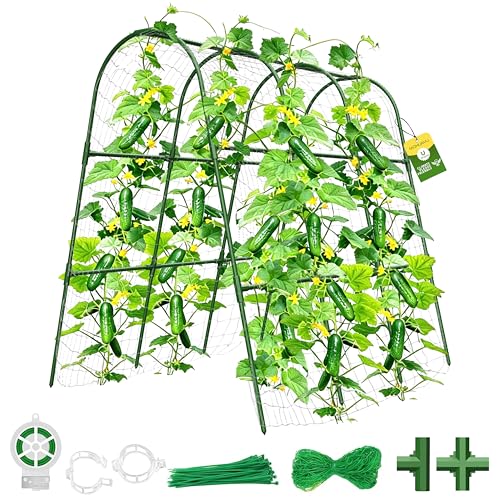
【U-Shape Stability Structure 】 U-frame trellis is more stable than A-frame trellis. Allowing you to plant a row on both sides. The arch design maximizes the garden space.

【Multi-Function】 Tall Tomato Cage-Each tomato cage can be adjusted from 16inches to 47 inches in height,suit for different growth stages of plants, offering versatile supports for a wide variety of tomato plants, ensuring they grow tall and strong.

【Package included】:Crafted from robust hollow steel, this garden stakes features a fade-resistant green plastic coating, offering reliable protection against wind, rain, and rust. This Trellis for Climbing Plants Outdoor comes complete with everything you need to get started: 17pcs metal stakes, 8pcs T shape connect pipe, 2 A-shaped connectors, and a 0.9x1.8meter bird net.
Maintaining Your Cucumber Trellis
To ensure your cucumbers thrive on the trellis, check the vines regularly to guide them as they grow, preventing them from tangling or sagging.
Harvest cucumbers frequently to encourage more fruit production and prevent the plant from becoming stressed or overloaded.
Inspect the trellis for any damages or signs of weakness, repairing or reinforcing it when necessary to support the weight of the growing cucumbers.
Consider planting companion plants like herbs or flowers near the cucumbers on the trellis to attract beneficial insects and promote a healthy garden ecosystem.
Cucumber Trellising Tips
- Use a sturdy trellis that can support the weight of mature cucumber plants laden with fruit.
- Train vines regularly to encourage upward growth and prevent overcrowding on the trellis.
- Avoid overcrowding by providing adequate spacing between cucumber plants to ensure proper air circulation and sunlight exposure.
| Watering Frequency | 2-3 times a week |
|---|---|
| Ideal Spacing | 12-24 inches apart |
| Harvest Time | 50-70 days after planting |
Caring for Cucumber Plants on Trellis
Growing cucumbers on a trellis offers many benefits, including increased air circulation, ease of harvesting, and better pest control. To ensure healthy and thriving cucumber plants, here are some essential care tips for your trellised crop:
- Regular Inspection: Check your cucumber plants frequently for any signs of pests, diseases, or nutrient deficiencies.
- Pruning: Trim off any dead or yellowing leaves to promote airflow and prevent the spread of diseases.
- Fertilizing: Provide a balanced fertilizer according to the specific needs of your cucumber plants.
Conclusion
You now have a solid understanding of how to care for cucumber plants on a trellis. By following the tips provided in this article, you can ensure your plants thrive and produce an abundant harvest. Remember to inspect your plants regularly, prune for optimal growth, and fertilize appropriately. Embracing these practices will not only lead to healthier plants but also make your gardening experience more enjoyable. Happy growing!
Frequently Asked Questions
Why should I grow cucumber plants on a trellis?
Growing cucumber plants on a trellis enhances air circulation, makes harvesting easier, and aids in pest control, resulting in healthier plants and higher yields.
How can I care for cucumber plants on a trellis?
Care involves regularly inspecting for pests, diseases, and nutrient deficiencies, pruning for airflow and disease prevention, and fertilizing with a balanced fertilizer suitable for cucumber plants.
What are the benefits of pruning cucumber plants on a trellis?
Pruning helps enhance airflow around the plants, reduces the risk of diseases by promoting drying, and encourages better fruit development and easier harvesting.
