


I have found that container gardens tend to shape how often a patio or deck actually gets used rather than just sitting there as background.
When I set up a few buckets near the seating last year the whole space felt more lived in once the plants filled out.
Not every recycled option works on a small balcony though.
It helps to check how much sun hits the spot and whether the containers can handle wind without tipping over.
Some of these bucket setups seem worth testing on the back porch where I can move them around as the seasons change.
Hanging Buckets Along The Railing

Many balconies have limited floor space, so people look to the railing for extra room. Buckets and other recycled metal containers can be tied or wired along the edge to hold plants without crowding the walkway.
This setup works best on metal or wood railings that can handle some weight. Drill drainage holes in the bottoms, use strong rope or wire, and check the attachments now and then so nothing tips.
Cluster Buckets And Crates On Porch Steps
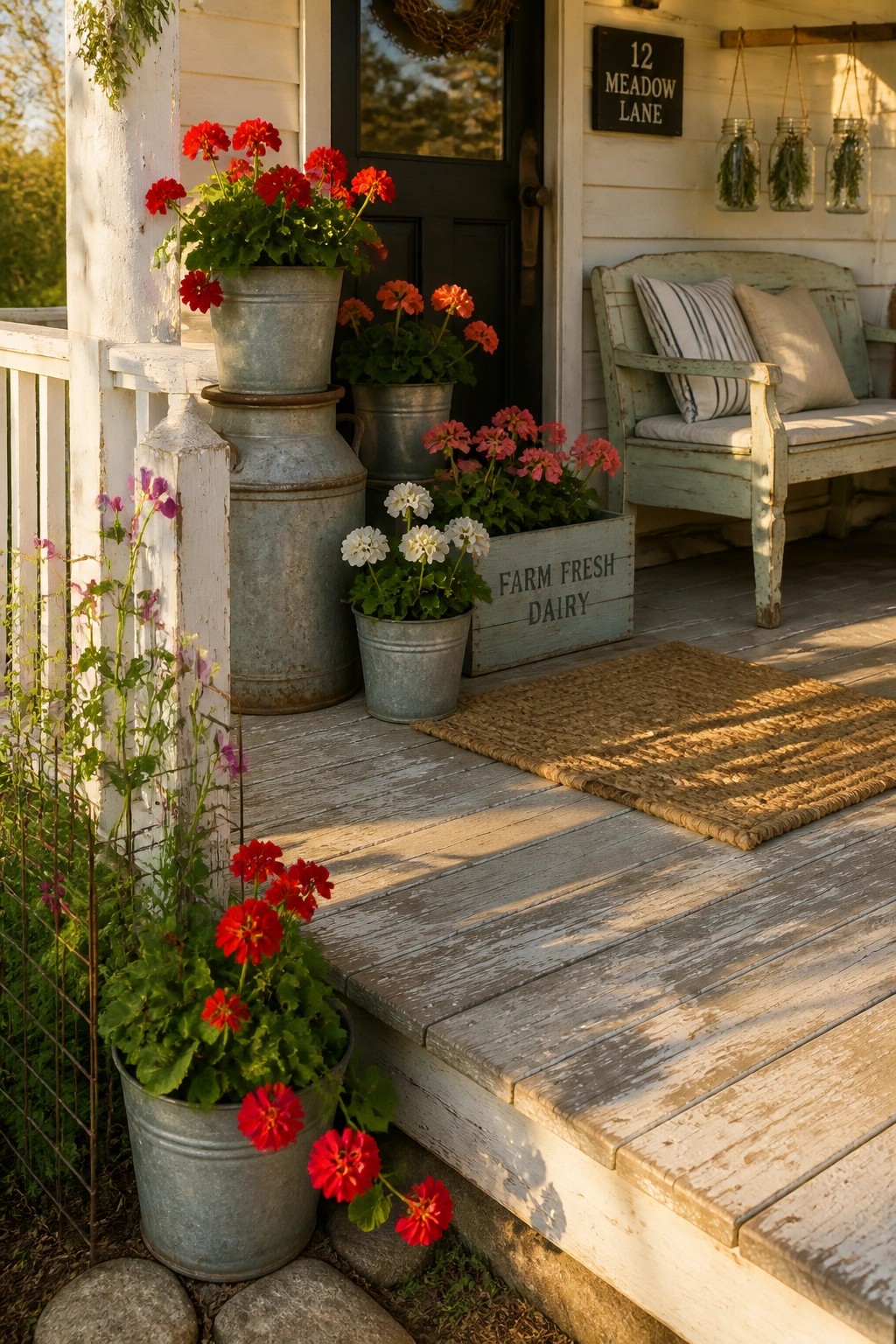
One easy way to add life to a porch is to collect old metal buckets and wooden crates and use them as planters. Grouping them at different heights along the steps lets the flowers spill over naturally and creates a simple layered look without much work.
This approach suits older homes with wooden porches or entry areas that already have some wear. Drill a few holes in the bottom of each container for drainage, then arrange them so taller plants sit behind shorter ones. The mix of metal and wood keeps the display casual and avoids a too-perfect garden feel.
Using Buckets As Patio Planters

Buckets make a simple choice for container gardening because they are easy to find and move when you want to change the layout. On a patio they can sit right on a bench or along the edge of the seating area without needing extra shelves or stands.
Try them for herbs or leafy greens that you reach for often while cooking. They work best in small outdoor spaces where you want flexibility and do not mind drilling a few holes for drainage.
Repurpose Household Containers For Your Garden

Many gardeners turn to old buckets and food containers when they want to start plants without buying new pots. This keeps costs low and makes use of things that would otherwise be thrown out.
It works especially well in small spaces or on a tight budget. Drill a few holes in the bottom for drainage and set the containers where they get enough sun.
Use Recycled Buckets And Colanders As Planters

Grouping a few different metal containers together makes a simple way to bring plants into an outdoor seating area. The mix of sizes and finishes adds some texture without needing a big garden bed or fancy pots.
This works best on a patio or pool deck where you want plants close to chairs or loungers. Just check that each container drains well and set them in a loose cluster so the arrangement feels natural rather than lined up.
Line A Path With Bucket Planters

Using buckets to line a garden path keeps things simple and flexible. You can move the containers later if the layout needs adjusting, and the different colors and sizes add interest without much planning.
This approach works best in narrow side yards or along a fence where a fixed bed would feel too heavy. Set the buckets directly on gravel or soil, and choose plants that can handle the sun or shade in that spot.
Hang Buckets From A Fence Or Lattice

Hanging buckets on a fence or lattice gives you extra planting space without crowding the ground. It works well when you want color at eye level and have a blank wall or fence that could use some life.
Old metal buckets in different colors make the setup simple and cheap. This approach fits homes with wooden structures already in place and keeps things easy to water and move if needed.
Vertical Gardens from Pallets and Recycled Cans
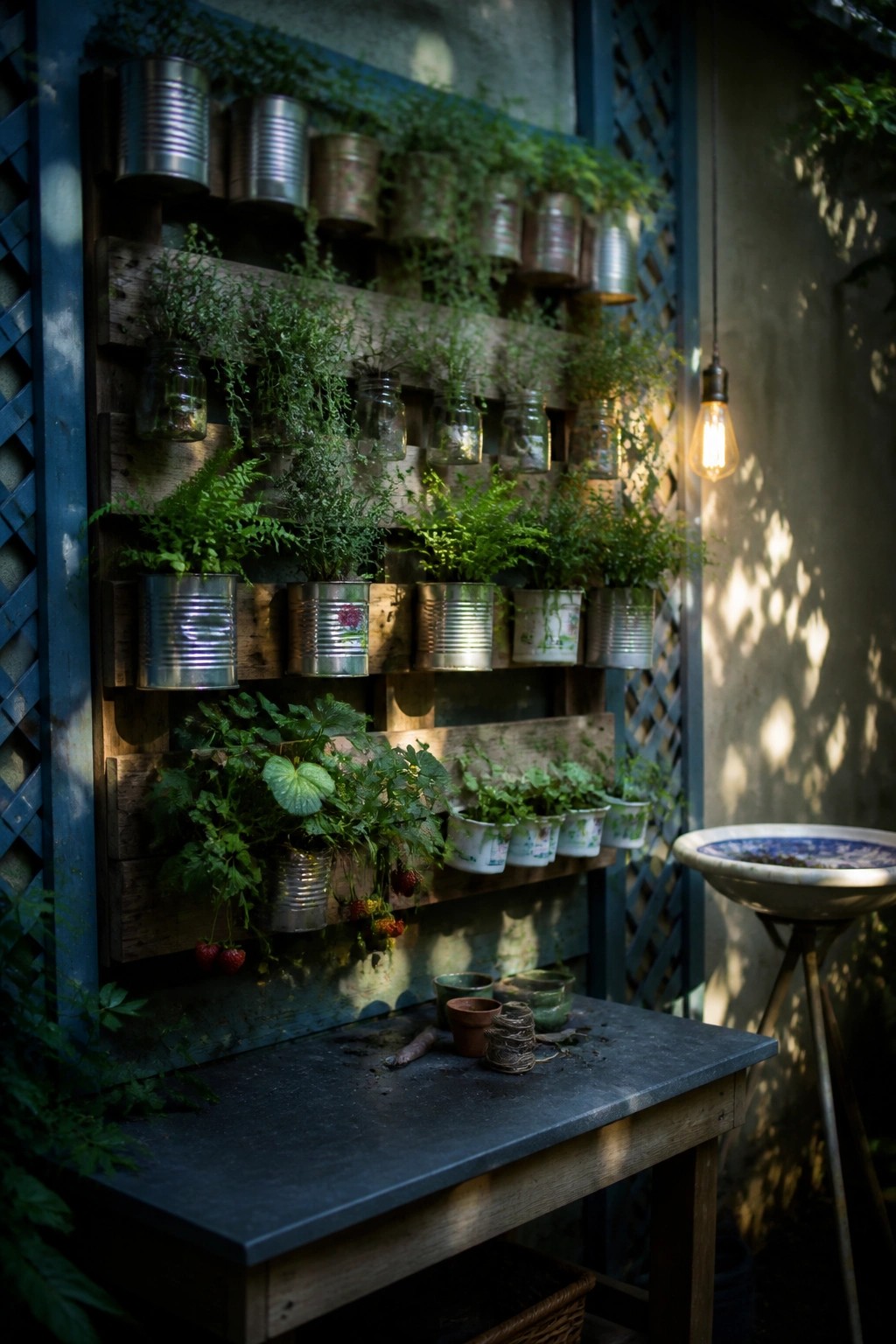
Mounting old pallets against a wall and attaching tin cans or jars turns a plain surface into a working garden. This setup lets you grow herbs, small greens, and flowers without taking up floor space, and the wood holds everything steady while the containers keep soil contained.
It works best along a fence, side of a shed, or even a balcony railing where light is good. Start with a few rows of cans screwed into the pallet slats, add drainage holes, and fill them as you go. The result stays simple and can be expanded later if you find more containers.
Use Recycled Buckets And Crates As Planters
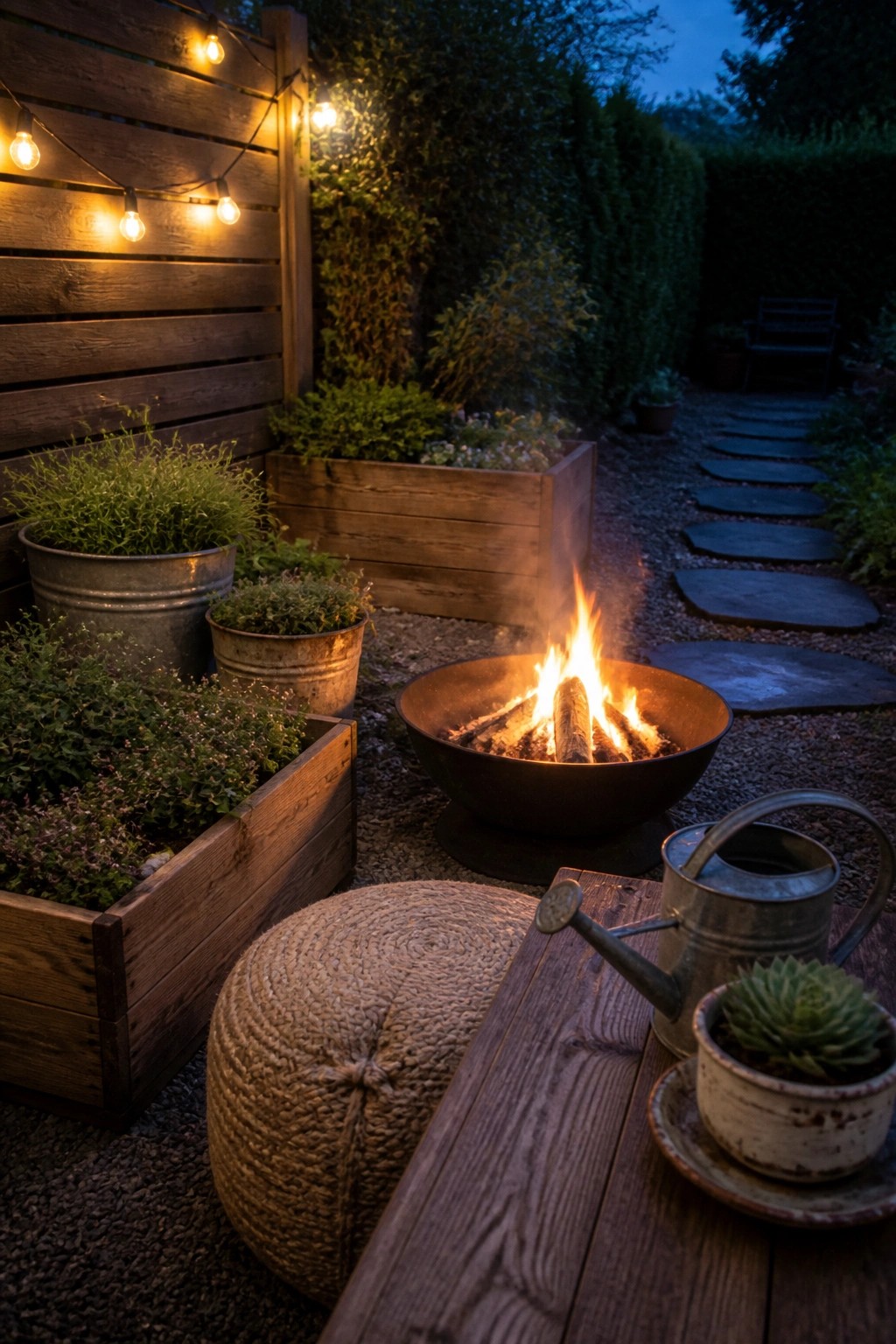
Metal buckets and old wooden boxes make simple planters that fit right into a backyard seating area. They cost little or nothing, hold up outdoors, and let you move plants around without much effort. This approach works especially well when you want greenery near a fire pit without building permanent beds.
Place a few taller buckets on one side and lower crates on the other so the plants frame the seating without blocking the view of the flames. The mix of metal and wood adds texture while keeping everything practical for small yards or patios. Just check that each container has drainage holes before you fill it with soil.
Hang Buckets And Jars For Outdoor Herbs

Many people want fresh herbs close to the grill or sink without taking up counter space. Hanging a few recycled metal buckets from overhead beams and tucking more into jars along the side of the counter keeps everything within easy reach while cooking outside.
This idea works best on a covered patio or deck where the structure can support the weight. Check drainage holes before hanging so the soil does not stay soggy, and choose spots that get enough sun for the herbs you want to grow.
Buckets Hung From the Railing Keep Herbs Within Reach
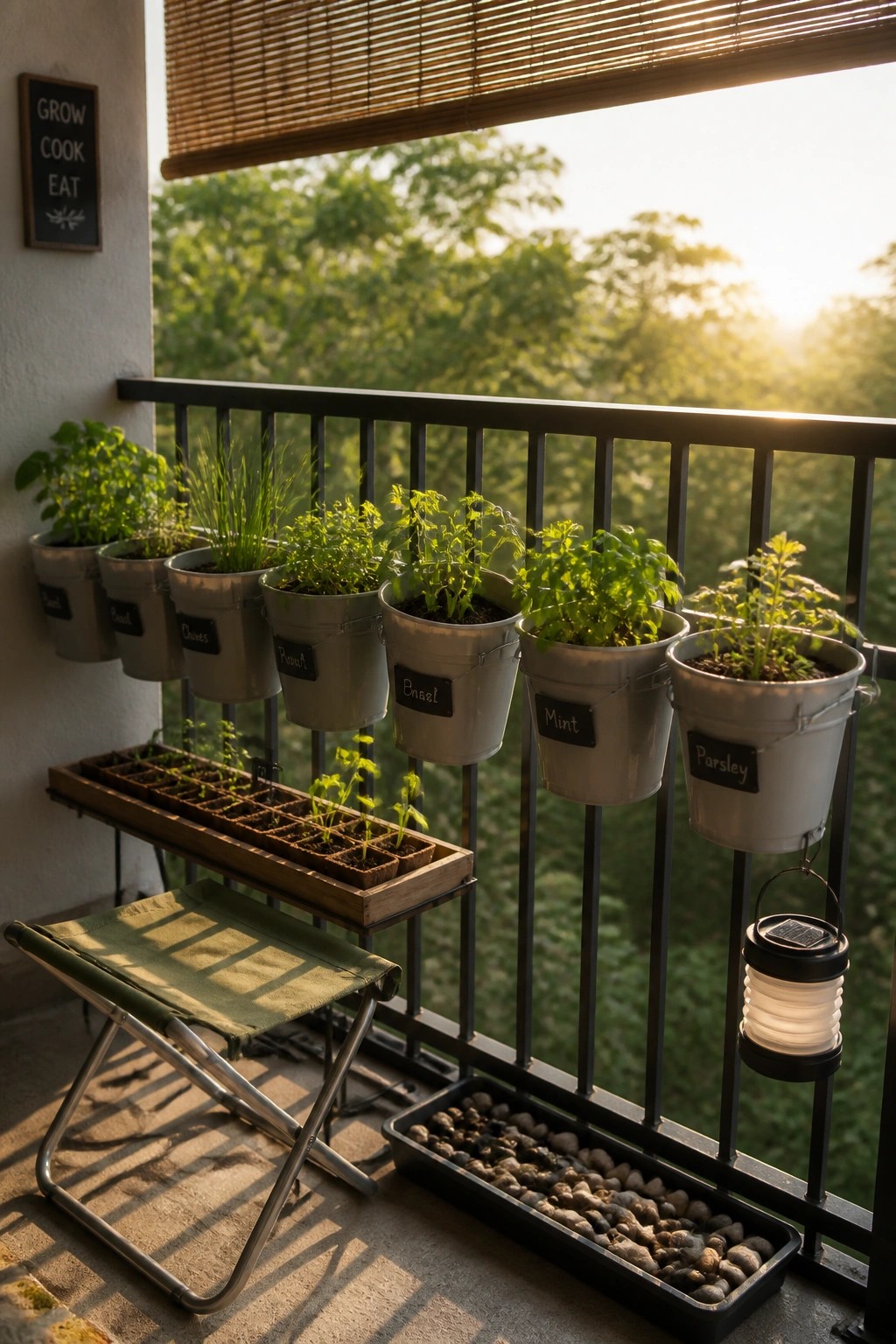
Many people with small balconies use metal buckets hung from the railing to grow herbs without losing floor space. The setup keeps plants at a comfortable height for watering and picking, and it works especially well when the railing is sturdy enough to hold the weight.
This approach suits apartments or homes with limited outdoor room. Drill drainage holes in the buckets, add a light soil mix, and check the railing brackets now and then so nothing tips or strains the metal over time.
Stack Drawers For Vertical Planters

Old drawers stacked together give you a simple way to add height and more planting space on a patio. They work well when you want flowers close to seating areas without spreading pots across the floor.
This setup fits small decks or balconies best. Drill a few holes in the bottom of each drawer for drainage and place the stack where it gets enough sun for the plants you choose.
Stacked Buckets Make A Simple Vertical Garden

Stacking metal buckets gives you a tall planter that uses very little ground space. This approach works well when you want more planting room but do not have a large bed to work with. The buckets sit one on top of the other and let plants spill out at different heights.
Place the tower in a sunny spot near a path or in a corner of the yard. It suits small gardens or side areas where flat planting feels crowded. Make sure each bucket has drainage holes and that the stack stays steady as it grows taller.
Use A Bench For Stacked Container Gardening

A bench gives you a simple way to line up several recycled buckets at once without taking over much ground space. It keeps the pots off the soil, improves drainage, and makes watering and harvesting easier on your back.
This setup works well in a small yard or along the edge of a vegetable patch where you need quick access to different crops. Just make sure the bench is sturdy enough to hold wet soil and place taller plants toward the back so everything gets sun.
Wheelbarrows Make Useful Planters

One simple way to add height and interest to a garden path is to plant directly in an old wheelbarrow. The shape already holds plenty of soil, and the wheels let you shift the whole thing if the light changes or you want a different view. It brings a bit of the working garden into the planting without extra structures.
This idea works best in smaller yards or along side paths where a raised bed would feel too heavy. Drill a few holes in the bottom for drainage, then fill it with a mix of taller flowers in the center and trailing plants along the edges. It suits homes that already have some worn garden tools or casual landscaping around.
Mixing Container Sizes For Layered Planting

One simple way to add structure to an outdoor space is to group containers in a few different heights. The mix keeps the planting from looking flat and gives each plant its own spot without extra fuss.
Set the tallest pots toward the back or against a wall, then step down to shorter ones in front. This works especially well along paths or seating areas, and it is easy to do with recycled buckets or old planters that you paint or leave plain.
Buckets Work Well As Patio Planters

Many people turn to old buckets when they want simple planters for a patio or balcony. The bucket gives you a ready-made container that already has some height, so the plants sit nicely among other pots without extra stands or shelves.
This works best in smaller outdoor spaces where you need a few larger plants but do not want to buy new pots. Just drill a few holes in the bottom for drainage and set the bucket where it gets the right amount of sun.
Use Old Kitchen Colanders As Hanging Planters

Hanging old colanders from a tree branch gives you a simple way to add plants above a patio without using floor space. The holes let water drain right through, so the plants stay healthy and you avoid the usual mess on the ground.
This setup works best on a shaded patio or under a big tree where you already spend time sitting. Try grouping several at different heights and filling them with herbs or trailing flowers. It keeps the area feeling open while still giving you plenty of greenery.
Recycled Buckets For Edge Planting
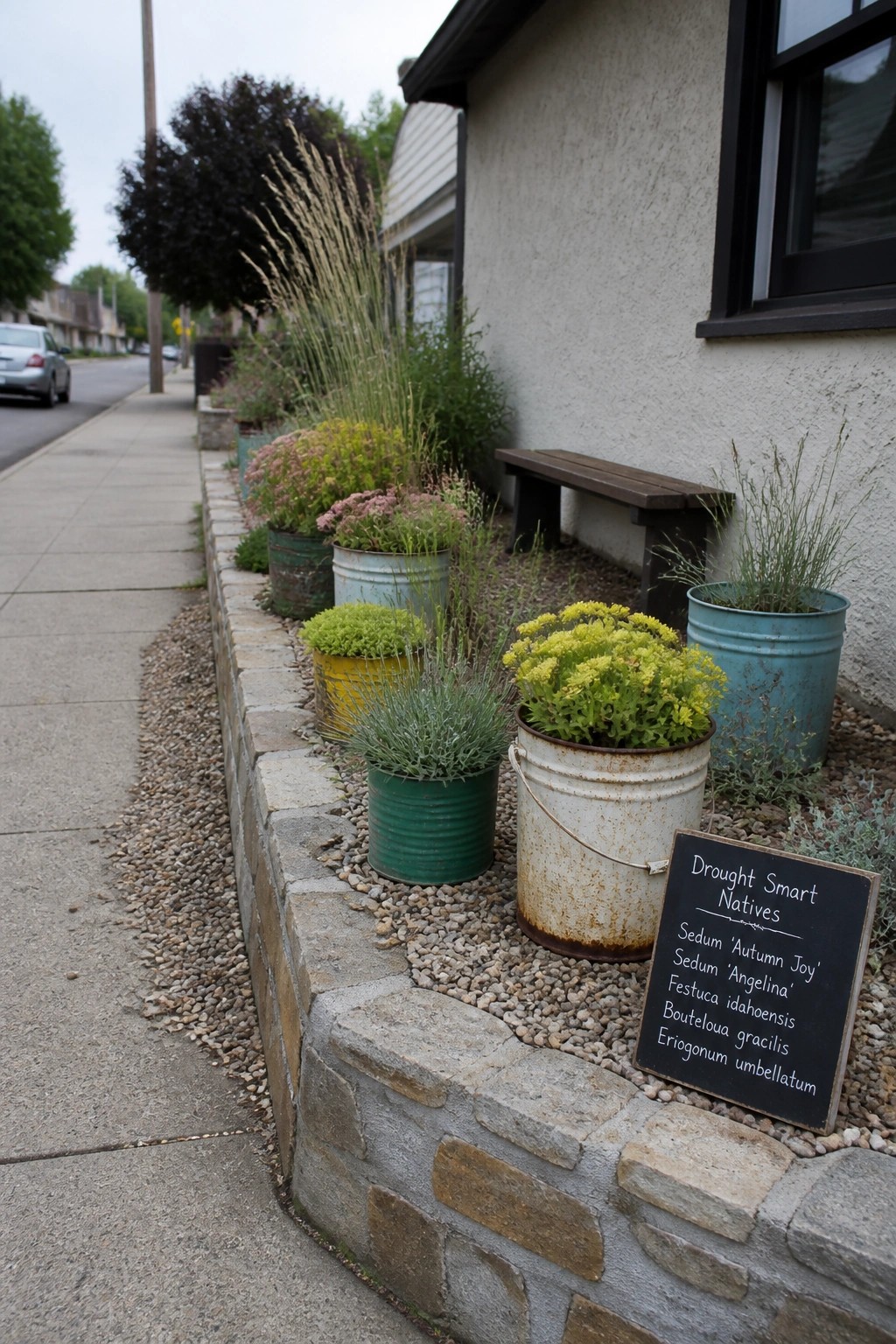
Old metal buckets can turn a plain strip of ground into a planted edge without much work. They sit right on gravel or soil, hold a mix of low water plants, and move easily if you need to rearrange them later. This setup works along a wall or sidewalk where digging beds would be hard.
Place the buckets in a loose row and fill them with tough native plants that handle dry spells. The containers keep roots contained and make it simple to swap plants or empty them in winter. It suits homes with narrow side strips or front edges that need something practical but still green.
Frequently Asked Questions
Q: How do I add drainage to my bucket without it leaking everywhere? A: Drill four or five holes in the bottom before filling it with soil. This stops water from pooling and keeps roots healthy. Place a tray underneath if your bucket sits on a deck.
Q: Which plants actually do well in a five gallon bucket? A: Leafy greens and bush beans grow fast in that space. Give them daily sun and water when the top inch of soil feels dry. Skip sprawling vines unless you add a simple stake.
Q: Are old food buckets safe for growing vegetables? A: Wash them thoroughly with soap and rinse until the water runs clear. Most plastic ones from kitchens or delis work fine after that step. Skip any that once held paint or cleaners.
