


I have found that balconies and patios often sit unused until someone figures out how to make them productive without crowding the space.
Many setups fail because people forget to check how much weight the floor can hold or where the afternoon shade actually falls.
Containers change everything.
Testing different depths and materials showed me which ones keep roots steady through heat waves while still leaving room to walk around.
Over time these choices turn a narrow ledge into a spot where picking tomatoes feels like part of the daily routine rather than an extra chore.
Container Gardens Along Balcony Railings

Many people skip growing tomatoes because they assume you need a yard or big garden beds. Mounting long containers right on the railing turns even a narrow balcony into a useful growing spot without taking up floor space.
This setup works well on apartments or townhomes where the only outdoor area is a small balcony. Use sturdy brackets to secure the planters and add simple bamboo stakes or cages so the plants stay upright as they fill in. Just check the weight limit for your railing before loading them with soil and water.
Mount a Vertical Planter on Your Balcony Wall

A vertical planter like this one frees up floor space while letting you grow several tomato varieties in one spot. The fabric pockets hold the plants upright against the wall, and the labels make it easy to keep track of what is growing where. Many people like this setup because it turns an empty wall into productive growing area without needing extra room.
This works well on balconies or small patios where ground space is limited. Secure the frame firmly so it can handle the weight of wet soil and full plants, and choose a spot that gets enough sun. It suits apartment dwellers who want more than a few pots but still have no backyard.
Line Stone Ledges With Containers
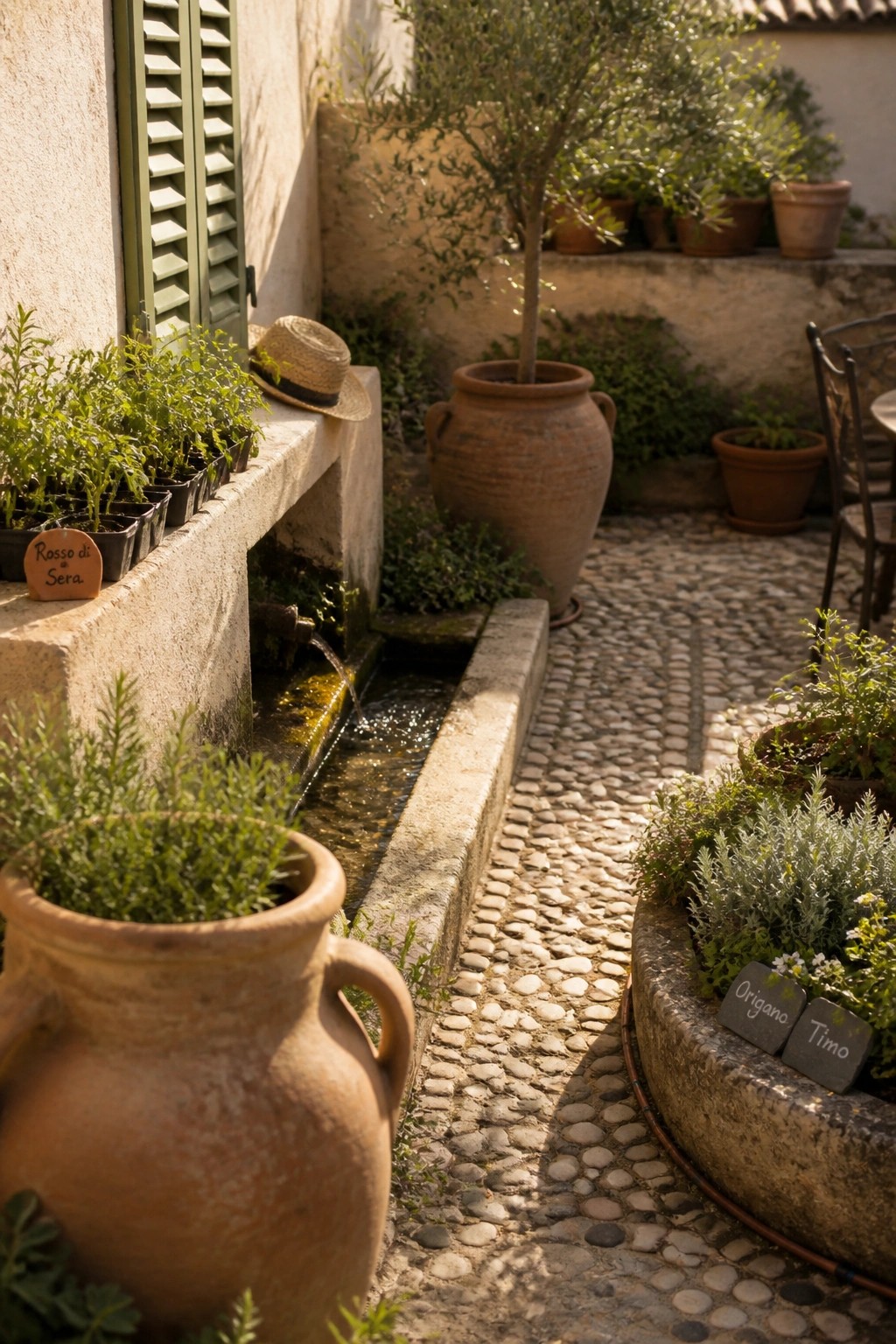
A stone ledge next to a path gives you a ready made spot for rows of pots without taking up floor space. Many people use this setup in small courtyards or side yards where there is no open soil, and it works especially well for tomatoes because the plants stay off the ground and get good airflow.
Choose pots that match the width of the ledge so they sit steady, and mix a few larger ones with smaller ones for variety. This approach suits homes with paved areas or narrow passages, but check that the ledge can handle the weight once the pots are filled with soil and water.
Cinder Block Raised Beds For Balconies

One easy way to grow tomatoes without a yard is to build low raised beds using cinder blocks and wood planks on a balcony or deck. The blocks lift the soil for better drainage and give the plants more root room while keeping the whole setup compact.
This approach works best on small outdoor spaces where you need sturdy support and a simple layout. Stack the blocks to the height you want, top them with planks, fill with soil, and add wire cages to keep the plants upright as they grow.
Add a Trellis to Your Tomato Planter

A basic trellis makes container tomatoes easier to manage when space is tight. It keeps the vines off the ground, improves airflow, and lets you fit more plants into one box without crowding.
This approach works well on balconies or decks that get steady sun. Use sturdy posts and twine or rope so the structure can handle the weight as the plants fill out.
Fabric Grow Bags On The Stoop

Fabric grow bags work well when space is tight and there is no backyard. They sit right on the ground or steps, drain easily, and can be moved if needed. Many people use them for tomatoes because the material keeps roots from circling and helps prevent overwatering.
Place a few bags along a front entry or side path where they get sun. Pair them with a simple watering routine and basic fertilizer, and they produce well without needing raised beds or big pots. Just watch that the spot stays level and gets enough light through the day.
Vertical PVC Pipe Planters

Vertical PVC pipes make it easy to grow tomatoes and other vegetables without needing ground space. The pipes take up very little floor area while still giving each plant its own spot, which works well in a greenhouse, sunroom, or bright indoor corner. Many people like this setup because it keeps plants off the ground and makes watering and harvesting simpler.
This approach suits apartments or homes with no backyard, as long as there is enough light. Cut holes along the pipe, fill it with soil or a growing mix, and set it upright near a window or under grow lights. Just watch the weight once the pipe is full and make sure it stays stable.
Tiered Stands Help You Grow More In Tight Spots

A tiered stand lets you fit quite a few pots into one small area without spreading them across the whole patio. It keeps plants off the ground, improves air flow around them, and makes watering and harvesting easier when space is tight.
Place the stand near a wall or railing so it does not block walking paths. Choose a sturdy metal frame that can handle the weight of full pots, and group plants with similar water needs on the same level.
Tiered Planters Work Well On Small Balconies

A tiered planter lets you fit several tomato plants and herbs into one spot instead of spreading pots all over the deck. It keeps the plants organized and makes watering and picking easier when space is tight.
This approach suits apartment balconies or small decks that get decent sun. Put larger tomato plants on the lower levels and smaller herbs up top so everything stays accessible and nothing gets shaded out.
Raised Wooden Planters On A Deck

Raised wooden planters give you a simple way to grow tomatoes when you only have a deck or patio. They keep the plants off the ground, make watering straightforward, and let you fit a decent number of vines into a small area without digging up any lawn.
This approach works best on decks that can handle the weight and have room for at least a few boxes in a row. Choose untreated cedar or pine if you can, and consider adding wheels so you can shift the boxes for sun or cleaning.
Hanging Baskets Free Up Floor Space

Many people with no yard turn to hanging baskets when they want to grow tomatoes on a balcony. The baskets keep plants off the floor so there is still room to walk or sit.
This approach works best on narrow city balconies where floor space is limited. Use sturdy chains and check that the railing can support the weight once the pots are full of wet soil.
Baskets Keep Tomato Containers Simple on a Deck
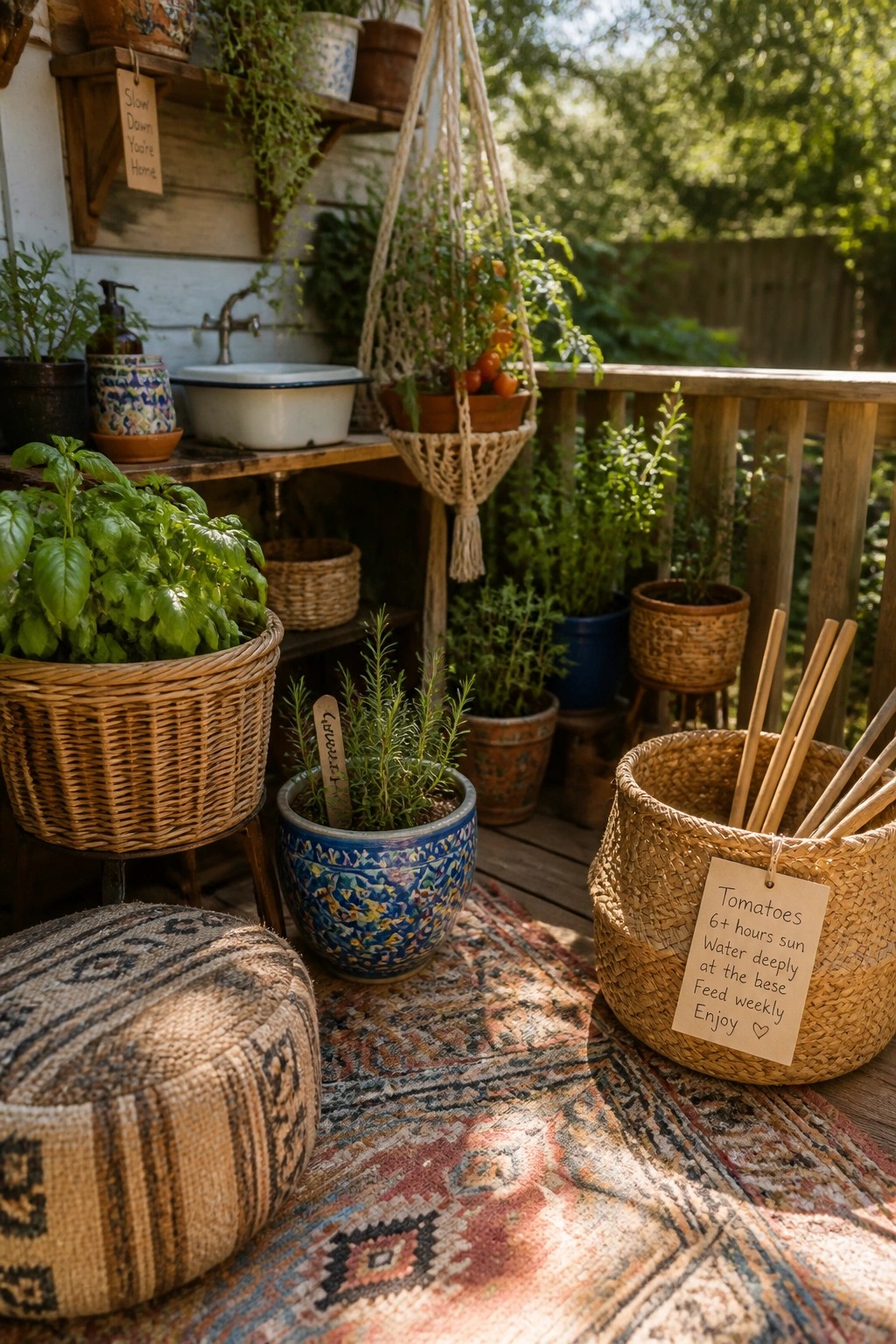
Baskets work well for tomatoes because they are light and easy to move around as the plants grow or the sun shifts. On a small deck or porch you can tuck them into corners or line them along the railing without needing built-in beds or heavy pots.
They suit homes with limited ground space and let you adjust the layout each season. Just make sure the baskets have good drainage and that you water a bit more often than you would with in-ground plants.
Grow Tomatoes Upward With Sturdy Cages

Many gardeners fit tomatoes into small yards by using tall cages inside a single raised bed. The vertical support keeps the plants from sprawling and makes it easier to reach the fruit without crowding the space.
This setup works best along a patio edge or in a narrow side yard where ground room is limited. Choose strong cages that can handle the weight once the vines are full, and place the bed where it gets steady sun.
Repurpose a Pallet Into a Vertical Tomato Planter

Many gardeners use an old wooden pallet to create a compact vertical planter when space is tight. The stacked levels let you fit several tomato plants in one spot while keeping them off the ground and easier to reach.
This idea works best against a sunny wall or fence with good drainage underneath. Line the openings with fabric, add soil, and water regularly since the plants dry out quicker than they would in larger pots.
Grow Tomatoes in a Greenhouse Raised Bed

A long raised bed inside a greenhouse gives you plenty of room to grow several tomato plants without needing any outdoor space. The wooden sides keep the soil contained and warm, while the glass roof brings in steady light all day. Stakes or simple teepees help the plants stay upright as they grow tall.
This setup works well for anyone with a sunny porch enclosure, sunroom, or small greenhouse. Just make sure the bed gets enough airflow and that you water regularly since the enclosed space can dry out faster than you expect. It is a simple way to turn an unused indoor area into a productive tomato garden.
Mount Vertical Containers on a Wall

A wall mounted system like this lets you grow tomatoes and other vegetables without needing ground space. The stacked containers keep everything off the floor, use vertical room that often goes unused, and make watering and harvesting easier since the plants sit at different heights.
This setup works best on a sunny exterior wall near a patio or side entrance. Keep a small rolling cart nearby for tools and supplies so you can tend the plants without hauling things back and forth. Make sure the wall gets enough light and that the brackets can handle the weight once the containers are full of soil and water.
Raised Stone Beds On A Deck

Raised stone beds let you grow tomatoes in a space that has no soil at all. They sit right on the deck boards, give the plants room to root, and keep everything neat without needing a yard.
This approach suits decks, rooftops, and balconies where weight can be supported. Keep the beds narrow enough to reach across and use a liner inside so the wood underneath stays dry.
Large Ceramic Pots For Balcony Tomatoes

Large ceramic pots give tomatoes plenty of room to grow even when there is no yard at all. The deep soil helps roots stay steady and holds moisture better than smaller containers, so the plants need less daily fuss.
Set the pots on a woven stand to keep them off the floor and improve airflow underneath. This works best on a sunny balcony or patio where the plants can get six hours of light and still leave space for seating or a hammock.
Frequently Asked Questions
Q: How often do I need to water tomatoes in containers?
A: Stick your finger into the soil each morning. Water when the top inch feels dry to keep roots steady without drowning them. Small pots dry out fast so check more often on hot days.
Q: What size pot works if I only have room for a few plants?
A: Choose at least a five gallon container for each tomato. This gives roots space and cuts down on constant watering. One solid pot per plant beats crowding them together.
Q: How can I stop pests from hitting my balcony tomatoes?
A: Inspect leaves once a week and pick off any bugs you spot by hand. A quick spray of soapy water handles most common invaders before they spread. Keep the area clear of fallen leaves to remove hiding spots.
