

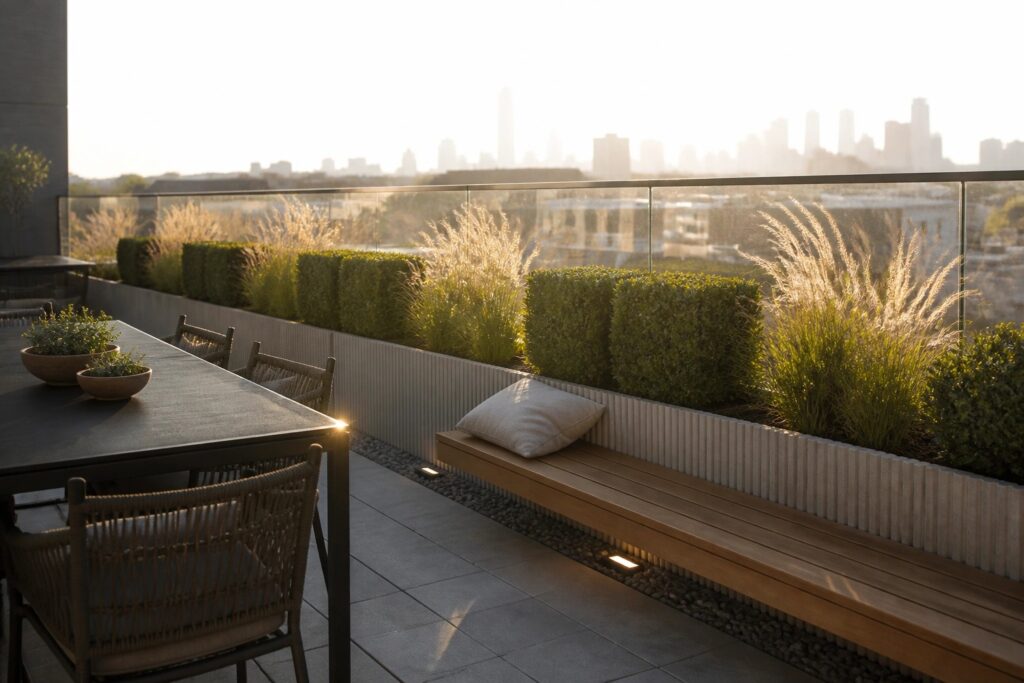
I have found that container gardens tend to work best when the planters are placed with an eye toward how the overall layout will look from key spots in the yard.
Structured greens give a sense of order that scattered pots rarely achieve, especially once plants fill in over a few months.
I would test a couple of simple rectangular options first to see how they shape the space.
The right scale of planter makes a bigger difference than most people expect when the goal is keeping the area feeling open rather than crowded.
Over time the arrangement either guides movement naturally or starts to block it in ways that become annoying.
Linear Planters With Structured Greens
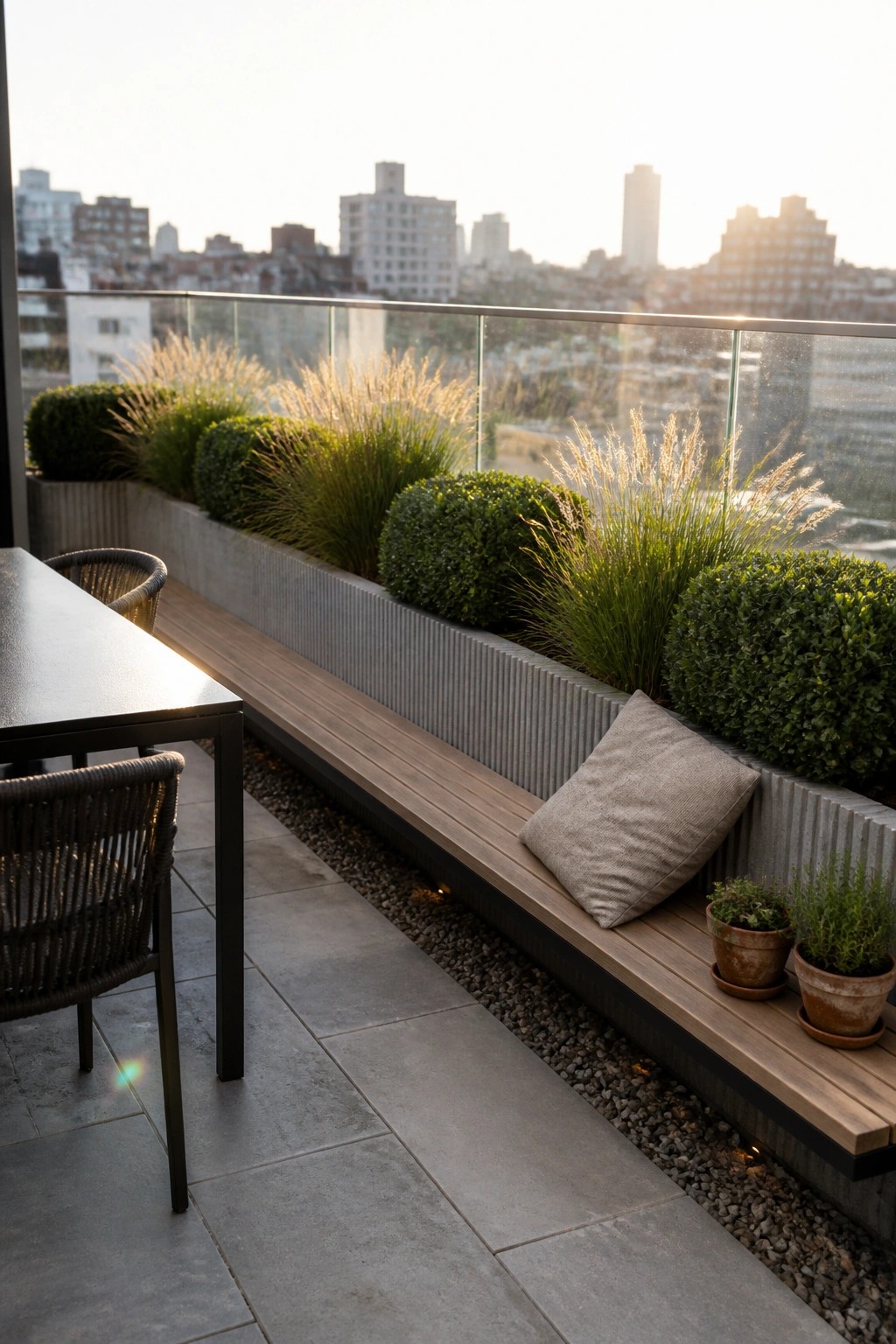
A long run of planters set right beside a bench gives the space a tidy, finished look without much fuss. The clipped shrubs and tall grasses hold their shape through the seasons, so the whole edge stays neat even when things get a little overgrown elsewhere.
This setup works best on balconies or terraces where you want a bit of privacy and greenery without blocking the view completely. Keep the planters simple in color and material, stick to a few repeating plant shapes, and make sure the bench and planter heights line up so the whole line feels like one piece.
Structured Greens In Matching Planters
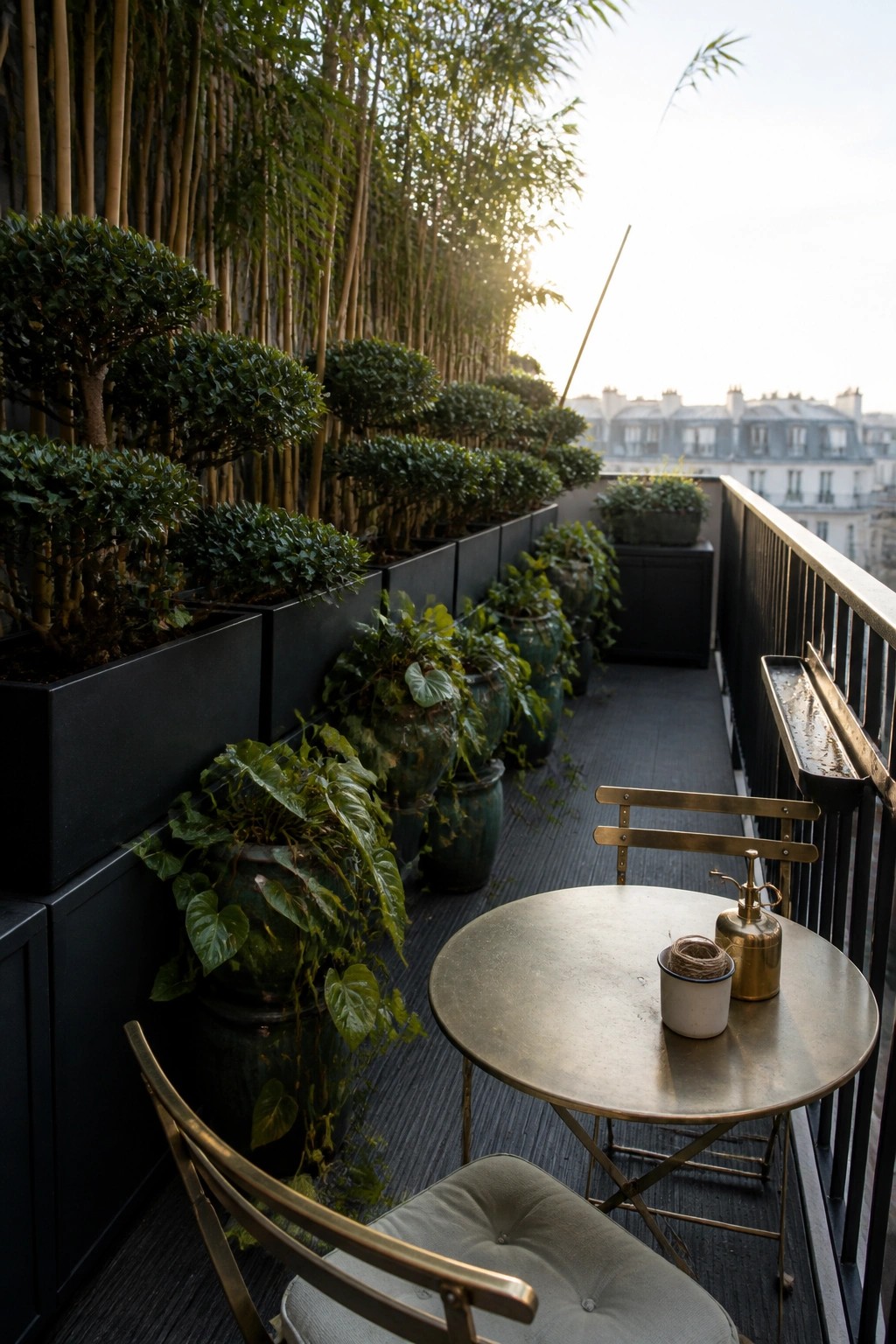
Many balconies end up looking scattered when people mix too many different pots and plant shapes. Keeping the planters the same color and style, then choosing plants that stay neat and clipped, gives the space a calmer order that still feels full.
This approach works especially well on long narrow terraces or city balconies where space is tight. Use a few rectangular planters in one dark finish and fill them with topiaries or upright shrubs that hold their shape. The result stays low maintenance and keeps the focus on the plants rather than the containers.
Rectangular Metal Planters For Structured Garden Lines
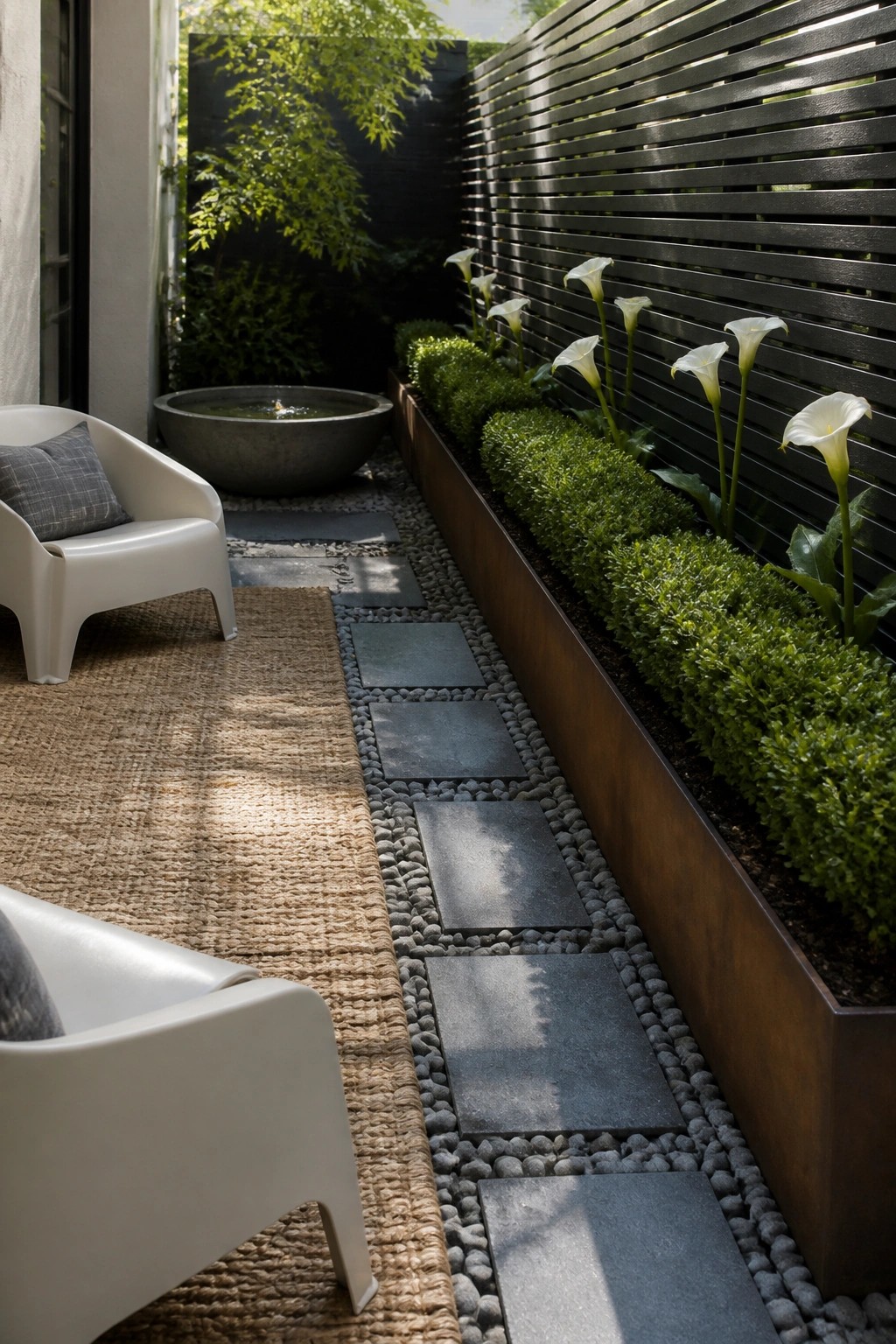
Long rectangular planters give you a simple way to add greenery along a narrow path or wall. They keep the planting contained and orderly, which works especially well when space is tight and you still want a clear line of green without scattered pots or messy edges.
This approach suits modern homes with side yards or courtyard walks. Fill the planter with layered shrubs and a few taller flowers, and match the metal finish to nearby fencing so the whole strip reads as one clean element rather than separate pieces.
Raised Wooden Planters For Patio Edges
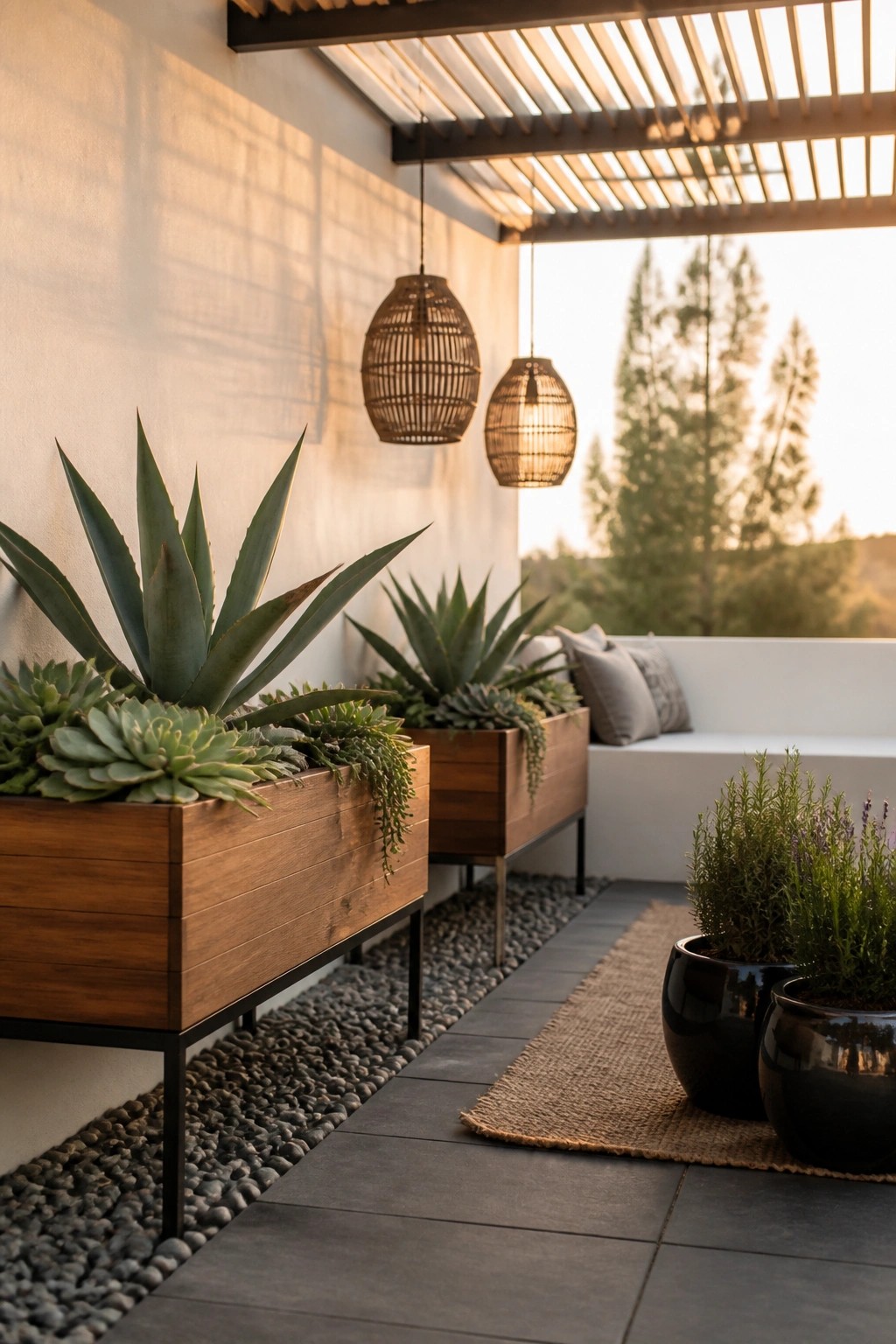
Raised wooden planters give you a simple way to add structured greenery to a paved patio without digging into the ground. They keep plants organized, protect the flooring from water and soil, and create a clear line between the seating area and the rest of the space.
These boxes work best on balconies, terraces, or side patios where you want low-maintenance plants. Succulents and agaves do well in them because they need little water, and the metal legs keep everything level on uneven surfaces. Just check that the wood is sealed so it holds up outdoors.
Frame The Entry With Tall Structured Planters
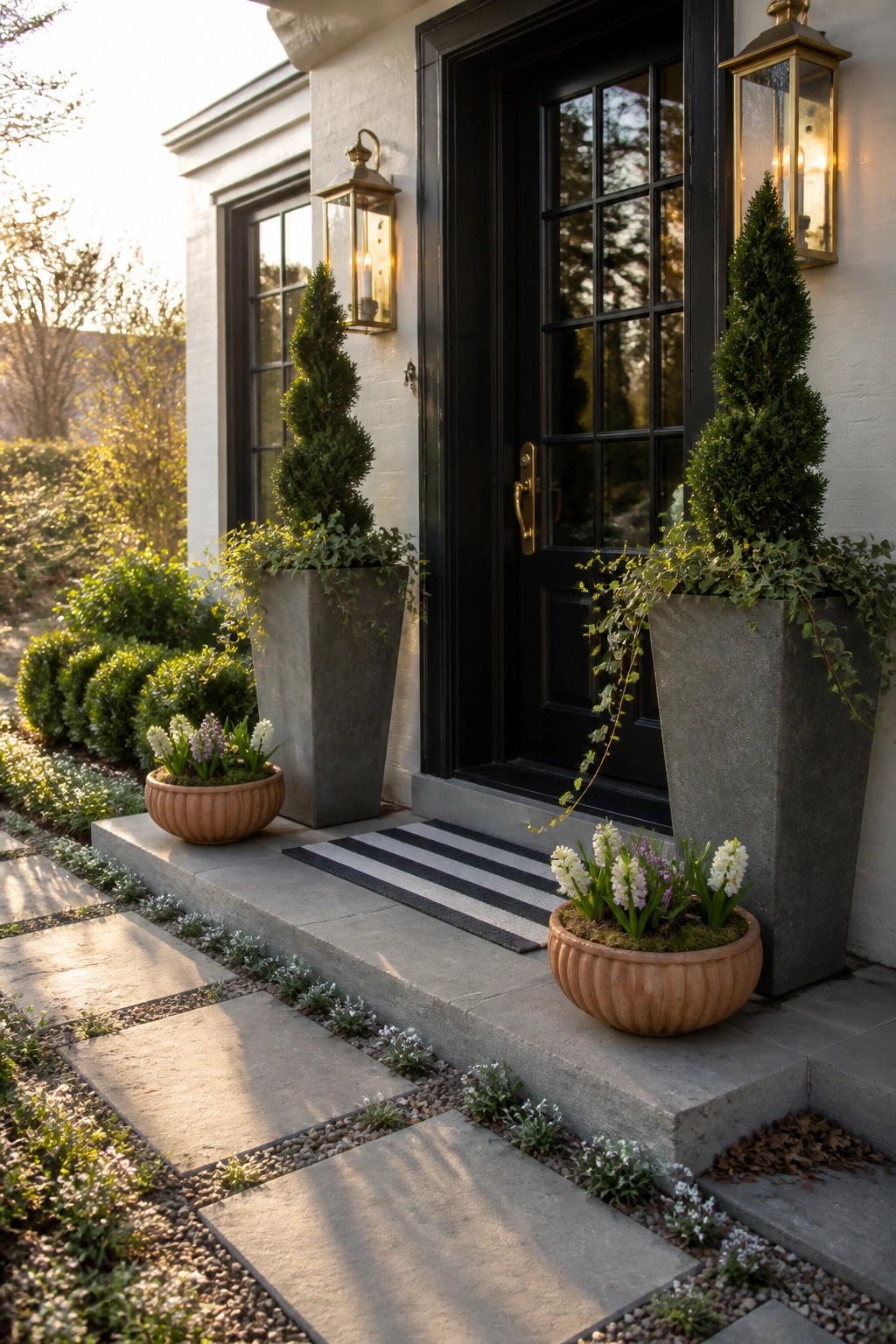
Tall evergreens in big clean planters give an entry a finished look without much fuss. The height adds presence right where people walk in, and the simple shapes of the planters keep everything feeling orderly rather than busy.
This approach works best on homes with a clear front path or small paved area. Use two matching large planters to balance the door, then add a couple of smaller pots with flowers at the base if you want a bit of color that changes with the seasons.
Structured Greens in Large Planters Around a Deck Table
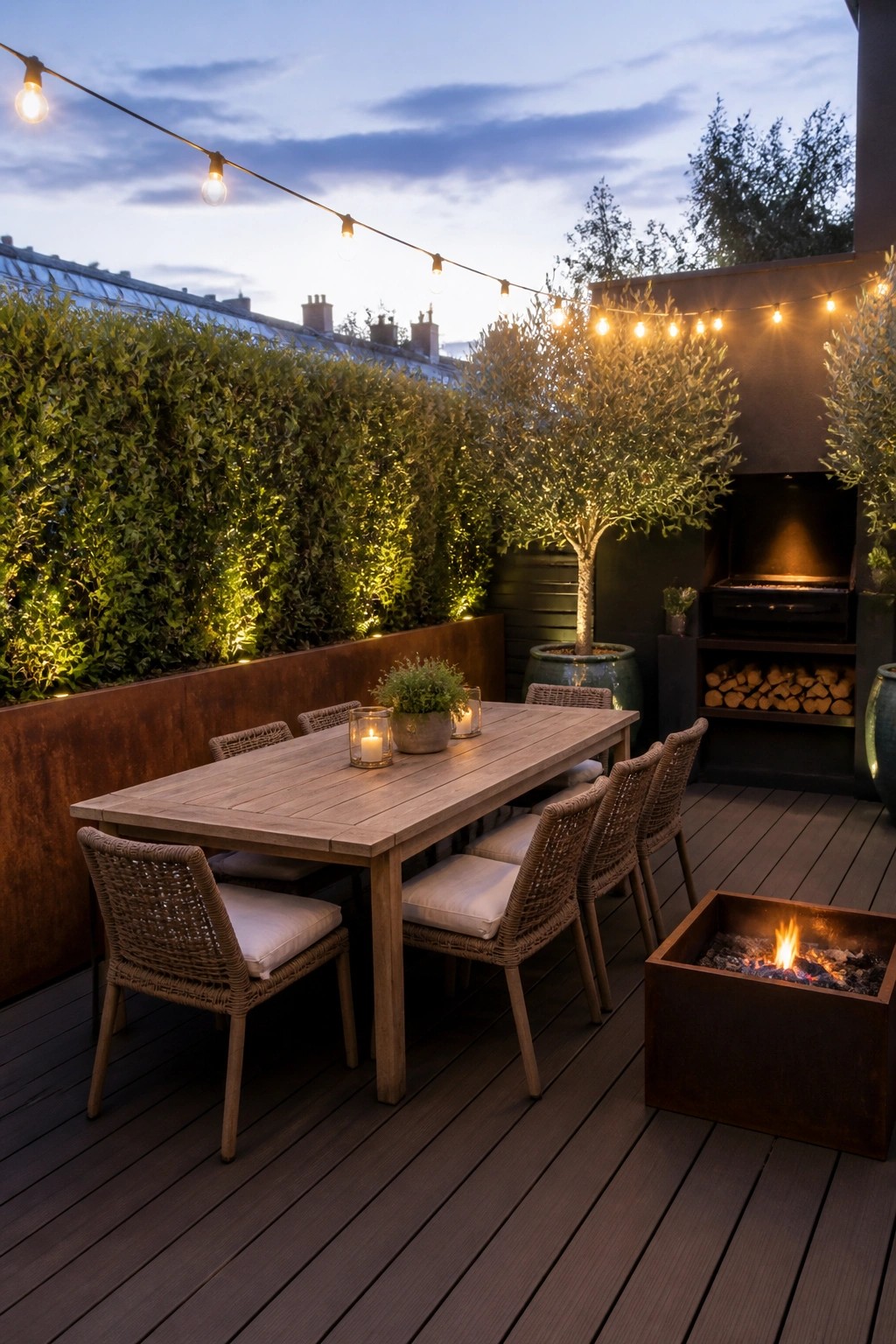
Large planters with trimmed trees and hedges work well when you want to give a deck dining area some shape without building walls. They create a soft boundary that still feels open, and the clean lines of the containers keep everything looking neat rather than overgrown. On this deck the tall pots sit at the corners while the longer planter runs along one side, which helps the table feel settled in its spot.
This approach suits decks that sit close to neighboring buildings or need a bit of separation from the rest of the yard. Stick with a few matching containers in simple shapes and repeat the same type of greenery so the look stays calm. Avoid crowding the table with too many small pots, since the larger ones already do the main job of holding the space together.
Large Planters For Structured Poolside Planting
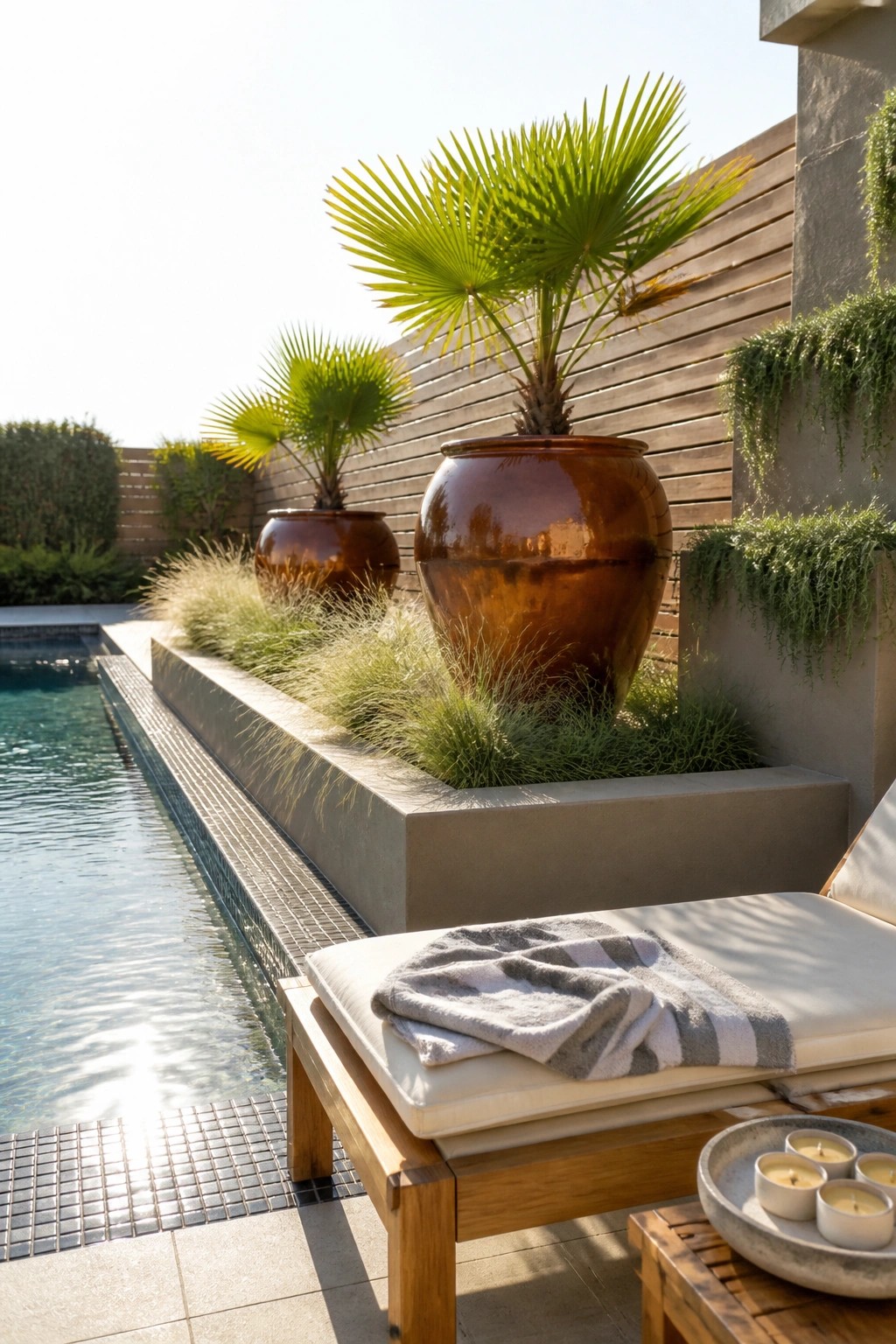
Large ceramic pots work well when you want height and order without a full garden build. The glossy brown finish on these oversized pieces stands out against the concrete and wood, while the palms and grasses inside keep the look simple and contained.
Place them where the edge of the pool meets a seating area, and they help divide the space without blocking views. This approach suits modern homes that already have hard surfaces and need a few strong vertical elements to soften the lines. Stick to one or two plant types per pot so the shapes stay clean.
Matching Planters With Rounded Shrubs
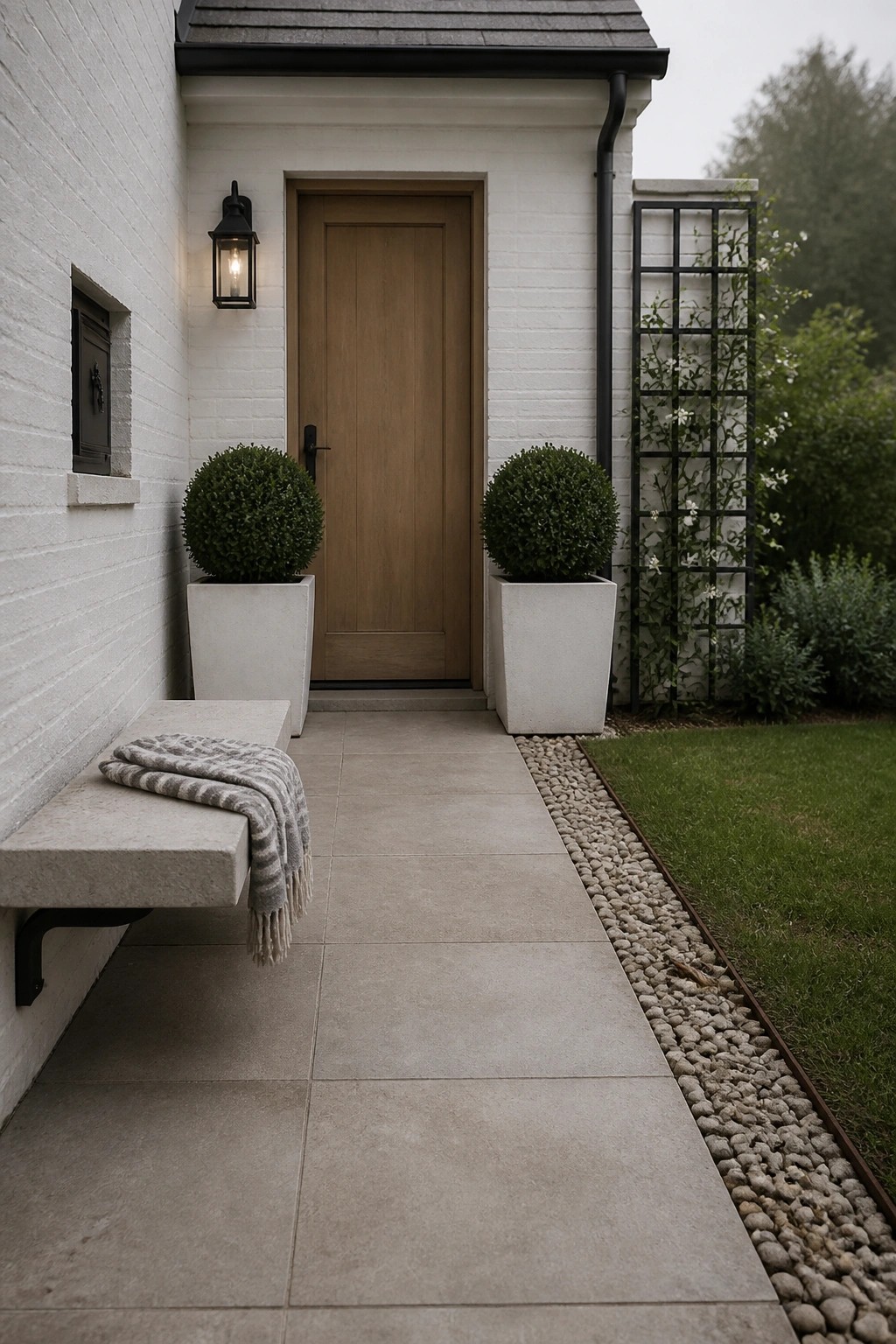
Matching planters with rounded shrubs create a simple, orderly look that works well at a front entry. The clean white cubes and tight green shapes give the walkway clear structure without needing constant upkeep or lots of color.
Try this approach on a paved path or beside a door where you want symmetry that stays neat through the seasons. It suits homes with straight lines and simple materials, and it keeps the focus on the architecture rather than scattered planting.
Mixing Planter Materials On A Balcony
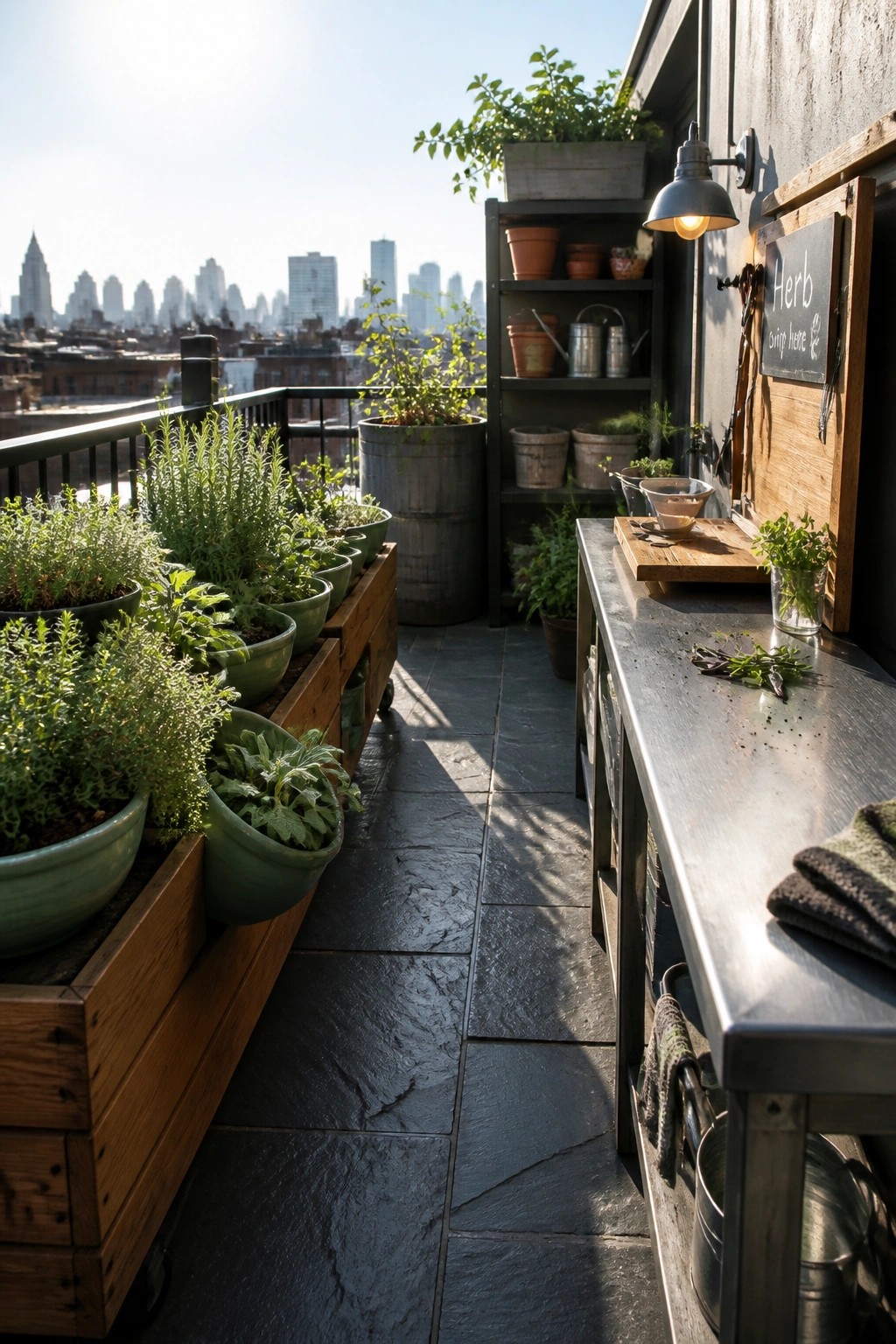
A simple way to keep a balcony garden organized is to use different planter materials together. Wooden troughs, metal barrels, and ceramic pots each bring their own texture, but when grouped they still feel structured rather than scattered. This mix works especially well for herbs and leafy greens that need easy access.
Place the larger containers along the edge to define the space, then keep smaller pots on a work table for daily picking. The approach suits city balconies where floor space is tight and everything needs to stay neat. Just make sure the containers have good drainage so the plants stay healthy through the seasons.
Anchor Outdoor Seating With Tall Planters

Tall planters with upright trees give a deck bench a clear edge without crowding the space. They add height and structure while leaving the seating area open and easy to use.
This approach works well on patios or decks where the bench is built in. Stick to a few matching pots in one color and keep the plants trimmed so the lines stay simple and the view stays open.
Wall Mounted Planters Add Vertical Layers
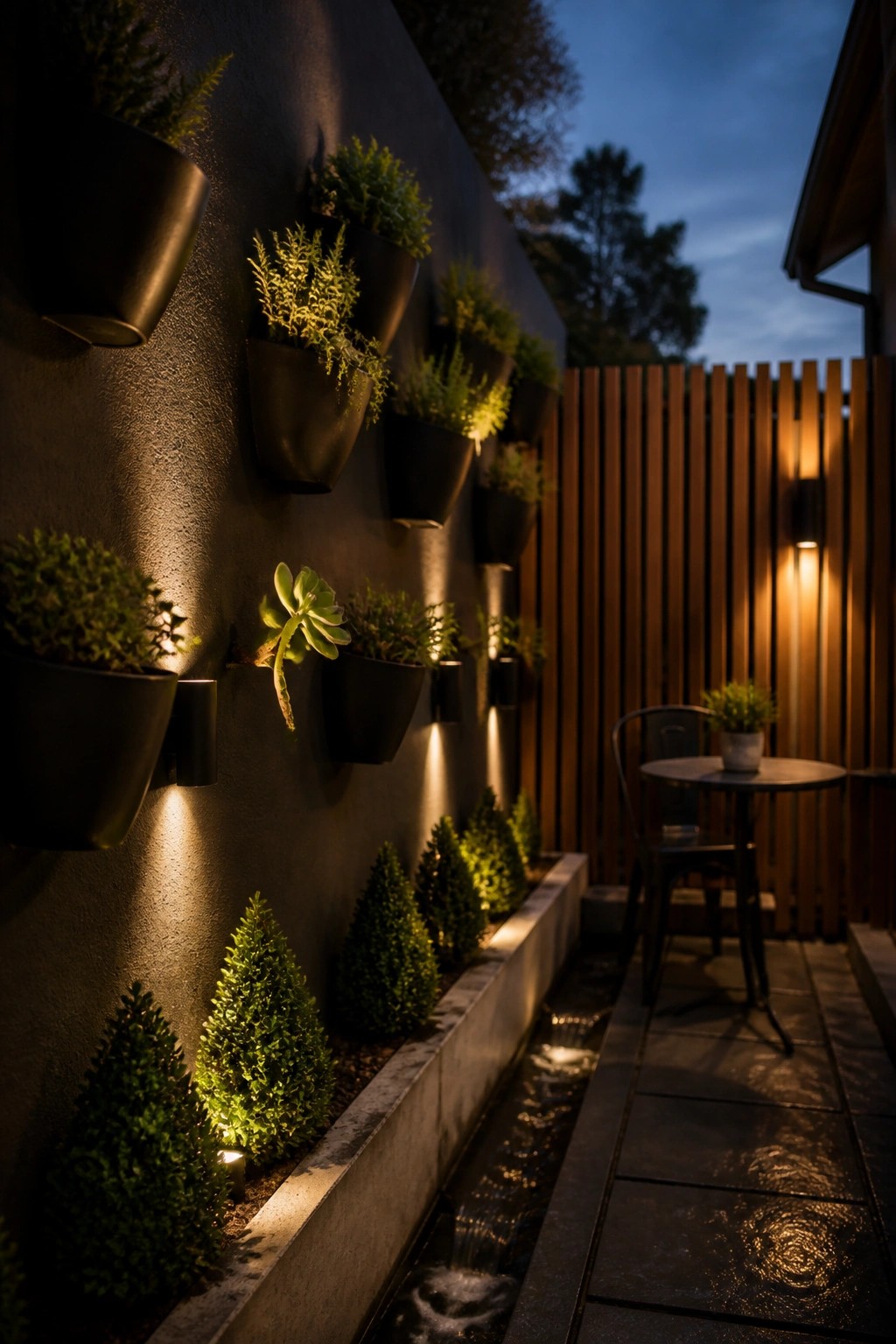
Many people turn to wall mounted planters when they want more greenery but have limited ground space. The clean containers keep the look tidy and let the plants form a clear pattern up the wall.
This setup works best along narrow side yards or against a fence where a traditional bed would feel cramped. Mount the planters at staggered heights and mix compact shrubs with a few trailing varieties so the wall feels full without looking crowded. Check that the wall can handle the weight once the planters are filled.
Large Planters To Add Height On A Patio

Large planters give you a way to bring trees and structure into a paved outdoor space without digging beds or changing the hardscape. The simple round shapes keep everything looking neat and let the plants stand out on their own.
They work best on concrete or stone patios where you want some vertical interest but still need to keep the floor open for furniture. Line a few along one edge to mark the dining area or create a soft screen from the rest of the yard.
Rectangular Planters For A Clean Porch Border
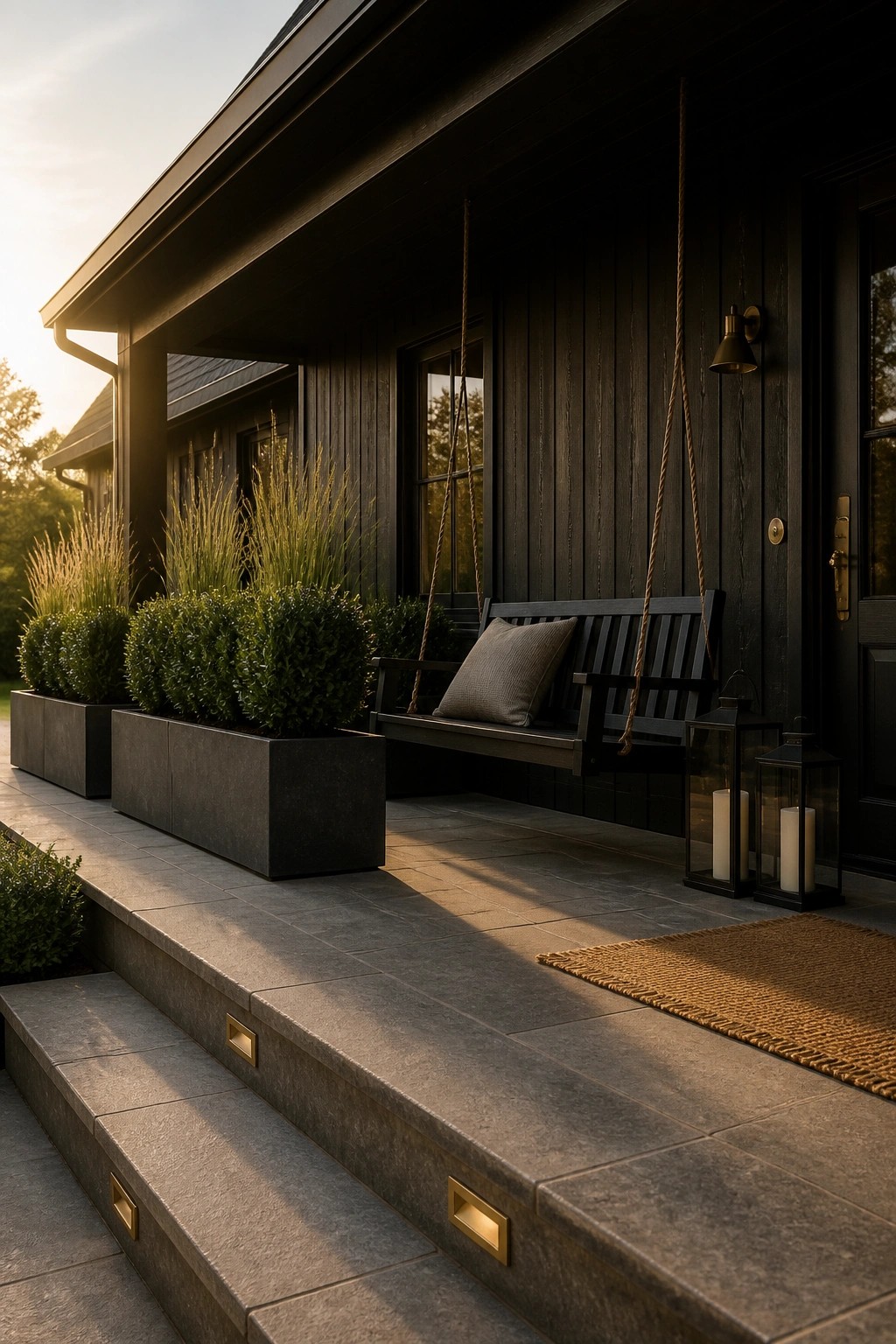
Large rectangular planters make it easy to add structure along a porch without digging beds or dealing with uneven ground. The dark finish on the containers keeps the look simple and lets the greenery stand out in neat blocks.
This works best on homes with paved entries or steps where a traditional garden would feel out of place. Keep the plants layered with a mix of low shrubs and taller grasses so the line stays full but not messy.
Raised Metal Planters For Structured Edges

Raised metal planters help keep planting neat and contained around an outdoor seating area. They create clear lines without crowding the space with lots of small pots, and the material holds up well in all kinds of weather.
Place them along deck edges or beside gravel seating zones where you need a bit of separation. Mix a few plant heights inside each box so the look stays full but still simple, and make sure the planters sit level so they feel intentional rather than scattered.
Matching Pots of Boxwood Add Structure to the Steps
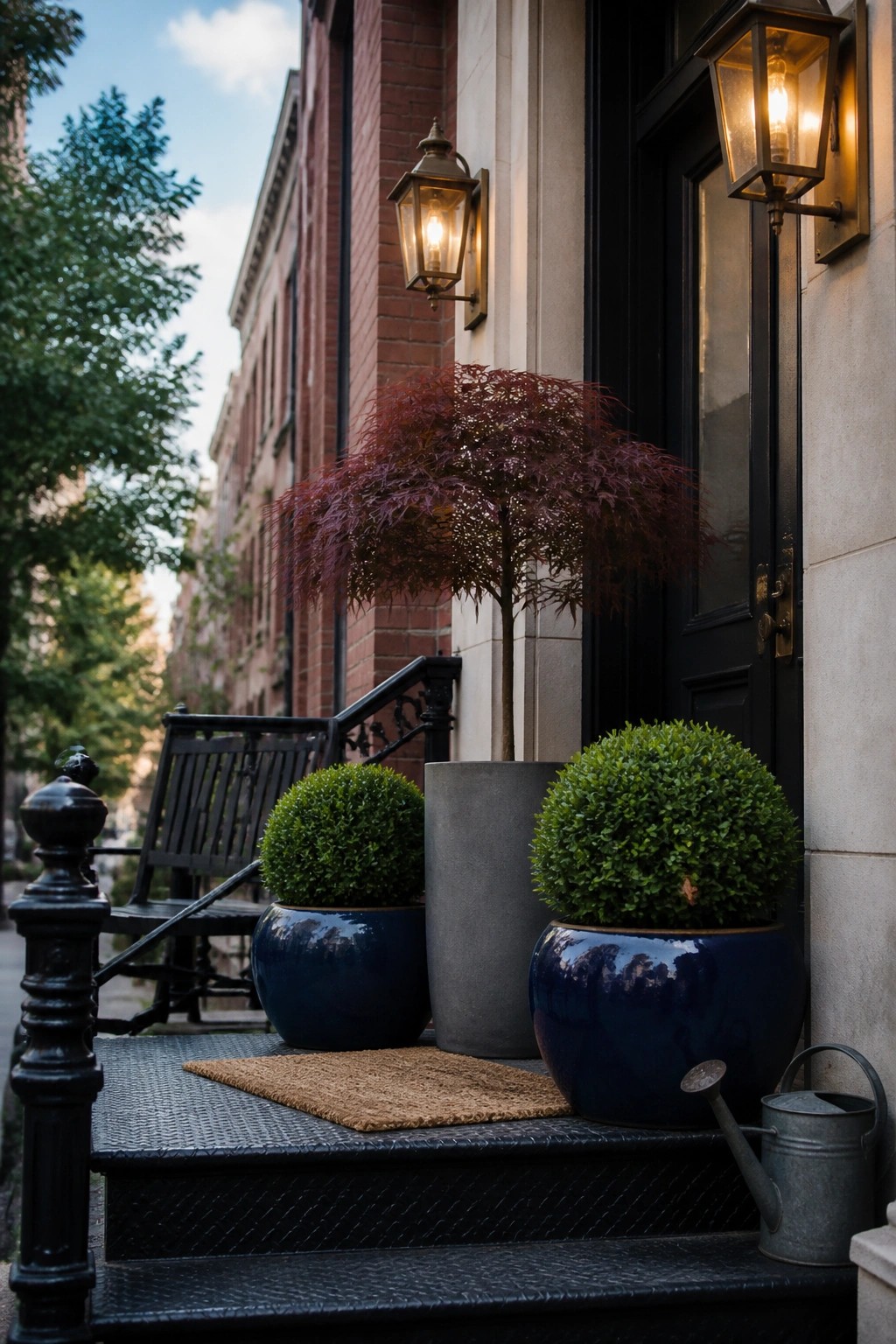
Rounded shrubs in deep blue pots give the front steps a neat, finished look without crowding the space. The dark color of the containers helps the green stay the main focus and keeps the whole setup from feeling busy.
This approach works best on homes with simple entries or dark trim where you want a bit of greenery that stays tidy year round. Stick to two or three pots in the same shade and shape, and skip anything tall or trailing that might block the path.
Long Raised Planters Along Paths
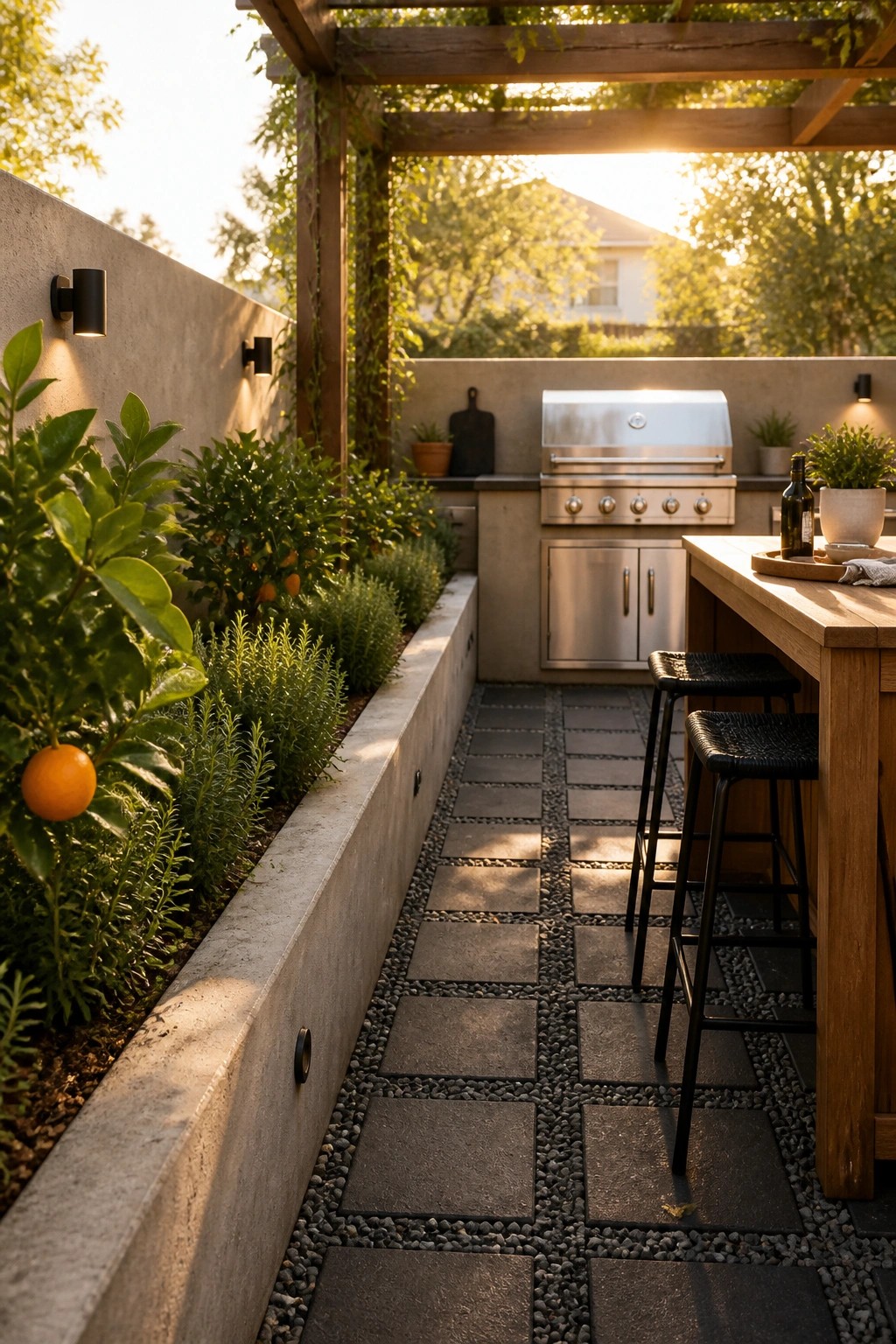
A long raised planter gives the garden a clear edge and keeps everything looking organized without much effort. The concrete sides create a simple boundary that separates the planting from the walkway while giving the plants room to grow in a controlled way. This setup works especially well in smaller yards where you want structure but still need space to move through the area.
It suits homes with straight paths or narrow side yards where loose planting can start to feel messy. Keep the bed narrow enough to reach across for watering and trimming, and choose plants that stay fairly contained so the lines stay sharp over time.
Long Planters With Built-In Lighting
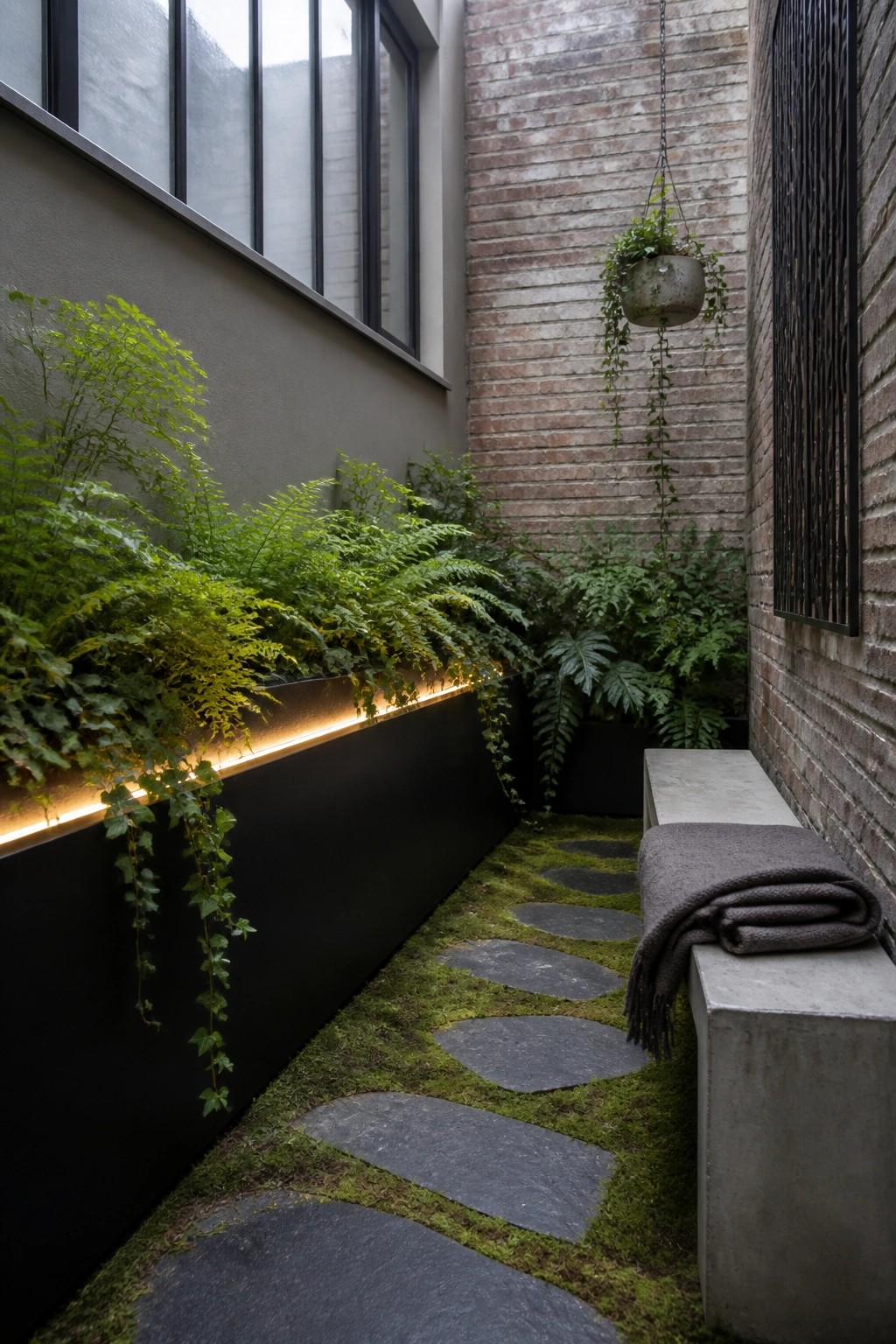
A long raised planter makes a narrow side passage feel more like a real garden instead of leftover space. The dark box keeps the look simple while the built-in light at the base highlights the ferns and trailing greens without extra fixtures.
This setup works well on homes with tight side yards or slim courtyards where you still want some planting. Keep the planter height low so it does not crowd the walkway, and choose plants that can handle the shade most of these spots get.
Tall Planters For A Living Privacy Screen

A row of tall evergreens in matching containers can mark the edge of a patio and give a sense of enclosure without a solid fence. The clean lines of the planters keep the look simple while the upright greens add height and block views from beyond the space.
This works best on decks or poolside areas where you want separation but still need light and air to pass through. Line up several large planters in the same style and pick narrow evergreens that hold their shape so the screen stays tidy with little trimming.
Stack Plants on a Ladder Shelf for Easy Container Gardening
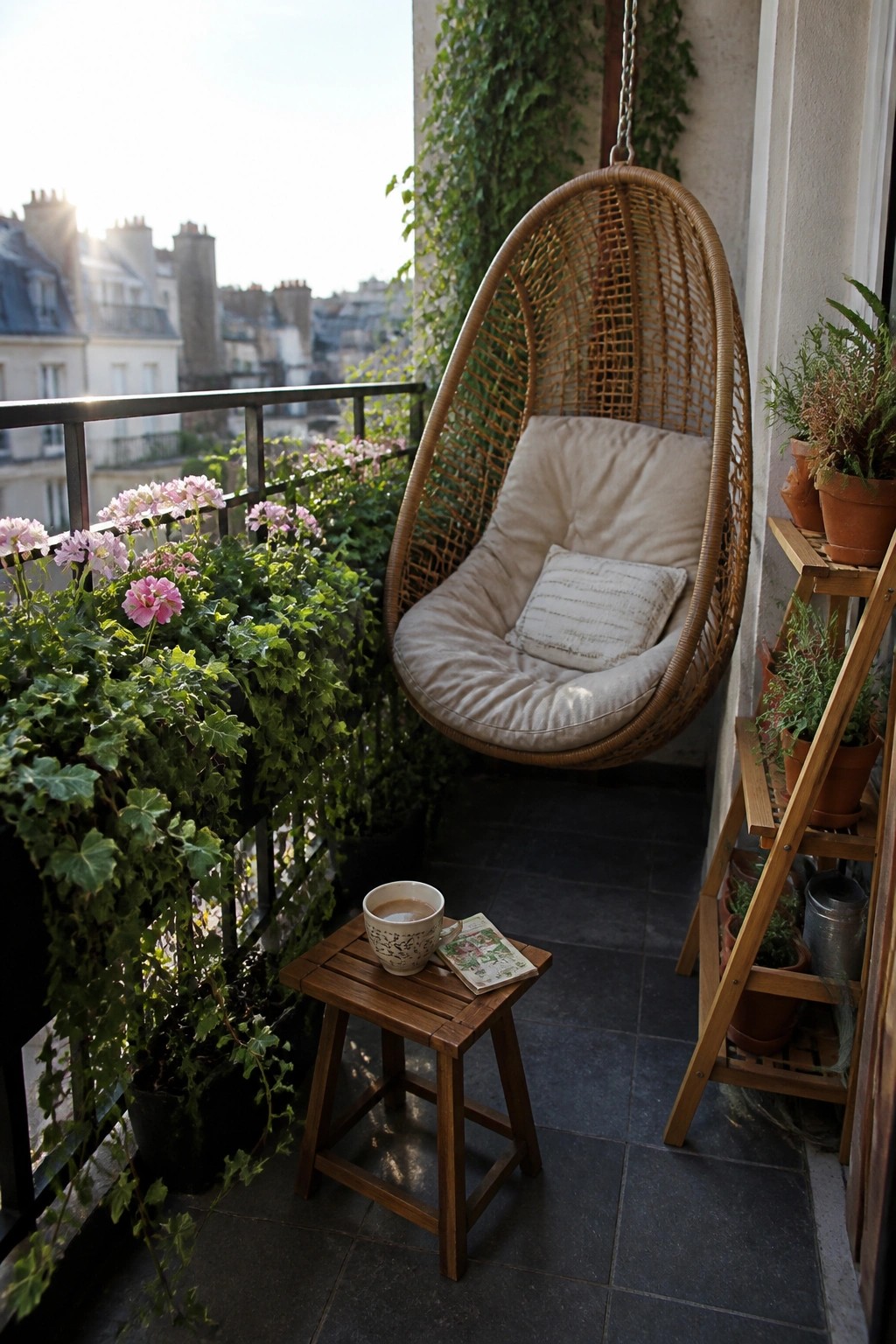
A ladder shelf gives you a simple way to fit more container plants into a small balcony without crowding the floor. It holds several pots at different heights so the greens stay visible and the space still feels open.
This setup works best on balconies or patios where floor room is limited. Use matching clean pots and group plants by size so the arrangement stays neat and easy to water.
Tiered Concrete Planters for Structured Slopes
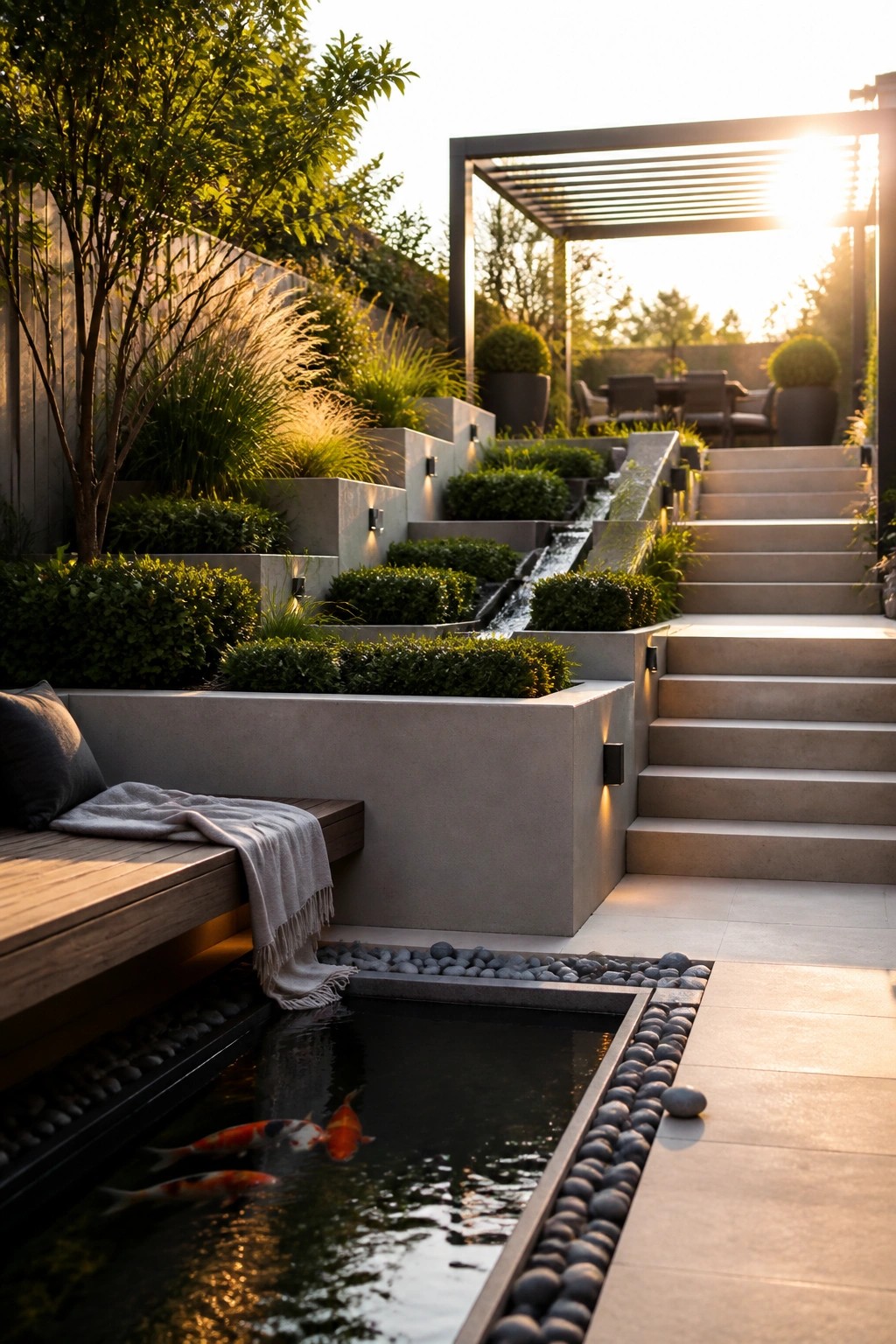
Raised concrete planters make it easier to handle a sloped yard without losing a clean, modern look. They create flat planting areas that step down naturally, which keeps the garden feeling organized even when the ground drops away. The simple rectangular shapes also give the plants a strong backdrop so the greens stand out more.
This approach works best on lots with noticeable grade changes or in new builds where you want low-maintenance beds that still look intentional. Keep the planters the same width and material throughout so the lines stay consistent, and add a water element only where it can follow the same stepped pattern.
Matching Planters For Structured Garden Lines
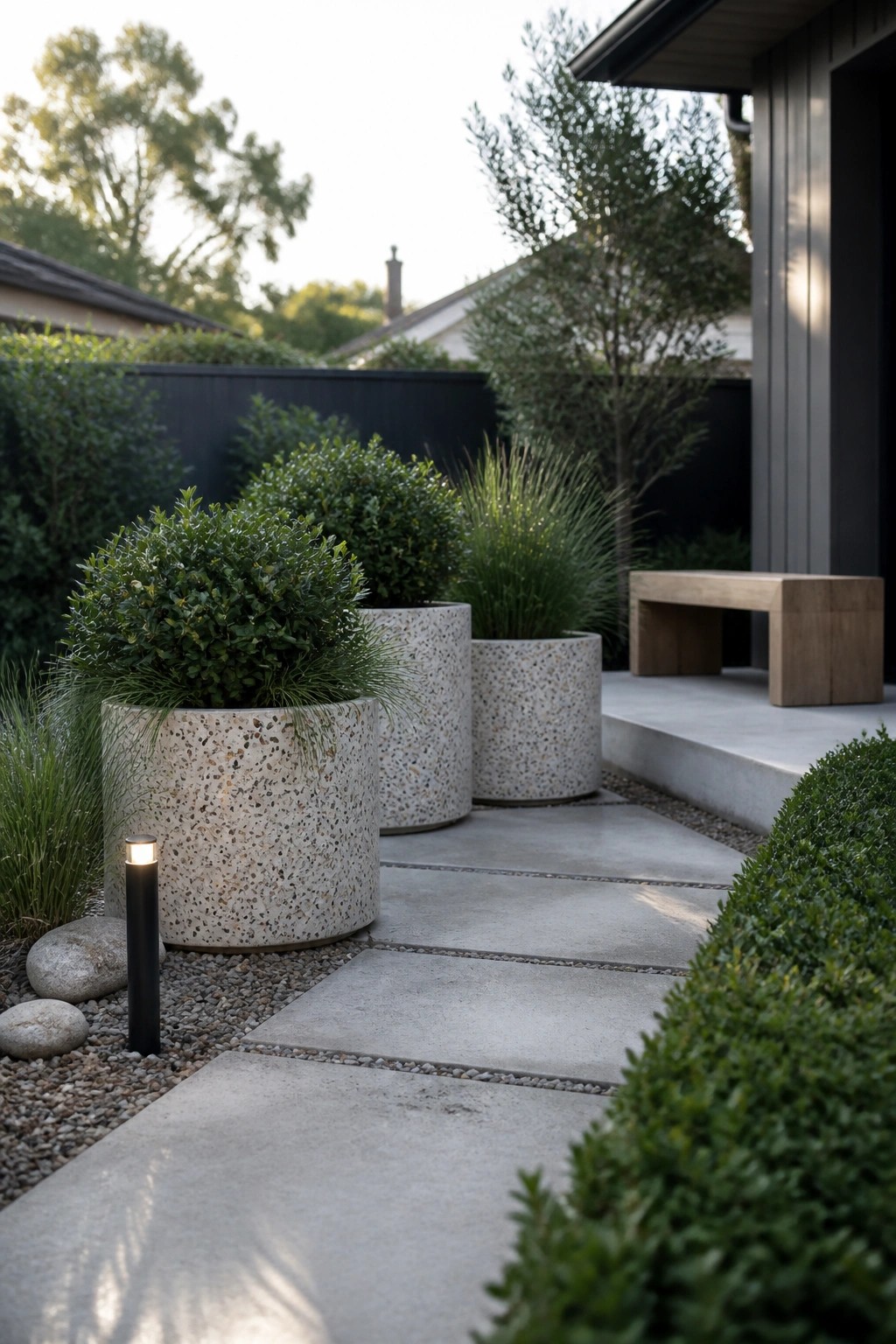
Many people turn to matching planters when they want a garden to feel organized without looking stiff. The repeated shape and material keep the planting simple and let the greens do the work instead of a mix of different pots.
This approach works best along paths or beside a house where you need clear edges but still want some softness. It suits homes with clean architecture and pairs well with gravel or concrete hardscaping that already has a quiet, modern feel.
Container Plants Along Outdoor Seating Areas

Many people like adding a few well-chosen containers to an outdoor lounge because it brings in greenery without needing a full garden bed. The clean lines of the planters keep the look modern while the structured plants add softness and a bit of separation from the rest of the yard.
This works well on patios or decks that already have solid seating and a table. Place taller planters near the back edge and one or two smaller ones on the surface itself. It suits homes with limited ground space or those wanting low-maintenance greenery that can be moved around as needed.
Planters That Define an Outdoor Lounge
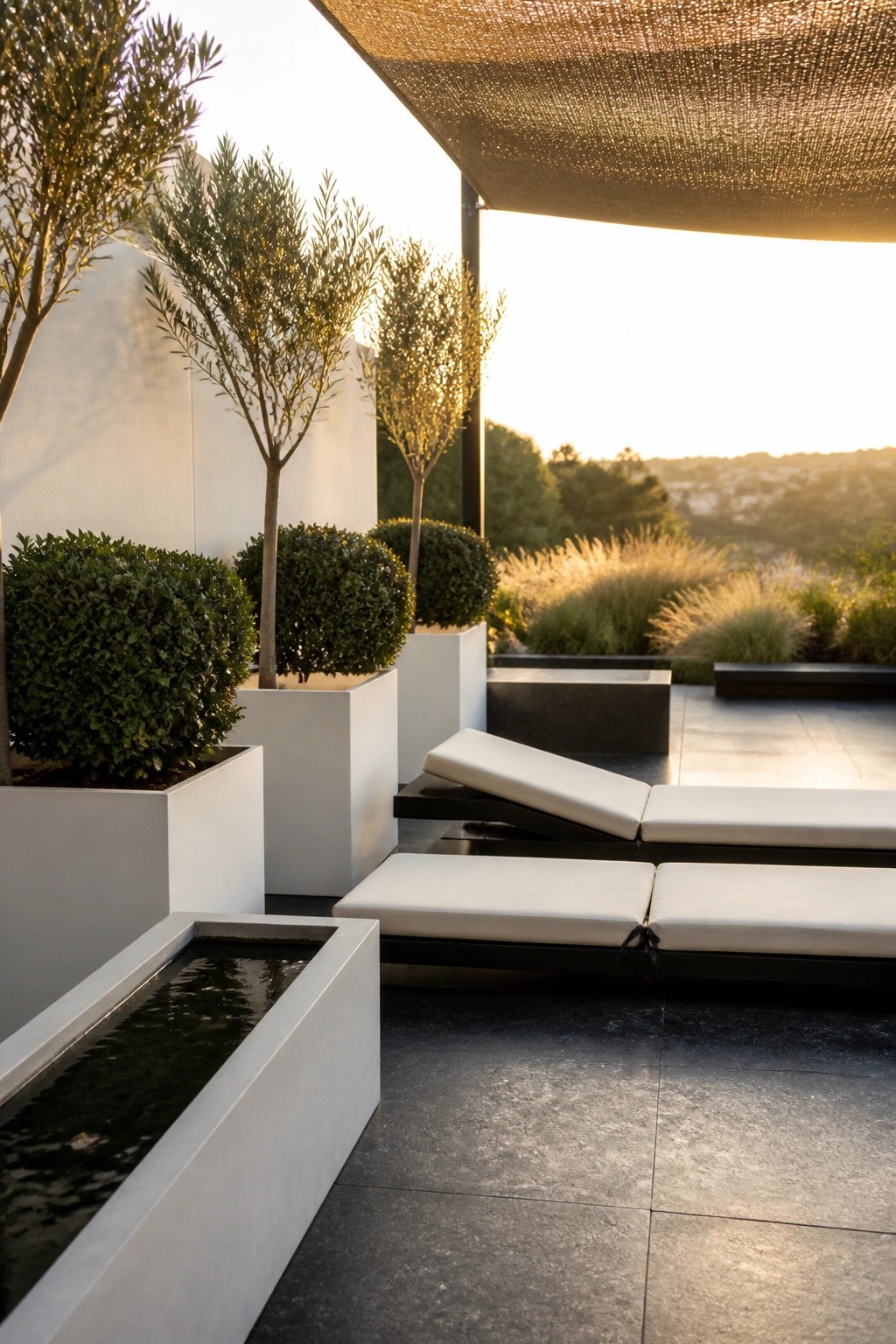
Large rectangular planters can mark off a seating area without adding walls or railings. The clean lines and clipped plants keep the space looking organized while still bringing in some greenery next to the chairs.
This setup works well on flat paved terraces where you want structure but still need room to move around. Stick to a few plant shapes that stay neat after trimming and use light-colored planters so they do not overpower the seating.
Frequently Asked Questions
Q: Which plants give that structured green look without much work?
A: Choose boxwood or rosemary for their tidy shapes. They hold form well in containers and need little trimming. Add a fern or two for soft contrast.
Q: How often should I move my planters around for the best light?
A: Watch how the sun hits your spot over a week. Shift them once to catch more rays if leaves start looking pale. Most modern setups thrive with steady morning light.
Q: What if my clean planters start showing dirt stains?
A: Wipe them down with a damp cloth every couple weeks. This keeps the modern edge sharp. Avoid harsh cleaners that might damage the finish.
