

I have found that containers make it easier to grow vegetables even when the backyard layout leaves little room for a full bed.
Many setups work better once you stop trying to force too many plants into one spot and instead focus on what actually fits the available light and water access.
The key is picking varieties that do not need constant care.
Once those choices are in place the whole arrangement starts to feel less like an extra chore and more like something that just happens alongside daily life.
I would test the sturdiest options first before adding anything that might need moving around when the seasons shift.
Wooden Planters For Balcony Vegetables

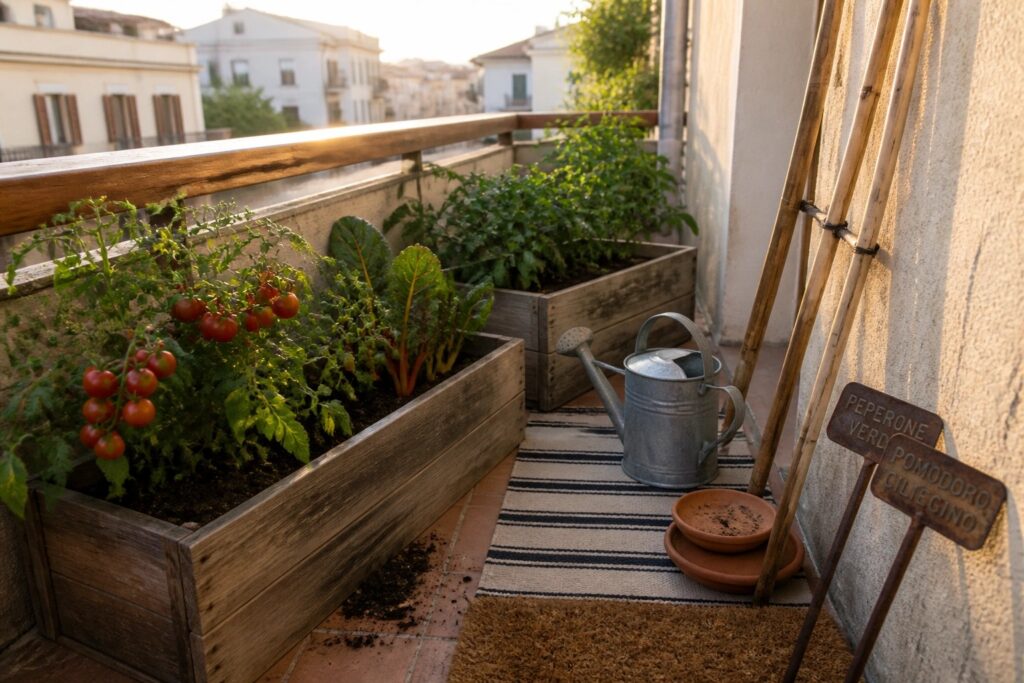
Wooden planter boxes give you a simple way to grow vegetables in containers without much fuss. They hold enough soil for steady root growth and fit well on balconies where space is limited. The natural material also blends in with most outdoor settings.
These boxes work best in full sun spots with good airflow. Choose deep ones for crops like tomatoes and make sure the wood is treated for weather resistance so they last more than one season.
Raised Planters Simplify Vegetable Growing

Raised planters give you a clean edge and a set depth of soil that stays consistent. They cut down on weeding and make it easier to reach every plant without kneeling on the ground. Many people like them because the beds warm up faster in spring and drain well after heavy rain.
These beds work best along a path or next to seating so you can check the plants while you are already outside. Keep the width under three feet so you can reach the middle from either side. Stick with compact leafy greens and herbs that do not need staking.
Growing Vegetables In Containers On A Deck

Large pots make it easy to grow vegetables right on a deck or rooftop without needing a full garden bed. The setup stays simple and contained, so you can move things around if needed and keep the space looking tidy even in a small urban area.
This works especially well for city homes or apartments with limited ground space. Stick with sturdy pots that hold plenty of soil and choose low maintenance crops that do not require constant fussing or support structures.
Grow Vegetables in Pots by the Steps

Many people like keeping a few vegetable pots right on the porch steps. It keeps the plants close for watering and picking, and the setup stays simple without needing extra garden beds.
This approach works best on homes with wide steps that get decent sun. Use sturdy pots in a mix of sizes so the plants have room to grow, and stick with low maintenance varieties that handle a bit of crowding.
Concrete Block Raised Beds For Vegetables

Concrete blocks stacked into simple raised beds give you a sturdy way to grow vegetables without much fuss. They hold soil well, drain nicely, and keep plants off the ground so weeds and pests stay lower. In a narrow side yard or along a path this setup turns leftover space into productive growing area.
The blocks work best in full sun spots where you can reach both sides easily for watering and harvesting. Keep the beds narrow enough to tend without stepping inside, and fill them with a good mix of soil and compost. Leafy greens like perpetual spinach do especially well in this kind of contained setup.
Growing Vegetables In Large Containers

Large pots let you grow productive vegetables without needing a full garden bed. The terracotta ones in the photo hold tomatoes and squash right on the patio, where they stay easy to water and harvest.
This approach works well on paved outdoor spaces or small terraces that get steady sun. Pick deep pots, use quality soil, and group plants that need similar care so the whole setup stays low maintenance.
Wooden Barrels For Container Vegetables

Wooden barrels give you a sturdy option for growing vegetables without needing fancy pots. They hold a good amount of soil and stay put on a deck, which makes watering and harvesting feel straightforward.
They suit homes with sunny decks or patios where you want low fuss. Pick crops like kale or collards, add drainage holes if needed, and keep the barrels in a spot that gets steady light.
Use a Metal Trough Planter on the Patio

A long metal trough planter gives you a simple way to grow several vegetables in one contained spot right on the patio. It keeps the plants organized along the edge of the space so they do not spread into seating areas or walkways.
This works well for smaller outdoor living spots like balconies or side patios where a full garden bed is not an option. Choose vegetables that stay fairly compact and make sure the planter sits in a spot with decent sun and easy access for watering.
Vegetable Containers on Porch Steps

Many people find it easiest to grow a few vegetables right on their porch steps in simple pots. This setup keeps the plants close to the house, where they get steady sun and stay within easy reach for watering and harvesting without extra trips to a garden bed.
It suits homes with wooden steps or a small deck area that gets decent light. Pick sturdy pots with good drainage and focus on low maintenance crops that do not need constant fuss. Keep a watering can nearby so the routine stays quick.
Raising Vegetables In Containers On Pallets

Putting pots on wooden pallets keeps the containers off damp ground and makes it easier to move them around when needed. Many people like this setup because it improves drainage and helps prevent roots from sitting in water, which matters a lot with vegetables.
This approach works well in small yards or along fences where space is tight. Just make sure the pallets are clean and level, and choose pots that are large enough for the plants you want to grow.
Big Pots On The Deck For Vegetables

Large ceramic pots turn a simple deck into a practical spot for growing vegetables without much fuss. The deep containers hold enough soil and moisture to support leafy crops that stay productive with basic watering and occasional feeding.
This setup works best on wooden decks or patios that get steady sun. Choose pots at least 12 inches wide so roots have room, and group them near a water source to keep the routine simple.
Vertical Pallet Gardens Keep Vegetables Accessible

Mounting reclaimed pallets on a wall turns a small outdoor spot into a productive vegetable area. The slats create built-in rows that hold soil and plants without taking up floor space, which makes daily care and picking much easier.
This approach suits patios, side yards, or narrow balconies where ground beds are not an option. Secure the wood well, add a liner, and choose compact crops that do not mind shallow soil.
Add Vegetable Containers to Outdoor Seating Areas

Many gardeners like setting a few vegetable pots right on a bench or stool near where they sit. It keeps the plants handy for watering and picking, and it turns a simple seating spot into a productive area without needing extra garden beds.
This works best on patios or small decks where space is tight. Choose sturdy wooden pieces that can handle the weight, and stick to compact varieties like eggplant or peppers so the containers do not crowd the seating.
Metal Raised Beds Keep Vegetable Growing Simple

Metal raised beds give vegetables a steady spot to grow without needing much extra care. The contained soil warms up faster in spring and drains well, which helps roots stay healthy even in a paved area.
These beds work best on patios or small yards where in-ground planting is not possible. Fill them with a good mix and choose compact crops like leafy greens or root vegetables that do not need deep soil.
Vegetables in Pots on the Patio

Many people like keeping a few vegetables in pots right on the patio. It makes daily care easy since everything stays close at hand and you can water or pick without walking out to a garden bed.
This works best on terraces or paved areas that get steady sun. Use larger pots so the plants have room to grow, and group them along a wall or railing where they stay protected from wind.
Barrels Simplify Container Vegetable Growing

Many people like using old metal barrels for vegetables because they give the plants plenty of root space while keeping everything contained. The barrels also make it easy to group different crops together in one spot.
This setup works best on patios or small yards where you want fresh greens close to the kitchen. Drill a few holes in the bottom for drainage and place the barrels in a sunny area so the plants stay productive with little extra work.
Frequently Asked Questions
Q: How much sun do these container veggies really need to stay productive?
A: Most do well with six hours of direct light daily. Set pots where they catch morning sun if your afternoons get too hot. That simple spot choice keeps growth steady without extra work.
Q: What soil works best for keeping maintenance low in pots?
A: Use a light potting mix that drains well instead of heavy garden dirt. It prevents soggy roots and cuts down on watering checks. Add a bit of compost at planting time and you are set for the season.
Q: Do these vegetables need constant feeding once they are growing?
A: A single dose of balanced fertilizer at the start covers most of them. Skip weekly routines since the goal is low effort. Watch for yellow leaves and give a light boost only if they show up.
Q: Can I move the pots around during the season?
A: Shift them as needed to follow the sun or dodge heavy rain. Containers make that easy compared with in-ground beds. Just lift carefully so roots stay settled.
