

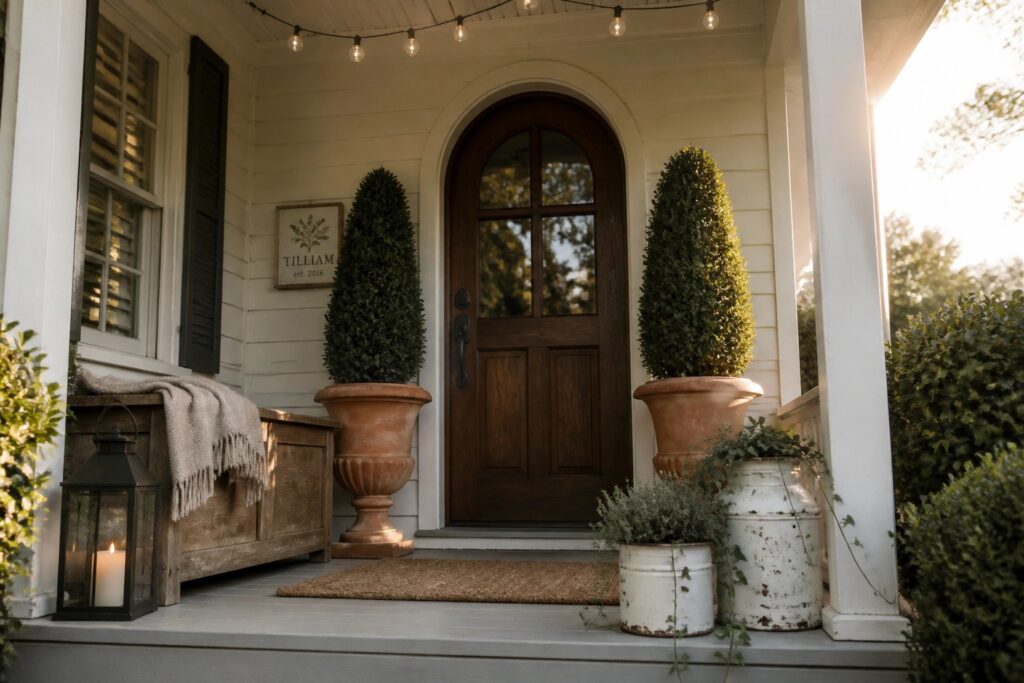
I have always noticed that the front entry sets the first impression of a house long before anyone reaches the door.
Over time I have found that simple containers on the porch can balance the lines of a facade without requiring major changes to the structure.
Some setups look promising on paper but end up blocking the walkway once the plants grow.
I tend to test a few small changes each season to see what actually holds up against the weather and daily use.
Adapting ideas from others helps me avoid mistakes I would otherwise make on my own entry.
Frame the Door With Tall Potted Shrubs
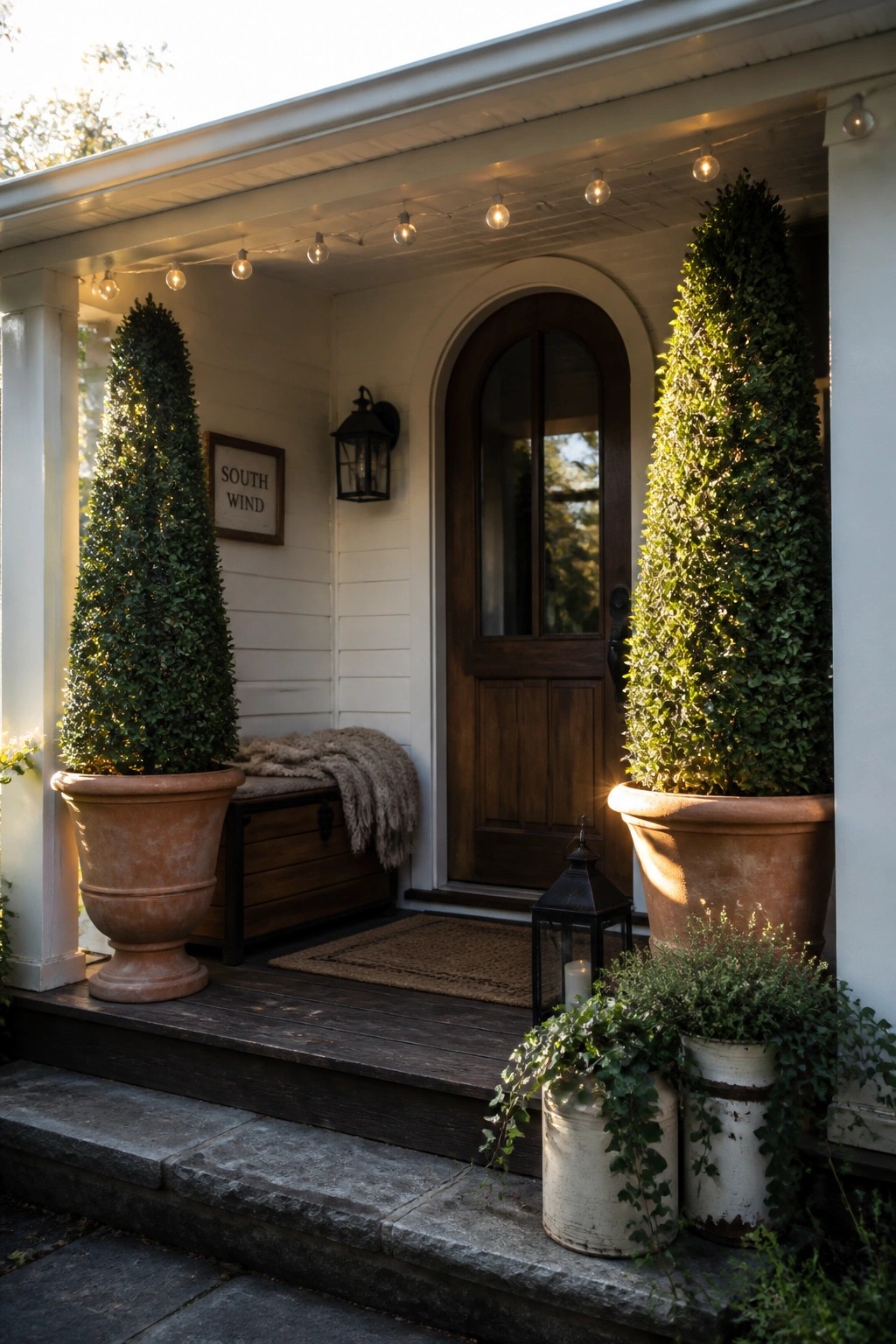
Tall containers planted with dense evergreens can give a porch entry real presence without crowding the space. The plants add height and a bit of structure that makes the doorway feel more intentional and pulled together.
This approach works on many covered porches and small entry decks. Match the pot size to the scale of your door, keep the plants trimmed so they stay neat, and choose evergreens that hold up in your climate.
Incorporate Wooden Planters Into The Porch Railings
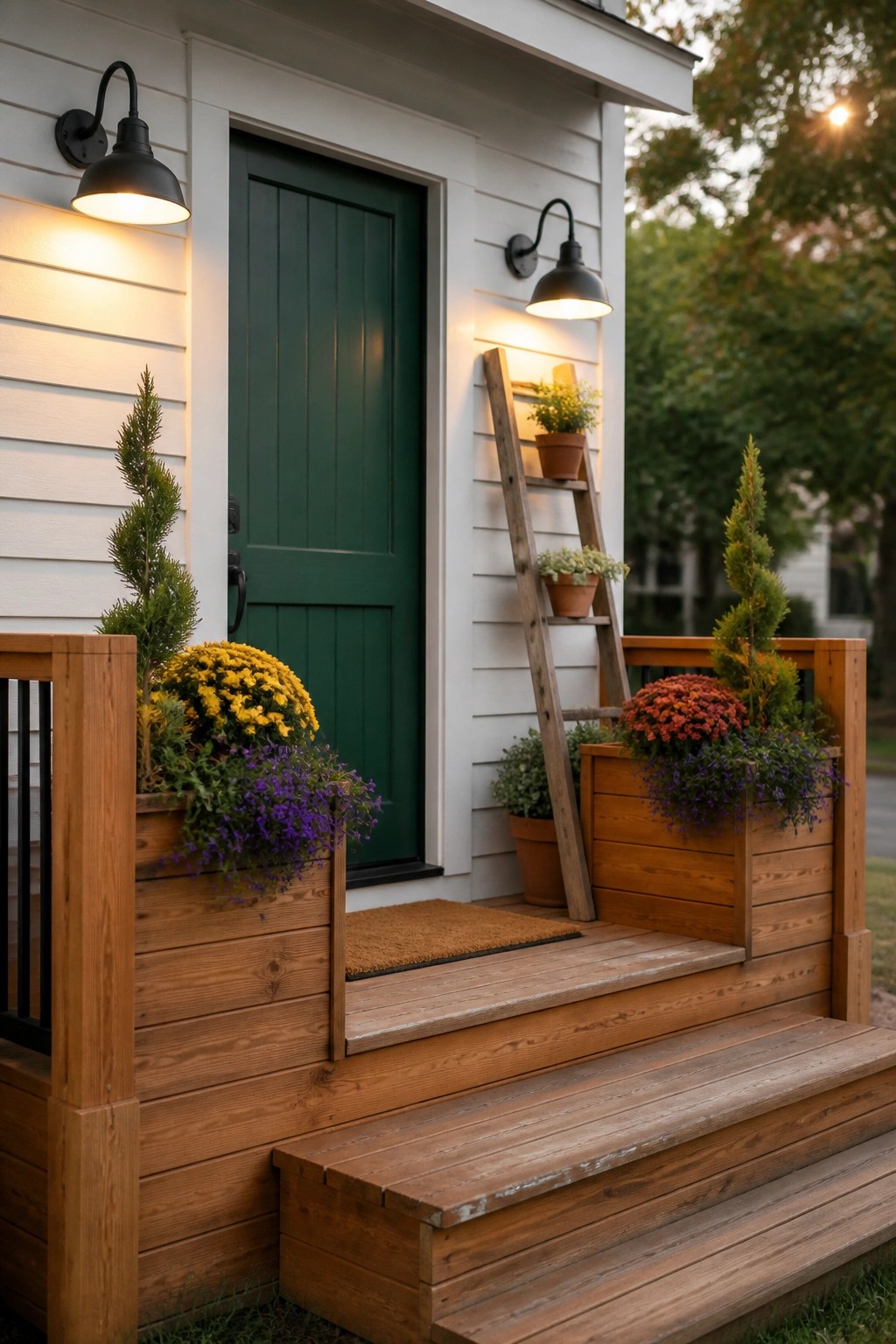
Wooden planters built along the railings give you a simple way to add container gardens without crowding the walking space. They stay put during wind or heavy rain and let the plants spill over naturally for a softer look at the entry.
This approach suits older homes with wooden porches and works best when you mix taller shrubs with lower flowers in the same boxes. Line the inside well and check drainage so the wood holds up over time.
Stack Containers for Layered Height
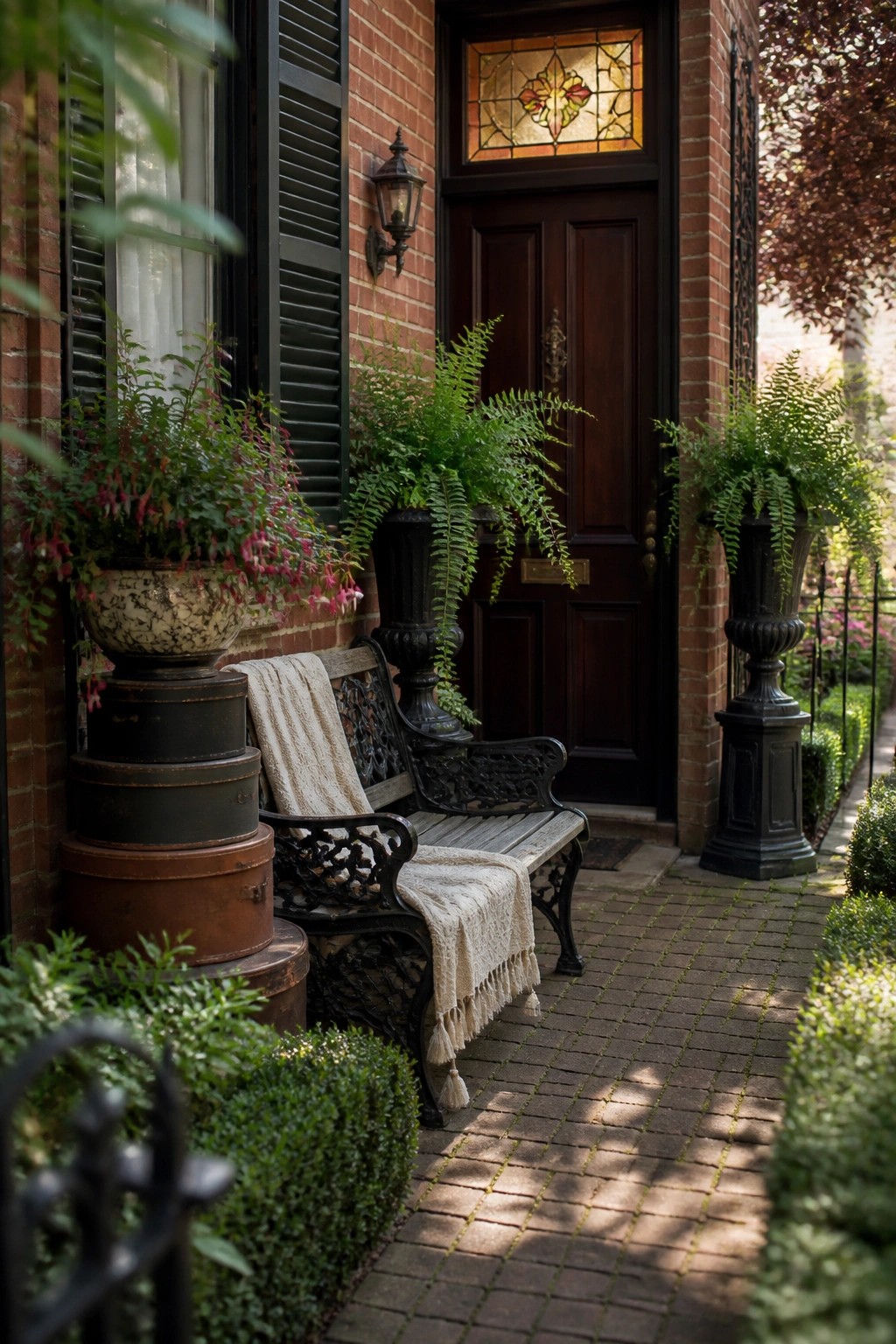
Stacking pots of different sizes gives you quick height without needing big permanent beds. It works especially well on a narrow porch where you want the plants to feel full but still leave room to walk. The mix of shorter stacks and taller urns also helps balance a bench or seating area so the whole entry feels pulled together.
This approach suits brick homes or any space with a solid wall behind it. Start with two or three containers in one spot, then add a taller urn on the opposite side to keep things even. Just make sure the bottom pots can handle the weight and that you can still reach everything for watering.
Layer Different Pot Sizes Along The Steps
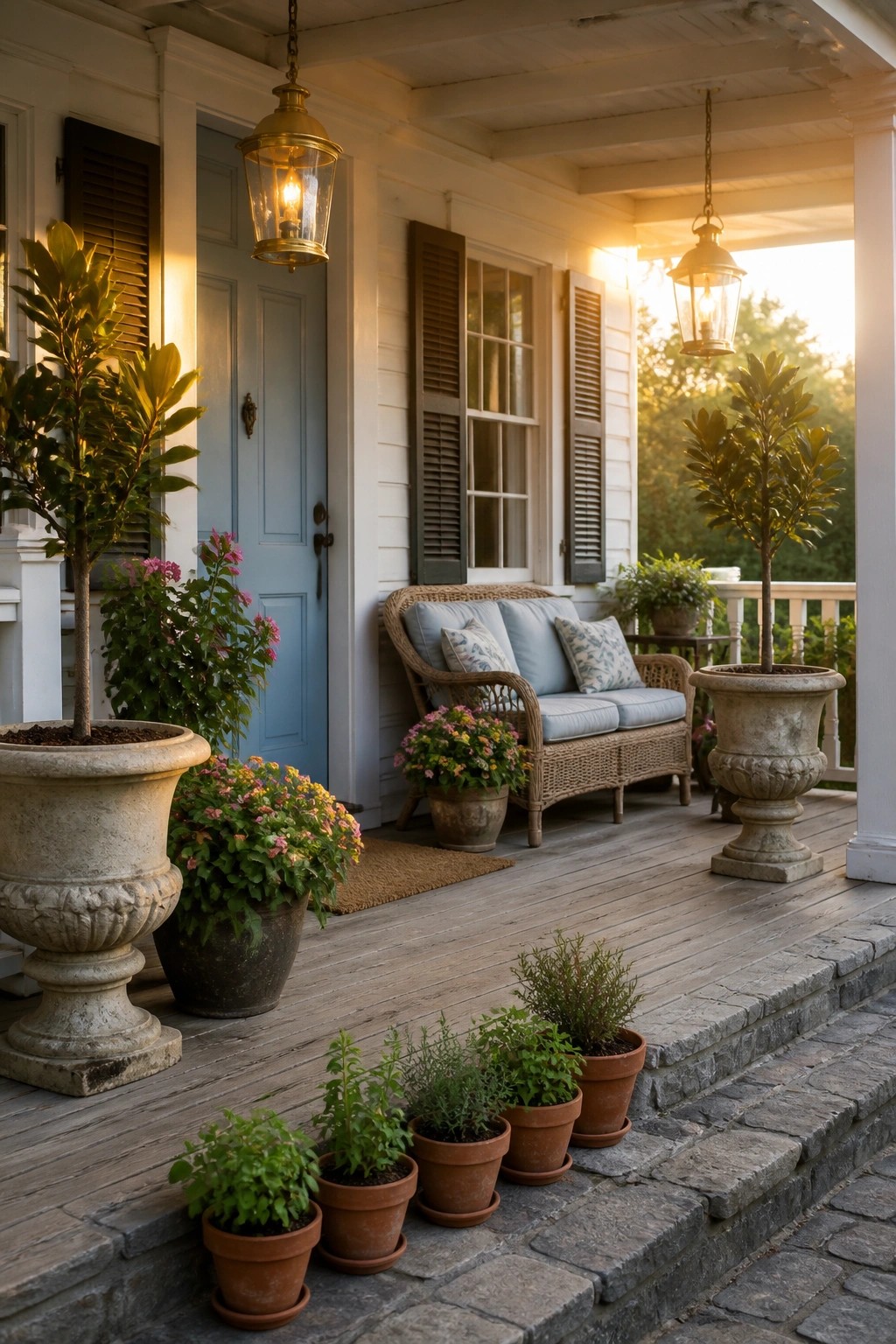
Placing containers in a range of sizes along the porch steps adds depth without crowding the walkway. The mix of large urns at the base and smaller pots higher up keeps the eye moving upward and makes the entrance feel fuller.
This approach works best on homes with wooden porches or any entry that has a short flight of stairs. Start with one or two big statement pots near the bottom, then fill in with medium and small ones as you move toward the door. Keep the colors simple so the plants stay the focus.
Stack Buckets Along the Steps
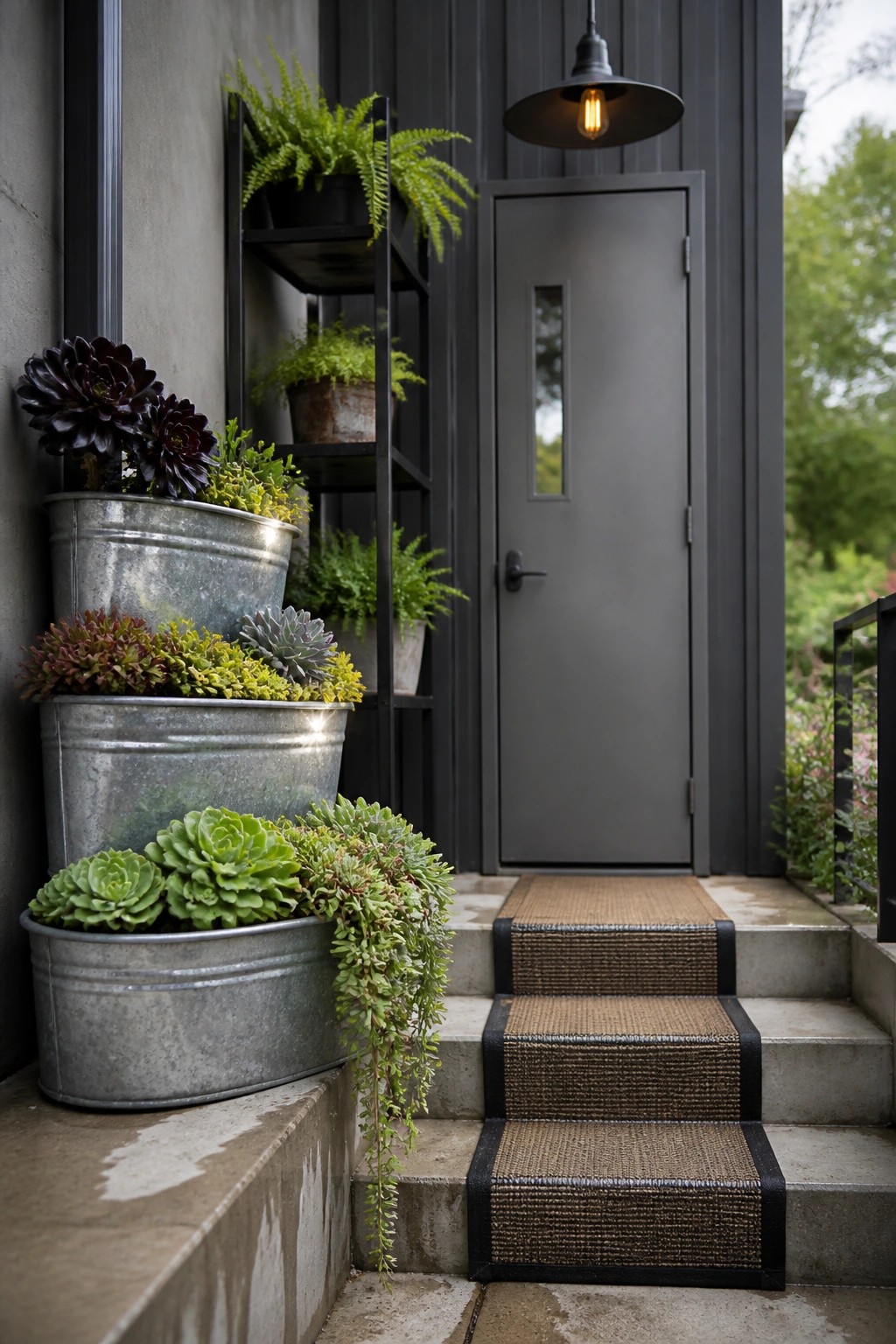
Metal buckets stacked in different sizes give you quick height without any permanent work. The lower bucket holds the bigger plants while the one on top adds a second layer, and both can be moved around if the seasons change or you want a different look.
This setup works best on small porches or narrow entries where you still want plenty of plants. Just watch the weight on older steps and make sure the buckets sit steady so they do not tip when people walk by.
Mount A Pallet For Vertical Container Gardening
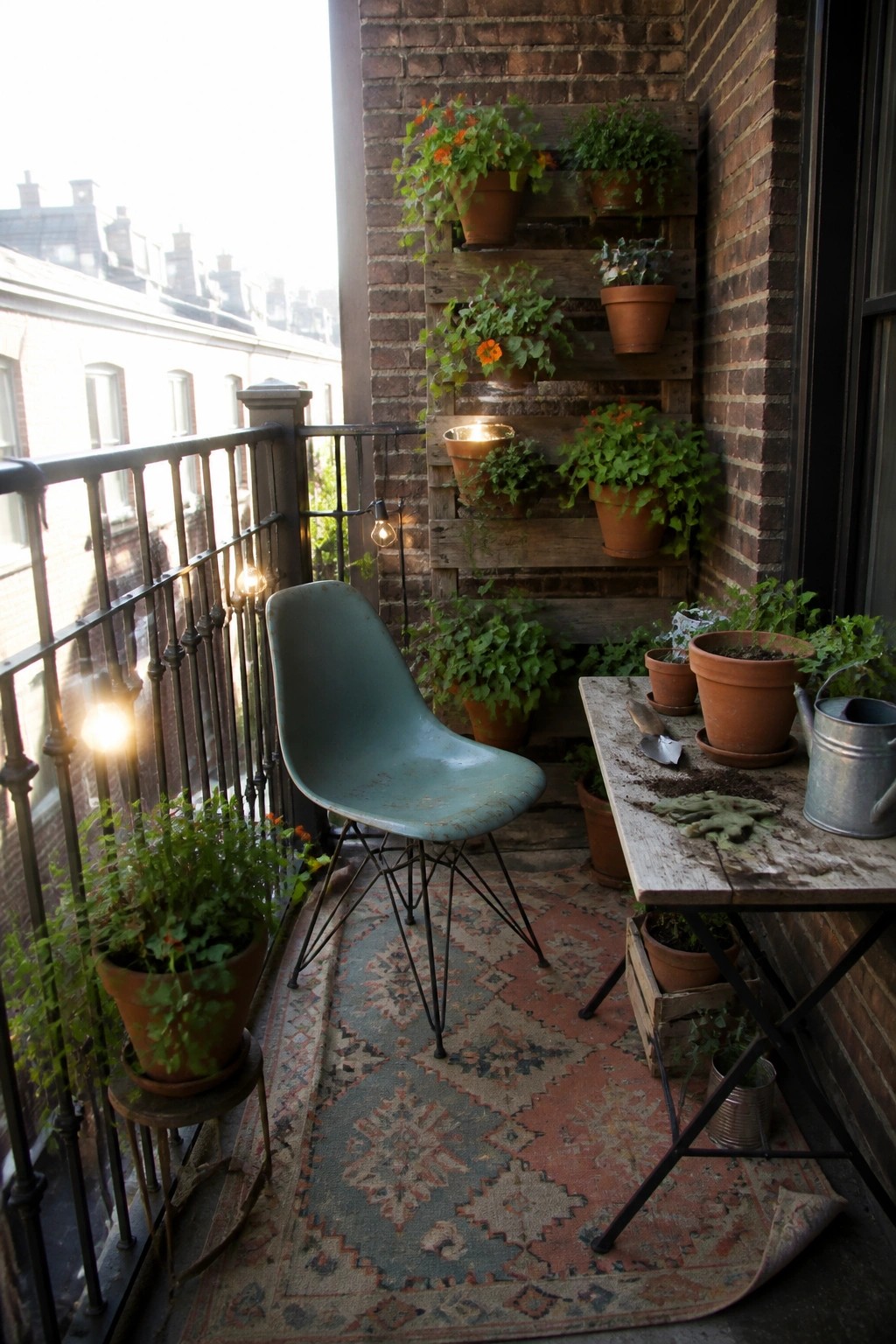
One simple way to add more plants without crowding the floor is to mount a wooden pallet on the wall. It turns unused vertical space into a place for several pots at once, which is especially helpful on small balconies or narrow porches.
This setup works best when the pallet is secured firmly and the pots fit snugly into the slats. It suits apartments or older homes with limited outdoor room, though it helps to pick lighter pots and plants that do not need constant heavy watering.
Use A Bench For Layered Containers
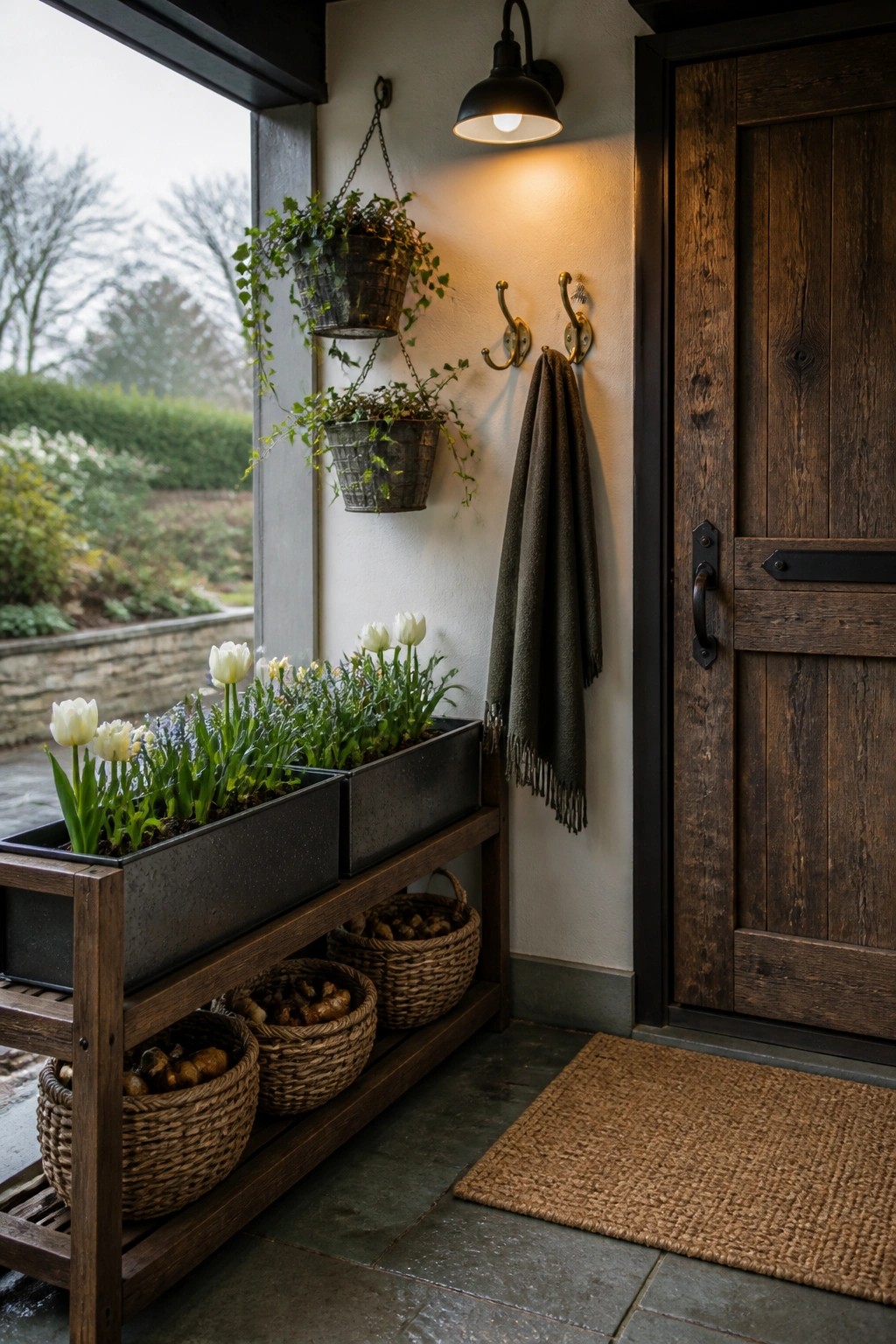
A bench gives you an easy way to create different heights without building anything permanent. It keeps the planters visible from the path and makes watering simpler since everything stays in one spot. Many people like this setup because it works even on a small porch where floor space is limited.
Place the bench right beside the door so the plants feel like part of the entry. A low wooden bench holds long troughs on top and leaves room for baskets or smaller pots underneath. This arrangement suits most homes with a covered porch and gives you flexibility to swap plants with the seasons.
Rustic Wooden Planters On The Porch
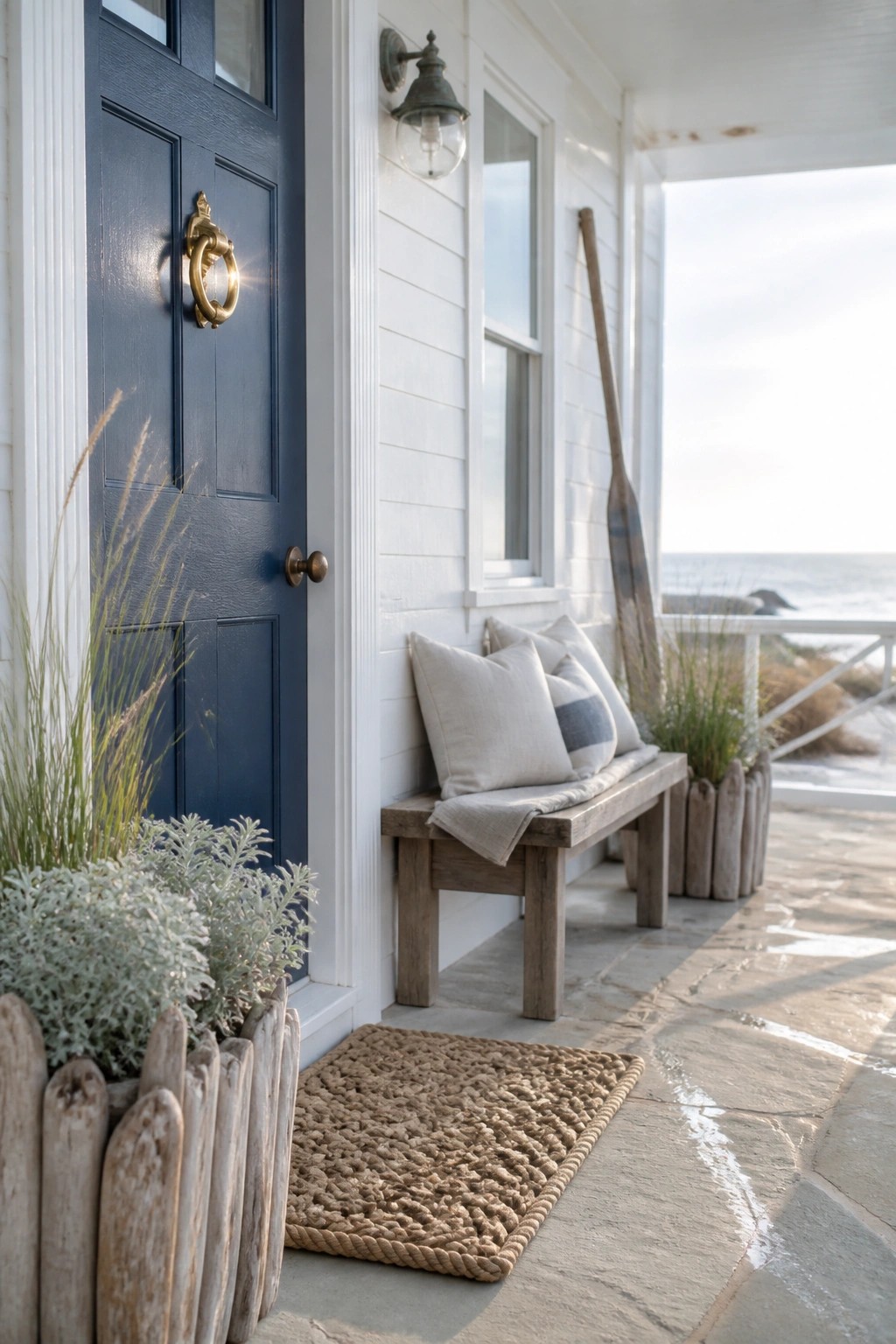
Wooden containers give a porch a simple, grounded look that feels right at home on a coastal entry. They hold up well outdoors and let you group plants at different heights without needing built-in beds. The rough texture of the wood also softens the hard lines of stone floors and painted siding.
These planters suit casual homes where you want the option to rearrange or swap plants with the seasons. Just add a liner for drainage and keep the boxes a similar size so the grouping stays tidy. Place them near the door or along the edge of the porch where they get decent light.
Frame the Entry With Tall Potted Evergreens
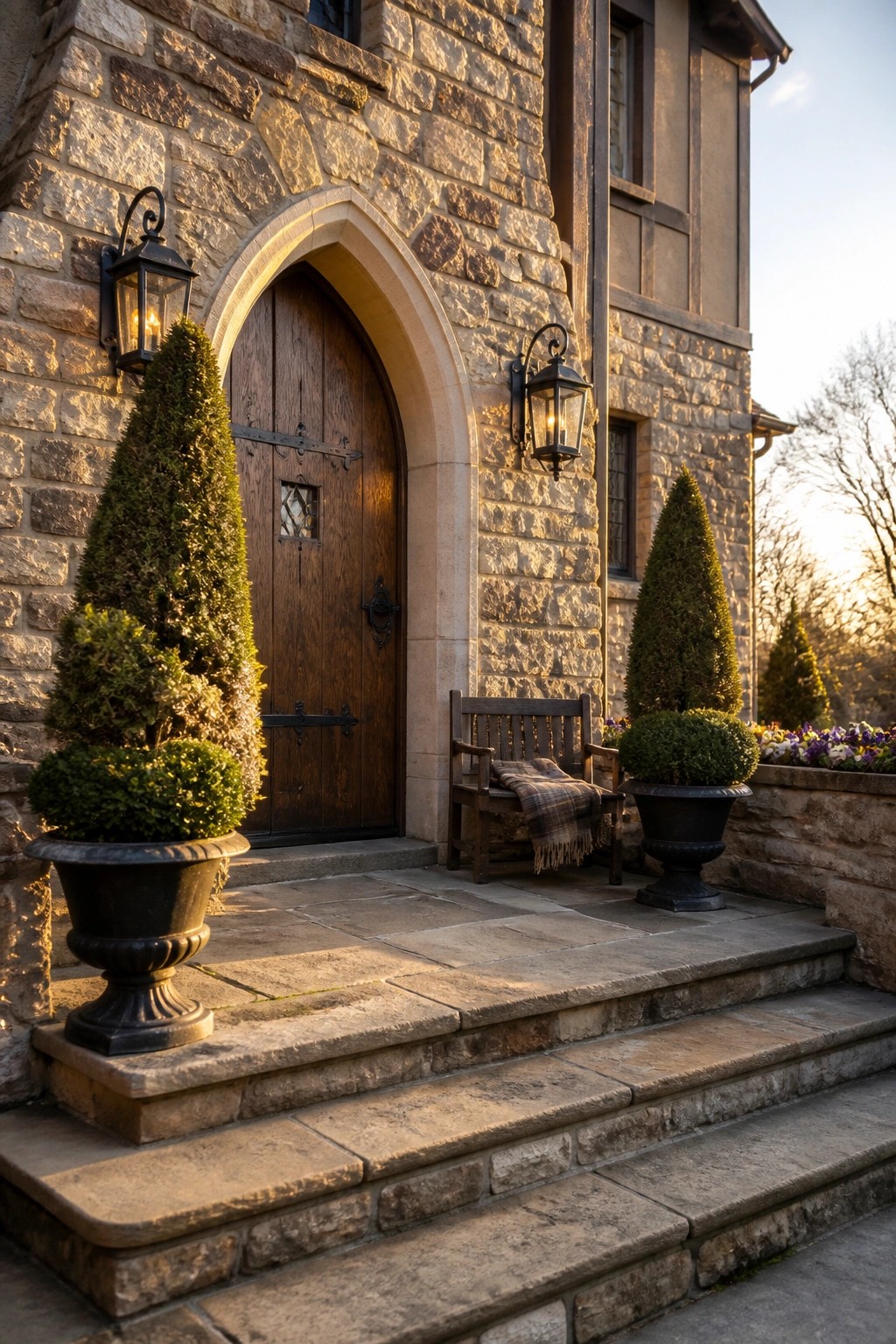
Placing tall evergreens in large containers beside the steps gives a stone entry more structure and a softer edge. The containers add height without any digging, and the green shapes stand out against the rough masonry.
This approach works on homes where the front is mostly hard surfaces. Match the pot style to the house and pick plants that hold their shape through winter so the look stays full all year.
Layering Heights in Large Containers
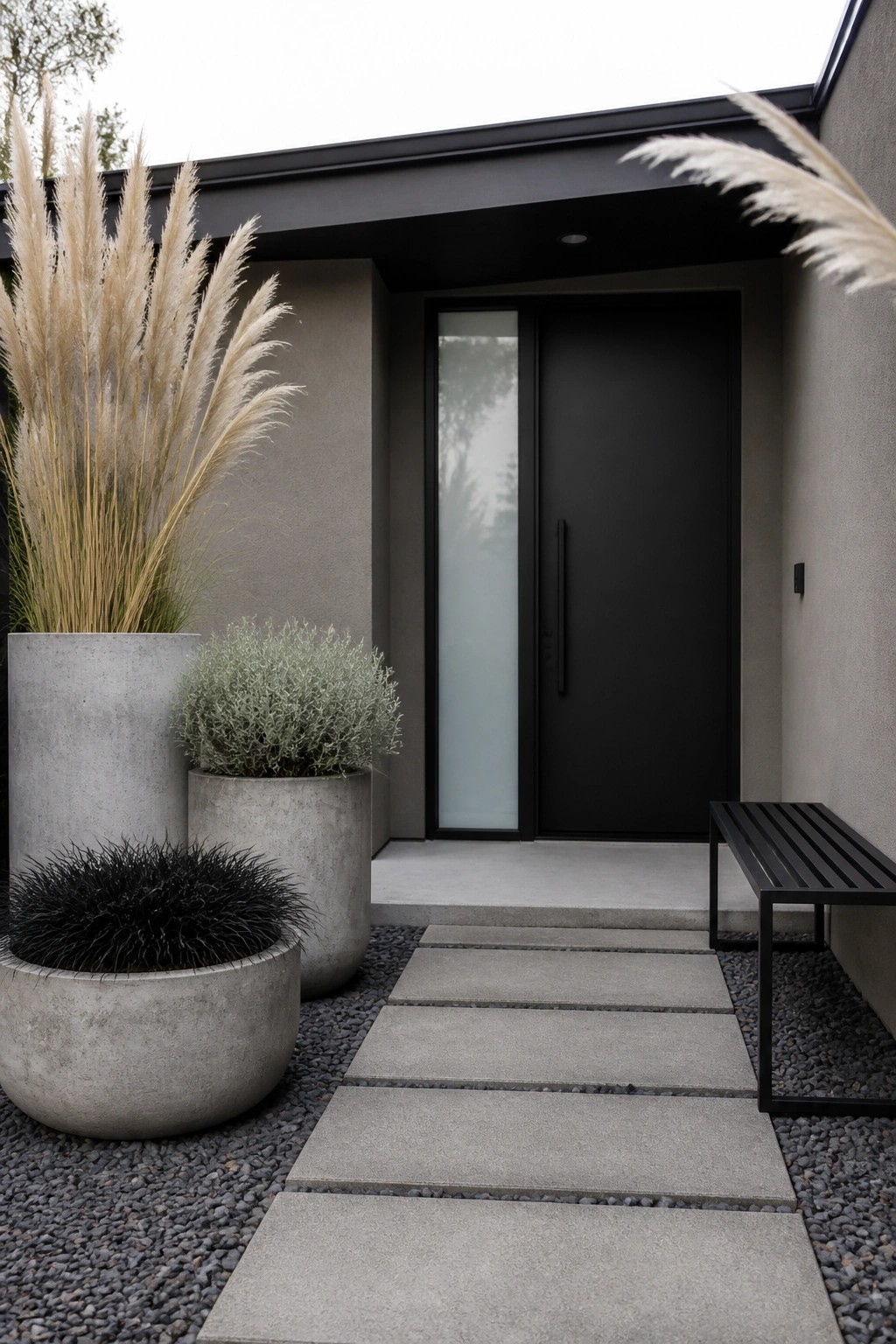
One way to make a flat entry feel more finished is to use a few oversized containers with plants of different heights. The tall grasses stand out against the lower shrubs, and the mix gives the area some shape without adding built structures.
This works best on homes with simple materials like concrete and dark doors. Keep the tallest pots toward the sides and leave the center path open so walking stays easy. It suits entryways that get full sun and already have gravel or stone underfoot.
Cluster Containers Along the Porch Rail
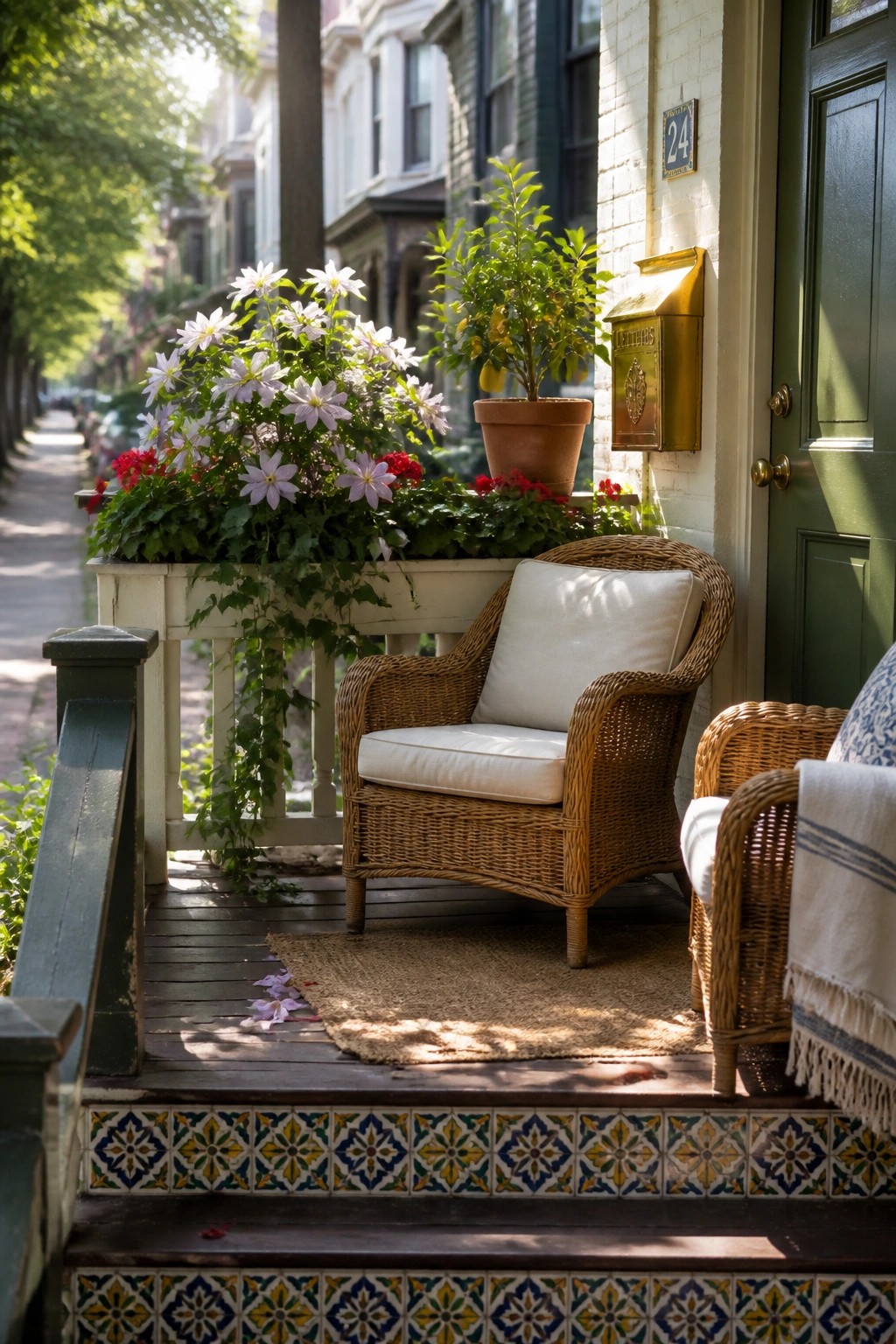
One simple way to make a front porch feel more welcoming is to group several containers together along the railing. The mix of sizes and flower colors adds life without taking up floor space or needing a full garden bed.
This approach suits older homes with narrow porches or limited ground space. Use a long planter for the main row and tuck one or two taller pots behind it for height. Check drainage and watering needs often, since rail planters dry out faster than ground beds.
Wooden Planters Along the Porch Edge
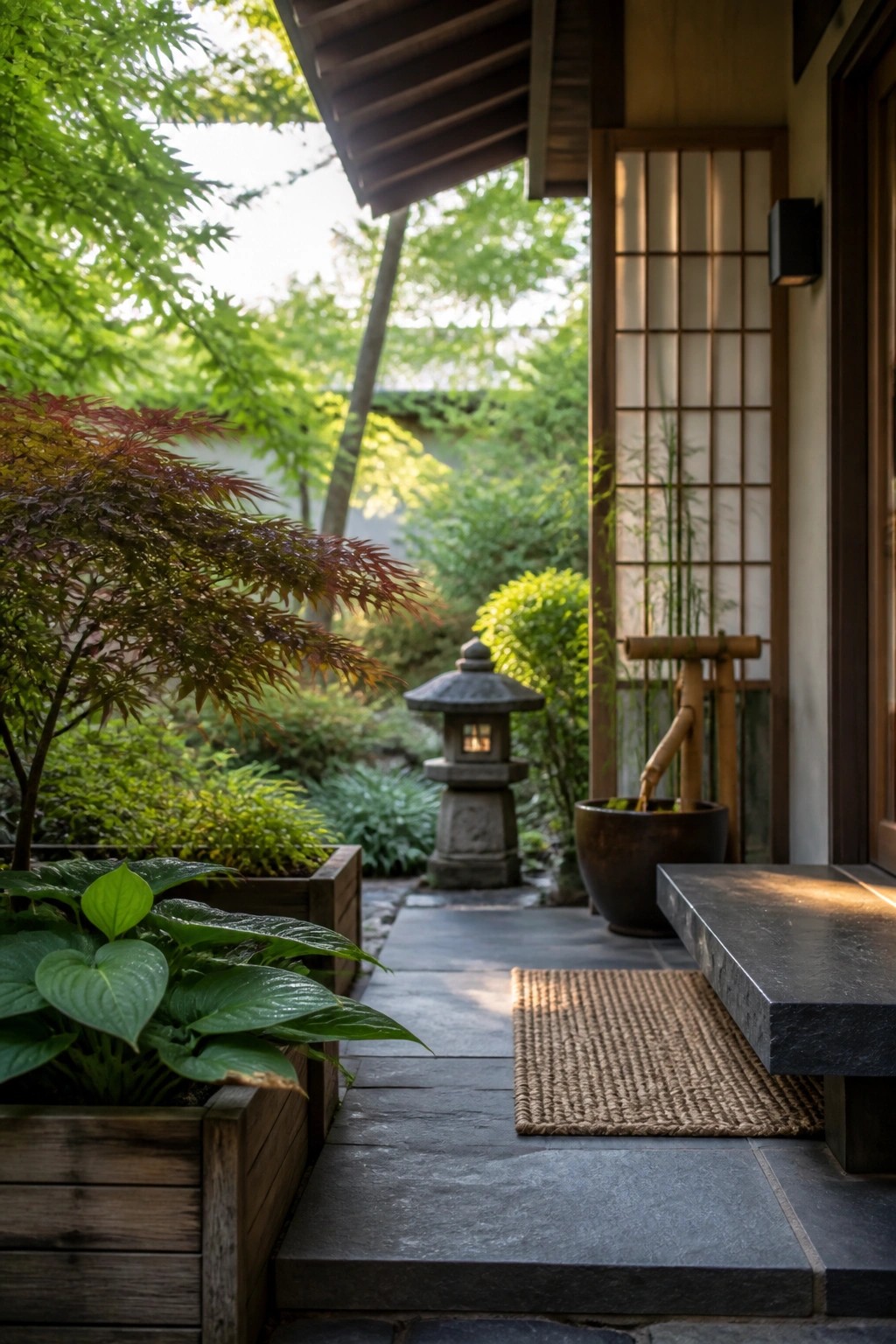
Wooden planter boxes placed right at the edge of a stone porch give the space a softer, more lived-in feel. The boxes keep plants contained while still letting the foliage spill over and break up the hard lines of the steps and flooring.
This approach works well on entries that get partial shade, since the deep boxes hold enough soil for larger leafy plants to stay healthy. Keep the path clear by setting the planters to one side and choose varieties that stay compact enough not to crowd the walkway.
Group Colorful Pots Near The Door
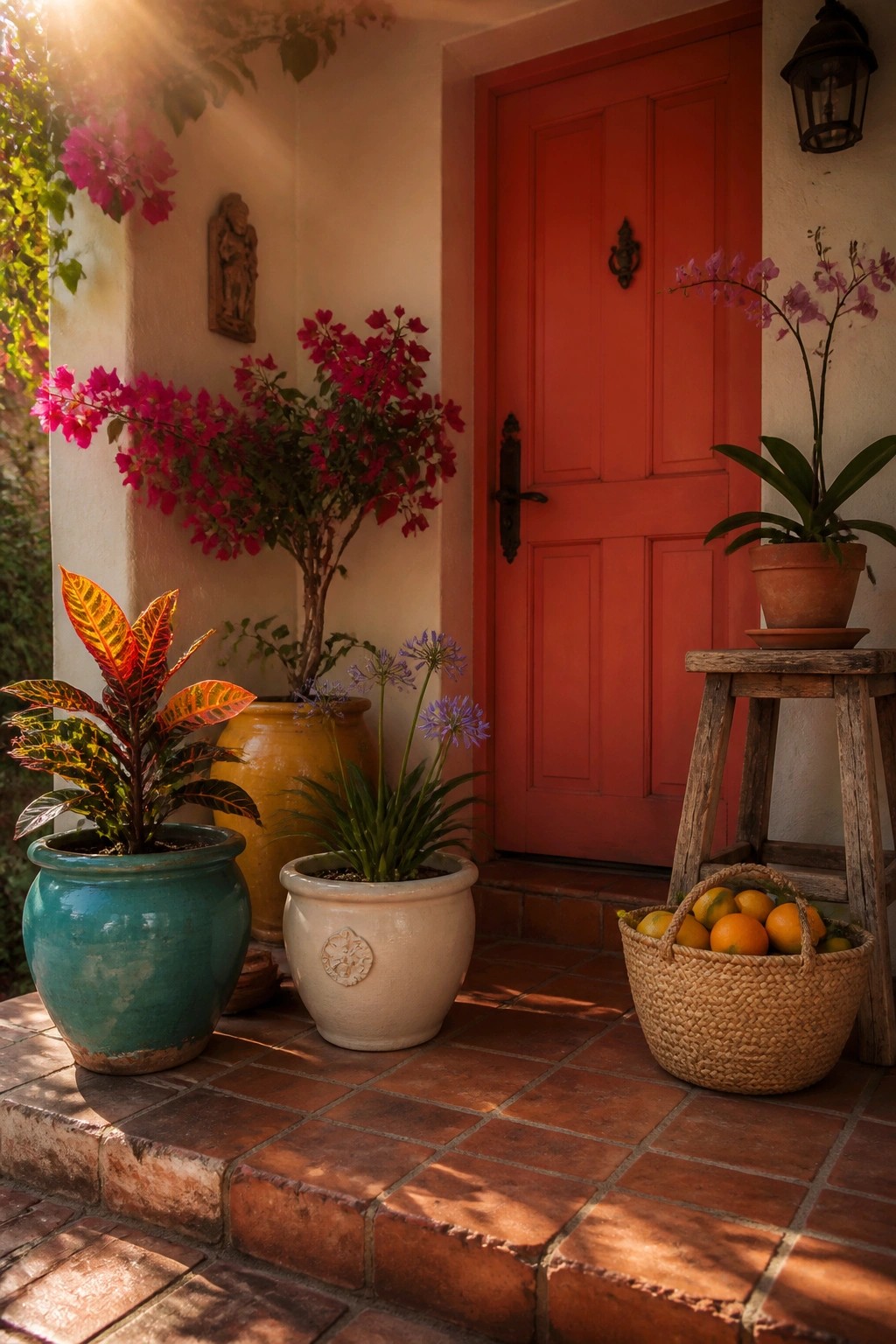
Many people like placing several pots together right by the front door. The mix of colors and sizes gives the entry a friendly layered look without needing a lot of space or big changes to the house.
This works best on small porches or steps where you want something simple and seasonal. Keep it to three or four pots and swap plants as they bloom so the spot stays bright through the year.
Frequently Asked Questions
Q: How do I pick the right size containers for my porch steps? A: Start with pots that match the scale of your steps. Bigger containers hold moisture longer so you water less often. Mix in a few smaller ones for variety.
Q: What if my porch gets full sun all day? A: Go for heat loving plants like petunias or geraniums in those spots. They handle the sun without wilting fast. Add some mulch on top to keep the soil from drying out too quick.
Q: Do I need to bring the pots inside during winter? A: Check your local frost dates first. Many containers can stay out if you choose hardy plants and wrap the pots for protection.
