


I have noticed that container gardens often fail when people focus only on looks without thinking about how the plants will actually grow in their space.
Over time I learned that choosing the right containers makes a bigger difference than I expected because they affect both drainage and the overall balance of a small patio.
Some arrangements end up looking messy after a few weeks because the plants outgrow their spots faster than expected.
Budget choices require a bit of trial and error at first.
I usually test two or three simple setups before committing to more because that shows me what actually holds up in daily life.
Mix Up Your Container Materials

Mixing different container materials gives a balcony garden more personality without extra cost. Metal buckets, old terracotta, and patterned ceramic pots all work together when you group them by size rather than trying to match them.
This approach suits small outdoor spaces that already have seating. Set the tallest pots toward the back and keep shorter ones closer to the bench or chairs so the plants frame the area without blocking movement. Just make sure every pot drains well.
Layer Containers On Steps
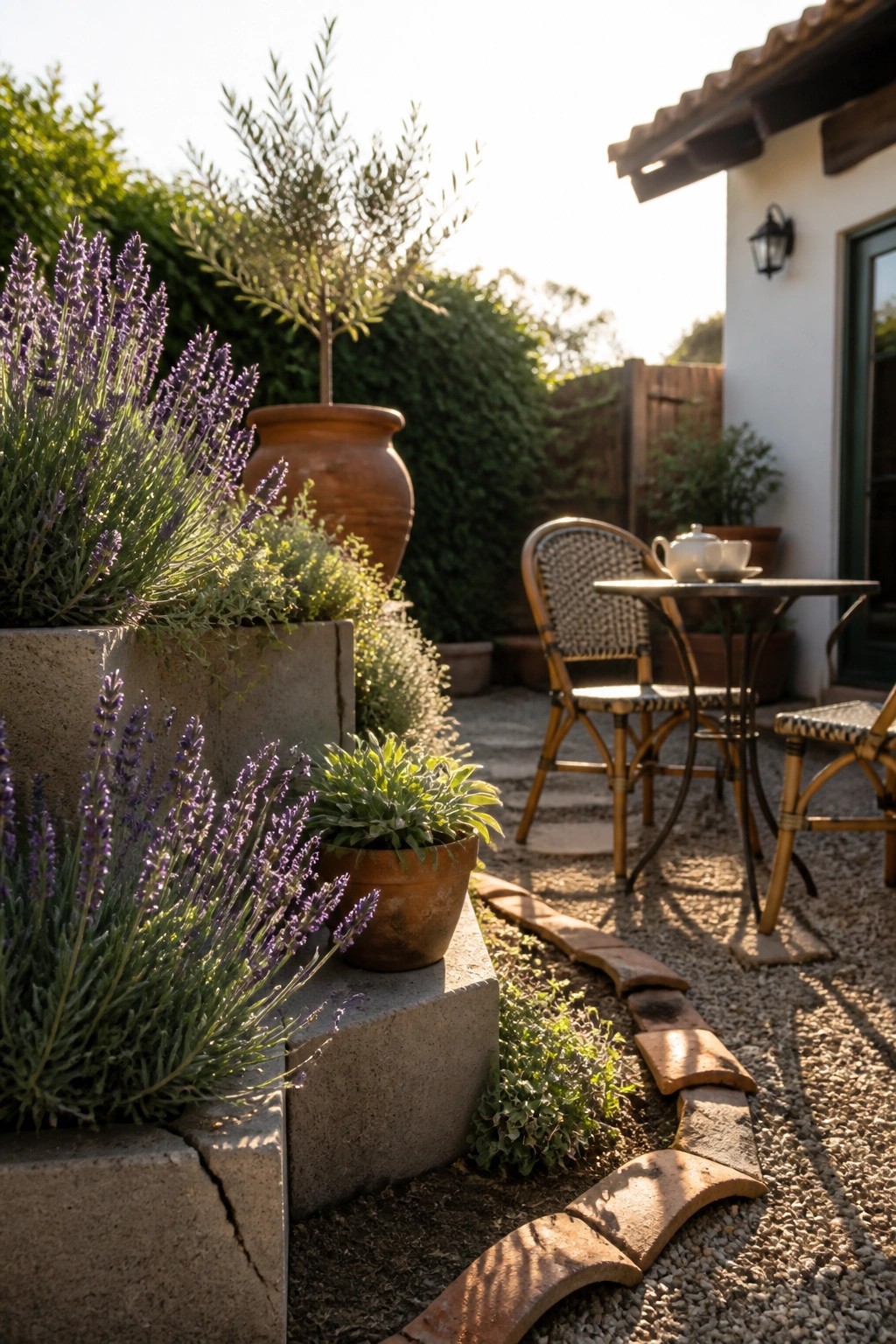
Placing pots at different heights makes a small garden area feel fuller and more interesting. Concrete ledges or steps give you free structure, while terracotta pots add warmth and keep the whole thing from looking too uniform.
This setup works best along a path or against a wall where space is tight. Use a few basic blocks or existing steps, then group three or four pots of different sizes. Stick to one or two plant types so it stays simple and easy to maintain.
Group Containers of Different Sizes Along the Edge
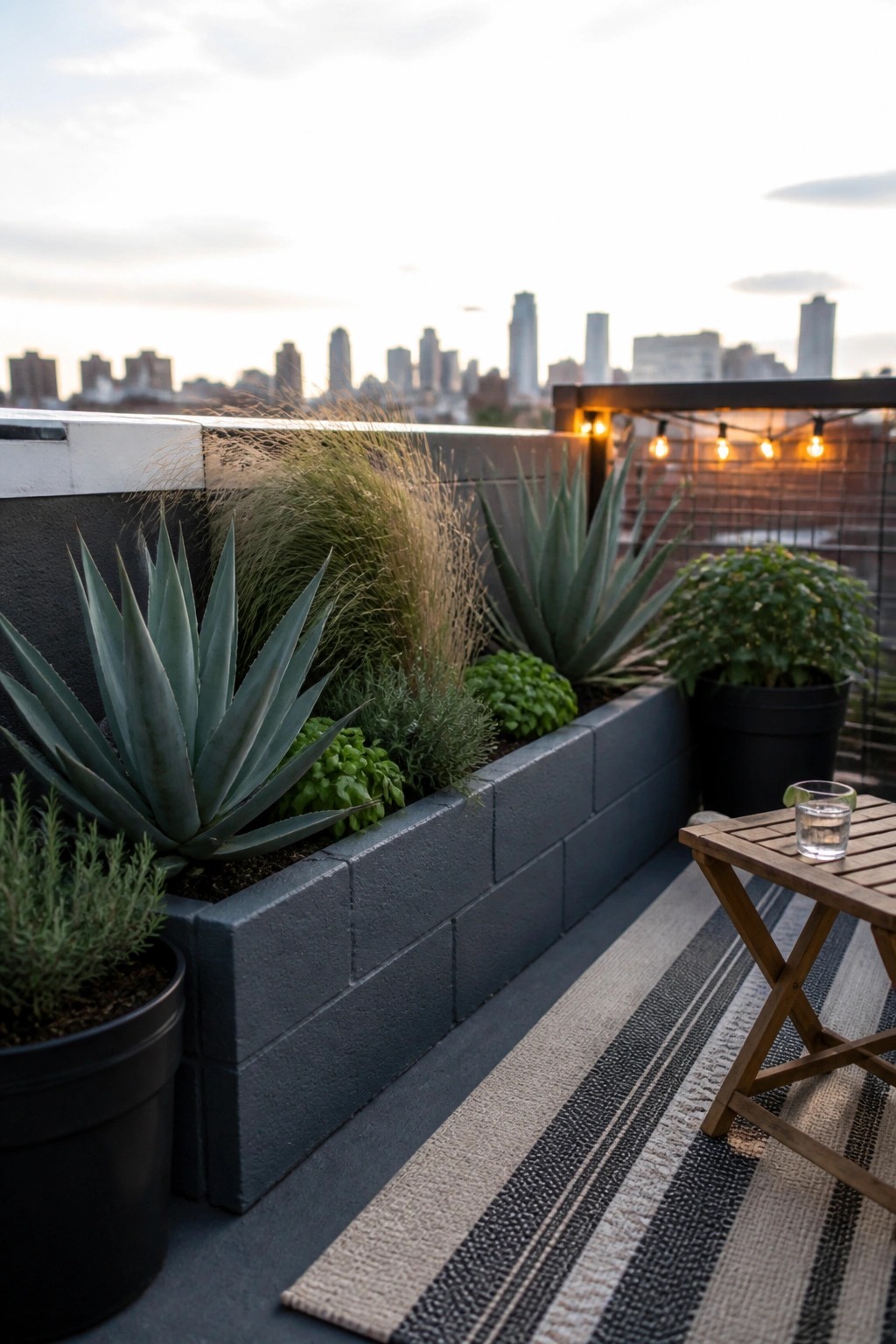
A simple way to get a full garden feel on a balcony or rooftop is to line up containers in a row rather than spreading them out. Mixing a long trough with a few separate pots lets you vary the heights and textures without spending much.
This works especially well on narrow outdoor spaces where you want a bit of privacy or just more greenery close at hand. Stick with sturdy, affordable pots in one or two colors so the plants stay the focus, and leave a little room between them for airflow.
Layer Hanging Baskets With Stacked Pots

Many people use hanging baskets alongside stacked pots to bring height and variety to a porch without spending much. The mix keeps things simple while making the space feel fuller and more inviting.
This approach works best on small decks or front porches where floor room is limited. Start with two or three hanging planters at different lengths, then group your pots in short stacks so the whole setup stays easy to rearrange.
Glass Jars Keep Herb Gardens Simple And Cheap
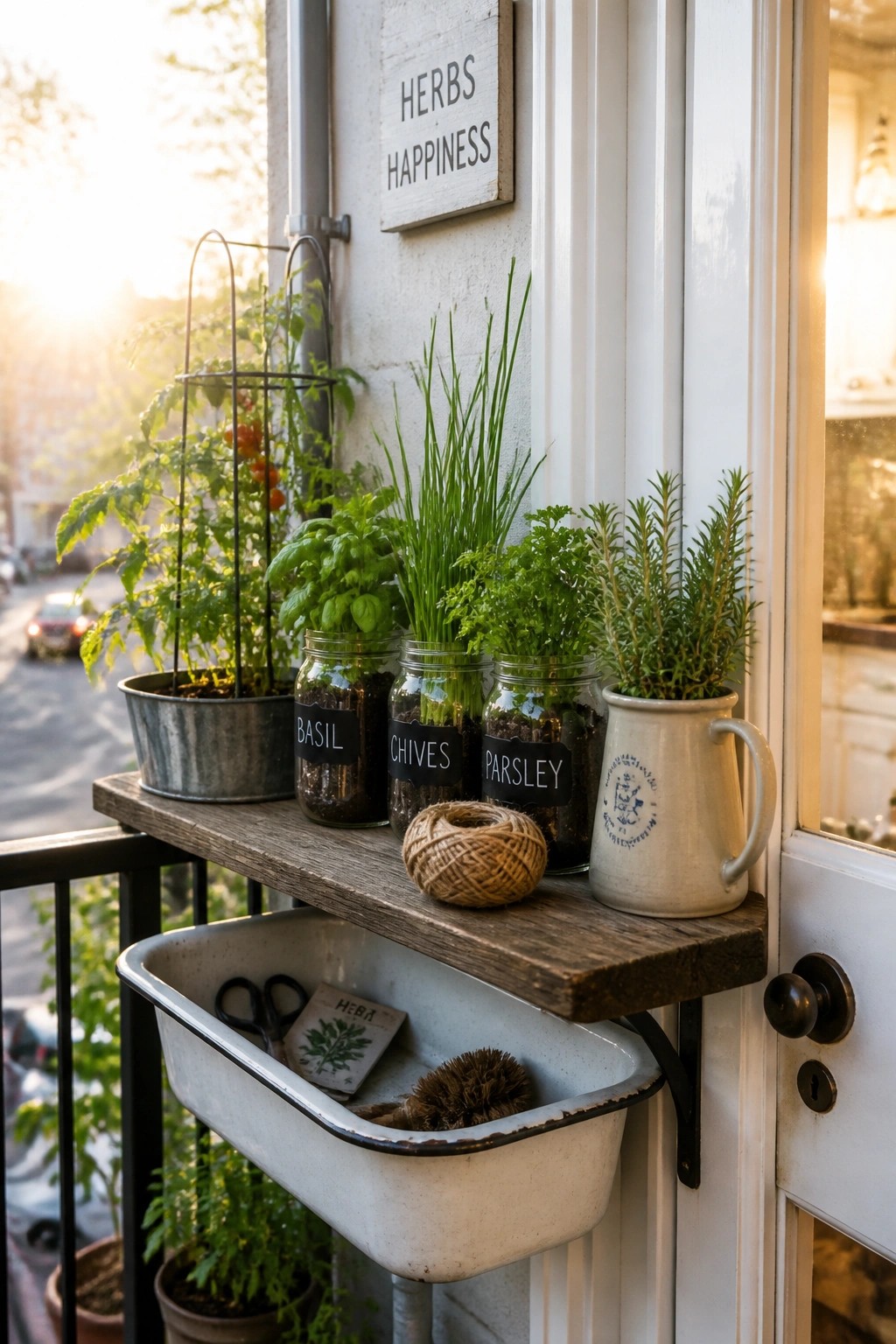
Glass jars make a good choice for growing herbs because they cost little and let you check moisture levels at a glance. The clear sides also keep the look light so the plants do not feel heavy on a narrow ledge or railing.
Place the jars on a sturdy board where they get morning sun, and add simple paper labels so you know what is growing. This setup suits small balconies or back doors and works with any leftover jars you already have on hand.
Repurpose Pallets Into Vertical Planters

A wooden pallet mounted on a fence gives you a simple way to grow more plants without taking up ground space. It works especially well in narrow side yards or along property lines where flat beds would feel cramped.
Hang a few buckets or tuck pots into the slats and you can mix herbs, flowers, and trailing greens in one spot. This setup suits small homes with limited yard room and keeps everything easy to water and reach.
Group Containers on a Tiled Base
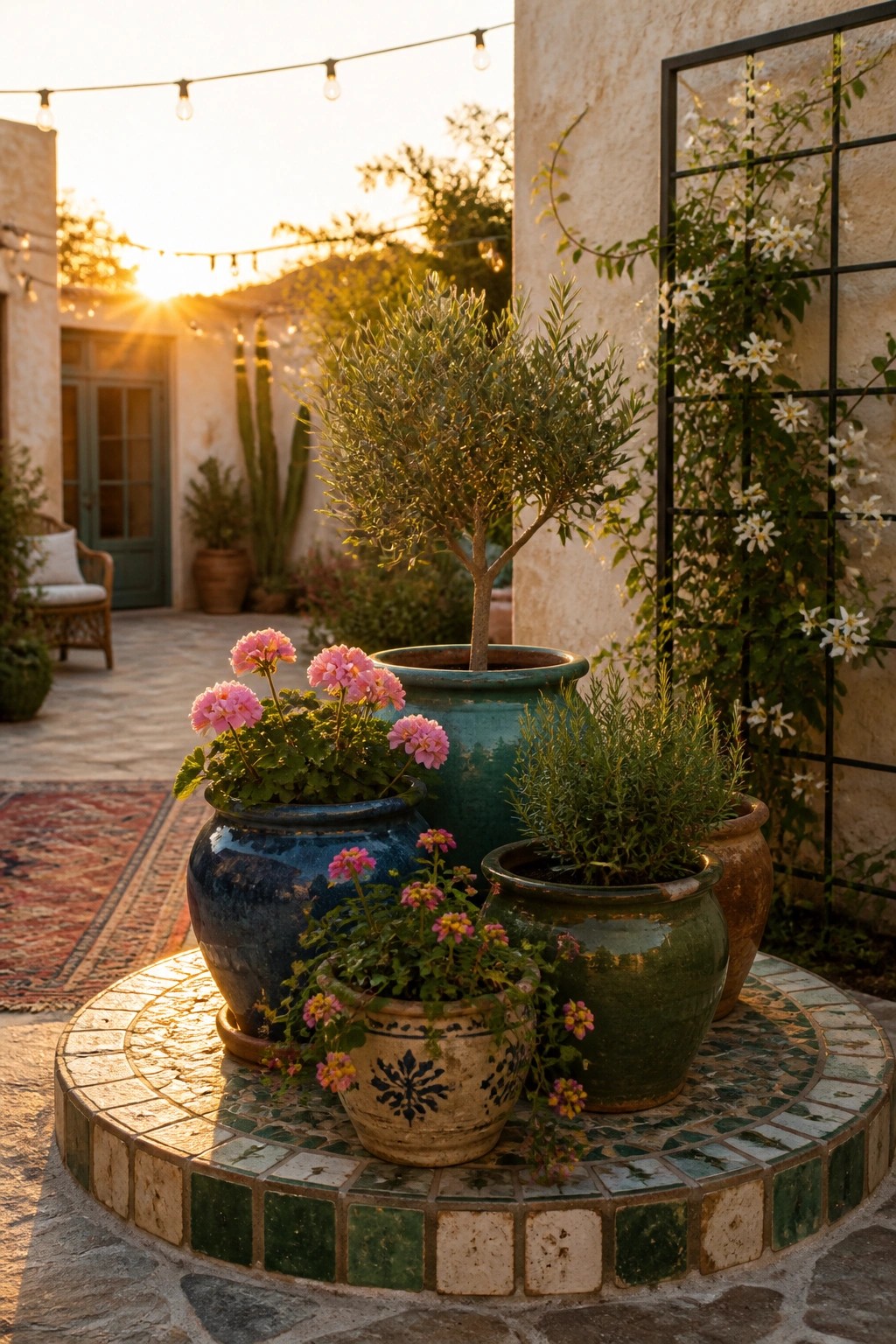
Clustering pots together on one surface makes even simple plants look more intentional. The different heights and colors create a small display without needing a big garden bed or lots of new purchases.
This works well on a patio or side yard where space is limited. A low tiled platform or similar base keeps the pots off the ground and helps them read as one unit. Just watch the drainage so water does not pool on the surface underneath.
Lining Up Large Pots For Structure
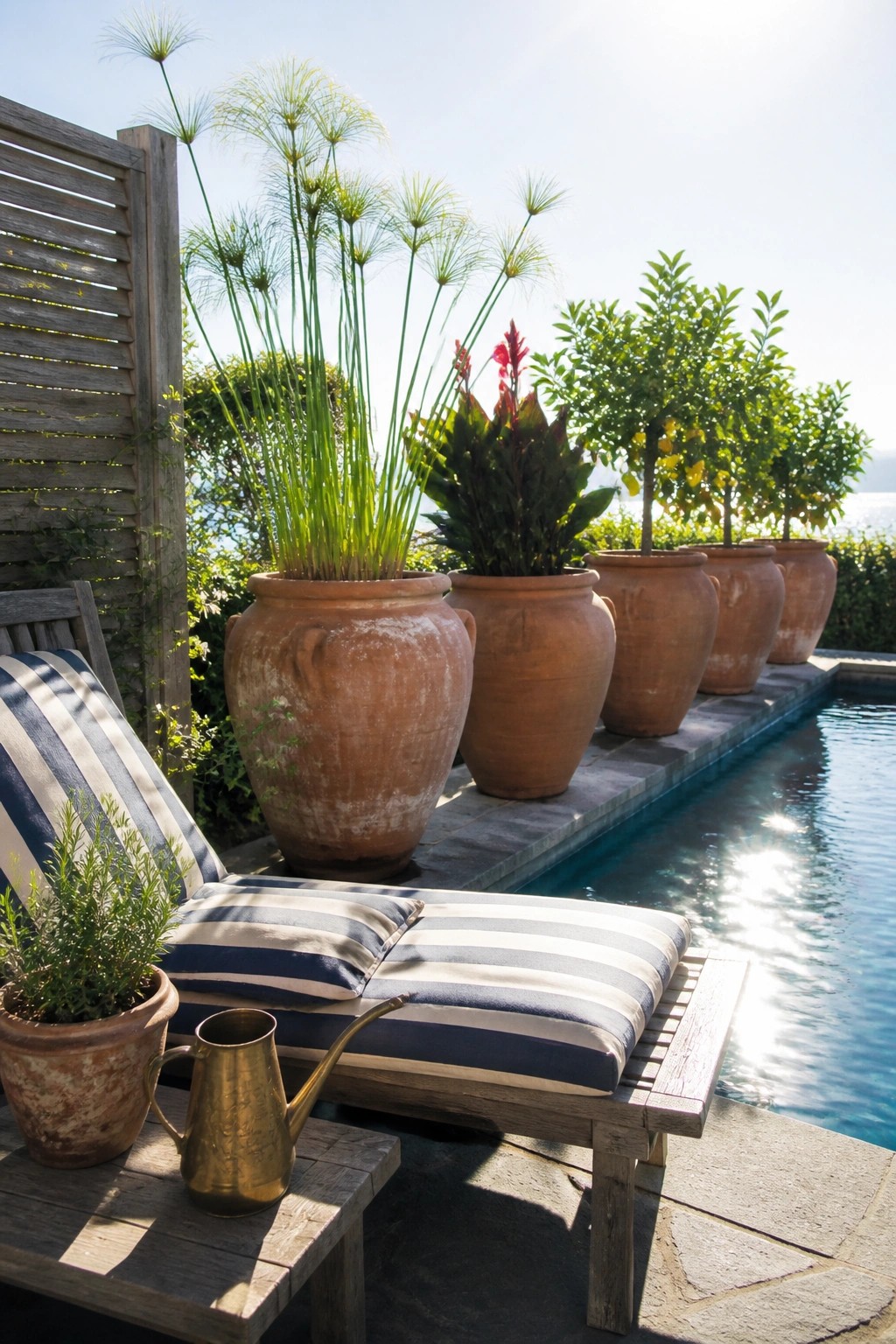
One simple way to give a pool or patio more shape is to set several large pots in a straight row. The repetition turns basic containers into a border that feels planned and keeps the space from looking scattered.
This approach works best in sunny outdoor spots where you want height and greenery without digging beds. Match the pots in size and material, then choose a mix of tall and leafy plants to add softness while staying easy to move or swap out later.
Use A Ladder As A Plant Stand
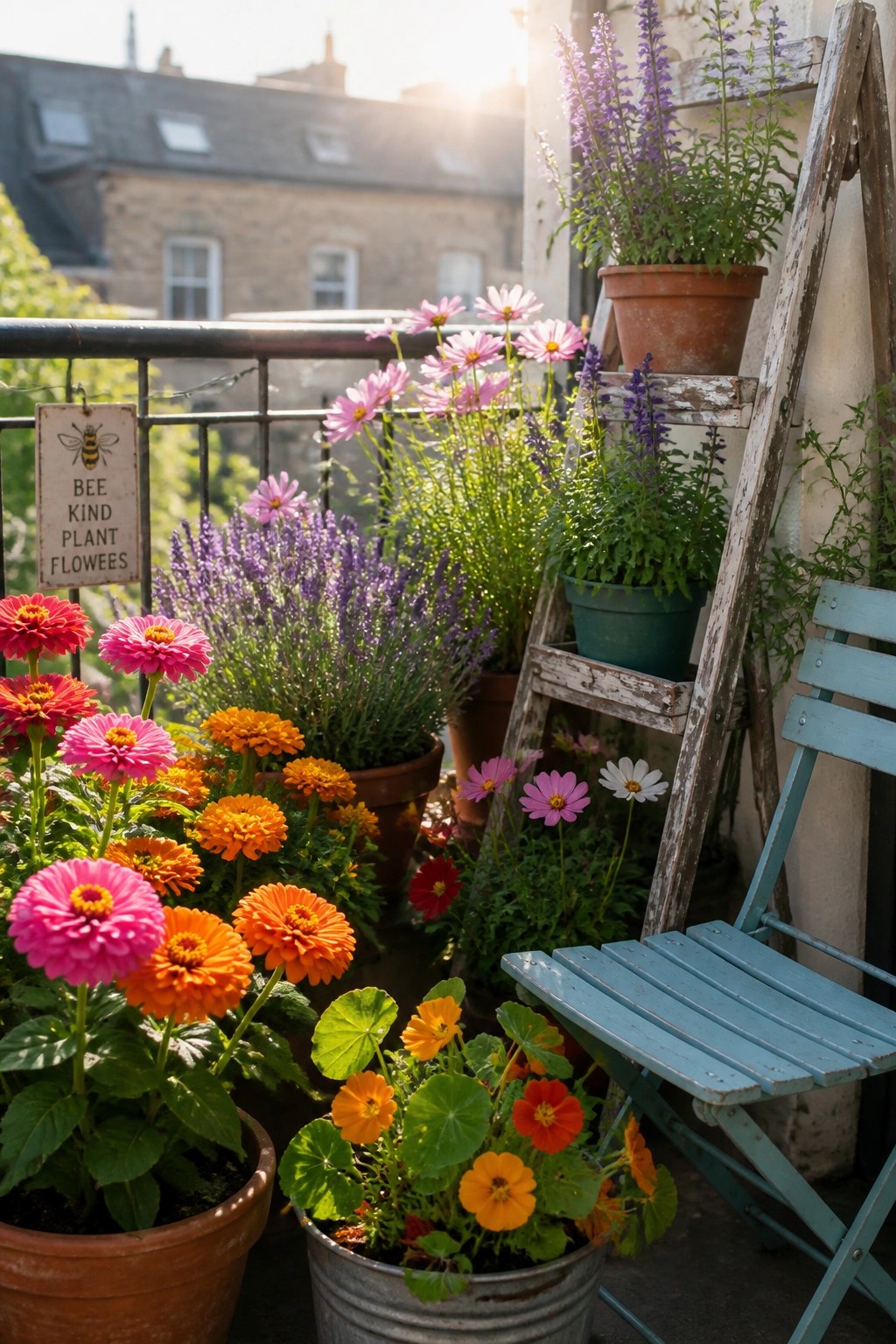
One easy way to fit more plants into a small balcony is to lean a wooden ladder against the wall and set pots on the rungs. This creates height without crowding the floor and lets you mix different sizes and colors at eye level.
It works best on balconies or patios where space is tight. Choose a sturdy ladder, keep the pots lightweight, and check the balance so nothing tips over in wind.
Stack Wooden Crates For Layered Plantings
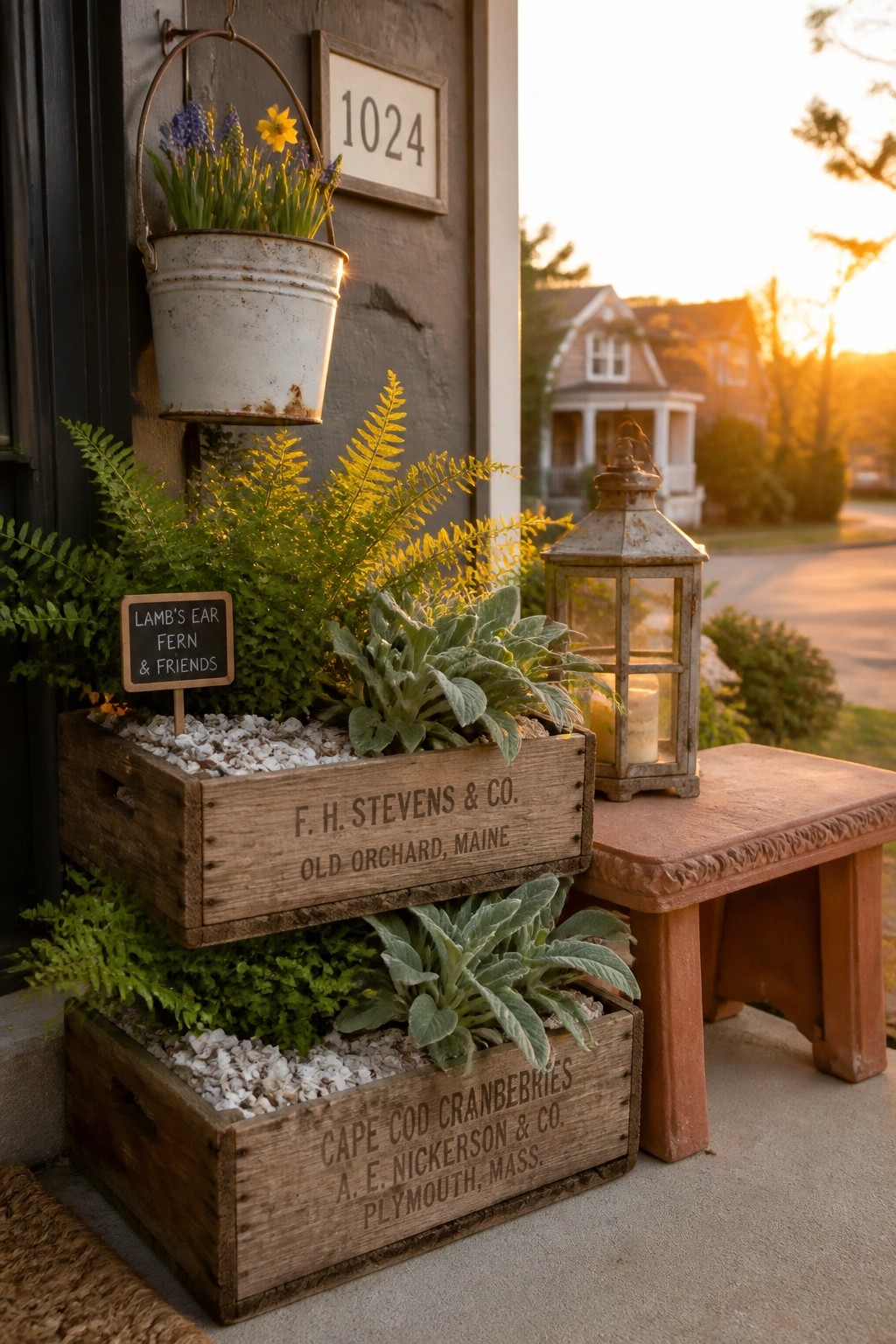
Wooden crates make a practical choice when you want container gardens that feel full without spending much. Stacking two or three gives you height and lets you mix plants with different textures in one spot. The crates also keep everything contained so the area stays tidy near an entry or along a walkway.
They work best on a porch, front step, or side path where you need a quick vertical display. Look for sturdy crates at flea markets or salvage yards, line them with plastic if needed, and fill the bottom with gravel for drainage. Keep the stack low enough that watering stays easy.
Woven Baskets As Container Planters

Woven baskets bring a simple texture to container gardens that feels relaxed and natural. They cost far less than ceramic or stone pots yet still look intentional when you set several plants together in the same space.
These baskets suit patios and small courtyards where you want greenery without a big budget. Line the inside with a plastic sheet or an old pot to keep moisture from damaging the weave, then move them around as needed to change the layout.
Repurpose Everyday Items For A Railing Garden

Many people like turning kitchen odds and ends into planters because it keeps costs low while still giving a tidy look. Glass jars, an old colander, or a simple bucket can all hold herbs or small vegetables when set along a railing or hung from a hook.
This approach works best on balconies or decks that get decent light. Just check that each container drains well so the plants do not sit in water.
Use A Few Large Matching Pots

Many people start with a mix of small pots in different colors and wonder why the space feels scattered. Using just a few oversized pots in the same dark finish pulls everything together fast and keeps the focus on the plants instead of the containers.
This approach works well on patios or side yards where you want low upkeep. Choose pots that are deep enough for good root growth, set them in a loose group, and fill them with a mix of grasses or small shrubs that share similar watering needs. The result stays simple and still looks planned.
Use a Pallet for Vertical Planting
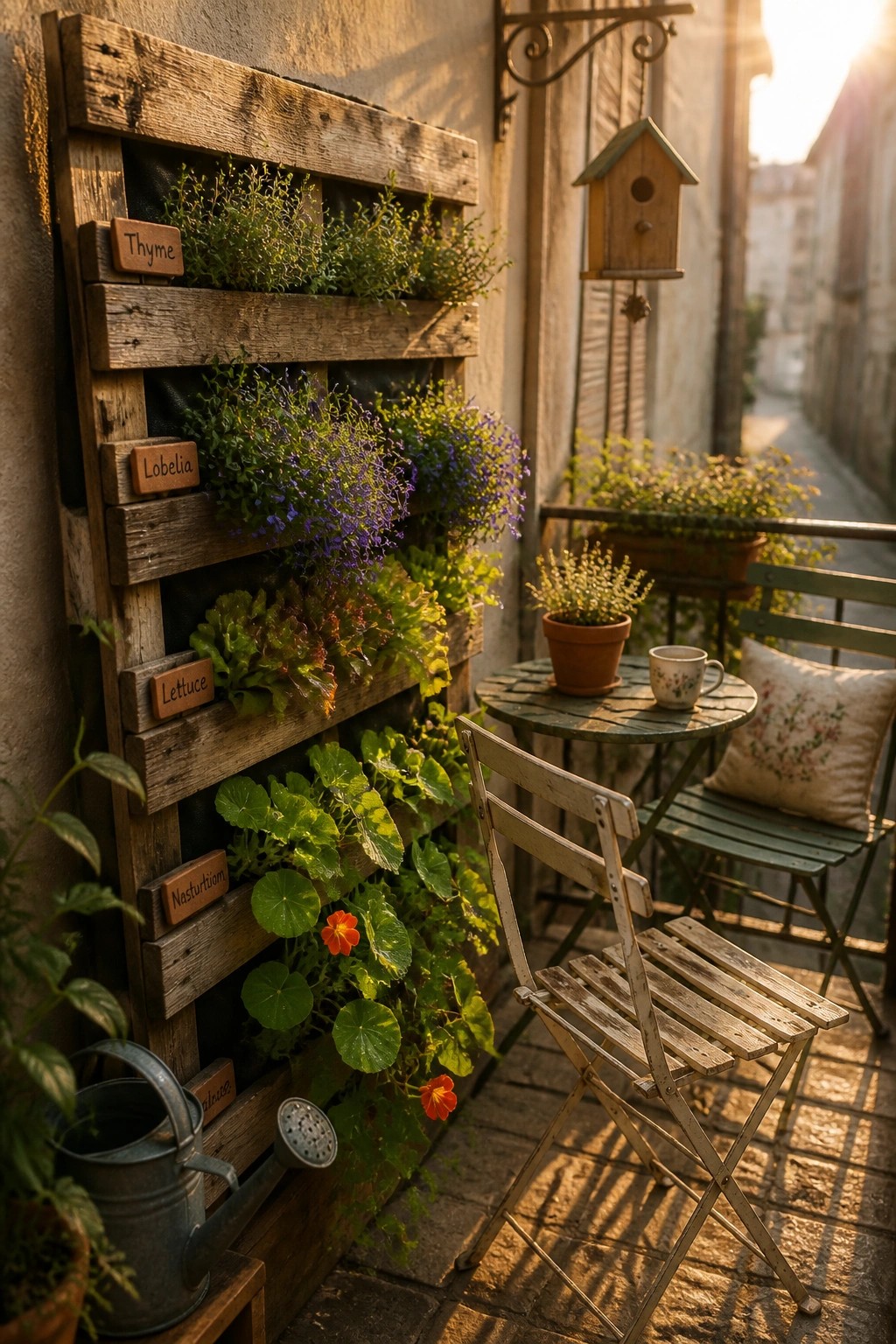
A wooden pallet turned into a wall garden gives you extra growing space without taking up floor room. It works well on a narrow patio or balcony where pots would crowd the seating area. The built-in shelves hold soil and plants at different heights, so you can mix herbs with flowers that trail down.
This setup suits small outdoor spaces that still need to feel open. Mount the pallet on a sunny wall, line the sections with fabric, and fill them with easy plants like herbs or trailing blooms. Keep the rest of the area simple so the vertical garden stays the main feature.
Line Wooden Benches With Containers
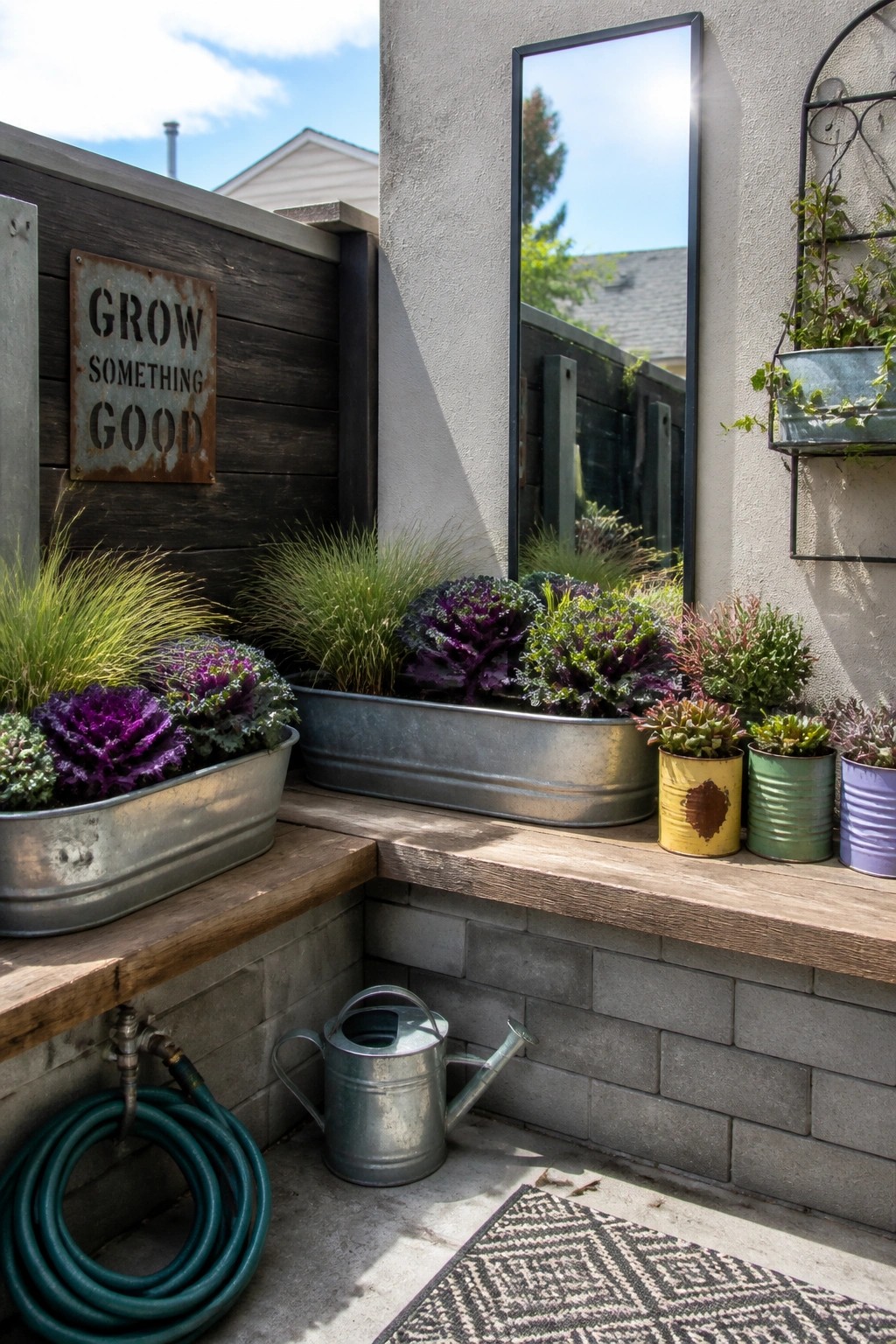
Wooden benches make a handy base for container gardens because they lift plants off the ground and keep everything at a comfortable height. This setup works especially well in small patios or side yards where you do not have much planting space. The mix of metal tubs and smaller colorful cans adds some variety without costing much.
It suits homes with existing decking or simple ledges along a wall. Just make sure the bench can handle the weight when the containers are full of soil and water. Place the larger tubs toward the back and smaller ones in front so everything stays easy to reach for watering.
Line Up Matching Pots Along a Ledge

One easy way to make a small balcony or deck feel more organized is to line up containers that all match. White pots keep the look simple and let the greenery do most of the work without adding extra color or pattern.
This works especially well when you have a low wall or ledge to set them on. Use the same size and finish so the row stays neat instead of looking like a random mix of pots.
Frequently Asked Questions
Q: How do I keep cheap containers from drying out too fast? A: Line the inside of your pots with a plastic bag that has a few holes poked in it. This holds moisture longer without costing much. Check the soil with your finger each day instead of following a strict schedule.
Q: What plants give the most stylish mix on a tight budget? A: Start with easy growers like herbs or marigolds from seed packets. Mix textures by pairing leafy greens with a few flowering ones in the same pot. Rotate them around as they bloom to keep the display fresh.
Q: Can I move my containers around without much effort? A: Pick lightweight pots like plastic or fabric ones for easy rearranging. Group them on a tray if you have one handy.
