

Ever wondered if you can grow broccoli indoors, right in the comfort of your own home? Picture this: you’re craving a fresh, crunchy bite of broccoli for your favorite dish, but you realize you’re out of stock. What if you could just pluck it from your indoor garden whenever you needed it?
In this article, we’ll explore the exciting world of indoor broccoli gardening and how you can turn your kitchen into a mini broccoli farm. Imagine the convenience of having your own supply of this nutritious veggie just a few steps away. With some simple tips and tricks, you’ll soon be harvesting your very own home-grown broccoli, adding a touch of freshness and flavor to your meals.
Choosing the right broccoli variety
When** selecting** a broccoli variety for your indoor garden, consider factors like the size of the mature plant, the time it takes to grow, and the recommended growing conditions.
- Dwarf varieties are ideal for limited space indoors.
- Hybrid varieties tend to be more adaptable to indoor conditions.
- Quick-growing varieties are great for those wanting a faster harvest.
- Cold-hardy varieties are suitable if your indoor environment tends to be cooler.
Research the various broccoli cultivars and choose one that aligns with your preferences and indoor gardening setup. Opting for a variety that suits your space and lighting conditions will increase the chances of a successful harvest.
Recommended Products

Heirloom, Organic, Non GMO, Vegetable, Fruit, Herb, Flower Garden Seeds

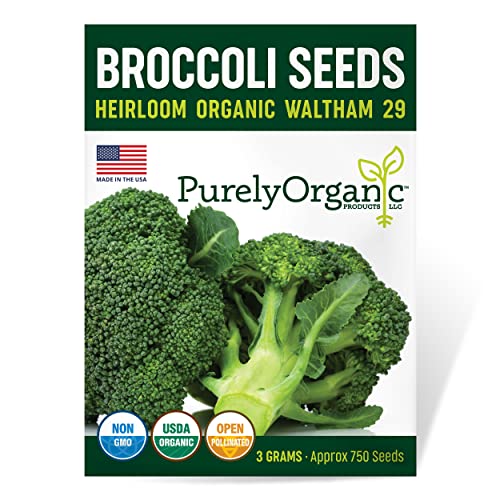
Brassica Oleracea Var. Italica: These finest quality, non-GMO, USDA Organic Waltham 29 Broccoli seeds produce crisp, crunchy, dark greenish-blue florets, leaves and stems that are packed with flavor and vitamins. They’re great on a plate!
Setting up the ideal indoor environment
To grow broccoli successfully indoors, you need to create the right environment for your plants. Here are some key factors to consider:
- Light: Place your broccoli where it can get 6-8 hours of sunlight daily or use grow lights for sufficient light exposure.
- Temperature: Maintain a consistent temperature between 60-70°F during the day and slightly lower at night.
- Humidity: Aim for moderate humidity levels between 40-60% to prevent drying out or mold growth.
- Air Circulation: Ensure good airflow to prevent humidity-related issues and promote healthy plant growth.
- Containers: Use well-draining containers with sufficient depth for root growth.
- Soil: Choose a lightweight, nutrient-rich potting mix suitable for broccoli cultivation.
- Watering: Water regularly, keeping the soil consistently moist but not waterlogged.
- Fertilization: Feed your broccoli with a balanced liquid fertilizer every 2-3 weeks to support growth.
Creating the ideal indoor environment will set the stage for your broccoli plants to thrive and produce a bountiful harvest.
Providing ample light for growth
To ensure optimal growth, broccoli plants require a healthy dose of light. Here are some tips to help maximize light exposure for your indoor broccoli garden:
- Natural Light: Place your broccoli in a spot that receives 6-8 hours of direct sunlight each day.
- Supplemental Lighting: Consider using grow lights if natural light is limited. LED grow lights are a good option for indoor gardening.
- Light Duration: Keep the lights on for about 12-14 hours each day to mimic natural daylight cycles.
- Light Distance: Position your lights about 6-12 inches above the plants to prevent stretching and ensure adequate light absorption.
By focusing on providing ample light, you can encourage healthy growth and bountiful harvests from your indoor broccoli garden.
Recommended Products

🌻Efficient LED Combination: This LED lamp has grow lights made up of 80 efficient growing LEDs ( 32 red lights, 12 blue lights,20 yellow lights and 16 white lights). It meets the conditions of plant growth without sunlight. 1--Full Spectrum(380nm-800nm): Suitable for all plants to root and sprout. 2--Red(660nm)+BLUE(460nm) Spectrum: for blooming and fruits. 3--Red+Blue+Full Spectrum: A mix of Red+Blue+Warm White is best to fuel the growth of your plants.

FULL SPECTRUM & NATURAL LIGHT: A19 full spectrum grow light appears 4000K white to eyes but has a red/blue light spectrum. Same as natural sun shine, perfect for tomatoes, cucumbers, peppers, leafy greens and herbs at all growth stages.

NOTE: The product stand needs to be pressed down by the flower pot to be stable. Not wireless style. 2 Installation Methods: Specially designed plant light for indoor plants, which can be inserted in the soil or stand for lighting.Unique and easy to assemble and disassemble.
Nurturing your broccoli plants
Lighting is essential for the growth of your indoor broccoli plants. Ensure your plants receive 6-8 hours of direct sunlight. LED grow lights can help supplement light needs. Maintain a daily light duration of 12-14 hours with the light source positioned 6-12 inches above the plants for optimal growth.
Water your broccoli plants regularly to keep the soil consistently moist. Check the soil by inserting your finger up to the first knuckle – if it feels dry, it’s time to water. Flooding the plant with water can lead to root rot, so ensure proper drainage.
Provide your plants with nutrient-rich soil. Fertilize every 3-4 weeks with a balanced fertilizer. High-quality soil promotes healthy root development and overall plant growth.
Monitor your plants for pests and diseases. Common issues include aphids and cabbage worms. Neem oil or insecticidal soap can help keep pests at bay. Remove any affected leaves promptly to prevent the spread of disease.
Maintain proper airflow around your broccoli plants. Good air circulation helps prevent mold and mildew issues. A gentle fan can assist in keeping the air moving around your plants.
Keep an eye on the temperature. Broccoli thrives in temperatures between 65-75°F. Avoid sudden temperature fluctuations, as they can stress the plants.
Harvest your broccoli florets once they reach a desirable size. Cut the main head at an angle to encourage the growth of side shoots. Regular harvesting promotes continuous growth.
Follow these nurturing tips to ensure your indoor broccoli plants thrive and provide you with a bountiful harvest.
Harvesting your home-grown broccoli
When it comes to harvesting broccoli, timing is key. You want to harvest your broccoli when the heads are compact and firm, before the florets start to separate. Here are some tips on how to harvest your home-grown broccoli successfully:
- Inspect the broccoli heads regularly to determine when they are ready for harvesting.
- Use a sharp knife to cut the broccoli stem at an angle, leaving some stem attached to the plant for potential regrowth.
- Start harvesting the main head when it is about 6-8 inches in diameter.
- After harvesting the main head, small side shoots will develop. Continue harvesting these side shoots regularly to promote further growth.
Remember, overripe broccoli can taste bitter, so harvest your broccoli timely for the best flavor and quality.
Conclusion
Harvesting your home-grown broccoli at the right time is key to savoring its delicious flavor and freshness. By keeping an eye on the heads, using a sharp knife for cutting, and starting with the main head at the ideal size, you can enjoy the best-tasting broccoli. Remember to harvest side shoots to promote continuous growth and maintain the quality of your harvest. Timely harvesting not only ensures a tasty experience but also avoids any bitterness in your broccoli. So, keep these tips in mind as you embark on your indoor broccoli-growing journey!
Frequently Asked Questions
When is the right time to harvest home-grown broccoli?
Harvest your home-grown broccoli when the main head reaches 6-8 inches in diameter.
How should I cut the broccoli stem for harvesting?
Use a sharp knife to cut the broccoli stem at an angle to prevent damage to the plant.
Why is timely harvesting of broccoli important?
Harvesting broccoli timely prevents bitterness and ensures the best taste and quality.
How can I ensure continuous growth of broccoli?
Harvest the main head first, then side shoots to encourage continuous growth of broccoli.
