

Are you struggling to keep your tomato plants upright and thriving? Picture this: Your tomato garden is flourishing, but the weight of the ripening fruits is causing your plants to droop. What can you do to ensure they stay healthy and productive?
In this article, we’ll explore simple yet effective solutions for supporting your tomato plants. By discovering the right tools and techniques, you’ll not only prevent your plants from bending under pressure but also promote better growth and higher yields. Ready to learn how to give your tomatoes the support they need to reach their full potential?
Key Takeaways
- Providing support for tomato plants is essential to promote upright growth, improve air circulation, and prevent diseases.
- Common challenges without support include sprawling plants, increased susceptibility to pests and diseases, and lower yields due to structural strain on the plant.
- Using stakes offers advantages such as improved air circulation, reduced risk of fruit rot, and easier access for maintenance tasks like pruning and harvesting.
- Tomato cages provide excellent support by keeping plants upright, promoting good airflow, and facilitating easy access for care activities like watering and harvesting.
- Trellises and netting offer vertical growth support, space efficiency, better air circulation, and easier harvesting compared to traditional methods like stakes or cages.
- Exploring alternative options like using strings or twine can be beneficial for supporting indeterminate tomato varieties effectively while adding creativity to your garden space.
Overview of Tomato Plant Support Methods
Supporting your tomato plants is crucial for their growth and productivity. Without proper support, they can become tangled, break, or not receive adequate sunlight. Let’s explore why providing support is essential and the common challenges you may face without it.
Why Support is Essential for Tomato Plants
Supporting tomato plants ensures they grow upright, allowing better air circulation around the foliage and reducing the risk of diseases. It also prevents fruits from touching the ground, minimizing rotting and pest damage. By providing support, you help your plants focus their energy on producing healthy tomatoes instead of struggling to stay upright.
Common Challenges Without Support
Without adequate support, tomato plants can sprawl on the ground, making them more susceptible to pests and diseases. Additionally, unsupported plants may experience fruit rot due to direct contact with soil or limited airflow around the stems. Lack of support can lead to lower yields and poor fruit quality as the plant’s resources are diverted towards maintaining its structure rather than fruit development.
Using Stakes for Tomato Support
When it comes to supporting your tomato plants, using stakes is a popular method that can provide the necessary support for healthy growth. Let’s explore how you can effectively use stakes to ensure your tomato plants thrive.
Recommended Products
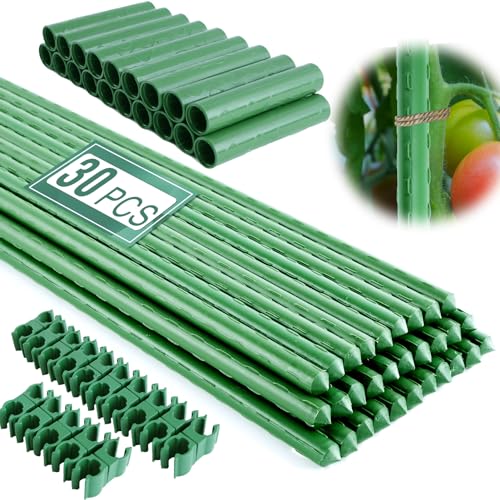
[DURABLE AND STURDY] Crafted from robust hollow steel, this garden stakes features a fade-resistant green plastic coating, offering reliable protection against wind, rain, and rust. With anti-slip ridges, it's easy to tie on plant ties, aiding in plant climbing. the pointed bottom design of tomato stakes enables effortless soil insertion, ensuring a secure anchoring effect with minimal effort

[DURABLE AND STURDY] Crafted from robust hollow steel, this garden stakes features a fade-resistant green plastic coating, offering reliable protection against wind, rain, and rust. With anti-slip ridges, it's easy to tie on plant ties, aiding in plant climbing. the pointed bottom design of tomato stakes enables effortless soil insertion, ensuring a secure anchoring effect with minimal effort

DURABLE AND RUST-PROOF: The 72 inch garden stake is made of high-quality hollow metal, which make it upright guidance, the resin coating to prevent more UV and weather resistant to rust, can be reused for long time.
Choosing the Right Stake
Selecting the right stake is crucial for providing adequate support to your tomato plants. Consider using sturdy materials like wooden or metal stakes that are at least 6 feet tall to accommodate the height of mature tomato plants. Ensure the stakes are strong enough to withstand the weight of the plant and its fruit without bending or breaking.
Installation Techniques
To install stakes for supporting your tomato plants, place them in the ground near each plant when they are young. Drive the stake into the soil at least 1 foot deep, ensuring it is positioned close to the main stem of the plant but without damaging roots. As your tomato plant grows, gently tie it to the stake using soft ties or twine, allowing room for growth while providing stability.
Pros and Cons of Using Stakes
Using stakes for supporting tomato plants offers several advantages, such as improved air circulation around the plant, reduced risk of fruit rot from contact with soil, and easier access for pruning and harvesting. However, one limitation of using stakes is that they may not provide sufficient support for large or heavily laden tomato plants compared to other methods like cages or trellises.
Utilizing Tomato Cages
When supporting your tomato plants, utilizing tomato cages can be a practical and effective method. Here’s how you can benefit from using tomato cages and the steps to choose and install them correctly.
Recommended Products

2X Thicker Than Standard Cages – 6mm Steel Tubes for Ultimate Strength: Forget wobbly plastic, rotting wood, and those 3mm wire cages that crumple under pressure. Our heavy-duty tomato cage is forged from 6mm-thick galvanized steel—twice the thickness of typical supports. It stands tall through storms, carries heavy fruit like a champ, and gives your plants the rock-solid confidence they deserve

Galvanized wire 33" cages for small tomato's & plants

Robust & Sturdy Vertical Support: Measuring 33 inches tall, this small tomato cage features a strong 3-leg and 3-ring design that provides solid vertical support for tomato plants, peppers, and top-heavy vegetables, preventing sagging, bending, or breakage.
Benefits of Tomato Cages
Tomato cages offer excellent support for your plants as they grow. They help keep the plant upright, preventing it from bending or breaking under the weight of the tomatoes. Additionally, tomato cages promote good air circulation around the plant, which is essential for reducing the risk of diseases caused by excess moisture.
By using tomato cages, you also make it easier to access your plants for pruning, watering, and harvesting. This accessibility can save you time and effort when tending to your tomatoes throughout the growing season.
- Choosing Tomato Cages: When selecting a tomato cage, opt for sturdy materials like galvanized steel or heavy-duty wire that can withstand the weight of mature tomato plants. Ensure that the cage is tall enough to accommodate the full height of your tomatoes as they grow.
- Installing Tomato Cages:
- Place the cage over your young tomato plant while it’s still small.
- Gently guide the branches through the openings in the cage as they grow.
- Secure the cage firmly into the ground to provide stable support for your plant.
- Check periodically to ensure that no branches are being constricted by the cage.
By following these steps, you can effectively utilize tomato cages to support your plants and enjoy a bountiful harvest without worrying about their stability or health.
Exploring Trellis and Netting Options
When it comes to supporting your tomato plants, trellises and netting can be excellent alternatives to stakes or cages. Let’s delve into the advantages of using trellises and netting as support options for your tomato plants.
Recommended Products

Trellis Netting Polyester Nylon: Our trellis netting is made of durable polyester nylon materials,strong and durable, not easy to break, reusable,can support extremely heavy crop loads, protect plants from damage, able to grow vertically

PRODUCT SIZE - Trellis netting 5Ft *15 Ft, 3.5 inch square mesh, easily cut to desired size to use. Important note: The trellis netting comes in a vacuum sealed bag.

Material:You will receive 1 plant trellis netting,made from polyester,not easy to break.Trellis for climbing plants outdoor can support heavy crop loads
Advantages of Trellises and Netting
Trellises and netting offer several benefits for your tomato plants:
- Vertical Growth Support: Trellises provide vertical support, allowing your plants to grow upwards without bending or sprawling on the ground.
- Space Efficiency: By training your tomatoes to grow vertically on a trellis or netting, you can save space in your garden or containers.
- Improved Air Circulation: Both trellises and netting promote better airflow around the plants, reducing the risk of diseases caused by excess moisture.
- Easy Harvesting: Vertical growth facilitated by trellises makes it easier to spot and pick ripe tomatoes.
Installation Guide for Trellises and Netting
Here’s a simple guide to installing trellises or netting for your tomato plants:
- Selecting Materials: Choose sturdy materials like wooden stakes, bamboo poles, or metal grids for trellising. For netting, opt for durable mesh that can support the weight of growing tomatoes.
- Positioning: Place the trellis or set up the netting before planting your tomatoes to avoid damaging roots later on.
- Securing Support: Ensure that the trellis is firmly anchored in the ground or attached securely to a structure like a fence. For netting, attach it between posts at an appropriate height based on plant size.
- Training Your Plants: As your tomatoes grow, gently guide their stems through the openings in the trellis or mesh netting to encourage upward growth.
- Regular Maintenance: Check periodically for any signs of sagging or instability in the support system. Adjust as needed to keep your tomato plants well-supported throughout their growth cycle.
By incorporating trellises or netting into your tomato plant care routine, you can provide effective support while maximizing space utilization and promoting healthier plant growth.
Alternative Support Options
When it comes to supporting your tomato plants, there are various alternative options you can explore beyond traditional stakes and cages. These alternatives offer unique benefits and can be just as effective in promoting healthy growth and maximizing space in your garden.
Using Strings or Twine
One innovative way to support your tomato plants is by using strings or twine. This method involves tying the main stem of the tomato plant to a vertical string or twine as it grows. By gently securing the plant along the string at regular intervals, you encourage upward growth and prevent sprawling.
To implement this technique, start by attaching one end of the string to a sturdy support structure above the plant, such as a stake or overhead line. Then, loosely tie the other end around the base of the plant’s main stem. As the tomato plant grows, continue securing it to the string every few inches using soft loops or twists.
Using strings or twine for support not only helps maintain an organized garden layout but also facilitates better air circulation around the plants. This method is particularly useful for indeterminate tomato varieties that require continuous support throughout their growing season.
Innovative DIY Support Ideas
For those looking to get creative with their tomato plant supports, there are several do-it-yourself (DIY) options that can add a personalized touch to your garden while serving a practical purpose. One idea is to repurpose old wooden ladders by leaning them against a wall or fence and allowing tomato vines to climb up each rung.
Another inventive DIY solution involves constructing a teepee-style trellis using bamboo poles tied together at the top with twine. This structure provides ample vertical space for tomatoes to grow upward while creating an eye-catching focal point in your garden.
By exploring these alternative support options like using strings or twine and embracing innovative DIY ideas, you can find creative ways to nurture your tomato plants effectively while adding visual interest to your gardening space.
Conclusion
You now have a range of creative options to support your tomato plants beyond the usual stakes and cages. Whether it’s using strings for better air circulation or repurposing old ladders for a unique touch, there are plenty of ways to nurture your plants effectively. By exploring these alternatives, you can not only maximize space but also add visual interest to your garden. So go ahead and try out these innovative ideas to give your tomatoes the support they need while adding a personalized touch to your gardening experience. Happy planting!
Frequently Asked Questions
Q: Why should I consider alternative support options for my tomato plants?
A: Alternative support options like strings or twine provide better air circulation and upward growth, especially beneficial for indeterminate varieties.
Q: What are some creative DIY ideas for supporting tomato plants?
A: Repurposing old ladders or constructing teepee-style trellises using bamboo poles are innovative ways to support tomato plants creatively and practically.
Q: How can exploring alternative support options benefit gardeners?
A: By exploring alternative support options, gardeners can effectively nurture their tomato plants, maximize space, and add visual interest to their gardens.
