

Ever wondered what magical structures cucumbers sprout from? Imagine strolling through a garden, pondering the humble cucumber plant’s support system. You’re not alone in this curiosity. In this article, we’ll unravel the mystery and reveal what cucumbers actually grow on.
Picture this: you’re at the grocery store, eyeing the fresh produce section. Your hand reaches for a crisp cucumber, and a thought crosses your mind – how does this green delight even grow? Understanding the foundation of cucumber growth can enhance your appreciation for this versatile vegetable. Get ready to dive into the fascinating world of cucumber cultivation with us.
The Structure of Cucumber Plants
Cucumber plants are vines that belong to the Cucurbitaceae family. They grow in a sprawling manner, requiring support structures to climb as they develop.
- Tendrils: Cucumber plants use tendrils to anchor themselves to supporting structures, helping them climb and access sunlight efficiently.
- Leaves and Stems: The vibrant green leaves of the cucumber plant play a crucial role in photosynthesis, enabling the plant to produce its food and grow.
- Flowers and Fruits: Cucumber plants produce yellow flowers that eventually develop into the well-known elongated cucumbers that we harvest.
Understanding the structure of cucumber plants is key to supporting their growth and optimizing cucumber yields in your garden.
Types of Supports for Cucumber Growth
When it comes to cucumber plants, providing the right support is essential for their growth and yield. Here are some common types of supports you can use:
- Trellises: These vertical structures are great for cucumbers to climb and spread out, helping them receive more sunlight and air circulation.
- Cages: Sturdy cages offer support and help in keeping cucumber fruits off the ground, preventing them from rotting and making harvesting easier.
- A-Frames: A unique support system that provides a V-shaped structure for cucumbers to grow on, maximizing space and sunlight exposure.
- Poles: Simple and effective, poles are a cost-effective way to support cucumber plants as they grow taller.
- Fencing: Utilizing a fence as support can work well for vertical growth, especially in smaller garden spaces.
Remember, choosing the right support for your cucumber plants can lead to healthier vines, better air circulation, and increased harvest yields. Experiment with different types to see what works best for your garden.
Recommended Products

【Package included】:Crafted from robust hollow steel, this garden stakes features a fade-resistant green plastic coating, offering reliable protection against wind, rain, and rust. This Trellis for Climbing Plants Outdoor comes complete with everything you need to get started: 17pcs metal stakes, 8pcs T shape connect pipe, 2 A-shaped connectors, and a 0.9x1.8meter bird net.

【Multi-Function】 Tall Tomato Cage-Each tomato cage can be adjusted from 16inches to 47 inches in height,suit for different growth stages of plants, offering versatile supports for a wide variety of tomato plants, ensuring they grow tall and strong.
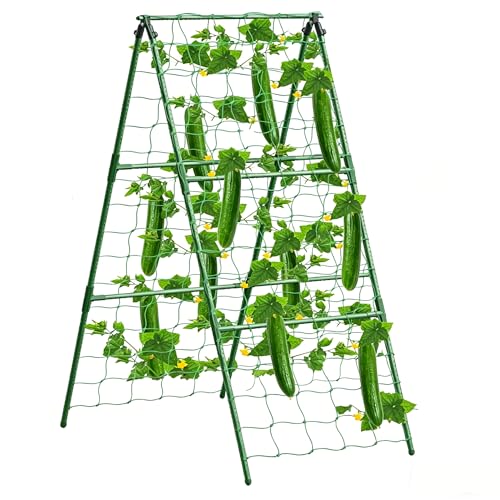
【Package included】:This Trellis for Climbing Plants Outdoor comes complete with everything you need to get started: 17pcs metal stakes, 8pcs T shape connect pipe, 2 A-shaped connectors, and a 0.9x1.8meter plant net.
How Cucumbers Climb
Imagine you’re a cucumber plant in need of support as you reach for the sky. Cucumbers climb using specialized structures known as tendrils. These spiraling appendages seek out surfaces to latch onto, providing stability as the plant grows upwards.
Tendrils are like nature’s grappling hooks, enabling cucumbers to scale vertical surfaces and expand their reach. As a gardener, you can help facilitate this process by providing vertical supports for the tendrils to grab hold of and guide the plant’s growth.
Here are a few ways in which cucumbers utilize their climbing abilities to thrive:
- Vertical Growth: Cucumbers naturally grow upwards towards the sunlight, making vertical support systems essential for optimizing their growth potential.
- Maximized Sunlight Exposure: Climbing allows cucumbers to position their leaves for maximum sunlight absorption, aiding in efficient photosynthesis.
- Improved Air Circulation: By climbing, cucumbers can better access fresh air, reducing the risk of fungal diseases and promoting overall plant health.
By understanding how cucumbers climb and providing the right support structures, you can enhance their growth and yield significantly.
The Importance of Proper Support Systems
Cucumbers thrive when provided with suitable support systems. Vertical growth is enhanced when they can climb on sturdy structures.
Here’s why proper support systems matter:
- Maximizes sunlight exposure: Vital for photosynthesis.
- Improves air circulation: Reduces the risk of fungal diseases.
- Enhances overall plant health: Promotes vigorous growth and higher yields.
To optimize cucumber growth, ensure you have adequate support in place.
Tips for Supporting Cucumber Plants
Supporting your cucumber plants correctly is crucial for their growth and yield. Here are some tips to help you establish a strong support system for your cucumbers:
- Choose the Right Support: Select sturdy trellises or cages that can bear the weight of growing cucumbers.
- Vertical Orientation: Train your cucumber vines to grow vertically on the support structure to maximize space and exposure to sunlight.
- Regular Monitoring: Check the plants regularly and adjust the supports as needed to prevent vines from sagging or breaking.
- Pruning: Trim excess foliage and side shoots to redirect the plant’s energy towards fruit production and to prevent overcrowding.
- Secure Ties: Use soft ties to attach the vines to the support without damaging them.
- Spacing: Ensure proper spacing between plants when using support structures to allow for adequate air circulation and sunlight penetration.
- Consistent Watering: Maintain even soil moisture levels to promote healthy growth and prevent stress on the plants.
By following these tips, you can provide the necessary support for your cucumber plants to thrive and produce a bountiful harvest.
Conclusion
Supporting your cucumber plants properly is key to ensuring a successful harvest. By selecting sturdy trellises, training vines vertically, and maintaining consistent care, you create an environment where cucumbers can flourish. Remember to monitor and adjust supports, prune for optimal fruit production, use secure ties, and provide adequate spacing for air circulation and sunlight exposure. These efforts will not only benefit your cucumber plants but also contribute to a bountiful yield. Happy gardening!
Frequently Asked Questions
What types of support systems are recommended for cucumbers?
Choosing sturdy trellises or cages is ideal for supporting cucumber vines.
How should cucumber vines be trained for optimal support?
Train cucumber vines vertically to encourage upward growth and make use of the support system effectively.
Why is monitoring and adjusting supports important for cucumber plants?
Regular monitoring and adjusting of supports ensure that the plants receive the necessary assistance as they grow.
How does pruning contribute to optimal fruit production in cucumbers?
Pruning helps in removing excess foliage, allowing the plant to focus its energy on fruit production.
Why is using secure ties important in supporting cucumber vines?
Secure ties prevent the vines from falling or breaking due to the weight of growing cucumbers.
How does proper spacing benefit cucumber plants in terms of support?
Proper spacing between plants allows for adequate air circulation and sunlight exposure, promoting healthy growth.
Why is consistent watering crucial for maintaining a strong support system for cucumbers?
Consistent watering helps in keeping the plants healthy and well-supported throughout their growth cycle.
