

Ever wondered what magic unfolds beneath the soil when you plant cucumber seeds? Picture this: you eagerly check your garden each day, hoping to catch a glimpse of those first signs of life. But what exactly should you expect to see when your cucumber plants finally decide to make their grand entrance?
As a budding gardener, witnessing the initial stages of a cucumber plant’s growth can be both exciting and puzzling. The anticipation of those tiny sprouts breaking through the earth is a moment filled with curiosity and wonder. In this article, we’ll unravel the mystery and paint a vivid picture of what cucumber plants look like as they take their first steps into the world.
Understanding Cucumber Seeds
Planting cucumber seeds is an exciting process. You need to ensure proper soil moisture and warmth for successful germination. Place the seeds about 1 inch deep in the soil and keep them 2-3 inches apart.
Cucumber seeds typically sprout within 4-7 days. The first sign of growth is the emergence of two small leaves called cotyledons. These initial leaves may look different from the plant’s true leaves.
As the cucumber plant continues to grow, you’ll notice vine-like stems developing. These vines will eventually grow long and require support. Cucumber plants also produce tendrils that help them climb and support themselves.
Regular watering is crucial for healthy cucumber plant growth. Ensure the soil is consistently moist but not waterlogged. Sunlight is essential too; cucumbers require 6-8 hours of sunlight daily.
Continue monitoring your cucumber plants as they grow. Look for any signs of pests or diseases and take necessary action promptly to prevent damage.
Essential Facts
| Growth Period | Sprouting Time | Leaf Description |
|---|---|---|
| 4-7 days | 2 small leaves | True leaves to follow |
Germination Process
When cucumber seeds first sprout, they send out cotyledons, which are not true leaves. These initial leaves are followed by the emergence of true leaves. Here’s what you might notice during the germination process:
- Cotyledons: First leaves to appear after germination
- True Leaves: Follow cotyledons and look like typical cucumber leaves
As your cucumber plant continues to grow, it will start developing vine-like stems that require support as they elongate. The plant will also produce tendrils that help it climb and sustain its growth. Here are some key points as the plant progresses:
- Vine-like Stems: Need support as they grow longer
- Tendrils: Help the plant climb and stay upright
For successful germination and growth, remember to provide your cucumber plant with adequate water and sunlight. Aim for 6-8 hours of sunlight daily and ensure the soil stays moist but not waterlogged. Regularly monitor your plant for any signs of pests or diseases to prevent damage and promote a healthy growth environment.
| Aspect | Details |
|---|---|
| Sunlight Needed | 6-8 hours/day |
| Soil Moisture | Moist, not soggy |
| Support for Stems | Required |
| Climbing Tendrils | Aid Growth |
Recommended Products
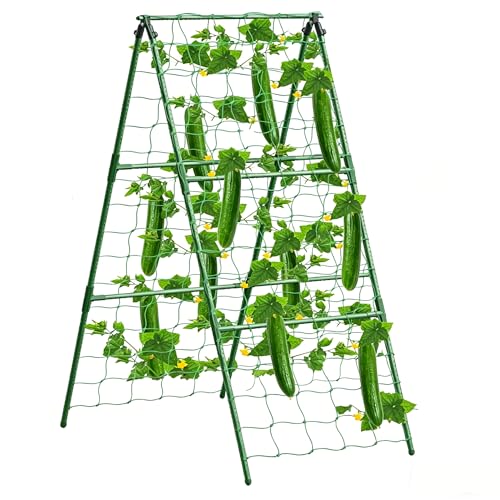
【Package included】:This Trellis for Climbing Plants Outdoor comes complete with everything you need to get started: 17pcs metal stakes, 8pcs T shape connect pipe, 2 A-shaped connectors, and a 0.9x1.8meter plant net.

【Multi-Function】 Tall Tomato Cage-Each tomato cage can be adjusted from 16inches to 47 inches in height,suit for different growth stages of plants, offering versatile supports for a wide variety of tomato plants, ensuring they grow tall and strong.

PLASTIC MATERIAL: The plant support clips are made of plastic. 1.2 inch (30 mm) middle diameter. Smooth surface without burr. The clamps are durable, and the middle joint is folded repeatedly and not easy to break, which can be reused.
Seedling Appearance
When your cucumber seeds first sprout, you’ll notice tiny green cotyledons, which are the first leaves to emerge. These initial leaves might be a bit rounded and don’t look like the typical cucumber leaves you’re familiar with yet.
As the seedling grows, true leaves will start to appear, resembling the more recognizable cucumber leaf shape. These leaves will eventually take over from the cotyledons, becoming the primary site for photosynthesis in the plant.
The stem of the seedling will start to elongate, showing signs of the vine-like growth characteristic of cucumber plants. It’s important to provide support for these stems as they grow to ensure they develop properly.
Keep an eye out for the development of tendrils on the plant. These thin, spiraling structures are essential for cucumber plants as they use them to climb and support their growth.
| Aspect | Details |
|---|---|
| Initial leaves | Cotyledons |
| Developing leaves | True leaves |
| Stem growth | Vine-like structure |
| Supporting growth | Provide support for stems |
| Climbing aid | Tendrils |
Remember to observe these changes closely as your cucumber plants progress from seedlings to mature plants.
Recommended Products

【Package included】:Crafted from robust hollow steel, this garden stakes features a fade-resistant green plastic coating, offering reliable protection against wind, rain, and rust. This Trellis for Climbing Plants Outdoor comes complete with everything you need to get started: 17pcs metal stakes, 8pcs T shape connect pipe, 2 A-shaped connectors, and a 0.9x1.8meter bird net.
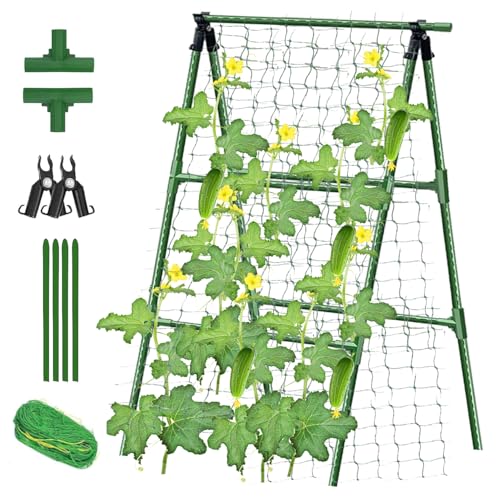
【Groumh A-FRAME DESIGN】NOTE: THE TRELLIS IS FOR SMALL PLANT NOT FOR BIG!! sturdy 48x15in A-frame cucumber trellis can grow various plants from both sides of the trellis. These shapes promote airflow for the climber, and the plant will have plenty of sunlight to maximize photosynthesis. Let you get a better harvest.

【A-Frame Trellis】Our detachable Cucumber Trellis is widely used in gardens and backyards; It allows you to adjust the width as needed for compact storage; By utilizing vertical space, this Plant Grow Support elevates vines off the ground, maximizing sunlight exposure for better quality fruits and vegetables while boosting overall harvest and yield
Identifying True Leaves
When Identifying True Leaves on your cucumber seedlings, look for leaves that have the characteristic shape of mature cucumber leaves. These leaves will appear after the cotyledons, which are the first set of leaves you see upon germination.
True leaves generally have serrated edges and a rough texture compared to the smoothness of cotyledons. As the seedling grows, you’ll notice multiple lobes developing on each true leaf, resembling a small version of the mature cucumber plant’s leaves.
Cucumber plant’s true leaves play a crucial role in photosynthesis and nutrient absorption as they are more efficient than cotyledons in these functions. Monitoring the appearance of these true leaves helps you track the plant’s growth and overall health.
Conclusion
Now that you can recognize true leaves on your cucumber seedlings, you have a key indicator of their growth and health. These mature leaves with serrated edges and a rough texture play a vital role in the plant’s development, ensuring proper photosynthesis and nutrient absorption. By keeping an eye on the emergence of true leaves, you can track your cucumber plant’s progress as it moves towards maturity. Remember, observing these distinctive features will help you nurture your cucumber plants effectively for a successful harvest. Happy gardening!
Frequently Asked Questions
What are true leaves on cucumber seedlings?
True leaves on cucumber seedlings are mature cucumber plant leaves that follow the initial cotyledon stage. They are characterized by their cucumber leaf shape, serrated edges, and rough texture. True leaves play a crucial role in photosynthesis and nutrient absorption.
Why are true leaves important?
True leaves are vital for the growth and health of cucumber plants as they progress towards maturity. They help in the process of photosynthesis, absorbing nutrients that are essential for the plant’s development. Monitoring the emergence of true leaves is key to tracking the plant’s progress and ensuring its well-being.
How can I identify true leaves on cucumber seedlings?
You can identify true leaves on cucumber seedlings by observing their mature cucumber leaf shape, serrated edges, and rough texture. True leaves resemble the final leaves of a mature cucumber plant, developing lobes that enhance photosynthesis and nutrient absorption. Pay attention to the leaves that appear after the cotyledons for accurate identification.
