

Ever wondered how to make your cucumbers grow faster? Imagine having a bountiful harvest of crisp, fresh cucumbers sooner than you thought possible. Picture yourself enjoying the fruits of your labor in record time. In this article, you’ll discover simple yet effective tips to accelerate the growth of your cucumber plants.
Have you ever planted cucumbers only to find them taking forever to mature? It can be frustrating when you’re eagerly waiting to taste those homegrown cucumbers. With the techniques shared here, you’ll learn how to speed up the growth process and have your cucumbers ready for picking sooner than you imagined.
By implementing the strategies outlined in this article, you’ll not only save time but also enjoy a more abundant cucumber harvest. Get ready to unlock the secrets to faster cucumber growth and elevate your gardening game.
Understanding Cucumber Growth
Cucumbers are warm-season plants that thrive in full sun and well-draining soil. Here’s how you can boost their growth:
- Temperature: Cucumbers prefer temperatures between 70-85°F.
- Sunlight: They need at least 6-8 hours of sunlight daily for optimal growth.
- Water: Ensure consistent moisture without overwatering to prevent stress.
By understanding these fundamental needs, you can create an environment ideal for accelerated cucumber growth.
Providing Optimal Growing Conditions
Ensuring adequate sunlight, consistent moisture, and optimal temperatures are key for maximizing cucumber growth. Here’s how you can create the perfect environment for your cucumber plants:
- Sunlight: Position your cucumbers in a spot with 6-8 hours of direct sunlight each day.
- Watering: Keep the soil consistently moist but not waterlogged. Aim to water at the base of the plant to prevent leaf diseases.
- Temperature: Maintain temperatures between 70-85°F for ideal growth.
By following these guidelines, you can significantly speed up the growth of your cucumber plants.
Proper Watering Techniques
When it comes to watering cucumbers, proper techniques are key to accelerating growth. Here’s what you need to know:
- Consistent Moisture: Keep the soil consistently moist but not waterlogged.
- Deep Watering: Water deeply to encourage strong root development.
- Mulching: Use mulch to help retain soil moisture.
By mastering these watering techniques, you can promote faster cucumber growth.
- Morning Watering: Water in the morning to allow foliage to dry before evening.
- Avoid Wetting Foliage: Water the base of the plant to prevent diseases.
- Check Soil Moisture: Stick your finger into the soil to check for moisture levels.
Remember, consistent and proper watering is crucial for maximizing cucumber growth.
Recommended Products
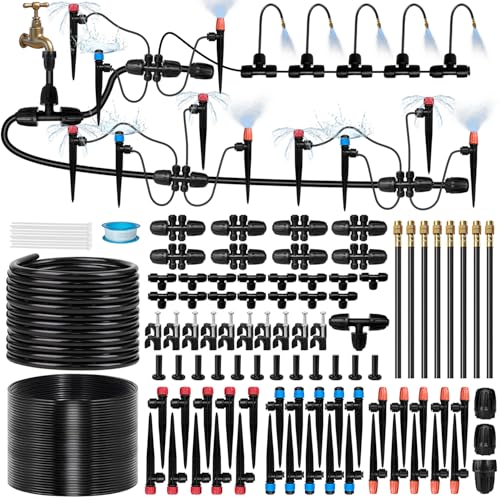
【Upgraded Tube Design & Water Saving】 Our garden watering system is upgraded to 1/2” diameter to support high water pressure. The 1/2” tee connector allows seamless splitting into 2 independent zones for customized watering schedules. By delivering moisture directly to root zones, this drip Irrigation system significantly reduces evaporation and runoff—saving more water compared to conventional sprinklers while eliminating the need for manual watering.

Automatic Drip Irrigation System Kit: The universal connector adapts to different tubing sizes with a secure, leak-free fit; the dual-channel connector splits a single line into two separate watering paths for multi-zone irrigation. The garden bed watering system includes 100FT 1/4" Water Pipe, Cable Ties x 24, Universal Connector x 1, Dual Channel Connector x 1, Quick Tees x 24, Sealing Tape x 1, Fixing Clips x 24, End Plus x 4, and Brass Nozzles x 24. Simply unbox and start building automatic misting system.

NO MORE HARD INSTALLATION - SET UP IN MINUTES. Tired of struggling with stiff barbed fittings? This drip irrigation system features quick-connect fittings that let you push, lock, and secure tubing effortlessly. No tools, no leaks, just a smooth setup experience. Enjoy a frustration-free installation and get your garden watering system running in minutes.
Feeding and Fertilizing Tips
When it comes to feeding and fertilizing your cucumbers, choose a balanced fertilizer with equal parts nitrogen, phosphorus, and potassium.
- Fertilize once a week or according to the recommendations on the product label to keep your plants nourished.
- Avoid overfeeding, as this can lead to burned roots and stunted growth.
Consider organic options such as compost or manure for slow-release nutrients that benefit the soil and your plants.
Water your cucumbers after applying fertilizer to help distribute the nutrients effectively.
Remember, proper feeding is essential for healthy growth and abundant harvests.
Recommended Products

Cucumber fertilizer specifically formulated for cucumbers, zucchini, pumpkins, butternut squash, melons, watermelon, and gourds, promoting robust vines, strong roots, and high yields

🥒 EXPERTLY CRAFTED FOR CUCUMBER PRODUCTIVITY – Gardenera LIQUID POWER Cucumbers Fertilizer is designed to enhance vine growth, flowering, and high-yield fruiting for all cucumber types, including slicing, pickling, and greenhouse varieties.

SPECIALIZED VINE CROP FORMULA 8-16-36 — Engineered specifically for cucumbers, melons, squash, zucchini, and pumpkins; very high potassium (36%) prevents bitter fruit and malformed cucumbers while promoting crisp texture and extended shelf life
Managing Pests and Diseases
- Inspect plants regularly to catch and address issues early.
- Practice crop rotation to reduce the risk of diseases in your cucumber plants.
- Use natural predators like ladybugs to control common pests.
- Consider companion planting with marigolds, nasturtiums, or basil to repel pests naturally.
- Avoid overhead watering to reduce the spread of fungal diseases.
- Apply neem oil as a natural and safe pesticide for common cucumber pests like aphids or spider mites.
| Important Note: |
|---|
| Pests and diseases can slow down cucumber growth, so stay vigilant and take proactive measures to protect your plants. |
Recommended Products

FUNGAL DISEASE CONTROL: Prevents and controls black spot on roses, powdery mildew, rust, downy mildew, and other listed fungal diseases when applied on a 7–14 day schedule

PLANT DISEASE CONTROL: Natria Neem Oil acts as an insecticide and fungicide in one convenient spray; Ready-to-use trigger sprayer requires no mixing

FOR ORGANIC GARDENING - Captain Jack's NeemMax is a perfect pest control solution for any garden dealing with mites, flies, mildew, and more. This product is a four-in-one insecticide, fungicide, miticide, and nematicide.
Conclusion
You’ve learned valuable tips on accelerating the growth of your cucumber plants. By implementing strategies like proper watering, providing adequate sunlight, and using organic fertilizers, you can optimize their growth potential. Remember to monitor your plants regularly for pests and diseases, and consider companion planting to naturally deter unwanted visitors. With a little care and attention, your cucumbers will thrive and reward you with a bountiful harvest. Happy gardening!
Frequently Asked Questions
How can I protect my cucumber plants from pests and diseases?
Inspect plants regularly, practice crop rotation, use natural predators like ladybugs, and companion plant with marigolds, nasturtiums, or basil for natural pest control. Avoid overhead watering and use neem oil as a safe pesticide.
What are some proactive measures to prevent cucumber plant issues?
Take proactive steps by checking plants often, rotating crops, introducing beneficial insects, companion planting, avoiding overhead watering, and using neem oil as a safe pesticide.
Why is it important to manage pests and diseases for cucumber plants?
It is crucial to manage pests and diseases to ensure healthy growth and optimal yield of cucumber plants. Regular inspections, preventive practices, and natural remedies help protect the plants from potential threats.
