

Selecting the right cucumber variety
When it comes to helping your cucumbers thrive, choosing the right variety is essential for successful growth. Here’s how you can make the best selection:
- Consider the Purpose: Decide whether you’re growing cucumbers for slicing, pickling, or both.
- Understand the Types: There are slicing cucumbers for fresh eating and pickling cucumbers for canning.
- Size Matters: Choose based on the size preference you have for your cucumbers – be it shorter or longer fruits.
Remember, selecting the appropriate cucumber variety sets the foundation for a bountiful harvest.
Recommended Products

Heirloom, early-maturing favorite: Heirloom favorite boston cucumber seeds mature in 55-60 days, producing sweet, crunchy 2-6 inch picklers on vigorous vines with high yields for your vegetable garden and home garden seed collection.

BURPLESS AND LOW ACID – Smooth-skinned cucumbers with no bitterness, ideal for easy digestion, fresh eating, or quick-pickling snacks

Bush Pickle Hybrid Cucumbers are perfect for pickling, as they are 4 to 5 inches long with crisp, tender flavor.
Providing proper sunlight and temperature
To help your cucumbers grow successfully, ensuring they get adequate sunlight is crucial. Aim for at least 6-8 hours of sun exposure daily for optimal growth.
Cucumbers also thrive in warm temperatures. Maintain a consistent temperature range of 70-90°F during the day and 60-70°F at night. Fluctuations can impact their development.
Here are some tips to optimize sunlight and temperature for your cucumber plants:
- Place your cucumber plants in a sunny spot with good air circulation.
- Consider using row covers or mulch to regulate temperature and protect them from extreme weather conditions.
- Monitor the weather forecast and adjust your care routine accordingly to maintain ideal conditions.
Remember, providing the right environment for your cucumbers ensures healthy growth and a bountiful harvest.
Watering and Soil Requirements
Watering Guidelines:
- Cucumbers require consistent moisture for proper growth.
- Water deeply once a week, especially during dry spells.
- Check the soil moisture by poking a finger about an inch into the soil – water when it feels dry.
- Avoid wetting the foliage to prevent diseases like powdery mildew.
Soil Preparation:
- Use well-draining soil rich in organic matter for optimal growth.
- Ideal soil pH ranges between 6.0 and 7.0.
- Consider adding compost or aged manure to improve soil fertility.
- Apply a layer of mulch to retain soil moisture and prevent weed growth.
- Materials like straw or grass clippings work well for mulching cucumbers.
- Use a large enough container with drainage holes.
- Select a quality potting mix specifically formulated for vegetables.
- Water container-grown cucumbers more frequently as soil tends to dry out faster.
| Watering Frequency | Soil pH Range | Ideal Soil pH |
|---|---|---|
| Every 1-2 weeks | 6.0-7.0 | 6.5 |
Trellising techniques for support
When it comes to supporting your cucumber plants, trellising is an effective method that can help increase air circulation, reduce disease risk, and make harvesting easier. Here are some trellising techniques you can use in your cucumber garden:
- Vertical Supports: Use stakes, cages, or trellises to guide your cucumber vines upwards. This method not only saves space but also helps prevent fruit rot by keeping cucumbers off the ground.
- String Trellis: Create a simple string trellis by tying strings horizontally between two vertical supports, allowing the cucumber vines to climb up. This technique provides good support and is easy to set up.
- A-Frame Trellis: Build an A-frame structure using bamboo poles or wood, forming a sturdy support system for your cucumber plants. This design allows the vines to grow upwards and helps distribute the weight of the plants evenly.
- Cattle Panel Trellis: Repurpose a cattle panel or hog wire fencing by bending it into an arch shape to create a strong and durable trellis for your cucumbers. This design provides ample space for vines to climb and allows for easy access to the fruits.
- Mesh Netting Trellis: Install mesh netting along a support structure to create a vertical trellis for your cucumber plants. The netting provides a secure climbing surface for the vines and makes it simple to train them upwards.
By utilizing these trellising techniques, you can support the growth of your cucumber plants, improve air circulation, and optimize space in your garden for a successful harvest.
Recommended Products

【Package included】:Crafted from robust hollow steel, this garden stakes features a fade-resistant green plastic coating, offering reliable protection against wind, rain, and rust. This Trellis for Climbing Plants Outdoor comes complete with everything you need to get started: 17pcs metal stakes, 8pcs T shape connect pipe, 2 A-shaped connectors, and a 0.9x1.8meter bird net.
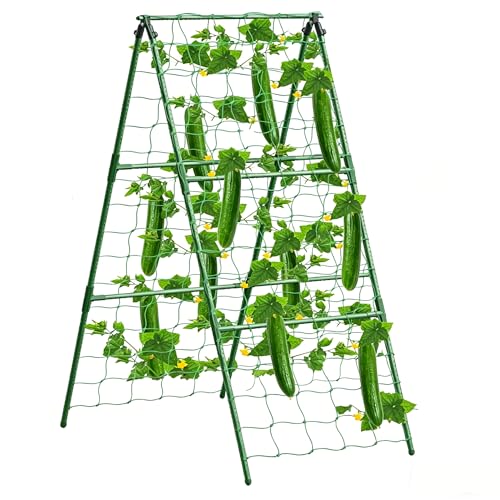
【Package included】:This Trellis for Climbing Plants Outdoor comes complete with everything you need to get started: 17pcs metal stakes, 8pcs T shape connect pipe, 2 A-shaped connectors, and a 0.9x1.8meter plant net.

【Waterproof and Durable】: Our obelisk trellis is made of metal tubes and PE plastic coating, which prevents the tower from rusting, waterproof and able to withstand all kinds of weather conditions, ensuring a long service life.
Common pests and diseases to watch out for
Pests and diseases can pose a threat to your cucumber plants. Prevention and early detection are key to ensuring a successful harvest. Here are some common issues to watch out for:
- Cucumber Beetles: These pests feed on leaves and can transmit bacterial wilt. Use row covers to protect your plants.
- Powdery Mildew: A fungal disease that appears as a white powdery substance on leaves. Ensure good air circulation and consider fungicidal treatments.
- Downy Mildew: Another fungal disease that causes yellow spotting on leaves. Remove and destroy infected plants to prevent spreading.
- Bacterial Wilt: Transmitted by cucumber beetles, this disease causes wilting and eventual death of plants. Avoid overwatering to reduce the likelihood of infection.
- Aphids: These tiny insects suck sap from plants, causing stunted growth. Introduce beneficial insects like ladybugs to control aphid populations.
- Spider Mites: These pests thrive in hot, dry conditions and can cause yellowing and stippling of leaves. Keep plants well-watered and consider using insecticidal soap.
Recommended Products

LAB PROVEN TO KILL & REPEL BUGS. Plant powered pest protection with natural essential oils that works. This pest repellent spray is proven to protect your pets and family from mosquitoes, ants, ticks, fleas, and other common yard bugs. Meets the same effectiveness standards required for conventional flea and tick yard treatment and preventatives. An alternative to conventional pesticide sprays, baits, ant granules, zappers or foggers.

3-IN-1 PLANT CARE: 3-In-1 Insect, Disease & Plant Mite Control provides insect control, disease control, and plant mite control all in one; Rainproof protection starts in 4 hours and lasts up to 14 days

READY-TO-USE CONTACT SPRAY: No mixing required. Thoroughly spray insecticide on all plant parts, including the underside of leaves. Pests must be sprayed directly to achieve control
Conclusion
Remember, keeping a watchful eye on common pests and diseases is key to helping your cucumber plants thrive. Be proactive in safeguarding your plants against threats like Cucumber Beetles, Powdery Mildew, and Bacterial Wilt. Utilize protective measures such as row covers and beneficial insects to maintain a healthy growing environment. By following these strategies and maintaining good plant care practices, you can ensure a bountiful cucumber harvest. Happy gardening!
Frequently Asked Questions
What are the common pests and diseases that can affect cucumber plants?
Common pests and diseases that can affect cucumber plants include Cucumber Beetles, Powdery Mildew, Downy Mildew, Bacterial Wilt, Aphids, and Spider Mites.
Why is prevention and early detection important in managing pests and diseases in cucumber plants?
Prevention and early detection are crucial in managing pests and diseases in cucumber plants because they can help to minimize damage and maximize the chances of a successful harvest.
What are some recommended strategies to protect cucumber plants from pests and diseases?
Recommended strategies to protect cucumber plants from pests and diseases include using row covers, ensuring good air circulation, considering fungicidal treatments, removing infected plants, avoiding overwatering, introducing beneficial insects, and keeping plants well-watered.
How can I support the healthy growth of my cucumber plants in the presence of pests and diseases?
To support the healthy growth of cucumber plants in the presence of pests and diseases, it is important to implement preventive measures, maintain plant hygiene, and employ suitable treatment options as needed.
