

Have you ever dreamt of enjoying the crunch of homegrown pickling cucumbers in your salads and sandwiches? Picture this: You head to your kitchen, reach for a jar of pickles, only to realize you grew these cucumbers yourself. Exciting, right? In this article, we’re diving into the world of growing pickling cucumbers in containers.
Imagine stepping out onto your balcony or patio, greeted by lush green vines bearing fresh cucumbers ready to be transformed into tangy pickles. With our tips and tricks, you’ll discover how simple and rewarding it can be to cultivate your own cucumbers in limited spaces. Get ready to savor the satisfaction of pickling cucumbers you nurtured from seed to harvest, all within arm’s reach.
Choosing the Right Container
When it comes to choosing a container for your pickling cucumbers, there are a few key factors to consider:
- Size: Opt for a container that is at least 12-18 inches deep and 18-24 inches wide to provide ample space for the cucumber roots to grow.
- Material: Select a container made of durable material like plastic, ceramic, or wood that can withstand outdoor conditions and provide proper drainage.
- Drainage: Ensure the container has adequate drainage holes at the bottom to prevent waterlogging, which can lead to root rot.
- Mobility: If you plan to move your cucumbers around to catch the sunlight, choose a container with wheels for easy mobility.
Selecting the Perfect Cucumber Variety
When deciding on the perfect cucumber variety for your container, consider the bush type for compact growth.
Look for pickling cucumber varieties like ‘Chicago Pickling’ or ‘County Fair’ that thrive in small spaces.
Ensure the variety is suitable for containers by checking for phrases like “ideal for pots” on seed packets.
Pick a disease-resistant variety to avoid common cucumber ailments.
Enjoy browsing through seed catalogs for unique cucumber varieties to grow in your container garden.
Explore heirloom varieties like ‘National Pickling’ for a touch of tradition.
| Key Point | Data/Statistics |
|---|---|
| Ideal Container Size | 12-18 inches deep, 18-24 inches wide |
| Optimal Cucumber Variety | Bush type for compact growth |
| Examples of Pickling Cucumber Varieties | ‘Chicago Pickling’, ‘County Fair’ |
| Disease-Resistant Varieties | Recommended to avoid common ailments |
Providing Adequate Sunlight and Watering
When growing pickling cucumbers in a container, remember they thrive on full sunlight. Ensure they get at least 6-8 hours of direct sunlight daily. It’s like giving them a nice day at the beach; they’ll soak it up and grow happily.
For watering, keep the soil consistently moist but not waterlogged. Aim for a deep watering session a few times a week rather than light watering every day. Think of it like a refreshing drink for your cucumbers – they need it to stay hydrated and healthy.
In hotter weather, you may need to water more frequently to prevent the soil from drying out entirely. Touch the soil with your finger to check if it’s time to water again. Think of it as checking the soil’s mood – dry means thirsty, while damp means it’s content.
Fertilizing and Pruning for Healthy Growth
To ensure healthy growth for your pickling cucumbers, here’s what you need to know:
- Fertilizing:
- Use a balanced fertilizer with equal parts nitrogen, phosphorus, and potassium.
- Start fertilizing two weeks after planting, then every three weeks thereafter.
- Avoid over-fertilizing to prevent issues like burnt roots.
- Pruning:
- Regularly prune the cucumber plant to encourage air circulation and fruit development.
- Remove any dead or yellowing leaves to keep the plant vibrant.
- Pinch off any suckers that develop in leaf joints to focus energy on fruit production.
Recommended Products

🥒 EXPERTLY CRAFTED FOR CUCUMBER PRODUCTIVITY – Gardenera LIQUID POWER Cucumbers Fertilizer is designed to enhance vine growth, flowering, and high-yield fruiting for all cucumber types, including slicing, pickling, and greenhouse varieties.
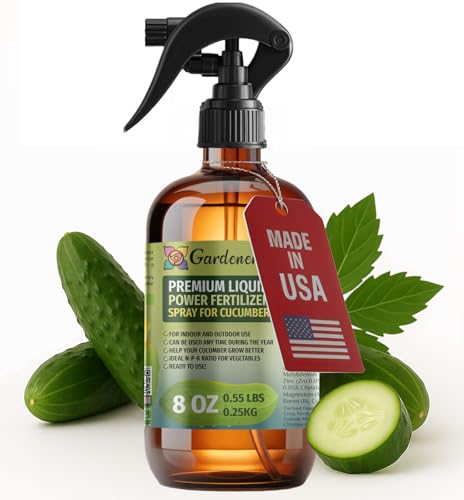
🌿 READY-TO-USE CONVENIENCE – Skip the hassle of measuring and mixing. This LIQUID POWER cucumber fertilizer spray comes fully premixed in an easy-to-use spray bottle, ready for immediate application to your garden or indoor plants.

Cucumber fertilizer specifically formulated for cucumbers, zucchini, pumpkins, butternut squash, melons, watermelon, and gourds, promoting robust vines, strong roots, and high yields
Harvesting Your Pickling Cucumbers
When it’s time to harvest your pickling cucumbers, there are key indicators to look out for to ensure you’re picking them at the right moment. Here’s what you need to know:
- Size Matters: Pickling cucumbers are best harvested when they reach about 2-4 inches in length. Smaller cucumbers will be crunchier and have fewer seeds.
- Frequent Checking: Keep an eye on your cucumbers, as they can grow quickly. Aim to harvest every 2-3 days to prevent them from becoming overripe.
- Color Clues: Pickling cucumbers are typically dark green. If you see any yellowing, it might mean they are overripe.
- Mindful Picking: When harvesting, use scissors or a knife to cut the cucumber from the stem. Avoid twisting or pulling, as this can damage the vine.
- Continual Harvest: Regularly picking cucumbers encourages the plant to produce more. The more you harvest, the more cucumbers you’re likely to get.
Conclusion
You’ve now learned the essentials of growing pickling cucumbers in containers. Remember to provide ample sunlight, consistent watering, proper fertilization, and regular pruning to ensure healthy growth. When it’s time to harvest, aim for cucumbers that are 2-4 inches in size, with a dark green color indicating ripeness. Be vigilant in checking for readiness to prevent overripening. Harvest with care using scissors or a knife. By continually harvesting, you’ll encourage more cucumbers to grow, giving you a bountiful supply for your pickling adventures. Happy gardening!
Frequently Asked Questions
When should I harvest pickling cucumbers?
Pick pickling cucumbers when they reach 2-4 inches in size for the best flavor and texture.
How can I tell if a pickling cucumber is ripe?
Look for a dark green color as an indicator of ripeness for pickling cucumbers.
How should I harvest pickling cucumbers?
Harvest pickling cucumbers using scissors or a knife to avoid damaging the plant.
Why is continual harvesting important for pickling cucumbers?
Continual harvesting promotes more cucumber production by encouraging new growth.
