

Ever wondered how you can enjoy fresh cucumbers right from your own home? Picture this: You’re craving a crisp cucumber for your salad, and instead of rushing to the store, you simply step outside to your garden. Sounds dreamy, doesn’t it? In this article, you’ll uncover the secrets to growing cucumbers in grow bags – a simple and rewarding way to cultivate these delicious veggies.
Have you ever faced the dilemma of limited garden space or poor soil quality? Growing cucumbers in grow bags might just be the solution you’ve been searching for. With this method, you can easily nurture your cucumbers in a compact area while ensuring they receive the right nutrients to thrive. Say goodbye to space constraints and hello to a bountiful cucumber harvest!
By the end of this article, you’ll be equipped with the knowledge and confidence to kickstart your cucumber-growing journey in grow bags. Get ready to savor the satisfaction of harvesting your own homegrown cucumbers – it’s a rewarding experience that awaits you just a few steps away from your doorstep.
Choosing the Right Grow Bags
When choosing grow bags for your cucumber plants, opt for ones that are large enough to accommodate the plant’s root system.
Consider the material of the grow bags. Here are some common options:
- Fabric: Allows roots to breathe, preventing root bound issues.
- Plastic: Retains moisture well, suitable for hot climates.
- Biodegradable: Eco-friendly option that can be planted directly into the ground.
Ensure the grow bag has adequate drainage holes to prevent waterlogging that can harm your cucumber plants.
Look for reusable grow bags to save money in the long run.
Recommended Products

Sturdy & Garden-Ready Material: Made of 300g of thickened nonwoven fabric, these pots are moderately permeable, environmentally friendly, and BPA-free; Ideal for raised beds, patios, and outdoor gardens

Superior Aeration and Drainage for Healthier Roots:Thick nonwoven fabric allows excellent airflow and water drainage to prevent overwatering and root rot promoting stronger plant growth

Thickened Nonwoven Fabric: Crafted from 300G thickened breathable nonwoven fabric, these grow bags for plants provide moderate permeability for root respiration; BPA-free material ensures food safety for organic vegetables
Selecting the Ideal Cucumber Varieties
When selecting cucumber varieties for grow bags, choose ones that are well-suited for container gardening.
Consider compact or bush cucumber varieties that thrive in confined spaces.
Popular choices include Miniature White, Spacemaster, and Salad Bush cucumbers.
Opt for disease-resistant varieties to ensure healthy growth in your grow bags.
Research the growth habits of different cucumber types to match your space and preference.
Avoid overcrowding by selecting cucumber types that fit the size of your grow bags.
Experiment with different varieties to find the ones that best suit your growing conditions.
By considering these factors, you can select the ideal cucumber varieties for successful growth in your grow bags.
Preparing the Grow Bags
To ensure successful cucumber growth in grow bags, you must properly prepare the containers before planting. Here’s how:
- Choose the Right Size: Opt for grow bags that are at least 10-14 inches deep to accommodate cucumber roots comfortably.
- Provide Drainage: Ensure the grow bags have drainage holes to prevent waterlogging, which can lead to root rot.
- Use Quality Soil: Fill the grow bags with a well-draining, nutrient-rich potting mix specifically formulated for containers.
- Positioning: Select a sunny location for your grow bags, as cucumbers thrive in full sun for at least 6-8 hours per day.
- Fertilize Responsibly: Consider using a balanced fertilizer or organic compost to provide essential nutrients for healthy plant growth.
- Watering: Maintain consistent moisture levels in the soil, ensuring it doesn’t dry out completely between waterings.
- Warmth: Cucumbers are sensitive to cold temperatures, so wait until all danger of frost has passed before transplanting seedlings into grow bags.
- Support Structures: Depending on the cucumber variety, you may need to install a trellis or support system in the grow bags to guide vine growth.
Following these steps will set the stage for a thriving cucumber garden in your grow bags.
Planting Cucumber Seeds or Seedlings
To start growing cucumbers in your grow bags, you have two options: planting seeds or seedlings. Here’s how to get started:
Planting Seeds:
- Fill your grow bag with high-quality soil and water it lightly.
- Create small holes in the soil about 1 inch deep and plant cucumber seeds in each hole.
- Cover the seeds lightly with soil and water gently. Place the bag in a sunny spot and keep the soil moist.
- Prepare the grow bag by filling it with well-draining soil and watering it.
- Dig small holes in the soil and gently transplant your cucumber seedlings into the bag.
- Ensure the seedlings are planted at the same depth as they were in their original pots.
- Water the seedlings thoroughly and place the grow bag in a sunny location.
Recommended Products
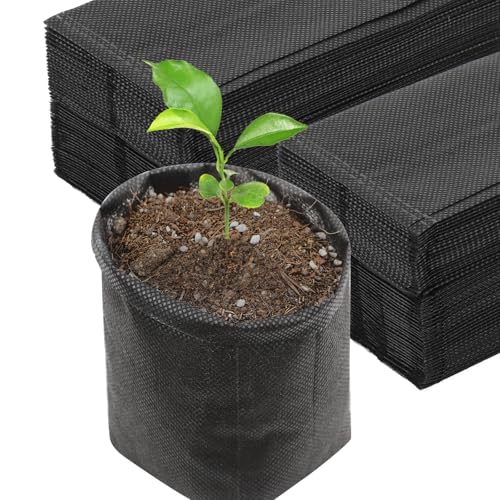
【Pack & Size】Pack of 200 thickened seed starter bags with size 5.5 x 5.9" (3.3" x 5.1" with soil). Fit for 1 gallon pots for plants.

DURABLE MATERIAL: Seedling Nursery Bags are made from fabric, which is sturdy, with strong air permeability. It's your good helper for gardening and planting

Natural Material --- Made of non-woven thickened fabric, breathable, lightweight, healthy, easy and convenient to use.
Caring for Your Cucumber Plants
- Watering: Keep soil evenly moist but not waterlogged. Water near the base to prevent mold and mildew.
- Fertilizing: Use a balanced fertilizer every 2-3 weeks to ensure nutrient-rich soil.
- Pest Control: Check plants regularly for pests like aphids or cucumber beetles. Use organic pest deterrents.
- Pruning: Remove any yellow leaves and trim overcrowded areas for better airflow.
- Harvesting: Pick cucumbers when they’re firm and green to encourage more fruit growth.
- Monitoring: Watch for yellowing leaves or stunted growth as signs of nutrient deficiencies.
- Support: Consider using stakes or trellises to support the growing vines.
Recommended Products

3-IN-1 GARDEN CARE SPRAY - Earth’s Ally 3-in-1 Plant Spray is a ready-to-use botanical oil spray designed for indoor and outdoor plant care. The houseplant pest spray effectively kills and controls soft-bodied insects and common plant diseases with a synergistic blend of essential oils.

🥒 EXPERTLY CRAFTED FOR CUCUMBER PRODUCTIVITY – Gardenera LIQUID POWER Cucumbers Fertilizer is designed to enhance vine growth, flowering, and high-yield fruiting for all cucumber types, including slicing, pickling, and greenhouse varieties.

Cucumber fertilizer specifically formulated for cucumbers, zucchini, pumpkins, butternut squash, melons, watermelon, and gourds, promoting robust vines, strong roots, and high yields
Conclusion
You now have all the essential tips to successfully grow cucumbers in grow bags. Remember to water at the base, use balanced fertilizer, watch out for pests, prune for airflow, harvest when firm, monitor nutrients, and consider support structures. Happy gardening and enjoy your fresh cucumbers straight from your own garden!
Frequently Asked Questions
Is watering important for cucumber plants grown in grow bags?
Yes, watering is crucial for cucumber plants in grow bags. Water near the base to prevent mold and ensure consistent moisture levels for healthy growth.
How often should I use fertilizer for cucumber plants in grow bags?
Use a balanced fertilizer regularly to provide essential nutrients for cucumber plants in grow bags. Follow product instructions for the proper application.
How can I prevent pests like aphids from damaging my cucumber plants?
Check for pests like aphids regularly on cucumber plants in grow bags. Consider using natural remedies or insecticidal soap to control infestations.
Why is pruning recommended for cucumber plants?
Pruning promotes better airflow and helps prevent disease in cucumber plants growing in grow bags. Trim excess foliage to improve sunlight exposure and reduce moisture buildup.
When is the best time to harvest cucumbers in grow bags?
Harvest cucumbers when they are firm and of a suitable size for the variety you are growing in the grow bags. Avoid letting them become overripe or yellow.
How can I monitor and address nutrient deficiencies in cucumber plants?
Monitor cucumber plants for any signs of nutrient deficiencies, such as yellowing leaves or stunted growth. Adjust fertilizer or soil amendments accordingly to address specific nutrient needs.
Should I use support structures for cucumber vines in grow bags?
Consider using support structures like stakes or trellises for cucumber vines in grow bags. These structures help vines grow vertically, saving space and reducing the risk of fruit rot.
