

Ever wondered how you can enjoy fresh cucumbers right from your own garden? Picture this: you’re craving a crisp, homegrown cucumber for your salad, but the store-bought ones just don’t cut it. What if you could step into your backyard and pick one straight from your own cucumber plant? Exciting, isn’t it?
Choosing the Right Cucumber Variety
When selecting a cucumber variety for your garden, consider factors such as taste preference, climate, and intended use.
- Pickling Cucumbers: Ideal for making pickles, these cucumbers are typically shorter and sturdier.
- Slicing Cucumbers: Perfect for fresh salads, sandwiches, or snacking, these cucumbers are longer and have a thinner skin.
- Burpless Cucumbers: If you want to avoid bitter flavors and indigestion, opt for burpless varieties.
Before making your choice, consult with local gardeners or nurseries to find out which cucumber varieties thrive best in your specific area.
Check the seed package for valuable information, including the cucumber’s flavor profile, days to maturity, and growth habits.
Certain varieties, like “Marketmore” or “Straight Eight,” are popular for their reliability and adaptability to various growing conditions.
When in doubt, experiment with different types to find the perfect cucumber variety that suits your taste buds and gardening skills.
Selecting the Ideal Planting Location
When choosing a spot to plant your cucumber, remember that they thrive in warm temperatures with plenty of sunlight. Here are key factors to consider:
- Sunlight: Pick a location that receives at least 6-8 hours of sunlight daily.
- Soil: Opt for well-draining soil rich in organic matter to promote healthy growth.
- Space: Ensure there’s enough room for the vines to spread or consider vertical gardening.
- Protection: Shield your cucumbers from strong winds that can damage tender vines.
- Accessibility: Plant them where you can easily water and harvest your cucumbers.
Consult local gardening guides or experts for specific advice tailored to your region.
Preparing the Soil for Planting
When preparing the soil for your cucumber plants, it’s crucial to create an optimal environment that fosters healthy growth. Here are some essential steps to get started:
- Choose a sunny location: Cucumbers thrive in full sunlight, so select a spot with at least 6-8 hours of direct sunlight daily.
- Test the soil: Check the pH levels of the soil to ensure it’s around 6.0-7.0, which is ideal for cucumber cultivation.
- Improve soil drainage: Amend the soil with compost or organic matter to enhance its drainage and nutrient content.
- Clear the area: Remove any weeds or debris from the planting site to prevent competition for resources.
- Loosen the soil: Till the soil to a depth of at least 6-8 inches to promote root growth and better aeration.
- Consider mulching: Applying a layer of mulch around the plants helps retain moisture and suppress weed growth.
By following these pre-planting soil preparations, you’ll set the stage for a successful cucumber harvest.
Planting the Cucumber Seeds or Seedlings
When starting your cucumber garden, planting the seeds or seedlings correctly is crucial for a successful harvest. Here are some essential steps to guide you:
- Choose the Right Time: Select a time when the soil is warm, typically around 70°F (21°C). Cucumbers thrive in warmth, so planting when it’s too cold can hinder their growth.
- Prepare the Soil: Ensure the soil is well-drained and rich in organic matter. Cucumbers prefer a slightly acidic soil with a pH level between 6.0 and 7.0.
- Planting Seeds: If starting with seeds, plant them about 1 inch deep in groups of 2-3 seeds, spacing each group about 36 inches apart. Once they sprout, thin them to the strongest seedling.
- Planting Seedlings: If using seedlings, transplant them carefully into the prepared soil, ensuring they are planted at the same depth as they were in the containers.
- Provide Support: Cucumbers are vine plants that benefit from vertical support. You can use trellises, cages, or stakes to help them grow upwards, saving space in your garden.
- Watering: Keep the soil evenly moist, especially during dry periods. Avoid overwatering, as this can lead to disease and rot.
- Sunlight: Cucumbers need plenty of sunlight to thrive. Aim for at least 6-8 hours of direct sunlight daily for optimal growth.
By following these steps, you set a strong foundation for your cucumber plants to grow healthy and yield a bountiful harvest.
Recommended Products

Support for Tall Plant: This trellis kit provides 7.87” support for your tomatoes, peppers and more

Provides lightweight yet strong support for tomatoes, beans, peas, and other climbing plants and flowers with a large planter that holds approximately 10 gallons of media while the tower expands to over 4 feet

【Pack of 20】: The tomato hooks can be used alone or with truss brackets, place the tomato hook at the suitable place on the vegetable, vertical drop the rope, the vine will grow around the rope.
Caring for Your Cucumber Plants
To ensure the health and productivity of your cucumber plants, it’s essential to provide proper care throughout their growth. Here are some key tips to help you maintain thriving cucumber plants:
- Consistent Watering: Keep the soil consistently moist but not waterlogged. Aim to water your cucumber plants 1-2 inches per week, adjusting based on weather conditions.
- Mulching: Mulch around the base of your plants to retain moisture, suppress weeds, and maintain even soil temperature.
- Fertilizing: Regularly feed your cucumber plants with a balanced fertilizer, high in nitrogen, to support leafy growth, followed by phosphorus and potassium for flowering and fruiting.
- Pest Control: Monitor your plants for common pests like aphids and spider mites. Use organic pest control methods or insecticidal soap to keep infestations in check.
- Harvesting: Harvest ripe cucumbers promptly to encourage continuous production. Check your plants daily and pick cucumbers when they reach the desired size and color.
| Watering Guide |
|---|
| Water Need: 1-2 inches per week |
| Mulching Benefits: Retains moisture, suppresses weeds |
| Fertilizer Composition: High in nitrogen, followed by phosphorus and potassium |
| Pest Control: Watch for aphids and spider mites |
| Harvesting Tip: Pick cucumbers promptly when ripe |
Recommended Products

【Package included】:Crafted from robust hollow steel, this garden stakes features a fade-resistant green plastic coating, offering reliable protection against wind, rain, and rust. This Trellis for Climbing Plants Outdoor comes complete with everything you need to get started: 17pcs metal stakes, 8pcs T shape connect pipe, 2 A-shaped connectors, and a 0.9x1.8meter bird net.
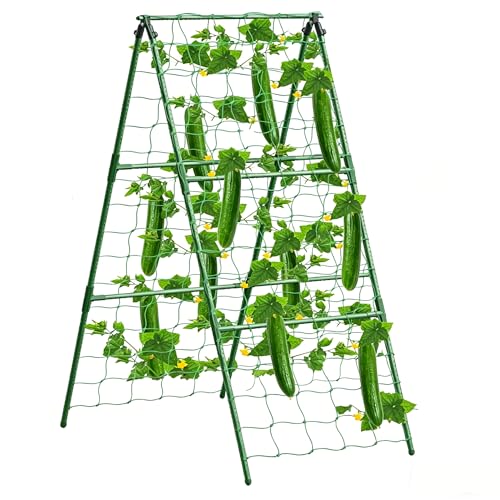
【Package included】:This Trellis for Climbing Plants Outdoor comes complete with everything you need to get started: 17pcs metal stakes, 8pcs T shape connect pipe, 2 A-shaped connectors, and a 0.9x1.8meter plant net.

【Waterproof and Durable】: Our obelisk trellis is made of metal tubes and PE plastic coating, which prevents the tower from rusting, waterproof and able to withstand all kinds of weather conditions, ensuring a long service life.
Harvesting and Enjoying Your Cucumbers
When it comes to harvesting your cucumbers, it’s essential to pick them ripe. Look for firm cucumbers with a bright green color. Avoid those with a yellow tint, as they may be overripe.
Here are some handy tips to ensure you enjoy your cucumbers to the fullest:
- Check daily: Regularly inspect your cucumber plants for ripe fruits. Cucumbers can grow rapidly, so check them daily for the perfect harvesting time.
- Use scissors or pruners: To avoid damaging the plant, cut the cucumbers from the vine using scissors or pruners. Leave a small portion of the stem attached to the cucumber.
- Harvest early in the day: It’s best to harvest your cucumbers in the morning when temperatures are cooler. This helps maintain their freshness.
By following these simple tips, you’ll be able to savor the delicious taste of homegrown cucumbers all season long.
Conclusion
Enjoy the fruits of your labor by harvesting cucumbers at their peak. Remember to select firm, vibrant green cucumbers for the best flavor. By checking your plants daily and harvesting in the morning, you’ll ensure a fresh and tasty supply. Use scissors or pruners to gather your cucumbers without harming the plant. These simple steps will help you relish the delightful taste of your homegrown cucumbers all season long. Happy harvesting!
Frequently Asked Questions
Q: How can I identify ripe cucumbers for harvesting?
A: Choose firm cucumbers that are bright green in color and avoid overripe ones that have a yellow tint.
Q: How often should I check my cucumber plants for ripe cucumbers?
A: Check your plants daily to harvest ripe cucumbers at the right time for optimal taste and quality.
Q: What is the best time of day to harvest cucumbers?
A: Harvest cucumbers in the morning to maximize freshness and flavor.
Q: What tools should I use to harvest cucumbers without damaging the plants?
A: Use scissors or pruners to carefully harvest cucumbers without harming the plant.
