Close Menu
    Veggie Knowledge
    • Home
    • Growing Vegetables
      • Beets
      • Broccoli
      • Carrots
      • Cucumber
      • Green Beans
    • Tips and Advice
    • Free eBook
    • About
      • Contact
      • Privacy Policy
    Veggie Knowledge
    Home»Carrots»Harvesting Carrots Grown in Straw Bales: Essential Techniques Revealed
    Carrots

    Harvesting Carrots Grown in Straw Bales: Essential Techniques Revealed

    Lucy StoneBy Lucy StoneJuly 9, 20245 Mins Read
    Facebook Twitter Pinterest LinkedIn Tumblr WhatsApp VKontakte Email
    Share
    Facebook Twitter LinkedIn Pinterest Email

    Ever wondered how to grow delicious carrots without a garden? Picture this: you’re craving fresh, homegrown carrots, but your outdoor space is limited. What if I told you that you could grow vibrant carrots right on your balcony or patio?

    Contents show
    1 Choosing the Right Straw Bales
    2 Preparing the Straw Bales
    3 Planting Carrot Seeds
    4 Watering and Fertilizing
    5 Harvesting Your Carrots
    6 Conclusion
    7 Frequently Asked Questions
    7.1 When are carrots ready to be harvested?
    7.2 What is the recommended technique for harvesting carrots from straw bales?
    7.3 Why is proper timing and technique important when harvesting carrots?

    Imagine the convenience of stepping outside and harvesting your own organic carrots without the need for a traditional garden bed. In this article, you’ll discover the secrets of growing carrots in straw bales.

    Get ready to unlock a simple, space-saving method that not only yields tasty carrots but also adds a touch of green to your urban oasis. Let’s dive in and learn how you can cultivate your own crunchy, garden-fresh carrots in straw bales effortlessly.

    Choosing the Right Straw Bales

    When it comes to embarking on your straw bale carrot-growing journey, Choosing the Right Straw Bales is crucial. Here are a few key considerations to keep in mind:

    • Condition: Ensure that the straw bales you select are clean and weed-free to provide an optimal environment for your carrots to thrive.
    • Age: Opt for straw bales that are more seasoned as they have had time to break down slightly, making them an ideal medium for planting your carrots.
    • Size: Select straw bales that are regular in size as larger bales can be challenging to move once they are moist and heavy from watering.
    • Organic: Whenever possible, choose organic straw bales to minimize the risk of introducing harmful chemicals to your carrot crop.

    By paying attention to these details, you can set yourself up for success in growing vibrant and delicious carrots in your straw bales.

    Recommended Products

    HealthiStraw GardenStraw, 3 cu ft (20 lbs) All-Natural Mulch for Gardens, Vegetables & Lawn Seeding – Water-Conserving Wheat Straw – Thoroughly Cleaned, Sustainable
    HealthiStraw GardenStraw, 3 cu ft (20 lbs) All-Natural Mulch for Gardens, Vegetables & Lawn Seeding – Water-Conserving Wheat Straw – Thoroughly Cleaned, Sustainable

    All-Natural & Clean Mulch —Sustainably sourced 100% non-GMO wheat straw is naturally filtered to remove dust, dirt, and as many seeds as possible for a clean, pure mulch.

    MUST READ:  Maximizing Carrots in Crop Rotation: Better Pest Control Strategies Revealed
    VIEW LATEST PRICE

    As an affiliate, we earn on qualifying purchases.

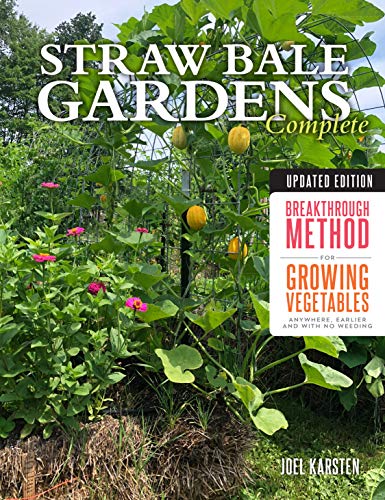
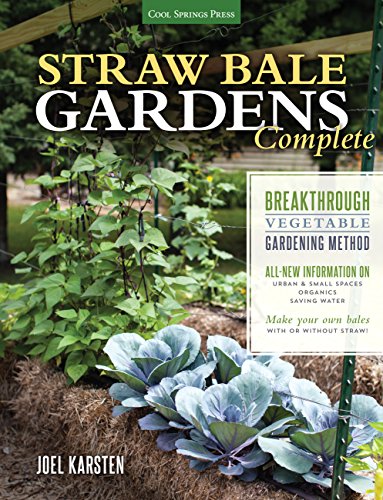
    Straw Bale Gardens Complete: Breakthrough Vegetable Gardening Method - All-New Information On: Urban & Small Spaces, Organics, Saving Water - Make Your Own Bales With or Without Straw
    Straw Bale Gardens Complete: Breakthrough Vegetable Gardening Method - All-New Information On: Urban & Small Spaces, Organics, Saving Water - Make Your Own Bales With or Without Straw
    VIEW LATEST PRICE

    As an affiliate, we earn on qualifying purchases.

    EZ-Straw Seeding Mulch with Tackifier - Biodegradable Organic Processed Straw a 2.5 CU FT Bale (Covers up to 500 sq. ft.)
    EZ-Straw Seeding Mulch with Tackifier - Biodegradable Organic Processed Straw a 2.5 CU FT Bale (Covers up to 500 sq. ft.)

    ORGANIC PROCESSED STRAW With TACKIFIER – Premium Processed Straw with a bonding agent (Tackifier) that gives straw a tackiness which holds it together. This natural bonding agent is biodegradable and helps to protect grass seed from heavy washout and wind.
    VIEW LATEST PRICE

    As an affiliate, we earn on qualifying purchases.

    Preparing the Straw Bales

    When it comes to setting up straw bales for growing carrots, taking the time to prep them right can make all the difference in your harvest. Here’s what you need to do:

    • Selecting the Right Bales: Choose clean, weed-free, and preferably organic straw bales. This ensures you’re providing the best environment for your carrots to thrive.
    • Placement: Position the bales in a location that receives full sun for at least six hours a day. This is essential for optimal carrot growth.
    • Conditioning the Bales: Water the straw bales thoroughly for about 10-14 days prior to planting. This process initiates decomposition, creating a nutrient-rich environment for your carrots.
    • Adding Fertilizer: Before planting, apply a balanced fertilizer to the bales to provide the necessary nutrients for your carrot plants.
    • Creating Planting Holes: Once the bales are conditioned, make holes in the straw to accommodate your carrot seeds or seedlings. Ensure the holes are deep enough to support proper root growth.

    By following these steps, you’re setting the stage for a successful carrot-growing adventure right at home.

    Recommended Products

    EZ-Straw® Just Straw Clean Processed Straw – Multi Purpose - Small Bale (1 Cubic Foot)
    EZ-Straw® Just Straw Clean Processed Straw – Multi Purpose - Small Bale (1 Cubic Foot)

    Organic – All-Natural Premium Clean Processed Straw

    VIEW LATEST PRICE

    As an affiliate, we earn on qualifying purchases.

    Straw Bale Gardening
    Straw Bale Gardening
    VIEW LATEST PRICE
    MUST READ:  Companion Planting Guide for Carrots: Optimal Choices and Tips

    As an affiliate, we earn on qualifying purchases.

    BaleBuster Straw Bale Gardening Twenty Bale Preparation kit Traditional Refined NPK Formulation 24 lbs (not Organic)
    BaleBuster Straw Bale Gardening Twenty Bale Preparation kit Traditional Refined NPK Formulation 24 lbs (not Organic)

    Proprietary formulation - BaleBuster was developed by the original Pioneer of the STRAW BALE GARDENS method, and has been adopted by many Straw Bale Gardeners around the world to assure success without the need to search for the correct products to use for conditioning bales properly. BaleBuster is an all-in-one solution, and is simple to apply. It works quickly, disolves as needed. , and contains beneficial bacteria and fungal spores that are activated by appllication of water. Recreating the BaleBuster formula would require purchasing four seperate products and mixing them accurately with a carrier for the microbials.

    VIEW LATEST PRICE

    As an affiliate, we earn on qualifying purchases.

    Planting Carrot Seeds

    When it’s time to plant carrot seeds, follow these steps for a successful start:

    • Prepare the Soil: Make sure the soil is loose and free of rocks to encourage straight carrot growth.
    • Create Planting Furrows: Use a hoe to make shallow furrows about half an inch deep in the soil.
    • Space the Seeds: Scatter the seeds along the furrow, leaving about 2 inches between each seed.
    • Cover and Water: Gently cover the seeds with soil and water them regularly to keep the soil moist.
    • Thin Out Seedlings: Once the seedlings sprout, thin them out to ensure proper spacing for mature carrots.
    • Mulch Around Plants: Adding mulch can help retain moisture and prevent weeds from growing.
    Important Facts
    Depth of Furrows0.5 inches
    Spacing2 inches

    Watering and Fertilizing

    When watering your carrots in straw bales, remember that they require consistent moisture to thrive. You should water the bales regularly, ensuring that they are kept moist but not waterlogged.

    As for fertilizing, consider using a balanced fertilizer with equal parts of nitrogen, phosphorus, and potassium. A good option is a 10-10-10 fertilizer, which provides essential nutrients for the carrots’ growth.

    To fertilize your carrot straw bales effectively, you can sprinkle the fertilizer over the top of the bales. Lightly water the bales afterward to help the fertilizer seep into the straw and reach the carrot roots.

    MUST READ:  How to Successfully Grow Carrots in a Pot: A Complete Guide

    Remember that proper watering and fertilizing are crucial to support the growth of your carrots in straw bales effectively. By providing adequate moisture and nutrients, you can ensure that your carrots develop into healthy and vibrant plants.

    Recommended Products

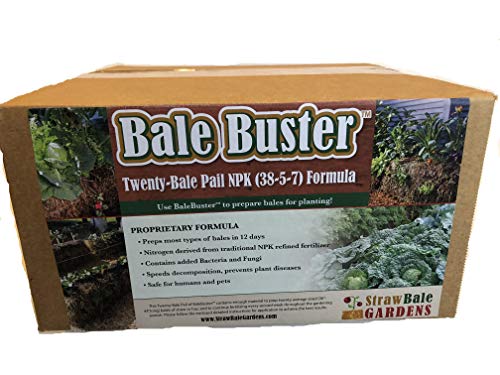
    BaleBuster4 Four Bale Conditioning Formula for Preparation of a Straw Bale Garden for Planting a Vegetable Garden
    BaleBuster4 Four Bale Conditioning Formula for Preparation of a Straw Bale Garden for Planting a Vegetable Garden

    Only product on the market specifically formulated for Straw Bale Gardening
    VIEW LATEST PRICE

    As an affiliate, we earn on qualifying purchases.

    Straw Bale Gardens Complete, Updated Edition: Breakthrough Method for Growing Vegetables Anywhere, Earlier and with No Weeding
    Straw Bale Gardens Complete, Updated Edition: Breakthrough Method for Growing Vegetables Anywhere, Earlier and with No Weeding
    VIEW LATEST PRICE

    As an affiliate, we earn on qualifying purchases.

    BaleBuster4 Starter Kit Includes Straw Bale Gardens Complete Book with Instructions for Step-by-Step Garden Set up.
    BaleBuster4 Starter Kit Includes Straw Bale Gardens Complete Book with Instructions for Step-by-Step Garden Set up.

    Treats four straw bales for a garden

    VIEW LATEST PRICE

    As an affiliate, we earn on qualifying purchases.

    Harvesting Your Carrots

    • Timing: Carrots are typically ready for harvest 60-80 days after planting.
    • Signs of Readiness: Look for bright color and a diameter of about 1/2 inch.
    • Harvesting Technique: Gently pull the carrot from the straw, ensuring you grasp the green top firmly.

    Conclusion

    You’ve now learned about the exciting process of harvesting carrots grown in straw bales. Remember, carrots are typically ready for picking in just 60-80 days, so keep an eye out for those vibrant colors and the ideal diameter. When it’s time to harvest, gently pull the carrots from the straw while holding onto the green tops firmly. Mastering the timing and techniques for harvesting is key to enjoying the fruits of your labor. Happy harvesting and enjoy your fresh, home-grown carrots!

    Frequently Asked Questions

    When are carrots ready to be harvested?

    Carrots are typically ready for harvest 60-80 days after planting. Look for bright color and a diameter around 1/2 inch.

    What is the recommended technique for harvesting carrots from straw bales?

    Gently pull the carrot from the straw while firmly grasping the green top to avoid damage.

    Why is proper timing and technique important when harvesting carrots?

    Proper timing and technique ensure minimal damage to the carrots, maximizing quality and yield.

    Share. Facebook Twitter Pinterest LinkedIn Tumblr WhatsApp Email
    Previous ArticleGrowing Carrots in Aquaponic Systems: Success Tips and Harvesting Guide
    Next Article Optimal Ways to Control Carrot Patch Weeds Naturally
    lucy stone
    Lucy Stone

      Hi, I'm Lucy! As a passionate gardener and writer for Veggie Knowledge, I've dedicated my life to exploring the secrets of successful vegetable growing. My love for gardening blossomed in my grandmother's backyard, where I learned how much joy a single plant can bring. I aim to share that joy through practical tips and insightful advice, helping you cultivate your own thriving garden

      Related Posts

      5 Effective Organic Fertilizers for Growing Carrots: A Complete Guide

      July 9, 2024

      How to Cultivate Prize-Worthy Giant Carrots: Pest Control Tips Included

      July 9, 2024

      Why You See White Spots on Carrot Leaves and How to Prevent Them

      July 9, 2024

      How to Harvest and Enjoy Perfect Carrots from Your Vertical Garden

      July 9, 2024
      Leave A Reply Cancel Reply

      Affiliate Disclosure

      As an Amazon Associate, I earn from qualifying purchases.

      Recommended Reading

      How to Grow Sweet Yellow Peppers: Pro Tips for a Bountiful Harvest

      Growing Vegetables

      How to Grow Top Crop Green Beans: Pro Tips for a Bountiful Harvest

      Growing Vegetables

      How Long Does It Take a Tomato Plant to Grow? Quick Guide

      Growing Vegetables

      What am I Growing? How to Identify Your Garden Vegetables

      Growing Vegetables

      How to Grow Okra in Containers: Maximize Your Harvest Yield

      Growing Vegetables

      How to Grow Potatoes in Tires: Pro Secrets Revealed

      Growing Vegetables

      How to Grow Tomato Plants: A Complete Step-by-Step Project Guide

      Growing Vegetables

      How to Grow Asparagus in Water: The Ultimate Beginner’s Guide

      Growing Vegetables
      How VeggieKnowledge.com Got Started

      We started this website to share our love of vegetables with the world, and to help people discover the many benefits of growing, cooking, and eating fresh and delicious vegetables.

      Got questions or comments? You can reach us at [email protected].

      Featured Articles

      10 Common Gardening Mistakes (and How to Avoid Them)

      How Much Sun Do Vegetables Really Need?

      Beginner’s Guide to Growing Vegetables: What to Know Before You Start

      Watering 101: How to Keep Your Plants Happy and Healthy

      The Best Vegetables for First-Time Gardeners

      Categories
      • Beets
      • Broccoli
      • Carrots
      • Cucumber
      • Green Beans
      • Tips and Advice
      Veggie Knowledge
      • Home
      • About
      • Contact
      • Privacy Policy
      • Affiliate Disclosure
      • Free eBook
      © 2026 Veggie Knowledge

      Type above and press Enter to search. Press Esc to cancel.